Root Rot on Peperomia: Causes, Checks & Fixes
Quick answer
Root rot on Peperomia follows chronic wet mix and poor drainage-not random disease. First step: stop watering, unpot gently, and inspect whether roots are firm and pale or brown and mushy before you trim or repot.
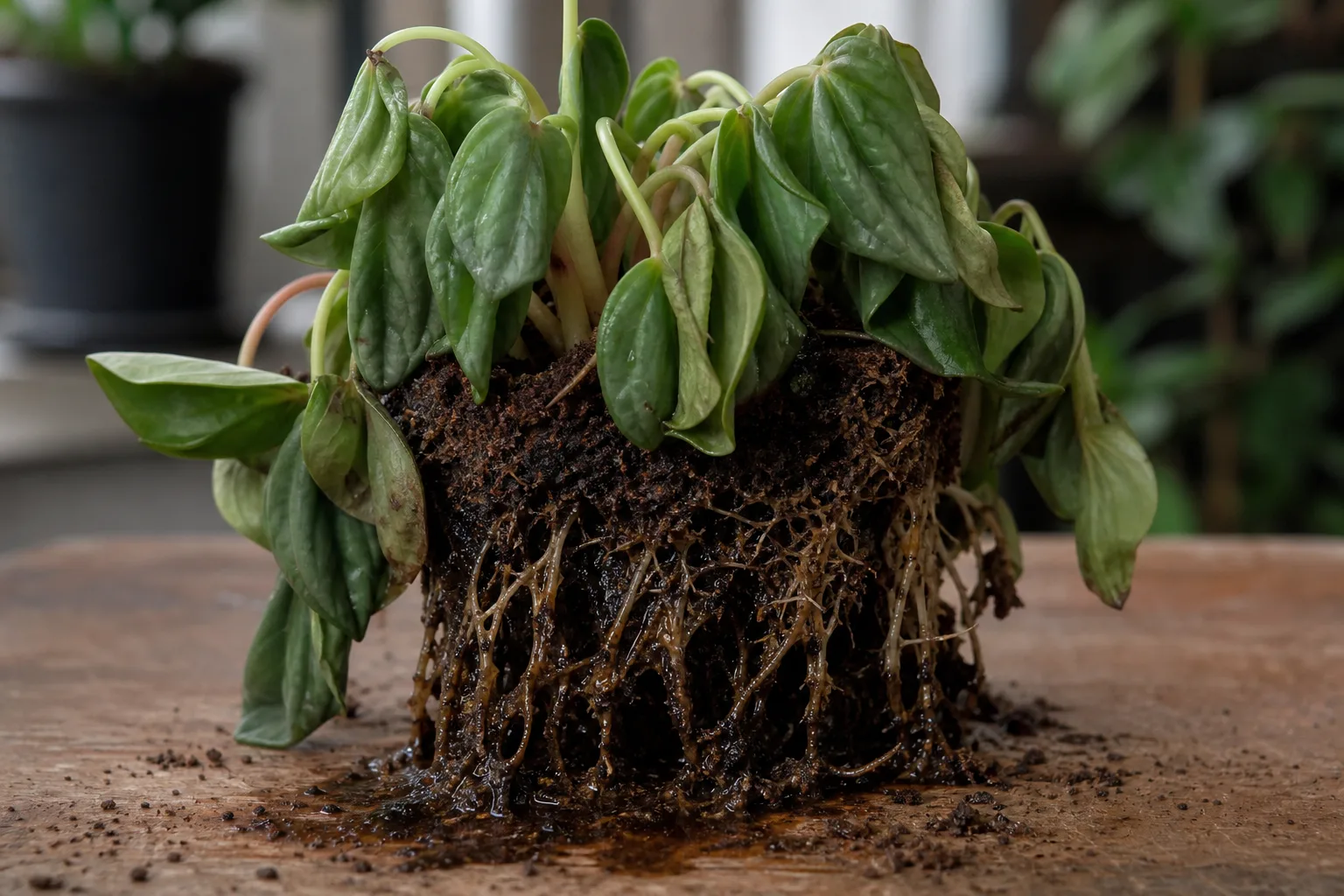
Root Rot on Peperomia: Causes, Checks & Fixes
This guide covers root rot on Peperomia. See also the general Root Rot guide, watering, and light pages for this plant.
Root Rot on Peperomia: Causes, Checks & Fixes
Quick answer
Root rot on Peperomia (Peperomia spp.) is a rescue guide for confirmed root decay-not early overwatering triage. If stems are still firm and you suspect too much water but have not inspected roots, start with the Peperomia watering guide and its wilting-with-wet-soil checks first. Use this page once decay is likely or confirmed.
On this genus, rot almost always follows culture: soil that stays saturated around fine, shallow roots while semi-succulent leaves still store water above. Peperomia’s thick foliage can mask root failure for days. When feeder roots lose oxygen in waterlogged mix, they decay; the plant then wilts despite wet soil because damaged roots cannot transport water upward.
First step: stop watering and unpot gently to inspect the roots. Do not add more water hoping limp leaves will perk up. A heavy pot, sour smell, and mushy brown roots confirm rot; a dry lightweight pot with firm wilted leaves points to thirst instead.
What root rot looks like on Peperomia
Symptoms vary by habit, but the root-zone pattern is consistent: chronic wet mix → oxygen loss → mushy roots → collapse above soil.
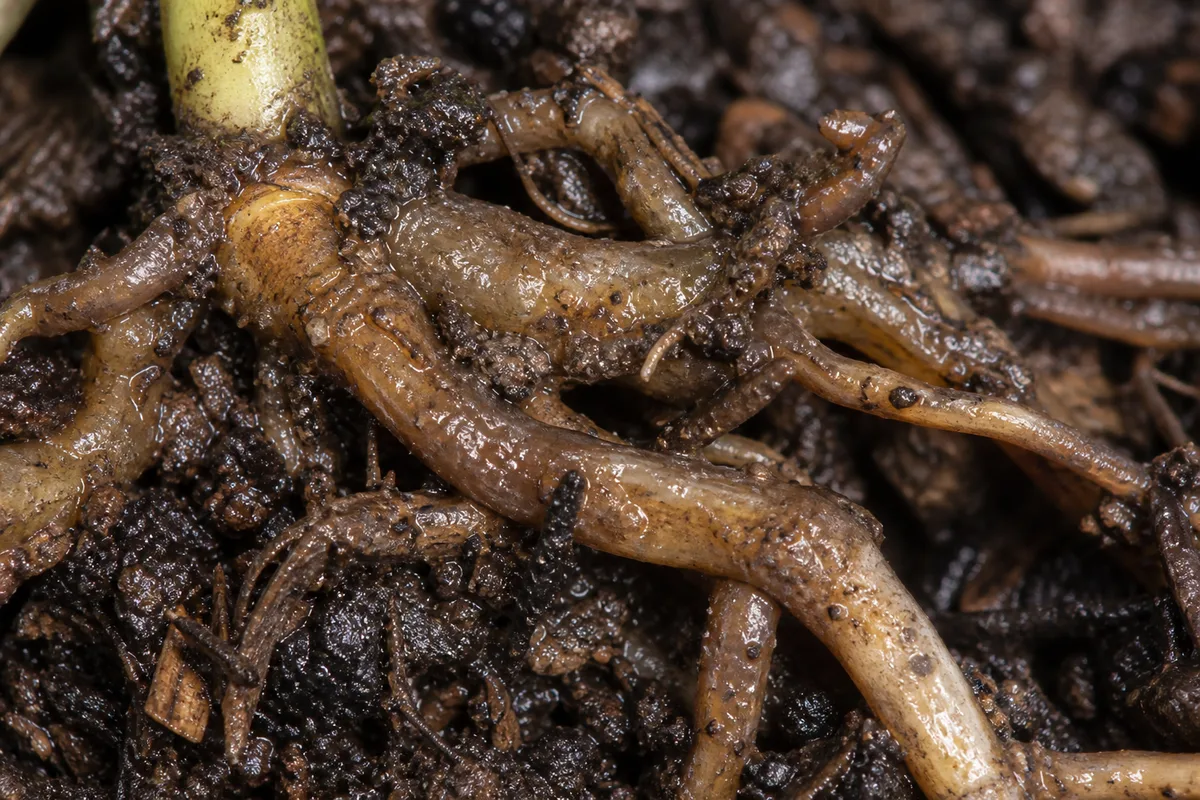
Root Rot symptoms on Peperomia - compare with healthy tissue on the same plant.
Rosette types (obtusifolia, caperata, argyreia)
Compact rosette peperomias-baby rubber plant (P. obtusifolia), ripple plant (P. caperata), watermelon peperomia (P. argyreia)-show rot from the crown outward:
- Lower leaves turn dull yellow while the pot stays heavy for days
- Petioles go limp and feel slightly soft at the base, even if the center still looks firm briefly
- New leaf production stops; the rosette may collapse inward despite wet soil
- Soil surface stays dark and damp long after watering
- Fungus gnats hover above constantly moist mix-a common early warning on this genus
For habit-specific detail on P. argyreia, see root rot on Watermelon Peperomia.
Trailing types (Hope, prostrata, serpens)
Trailing and vining forms-string of turtles (P. prostrata), cupid peperomia (P. serpens), Peperomia Hope-decay often starts at the lowest nodes touching damp mix:
- Bottom stems soften and turn dark while upper growth still looks acceptable
- Leaves drop in clusters along the trailing section first
- The hanging portion feels mushy when you lift it; firm tips do not guarantee healthy roots below
- Oversized hanging baskets hold excess wet mix around a small root ball
See root rot on Peperomia Hope for trailing-habit rescue detail.
Advanced crown and stem-base involvement
Late-stage rot spreads upward from roots into the crown or stem base:
- Sour or swampy smell when you lift the pot
- Crown softens where multiple petioles meet the soil line (rosettes) or where stems emerge from mix (upright types)
- Entire plant collapses despite wet soil-classic wilting paradox on Peperomia
- Blackened, translucent roots visible through drainage holes
- Lower leaves brown and drop in clusters over a few days
Unlike underwatering, the pot feels heavy and the mix smells off. Dry soil with slightly floppy but firm petioles or leaves usually means thirst, not rot.
Why Peperomia gets root rot
Several genus traits make Peperomia fail faster than woody houseplants once roots sit in stale water.
Semi-succulent leaves vs. fine vulnerable roots
Peperomia evolved in humid tropical forests where rain arrives in bursts and upper soil dries quickly. Many species have thick, fleshy leaves that store water-a buffer against dry spells-paired with fine, shallow feeder roots that suffocate in saturated mix. The leaf tank keeps foliage looking hydrated while roots below are already dying. That mismatch is why rot often surprises owners who thought the plant looked fine.
Clemson Cooperative Extension HGIC identifies root rot from overwatering as the most common disease of peperomia and recommends allowing plants to dry out between waterings.
Oversized pots and slow dry-down
Peperomia prefers a right-sized pot with open drainage. An oversized container holds excess wet mix around a small root ball, keeping lower roots oxygen-starved for days after you think the plant has dried out. The Royal Horticultural Society notes that if the pot is too big, compost stays wet longer and roots can rot. Many peperomias also tolerate being slightly pot-bound better than swimming in extra substrate.
Calendar watering and winter slowdown
Watering every Tuesday regardless of season keeps mix saturated. In low light or winter, when growth slows, the plant uses far less water while the same schedule continues. NC State Extension links root rot and yellowing or curling leaves to overwatering on peperomia. Reduce watering from fall through late winter when new growth pauses-near-dormant plants in cool rooms may need water only every three to four weeks.
Other triggers include blocked drainage holes, saucers left full after bottom-watering, dense peat-heavy mix without perlite, and deep shade that slows transpiration so normal watering frequency becomes excessive.
Fungi such as Pythium often finish the breakdown once tissue is oxygen-deprived, but the trigger is almost always waterlogged, poorly aerated mix-not bad luck.
How to confirm the cause
Work through this checklist before you trim roots or repot:
- Pot weight and smell - A heavy pot days after watering plus a sour odor suggests anaerobic conditions in the root zone.
- Soil moisture at depth - Push a finger or skewer into the top half of the mix. Constantly wet deep soil with limp leaves fits rot. Bone-dry soil with firm stems suggests underwatering instead.
- Crown or stem-base firmness - Press where petioles meet soil (rosettes) or where stems exit the mix (trailing types). A firm crown with only root damage below may recover; a soft crown means decay has spread upward.
- Root inspection - Gently unpot if weight, smell, or crown softness point to trouble. Healthy peperomia roots are pale, firm, and resilient. Rot shows brown, translucent roots that mush between fingers.
- Watering history - Have you watered before the top half dried, left the saucer full, or repotted into a much larger pot recently? That pattern fits root rot on this genus.
- New growth test - No emerging leaves or stems for three or more weeks while outer foliage declines suggests the root system can no longer support the plant.
If soil is dry, stems are firm, and leaves are slightly limp, water once thoroughly and recheck in 24 hours before assuming rot.
Lookalike symptoms
| What you see | Pot / mix | Roots (if checked) | Likely cause | Next step |
|---|---|---|---|---|
| Limp leaves, heavy wet pot, sour smell | Saturated days after watering | Brown, mushy | Root rot | Stop water; unpot; trim and repot |
| Limp leaves, light dry pot | Dry throughout | Firm, pale | Underwatering | Water deeply once; recheck in 24 h |
| Yellow lower leaves, firm crown, wet pot | Wet but no sour smell yet | Still firm, pale | Early overwatering | Dry root zone; see overwatering guide |
| Long stretchy stems, pale small leaves | Normal moisture | Firm | Low light | Move to brighter indirect light |
| Lower outer leaf yellow, firm crown, new center growth | Normal | Firm | Normal senescence | Remove old leaf; no rescue needed |
First fix for Peperomia
Stop watering and unpot gently to inspect the roots.
Move the plant to a clean work surface. Tilt the pot and slide the root ball out with minimal pulling on stems or petioles. Knock away wet mix so you can see root color and texture clearly. Do not water during this inspection.
If roots are mostly firm and pale with only a few soft tips, trim the damaged sections, let cut surfaces air-dry briefly, and repot into fresh airy mix without soaking the plant again first.
If more than one-third of roots are mushy or the crown is soft, proceed immediately to the recovery steps below. Do not return the plant to the same wet mix hoping it dries out on its own-decay spreads in waterlogged, oxygen-poor soil.
Step-by-step recovery
After inspection confirms rot:
- Trim decay with sterile scissors - Cut away brown, soft roots back to firm, pale tissue. Remove any blackened crown tissue the same way. Disinfect blades between cuts with rubbing alcohol.
- Rinse gently - Lukewarm water removes contaminated mix clinging to remaining roots. Pat dry lightly; do not scrub healthy tissue.
- Air-dry 24–48 hours - Lay the plant on paper towels in bright indirect light so cut surfaces callus. Skip watering during this window.
- Repot into fresh airy mix - Use roughly 50% potting compost and 50% perlite, matching the fast-draining blend in our Peperomia watering guide. Choose a pot only slightly larger than the trimmed root ball with open drainage holes. Set the crown at or slightly above the soil line. See the repotting guide for technique.
- Wait one week before cautious watering - Let the compost partially dry between waterings, then water lightly at the pot edge once. Empty the saucer within 30 minutes.
- Hold fertilizer for three to four weeks - Stressed roots cannot handle salts. Resume at half strength only after new firm growth appears.
- Propagate backup cuttings - Take leaf, petiole, or stem cuttings from any firm tissue while you still can. Root them separately in moist perlite per our propagation guide so you do not lose the plant if the main specimen fails.
Mild, moderate, and severe branches
Mild - Few soft root tips, firm crown, no sour smell. Trim tips, air-dry, repot into dry airy mix. Expect stabilization within one to two weeks.
Moderate - Roughly one-third to half of roots mushy, crown still firm. Aggressive trim, 48-hour air-dry, smaller pot, backup cuttings started the same day. New growth may take three to six weeks.
Severe - Soft crown, more than two-thirds of roots mushy, sour smell returning within days of repot. Attempt propagation from any firm leaves or stem nodes; the main plant rarely recovers once the growing point decays.
Isolate the plant from other peperomias until active decay stops and new growth emerges.
Recovery timeline
Mild root damage with a firm crown may stabilize within one to two weeks after trim and repot. Expect three to six weeks before new leaves or stems appear-peperomias are naturally slow growers.
Judge recovery by firm new growth from the center or nodes, stable roots on recheck, and stopped symptom spread-not by old yellow foliage. Damaged leaves will not green up again; remove them once replacement growth is visible.
If the crown keeps softening or the mix smells sour again within two weeks of repotting, the growing point is likely compromised. Shift focus to cuttings rather than repeated soaking.
What not to do
Do not water a wilting plant without checking soil moisture and root firmness first. Rot mimics thirst above soil.
Do not repot into a much larger pot after root loss. Excess wet mix around a trimmed root ball repeats the problem.
Do not return the plant to the same soggy mix after trimming roots. Fresh, airy substrate is essential.
Do not fertilize a rotting plant hoping to push growth. Stressed peperomias need stable dry-down cycles, not nitrogen.
Do not rely on hydrogen peroxide drench alone without removing mushy roots and improving drainage. Physical removal of decay matters more than a soak.
Do not compost mushy roots or mix indoors-it can spread pathogens to other houseplants.
Peperomia is non-toxic to cats and dogs per the ASPCA, which makes inspection and repotting safer around pets-but bag discarded substrate and wash hands after handling decayed tissue.
How to prevent root rot next time
Prevention belongs on the Peperomia watering guide-this page is for rescue. After recovery, align these genus-specific habits:
- Top-half dry rule - Let the upper 50% of mix dry before each drink, confirmed by pot weight and finger checks
- Fast-draining mix - Roughly 50% compost, 50% perlite; details in the soil guide
- Right-sized pot - Sized to the root ball, not the desired mature size
- Empty saucers - Never leave the pot standing in runoff water
- Bright indirect light - So the plant uses water at a realistic pace; deep shade plus frequent watering is a common indoor trigger
- Winter slowdown - Stretch intervals when growth pauses in cool, dim rooms
Related Peperomia guides
- Peperomia watering - Prevention, drought protocol, and early wilting-with-wet-soil triage
- Overwatering on Peperomia - Before roots have decayed
- Peperomia repotting - Pot sizing and mix after root trim
- Peperomia propagation - Leaf and stem salvage when the crown fails
- Peperomia overview - Genus care hub
- Root rot on Watermelon Peperomia - Rosette-specific rescue
- Root rot on Peperomia Hope - Trailing-habit rescue
Conclusion
Root rot on Peperomia is a drainage and watering problem centered on fine, oxygen-sensitive roots-not a mystery disease. Stop watering, inspect roots honestly, trim decay, and repot into airy mix in an appropriately sized pot. Semi-succulent leaves can mislead you; a heavy wet pot and mushy roots tell the truth. Catch damage early, change how you water, and keep cuttings as insurance when decay has already spread toward the crown.