Yellow Leaves on Peperomia: Causes, Checks & Fixes
Quick answer
Yellow leaves on Peperomia usually trace to overwatering, low light, underwatering, or one old leaf aging-not fertilizer. First step: check soil moisture at mid-depth and pot weight before changing anything else.
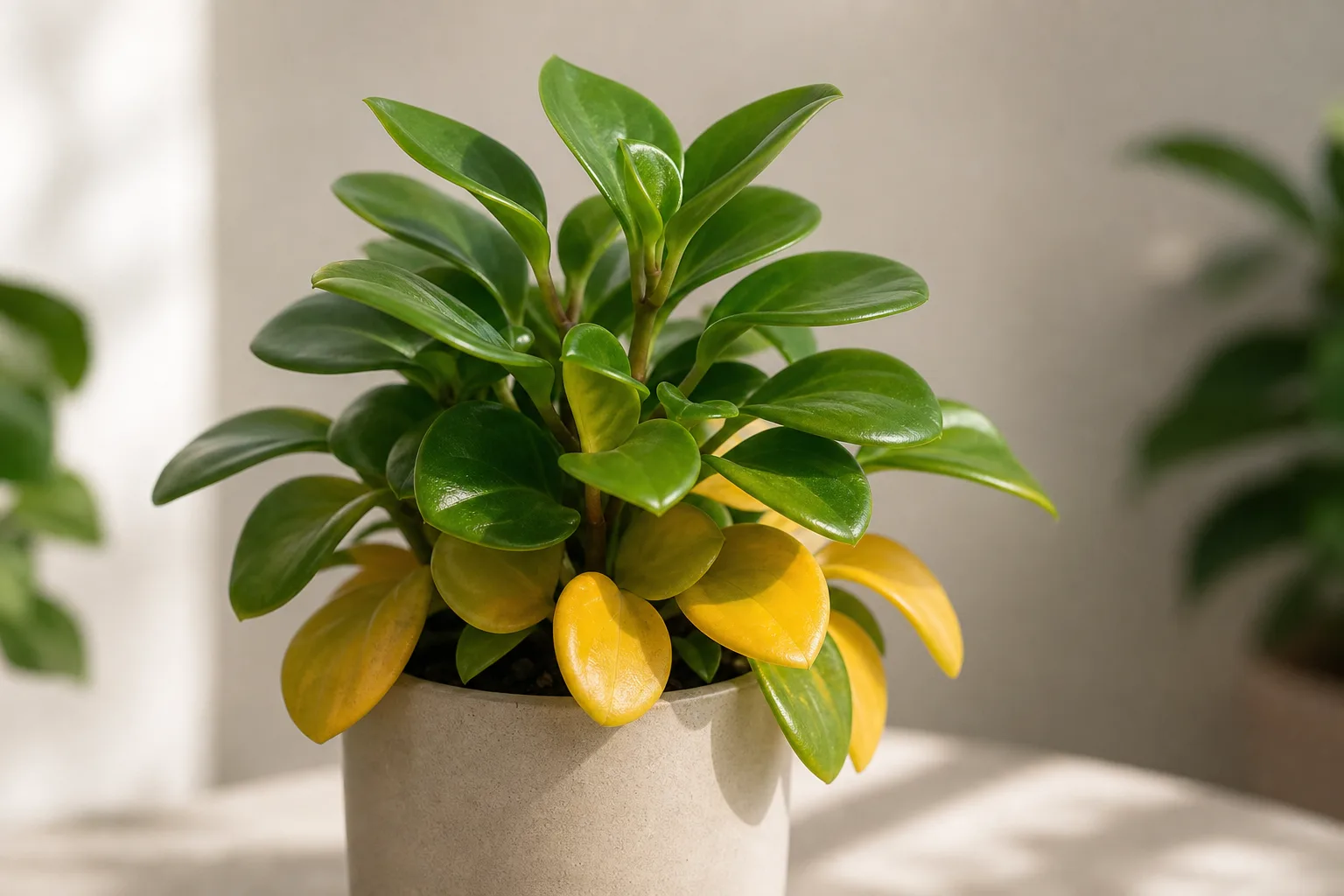
Yellow Leaves on Peperomia: Causes, Checks & Fixes
This guide covers yellow leaves on Peperomia. See also the general Yellow Leaves guide, watering, and light pages for this plant.
Yellow Leaves on Peperomia: Causes, Checks & Fixes
Quick answer
Yellow leaves on Peperomia (Peperomia spp.) are a symptom, not a single diagnosis. On this genus, the same yellow blade can mean natural aging of one old rosette leaf, root stress from soil that stayed wet too long, drought on a light pot, or pale new growth from dim light-each needs a different first move.
First step: check soil moisture at mid-depth and lift the pot. If the mix is wet and cool while lower leaves turn soft and yellow, stop watering until the top half of the mix is dry and the container feels lighter-the drought protocol for semi-succulent peperomia, not a calendar guess. If the pot is light and leaves are thin and slightly wrinkled, one thorough soak after dry-down may be the fix. If only one bottom leaf on a firm rosette fades over months, aging is likely and no rescue is needed.
Do not reach for fertilizer on yellow foliage. Salt buildup from overfeeding can yellow leaves too, and feeding a waterlogged plant makes root stress worse.
What yellow leaves look like on Peperomia
Peperomia’s compact form hides how the yellowing started until you pair leaf position, texture, and soil state.
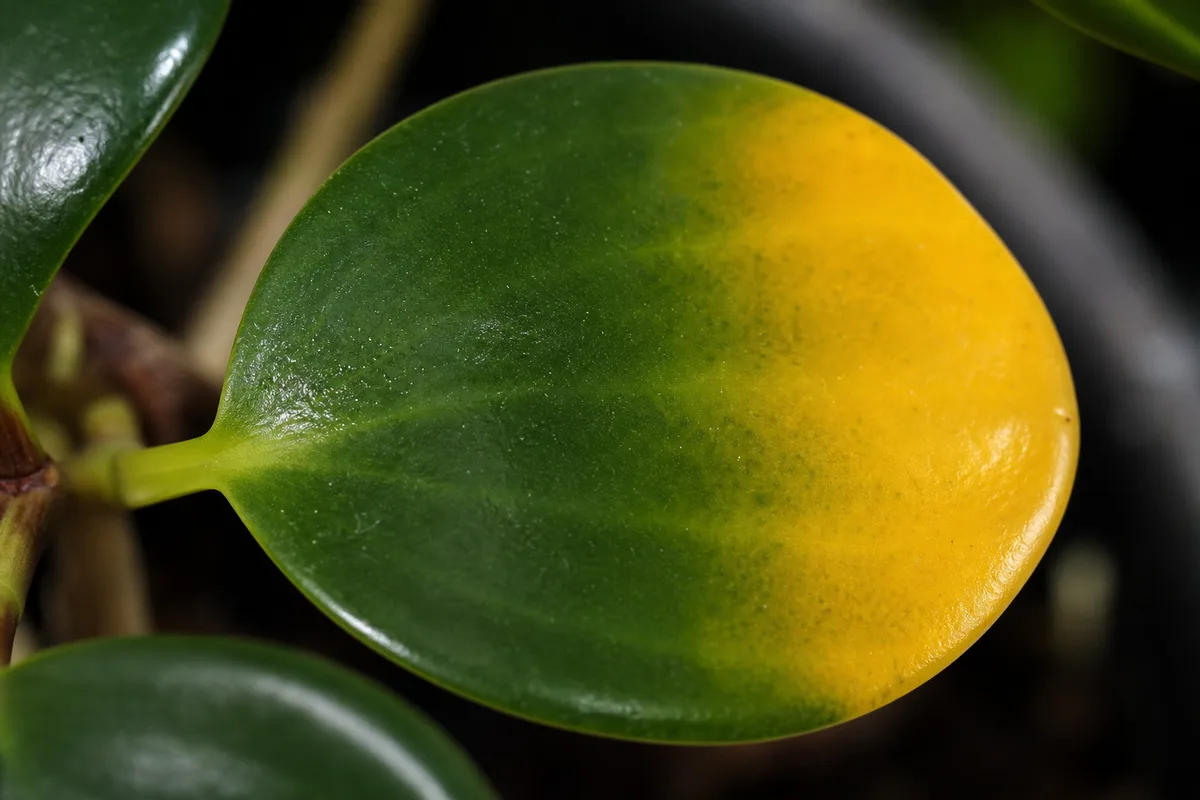
Yellow Leaves symptoms on Peperomia - compare with healthy tissue on the same plant.
Lower-leaf patterns:
- One or two bottom leaves fading slowly on rosette types (P. caperata, P. argyreia) while the crown stays green and firm-often natural senescence as new leaves emerge from the center
- Several lower leaves yellowing together, soft and limp, on soil that stays damp for days-classic overwatering and early root stress
- Crisp yellow or brown lower leaves on a light, dry pot with thin, slightly wrinkled foliage-underwatering lookalike, more common on thin-leaved species
Upper-leaf and whole-plant patterns:
- Pale yellow new growth at the tips with long gaps between leaves-not enough light; the plant stretches toward a window while older lower leaves may still look green
- Wilting plus yellow lower leaves on wet soil-the wilting paradox: roots fail in saturated mix while semi-succulent leaves still store water above
- Uniform yellowing with mushy stems and sour smell-escalate to root rot
Texture matters on peperomia: soft limp yellow on a heavy wet pot points away from thirst; crisp yellow on a light pot points away from overwatering.
Why Peperomia gets yellow leaves
Peperomia evolved for intermittent tropical showers and real dry-down in forest understory-not for sitting in a perpetually damp kitchen pot. Its thick, semi-succulent leaves and stems store water while fine, shallow roots suffocate quickly in stale moisture. That biology makes overwatering the dominant yellow-leaf cause indoors, outpacing classic underwatering in most collections.
Overwatering and root stress. When the root zone stays wet, oxygen drops, feeder roots die, and transport fails. Lower leaves yellow in clusters-often soft, not crispy-while the mix stays cool at mid-depth. Thick leaves can still look turgid for days, which tricks growers into watering again. Clemson HGIC notes that root rot from overwatering is the most common disease of peperomia.
The stacked stressor: low light plus slow dry-down. A peperomia in a dim corner uses less water per week. The same watering rhythm that worked in summer keeps soil wet longer in winter. Yellowing can come from both prolonged root saturation and pale stretched new growth. Fixing light often speeds the dry cycle as much as skipping drinks.
Underwatering. Extended drought yellows lower leaves too, but they tend to be crisp or thin and the pot feels light. Thick-leaved P. obtusifolia tolerates deeper dry-down; thin-leaved ripple and watermelon types show stress faster.
Natural aging. Rosette peperomias shed the oldest bottom leaf periodically as the crown pushes new foliage. One yellow leaf over months on an otherwise healthy plant is normal-not every yellow blade is a crisis.
Salt buildup. Frequent fertilizing without flushing can yellow leaf margins and tips. Do not feed a plant already stressed by wet roots.
Species notes: thick-leaved vs. thin-leaved types
Not every peperomia on the shelf yellows at the same speed or dries on the same schedule.
Thick-leaved types-P. obtusifolia (baby rubber plant), P. polybotrya, P. graveolens-have the most succulent-like foliage with low water needs. Stored leaf water masks early root decline, so yellowing from overwatering may appear more slowly. These types tolerate deeper dry-down between drinks under the same top-half-dry rule.
Thinner-leaved types-P. caperata (ripple peperomia), P. argyreia (watermelon peperomia), P. clusiifolia-still need the top half dry before watering but yellow and wilt faster when roots sit in stale moisture. Do not keep them “evenly moist” like a fern.
Trailing forms in hanging baskets may dry unevenly at the soil surface versus the core. Always probe mid-depth, not surface color alone.
When unsure of species, default to conservative dry-down: top half dry, pot lighter, then one full soak with complete drainage-details in the Peperomia watering guide.
Lookalike symptoms: aging vs. overwatering vs. underwatering vs. root rot vs. low light
| Pattern | Which leaves | Pot weight | Soil mid-depth | Leaf feel | Stem at soil line | Likely cause |
|---|---|---|---|---|---|---|
| Natural aging | One old bottom leaf | Normal | Dry to slightly damp | Firm or mildly fading | Firm, green | Senescence-wait or snip |
| Overwatering | Several lower, spreading | Heavy | Wet, cool | Soft, limp on wet mix | Firm early | Root stress from saturation |
| Underwatering | Lower, sometimes edges | Light | Dry throughout | Thin, slightly wrinkled | Firm | Turgor loss from drought |
| Advancing root rot | Many lower + upper | Heavy | Wet, sour smell | Mushy yellow | Soft or darkening | Anaerobic decay-escalate |
| Low light | Pale new upper growth | Normal to heavy | Slow to dry in dim rooms | Small, pale, stretched | Firm | Insufficient light ± wet soil |
Wilting with moist soil often means roots cannot absorb water because they are decaying-not that the plant needs more water. For the full wilt-on-wet-soil branch, see wilting on Peperomia.
How to confirm the cause
Work through these checks in order before Peperomia repotting guide, fertilizing, or moving the plant:
- Count and position - One bottom leaf over months on a firm rosette suggests aging. Several lower leaves yellowing together suggests stress.
- Lift pot weight - Heavy days after watering confirms wet-soil direction; light and dry suggests drought.
- Probe mid-depth - Finger or dry skewer to the top half of the pot. Moisture clinging at mid-depth while you water on schedule means stop-not another drink.
- Leaf texture vs. soil state - Pinch a mature leaf. Soft limp leaves on wet soil signal the wilting paradox; thin wrinkled leaves on dry mix signal thirst.
- Inspect new growth - Pale, small leaves on long stems point to low light even when lower leaves still look green.
- Smell and stem firmness - Sour odor or soft blackening at the soil line means unpot and inspect per the root rot guide.
- Season and placement - Cool dim winter rooms extend dry-down; bright warm summer setups shorten it. Compare against your watering guide intervals, not a calendar.
If checks point to chronic wet soil with clustered yellow lower leaves, treat overwatering first. If the pot is bone dry and leaves are crisp, treat underwatering instead.
The first fix to try
Match your first action to what soil moisture and pot weight show-not to leaf color alone.
Wet heavy pot, soft yellow lower leaves: Stop watering until the top half of the mix is dry and the container feels noticeably lighter. Provide brighter indirect light if the plant sits in deep shade so the next dry cycle completes predictably. Do not pour another drink because foliage looks limp while soil is still cool at mid-depth.
Light dry pot, thin wrinkled leaves: Water thoroughly once when the top half is dry, drain completely, and empty saucers within thirty minutes.
One firm aging bottom leaf on a healthy rosette: Remove the spent leaf if you prefer; no watering change needed.
Pale stretched new growth with firm lower leaves: Move to brighter indirect light first-see the light guide-then reassess watering rhythm once the plant uses water at a normal rate.
If lower leaves keep yellowing after the upper zone dries, unpot and inspect roots before stacking fertilizer or repotting into a larger pot.
Step-by-step recovery
Mild yellowing-one to three soft lower leaves, wet soil for days, firm stem base:
- Withhold water until top half dry and pot weight normalizes.
- Snip fully yellow spent leaves once stable.
- Resume with one deep soak when checks pass; drain fully.
- Watch for new compact leaves at the crown within two to four weeks.
Moderate stress-persistent yellow lower clusters, slight wilting, sour smell developing, but stem still firm:
- Complete dry-down as above.
- Scrape or remove the wettest top inch of peat if it stays soggy while deeper mix dries.
- Consider repotting into fresh 50% compost / 50% perlite mix per the soil guide if old mix smells or compacts.
- If yellowing continues after corrected dry-down, inspect roots and follow the overwatering recovery path.
Severe escalation-soft stem base, black mush at crown, most roots slimy on inspection:
- Unpot immediately; trim dead root tissue.
- Repot into a smaller pot matched to remaining roots.
- Withhold water three to seven days, then one cautious soak.
- Follow the full root rot protocol.
Recovery timeline
Fully yellow leaves do not re-green-they drop or can be removed once spent. Success means firm new leaves at the crown, not saving every old blade.
After correcting overwatering, yellowing often stops within one to two weeks once soil oxygen returns. New green growth typically appears within two to four weeks in warm bright conditions; cool dim rooms may need three to six weeks before the first post-recovery leaf.
Improvement: yellowing stops spreading; new tips emerge; pot weight matches your corrected rhythm.
Worsening: stems soften at the base; sour smell intensifies; collapse on soggy mix with no new growth for a month-treat as root rot immediately.
What not to do
- Do not fertilize yellow foliage on a stressed or waterlogged plant-salt buildup can yellow leaves and feeding wet roots makes decay worse
- Do not increase watering when leaves droop on a heavy wet pot-the wilting paradox is the most common misread on peperomia
- Do not assume every yellow leaf needs food-check moisture, light, and aging first
- Do not repot into a larger pot to “help drying”-that adds excess wet soil volume
- Do not pull half-yellow leaves-snip cleanly once fully spent
- Do not wait for old leaves to re-green-judge recovery by new center growth
How to prevent yellow leaves next time
Water only when the top half of the mix is dry-use touch, skewer, and pot weight together, not dates. Use fast-draining mix with perlite in a pot sized to the root mass with an open drainage hole. Empty saucers and cachepots after every drink.
Provide bright indirect light so the plant uses water at a predictable rate and new growth stays compact-placement detail on the light guide. Stretch intervals in cool winter rooms when growth slows.
Remove spent lower leaves on rosette types before pests hide in dense crowns. For full seasonal rhythm, species notes, and the leaf-firmness test, keep the Peperomia watering guide beside this page. Genus-wide care context lives on the Peperomia overview.
When to worry
Escalate beyond simple dry-down when:
- Stem base turns soft or black while mix is wet
- Sour smell persists after surface dries
- Yellowing spreads to many leaves quickly on saturated soil
- No new growth for a month after corrected watering
- More than a small fraction of roots are mushy on inspection
Those patterns overlap advanced root rot. Early intervention-dry-down while stems are still firm-saves most peperomias that owners would otherwise lose to kindness.
Conclusion
Yellow leaves on peperomia reward a simple habit: read the leaf with the soil. Semi-succulent foliage exists so you can let compost partially dry between waterings-then water deeply, drain completely, and wait again. One fading bottom leaf on a firm rosette is often normal aging; several soft yellow leaves on a heavy wet pot is a stop-watering signal, not a feed-or-soak reflex. Correct the rhythm and judge recovery by new green growth at the crown-not by re-greening leaves that have already yellowed through.
Related Peperomia problems
- Peperomia watering - Drought protocol, dry-down rhythm, and wilting-with-wet-soil triage
- Overwatering on Peperomia - Wet-soil yellow branch in depth
- Underwatering on Peperomia - Crisp yellow lookalike
- Root rot on Peperomia - Mushy roots escalation
- Wilting on Peperomia - Symptom overlap and paradox
- Not enough light on Peperomia - Pale upper growth
- Peperomia overview - Genus care hub
When to use this page vs other Peperomia guides
- Peperomia watering guide - Use for routine moisture checks before assuming yellow leaves is the main issue.
- Peperomia problems hub - Browse all 5 common issues on this species.
- Root Rot on Peperomia - Different entry point when symptoms overlap with yellow leaves.