Peperomia Pruning: When, Where, and How Much to Cut
Peperomia Pruning: When, Where, and How Much to Cut
Peperomia Pruning: When, Where, and How Much to Cut
Start by removing dead, yellow, mushy, or pest-damaged leaves and any soft rotting stem tissue with clean, sharp snips - that is the only pruning most healthy Peperomia plants need on any given day. The genus Peperomia includes more than 1,000 compact tropical species in the Piperaceae family, sold as radiator plants, watermelon peperomias, ripple plants, and dozens of trailing basket varieties. NC State Extension describes them as slow-growing houseplants with fleshy leaves, shallow roots, and growth habits ranging from erect clumps to cascading vines. Clemson HGIC notes that trimming old leaves and pruning stems above leaf nodes makes plants look fuller - but only after you have cleared tissue that is already failing. Once damaged material is gone, decide whether your plant needs light tip pinching, a leggy-stem cutback, or rosette crown cleanup.
What Pruning Does for Peperomia
A healthy Peperomia does not require regular pruning to survive. The value appears when you want a denser silhouette, need to shorten stems stretched toward a window, must remove tissue damaged by pests or rot, or want to root trimmings back into the same pot. Unlike woody shrubs, Peperomia stores water in semi-succulent leaves and builds no permanent hard scaffold. Each cut redirects energy immediately: the removed tip stops extending, and buds at nodes below often activate.
Pruning also forces a close inspection. Mealybugs hide in leaf axils, and Clemson HGIC lists root rot on Peperomia as the most common disease when soils stay wet. Handling stems during a trim surfaces those problems early. What pruning cannot fix on its own is chronic overwatering, an oversized pot that never dries, or dim light - cut back a leggy plant and return it to the same dark shelf, and new growth will stretch again within weeks.
How Nodes Drive Branching on Stem Types
On upright and trailing Peperomia species - baby rubber plant (Peperomia obtusifolia), cupid peperomia (P. serpens), string of turtles (P. prostrata), and beetle peperomia (P. quadrangularis) - branching follows apical dominance. Hormones from the stem tip suppress side shoots lower down. Remove the tip just above a node - the point where a leaf attaches to the stem - and lateral buds below often break dormancy. Clemson HGIC recommends pruning a stem above a leaf node so the plant will branch.
Cuts made in the smooth internode between nodes rarely trigger reliable branching and often die back to the nearest node, leaving a brown stub. Expect visible new side shoots within two to four weeks during warm, bright months and much slower progress in late fall and winter.
Rosette and Crown Types Need a Different Approach
Rosette-form species such as ripple plant (Peperomia caperata) and watermelon peperomia (P. argyreae) grow from a central crown rather than long branching vines. You do not pinch the crown center to force bushiness - that can damage the only growing point. Instead, remove individual outer leaves that are yellow, wrinkled, or pest-damaged by cutting or twisting them at the base where the petiole meets the crown. For a sparse rosette, new leaves emerge from the center on their own when light and watering are correct; pruning cannot regenerate a crown that has fully collapsed from rot.
When to Prune Peperomia
Timing separates a trim that refills in weeks from one that leaves bare stems until spring.
Best Window for Shaping Cuts
Schedule cosmetic shaping - tip pinching, leggy stem shortening, and staged cutbacks - from spring through early summer, when Peperomia is actively producing leaves and the top inch of soil dries at a steady rate. Clemson HGIC ties flower-spike production to active spring and summer growth, which is the same window when cut nodes activate fastest indoors.
Early fall can work in warm, well-lit homes. Avoid removing more than one-third of the foliage from late fall through winter unless you have no choice - wounds stay open longer in cool, dim conditions and new buds activate slowly on these slow-growing plants.
Emergency Removal Any Time
Some cuts are about plant health, not appearance. Remove these whenever you find them:
- Fully yellow or brown leaves that no longer photosynthesize
- Mushy, black stem sections from overwatering - cut back to firm green tissue
- Pest-damaged tips with concentrated mealybug or mite clusters
- Broken stems from handling or pet damage
Emergency winter removal is justified when leaving diseased tissue in place carries more risk than the stress of a small cut. Cosmetic hard cutbacks on an otherwise healthy plant can wait for spring.
When to Wait
Hold off on shaping cuts when:
- Soil has stayed wet for days and leaves feel soft - fix drainage and drying rhythm first
- The plant was repotted within the last two weeks - let roots settle
- Multiple stems are rotting at soil level - take healthy cuttings for propagation before further pruning on the parent
- Most of the plant is etiolated from very low light - improve placement before a major reshaping session
What to Check Before You Cut
Step back and read the whole plant before touching shears. A Peperomia that only needs grooming looks different from one that should not be pruned at all until root conditions improve.
Leaf Firmness and Soil Dryness
Press a mature leaf between your fingers. Firm, plump tissue means the plant is hydrated appropriately. Soft, translucent leaves with heavy wet soil suggest overwatering - pruning multiple healthy stems on a waterlogged plant adds stress without solving the real problem. NC State Extension notes that yellowing or curling leaves often indicate overwatering. Let the mix dry appropriately before cosmetic shaping.
Leggy Stems and Bare Crown Sections
Legginess shows as long internodes, smaller new leaves, and stems leaning toward the brightest window - etiolation from insufficient light. Pruning removes the stretched section and encourages branching from lower nodes, but it does not replace better placement. Move the pot to medium or Peperomia light guide before a major reshaping session.
Bare lower stems on trailing types without visible buds will not sprout leaves retroactively. If several inches of naked stem sit above healthy nodes, cut back to a node that still shows a small bud in the leaf axil. When most of a trailing basket is bare string, plan a staged cutback across two or three sessions two to three weeks apart during the growing season.
Pests, Rot, and Root Stress
Press stems gently near the base. Firm, plump tissue is safe to work with. Soft, wrinkled stems with wet soil suggest rot - prune below all mushy tissue with sterilized blades, reduce watering, and skip cosmetic shaping until the base stabilizes. Check leaf undersides and axils for mealybugs, spider mites, and scale. Remove heavily infested tips rather than leaving them in place.
Where to Cut - by Growth Form
The node is your target for any cut meant to trigger branching on stem-type Peperomia. It appears as a slight bump or leaf whorl where the petiole meets the stem, often with a tiny dormant bud visible in the axil.
Upright and Bushy Stems
On compact upright species - baby rubber plant, raindrop peperomia (P. polybotrya), belly button peperomia (P. verticillata) - make cuts 5–10 mm (about one-quarter inch) above a node at a slight angle with sharp snips. Do not cut through the node itself or leave a long bare stub above it. For maintenance, pinch the top one or two leaf pairs on soft new growth with fingers during the growing season.
Trailing and Vining Types
On hanging-basket species - string of turtles, cupid peperomia, creeping buttons (P. rotundifolia), beetle peperomia - cut long bare trailers back to a node two-thirds toward the pot, leaving at least one healthy leaf whorl on the remaining section when possible. Combine stem cuts with rooting trimmings at the pot edge for instant density. Support fleshy stems when cutting; semi-succulent tissue snaps easily at the crown if tugged.
Rosette Forms Like Ripple Peperomia
On Peperomia caperata, P. argyreae, and similar mound-form plants, remove individual damaged outer leaves at the base. Never cut into the central crown. If the rosette has shed most outer leaves from rot, address watering and pot size before expecting new central growth.
Flower Spikes
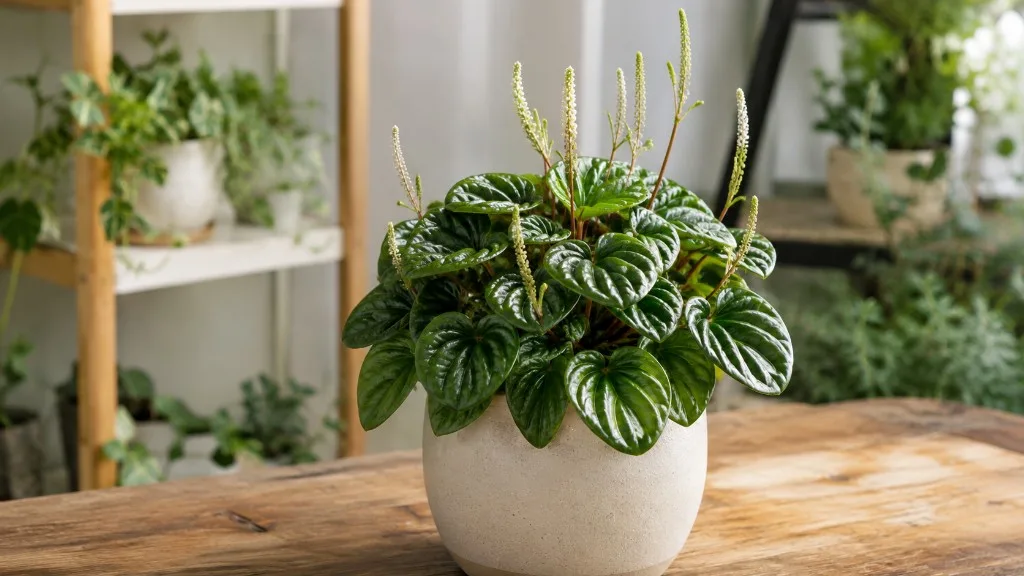
Peperomia produces small greenish-brown flower spikes resembling rat tails during active growth. Clemson HGIC notes these spikes are considered unattractive and that removing them lets the plant focus energy on leaf production. Snip spikes at the base when they appear - this is optional grooming, not a survival requirement.
Tools and Sanitation
You need very little:
- Sharp bypass pruning shears, floral snips, or scissors for stems up to pencil thickness
- 70% isopropyl alcohol to wipe blades before and between cuts
- A small tray or bag for trimmings
Bypass blades slice cleanly through fleshy Peperomia tissue; dull or crushed cuts brown and sometimes rot in humid rooms. Sterilize after every cut when removing rot or moving between plants. Skip fingernail pinches on mature trailing stems - ragged wounds invite fungal entry on species like string of turtles that rot easily when overwatered.
Step-by-Step Peperomia Pruning
- Inspect the whole plant - crown, soil surface, leaf undersides, and pot weight.
- Sterilize your snips with alcohol.
- Remove all dead, yellow, mushy, or pest-damaged tissue - leaves at the base, soft stem sections cut back to firm tissue.
- Assess light and watering - if leggy, confirm brighter indirect placement before major cuts.
- Shape by growth form - pinch or cut stem tips 5–10 mm above nodes on upright and trailing types; remove only damaged outer leaves on rosettes.
- Optional: root healthy cuttings in water or moist perlite, or bury nodes at the parent pot edge.
- Snip flower spikes at the base if you prefer a foliage-focused look.
- Wait to water until the soil has dried appropriately for your plant - do not soak freshly pruned roots in wet mix.
How Much You Can Safely Remove
Limit each pruning session to no more than one-third of the plant’s total foliage or stem mass. Peperomia’s fine, compact root system in an oversized decorative pot recovers slowly when foliage is stripped and soil stays moist. Dead or fully yellow leaves do not count toward the limit - remove those freely.
If a trailing basket needs major renovation, spread the work across two or three sessions two to three weeks apart during spring or summer rather than stripping all stems in one afternoon.
Using Pruning Cuttings for Propagation
Healthy stem sections with at least one node root easily - Peperomia is among the easiest houseplants to propagate from trimmings. Iowa State University Extension describes stem and leaf propagation for many peperomias. Take three-to-five-inch cuttings, remove lower leaves, and place nodes in water or moist perlite under bright indirect light. Clemson HGIC notes that baby rubber plant cuttings root readily in water when cut just below a node. Let cut surfaces callus for a few hours before inserting in mix if your home is humid. Do not propagate from soft, rotted, or pest-infested trimmings.
Aftercare and Recovery
After pruning, Peperomia needs stable conditions more than extra inputs. Keep bright indirect light, let the potting mix dry before watering again, and avoid fertilizing until you see new growth. NC State Extension recommends a moist, well-drained loam-and-sand mix - stale wet soil after a trim is the fastest route to crown rot on shallow roots.
Recovery Timeline
Light tip pinches produce visible side shoots in two to four weeks during active spring and summer growth. Harder cutbacks on multiple stems may take four to six weeks before new leaves match the size of older foliage. Winter pruning on a cool windowsill can stall visible progress for months even when the plant is healthy.
Signs Pruning Worked
- New leaves or side shoots emerging from nodes just below cut points
- Shorter internodes on fresh growth compared to pre-pruning stems
- Firmer leaf texture once Peperomia watering guide stabilizes
- Trailing baskets filling in when rooted cuttings take at the pot edge
Signs You Cut Too Much or Too Soon
- Wilted or wrinkled remaining leaves within days of a heavy session
- Brown, mushy cut faces that spread down the stem
- No new buds activating after six weeks during warm, bright weather
- Continued leaf drop from soil that stays wet - signals root stress, not a need for more pruning
Common Pruning Mistakes
- Hard pruning in an oversized wet pot - shallow roots cannot support stripped foliage when soil stays saturated.
- Mid-internode cuts - no buds exist to sprout; stubs die back or rot.
- Pruning without fixing light - new growth re-etches within weeks in the same dim corner.
- Cutting rosette crowns - destroys the only growing point on mound-form species.
- Removing all leaves from a single stem - leave at least one healthy node with foliage when possible.
- Propagating soft rotted cuttings - spreads failure instead of filling the pot.
- Watering on schedule instead of by dryness after a trim - the most common post-pruning error on Peperomia.
Bottom Line
Peperomia pruning is mostly dead-leaf cleanup and light pinching above nodes - match the technique to your plant’s growth form, fix light and pot dryness before aggressive cuts, and never remove more than one-third of healthy foliage in one session. The genus is forgiving when trimmed thoughtfully and unforgiving when stripped hard in wet soil. Start with damaged tissue, cut above nodes on stem types, leave rosette crowns alone, and let shallow roots recover in a appropriately sized, fast-draining pot.
When to use this page vs other Peperomia guides
- Peperomia overview - Start here for whole-plant context before deep-diving this topic.
- Peperomia problems hub - Jump to symptom-specific fix guides when this care topic does not resolve the issue.
- Leggy Growth on Peperomia - Escalate here when pruning adjustments are not enough.