Pothos Care Guide: Light, Water, Soil, Pruning and Problems
Grow easy pothos indoors with practical tips on light, watering, soil, pruning, propagation and yellow leaves.
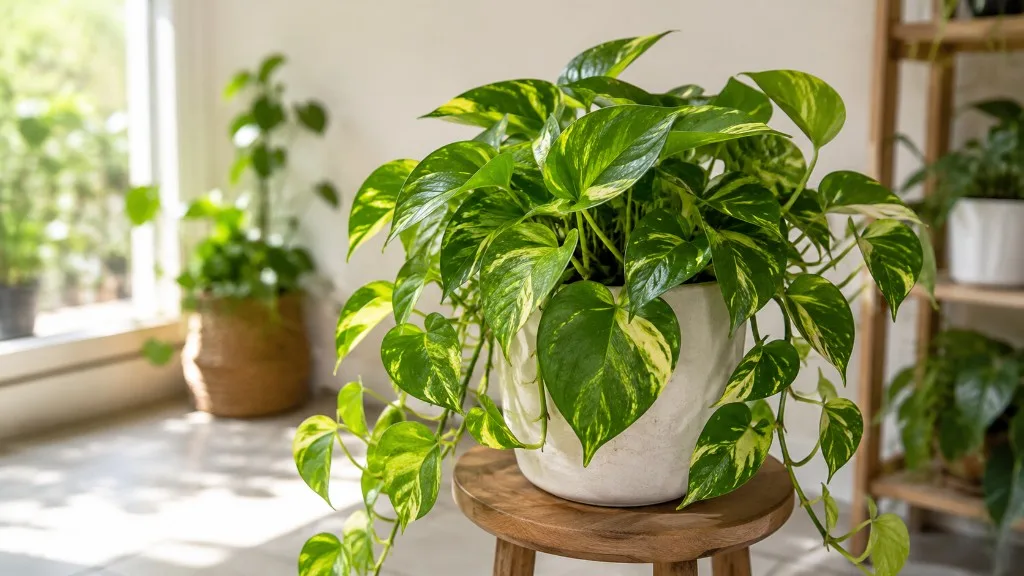
What Pothos Is and Why It Grows Well Indoors
Pothos is the everyday name for Epipremnum aureum, a tropical vining plant in the arum family. You will also see golden pothos, devil’s ivy, and ivy arum on tags. Indoors, pothos trails from shelves, climbs moss poles, or spills from hanging baskets using the same aerial roots it uses on tree trunks in the wild. The pothos care hub on LeafyPixels covers cultivar ID, topic-specific guides, and dozens of symptom pages - this guide gives you the consolidated framework and points you there when you need deeper troubleshooting.
Pothos earns its beginner-friendly reputation because it survives a wide range of home conditions. Survival and good growth are not the same thing. A pothos in a dim corner may stay alive for months while producing smaller leaves, longer gaps between leaves, and weaker variegation. One in bright indirect light, watered after the mix partly dries, and pruned occasionally usually grows faster, looks fuller, and recovers better from mistakes. That distinction is the core of practical pothos care.
Most indoor pothos problems trace to too little usable light, too much water around the roots, or a potting setup that traps moisture. These overlap constantly. Low light slows water use, so soil stays wet longer. Dense mix holds that water at the roots, and a decorative pot without drainage makes everything worse. By the time leaves yellow or blacken, the failure often started below the soil line - which is why reading soil and roots matters more than reacting to leaf color alone. (RHS)
Quick Pothos Care Snapshot
For healthy indoor pothos, place the plant in bright indirect light, water when the upper 1–2 inches of potting mix have dried, use a well-draining pot with drainage holes, and fertilize lightly during active growth. Pothos tolerates lower light, but variegated types often lose contrast when kept too dim. It handles occasional dryness better than constant wet soil - watering by soil condition beats watering by calendar every time. (Penn State Extension)
| Care factor | Baseline target | Deeper guide |
|---|---|---|
| Light | Bright indirect; tolerate low light | Pothos light guide |
| Water | Top 1–2 in dry, then soak and drain | Pothos watering guide |
| Soil | Well-draining indoor mix + perlite | Pothos soil guide |
| Feed | Every other month in active growth | Pothos fertilizer guide |
| Support | Trail or climb on moss pole | Pothos pruning guide |
Check soil before watering, soak the root ball when the plant is ready, and let excess water drain away. A pothos in Bengaluru, Phoenix, London, and Toronto will not dry at the same speed - pot material, root mass, and room conditions all change the interval. Good care is less about memorizing a schedule and more about making the right small decision each time you check the plant.
Light Requirements for Healthy Pothos Growth
Pothos does best in bright indirect light - strong ambient light without harsh direct afternoon sun for long periods. A spot near an east-facing window, a few feet back from a bright south- or west-facing window, or behind a sheer curtain often works well. Penn State Extension recommends bright indirect light for reliable indoor growth, and the Royal Horticultural Society describes Epipremnum as an easy houseplant that thrives across a wide range of conditions when light is adequate. (Penn State Extension) (RHS)
Direct sun is not automatically fatal, but strong afternoon sun can scorch leaves, especially after a plant was kept in lower light. Scorch appears as pale, bleached, or brown patches the plant cannot repair - though new leaves can grow healthy once the plant is moved. Artificial light helps in windowless rooms when intensity and duration are sufficient; a plant across the room from a weak lamp is not receiving the same usable light as one under a proper grow light. For placement troubleshooting, see the pothos light guide and not enough light problem page.
Low Light vs Bright Indirect Light
Pothos is sold as a low-light plant, but that phrase misleads. Low-light tolerant means the plant can survive and continue some growth in dim conditions - not that dim light is ideal. In bright indirect light, pothos grows faster, stays fuller, and maintains stronger variegation. In low light, vines stretch, leaves shrink, and internodes lengthen.
The watering link many people miss: a pothos in low light drinks less because photosynthesis and growth are slower. Watering on the same schedule as a bright-room plant keeps soil wet too long and invites root stress. Weekly watering might suit a root-bound pothos in warm brightness; it is often too frequent for a small plant in a cool bedroom. For most sluggish pothos, better light - not more fertilizer - is the first fix.
Cultivar Light Needs
Variegation changes the light math because white and yellow patches contain less chlorophyll. Clemson HGIC groups the cultivars you see most often:
| Cultivar | Variegation | Low-light tolerance | Best placement |
|---|---|---|---|
| Golden pothos | Yellow-green splashes | Good among variegated types | Medium to bright indirect |
| Jade pothos | Solid green | Best for dim rooms | Low to bright indirect |
| Marble Queen / Snow Queen | Heavy white marbling | Poor in low light | Bright indirect |
| N’Joy / Pearls and Jade | Crisp white patches | Poor in low light | Bright indirect |
| Neon pothos | Chartreuse, little variegation | Moderate; color fades in dim rooms | Medium to bright indirect |
If a variegated pothos reverts toward plain green in a north-facing corner, the plant is responding to insufficient light - not failing as a cultivar. Solid-green jade pothos or golden pothos are smarter picks for genuinely dim rooms.
Philodendron vs Pothos: Quick ID
The most common mix-up is with Philodendron hederaceum (heartleaf philodendron). Both trail with heart-shaped juvenile leaves. NC State Extension notes pothos lacks the conspicuous free stipules philodendrons show on new growth, and pothos petioles are grooved where they clasp the stem. Scindapsus pictus (satin pothos) is a different genus with matte, silvery-spotted leaves - similar care, different plant. When in doubt, check the pothos overview cultivar and ID section before buying another “pothos” that behaves differently.
How to Water Pothos Correctly
Water pothos when the potting mix has partly dried, then water thoroughly and let excess drain away. South Dakota State University Extension recommends watering thoroughly, letting soil dry between waterings, and avoiding continuously damp soil because it promotes root rot. (SDSU Extension)
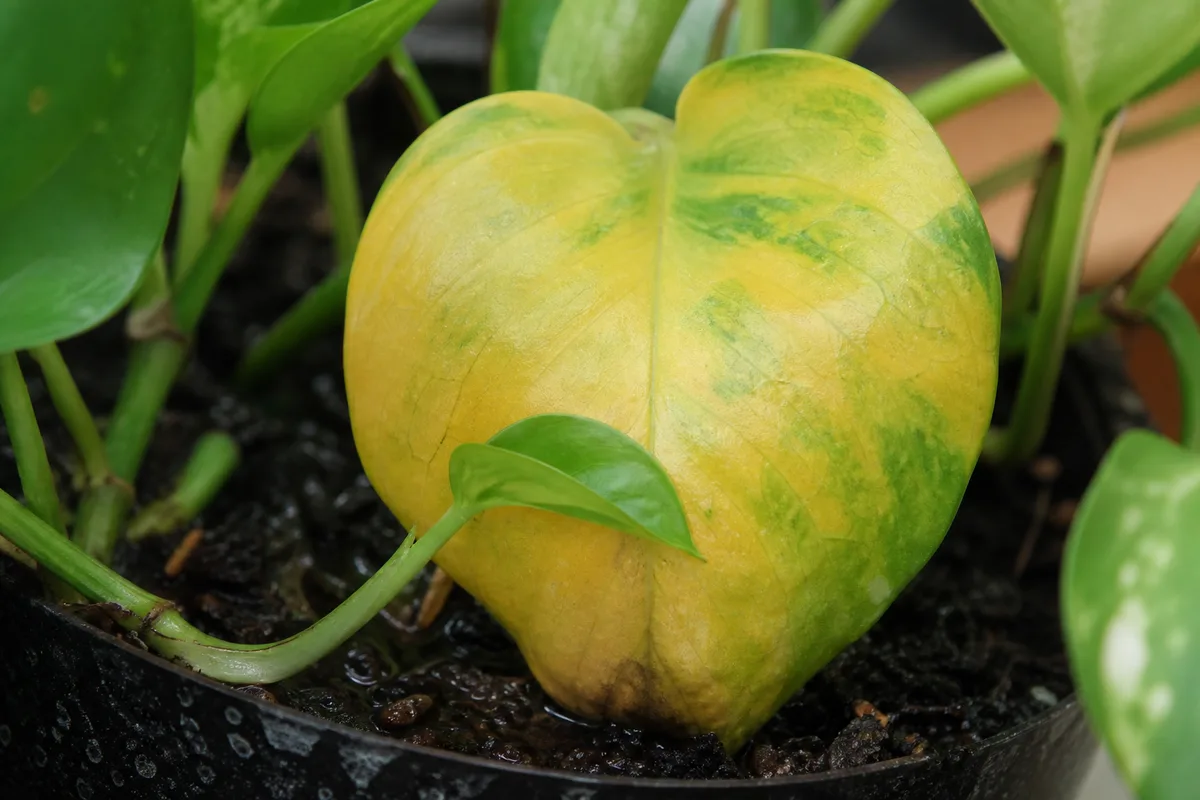
The safest method is to check soil before every watering. Push a finger into the top inch or two, or lift the pot and learn how it feels light versus heavy. In deeper pots, the surface may dry while the lower root zone stays wet - weight and drainage matter more than the top layer alone. When you water, moisten the root ball evenly; a quick splash often runs down dry soil sides and leaves the center hydrophobic.
The biggest mistake is a fixed schedule without considering pot size, light, temperature, humidity, and season. Missouri Botanical Garden recommends keeping soil consistently moist during active growth but reducing watering from fall to late winter - plant water use changes with conditions. (Missouri Botanical Garden) Full watering logic, saucer habits, and seasonal shifts live on the pothos watering guide and in the general how to water indoor plants guide.
Signs Your Pothos Is Overwatered or Underwatered
An overwatered pothos often shows yellowing leaves, dark spots, soft stems near the soil, a sour smell, fungus gnats, or soil that stays wet for many days. Roots may look brown, mushy, and break apart easily. Leaves may wilt even though soil is wet because damaged roots cannot move water - and watering again makes the problem worse. See pothos overwatering and root rot for step-by-step rescue.
An underwatered pothos usually has limp leaves, curling foliage, crispy brown edges, and dry soil pulling from the pot walls. A thirsty pothos often perks up within hours after a thorough drink if roots are still healthy. The diagnostic split: wilted leaves with bone-dry soil suggest thirst; wilted leaves with wet soil suggest root stress. Check soil and roots before acting - guessing from leaf color alone turns small problems into big ones.
If you suspect root rot, remove the plant, trim mushy roots with clean tools, discard sour mix, and repot into fresh airy mix with drainage. Do not fertilize immediately after heavy root loss; take healthy cuttings above damaged tissue as insurance. (Gardening Know How)
Best Soil, Pot, and Drainage Setup
Pothos needs a mix that holds some moisture but still lets air reach the roots. Standard indoor potting mix works when amended with perlite, orchid bark, coco chips, or pumice for better drainage. Wisconsin Horticulture Extension recommends a well-aerated medium and watering when the soil surface is dry. (Wisconsin Horticulture)
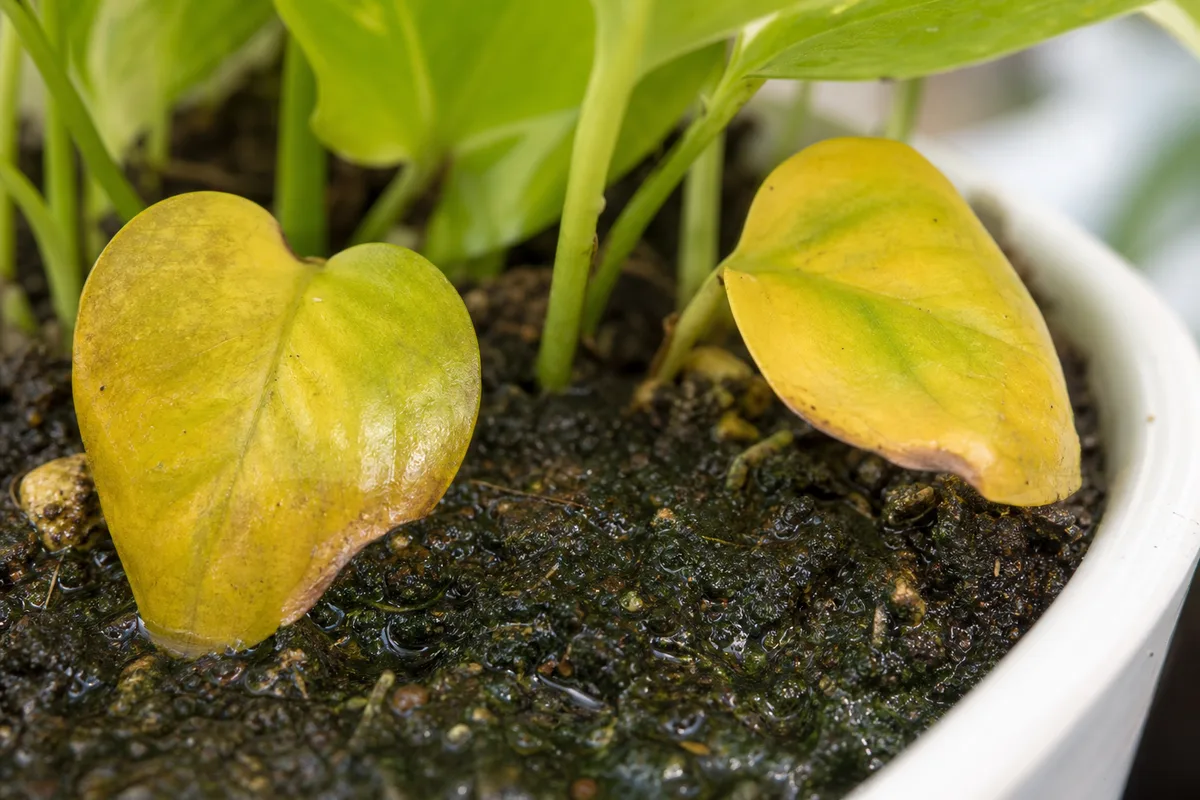
Drainage holes matter. A decorative cachepot without drainage traps water at the bottom where roots suffocate. Keep the plant in a nursery pot with holes inside the decorative outer pot, and empty standing water after watering. Pot size is another overlooked factor: a pot too large holds more wet mix than current roots can use, increasing rot risk especially in low light. Move up only one modest size unless the plant is severely root-bound.
Terracotta dries faster and helps heavy-handed waterers; plastic holds moisture longer and suits bright rooms or forgetful underwaterers. The right choice keeps roots evenly moist after watering but never trapped in soggy conditions for days. Mix recipes and amendment ratios are expanded on the pothos soil guide and poor drainage problem page.
When and How to Repot Pothos
Repot when roots circle tightly, emerge through drainage holes, or the plant dries out unusually fast after watering. Slowed growth alone does not always mean repotting is needed - low light, cold, or low nutrients also slow vines. Slide the root ball out and inspect before upsizing.
Choose a container with drainage and fresh mix. Water a day or two before repotting if the root ball is very dry. Loosen circling roots, remove dead material, and set the plant at the same depth as before. After repotting, water thoroughly and let the plant settle in bright indirect light. Some drooping is normal while roots adjust; wait for fresh growth before resuming fertilizer. Step-by-step timing and mix swaps are on the pothos repotting guide.
Temperature and Humidity Needs
Pothos prefers typical warm indoor temperatures and should be protected from cold stress. Clemson HGIC lists comfortable indoor growth around 65–85°F (18–29°C) during the day, with nights roughly 60–70°F, and warns that exposure below about 50°F (10°C) can damage leaves. (Clemson HGIC) Avoid placement beside AC vents, heaters, drafty doors, or cold winter glass.
Humidity helps pothos look its best but does not require greenhouse conditions. NC State Extension suggests increasing humidity with a humidifier or pebble tray when needed. (NC State Extension) Low humidity can contribute to crispy tips, especially with underwatering or heat stress, but light, watering, and drainage usually matter more. For dry-air troubleshooting, see the houseplant humidity guide and low humidity problem page.
Warmth plus humidity plus climbing support can encourage larger leaves. Humidity alone will not rescue a neglected plant - it works best as part of a stronger overall environment.
Fertilizer for Pothos
Pothos is not a heavy feeder, but light fertilizer during active growth supports fuller vines. NC State Extension recommends fertilizing every other month except during winter dormancy; Wisconsin Horticulture gives similar guidance. (NC State Extension) A balanced liquid houseplant fertilizer diluted to half label strength is usually enough.
Feed when the plant is actively producing new leaves - typically spring through early fall in most homes, though plants under strong grow lights may grow year-round. Fertilizing a resting or stressed plant can cause salt buildup and root irritation. Do not use fertilizer to solve root rot, sunburn, or pest damage; remove the stress first, then feed lightly once new growth appears. Details on strength, flush routines, and salt crust are on the pothos fertilizer guide.
Pruning and Shaping Pothos
Pruning redirects growth, removes weak vines, controls size, and can make pothos look fuller. Missouri Botanical Garden notes stems can be pinched to shape the plant and that pothos roots easily from cuttings. (Missouri Botanical Garden) Cut just above a node - the joint where leaf and aerial root emerge - because new growth often starts from nodes below the cut.
To build fullness, combine pruning with propagation: root cuttings and plant them back into the mother pot once established. Rotate the pot every week or two so growth stays balanced instead of leaning toward the light. Do not strip a weak plant aggressively unless you are reducing stress after root damage. Technique and timing are expanded on the pothos pruning guide.
Trailing vs Climbing Pothos
A trailing pothos looks relaxed on shelves, bookcases, and hanging planters. It is easy to maintain - trim long vines and root the cuttings - but trailing stems may look sparse near the pot if light is weak or the plant is never pruned.
A climbing pothos grows more upright and can produce larger, more mature-looking leaves when conditions are good. Moss poles, coir poles, and trellises mimic the tree trunks Epipremnum grips in nature. Climbing also keeps vines out of walkways, pets, and furniture.
Neither style is universally better. Choose trailing for easy shelf decor; choose climbing for vertical impact and larger foliage. You can combine both - some vines on a pole, others cascading. Health depends on light, watering, and roots more than display style.
If you switch a mature trailing plant to a pole, guide vines gently with soft ties. Do not force old woody sections to bend sharply; newer growth adapts more easily. A DIY moss pole works well for pothos when sized to the pot.
Propagation Belongs on the Hub
Pothos is one of the easiest houseplants to propagate because healthy nodes can produce roots and new shoots (Clemson HGIC). This guide does not repeat the full rooting workflow. Use the dedicated pothos propagation guide for water versus soil methods, node-cutting steps, and water-to-soil timing.
For care context, the practical takeaway is simple: use healthy vines, keep the parent plant in decent light, and prune leggy stems when you want a fuller pot. If the vine is weak, rotting, or badly underlit, fix the care issue first and propagate later.
Common Pothos Problems and Fixes
Most pothos problems are fixable when you diagnose the cause instead of treating every symptom the same way. Yellow leaves, brown tips, curling foliage, black spots, and leggy vines tell different stories depending on soil moisture, light, roots, temperature, and pests. A single old yellow leaf near the base is often normal aging; several yellow leaves at once with wet soil is more concerning.
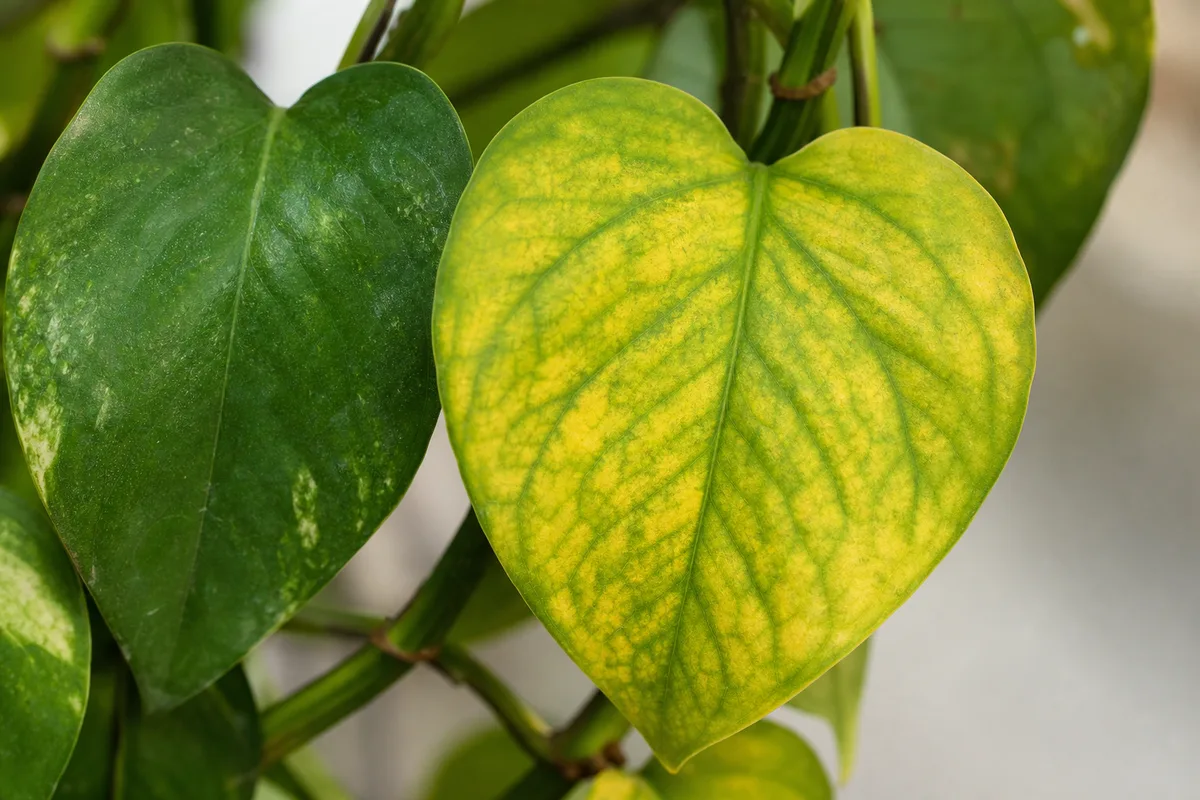
Root rot is among the most serious issues because it damages the support system for everything above ground. Wet, poorly aerated soil deprives roots of oxygen and favors rot organisms. (Gardening Know How) Pests - mealybugs, scale, spider mites, fungus gnats - appear more often on stressed plants. Check leaf undersides, nodes, and stem joints.
Some symptoms are harmless. Brown papery lines on stems or petioles can be normal maturation rather than disease when tissue is dry and firm and the plant is otherwise healthy. Texture matters: dry firm markings differ from soft rot, especially when the plant otherwise shows steady growth and healthy leaves.
When symptoms appear, start with the pothos care hub problem index rather than guessing. High-traffic fixes include yellow leaves, leggy growth, brown tips, curling leaves, and drooping leaves.
Yellow, Brown, Curling, or Leggy Leaves
Yellow leaves usually point to watering stress - especially overwatering. Wet soil with several yellow leaves warrants root inspection and better drainage. Very dry soil with perk-up after watering suggests underwatering. One older lower yellow leaf may simply be natural turnover.
Brown tips and crispy edges often follow dryness, inconsistent watering, low humidity, fertilizer buildup, or mineral stress. Damaged tips will not green again, but new leaves should improve once the stress is corrected. See brown tips for the full decision path.
Curling leaves often mean the plant is conserving moisture or reacting to stress from dry soil, root damage, heat, cold drafts, or pests. Check soil first, then roots and foliage.
Leggy vines usually mean the plant is stretching for light or growing long without pruning. Move to brighter indirect light, trim bare vines, root cuttings into the pot, and read leggy growth if the problem persists. Fertilizer alone will not fix legginess when light is inadequate.
Pothos Safety, Pets, and Air Quality Claims
Pothos is easy to love and easy to grow, but it is not a plant to let pets chew. The ASPCA lists golden pothos (Epipremnum aureum) as toxic to cats and dogs because it contains insoluble calcium oxalates. Signs include oral irritation, burning of the mouth, tongue, and lips, excessive drooling, vomiting, and difficulty swallowing. (ASPCA)
Placement matters as much as purchase. Trailing vines grow downward into reach over time, so check height regularly. Pothos sap can irritate sensitive skin - gloves help during heavy pruning. If a pet bites or eats pothos and shows symptoms, call ASPCA Animal Poison Control at (888) 426-4435 (fee may apply) and contact your veterinarian promptly.
Pothos Toxicity and Indoor Air Myths
Pothos is often marketed as a natural air cleaner, but evidence in real homes is more limited than marketing suggests. NASA’s 1989 interior landscape plant study examined pollutant reduction in controlled sealed chambers - conditions unlike a typical ventilated home with ongoing pollutant sources. (NASA Technical Reports Server) Iowa State University Extension explains houseplants have little measurable effect on air quality in homes and offices because real buildings exchange air continuously. (Iowa State Extension) The American Lung Association advises not relying on pothos or similar plants to clean indoor air and recommends proven ventilation and source-control methods instead. (Lung Association)
Grow pothos for greenery, resilience, and the satisfaction of caring for a living plant - not as a substitute for ventilation or a proper air purifier. Plants can make rooms feel calmer and teach observation; those benefits are real even when air-purifying claims are overstated for normal homes.
Related Guides
- How to propagate pothos - full water and soil propagation walkthrough
- How to water indoor plants the right way - soil-check habits that prevent overwatering
- Houseplant humidity guide - when dry air limits growth
- DIY moss pole - build support for climbing pothos
- Snake plant care - alternative for lower-light, lower-maintenance rooms
Conclusion
Good pothos care comes down to bright indirect light when possible, watering only after the mix partly dries, drainage that lets roots breathe, and pruning or propagating when vines go thin. Read the plant like a living system - leaves show light, soil shows water need, roots show pot health - and link out to the pothos hub when a symptom needs its own page rather than a guess from leaf color alone.