What Is a Pebble Tray? Definition, Setup, and Limits
Learn what a pebble tray is, how it works, what it can and cannot do, and which houseplants are reasonable candidates.
What a Pebble Tray Is
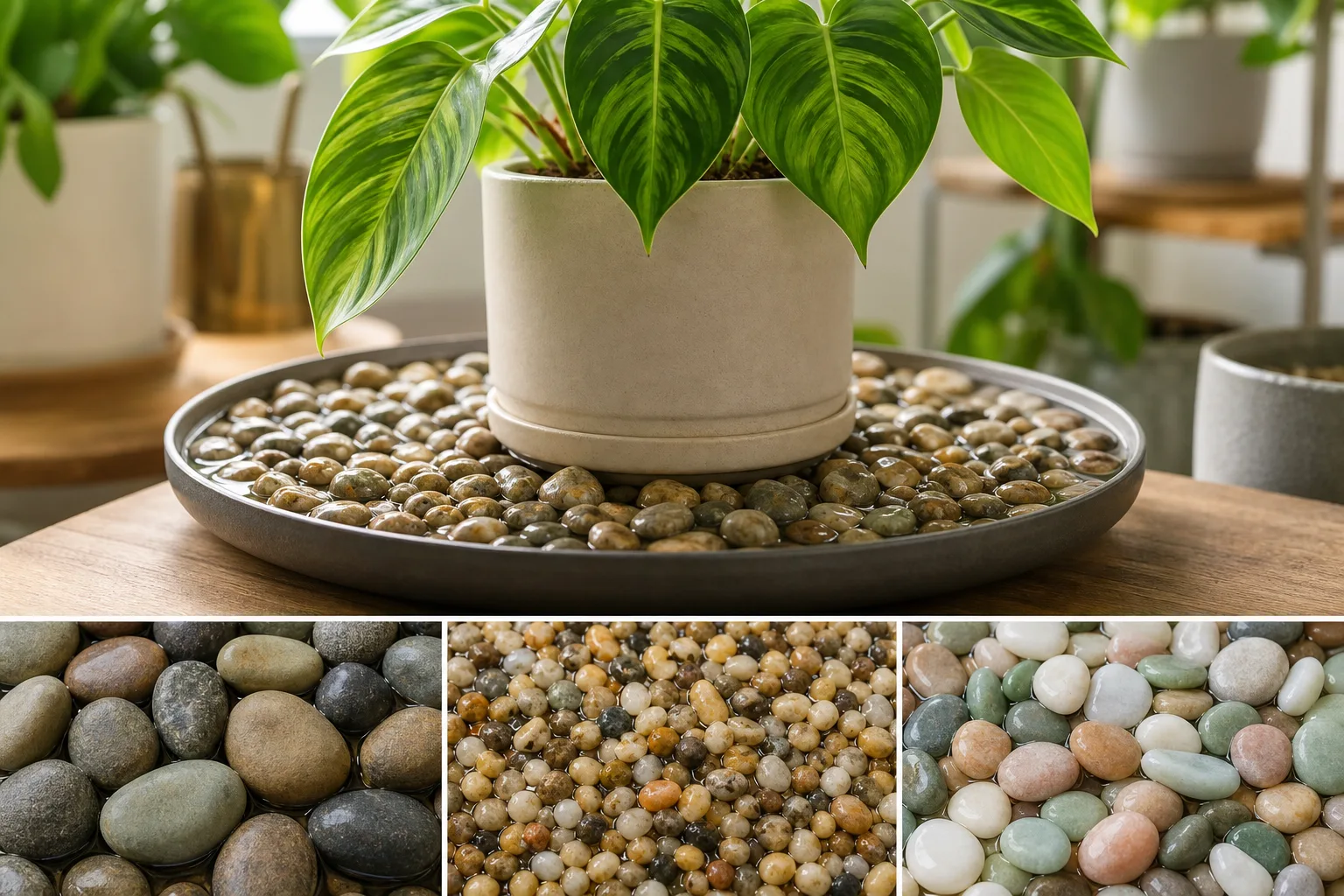
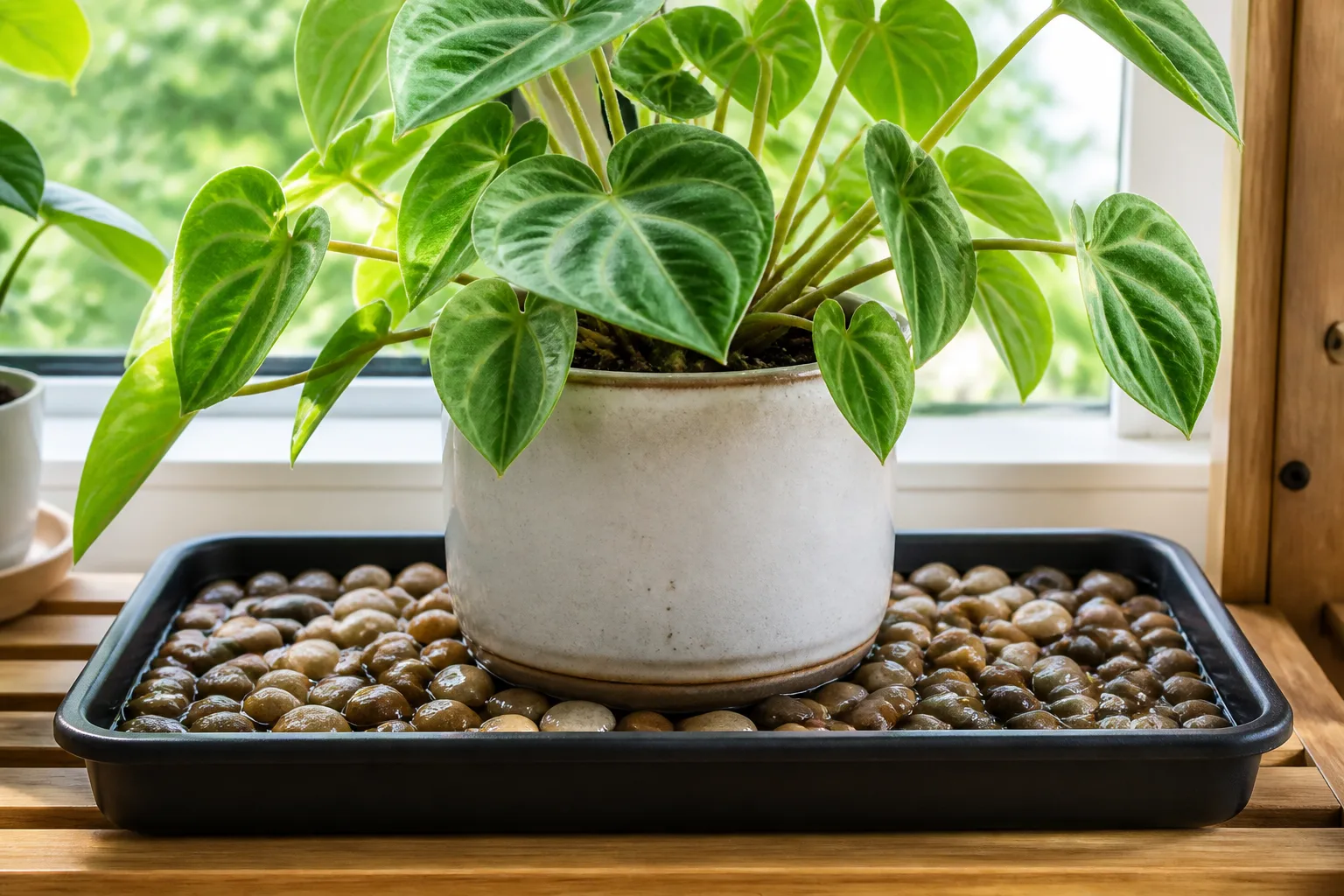
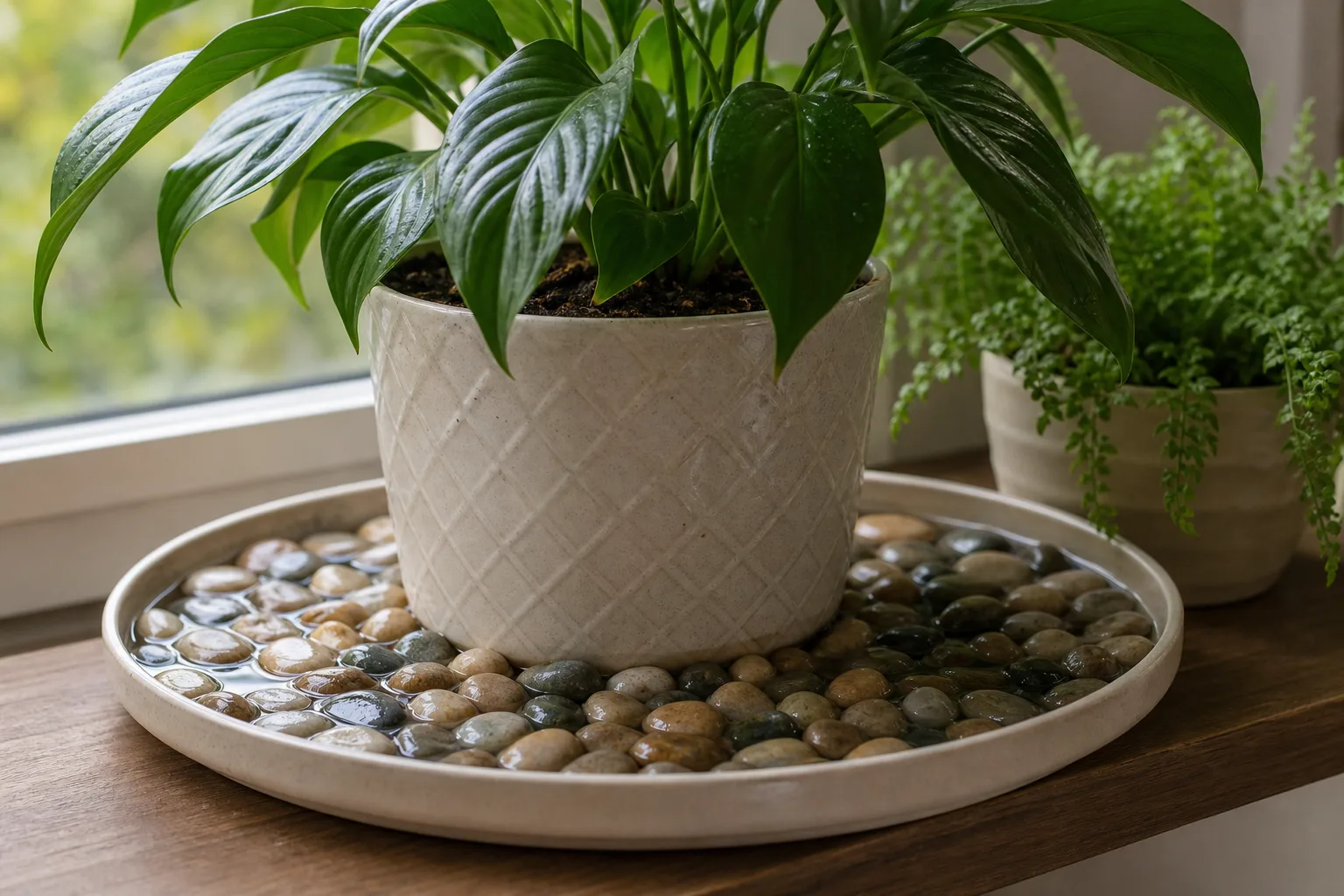
A pebble tray is a shallow waterproof tray that holds a layer of stones plus a small amount of water, with the plant pot resting on top of the stones above the waterline. The tray is not supposed to water the plant directly. Its job is to expose water to the air so some of it evaporates near the pot while the stones keep roots out of standing water.
Missouri Botanical Garden and University of Illinois Extension describe the same basic arrangement: gravel or pebbles in a tray, water below the pebble tops, and the pot resting on the stones rather than in the water.
That definition matters because many people use the term loosely. A saucer full of water with the pot sitting directly in it is not a correct pebble tray. That is standing water around roots.
What a Pebble Tray Is Not
This is where most confusion starts. A pebble tray is not:
- a watering method
- a drainage substitute for pots without holes
- a room humidifier
- a cure for every brown leaf tip
University of New Hampshire Extension treats trays as one modest humidity option among stronger whole-room tools. That is the right expectation. A tray is local, passive, and limited.
How It Works
The mechanism is just evaporation. Water exposed between the stones becomes water vapor in the air above the tray. That can create a slightly less dry pocket of air close to the plant, especially if:
- the tray is wide enough to expose real water surface
- the foliage sits fairly close to the tray
- room airflow is not stripping the moisture away immediately
Missouri Botanical Garden describes this as increasing relative humidity around plants. The important limit is scale: “around plants” does not mean “across the room.”
Why the Pebbles Matter
The pebbles do two jobs:
- they elevate the pot above the water
- they create spaces where water can evaporate
Without that separation, the reservoir becomes continuous bottom watering. Nebraska Extension is explicit that the water should stay below the base of the container.
The exact material is less important than the function. Washed gravel, river pebbles, or other stable inert materials can work as long as the pot remains above the waterline and the setup stays stable.
The Waterline Rule
If you remember one rule, remember this one:
the pot base and drainage holes stay above the waterline.
That is what separates a humidity aid from a root-rot trap. If water touches the pot bottom or drainage holes, the mix can wick upward and stay wet longer than intended. University of Illinois Extension and Iowa State Extension both warn against letting the pot sit in the water.
What a Pebble Tray Can Realistically Do
A pebble tray can provide a small local humidity assist. It is most plausible for:
- compact plants
- low-growing plants
- humidity-sensitive tropicals
- shelves or windowsills with relatively calm air
University of New Hampshire Extension presents trays as a mild helper rather than a full solution. That is the honest framing. If your room is extremely dry, a tray may help a little without solving the whole problem.
What It Usually Cannot Do
A pebble tray usually cannot:
- raise humidity meaningfully across a whole room
- rescue a tall floor plant whose leaves sit far above the tray
- correct root problems caused by poor drainage
- fix leaf damage caused by salts, pests, or underwatering
If the room is severely dry or the plant is large, a humidifier, better placement, or broader care correction will usually matter more.
Which Plants Are Reasonable Candidates
The best candidates are small humidity-aware tropicals, not every plant sold indoors. Good candidates can include:
- compact ferns
- fittonias
- prayer plants
- calatheas
- some orchids
Missouri Botanical Garden notes that some indoor ferns and orchids dislike low humidity, while cacti and succulents usually tolerate much drier home air.
Poor candidates often include:
- cacti
- many succulents
- ZZ plants in already acceptable conditions
- snake plants in already acceptable conditions
The tray should match the plant and the measured room, not just the word “tropical” on a plant tag.
When a Tray Is Worth Trying
Try a tray when all of these are true:
- the plant is reasonably close to the evaporation zone
- the room runs somewhat dry
- watering and drainage are already sound
- you want a low-cost local experiment before escalating
That is a good use case. It is also a narrow one.
When to Skip It
Skip the tray when:
- the pot would be unstable
- the room is already humid enough
- the plant is drought-adapted
- the problem is clearly wet roots, salts, or pests
- the whole room is so dry that only a room-scale solution will matter
The tray is optional even for many tropicals. It is a tool, not a requirement.
Cleaning and Moisture Safety
Because a tray holds open water, it needs occasional maintenance. Dust, algae, mineral crust, and grime build up faster than many people expect. EPA moisture guidance is a reminder that indoor moisture should stay controlled and clean, not stagnant and ignored.
Practical rule:
- refill as needed
- rinse when buildup appears
- deep-clean if you see slime, algae, or residue
If the tray becomes gross, it stops being a clean plant aid and starts becoming one more indoor moisture problem.
Where to Go Next
Use the next page based on your actual question:
- Do pebble trays really increase humidity for houseplants? if you want the evidence and measured limits
- How to make a DIY pebble tray for indoor plants if you want the practical build steps
- How pebble trays fit into a plant care routine if you want to decide when to use one versus skip it
This page is the definition, not the full cluster.
Conclusion
A pebble tray is a shallow tray of stones and water that keeps the pot above the reservoir while allowing water to evaporate nearby. It is a local humidity tool, not a room humidifier, not a watering shortcut, and not a drainage workaround for bad pots.
That makes it useful in the right narrow situations and disappointing in the wrong ones. If you understand the geometry and the limits, you can decide quickly whether it deserves a place in your setup.