How to Help a Monstera Thrive Indoors: 5 Care Levers That Matter
Improve Monstera growth with five core care levers: light, water, soil, support and seasonal adjustments.
What “Thriving” Means on a Monstera
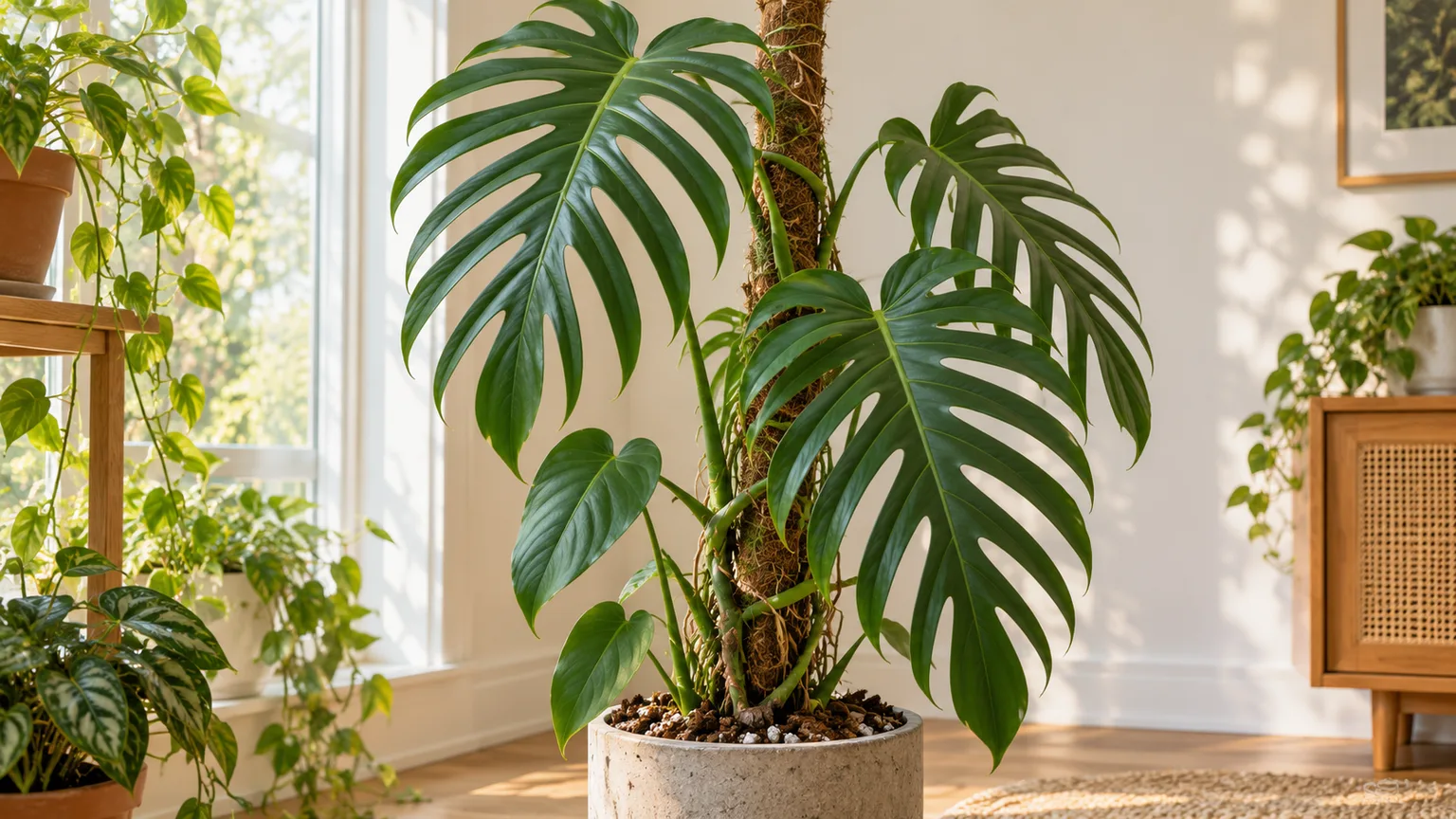
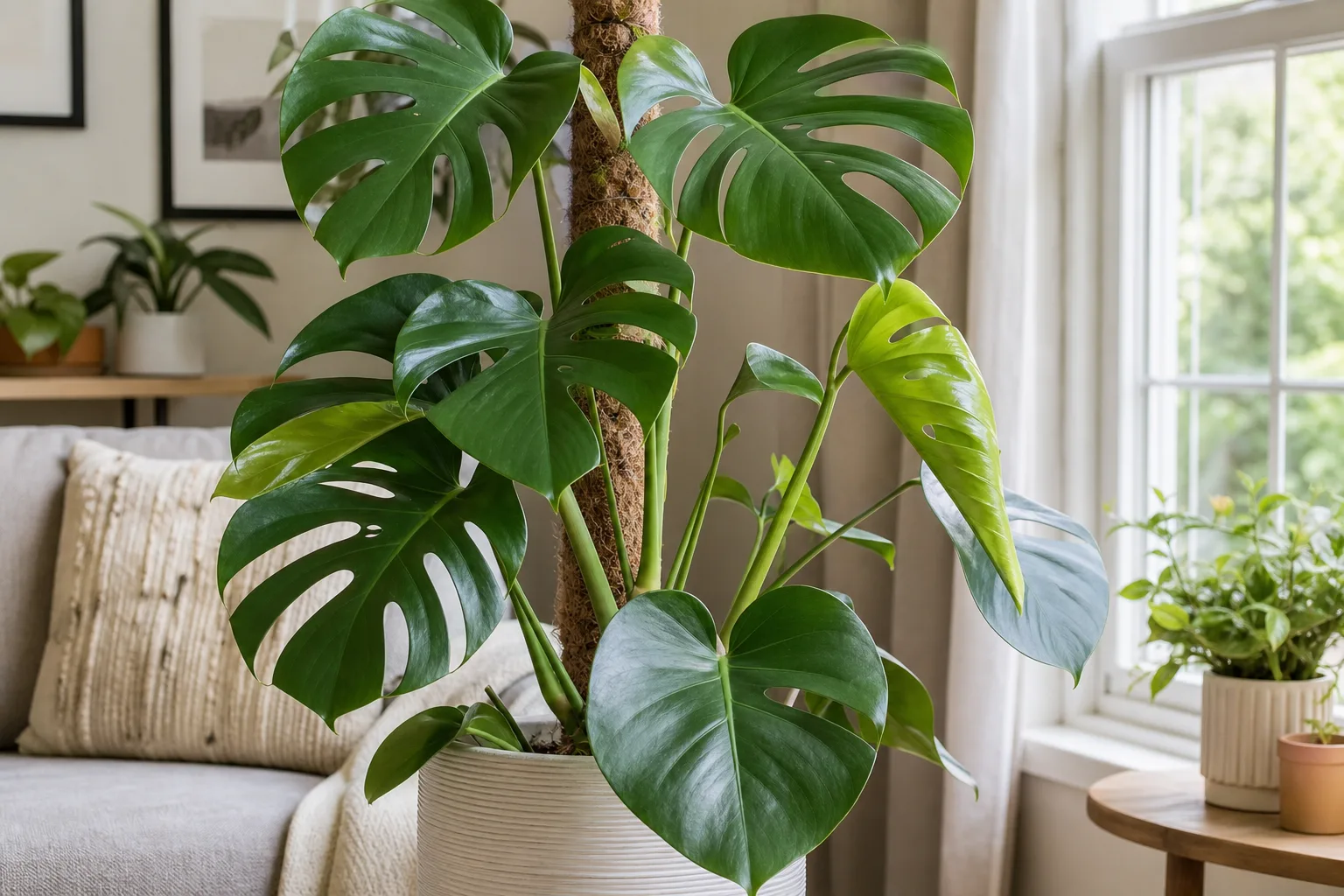
A Monstera can survive for a long time without thriving. Survival looks like slow green persistence. Thriving looks like stronger stems, cleaner unfurling, larger new leaves, better fenestration over time, and a plant that grows with confidence instead of merely hanging on.
This page is for growers who already know the basics and want to improve outcomes. It is not the beginner onboarding page and it is not the one-page checklist. The question here is narrower: what actually changes a Monstera from acceptable to impressive indoors?
The Five Levers That Change Growth Quality
The highest-value way to think about Monstera performance is through five levers:
- light
- watering rhythm
- support
- root-zone structure
- feeding
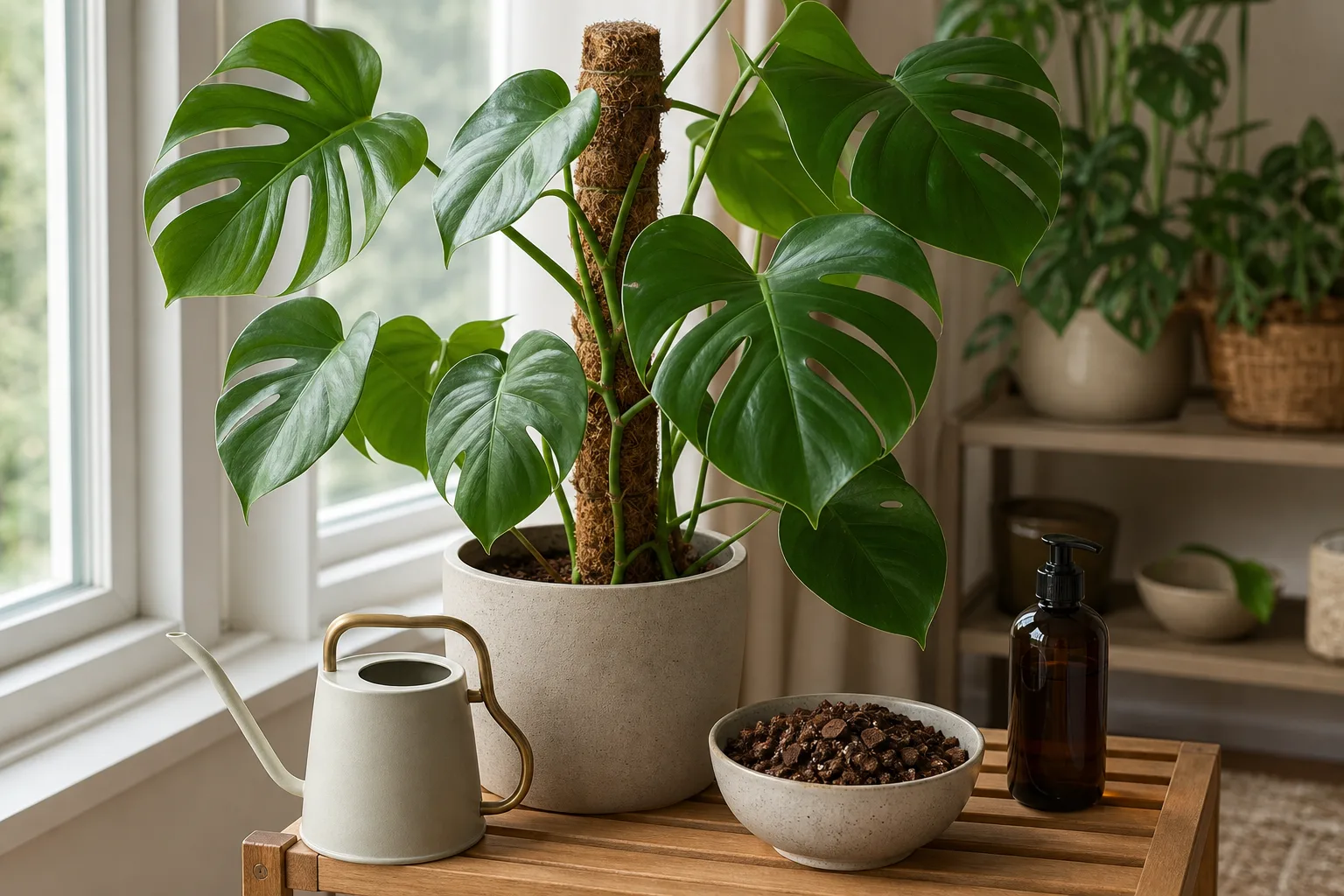
You do not need perfect conditions in every category. You do need to stop one bad lever from cancelling the rest. A plant in low light cannot use fertilizer well. A plant in stale wet soil cannot benefit fully from good humidity. A plant with no support often stalls at a smaller, flatter habit even when the room is otherwise decent.
Lever 1: Light Sets the Ceiling
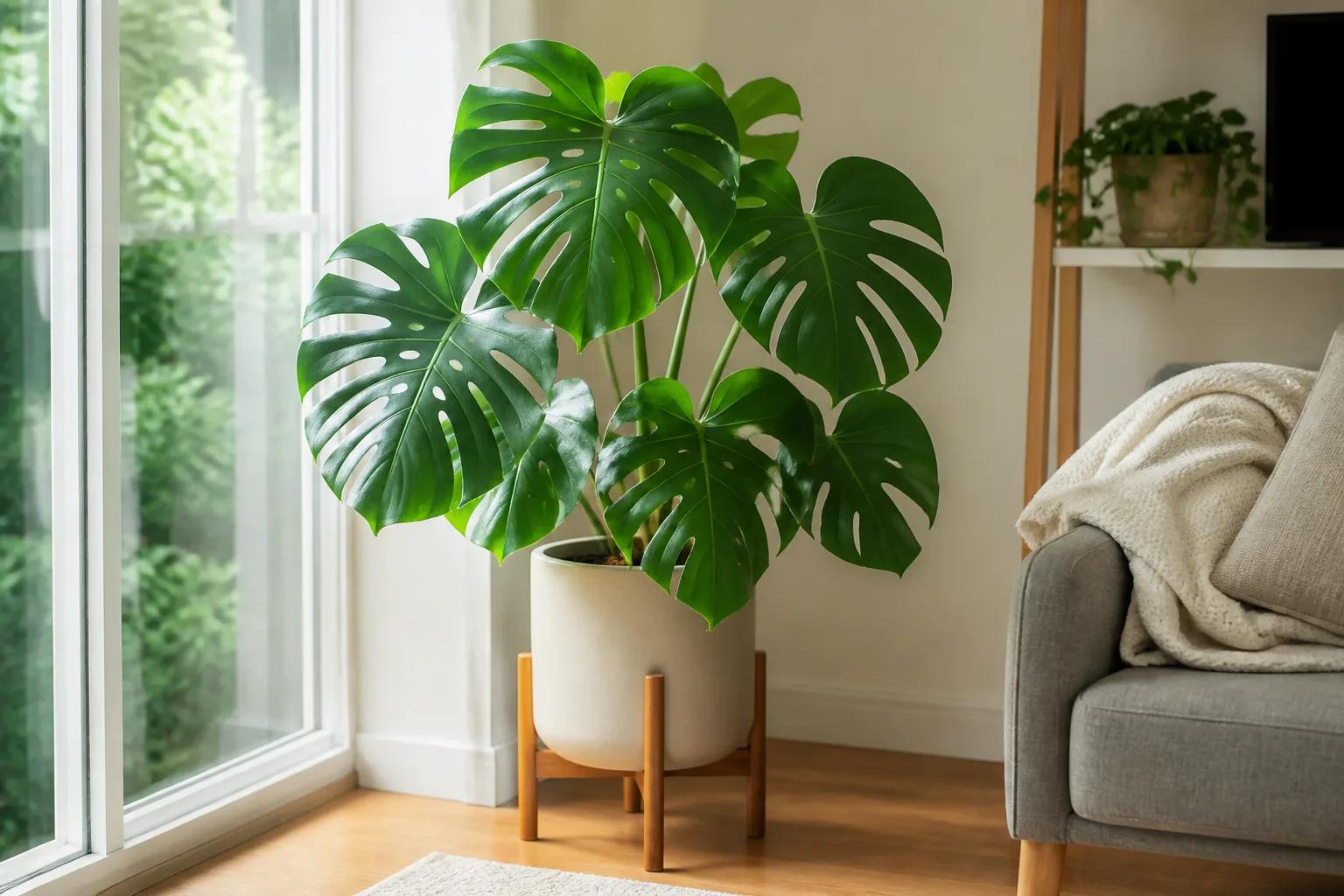
If you fix only one thing, fix light. Penn State Extension and RHS both place Monstera in bright indoor conditions without prolonged harsh direct sun.
Why light changes everything:
- larger leaves require more energy
- tighter growth usually reflects stronger usable light
- better light makes watering easier to read because growth is active
- fenestration improves more reliably when the plant is not energy-limited
The practical test is not whether the room “has a window.” It is whether new leaves are holding or increasing size over time. If the plant stays green but keeps downsizing new leaves, the light is likely the real bottleneck.
Lever 2: Watering Has to Match the Room, Not the Routine
UConn Home and Garden and other extension sources stress letting a meaningful portion of the mix dry before watering again. Thriving growth comes from repeatable wet-to-drier cycles, not from random drought and rescue or from chronic dampness.
The useful distinction:
- survival watering keeps the plant from collapsing
- growth watering keeps roots oxygenated and active enough to support bigger leaves
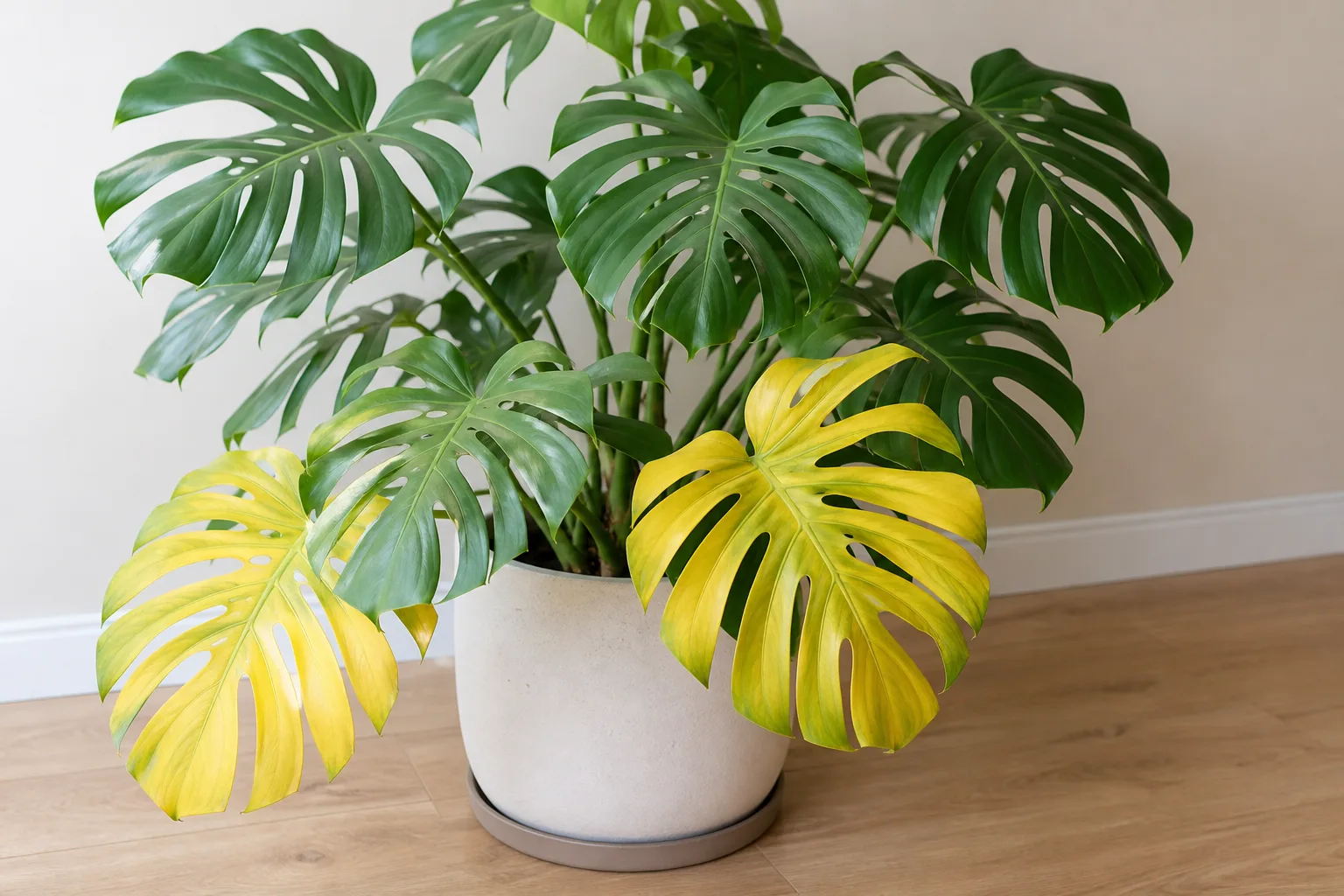
Monsteras hate staying stagnant more than they hate a short wait for the next soak. If the mix stays wet too long, the plant often shows “soft stress”: yellowing, limp growth, slower new leaves, and a root zone that never feels fresh.
Lever 3: Support Changes Habit, Not Just Appearance
NC State Extension describes Monstera deliciosa as a climbing vine with aerial roots. That is not decorative trivia. It is a growth instruction.
Support matters because:
- the plant distributes growth differently when it can climb
- aerial roots have something useful to do
- stems are easier to keep stable
- mature-looking leaves are easier to sustain on an upright frame
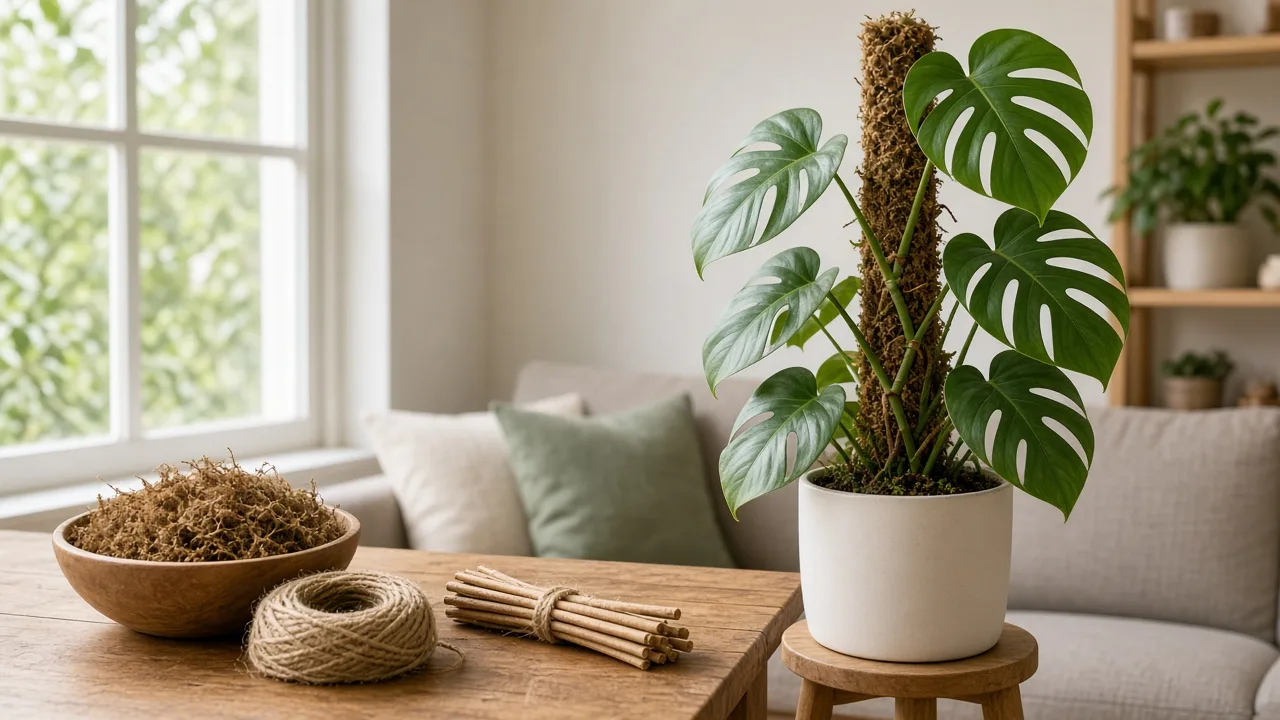
A trailing Monstera can stay alive. A climbing Monstera is usually better positioned to build larger foliage over time. Support does not replace light, but it often makes good light pay off more effectively.
Lever 4: The Root Zone Has to Stay Airy
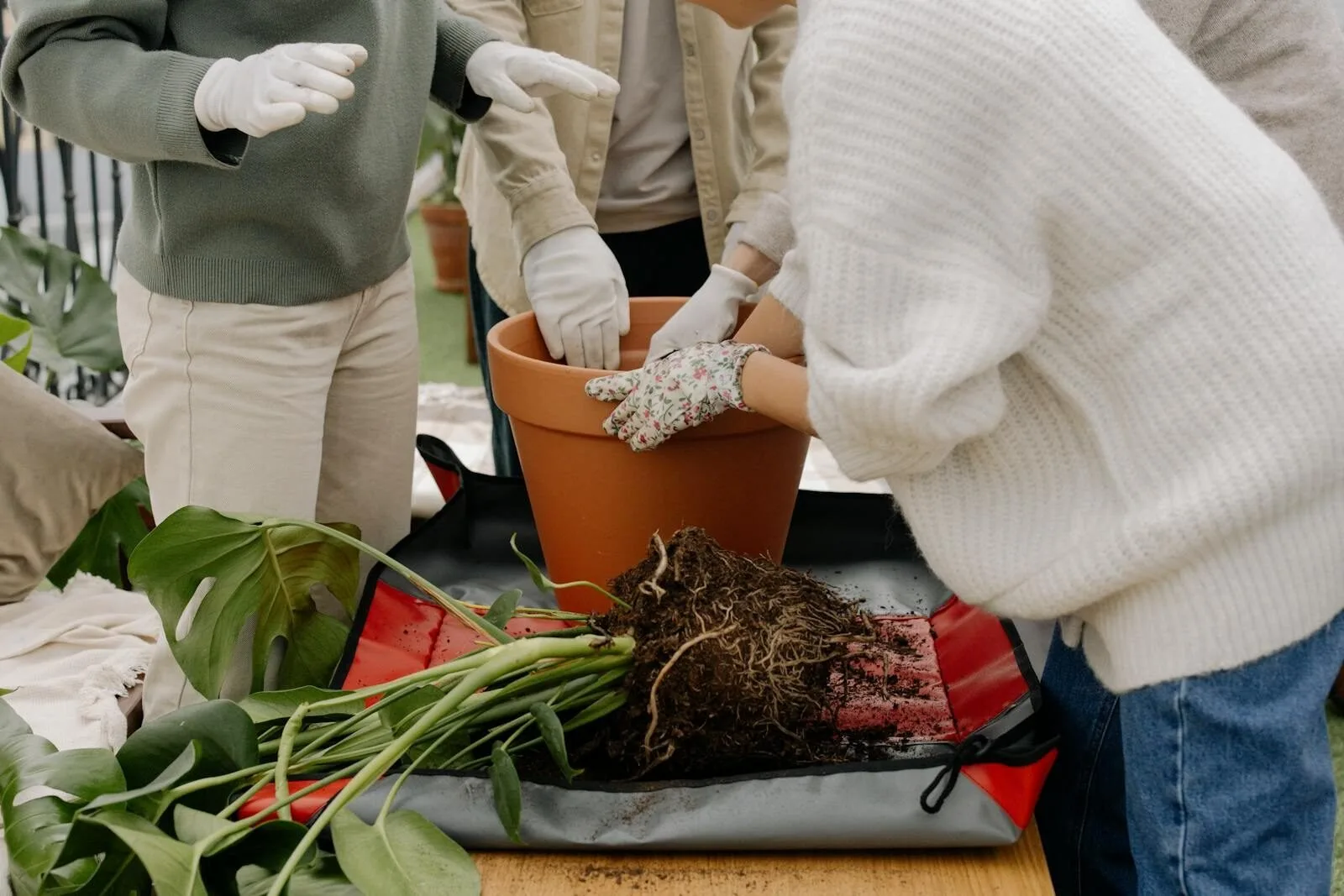
Thriving leaves come from healthy roots. That sounds obvious, but many indoor Monsteras are asked to produce mature foliage from a root zone that is too dense, too wet, too compacted, or too oversized for the plant.
The root-zone goal is simple:
- moisture retention without swampiness
- enough coarse structure to keep oxygen moving
- a pot size that matches the root mass
Wisconsin Horticulture and RHS both support free-draining media for this species. If you want larger leaves, start by asking whether the roots can actually support them.
Lever 5: Feeding Supports Growth, It Does Not Force It
Fertilizer matters, but it is the last of the five levers for a reason. It helps most when the plant already has enough light and a functioning root system.
RHS recommends balanced feeding during the growing season. That works because the plant is actively using resources then. It does not mean heavy feeding creates giant leaves in a dim room.
The fastest mistake here is trying to feed your way out of a structural problem. More nutrients on weak roots or weak light usually create salt stress faster than better growth.
Juvenile Versus Mature Growth: Why Some Plants Stay Small-Looking
Juvenile Monsteras make smaller solid leaves. Mature Monsteras make larger, more complex leaves. That transition is partly time, but not only time.
Plants often stay stuck in a juvenile-looking pattern because:
- light is too weak
- support is missing
- the root zone is not strong enough
- growth has stalled through repeated stress
RHS notes that holes usually appear only after plants mature. The practical takeaway is to support the conditions that allow maturity instead of expecting cosmetic shortcuts to simulate it.
Fenestrations: The Real Drivers
Fenestration attracts a lot of bad advice. A peer-reviewed paper on Monstera fenestration in PubMed discusses the evolutionary question, but for growers the useful answer is more practical than theoretical.
The strongest indoor drivers are:
- age and size of the vine
- bright usable light
- healthy root function
- stable support
If one of those is missing, the plant may stay mostly whole-leaved for longer than owners expect. Fertilizer alone does not solve that.
What a Thriving Monstera Usually Looks Like
Use this as a reality check:
- new leaves are not steadily shrinking
- stems are not stretching into long empty gaps
- the vine is supported instead of collapsing outward
- aerial roots are manageable, not a sign of chaos
- the pot dries at a readable pace
- the latest leaf unfurls without chronic sticking, tearing, or collapse
No plant is perfect. Thriving means the overall direction of growth is strong, not that every leaf is spotless.
Common Reasons a Monstera Survives but Never Improves
It Lives in Medium Light That Is Really Too Low
This is the classic “looks okay from across the room” trap. The plant survives, but every new leaf says it wants more.
The Pot Never Really Dries
Constant moisture suppresses root performance and keeps the plant in defensive mode.
It Has No Vertical Plan
Without support, the plant sprawls, tips, and often fails to build the structure owners want.
Feeding Is Doing Work That Light Should Be Doing
Nutrients cannot substitute for photons. If the plant is stalled, improve light before increasing feed.
Humidity: Supporting Lever, Not Master Lever
Monsteras appreciate moderate humidity, but humidity usually improves results only after the first three levers are already decent. Brown edges in a dry heated room can absolutely be real humidity stress, but humidity is rarely the only thing separating a surviving Monstera from a thriving one.
Useful rule:
- if the plant has good light, good watering, and healthy roots but still develops chronic dry-edge stress, review humidity
- if the pot is dense and wet or the room is dim, fix those first
Humidity can polish a working setup. It rarely rescues a broken one.
Bigger Leaves Need a Bigger System
Owners often focus on single variables: more fertilizer, a new pot, a moss pole, a brighter window. Thriving growth usually comes from the system becoming coherent all at once.
Bigger leaves are more likely when:
- the vine can climb
- the roots can breathe
- the plant gets enough energy to justify the investment
- watering supports active roots without suffocation
That is why some big-box Monsteras decline into smaller foliage after purchase. The room changed, and the growth system no longer supports the plant’s previous size.
The Best Sequence for Upgrading a Surviving Plant
If your Monstera is alive but underperforming, change things in this order:
- improve light
- correct watering rhythm
- check support
- inspect the mix and pot size
- adjust humidity if it still looks relevant
- feed during active growth only after the first five are sound
That order keeps you from solving a symptom while preserving the cause.
When to Use Narrower Guides Instead
This page is about growth quality. Open a narrower guide when the question becomes specific:
- Watering Monstera deliciosa
- Monstera light requirements
- How to get Monstera leaves to split
- Monstera not splitting leaves
- When and how to repot Monstera
This page should help you decide which lever is actually limiting performance before you dive into a narrower diagnosis.
Pet Safety Still Applies to Thriving Plants
A thriving Monstera is still toxic if chewed. ASPCA lists Monstera deliciosa as toxic to cats and dogs, so better growth does not change placement rules.
If the plant is getting bigger and moving from tabletop to floor scale, review pet access again. Plant success often changes household risk simply because the foliage becomes easier to reach.
Conclusion
The “secret” to a thriving Monstera is not a secret product. It is the interaction of five levers: light, watering rhythm, support, root-zone structure, and measured feeding. When those five align, the plant usually tells you with stronger new leaves, steadier growth, and a more mature habit.
That is also why struggling Monsteras often improve only after the system changes, not after one isolated hack. Build the plant a better growth engine, and the leaves usually follow.