Why Houseplants Struggle in Winter and How to Fix Them
Learn why indoor plants decline in winter and how to adjust watering, light, humidity, temperature and pest checks.
Houseplants often struggle in winter because their environment changes faster than their care routine. Shorter, weaker daylight can slow growth and water use, while heating dries the air and creates hot and cold pockets around windows, radiators, and vents. The result is rarely one isolated problem. A plant may be coping with lower light, wet potting mix, a cold window, and spider mites at the same time.
That overlap explains why winter symptoms are easy to misread. Yellow leaves can follow persistently wet roots, low light, cold damage, or natural aging. Brown edges can reflect dry air, inconsistent watering, root injury, or salt buildup. The safe response is not to add water, fertilizer, or a new product immediately. It is to inspect the whole setup and change the clearest mismatch first.
This page is the diagnostic companion to our winter houseplant care checklist. Use the checklist when you want a short seasonal routine. Use this guide when a plant is already declining and you need to decide whether light, roots, humidity, temperature, or pests are responsible.
Quick diagnosis: check the environment before treating the symptom
Start with evidence you can collect in five minutes. Feel the potting mix below the surface and lift the pot if it is safe to do so. Look at the newest and oldest leaves, then inspect leaf undersides, stem joints, the soil surface, drainage holes, window glass, and nearby vents. Note whether the plant was moved, repotted, fertilized, or brought indoors recently.
Use this order because it prevents the most damaging reflex: watering a plant simply because it is drooping. A wet, heavy pot plus yellow leaves points in a different direction from a light, dry pot plus crisp foliage. Fine webbing or stippling changes the diagnosis again. If the evidence is mixed, correct the most objective problem-such as standing water or contact with cold glass-and watch the plant before making several changes at once.
| What you observe | Likely winter contributors | First check |
|---|---|---|
| Yellow lower leaves, wet mix, fungus gnats | Excess moisture in low light | Root-zone moisture and drainage |
| Drooping with wet soil | Root stress, cold exposure, or disease | Roots, smell, stem firmness, temperature |
| Crispy tips without wet soil | Low humidity, uneven watering, or salts | Hygrometer, watering history, water quality |
| Sudden leaf drop after a move | Light or temperature shock | New location and draft exposure |
| Fine pale stippling or webbing | Spider mites | Leaf undersides with bright light |
| Long gaps between leaves or leaning | Insufficient light | Window exposure and lamp coverage |
Winter problems usually arrive as a symptom stack
Think in combinations rather than single causes. Lower light reduces how quickly many plants use water. If the summer watering interval continues, the mix stays wet longer and root-zone oxygen falls. At the same time, heated air can dry leaf edges even while the soil remains damp. Adding more water to cure those brown edges can make the root problem worse.
This “symptom stack” is the guide’s central idea: a visible symptom is the end of a chain, not a diagnosis. Work backward through light, moisture, temperature, humidity, and pests. Make one or two measured corrections, record the date, and evaluate new growth rather than expecting damaged leaves to become green again.
Why indoor conditions change in winter
Winter indoors is not simply a cooler version of summer. Day length, sun angle, heating, sealed windows, and cold exterior surfaces reshape the plant’s microclimate. The RHS winter guidance advises less water under lower light, brighter placement, attention to humidity, and protection from radiators, fires, cold windows, and drafts.
Your climate and home design alter the size of that shift. A south-facing apartment with efficient glazing may remain bright and stable, while a plant in a northern room near single-pane glass may face a severe light and temperature drop. Plants growing under adequate artificial light may keep growing and use water faster than plants relying on a dim window. “Winter care” must follow the conditions around the pot, not the month on the calendar.
Light and water use change together
Light supplies the energy for growth, so reduced light commonly slows growth and changes water demand. UVM Extension describes winter houseplant growth as considerably slower under fewer hours and lower intensity of sunlight, and recommends less watering plus extra attention to light and placement. That does not mean every tropical houseplant enters true dormancy; it means many become less active when the indoor environment supplies less energy.
This relationship is why light should be assessed before a watering schedule. A plant moved closer to a safe bright window or placed under an effective grow light may begin drying faster. A plant moved into a dim corner will usually dry more slowly. Check the pot after every environmental change instead of carrying the old interval forward.
Heating can lower indoor relative humidity and create sharp local differences. Penn State Extension reports that heated winter homes can fall below 30% relative humidity, while many tropical houseplants benefit from more moisture in the air. A small hygrometer near the plant is more useful than assuming the entire room matches a thermostat or weather app.
Temperature can also change over a few inches. Leaves touching cold glass may chill at night, while the same plant receives hot moving air when the heating system runs. Stable placement matters more than chasing a single perfect number. Check the plant’s actual location early in the morning and while the heater is active.
Use the symptom pattern to find the likely cause
Plant symptoms overlap, so treat them as clues rather than verdicts. Inspect the moisture level, the distribution of damage, and the timing. Problems that began immediately after moving a plant suggest environmental shock. Problems concentrated on lower leaves may involve aging or roots. Damage on new growth can point toward an active pest, severe root stress, or an ongoing environmental limitation.
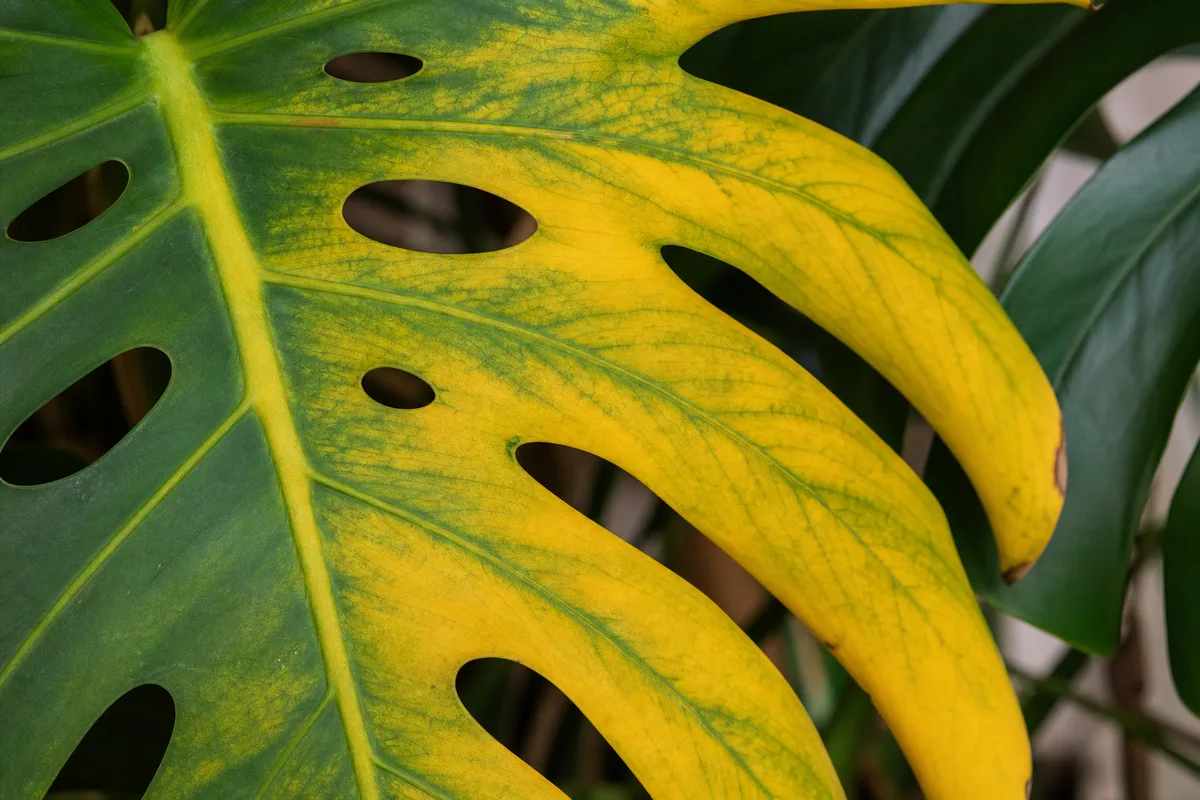
Do not diagnose from one leaf. An occasional older leaf can yellow and fall without signaling a crisis. Rapid change across several leaves, soft stems, foul-smelling mix, widespread webbing, or cold-blackened tissue deserves prompt action. For a structured seasonal routine after diagnosis, return to the winter care checklist.
Yellow leaves, wilting, and leaf drop
When a plant wilts, test the soil before watering. Dry mix and a noticeably light pot support underwatering; wet mix, a heavy pot, and yellowing lower leaves support excess moisture or root trouble. UVM notes that fungus gnats become problematic with overwatering, so adults hovering around damp soil are another reason to investigate moisture and drainage rather than add water.
Leaf drop can also follow a sudden reduction in light or a cold draft. Move the plant away from an extreme, but avoid repeated relocation. If the plant is a Monstera, compare the evidence with the dedicated Monstera yellow-leaf guide and its light requirements, which account for that species’ common problems.
Brown tips, webbing, and distorted growth
Brown tips alone do not prove that a plant needs more water. Dry air, uneven moisture, accumulated salts, damaged roots, and cold or hot airflow can produce similar margins. Measure humidity, review the root zone, and check whether the damage faces a vent or window. Humidity-sensitive plants such as calatheas need species-specific interpretation; the Calathea overview gives the appropriate moisture and light context.
Fine stippling, a dull or bronzed surface, and delicate webbing strongly suggest spider mites. Colorado State University Extension identifies stippling, bronzing, webbing, and premature leaf drop as typical spider-mite damage. Isolate an affected plant while you confirm the pest, because mites can move between nearby plants.
Fix light before adding water or fertilizer
Move a declining plant toward the brightest safe exposure its species tolerates, but protect tender foliage from cold glass and abrupt direct sun. Clean dust from broad leaves with a damp cloth while supporting the leaf. UVM recommends cleaning leaves in winter to maximize light absorption and using the same moment to inspect for pests.
Watch the plant’s shape as well as color. Leaning, long internodes, smaller new leaves, and loss of compact growth often indicate inadequate light. If the room cannot supply enough, use the complete grow-light guide to choose a fixture by plant need, coverage, distance, and duration rather than by marketing language.
Choose a safer window or add a grow light
A brighter window helps only if the temperature is safe. Keep foliage from touching cold panes and move the pot out of the direct path of exterior doors and heating outlets. Check the location at night; a windowsill that feels pleasant at noon may become a cold pocket before dawn.
For artificial light, a white or full-spectrum LED is a practical starting point for mixed foliage plants. Use a timer, follow the fixture’s distance guidance, and increase exposure gradually. Do not infer that a lamp is effective merely because it looks bright to human eyes. The relevant test is the plant’s response: compact new growth, stable color, and a predictable change in drying rate.
Water less often, but check just as often
“Water less” means reduce frequency when the root zone stays wet longer; it does not mean give tiny sips or let every plant become bone-dry. The RHS advises checking whether a pot needs water rather than watering routinely, then watering thoroughly and allowing excess to escape. Plant type, pot size, mix, room temperature, humidity, and light all change the interval.
Set a checking routine, not a watering schedule. Inspect plants once or twice a week, but water only those that have dried to the appropriate depth. For the mechanics of checking, saturating the root ball, and draining cachepots, use the indoor plant watering guide.
Test the root zone and protect drainage
Use two signals when possible: feel the mix at depth and compare pot weight. A wooden skewer can help with deep containers, although bark-heavy mixes require judgment. If the pot remains heavy and cool, wait. If it is much lighter and the mix is dry to the depth that species prefers, water thoroughly and let it drain.
Never leave runoff hidden in a decorative outer pot. Standing water defeats the drainage holes and extends saturation around roots. If soil smells sour, stems soften, or a wet plant continues collapsing, inspect the roots and follow a focused rot-recovery process rather than waiting for spring.
Fix humidity without keeping roots wet
Low humidity is an air problem, not a reason to keep potting mix saturated. Use a hygrometer near the plant cluster, then decide whether the reading and the species justify intervention. A ZZ plant usually needs less humidity management than a calathea, fern, or thin-leaved prayer plant; compare the ZZ plant overview before applying tropical-plant advice to every pot.
A portable humidifier near sensitive plants provides the most controllable increase. UNH Extension recommends a portable humidifier plus humidity monitoring for dry winter conditions. Clean the unit according to its manual, avoid blowing mist directly onto foliage, and keep electrical equipment away from spills.
Compare humidifiers, grouping, trays, and misting
Grouping plants can modestly improve the local microclimate, but leave enough space for inspection and airflow. Pebble trays have limited reach and must keep the pot above the waterline; they are not a room humidifier. For a focused comparison, see indoor humidity and pebble trays rather than adding multiple trays by default.
Misting is brief and difficult to measure, so it should not be the main humidity plan. Wet foliage combined with poor airflow may create other problems. If the hygrometer remains low after misting, nothing meaningful has been solved. Use sustained, measurable methods and keep root-zone watering decisions separate.
Stabilize temperature and placement
Move plants away from radiator tops, forced-air vents, fireplaces, frequently opened exterior doors, and direct contact with cold glass. The RHS warns that heat sources can crisp delicate leaves while cold windows and drafts can damage plants. The goal is a stable microclimate within the range tolerated by the species, not the warmest available spot.
Balance light and temperature rather than optimizing one at the expense of the other. If the brightest window becomes too cold at night, pull the plant back, use an insulating curtain without trapping the plant against the pane, or supply light from a fixture in a more stable location. Change placement once, then monitor rather than moving the plant daily.
Pause fertilizer and postpone optional repotting
Most plants that have slowed under winter light do not need routine feeding. Fertilizer does not replace light, and salts can accumulate when growth and water use are reduced. Pause or reduce feeding unless the plant is demonstrably growing under strong light or is a winter-active species with specific requirements. The RHS notes that winter-interest plants are not all identical, so flowering cyclamen and resting cacti should not receive one generic routine.
Postpone cosmetic repotting and major pruning when a stable plant can wait. UVM advises refraining from transplanting during winter unless necessary. Act now, however, if the pot is broken, drainage is absent, the mix has failed, roots are severely compromised, or rot requires intervention. University of Minnesota Extension identifies broken pots, escaping roots, and top-heavy growth as reasons a plant may need repotting. Emergency root care is more important than the calendar.
Inspect for pests every week
Winter is a good time for a fixed inspection habit: look under leaves, along veins, at stem joints, around pot rims, and across the soil surface. Iowa State Extension notes that spider mites are often noticed on houseplants in winter, when dry indoor air and reduced plant vigor can favor them. UVM also identifies fungus gnats with overwatering and recommends sticky traps for monitoring adults.
Isolate a suspicious plant before treatment. Confirm whether you have mites, scale, mealybugs, thrips, whiteflies, or gnats because controls differ. Begin with sanitation and physical removal where appropriate, then follow the label for any pesticide. The indoor integrated pest management guide explains monitoring and escalation without treating every symptom as the same infestation.
Adjust the diagnosis by plant type
Tropical foliage plants often show low humidity and temperature instability quickly, but their root moisture needs still vary. Succulents and many cacti are more likely to suffer from insufficient light combined with excessive water. Winter bloomers may remain active and need a routine tied to flowering rather than a blanket “do nothing” rule.
Species context prevents bad corrections. A calathea with crisp edges, a ZZ plant with yellowing stems, and a succulent stretching toward a window may share a season but not a diagnosis. Start with the plant’s established light and moisture needs, compare them with the current environment, and change the largest mismatch first.
Related guides
- Winter houseplant care checklist - a compact maintenance routine after the cause is clear.
- Complete grow-light guide - fixture choice, distance, coverage, and timing.
- How to water indoor plants - moisture checks, thorough watering, and drainage.
- Indoor humidity and pebble trays - realistic limits of trays and stronger alternatives.
- Integrated pest management indoors - pest identification, monitoring, and escalation.
Conclusion
Houseplants struggle in winter when seasonal changes create a chain of mismatches: less usable light, slower drying, dry heated air, unstable placement, and unnoticed pests. Diagnose the chain before treating the leaf. Check light and root-zone moisture first, then humidity, temperature, and pests.
Keep the process controlled. Correct standing water, unsafe temperatures, or active pests immediately; otherwise make one measured change and assess the next growth. For ongoing maintenance after the plant stabilizes, follow the winter houseplant care checklist and keep a weekly inspection routine.