Houseplant IPM: Weekly Pest Inspection and Treatment Schedule
Use a simple indoor plant IPM routine to spot pests early, isolate plants, treat safely and prevent repeat infestations.
Indoor pest outbreaks spread plant to plant because homes lack the predators, rain, and weather swings that limit pests outdoors. Integrated pest management (IPM) is not a bottle on the shelf - it is a repeatable schedule: inspect on a clock, identify what you find, isolate before you treat, start with physical removal, escalate to labeled products only when needed, and keep going until two clean inspections prove the population is gone.
This guide is the workflow hub. It tells you when to act, in what order, and how long to repeat. For pest identification photos, symptom-by-symptom field guides, and per-pest treatment depth, use our companion guide How to Tackle Indoor Plant Pests at Home. For species-specific damage pages, follow the links in the sign table below to our spider mites, mealybugs, scale, aphids, fungus gnats, and thrips hubs.
The National Pesticide Information Center notes that IPM uses pest biology and behavior to control problems while keeping both pests and pesticides to a minimum - and that indoor pesticide use carries different exposure risks than outdoor spraying because homes are less ventilated and pets may chew treated foliage. (NPIC)
Why IPM Is a Schedule, Not a Spray
Most failed houseplant pest runs share one mistake: one heroic spray, then forget. Eggs and crawlers hatch on their own timeline. A single application kills what is visible today and misses what emerges next week. Extension programs describe IPM as combining monitoring, cultural changes, physical removal, and least-toxic chemical tools only when earlier steps are not enough. (UC IPM)
For apartment and home growers, IPM compresses into six steps you run on a calendar:
- Inspect weekly - catch populations while they are small.
- Isolate immediately - stop drift to the rest of the collection.
- Physical removal first - rinse, swab, prune, trap, dry soil.
- Least-toxic labeled treatment - soap, oil, BTI, or other product matched to the pest.
- Repeat on lifecycle timing - usually every 5–7 days for three full cycles indoors.
- Prevention routine - quarantine new plants, fix watering, maintain airflow.
Colorado State University Extension emphasizes that many houseplant infestations arrive on newly purchased plants and recommends quarantine in a separate area for at least three weeks before joining the main collection. (CSU Extension) That quarantine window is part of the schedule, not an optional extra.
Case Study: Three Weeks Clearing Mealybugs on a Hoya
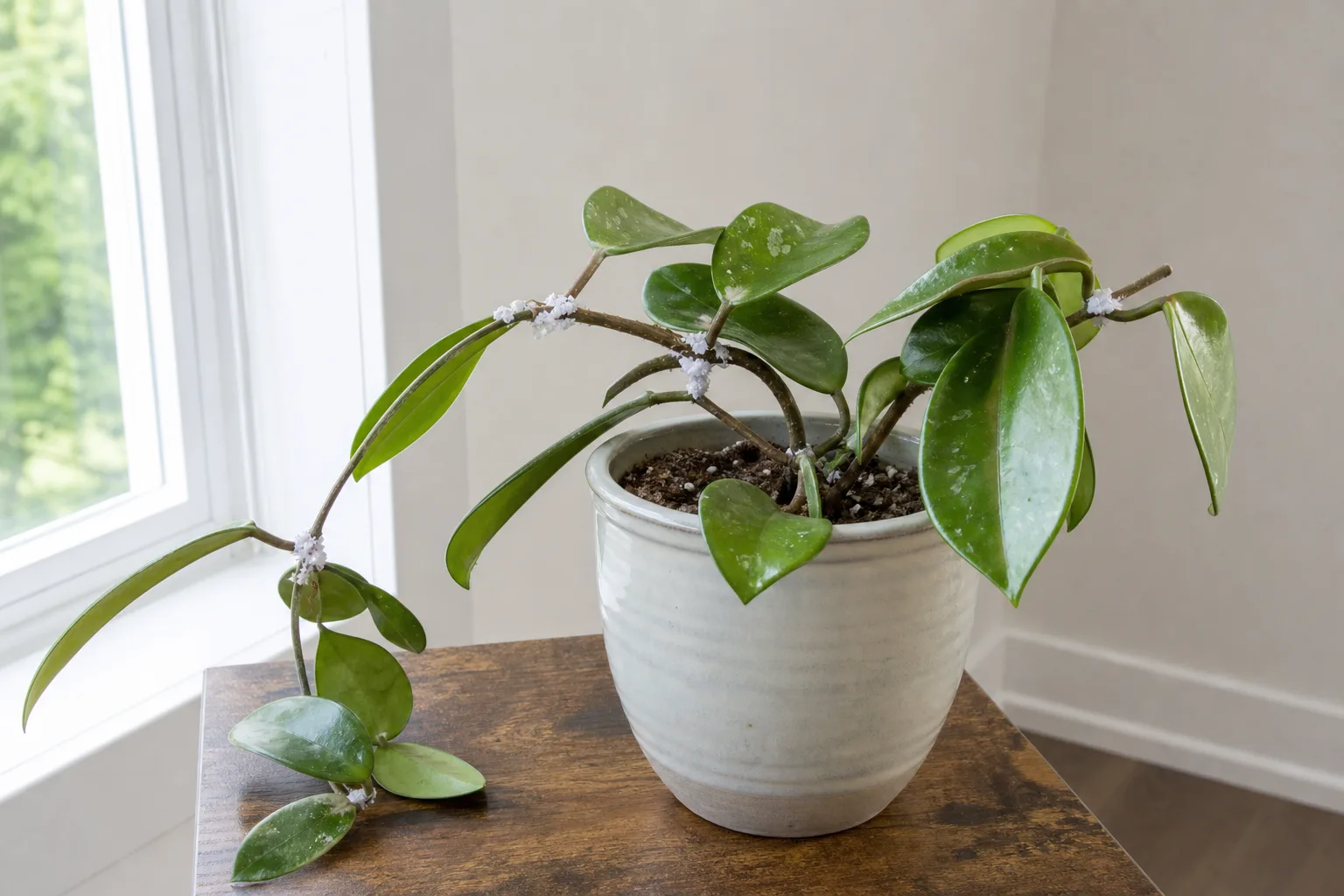
The following log is an editorial walkthrough - a realistic IPM sequence on a Hoya carnosa in a bright east-facing apartment, winter indoor humidity near 35%, collection of roughly thirty plants on two shelves. It shows how the six steps look on a calendar, not in theory.
Week 1 - Spotting, Isolating, and Baseline Counts
Monday, inspection day. During a routine weekly scan, white cottony clusters appeared in two leaf axils and along one stem segment - classic mealybug hiding spots. A phone macro photo confirmed it; no webbing (ruling out mites as the primary issue).
Actions taken:
- Moved the hoya to a spare room away from the main shelf - separate room beats a foot-count rule when space allows. CSU Extension recommends quarantine for new and suspect plants rather than relying on distance alone. (CSU Extension)
- Inspected the three pots touching the hoya on the shelf; one pothos neighbor had a single suspect speck - isolated that pot too.
- Logged counts: 4 visible mealy clusters on the hoya, 1 speck on pothos.
- Physical pass only: cotton swabs with 70% isopropyl alcohol on each cluster, then a gentle shower rinse. CSU notes alcohol swabbing is useful for mealybugs but can injure foliage - patch-test sensitive plants. (CSU Extension)
Outcome: Clusters turned brown; two days later, 2 new pinhead crawlers visible under the hand lens. Treatment cycle needed - physical removal alone was not enough.
Weeks 2–3 - Physical Removal and Repeat Soap Cycles
Day 8 (Week 2, Treatment 1). Applied insecticidal soap to runoff on leaf tops and undersides, stems, and pot rim - evening application, plant out of direct sun. Clemson HGIC notes insecticidal soaps are contact killers that work on soft-bodied insects when spray coverage is complete. (Clemson HGIC)
Day 14 (Week 2, Treatment 2). Re-inspected before spraying. 1 live cluster remained in a tight leaf fold missed by the first pass. Alcohol swab, then second soap application.
Day 21 (Week 3, Treatment 3). No live mealybugs on inspection. Sticky honeydew wiped clean. Neighbor pothos showed zero new signs.
Release criteria met: Two consecutive inspections (Days 21 and 28) with no live pests - not merely no new damage. Hoya returned to the shelf; pothos neighbor released one week later after its own clean inspection.
Lesson: The win came from dated repeats, not a stronger product. Mealybug crawlers can emerge over weeks; University of Minnesota Extension recommends physical removal plus repeated monitoring because egg masses and hidden stages survive single passes. (University of Minnesota Extension)
Step 1 - Inspect Weekly (Monitoring)
Pests are cheapest to control when populations are small. A five-minute weekly scan beats a weekend rescue mission on twelve plants.
Where to Look and What Tools Help
Check these zones every time:
- New growth and flower buds
- Leaf undersides (mites and thrips hide here)
- Stem joints and leaf axils (mealybugs, aphids)
- Soil surface and pot rim (fungus gnats adults)
- Saucers and cache pots (standing water attracts gnats)
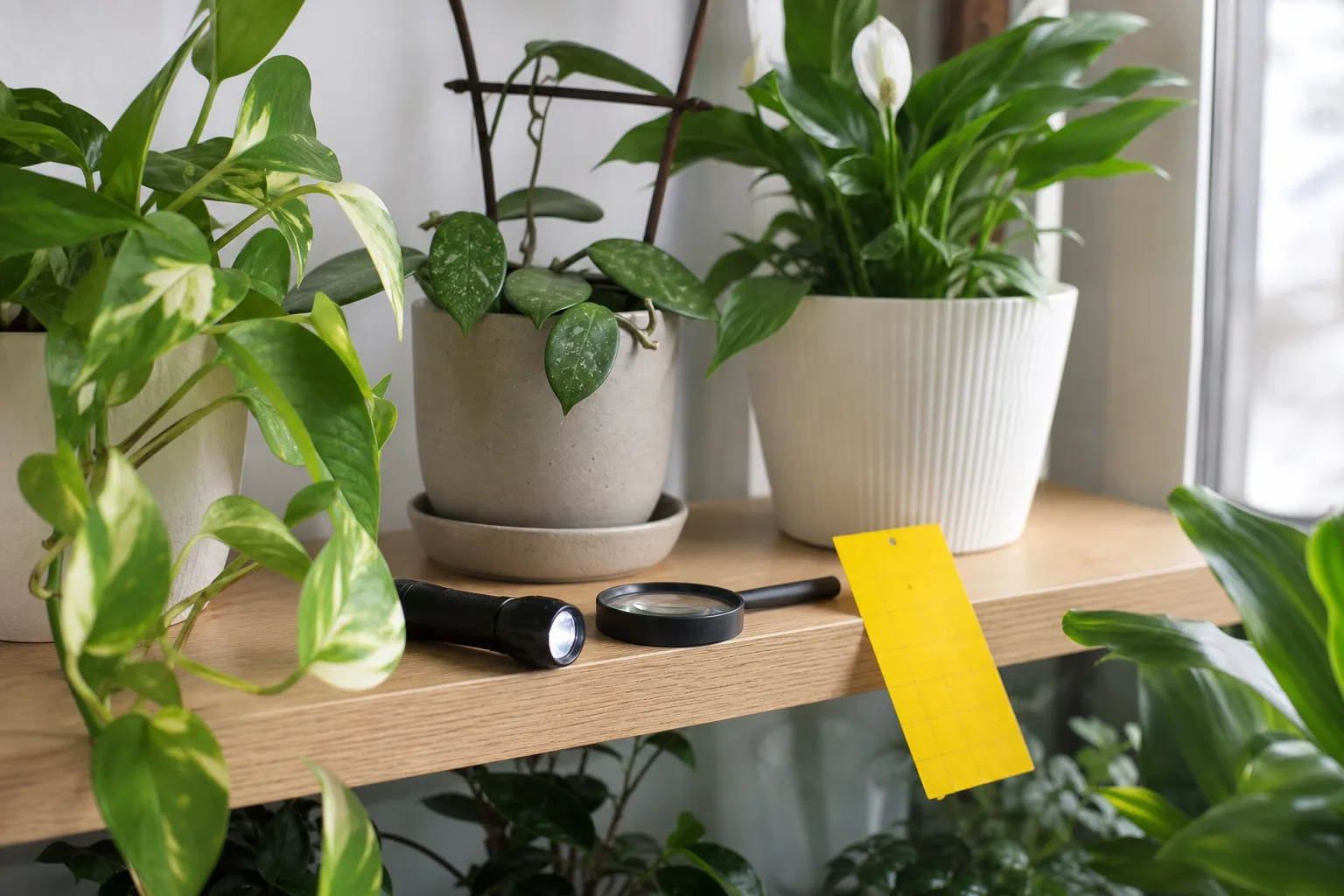
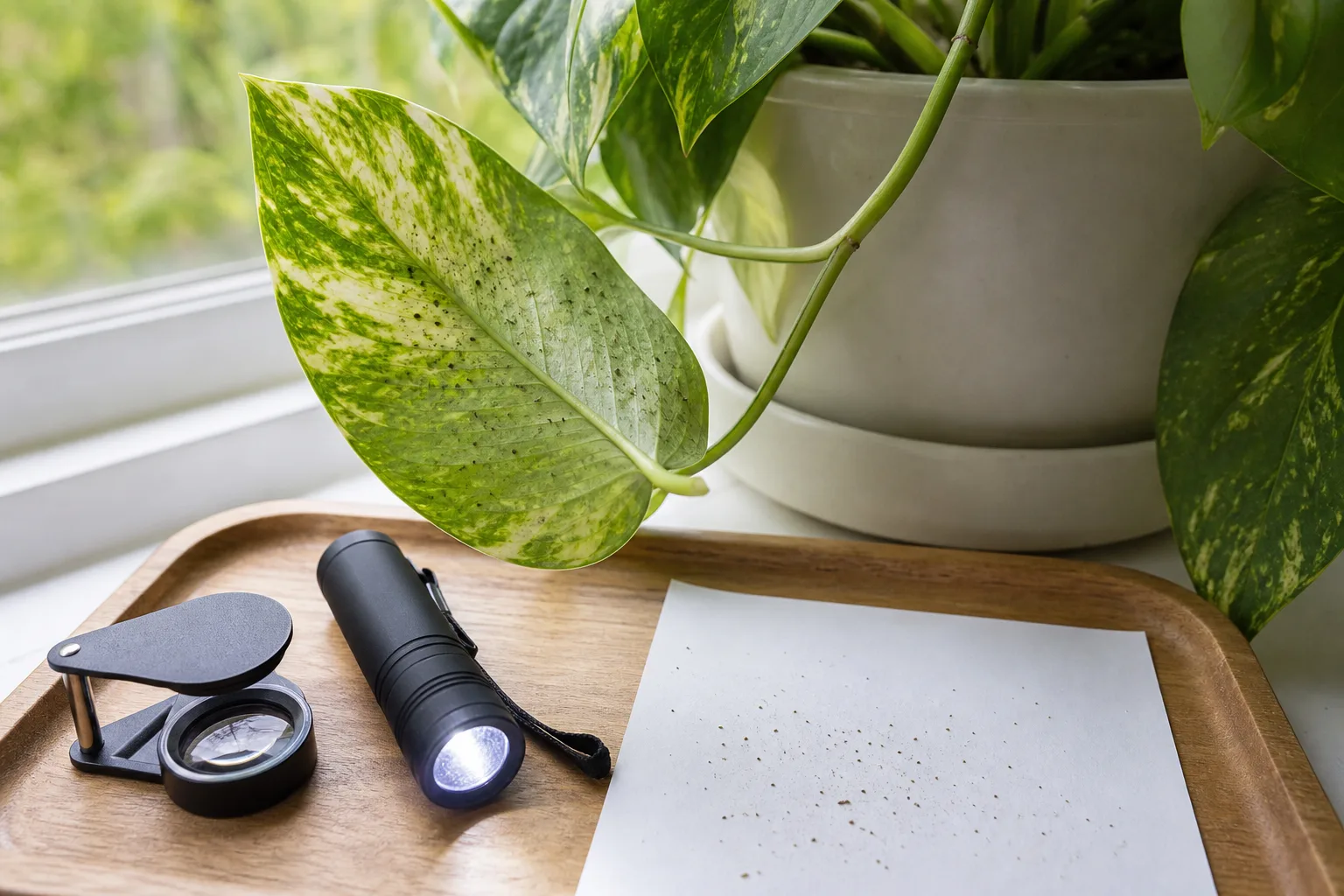
Tools that help: bright LED flashlight, 10× hand lens, white-paper tap test (shake a suspect leaf over paper - moving dust specks may be mites or thrips). Penn State Extension notes that close inspection of undersides and new growth catches most indoor pest problems early. (Penn State Extension)
| Pest | Key signs | Common hitchhikers |
|---|---|---|
| Spider mites | Fine webbing, stippled yellow leaves | Dry air, stressed plants |
| Mealybugs | White cottony clusters | Nursery plants, gifts |
| Aphids | Soft clusters on new growth | Open windows, new cuttings |
| Scale | Brown waxy bumps on stems | Woody plants, orchids |
| Fungus gnats | Tiny flies on soil | Overwatered pots |
| Thrips | Silvery scars, black specks | Flowers, outdoor drafts |
Use our plant problem diagnosis tool when symptoms do not match a single pest. New purchases: inspect every 2–3 days during quarantine; established collection: weekly is enough if you are consistent.
Step 2 - Isolate Immediately
Move affected plants to another room when possible - not just a few feet away on the same shelf. Pests crawl, hitchhike on tools, and drift on air. Isolation buys time to treat without reinfecting neighbors.
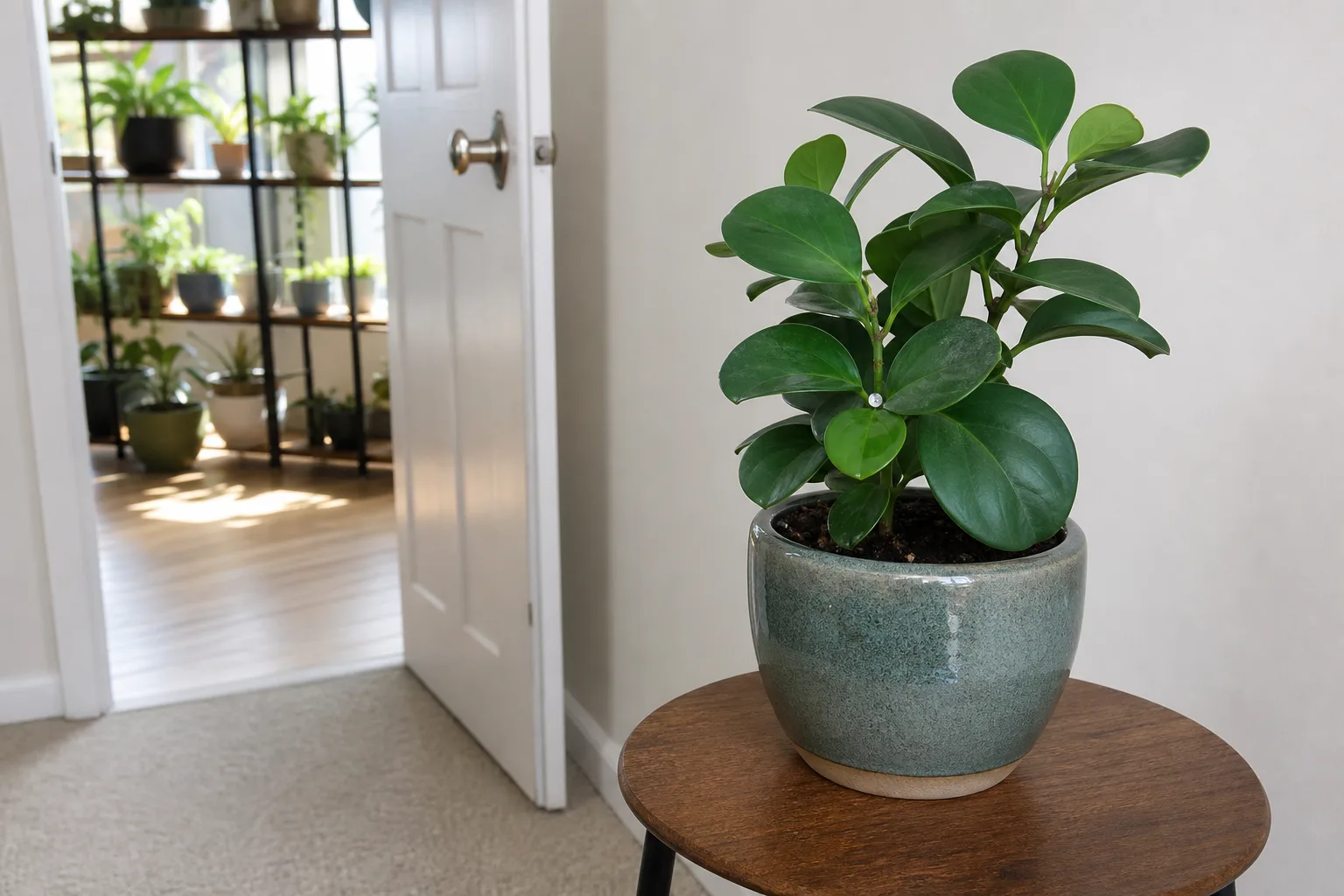
- Quarantine new purchases a minimum of three weeks before joining the shelf. (CSU Extension)
- Inspect neighbors if honeydew, webbing, or crawlers were present - one visible mealy cluster often means early spread.
- Change gloves or wash hands between infested and clean plants.
Step 3 - Physical Removal First (Cultural Control)
Always start with methods that do not depend on spray coverage alone:

- Rinse foliage in the shower or with a gentle hose - dislodges aphids, spider mites, and early mealy crawlers. CSU Extension lists syringing as effective for mites and aphids. (CSU Extension)
- Alcohol swabs (70% isopropyl) on mealy clusters and soft scale - rinse after ten minutes if the label or plant sensitivity requires it.
- Prune heavily infested leaves into a sealed bag.
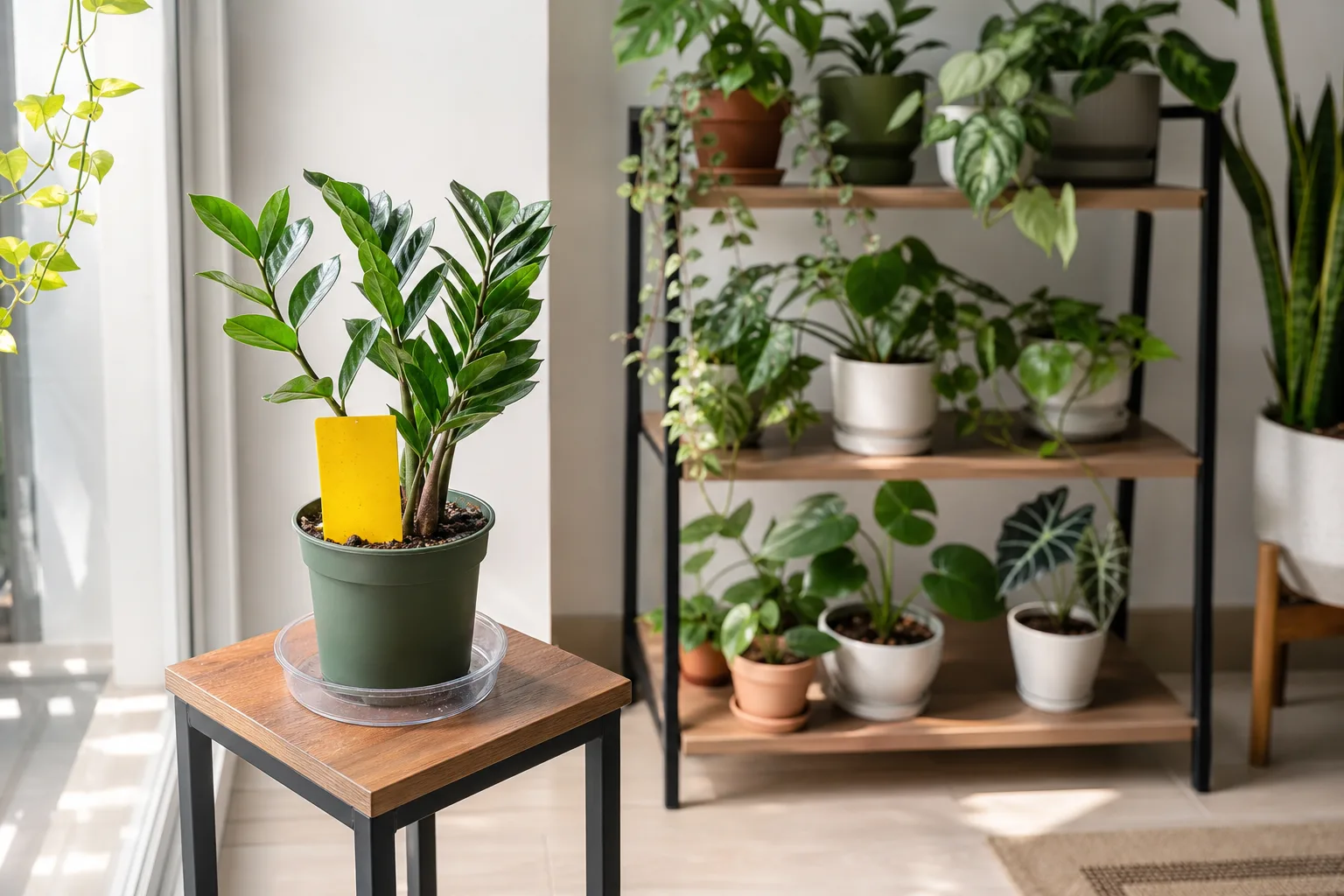
- Yellow sticky traps for fungus gnats and whiteflies - monitor counts, not a cure alone.
- Dry the soil surface for gnats - let the top 1–2 inches dry between waterings; wet soil favors gnat larvae while dry air favors mites - see indoor watering basics.
If live pests remain 48 hours after physical steps, move to labeled treatments in Step 4.
Step 4 - Treatment Matrix (Least Toxic First)
Repeat every 5–7 days for three full cycles unless the product label specifies a different interval. That cadence matches common indoor egg-hatch windows for aphids, mites, and many soft-bodied pests. (University of Minnesota Extension)
| Pest | First choice | Second choice | Notes |
|---|---|---|---|
| Aphids | Insecticidal soap | Horticultural oil | Cover undersides; soap is contact-only (Clemson HGIC) |
| Spider mites | Horticultural oil or miticide labeled for mites | Soap (less effective on adults) | Mites are arachnids, not insects - confirm label (Penn State Extension) |
| Mealybugs | Alcohol + soap | Horticultural oil | Hidden in crevices - repeats critical |
| Scale | Scrape + oil | Systemic (ornamentals only) | Armored scale needs mechanical removal |
| Fungus gnats | Dry soil + traps | BTI drench (Bacillus thuringiensis israelensis) | Fix overwatering; CSU lists BTI strain for gnat larvae (CSU Extension) |
| Thrips | Soap + blue sticky traps | Spinosad (only if labeled for indoor/houseplant use) | Inspect flowers and buds |
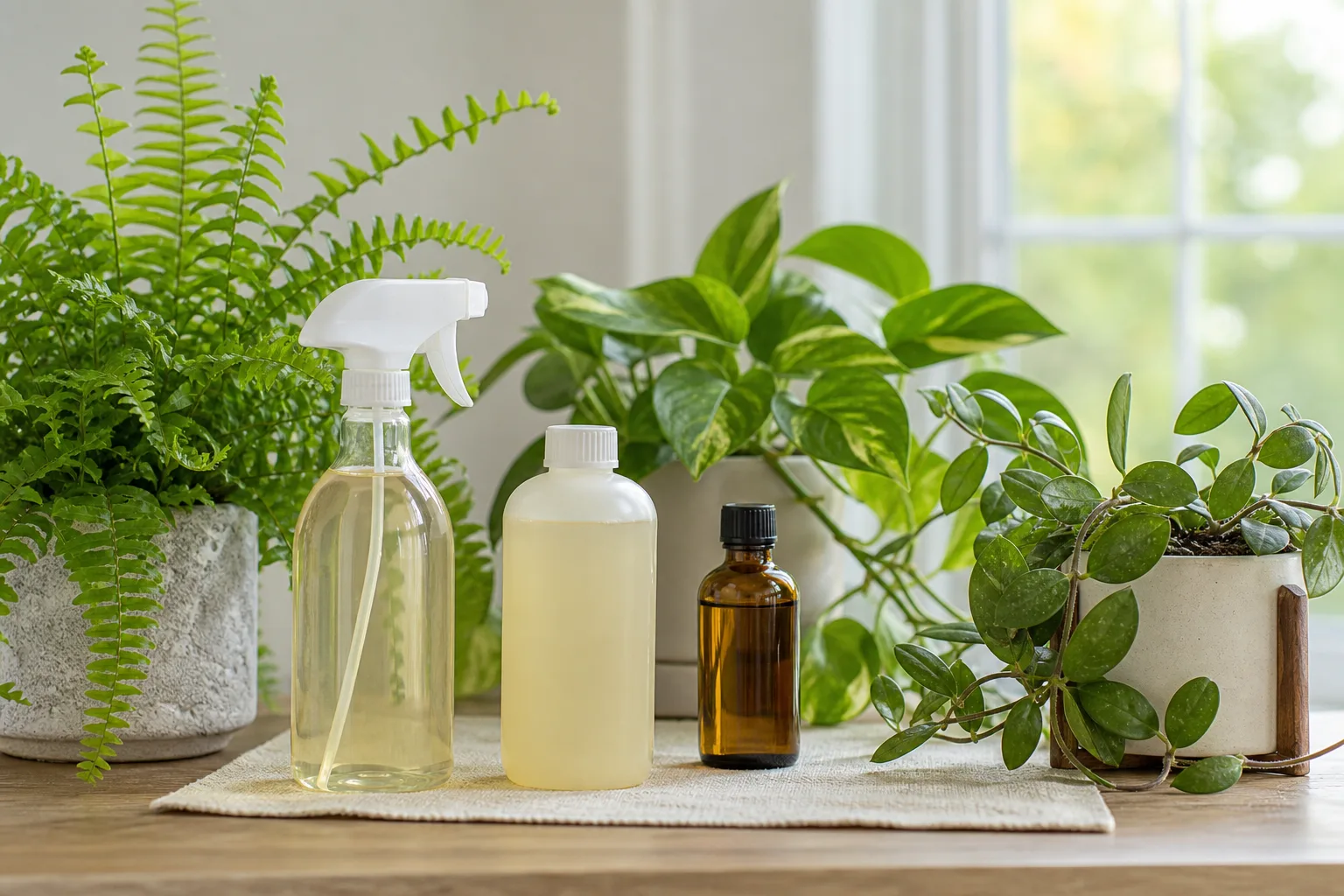
Insecticidal soap: contact killer - spray until runoff, hit undersides, avoid hot sun or drought-stressed plants.
Horticultural oil / neem: smothers eggs and soft bodies - apply in evening; test one leaf 24 hours first on ferns, calatheas, and hoya.
Systemic insecticides: last resort for ornamentals only - never on herbs or edibles indoors. NPIC warns that pets may chew houseplants and all pesticides pose companion-animal risks indoors. (NPIC)
How to Read Labels for Indoor Houseplant Use
Missouri Botanical Garden’s indoor pesticide FAQ is blunt: only use products specifically labeled for houseplants or indoor use - most yard and garden sprays do not allow indoor application. (Missouri Botanical Garden) Before any spray:
- Confirm the pest and site (houseplant/indoor) appear on the label.
- For mites, confirm miticide language - general insecticides may not control spider mites.
- Take the plant outdoors to spray when possible; CSU recommends minimizing indoor pesticide exposure.
- Keep treated plants away from pets until sprays dry completely.
Step 5 - Lifecycle Timing (Why Three Cycles Matter)
| Pest | Egg to adult (approx.) | Why 3 cycles |
|---|---|---|
| Aphids | 7–10 days | Missed nymphs hatch after first spray |
| Spider mites | 5–7 days | Populations double fast in dry air |
| Mealybugs | 2–3 weeks | Crawlers hide between wax stages |
| Fungus gnats | 2–3 weeks in soil | Larvae live in wet media |
| Scale | Weeks to months | Repeat oils while crawlers are active |
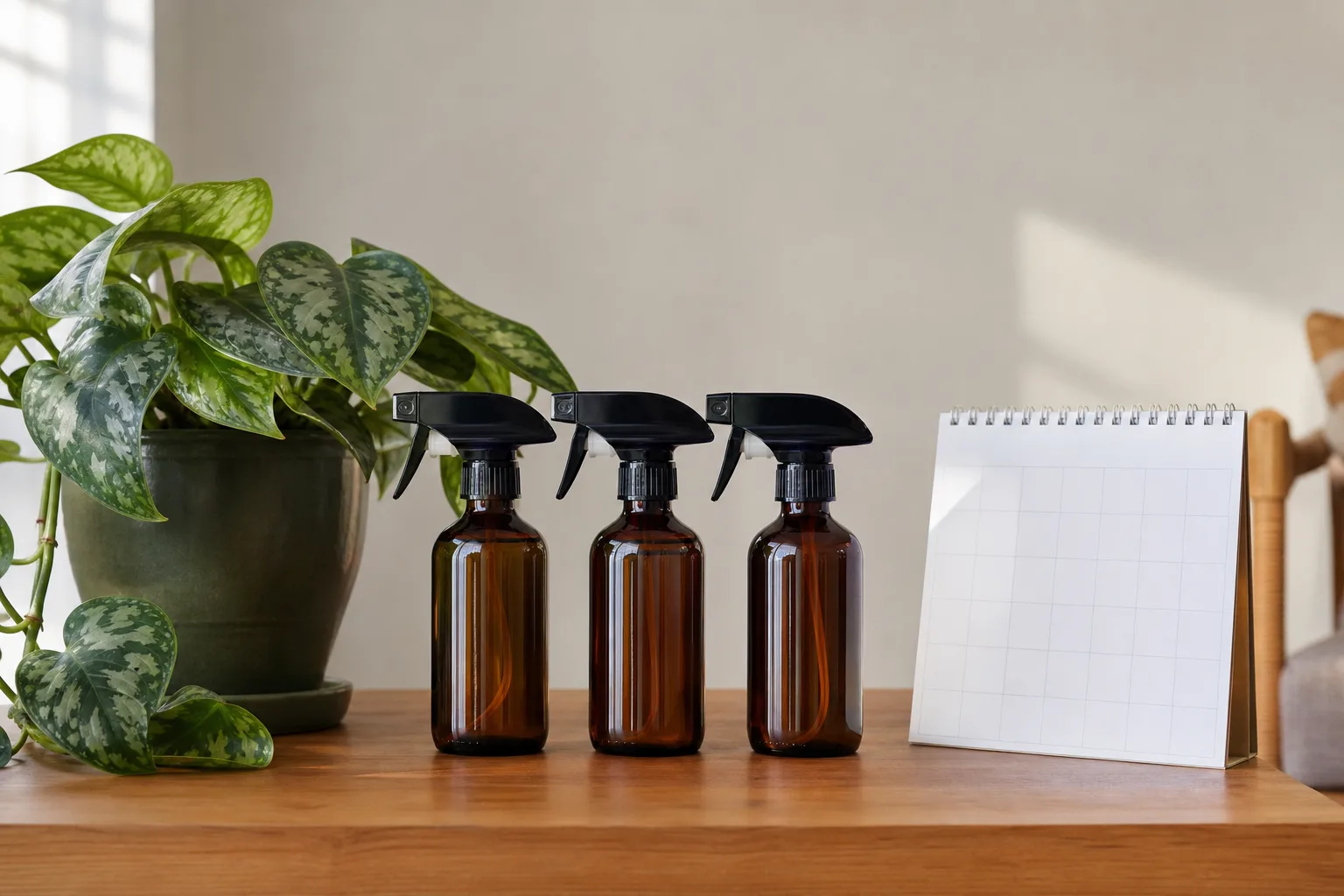 |
Stop treatment only after two consecutive inspections show no live pests - not merely no visible damage. Cosmetic recovery can lag behind hidden eggs. CSU Extension notes that whitefly eggs hatch in three to seven days and mealybugs mature in approximately two months - intervals vary by pest, which is why a fixed three-cycle schedule beats a single spray. (CSU Extension)
Step 6 - Prevention Routine
- Inspect weekly; quarantine all new plants three weeks minimum.
- Match watering to light so soil does not stay soggy - IPM and watering basics work together.
- Boost airflow between plants - crowded shelves trap humidity and hide pests.
- Clean saucers and cache pots monthly.
- Raise room humidity for mite-prone plants via the houseplant humidity guide without overwatering - CSU Extension notes that excessively moist soil favors fungus gnats while hot, dry sites favor spider mites. (CSU Extension)
Your Weekly IPM Log Template
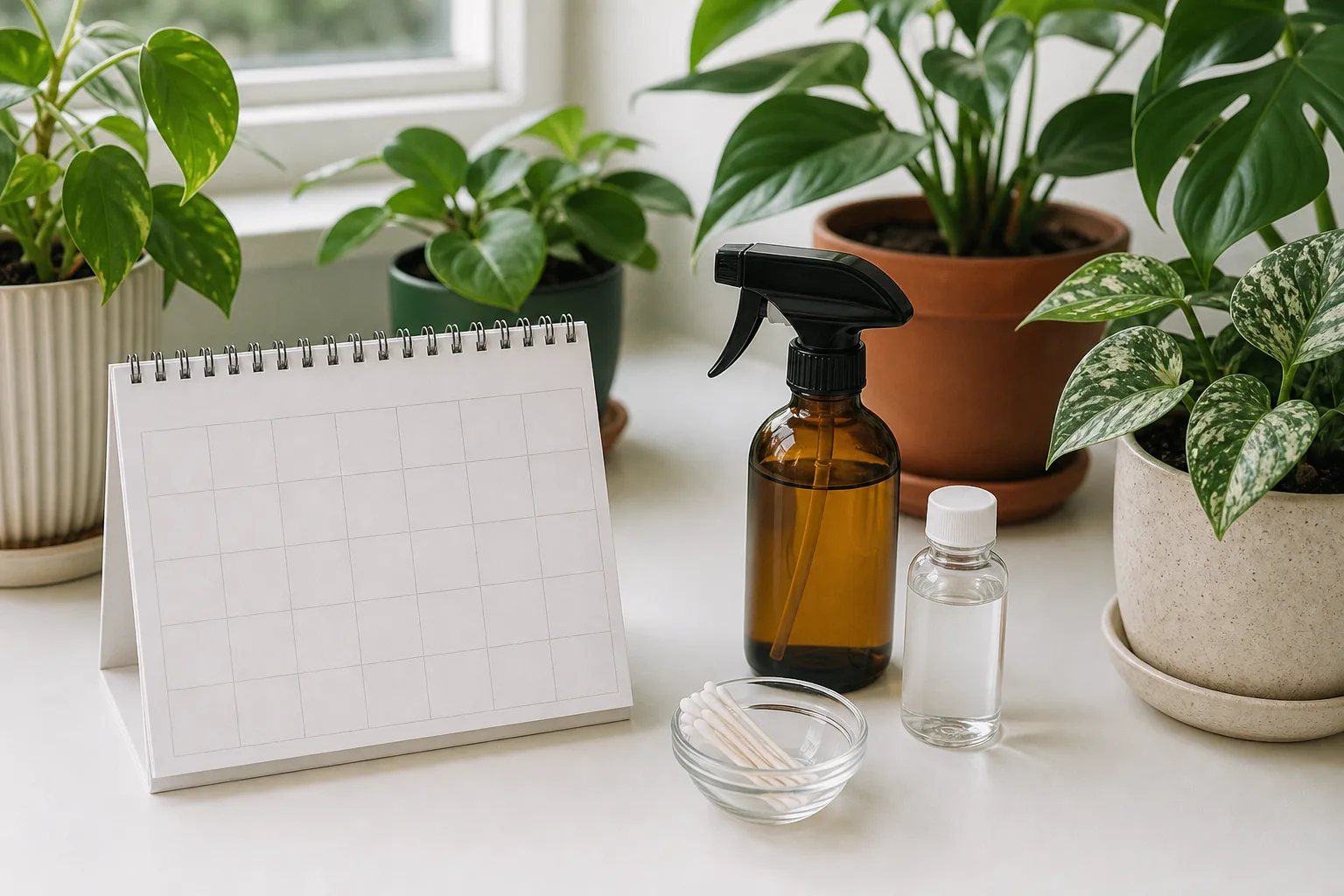
Copy this block into a notes app or printed sheet. The schedule matters more than the app.
| Date | Plant(s) | Pest (if any) | Action taken | Live pests seen? | Next treatment due |
|---|---|---|---|---|---|
| Inspect only / isolate / soap / oil / alcohol / trap | Y / N |
Rules for the log:
- One row per inspection or treatment - do not skip “inspect only” weeks.
- Record live pests seen, not just damage - damage can persist after pests are gone.
- Set next treatment due at Day +5 to +7 when in an active cycle.
- Mark cycle complete only after two clean inspections.
Plant Safety Notes
- Ferns, begonias, calatheas: oil-sensitive - always patch-test.
- Succulents with farina: avoid soap films - targeted alcohol on mealy only.
- Flowering orchids: rinse products off blooms; avoid oil on open flowers.
- Pets: isolate treated plants until sprays dry; keep systemics away from chew-prone pets (NPIC).
- Edible herbs indoors: no systemics - physical removal and soap rinses only; keep herbs separate from treated ornamentals.
Troubleshooting Common IPM Failures
Pests return after one spray: You stopped before the third repeat or missed egg sites in soil and crevices.
Leaves burn after treatment: Sprayed in direct sun, exceeded label rate, or plant was drought-stressed. UC IPM notes houseplant decline often ties to environmental stress - do not treat already stressed plants without fixing care first. (UC IPM)
Gnats won’t quit: Soil still wet too long - address drainage and mold on soil if present.
Mites spread after “fixing” humidity: Misting leaves without raising room humidity does not help - use a humidifier or grouping per the humidity guide.
Sticky honeydew on leaves: Active sap feeders still present - re-inspect and continue the schedule.
When to Escalate
- Identification uncertainty: Contact your local cooperative extension office for pest ID - bring clear photos and a bagged sample if allowed.
- Pesticide exposure or label questions: Call NPIC at 800-858-7378 or use NPIC’s houseplant IPM page.
- Discard vs persist: Replace plants only when roots or stems are already failing and three full IPM cycles did not work - not at the first sight of bugs.
Related guides
- How to Tackle Indoor Plant Pests at Home - pest ID, symptom photos, and per-pest treatment depth (companion to this workflow hub)
- Houseplant diseases identification and treatment - when symptoms point to fungal or bacterial problems, not insects
- Indoor plant watering basics - dry-soil vs soggy-soil context for gnats and root stress
- Houseplant humidity guide - room-level humidity for mite-prone plants without overwatering
- Winter houseplant care - seasonal inspection cadence when dry heating air spikes mite pressure
Conclusion
Houseplant IPM succeeds when you treat it like calendar discipline, not a one-time product choice. Inspect weekly, isolate the moment you find live pests, start with physical removal, match labeled treatments to the pest, repeat on lifecycle timing, and log what you see. Use How to Tackle Indoor Plant Pests at Home when you need identification depth; use this page when you need the order and repeat schedule. Two clean inspections beat one perfect spray every time.