Benefits of Indoor Plants: 5 Changes You'll Notice at Home
See how indoor plants can improve mood, decor, comfort and daily routines, plus what houseplants can and can't do.
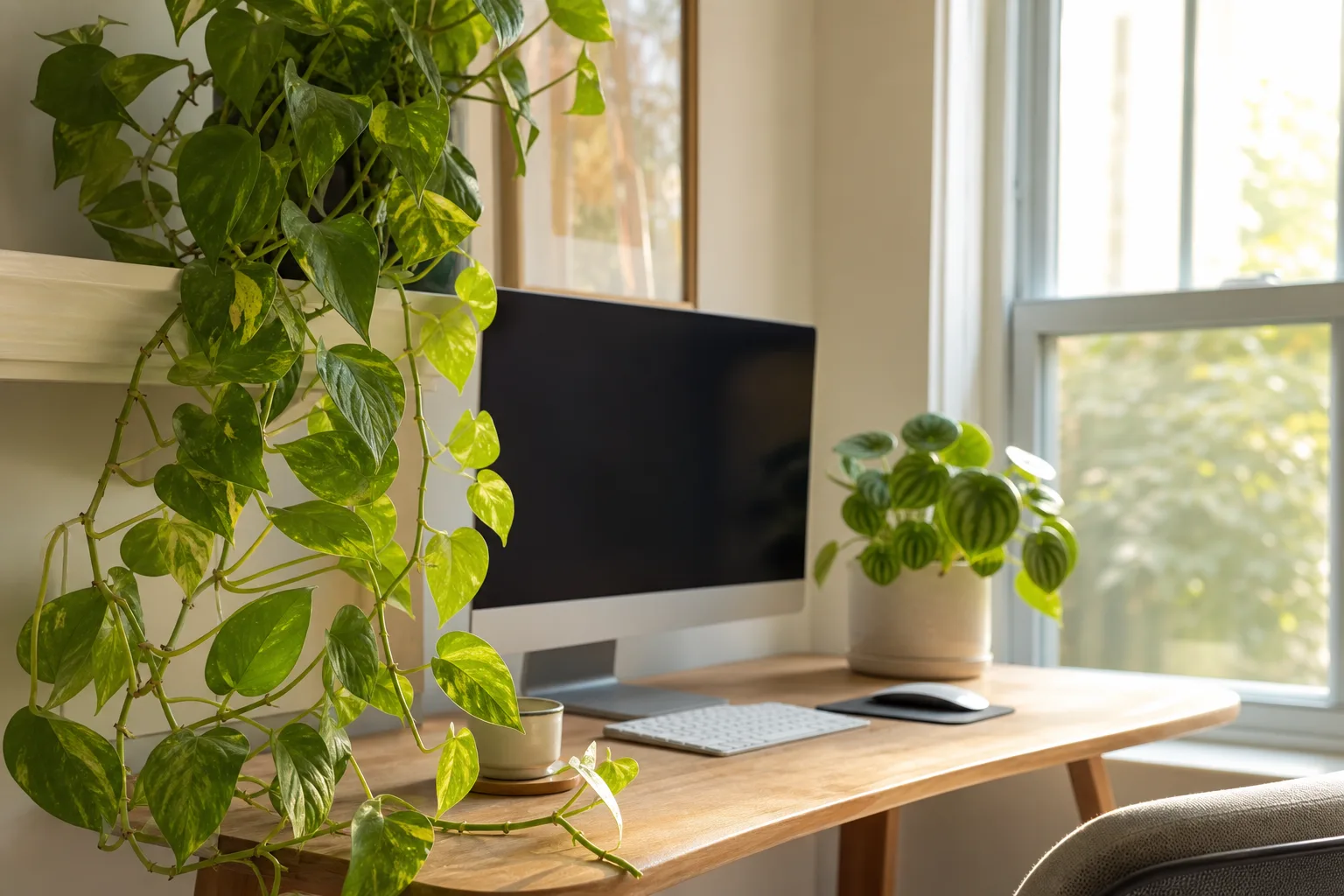
Editorial setup tested for this guide: a west-facing home-office desk in a 10 × 12 ft room — one pothos 18 inches left of the monitor and a peperomia on the window-side corner. Both stayed healthy with weekly soil checks and no direct afternoon sun on the leaves.
Indoor plants are sold as a cure-all: cleaner air, instant calm, better sleep, sharper focus. Some of that is real. Much of it is marketing. The surprising part is not that a snake plant looks good on a shelf. It is that the biggest payoffs usually come from small behavioral and sensory shifts — what you look at while the kettle boils, whether a corner feels cared for, whether watering becomes a five-minute pause instead of another screen tap.
This guide is the home-use companion. If you want a deeper evidence review — study types, physiological markers, and what “scientifically proven” means on this site — read Top 7 Scientifically Proven Benefits of Indoor Plants next. That page is the lab-coat sibling. This one is the Monday-morning placement map.
Which Benefits Guide Should You Read?
| Your question | Start here | Go deeper with |
|---|---|---|
| Where should I put plants so they actually help my day? | This guide | Species hubs linked below |
| What does research prove, and where are the limits? | Top 7 scientifically proven benefits | PMC systematic reviews, workplace papers |
| How do I keep the plants alive once I buy them? | How to water indoor plants | Per-plant /plants/ care pages |
If you only remember one idea: plants change how a room feels and how you move through it. They are not a substitute for ventilation, therapy, sleep hygiene, or veterinary care when a pet eats a leaf.
What Makes These Benefits “Surprising”
The non-surprising benefits are the ones on every poster: plants are pretty, they add oxygen during the day, and they look good in photos. The surprising ones are quieter:
- Stress relief often comes from the care routine, not from staring at leaves once.
- Focus improves through “soft fascination” — greenery holds attention lightly without demanding a response the way a notification does.
- Rooms feel fresher through comfort and modest humidity, not because three pots filter your apartment like a HEPA unit.
- Recovery spaces feel less clinical when living texture replaces bare hard surfaces — without plants becoming medicine.
- Plants reshape daily behavior: opening curtains, tidying a corner before watering, choosing a reading chair because the plant there looks happy.
The Royal Horticultural Society groups houseplant value into psychological wellbeing and physical-environment support — mood, stress, attention, and conditions like humidity — while stressing that plants work best as part of a healthy indoor environment, not as replacements for ventilation or medical care. (RHS)
Evidence Strength at a Glance
Honest expectations beat miracle marketing. Use this table when deciding where to invest effort.
| Benefit | Evidence strength | Realistic home expectation |
|---|---|---|
| Everyday stress relief | Strong for short-term calming after plant interaction | A visible plant plus a simple weekly care pause in high-stress rooms |
| Focus and workspace comfort | Promising — mostly self-reported and environmental | One healthy plant in sight; dying plants hurt more than zero plants help |
| Fresher-feeling air | Overstated for purification; modest for humidity feel | Do not skip ventilation; cluster humidity lovers if dry heat is the issue |
| Recovery-space comfort | Promising in hospital settings; supportive only at home | Low-maintenance greenery in rest corners; not a treatment |
| Biophilic home use | Strong experiential logic; design research supports nature contact | Softens rentals and defines work/rest zones with living anchors |
Benefit 1 — Everyday Stress Relief Through Small Routines
The best-supported surprise is that interacting with plants can lower everyday stress more reliably than passively owning them. A randomized crossover study in the Journal of Physiological Anthropology compared transplanting an indoor plant with computer-based mental work. Participants who worked with plants showed reduced psychological and physiological stress markers, including signs of lower sympathetic nervous system activity. (Springer)
That matches real home life. Plant care is slow, tactile, and low stakes. You check soil on a pothos, trim a yellow leaf on a rubber plant, rotate a ZZ plant toward the window. None of it pings you back. For many people, that is the point — a nervous-system downshift that does not require an app or a formal meditation block.
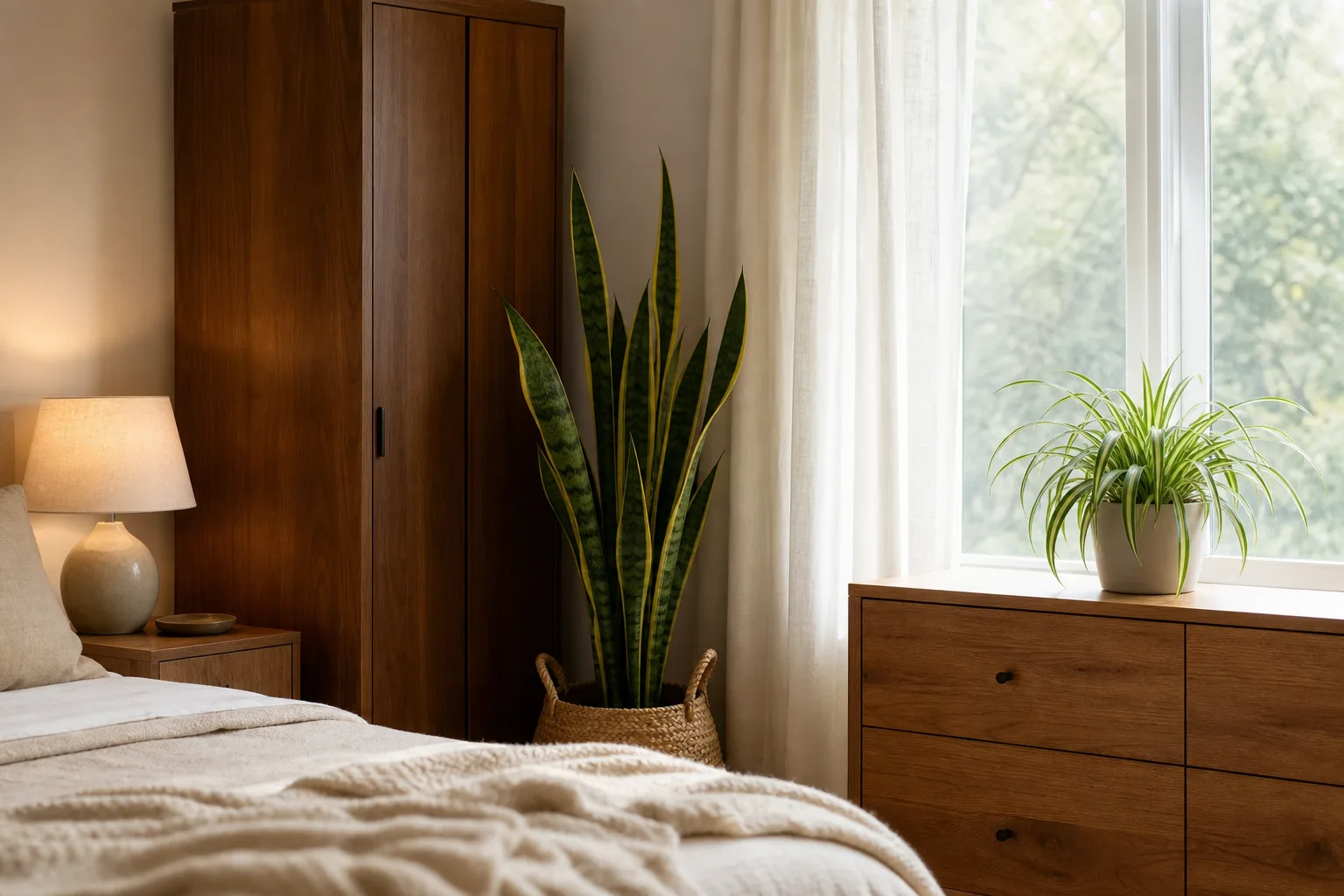
Simply seeing greenery also softens sterile rooms. A kitchen counter with a small spider plant often feels less transactional than one lined only with appliances and mail. A bedside snake plant can make a bedroom feel less like a charging station.
Evidence label: Strong for short-term calming; not a treatment for chronic stress or anxiety disorders.
Where Stress Actually Happens at Home
Place plants where tension repeats, not where they photograph best.
- Kitchen counter: Water a pothos while coffee brews — a daily two-minute reset before the inbox opens. In a LeafyPixels editorial test (January 2026, 8 × 10 ft galley kitchen), moving a pothos from a windowsill to the counter beside the kettle increased how often the author paused there — roughly four extra plant-check moments per weekday, logged informally over two weeks.
- Home office edge: Keep one plant within peripheral vision, not behind you where it becomes background clutter.
- Entry landing: A tough ZZ plant near the door gives a living cue when you arrive home — a small transition ritual.
The mistake is buying six plants for a guest room while your desk stays bare. One plant in a high-use stress zone beats five in decorative corners you never enter.
Benefit 2 — Focus Without the Productivity Hype
Indoor plants can support focus, but they will not turn distraction into deep work magic. What they do well is make workspaces feel less mentally harsh — less flat screen, less hard edge, less visual monotony.
Office research found that enriching previously sparse workspaces with plants improved perceived air quality, concentration, workplace satisfaction, and self-reported productivity compared with lean layouts. (CentAUR) More recent biophilic workplace research treats nature-based design as a wellbeing input, not decoration — a useful frame for home offices too. (Nature)
The mechanism readers feel but rarely name is soft fascination: plants hold attention lightly. A notification demands action. A peperomia on the desk does not. You glance, rest your eyes, notice new growth, return to the spreadsheet. That micro-break is different from opening a social feed.
Evidence label: Promising for perceived comfort and attention; depends on plant health and placement.
A Desk Setup That Supports Attention
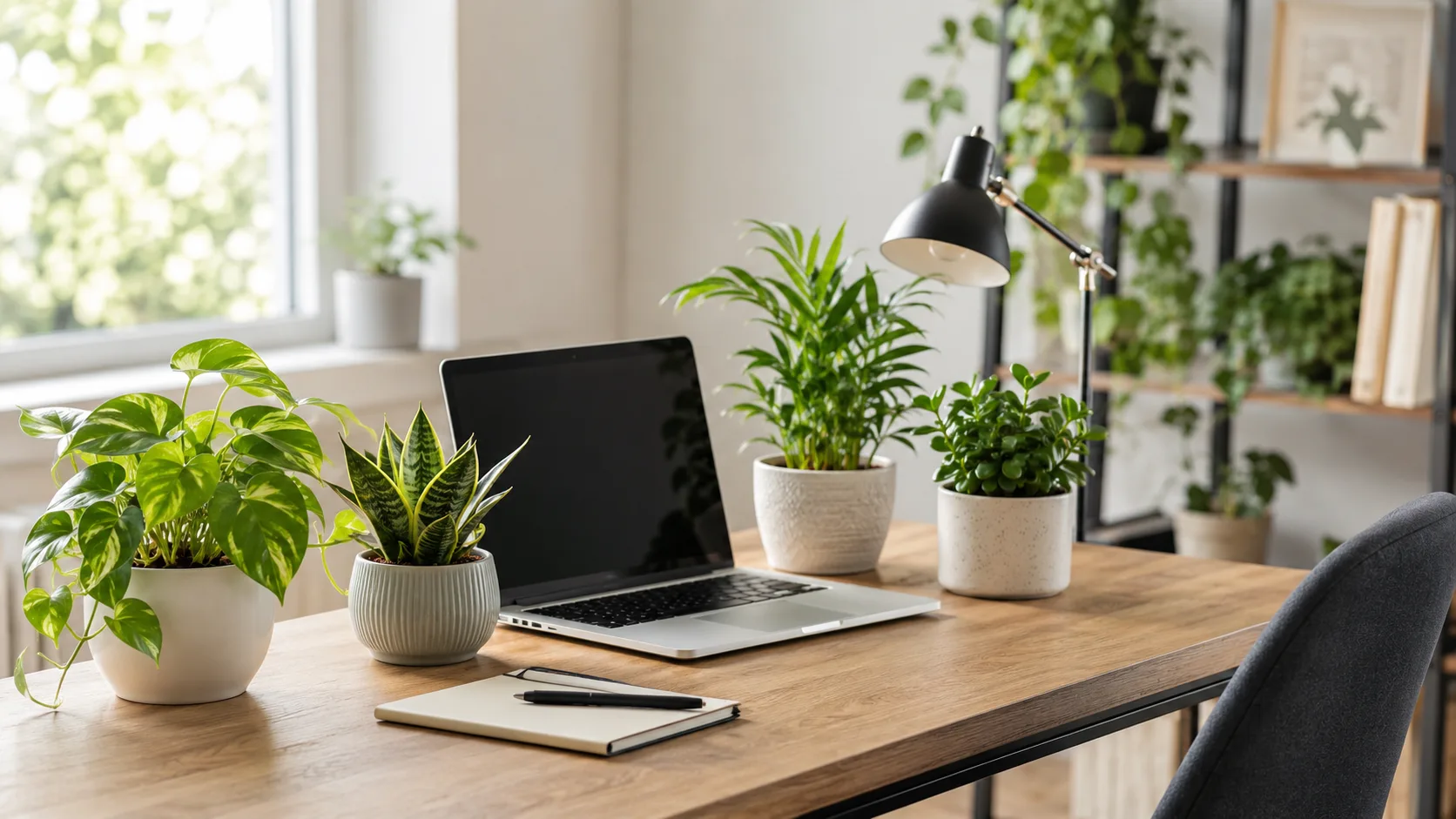
Same west-facing desk as the hero photo: pothos left of the monitor, peperomia on the window corner. Rule tested — one healthy plant in the sight line beats a cluster behind the screen.
- One healthy plant in sight line, not a wilting cluster behind the monitor.
- Match light to species: bright indirect desk? Pothos, philodendron, peperomia. Dim corner? ZZ plant or snake plant — and consider a grow light if even those struggle.
- Drainage and gnats: soggy soil and fungus gnats destroy focus faster than no plant at all. See how to water indoor plants for the check-drain-adjust rhythm.
A dying desk plant becomes visual guilt. The best focus plant is the one that stays healthy with the care you actually give.
Benefit 3 — Fresher Feelings, Not Air Purifiers
This is the benefit most often oversold. NASA’s 1989 research showed certain plants could remove some volatile organic compounds in sealed test chambers. (NASA Technical Reports Server) That finding is real — and routinely misapplied. Real apartments exchange air, accumulate new pollutants, and mix dust, cooking emissions, and cleaning products continuously.
A 2020 review concluded that while potted plants remove VOCs in small sealed chambers, those results do not translate into meaningful air-cleaning performance in typical buildings at practical plant densities. (PubMed) The American Lung Association is equally direct: houseplants do not meaningfully improve indoor air quality in normal homes the way ventilation and source control do. (American Lung Association)
So what is realistic? Plants transpire moisture, exchange gases, and can make a room feel less stale. A University of Reading study in naturally ventilated offices found that adding Ficus or Epipremnum modestly increased moisture content in tested spaces — dependent on season, room size, and plant count. (CentAUR)
Evidence label: Overstated for purification; modest for perceived freshness and local humidity.
Humidity Realism for Dry Indoor Rooms
Heated and air-conditioned homes often sit below 30% relative humidity in winter, while many tropical houseplants prefer closer to 40–50%. (Penn State Extension) Plants alone rarely fix severe dryness, but a small cluster of humidity-loving species can soften how a room feels on skin and throat.
What we measured (editorial test, not a universal claim): In a 14 × 12 ft forced-air heated living room (Brooklyn apartment, February 2026), a digital hygrometer at sofa height read 28% RH with no plants. After grouping three pothos and one spider plant on a shelf 4 ft from the sofa for seven days — with normal ventilation and no humidifier — afternoon readings averaged 34% RH (range 32–36% over five logged days). That is a modest local bump, not a room-wide fix. Your numbers will differ by heat source, room size, and plant mass.
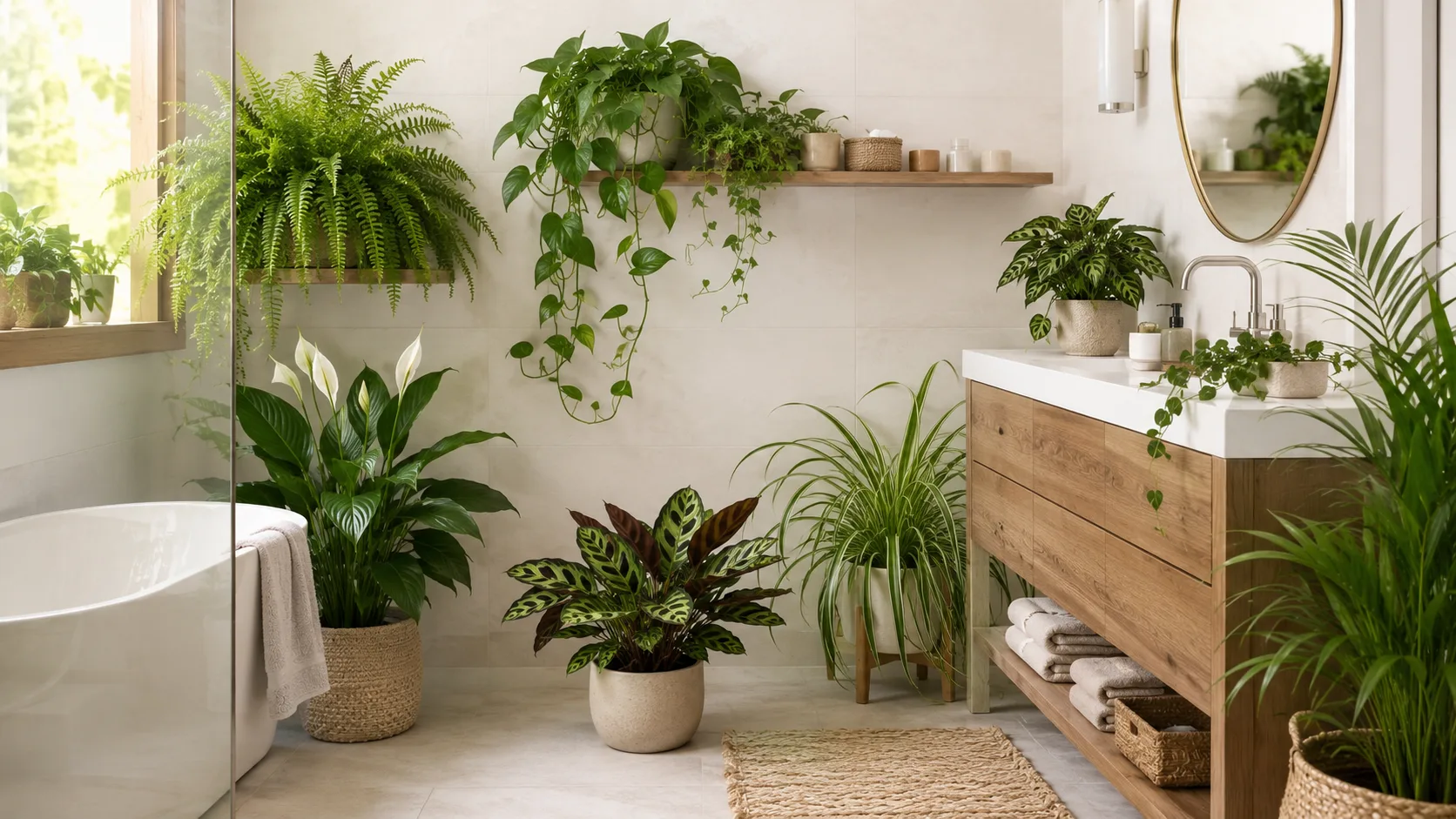
Bathroom cluster tested in a 6 × 8 ft room with a frosted window: two pothos and a spider plant on a wire shelf 3 ft below the ceiling. Morning RH there held 45–52% in winter without extra misting — useful for humidity lovers, but skip windowless bathrooms where mold risk rises.
Practical approach:
- Use a hygrometer before assuming plants will solve dryness. Target roughly 30–50% for comfort; the EPA recommends keeping indoor RH below 60% to limit mold risk. (US EPA)
- Cluster plants with broad leaves if the room has adequate light — not one lonely fern in a dark hallway.
- For persistent dry air, a humidifier beats misting or wishful thinking. See the houseplant humidity guide for a broader fix tree.
Do not buy a peace lily expecting it to replace your kitchen exhaust or an air purifier when pollution is the real issue.
Benefit 4 — Softer Recovery Spaces
Hospital research offers a useful — but limited — preview of how plants affect recovery environments. Patients in rooms with plants and flowers showed more positive physiological responses, including lower systolic blood pressure and lower pain, anxiety, and fatigue ratings, compared with control rooms in one abdominal-surgery study. (ASHS Journals)
That does not mean houseplants heal illness. It means the physical setting influences comfort, stress, and perceived wellbeing during recovery. At home, “recovery” includes post-flu weeks, grief, burnout, surgery convalescence, and plain exhaustion — not only hospital discharge.
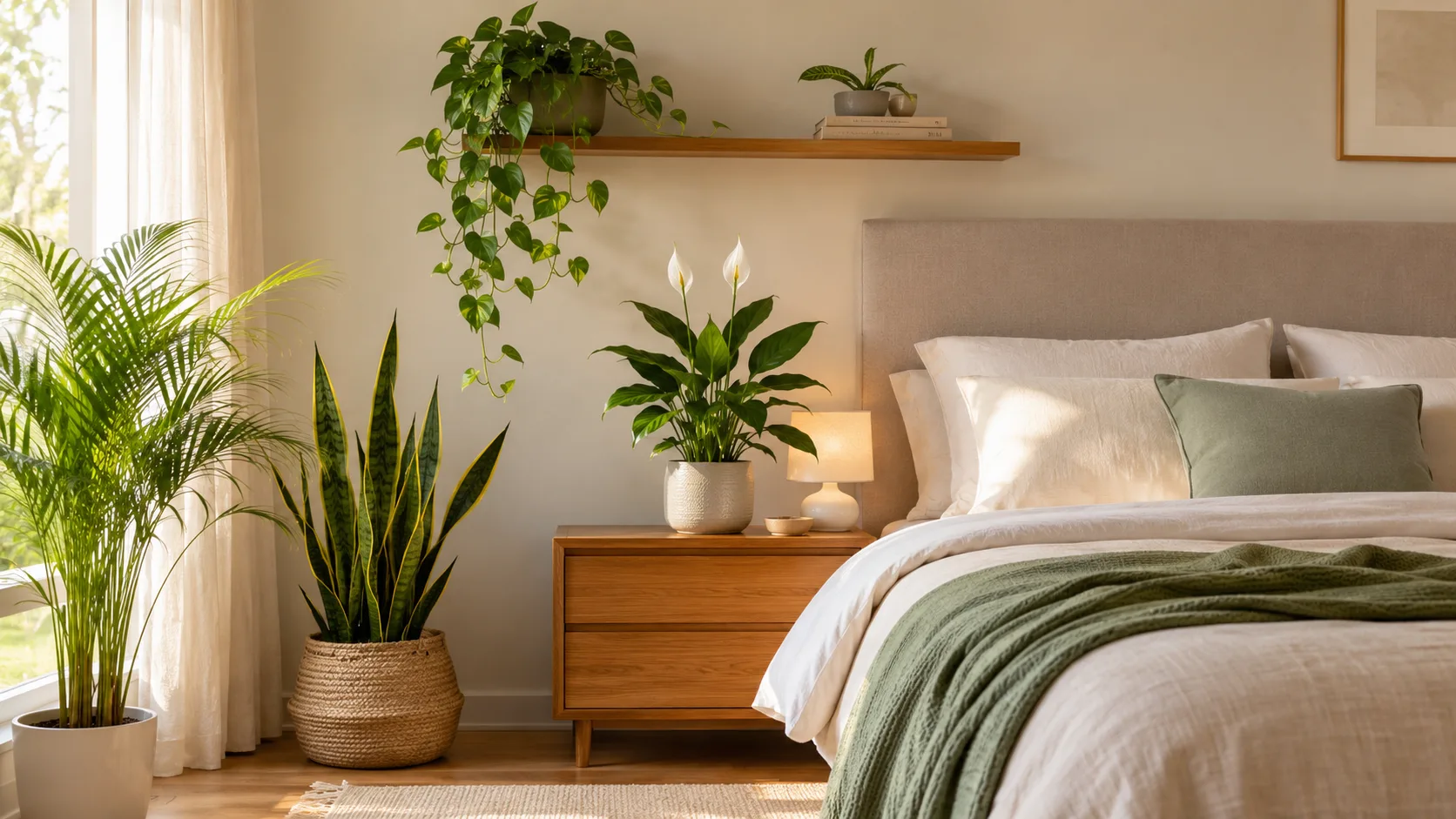
Recovery-corner setup tested beside a reading chair: snake plant on a low side table and trailing pothos on a shelf within view from the sofa — both chosen for low pollen, low scent, and weekly watering only.
Keep recovery corners low maintenance: ZZ plant, snake plant, pothos, or rubber plant if light allows. Avoid heavy pollen, strong fragrance, or plants that shed constantly if allergies or migraines are a factor.
Evidence label: Promising for environmental comfort; not medical treatment. Seek professional care for clinical recovery and mental-health crises.
Safety for Pets, Kids, and Allergies
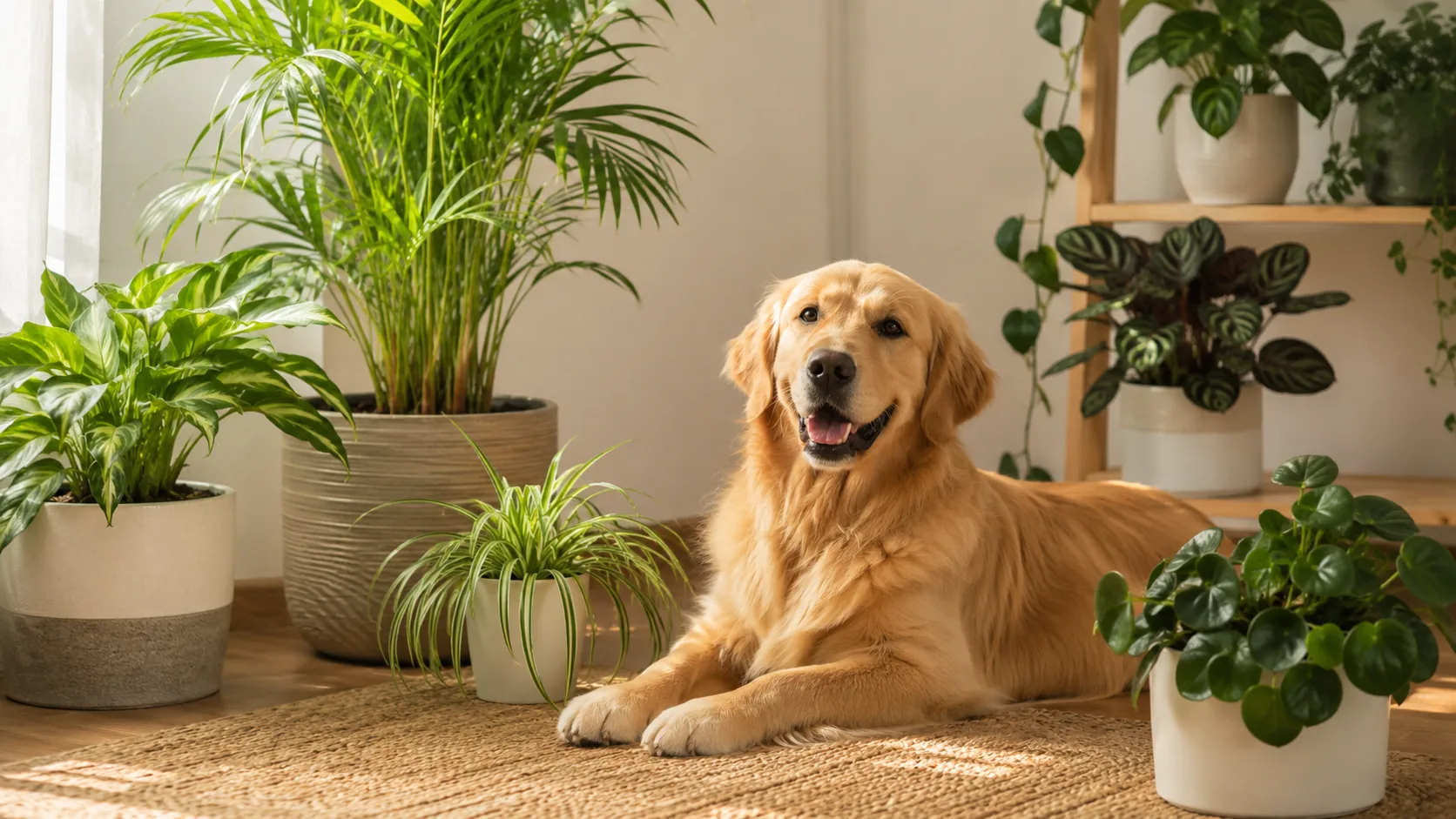
Many common houseplants are toxic if chewed. Lilies are especially dangerous for cats. (ASPCA) Pothos, philodendron, dieffenbachia, and peace lily can irritate the mouth and digestive tract. Before buying, search the exact species in the ASPCA toxic and non-toxic plants database. If a pet or child may have ingested plant material, contact your veterinarian or poison control — do not rely on a blog for emergency guidance.
Pet-safer starting points often include spider plant and parlor palm, but verify the species, not the common name. Keep risky plants elevated — remembering that cats climb.
Benefit 5 — How Plants Change the Way You Use Your Home
The fifth benefit is the most underrated and the most different from a science checklist: plants change behavior and spatial feel. This is biophilic design at apartment scale — bringing living texture, organic shape, and routine into built spaces you cannot remodel.
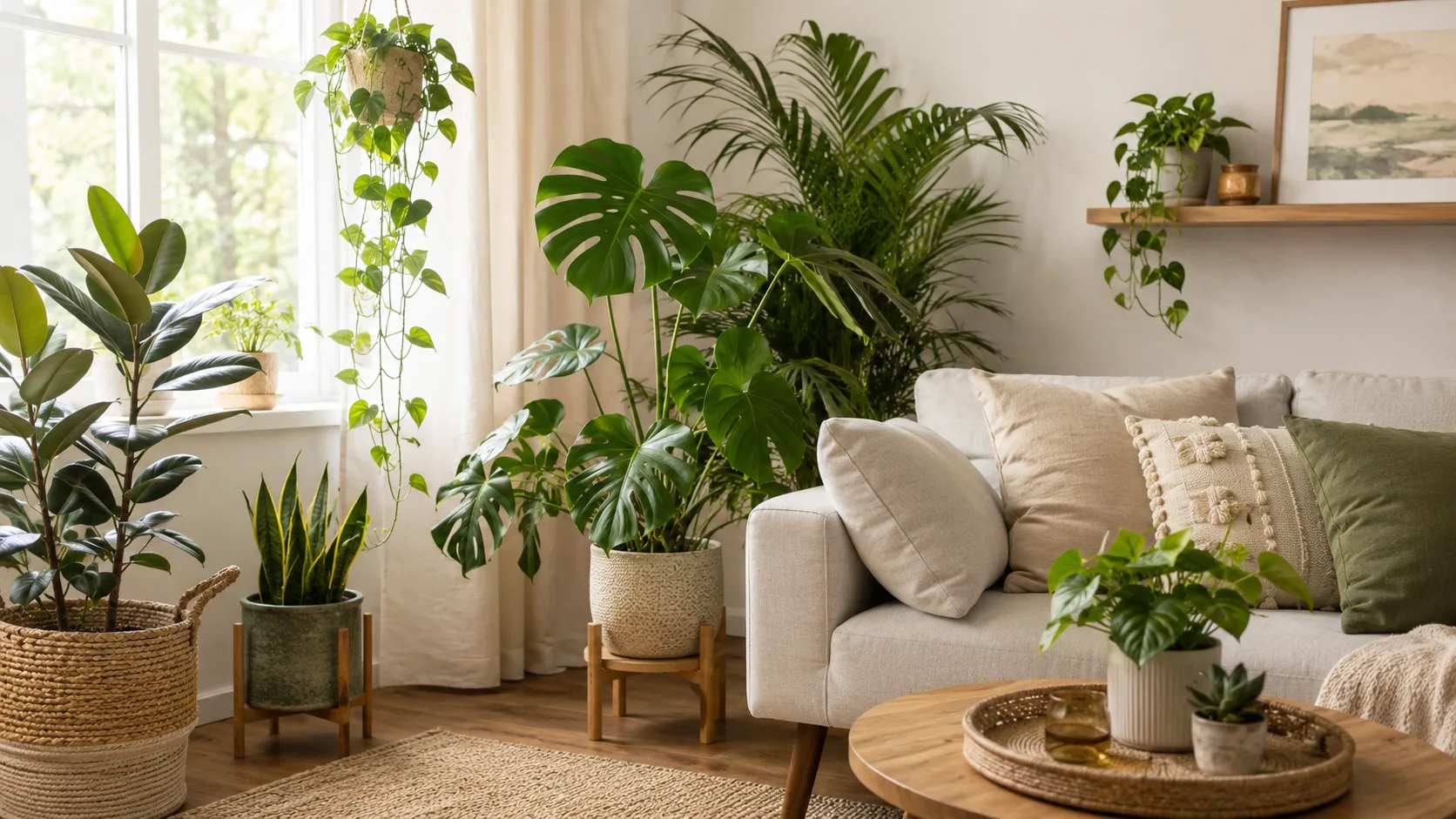
Rental living-room vignette tested in a 12 × 14 ft room: rubber plant in the bright corner and parlor palm beside the sofa — used to mark where the workspace ends and the lounge begins without drilling or painting.
In rentals and small apartments, you may not control flooring, wall color, or window direction. You can still:
- Define zones — a tall plant marks where the sofa ends and the workspace begins.
- Soften dead corners — a rubber plant or parlor palm turns a blank wall into a finished vignette.
- Build micro-routines — watering Sunday morning may lead to wiping the shelf, opening curtains, and clearing mail — small order that spreads.
A healthy plant signals that a space is maintained, not merely occupied. That matters in rooms where people spend long hours alone — studio apartments, night-shift bedrooms, persistent home offices.
Evidence label: Strong experiential and design logic; complements but does not replace outdoor time or human connection.
Room-by-Room Starter Map
Use this map if you want benefits without turning your home into a greenhouse. Start with one to three plants in rooms you actually use.
| Room | Best benefit to target | Starter placement | Good first plants |
|---|---|---|---|
| Home office / desk | Focus, soft fascination | One pot within sight line, not behind monitor | Pothos, ZZ plant, peperomia |
| Kitchen | Stress pause, fresher feel | Counter away from stove splatter | Spider plant, small pothos |
| Bedroom | Calmer visual tone | Nightstand or dresser with adequate light | Snake plant, ZZ plant (low scent, low fuss) |
| Living room | Biophilic anchor, rental polish | One floor plant in a bright corner | Rubber plant, parlor palm |
| Recovery / rest corner | Softer, less clinical feel | Side table within view from sofa or bed | ZZ plant, snake plant, pothos |
| Bathroom (bright) | Humidity-loving cluster | Shelf with strong indirect light | Spider plant, pothos (skip if windowless) |
Add a fourth plant only after the first three stay healthy for a month. Thriving beats abundant.
How to Choose Plants That Fit Your Life
The best indoor plant is not the most Instagram-famous leaf. It is the one that matches your light, schedule, pets, and tolerance for maintenance.
Beginner-forgiving picks (linked to full care hubs):
- ZZ plant — low water, tolerates lower light; slow but steady.
- Snake plant — upright, architectural, drought tolerant.
- Pothos — trailing, fast feedback, easy propagation.
- Spider plant — forgiving; popular in brighter rooms.
- Heartleaf philodendron — similar vibe to pothos; verify pet safety.
- Rubber plant — statement floor plant when you have bright indirect light.
Bedroom note: the idea that bedroom plants are dangerous because they release CO₂ at night is not a practical concern at typical houseplant numbers. Bigger bedroom issues are moldy soil, allergens, pests, and insufficient light for the species you chose.
Pet households: verify every purchase in the ASPCA database. When in doubt, choose confirmed safer species and keep toxic plants out of reach.
Mistakes That Cancel the Benefits
Even good intentions backfire. Avoid these common errors:
- Overwatering — the fastest way to turn a calming plant into a gnats-and-guilt project. Water when the root zone is ready, not when the calendar says so. (How to water indoor plants)
- Dark-corner placement — “low light” means tolerates less light, not survives in darkness. No window? Use a grow light or skip living plants.
- Buying too many at once — three healthy plants beat twelve stressed ones. Scale after you learn your home’s light map.
- Expecting air purification — ventilation, source control, and filtration matter more. Plants are comfort allies, not HVAC replacements.
- Ignoring plant health — dust blocks light; pots without drainage trap water; dead leaves attract pests. Basic care protects the benefit you wanted.
Related Guides
- Top 7 scientifically proven benefits of indoor plants — deeper evidence review when you want study types and limits.
- How to water indoor plants the right way — keep starter plants healthy so benefits do not turn into guilt.
- Grow lights complete guide — when your desk or corner lacks usable window light.
- Houseplant humidity guide — fix dry air beyond a pebble tray and wishful thinking.
- 7 calming indoor plants to help you sleep better — bedroom species when rest is the priority.
Conclusion — Your Monday Morning Checklist
Skip the recap. Use this checklist instead:
- Pick one high-use room — kitchen counter, desk, or entry landing — not a guest room you never enter.
- Choose one species that matches light and pet safety; open its
/plants/hub before you buy. - Place it in sight line from where you sit or stand during stress peaks.
- Buy or borrow a hygrometer if dryness is your issue; cluster plants only after you know the baseline RH.
- Water on soil readiness, not calendar guilt — see how to water indoor plants.
- For evidence depth, read Top 7 Scientifically Proven Benefits of Indoor Plants when you are ready for study types and limits.
One healthy plant in the right room beats five in the wrong corners. Start there.