Dieffenbachia Care: Light, Water, Toxicity & Tips
Dieffenbachia spp.
Dieffenbachia tolerates low light and needs watering only when the top inch of soil dries. Always wear gloves - all parts are toxic to cats, dogs, and humans. Handle with extreme caution around children and pets.
Dieffenbachia Care: Light, Water, Toxicity & Tips
Start with wateringThe most common care mistake for DieffenbachiaWatering guide →Dieffenbachia care essentials
Light
medium to bright indirect light
Water
Water when the top inch of soil is dry. Every 7–10 days in summer; every 14–21 days in winter.
Soil
Well-draining light potting mix with perlite.
Humidity
60%
Temperature
18–29°C (65–84°F)
Fertilizer
Use balanced liquid fertilizer at half strength and stop if the plant is stressed, newly repotted, or not actively growing. Fertilizing in winter; high-salt fertilizers cause brown leaf edges.
About Dieffenbachia
Dieffenbachia is native to Tropical Americas (Mexico to Argentina, Caribbean islands), typically reaches 2–5 ft tall indoors; large variegated leaves 8–14 inches indoors, with moderate to fast growth. Dieffenbachia has a upright growth habit and part of the Araceae family. It is also known as Dumb Cane, Mother-in-Law's Plant, and Leopard Lily.
| Detail | Information |
|---|---|
| Also known as | Dumb Cane, Mother-in-Law's Plant, Leopard Lily |
| Native region | Tropical Americas (Mexico to Argentina, Caribbean islands) |
| Mature size | 2–5 ft tall indoors; large variegated leaves 8–14 inches |
| Growth rate | Moderate to fast |
| Growth habit | Upright |
| Scientific name | Dieffenbachia spp. |
| Family | Araceae |
Dieffenbachia Care: Light, Water, Toxicity & Tips
What Is Dieffenbachia?
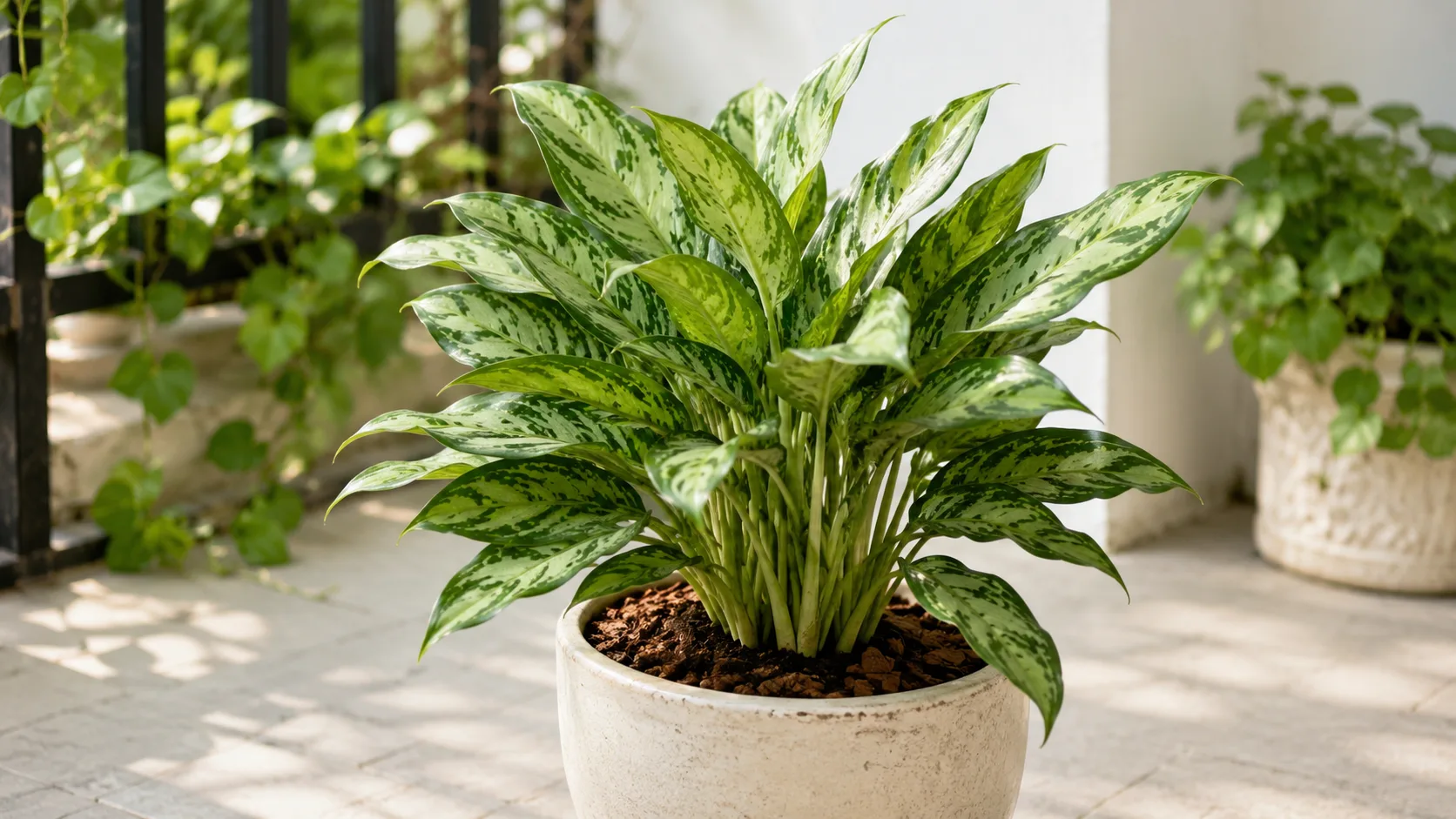
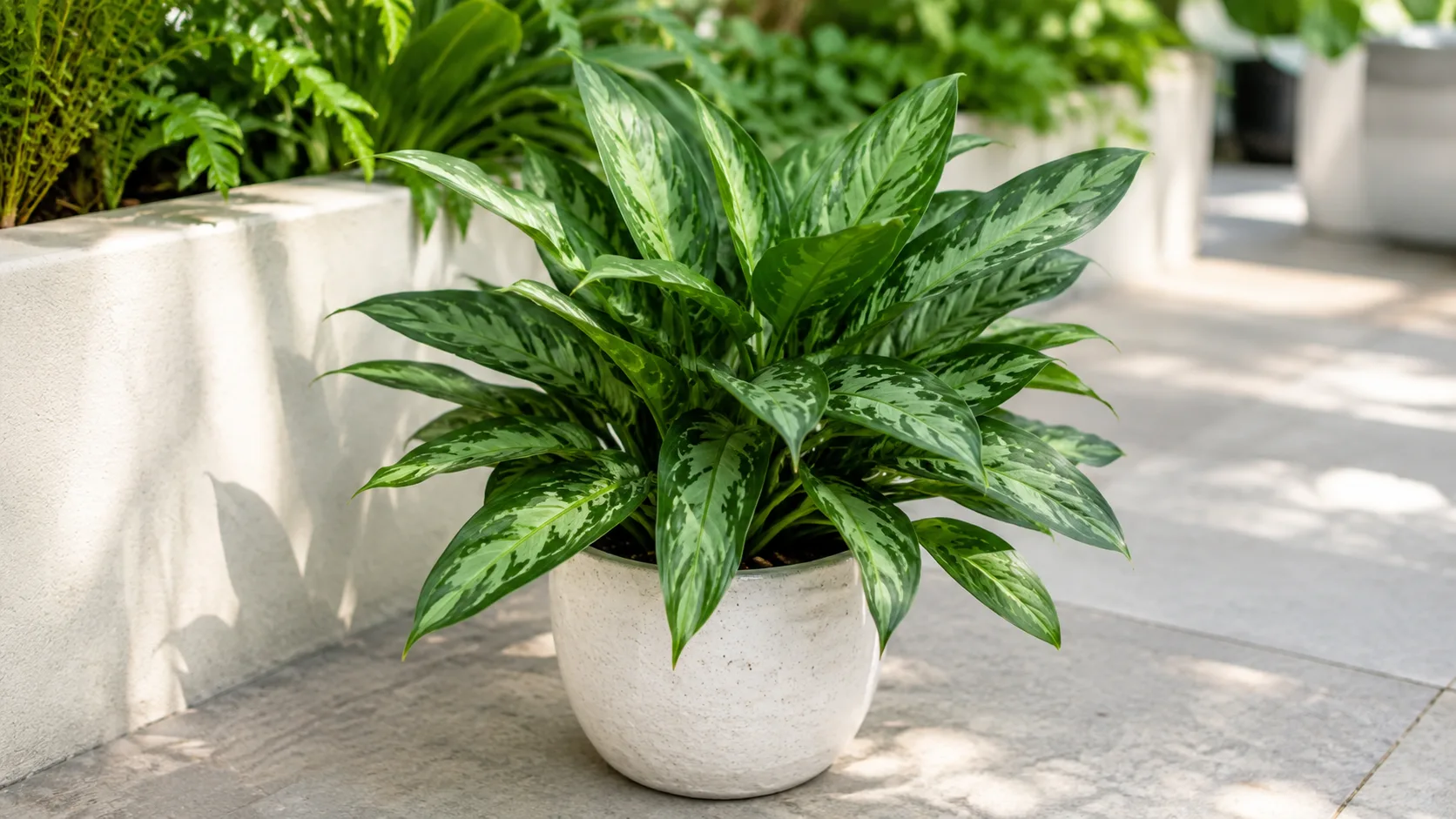
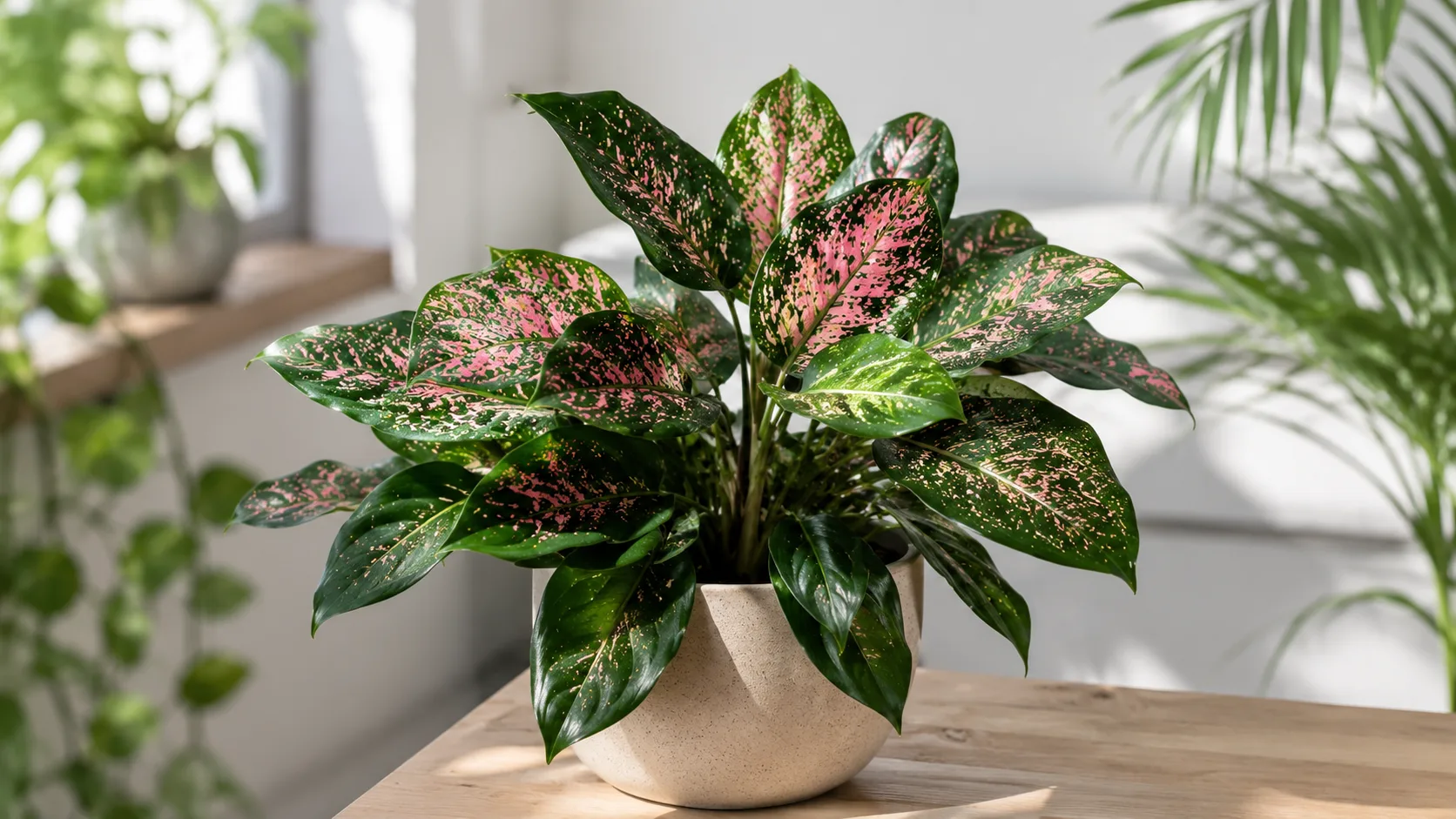
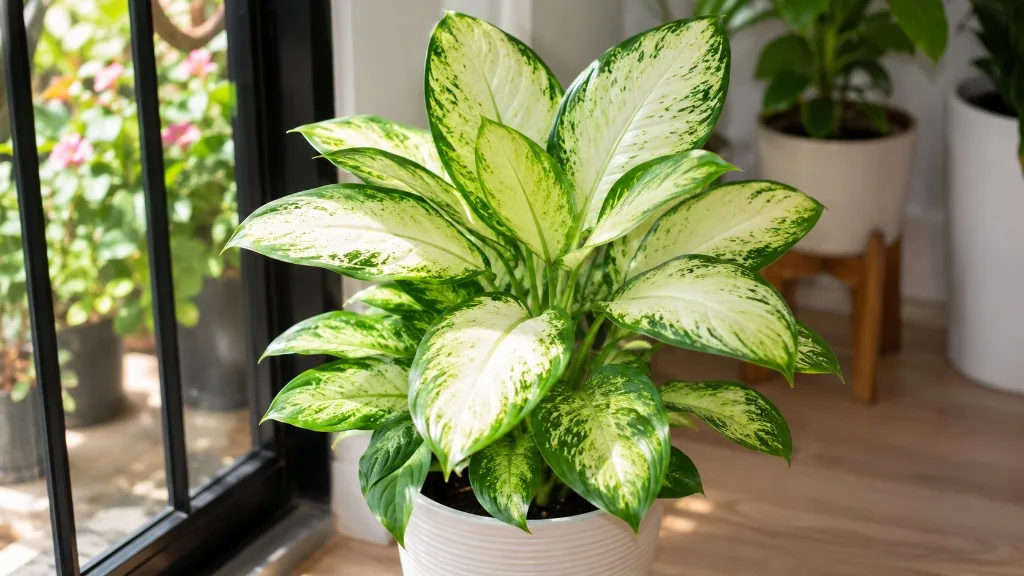
Dieffenbachia - commonly called dumb cane or dumbcane - is an upright tropical foliage plant grown for broad, patterned leaves on thick cane-like stems. On LeafyPixels, this page is the genus-level indoor guide for the unlabeled or loosely labeled nursery plants sold simply as “Dieffenbachia.” Use it when your tag does not name a cultivar, or when you want the shared care logic before branching into more specific pages such as Dieffenbachia Camille or Dieffenbachia Tropic Snow.
Most indoor dumb canes in commerce are Dieffenbachia seguine selections or hybrid lines derived from it. The NC State Plant Toolbox describes the species as an erect evergreen aroid with large leaves variegated in cream, white, or yellow. Indoors, that usually translates to a plant 2 to 5 feet (60 to 150 cm) tall with leaves roughly 8 to 14 inches (20 to 35 cm) long, though the range is wider once named cultivars enter the picture. Growth is moderate to fast in warm, bright conditions and slows sharply when light drops or temperatures fall below about 60°F (15°C).
If you are deciding whether Dieffenbachia fits your home, the practical summary is this: it is easier than a calathea and less tolerant of neglect than a pothos or snake plant. It handles average home humidity better than many prayer-plant relatives, but it does not forgive cold drafts, chronic overwatering on Dieffenbachia, or casual placement in chewing range of pets and children. The payoff is fast vertical foliage impact from a single pot. The non-negotiable caveat is calcium oxalate toxicity in every part of the plant, which makes placement and handling part of the care routine, not a footnote.
Botanical Background and the Araceae Family
Dieffenbachia belongs to the family Araceae - the arum family - alongside philodendrons, peace lilies, aglaonemas, pothos, and alocasias. That family connection matters more than most care tags admit. Araceae plants share a few baseline patterns: they prefer well-drained soil that still holds moisture, they dislike sudden temperature swings, and many accumulate insoluble calcium oxalate crystals as a defense compound. Knowing the family helps you predict problems before they become emergencies - root issues usually start in the mix long before the leaves tell the full story, and toxicity warnings that apply to philodendron apply here too.
The genus is native to the tropical Americas, from Mexico through Central and South America to Argentina, including Caribbean islands. In that warm, humid understory, Dieffenbachia grows as a herbaceous perennial with a cane-like stem that sheds lower leaves as it elongates, leaving a bare trunk topped by a crown of fresh foliage. Indoors, that growth habit means your plant may look like a leafy shrub for years and then gradually reveal a trunk - not a sign of failure, but a natural maturation pattern you can manage with pruning, rotation, or propagation.
Commercial production has favored compact, heavily variegated clones for interiorscapes for over a century. University of Florida IFAS Extension notes that maintaining aesthetic quality indoors depends heavily on matching cultivar to available light. That point matters enough to say plainly: the white-heavy dumb canes sold for lobbies and living rooms are not interchangeable. A darker green office-tolerant clone can coast in light that would turn a cream-centered cultivar plain green and leggy within a month.
How the Common Indoor Types Differ
Most shoppers do not buy a species; they buy a look. That is why a genus-level page still needs cultivar judgment:
- Compact, cream-centered types such as ‘Camille’ stay shorter and need brighter filtered light to keep the pale center clean instead of muddy green.
- Larger mottled forms such as ‘Tropic Snow’ make better floor plants, tolerate slightly lower light than many white-heavy cultivars, and demand more caution with pot size because the root ball often occupies a large decorative container.
- Darker green or speckled office clones usually tolerate modest light better but lose pattern quality fast in deep shade and still rot when watered like peace lilies.
If your plant still has a tag, use the named cultivar page when available. If it does not, read your plant by leaf pattern, mature size, and growth habit, then use this page as the baseline.
Why the Common Name “Dumb Cane” Matters
The name dumb cane is not folklore - it describes a real physiological effect. All parts of Dieffenbachia contain needle-shaped calcium oxalate crystals organized into bundles called raphides, along with proteolytic enzymes that intensify tissue irritation when plant cells are damaged. Chewing a leaf or stem releases those crystals into the mouth and throat, causing immediate burning pain, swelling of the lips and tongue, excessive drooling, and difficulty speaking - historically described as temporary loss of speech, hence “dumb.” Poison Control explains that the crystals cause mechanical microtrauma to soft tissue rather than a classic chemical poison, which is why symptoms can feel disproportionately severe from a small bite.
Sap contact on skin or in eyes can cause rash, redness, and irritation in sensitive individuals. That is why gloves matter during pruning and Dieffenbachia repotting guide, and why the plant belongs on a stable shelf rather than a coffee table in a home with toddlers. The toxicity is a serious irritation hazard, not usually a lethal one for adults, but rare cases of airway swelling have been reported when significant plant material is swallowed - enough reason to treat ingestion in children or pets as an urgent situation rather than a wait-and-see moment.
Understanding the mechanism also explains why Dieffenbachia is not “safe if pets only nibble.” The pain is immediate and the ASPCA lists clinical signs including oral irritation, drooling, vomiting, and difficulty swallowing in cats and dogs. Millions of households grow dumb cane without incident by respecting placement and handling rules - but the common name exists as a warning, and ignoring it is how preventable emergencies happen.
Best Growing Conditions for Dieffenbachia
Dieffenbachia performs best when four environmental variables work together: light, water, soil, and temperature. Nail those and feeding, repotting, and pest control become routine maintenance. Miss any one badly - especially light paired with overwatering - and the plant declines in ways that fertilizer cannot fix. The sections below walk through each variable with the cultivar nuance that generic “low light houseplant” advice usually skips.
Light Requirements and Window Placement
Bright indirect light is the target for nearly every Dieffenbachia sold as a houseplant. Think east-facing windows where gentle morning sun arrives and fades, or a position 3 to 6 feet (1 to 2 meters) back from a south- or west-facing window where daylight is strong but direct beams do not hit the leaves for hours at a time. North windows can work for shade-tolerant cultivars, but growth will be slower and variegation less vivid.
Too little light produces leggy stems with long gaps between leaves, smaller new foliage, and solid green leaves as the plant sacrifices patterning to maximize chlorophyll. Too much direct sun - especially hot afternoon sun - causes bleached patches, brown scorched edges, and curled leaves. A practical diagnostic: if new growth is compact, firm, and appropriately variegated for your cultivar, light is probably adequate. If stems stretch and lean hard toward the window, the plant wants more brightness. If the side facing the glass looks washed out while the shaded side stays dark green, pull the pot back or filter the sun with a sheer curtain.
Rotate the pot a quarter turn every week or two so the cane grows straight rather than bowing toward one light source. Dieffenbachia does not need dramatic daily movement - consistent orientation with occasional rotation is enough. In dim apartments, a full-spectrum LED grow light 12 to 18 inches above the canopy for 10 to 12 hours daily can substitute for a marginal window, which is often a better investment than buying a second plant to replace one that etiolated in a hallway.
Cultivar Light Differences Worth Knowing
Not every Dieffenbachia tolerates the same light intensity, and treating them identically is one reason variegated plants “go green” in offices. UF IFAS Extension cites specific interiorscape thresholds: cultivars such as ‘Star Bright’ and ‘Snow Flake’ remain attractive at roughly 50 foot-candles - genuinely low interior light - while ‘Camille’ needs approximately 150 to 250 foot-candles to hold its cream-and-green pattern without excessive stem elongation. Heavily white-variegated types generally need more light than darker green clones because pale tissue photosynthesizes less efficiently.
‘Tropic Snow’ and other large-leaved speckled varieties typically sit in the medium-to-bright indirect camp: fine a few feet from a bright window, unhappy in a windowless break room. ‘Compacta’ and similar dwarf forms follow the same rules at smaller scale - they do not magically need less light because the pot is smaller. When you buy a plant without a cultivar tag, use leaf response as your guide: fading variegation and stretching mean more light; scorching means less direct sun.
If you are choosing between Dieffenbachia and a true low-light specialist, aglaonema tolerates dimmer conditions with less dramatic variegation loss. Dieffenbachia can survive low light longer than a fiddle-leaf fig, but survival without pattern loss is a different standard - match the plant to the brightest spot you can offer, then select a cultivar known for shade tolerance if that spot is still modest.
Temperature and Humidity
Dieffenbachia prefers stable indoor temperatures between 65 and 80°F (18 and 27°C). It tolerates brief dips, but sustained exposure below about 55°F (13°C) slows growth and causes leaf drop, and frost is fatal. Watch problem zones: air-conditioning vents, winter window sills, and entry doors that blast cold air when opened. A plant that looked fine in October can look miserable by January if it spent three months in a draft.
Humidity in the 40 to 60% range supports the best foliage quality, which overlaps with what many homes already provide. Dieffenbachia tolerates drier winter air better than calatheas, but very dry air below ~30% encourages spider mites and can accentuate brown leaf tips, especially when combined with fluoride-heavy tap water. A pebble tray, grouping plants, or a small humidifier helps in heated apartments; misting leaves is optional and brief - wet foliage overnight can invite fungal spotting without meaningfully raising room humidity.
Soil and Drainage
For soil, use a well-draining peat- or coco-based potting mix amended with perlite. A reliable starting recipe is equal parts indoor potting mix and perlite, or two parts potting mix, one part perlite, one part fine orchid bark if you tend to water heavily. The mix should hold moisture in the root zone while draining freely from the bottom within minutes of watering. Heavy, compaction-prone mixes are a common path to root rot on Dieffenbachia because Dieffenbachia’s fleshy roots need air as much as water.
Target substrate pH around 6.0 to 7.0 - normal commercial mixes land close enough that hobbyists rarely need adjustment. Drainage holes are non-negotiable. A decorative cache pot without holes is a water reservoir, not a safety feature. If you use one, lift the grow pot to water, drain fully, and never let the bottom sit in runoff.
How to Water Dieffenbachia
The general rule: water when the top 1 to 2 inches (2.5 to 5 cm) of soil are dry, then soak until a little water runs from the drainage holes. Dieffenbachia likes even moisture during active growth but cannot sit in wet soil for days. The exact interval might be every 7 to 10 days in warm, bright summer conditions and every 14 to 21 days in cooler, dimmer winter months for a medium pot - but calendars are starting points, not commands. Pot size, mix composition, light, humidity, and root mass all change drying speed.
Check moisture with a finger, wooden skewer, or moisture meter before every watering. If the deeper mix still feels cool and damp, wait. If the top is dry and the pot feels noticeably lighter, water thoroughly. Always empty the saucer within 30 minutes so roots are not re-absorbing stagnant water. Dieffenbachia wilts when underwatering on Dieffenbachia, but chronic overwatering kills more plants than drought because root rot develops invisibly until multiple leaves yellow at once.
Water quality matters more than for some houseplants. Dieffenbachia is sensitive to fluoride and chlorine in municipal tap water, which can produce brown tips and margins even when Dieffenbachia watering guide is correct. If tips persist despite good moisture management, try filtered water, rainwater, or tap water left open overnight to off-gas chlorine. Periodic leaching - watering heavily until twice the pot volume runs through - flushes accumulated salts from fertilizer and hard water.
Watering Rhythm During Active Growth
During active growth - typically spring through early fall when new leaves unfurl regularly - Dieffenbachia uses water predictably. The pot dries on a rhythm you can learn within two weeks of observation. Water deeply but less often rather than a little every day; shallow frequent watering keeps only the surface moist while the core stays too wet or too dry depending on mix structure.
New leaves should emerge firm and fully expanded without brown edges. If new growth aborts small and crinkled, review light and moisture together - sometimes the issue is dim conditions slowing water uptake, not absolute drought. A plant in a bright, warm room may need water twice as often as the same cultivar in a north-facing office; compare pots in your home, not advice written for someone else’s climate.
Seasonal Adjustments and Common Watering Mistakes
In winter, shorter days and cooler rooms slow transpiration. The watering schedule that worked in August will overwater in January if you do not adjust. Stretch intervals, verify the deeper mix is approaching dry before soaking, and pause fertilizer until new growth resumes visibly. A Dieffenbachia that receives the same weekly drench year-round often develops yellow lower leaves and fungus gnats by February - both signs the mix is staying wet too long.
The most common watering mistakes are schedule watering without checking soil, letting pots sit in saucers of runoff, and using oversized pots “so I don’t have to water as often.” A pot too large for the root system holds excess moisture that roots cannot use, creating anaerobic conditions perfect for rot. Other frequent errors: watering with ice cubes (cold shock to tropical roots), compensating for droopy leaves without checking whether the mix is wet or dry, and assuming misting replaces watering.
When in doubt, underwater slightly rather than overwater severely - Dieffenbachia recovers from brief drought with a good soak faster than from advanced root rot, which may require cutting the cane back to healthy tissue and re-rooting.
How to Feed Dieffenbachia
Dieffenbachia is not a heavy feeder. A balanced water-soluble fertilizer such as 20-20-20 at one-quarter to one-half the label strength, applied every four to six weeks during active growth, is sufficient for most indoor plants. UF IFAS Extension recommends roughly 100 ppm nitrogen monthly after the initial post-purchase period - conservative by design because salt buildup burns leaf margins on Araceae plants.
Apply fertilizer to already-moist soil so the solution distributes without concentrating against dry roots. If your potting mix included a starter fertilizer charge, hold supplemental feeding for the first two months after purchase. Flush the pot with plain water every few months if white crust appears on the soil surface or leaf tips brown despite good humidity - that crust is often soluble salts.
Pause feeding during winter dormancy, immediately after repotting, and while the plant recovers from pest damage or root pruning. Feeding a stressed plant adds salt without supporting growth. Resume when new leaves appear on a normal schedule and the pot dries at a predictable rate. Over-fertilizing produces crispy leaf margins and stunted new growth that mimics drought - if you have been heavy-handed with the blue bottle, leach the soil and wait a month before feeding again.
Repotting and Root Health
Repot Dieffenbachia roughly every one to two years, or when roots circle the drainage holes, water runs straight through without absorbing, or the plant becomes top-heavy for its container. The best timing is early in the active growing season - late winter to spring - so roots have months of warmth and light to re-establish. Wear gloves during repotting because broken roots and cut stems release sap.
Move up only one pot size - typically 1 to 2 inches (2.5 to 5 cm) wider than the current container. Oversized pots are the leading cause of post-repot decline because excess soil stays wet. Use fresh well-draining mix, loosen circling roots gently, and water lightly after repotting. Expect some lower leaf yellowing as the plant redirects energy to root repair; avoid fertilizing until new growth appears.
Signs It Is Time to Repot
Physical signs are more reliable than the calendar. Roots emerging from drainage holes, soil drying within a day or two of watering, visible root mat at the soil surface, and a plant that wobbles because the root ball is small relative to top growth all suggest repotting. If water sits on the surface and will not penetrate, the mix may be hydrophobic or compacted - repotting with fresh medium often fixes that faster than top-dressing.
A sour smell from the mix, mushy brown roots, or persistent fungus gnats despite corrected watering indicate root health problems that repotting alone may not solve - trim rotten tissue with sterile shears, let cuts callus briefly, and replant in a smaller pot if you removed significant root mass. Dieffenbachia can recover from aggressive root pruning if warmth and humidity stay stable afterward.
Propagation Methods for Dieffenbachia
The most reliable home propagation methods are stem cuttings and division of multi-stemmed plants. Both work because Dieffenbachia’s cane stem stores water and nutrients, and each segment with a node can produce roots and new leaves. Work with a healthy parent plant, clean sharp pruners, and gloves - sap exposure during cutting is the main safety risk.
For stem cuttings, remove a 4- to 6-inch (10 to 15 cm) section of cane with at least one node, optionally dust the cut with cinnamon or let it air-dry for an hour to reduce rot risk. Root in moist perlite, a 50/50 perlite-and-peat mix, or water, keeping the node buried or submerged while the upper bud points upward. Place the cutting in bright indirect light at warm temperatures near 70 to 75°F (21 to 24°C). Roots typically form in three to six weeks; transplant when roots are 2 to 3 inches (5 to 7 cm) long and anchor gently in standard potting mix.
Air layering works on tall bare canes if you want to shorten a leggy plant without discarding the top - wound the stem, wrap moist sphagnum and plastic around the node, and cut below once roots fill the moss. Division is simplest when a pot holds multiple stems: unpot, separate root masses with a knife if needed, and pot each section individually. Do not propagate yellowing, pest-infested, or rot-compromised canes; weak cuttings fail at high rates and spread problems to clean medium.
Common Dieffenbachia Problems and Pests
Most Dieffenbachia problems are environmental - wrong light, wrong moisture, wrong temperature - and they announce themselves through leaf symptoms long before the plant collapses. The useful diagnostic order is moisture first, then light, then pests, then salts. Jumping to fertilizer or pesticide before checking the basics wastes time and sometimes makes things worse.
Yellow Leaves, Brown Tips, and Pest Identification
Yellow leaves are the most common complaint. Lower leaves yellowing one at a time while new growth stays healthy often means natural senescence - older leaves die as the cane elongates. Remove them cleanly. Multiple yellow leaves at once, especially if soft and accompanied by wet soil, strongly suggests overwatering and possible root rot. Yellow leaves with dry, crispy edges on a light pot point to underwatering or cold draft exposure. Uniform pale yellowing on older foliage with slow growth can indicate low light or nitrogen deficiency after years in the same depleted mix - repotting before fertilizing is usually the better first move.
Brown leaf tips and margins usually trace to low humidity combined with fluoride or salt buildup, though underwatering and direct sun scorch produce similar edges. Flush the soil if salts are suspected, switch water sources if fluoride is likely, and judge success by new leaves, because damaged tips do not green up retroactively.
Leggy, sparse plants with small green leaves need more light or a cultivar better matched to the available brightness. Prune or air-layer tall bare canes to reset aesthetics rather than letting the plant become a leaf tuft on a yard-long stick.
Pests to watch for include spider mites in dry winter air - fine webbing on leaf undersides and stippled yellow speckling are telltale signs. Mealybugs cluster in leaf axils and along veins as white cottony masses. Scale appears as immobile brown bumps on stems and leaf undersides. Fungus gnats hover near soil that stays wet on the surface. Inspect weekly with a magnifying glass if needed. Isolate infested plants, wipe mealybugs and scale with alcohol-dipped cotton swabs, rinse mites under lukewarm shower water, and follow with insecticidal soap applied to leaf undersides per label directions - though Clemson HGIC notes Dieffenbachia is sensitive to insecticidal soap, so test one leaf before coating the whole plant. Repeat weekly until clear.
Edema - small water-soaked blisters on leaf margins - appears when roots take up water faster than leaves transpire, often after a sudden temperature drop or overwatering during cool weather. Improve airflow, adjust watering, and avoid cold night windowsills.
Dieffenbachia Toxicity: Calcium Oxalate and Safe Handling
Every part of Dieffenbachia - leaves, stems, roots, and sap - contains insoluble calcium oxalate crystals and proteolytic enzymes. The ASPCA lists Dieffenbachia as toxic to dogs and cats, with clinical signs including oral irritation, intense burning of the mouth and tongue, excessive drooling, vomiting, and difficulty swallowing. Additional common names on the ASPCA entry - Giant Dumb Cane, Tropic Snow, Exotica, Spotted Dumb Cane - underscore that cultivar name does not change toxicity.
For humans, chewing plant tissue causes immediate pain and swelling; skin contact with sap may irritate sensitive individuals. Poison Control recommends rinsing the mouth with water, sucking ice chips for pain, and seeking emergency care if there is severe swelling, difficulty breathing, or difficulty swallowing. For skin exposure, wash with soap and water for 15 minutes. For eye exposure, rinse with running water and seek medical evaluation - corneal abrasion is possible.
Safe handling practices that responsible growers follow: wear nitrile gloves when pruning, repotting, or taking cuttings; wash hands and tools afterward; do not compost pruned material where pets might access it; place pots out of reach on sturdy stands rather than floor-level shelves in pet or toddler homes; and educate household members that this is not a salad ingredient. Dieffenbachia is widely grown safely - the risk is manageable, not imaginary - but it is categorically not pet-safe and not child-safe at chewing height.
If a pet ingests Dieffenbachia, contact your veterinarian or the ASPCA Animal Poison Control Center at (888) 426-4435 (a consultation fee may apply). For human exposure, Poison Control at 1-800-222-1222 (U.S.) can guide first steps. This is general safety information, not medical or veterinary advice - when symptoms are severe, professional care is appropriate.
For households that need non-toxic large foliage, consider calathea, cast iron plant (Aspidistra), or parlor palm instead of Dieffenbachia at nose level. If you already own dumb cane and share your home with animals, hanging baskets out of jump range or room restrictions work better than hoping curiosity will not strike.
Conclusion
Dieffenbachia is a tropical Araceae cane plant from the Americas that rewards bright indirect light matched to cultivar, moist well-draining soil checked before every watering, warm stable temperatures, and honest respect for its calcium oxalate toxicity. Give it an east window or a filtered bright spot, water when the top inch dries, flush salts periodically, rotate for straight growth, and wear gloves when you cut - and you get architectural foliage that fills vertical space faster than most shade-tolerant competitors.
When something looks wrong, read symptoms in context: stretching and faded variegation mean more light or a brighter cultivar choice; scorched bleached patches mean less direct sun; yellow leaves on wet soil mean roots need rescue, not another drink; brown tips often mean fluoride, salts, or dry air; webbing on undersides means spider mites. Fix environment first, adjust watering second, treat pests before they spread, and propagate healthy canes rather than nursing a rotting base indefinitely.
Dieffenbachia is not the right plant for every home - pet and toddler households should treat it as a serious oral irritant, not a mild inconvenience - but in the right placement it is one of the most forgiving dramatic foliage plants you can grow. Match cultivar to light, keep the mix aerated, and let the plant tell you when the rhythm is off. Do that, and dumb cane stops living up to only half its name.
When to use this page vs other Dieffenbachia guides
- Dieffenbachia overview - Canonical hub for this species - care topics and problems branch from here.
- Dieffenbachia problems - Symptom-first path when you already know something is wrong.
Related Dieffenbachia guides
- Dieffenbachia watering
- Dieffenbachia light
- Dieffenbachia soil
- Dieffenbachia propagation
- Dieffenbachia fertilizer
- Dieffenbachia repotting
- Dieffenbachia pruning
- Yellow Leaves on Dieffenbachia
- Brown Tips on Dieffenbachia
- Drooping Leaves on Dieffenbachia
- Root Rot on Dieffenbachia
- Overwatering on Dieffenbachia
How to care for Dieffenbachia?
How much light does Dieffenbachia need?
medium to bright indirect light
- medium to bright indirect light - medium to bright indirect light.
When should you water Dieffenbachia?
Water when the top inch of soil is dry. Every 7–10 days in summer; every 14–21 days in winter.
- Check the top inch; water when dry - Water when the top inch of soil is dry.
- Drain excess water - Water when the top inch of soil is dry.
What soil works best for Dieffenbachia?
Well-draining light potting mix with perlite.
- potting mix - Well-draining light potting mix with perlite.
- perlite (20%) - Well-draining light potting mix with perlite.
Grower notes for Dieffenbachia
What matters most with Dieffenbachia
Dieffenbachia is easiest to grow when you judge the whole plant: new growth, root-zone moisture, light exposure, and how quickly the pot dries after watering. In practice, the care checkpoint is simple: medium to bright indirect light. Pair that with well-draining light potting mix with perlite, and avoid changing water, pot size, and placement all at once.
Best placement in a real home
Dieffenbachia belongs where medium to bright indirect light is realistic for most of the day, not only where the pot looks good. Water when the top inch of soil is dry. Every 7–10 days in summer; every 14–21 days in winter. If the pot stays wet longer than expected, move the plant into better light or reassess the mix before watering again. Humidity target: 60%. Temperature comfort zone: 18–29°C (65–84°F).
Before you buy this plant
Choose Dieffenbachia with firm new growth, clean leaf undersides, and soil that does not smell sour or feel compacted. Be cautious if you see yellow-leaves, sticky residue, collapsed crowns, or a pot that is wet in poor light. Cosmetic old-leaf damage is less worrying than weak roots or active pests.
First month after bringing it home
Do not repot Dieffenbachia on day one unless the mix is failing or pests are obvious. Quarantine it, learn how fast the pot dries, and keep care boring while it adjusts. Watch especially for yellow-leaves, brown-tips, and drooping-leaves. If problems appear, correct the condition first rather than stacking fertilizer, repotting, and pruning together.
Safety note for Dieffenbachia
Dieffenbachia is not a plant to keep within reach of pets or children. The database flags it for cats, dogs, and humans. Use gloves if sap or plant tissue is irritating, and pick a pet-safe alternative for floor pots or low shelves.
How to tell Dieffenbachia is settling in
Also sold as Dumb Cane, Mother-in-Law's Plant, and Leopard Lily, this plant should be judged by stable new growth rather than label names alone. If you plan to multiply it later, common methods include Stem cuttings and Division. Repot only when you see Roots emerging from drainage holes and plant becoming top-heavy. If brown-tips shows up early, inspect light, watering, and roots before assuming the plant is permanently weak.
Is it pet safe?
Dieffenbachia is toxic to cats, dogs, and humans.
Contains calcium oxalate crystals and proteolytic enzymes. Causes intense oral pain, swelling, drooling, and temporary loss of speech in humans. Keep away from children and pets.
Watering Dieffenbachia
For Dieffenbachia, check the top inch; water when dry and water every 7–10 days in summer; every 14–21 days in winter. Reduce watering in winter.
| Detail | Information |
|---|---|
| How often | Every 7–10 days in summer; every 14–21 days in winter |
| How to check | Check the top inch; water when dry |
| Seasonal changes | Reduce watering in winter |
Signs of overwatering
- Yellow lower leaves
- mushy stems
- root rot
Signs of underwatering
- Drooping leaves
- dry crispy leaf tips
Soil & potting for Dieffenbachia
Use a mix of potting mix, perlite (20%) for Dieffenbachia. Good drainage prevents root rot. Target soil pH around 6.0–7.0. Repot every 2 years, ideally in spring.
| Detail | Information |
|---|---|
| Recommended mix | potting mix, perlite (20%) |
| Drainage | Good drainage prevents root rot |
| Soil pH | 6.0–7.0 |
| Repotting frequency | Every 2 years |
| Best season to repot | Spring |
Signs it needs repotting
- Roots emerging from drainage holes
- plant becoming top-heavy
- lower stem becoming bare as it grows tall
Humidity & temperature for Dieffenbachia
Dieffenbachia prefers 60%, though normal home humidity is usually fine. Keep temperatures around 18–29°C (65–84°F).
| Detail | Information |
|---|---|
| Humidity | 60% - normal home humidity is fine. |
| Ideal temperature | 18–29°C (65–84°F) |
Fertilizer & pruning for Dieffenbachia
Use use balanced liquid fertilizer at half strength and stop if the plant is stressed, newly repotted, or not actively growing. Fertilizing in winter; high-salt fertilizers cause brown leaf edges. for Dieffenbachia.
| Detail | Information |
|---|---|
| Fertilizer type | Use balanced liquid fertilizer at half strength and stop if the plant is stressed, newly repotted, or not actively growing. Fertilizing in winter; high-salt fertilizers cause brown leaf edges. |
Common problems on Dieffenbachia
Yellow Leaves
MediumLikely cause: Overwatering is the primary cause; also cold soil or drafts
Quick fix: Reduce watering; move away from cold air sources
Full fix guide →Brown Tips
LowLikely cause: Low humidity or fluoride accumulation from tap water
Quick fix: Increase humidity; switch to filtered water; flush soil quarterly
Full fix guide →Drooping Leaves
MediumLikely cause: Underwatering, cold exposure, or root rot from overwatering
Quick fix: Check soil moisture; water if dry; check roots if soil is wet
Full fix guide →Root Rot
MediumLikely cause: Common on this plant type; confirm with recent watering, light, and root checks.
Quick fix: Inspect the plant and correct the most likely care stressor before stacking treatments.
Full fix guide →Overwatering
MediumLikely cause: Common on this plant type; confirm with recent watering, light, and root checks.
Quick fix: Inspect the plant and correct the most likely care stressor before stacking treatments.
Full fix guide →Underwatering
MediumLikely cause: Common on this plant type; confirm with recent watering, light, and root checks.
Quick fix: Inspect the plant and correct the most likely care stressor before stacking treatments.
Full fix guide →Spider Mites
MediumLikely cause: Common on this plant type; confirm with recent watering, light, and root checks.
Quick fix: Inspect the plant and correct the most likely care stressor before stacking treatments.
Full fix guide →Mealybugs
MediumLikely cause: Common on this plant type; confirm with recent watering, light, and root checks.
Quick fix: Inspect the plant and correct the most likely care stressor before stacking treatments.
Full fix guide →Aphids
MediumLikely cause: Common on this plant type; confirm with recent watering, light, and root checks.
Quick fix: Inspect the plant and correct the most likely care stressor before stacking treatments.
Full fix guide →Leggy Growth
MediumLikely cause: Common on this plant type; confirm with recent watering, light, and root checks.
Quick fix: Inspect the plant and correct the most likely care stressor before stacking treatments.
Full fix guide →Slow Growth
MediumLikely cause: Common on this plant type; confirm with recent watering, light, and root checks.
Quick fix: Inspect the plant and correct the most likely care stressor before stacking treatments.
Full fix guide →Wilting
MediumLikely cause: Common on this plant type; confirm with recent watering, light, and root checks.
Quick fix: Inspect the plant and correct the most likely care stressor before stacking treatments.
Full fix guide →Low Humidity
MediumLikely cause: Common on this plant type; confirm with recent watering, light, and root checks.
Quick fix: Inspect the plant and correct the most likely care stressor before stacking treatments.
Full fix guide →Not Enough Light
MediumLikely cause: Common on this plant type; confirm with recent watering, light, and root checks.
Quick fix: Inspect the plant and correct the most likely care stressor before stacking treatments.
Full fix guide →Fungus Gnats
MediumLikely cause: Common on this plant type; confirm with recent watering, light, and root checks.
Quick fix: Inspect the plant and correct the most likely care stressor before stacking treatments.
Full fix guide →Mold on Soil
MediumLikely cause: Common on this plant type; confirm with recent watering, light, and root checks.
Quick fix: Inspect the plant and correct the most likely care stressor before stacking treatments.
Full fix guide →