How to Propagate Dieffenbachia: 3 Methods
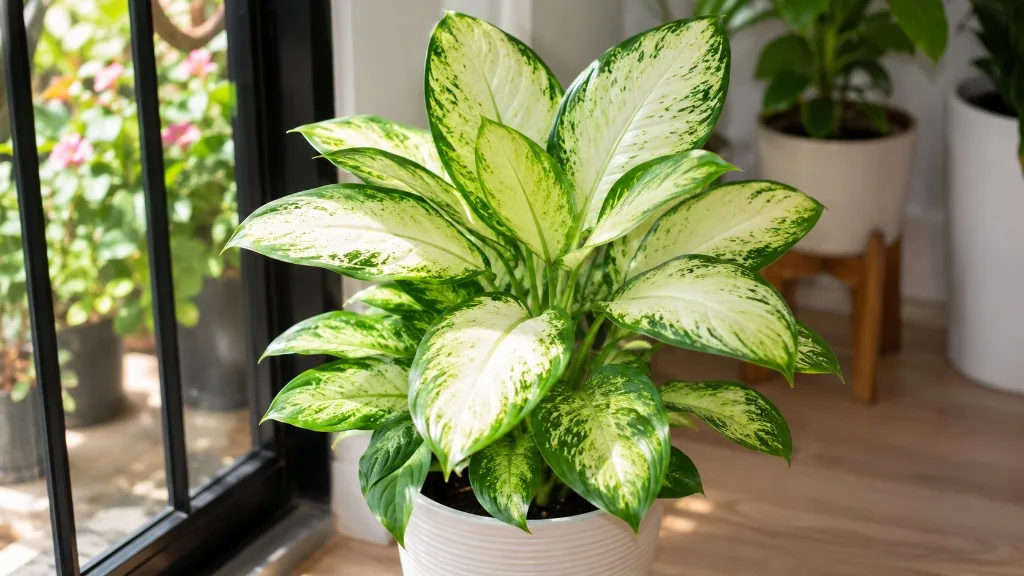
How to Propagate Dieffenbachia: 3 Methods
How to Propagate Dieffenbachia: 3 Methods
Dieffenbachia propagation is one of the more forgiving projects in indoor gardening - if you use the right plant parts. This tropical aroid roots readily from stem sections that include nodes, from the leafy top of a leggy plant, and through air layering on tall specimens you are not ready to chop blindly. What does not work, despite endless social-media experiments, is sticking a single leaf in water and waiting for a full plant. Nodes carry the dormant buds and vascular tissue that restart growth; leaves alone cannot rebuild a stem.
The three reliable home methods are top stem cuttings, cane section cuttings, and air layering. Each fits a different situation: resetting height, multiplying plants from a bare stem, or rooting a section while it is still attached to the parent. All three share the same non-negotiable prep step - respect the sap. Every cut releases cell sap loaded with calcium oxalate raphides, microscopic needle-shaped crystals that burn skin, irritate eyes, and cause severe mouth swelling if ingested. Gloves, clean tools, and careful disposal of cuttings are part of propagation, not an optional sidebar.
What Makes Dieffenbachia Easy (and Tricky) to Propagate
Dieffenbachia belongs to Araceae, the arum family, alongside philodendrons, monsteras, and aglaonemas. Aroids propagate vegetatively through stem tissue because their nodes hold adventitious buds - growth points that can push leaves and roots even when the top of the plant is removed. That biology is why a bare cane left in a pot after a hard prune often sprouts several new shoots within weeks. The same biology is why a leaf floating in a jar looks alive for months while producing nothing useful.
The tricky part is not getting something to root; it is getting a balanced plant - roots plus stem plus leaves - without rot. Dieffenbachia cuttings fail most often from too much moisture with too little warmth or airflow, not from some mysterious lack of “propagation luck.” Match the method to your plant’s shape, keep nodes in contact with a moist but airy medium, and protect yourself from sap at every step.
Why Leaf Cuttings Do Not Work
You cannot propagate dieffenbachia from a leaf cutting alone. A leaf may produce water roots at the petiole base if you submerge it, and it can stay green for a long time, but it lacks the stem node tissue required to generate a new shoot and trunk. Without a node, you get a rooted leaf - a botanical dead end, not a new dumb cane.
This distinction matters because dieffenbachia leaves are large and dramatic; they look like they should be enough. They are not. Always include stem tissue with at least one node - the slightly swollen ring on the cane where a leaf was attached or where a bud sits dormant. If someone shows you a “leaf propagation success,” look closely: there is almost always a hidden node or a piece of stem they did not mention.
How Nodes and Buds Drive New Growth
A node is the structural joint on the stem where leaves, roots, or branches emerge. On dieffenbachia canes you will see them as rings or slight ridges spaced along the stem, often with a small bump - an eye bud - that activates when the section above it is removed or when the cane is laid on moist mix. Internodes are the smooth segments between nodes; they store energy but do not sprout on their own.
For top cuttings, the node at the base of the cutting is where roots form first; the existing leaves at the top provide photosynthesis while roots develop. For cane sections, each piece needs at least one node (two or three is better) because you are starting without leaves and the bud must both root and push new foliage. For air layering, you wound the stem at a node, encourage roots to form on the parent plant, then sever only after you have a root ball - the safest approach when you fear losing an large specimen.
Safety First: Handling Toxic Sap During Propagation
Propagation means multiple fresh cuts, sap on tools, and stem pieces lying on your table - the highest-exposure moment in dieffenbachia care. NC State Extension lists dieffenbachia as poisonous to humans with high severity: burning and swelling of lips, tongue, and throat from calcium oxalate crystals, plus skin irritation from sap contact. Eyes are especially vulnerable. Treat every propagation session as a minor chemical-handling job, not casual pruning.
What Calcium Oxalate Raphides Do to Skin and Mouth
Calcium oxalate raphides are needle-like crystals stored in specialized plant cells. When stem tissue is cut or chewed, those crystals embed in mucous membranes and skin, causing immediate pain, redness, swelling, and inflammation. Dieffenbachia earned the common name dumb cane because oral exposure can swell the tongue and throat enough to interfere temporarily with speech - a serious signal, not a folk-tale exaggeration. Poison Control notes that raphides cause mechanical microtrauma plus chemical irritation, which is why the burning sensation arrives fast and feels disproportionate to the size of the cut.
On skin, sap contact typically causes dermatitis - rash, itching, and localized swelling - especially if you have sensitive skin or leave sap on without washing. In eyes, irrigation is urgent. Wear nitrile or latex gloves for the entire session, not just the moment of the cut. Avoid touching your face, phone, or snacks until you have washed. Sterilize shears with 70% isopropyl alcohol before and after use so sap does not transfer to other plants or surfaces.
If sap gets on skin, wash with soap and water for at least 15 minutes. If it enters the eyes, flush with clean water for 15 minutes and seek medical care if irritation persists. If someone ingests plant material, rinse the mouth, do not force fluids, and call Poison Control at 1-800-222-1222 (U.S.) or your local equivalent - mouth and throat swelling can become a breathing emergency in severe cases.
Safe Propagation Setup for Pets and Children
Dieffenbachia is toxic to cats and dogs according to the ASPCA. Propagation creates an extra risk window: fresh cuttings smell interesting, sap leaks onto floors, and discarded cane sections look like chew toys. Work at a table away from pets and children, lay down newspaper or a disposable mat, and bag all trimmings immediately rather than leaving them in an open compost bowl on the counter.
Do not propagate at floor level if you have toddlers or curious pets. Label new propagation trays clearly and store them on elevated shelves until you pot up finished plants. If you suspect pet ingestion, contact your veterinarian or the ASPCA Animal Poison Control Center at 1-888-426-4435 (fee may apply). Propagation success is not worth a preventable emergency-room visit.
Tools and Setup Before You Cut
Gather everything before you touch the plant so sap-soaked stems are not sitting on the counter while you hunt for moss. You will need sharp bypass pruning shears or a knife, nitrile gloves, 70% isopropyl alcohol for sterilizing blades, rooting hormone powder or gel (optional but helpful for cane sections and air layers), and containers matched to your method.
For water rooting, use a clear glass or jar so you can monitor water level and root development without disturbing the cutting. For soil or mix rooting, prepare well-draining potting mix - standard indoor mix amended with perlite or coarse bark in roughly a 2:1 ratio works well. Aroid roots rot in dense, soggy media. Small 4-inch nursery pots or propagation trays with drainage holes are better than oversized pots that stay wet for weeks.
Optional but valuable: a clear humidity dome or loose plastic bag supported on stakes (not touching leaves), a heat mat with thermostat set around 75–80°F (24–27°C), and sphagnum moss for air layering. Label every cutting with the date and method. Dieffenbachia cuttings look identical to other cane plants once leaves are removed, and you will forget which end was “up” on a horizontal cane within an hour.
When to Propagate Dieffenbachia
Propagate during active growth, typically spring through early fall, when daylight is longer, room temperatures sit in dieffenbachia’s comfort zone (65–85°F / 18–29°C), and the parent plant is pushing firm new leaves. UF IFAS Extension describes stem cuttings and division as standard propagation methods for Dieffenbachia - timing those to warm months dramatically shortens rooting time.
You can propagate in winter, but expect slower root formation and higher rot risk in cool, dim rooms. If you must propagate off-season, add bottom heat and a grow light for 10–12 hours daily, and reduce watering enthusiasm - cold wet mix is the main reason cane sections turn to mush between December and February.
Avoid propagating from a stressed parent - one with active root rot on Dieffenbachia, severe spider mite damage, or recent cold shock. Weak tissue fails in propagation trays at a higher rate, and you may spread rot to healthy cuttings through shared water or tools. Stabilize the parent first, or take material only from the healthiest portion of the stem.
The best practical triggers for propagation are leggy height (plant lost lower leaves and looks like a palm on a stick), desire to multiply a favorite cultivar, or recovery from accidental damage where you already must remove the top. Propagation turns a cosmetic problem into new plants rather than compost.
Method 1: Top Stem Cuttings With Nodes
Top stem cuttings are the fastest way to reset a tall dieffenbachia while producing one strong new plant. Choose a healthy stem with several leaves at the top and bare cane below. Count down to where you want the parent to branch - usually 6–12 inches (15–30 cm) of bare stem remaining on the parent is enough for new shoots - and make a clean horizontal cut just below a node on the cutting piece.
Your cutting should be 4–8 inches (10–20 cm) long with two to four leaves at the top and at least one clear node at the base. Remove leaves from the bottom one-third of the stem so nothing sits underwater or buried in mix. If the remaining leaf span is large, you may roll or halve the largest leaf to reduce water loss while roots form - dieffenbachia tolerates this better than many houseplants because the stem stores moisture.
Let the cut end callus for 2–24 hours in air on a dry tray if you are rooting in soil; water propagators can skip extended callusing but should change water promptly if it clouds. Dip the base in rooting hormone, then proceed to your chosen medium.
Water vs Potting Mix for Top Cuttings
Water propagation lets you watch roots form and avoids mix-borne rot early on. Place the node below the water line but keep leaves above the surface. Use room-temperature filtered or dechlorinated water, refresh it every 5–7 days, and keep the jar in Dieffenbachia light guide. Roots typically appear in 2–4 weeks in warm conditions; transplant to mix once roots reach 2–3 inches (5–8 cm) long - waiting too long makes the transition harder.
Soil or mix propagation skips the transplant shock of moving from water to soil and often produces sturdier roots for long-term pot culture. Insert the cutting so the bottom node sits 1–2 inches (2.5–5 cm) deep in moist mix. Enclose in a humidity dome or bag with ventilation holes, and open daily for a minute to exchange air. Keep mix lightly moist, never soggy. Expect roots in 4–6 weeks under good warmth; tug gently after week four to feel resistance.
Water wins for visual learners and beginners who fear unseen rot. Mix wins for people who want one step and for cuttings that already look stressed - waterlogged stems fail faster in stagnant jars than in airy mix with controlled moisture. Neither works if the cutting lacks a node or the room is cold.
Method 2: Cane Section Cuttings
Cane section cuttings are the most efficient multiplication method. After you remove the top of a leggy dieffenbachia, the remaining bare stem is not waste - it is raw material for multiple plants. Cut the cane into segments 3–6 inches (8–15 cm) long, each with at least one node and preferably two or three. Mark which direction was “up” toward the old top if you plan vertical planting; orientation matters less for horizontal placement but helps you keep track.
Allow cut surfaces to dry and callus for a few hours to reduce rot entry. Dust cut ends and nodes lightly with rooting hormone. Lay segments in a propagation tray or individual small pots.
Vertical vs Horizontal Cane Placement
Vertical planting mimics how the stem grew: insert the lower end into mix so one node is buried and at least one node sits at or just above the surface. The buried node roots; the upper node or eye bud pushes a new shoot. Do not bury the entire section deep - one to two inches of depth is enough. Deep planting in wet mix suffocates the cane.
Horizontal planting lays the section on its side with the eye bud facing up if you can identify it. Lightly cover the node with mix so it has contact with moisture but the cane is not entombed. Horizontal placement is classic for dumb cane propagation and works well under a humidity dome on a heat mat. Multiple buds may activate along one section; you can later separate them or grow them as a multi-stem clump.
Cane sections root more slowly than top cuttings because they have no leaves to photosynthesize until a bud opens. Timeline: 4–8 weeks for visible roots and first leaf unfurl in warm, humid conditions. Patience plus bottom heat near 75°F (24°C) beats frequent checking and overwatering on Dieffenbachia. When a new shoot has two or three leaves and resists a gentle tug, pot it individually.
Method 3: Air Layering for Tall or Leggy Plants
Air layering is the conservative choice when you want roots before you sever the stem - ideal for tall, valuable, or emotionally important plants where a failed top cutting would hurt. The parent keeps feeding the stem through intact vascular tissue while roots form at a wound site. It takes longer than a simple top cutting but carries lower total-plant loss risk.
Select a healthy stem 12–24 inches (30–60 cm) below the top, at a point with solid diameter and at least one node. You will root at that node while leaves above continue photosynthesizing.
Step-by-Step Air Layering Technique
- Sterilize tools and put on gloves. Identify the node where roots should form.
- Make an upward-angled cut about 1–2 inches (2.5–5 cm) long through one-third to halfway into the stem at the node, or remove a narrow ring of outer bark/cortex around the stem (girdling) at the same spot. The goal is to interrupt normal flow and trigger root formation without severing the stem.
- Insert a toothpick or small twig crosswise in a notch cut to keep the wound open, if you used a slice rather than a ring.
- Apply rooting hormone generously to the exposed inner tissue.
- Wrap moist sphagnum moss around the wound. Moss should be damp like a wrung-out sponge, not dripping - excess water invites mold inside the wrap.
- Cover with clear plastic wrap and seal top and bottom with twist ties, tape, or string to lock in humidity. You should see the moss through the plastic.
- Wait and inspect every 2–3 weeks. Roots will penetrate the moss over 6–8 weeks in warm conditions; you may see them through the plastic when ready.
- Sever below the root ball with sterile shears, remove the wrap, and pot the rooted section in fresh well-draining mix. Care for the new plant as you would a rooted top cutting.
Air layering demands more materials and patience but produces a larger rooted piece with less post-cut wilt than a bare top cutting on a huge plant. It is especially useful when the dieffenbachia is 6 feet tall and you want to shorten it without gambling the entire crown on a jar of water.
Rooting Conditions That Speed Success
Temperature drives dieffenbachia rooting more than almost any other variable. Root formation slows sharply below 65°F (18°C) and stalls in cold drafty windowsills. A heat mat under propagation trays - thermostatted to 75–80°F (24–27°C) - often cuts weeks off cane section timelines. Do not place trays directly over heating vents where air is hot but humidity is zero.
Light should be bright and indirect. Direct sun through glass overheats humidity domes and scorches cuttings. Low light slows bud activation on cane sections. A grow light 12–18 inches above the tray on a 12-hour timer fixes dim winter rooms.
Humidity around cuttings should stay roughly 60–80% while leaves or buds are developing, but stale enclosed air promotes mold. If you use a bag or dome, vent daily briefly or punch small holes. The pairing of high humidity plus airflow separates reliable propagators from those who lose trays to fuzzy mold every February.
Water quality and moisture level: for water propagation, change water before it smells. For mix, water when the top inch feels barely moist going toward dry - never on a rigid calendar. Rooting hormone helps cane and air-layer wounds more than fresh top cuttings with leaves, but it is not magic; cold wet conditions defeat hormone every time.
Realistic timelines in warm active-season conditions: top cuttings in water, 2–4 weeks to visible roots; top cuttings in mix, 4–6 weeks; cane sections, 4–8 weeks to roots plus first shoot; air layering, 6–8 weeks before severing. Cool rooms add weeks; do not assume failure at day 30 if the cane is still firm and green.
Aftercare: From First Roots to a Stable Plant
Newly rooted dieffenbachia is fragile even when it looks triumphant. Do not fertilize until the plant has been in its final pot for 4–6 weeks and is pushing new growth - fertilizer on roots only a few centimeters long burns tissue. Keep bright indirect light and temperatures stable. Water when the top inch of mix dries; newly rooted plants have small root volume and cannot handle drought or flood.
If you rooted in water, harden the transition to soil: pot into moist mix, keep humidity high for the first week, and expect some leaf droop while soil roots grow. Trim any roots that turned brown or slimy during the move. For cane sections, leave the first pot slightly undersized so the mix dries on a reasonable schedule - a 4-inch pot for a single new shoot is fine until the root ball fills it.
Gradually remove humidity domes over 7–10 days once new leaves harden off, opening longer each day so the plant adapts to normal room humidity. Dieffenbachia prefers moderate to high humidity indoors but will survive average home levels once established. Avoid Dieffenbachia repotting guide again immediately; let the plant settle through one full growth flush before upgrading pot size.
Watch for yellowing of the oldest leaf on a top cutting - often normal as the plant redirects energy to roots. Multiple yellow leaves, blackening at the base, or sour-smelling mix mean rot; remove from wet mix, trim mushy tissue, dust with cinnamon or hormone, and restart in fresh dry-ish mix with less water.
What Happens to the Parent Stem After You Cut
Removing the top does not kill the parent dieffenbachia. The bare cane stub left in the original pot retains nodes with dormant buds that activate once the apical dominance of the old top is gone. Within 2–6 weeks in warm bright conditions, you should see new shoots emerging along the stump - sometimes several at once, which you can keep as a bushier plant or thin to one or two strongest stems.
Keep the parent in bright indirect light and maintain your normal Dieffenbachia watering guide for a rooted plant - the temptation is to overwater a stem with no leaves, but the remaining root system still needs oxygen at the root zone. Do not fertilize heavily until new leaves are expanding. If you also planted cane sections from the same stem, label mentally which pot is which; the parent will become the fullest fastest because it already has an established root system.
If the stump shows no activity after 8 weeks in warm season, check that you did not leave a stem so short that all viable nodes were removed, and confirm the roots in the parent pot are still healthy. A rotting parent base cannot sprout; you may need to excavate, trim rot, and repot the stub in fresh mix.
Common Propagation Failures and Fixes
Mushy cane sections almost always mean too wet, too cold, or both. Discard sections that are soft and brown through the center; salvage firm portions by recutting above rot, callusing, and restarting with less water and more heat. Black base on top cuttings in water signals bacterial infection - recut above the black line, change to fresh mix or clean water, and improve airflow.
Cutting stays green but never roots often traces to missing or buried nodes - recheck that a node sits in the rooting zone. Leaf-only material in water creates this illusion indefinitely. Leaves collapse on top cuttings may be normal transient wilt, but persistent collapse with a firm stem base suggests dehydration under low humidity; increase dome humidity and trim oversized leaves.
Mold on moss in air layers needs immediate attention: unwrap, replace moss with fresh damp moss, re-wrap loosely with better ventilation holes, and reduce drip. Root rot after potting means the mix stayed too wet for the root volume - unpot, trim dead roots, repot into smaller pot with chunkier mix, and wait longer between waterings.
False success in water - long white water roots with no new leaves on a nodeless piece - is not a plant; discard and recut with proper nodes. Saving energy on hopeless material frees space for cuttings that will actually become dumb canes.
Conclusion
Propagating dieffenbachia comes down to stem biology, safe handling, and patient warmth. Use top stem cuttings to reset a leggy plant quickly, cane sections to turn one bare stem into several new starts, and air layering when you want roots confirmed before you cut a tall specimen. Leaf cuttings are not part of the program - nodes and buds on the cane are.
Before any blade touches the plant, set up for toxic sap: gloves, sterilized tools, bagged trimmings, and pets and children out of the work zone. Root in warm, bright, humid-but-ventilated conditions, choose water or mix based on your tolerance for transplant steps, and give cane sections the bottom heat they crave. The parent stump will usually branch again, so propagation is rarely an either-or choice between old plant and new - done correctly, you end with both.
When to use this page vs other Dieffenbachia guides
- Dieffenbachia overview - Start here for whole-plant context before deep-diving this topic.
- Dieffenbachia problems hub - Jump to symptom-specific fix guides when this care topic does not resolve the issue.
Related Dieffenbachia guides
- Dieffenbachia overview
- Dieffenbachia watering
- Dieffenbachia light
- Dieffenbachia soil
- Dieffenbachia fertilizer
- Dieffenbachia repotting
- Dieffenbachia problems
Related tool
Try the Propagation Success Calculator with dieffenbachia pre-selected to estimate needs for your setup.