Overwatering on Dieffenbachia: Causes, Checks & Fixes
Quick answer
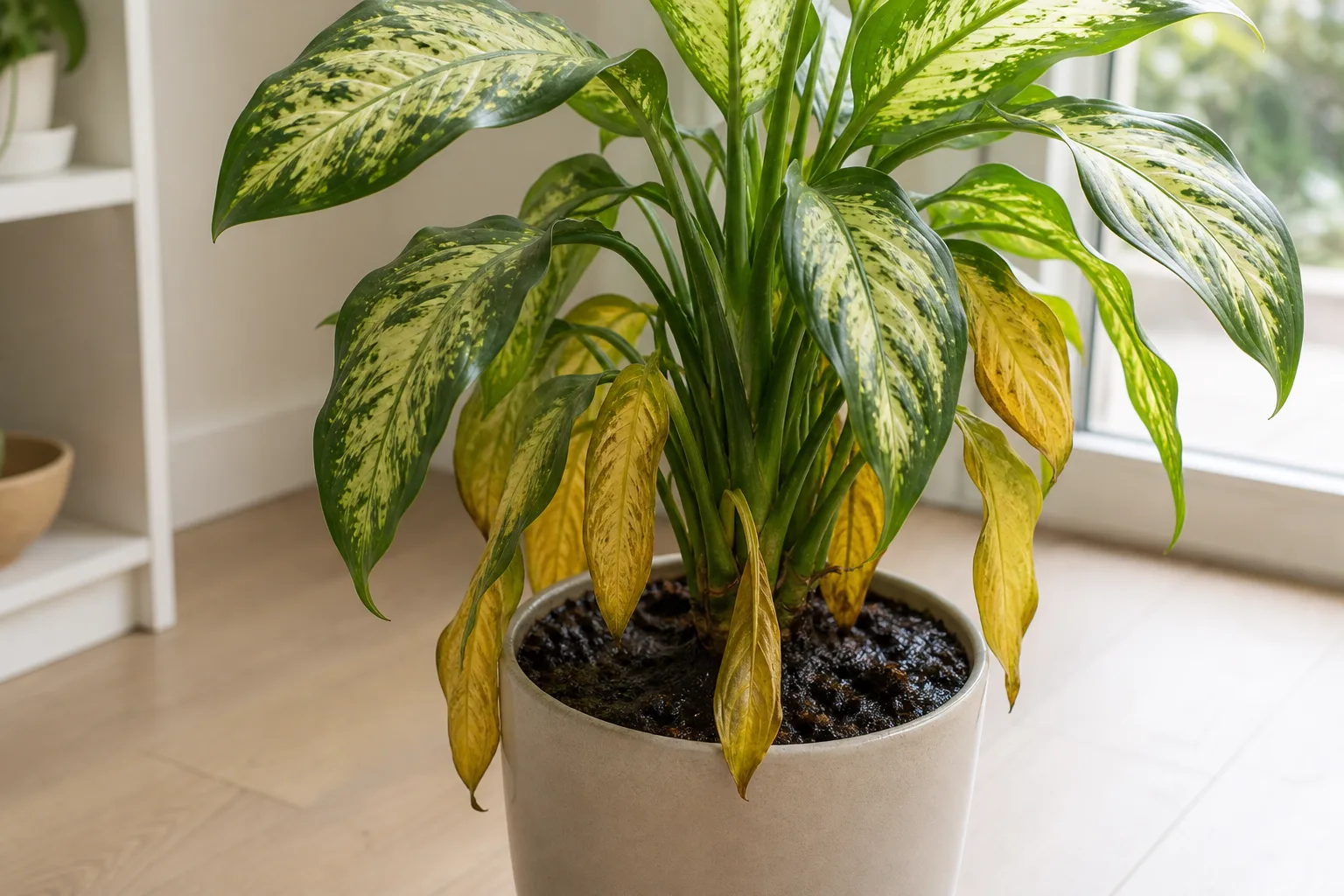
Overwatering on Dieffenbachia shows up as a heavy wet pot with limp lower leaves - the plant looks thirsty, but saturated roots cannot take up water. Stop all watering until the top inch of mix dries, empty standing saucer water, and inspect roots only if symptoms persist after dry-down. Wear gloves: dumb cane sap irritates skin.
Overwatering on Dieffenbachia: Causes, Checks & Fixes
This guide covers overwatering on Dieffenbachia. See also the general Overwatering guide, watering, and light pages for this plant.
Overwatering on Dieffenbachia: Causes, Checks & Fixes
Quick answer
Overwatering on Dieffenbachia means the root zone stays wet too long - not one heavy drink after a dry spell, but a pattern where mix rarely dries between waterings. Dieffenbachia grows as an upright cane with large patterned leaves along a thick stem. Those leaves wilt dramatically when roots fail, which tricks owners into watering again even though the soil is already saturated.
First step: stop all watering until the top inch of mix dries. Lift the pot out of any cachepot, empty the saucer, and do not add fertilizer or mist heavily while the root zone recovers. On dumb cane, the panic scenario is limp lower leaves while the pot feels heavy and cool - the plant looks thirsty, but damaged roots cannot absorb water even when mix is wet. That wet-wilt paradox is the signature of overwatering stress, not drought.
Compare your routine to the top-inch dry rule in our Dieffenbachia watering guide. Chronic calendar watering in dim corners is the usual runway into trouble; this page covers what to do while roots are still salvageable with a dry-down pause.
Overwatering vs. root rot: Overwatering means wet mix and stressed roots that are still firm and white when you check. Root rot means mushy brown roots, sour-smelling mix, or a soft cane base - you need trim-and-repot surgery, not just waiting for the mix to dry. Stay on this page if roots feel resilient after dry-down; switch to the root rot guide when they do not.
Wear gloves before you slide the plant out or trim any tissue. Dieffenbachia sap contains calcium oxalate crystals that irritate skin and is toxic to cats and dogs if chewed. UF/IFAS recommends gloves when handling this genus because contact with sap can irritate skin.
What overwatering looks like on Dieffenbachia
Early overwatering hides behind the cane’s large upper leaves. The tip can still look acceptable while roots suffocate below. Watch for this progression:
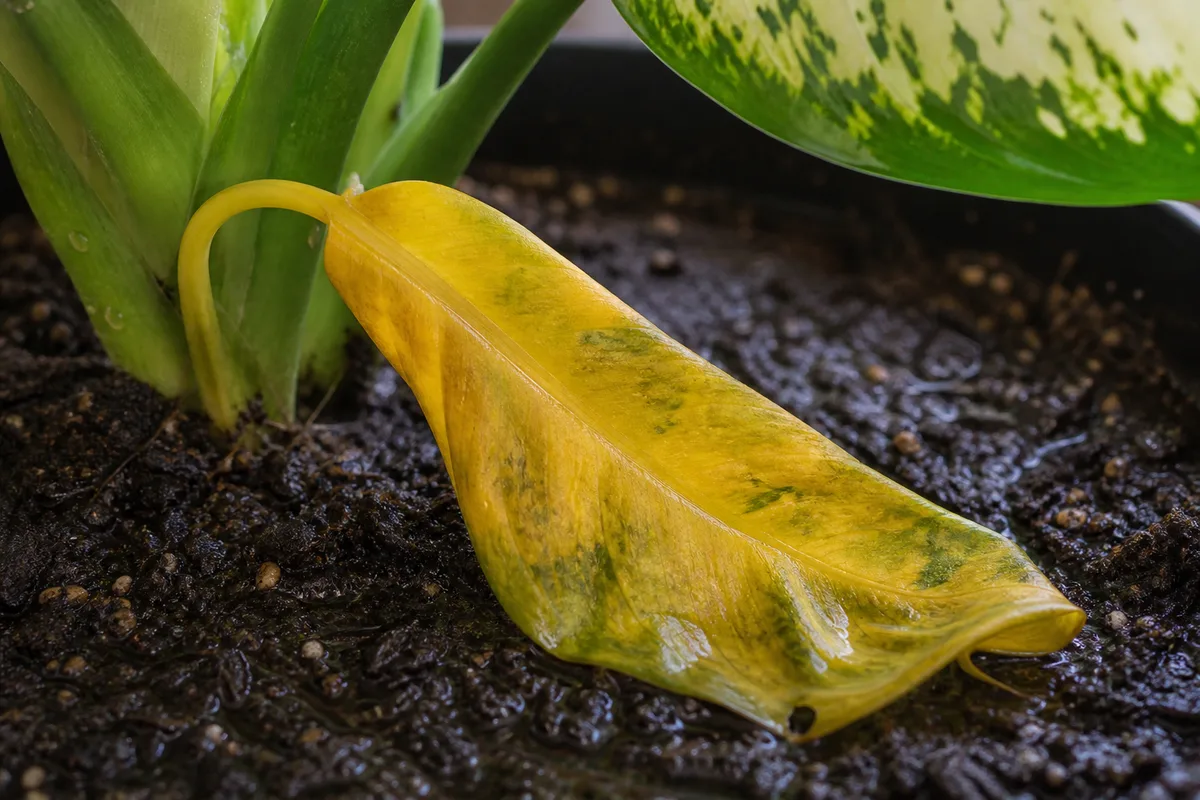
Overwatering symptoms on Dieffenbachia - compare with healthy tissue on the same plant.
- Lower leaves turn limp or soft yellow first - often two or more bottom leaves droop while newer foliage at the cane tip still holds color for days.
- The pot stays heavy several days after the last drink; surface mix feels cool, dark, and clings to your finger at one inch depth.
- Leaves wilt despite wet soil - owners reach for the watering can because the plant looks dramatic, which deepens the problem.
- Edema or water-soaked patches on leaf margins or between veins - excess root-zone moisture pushes water into leaf tissue faster than the plant can transpire it.
- Fungus gnats hover around constantly damp soil - a warning that the mix rarely dries between waterings.
- New growth slows or emerges smaller than older leaves, especially in winter when the plant barely transpires.
Dieffenbachia’s large leaves make root failure easy to miss. A floor specimen can lose lower leaf turgor while the patterned upper canopy still photographs well. By the time the whole cane droops, overwatering may already be advancing toward rot - which is why the wet-wilt paradox matters on day one.
Why Dieffenbachia gets overwatered
Aroid roots need moisture and oxygen together
Dieffenbachia prefers evenly moist, well-drained soil - not constant saturation. Clemson HGIC recommends watering thoroughly, then letting soil dry to one inch before watering again. Aroid roots need air pockets in the mix between drinks. When peat-heavy compost stays wet at depth while only the surface looks “damp,” roots lose oxygen and stop functioning even though you have not yet seen mushy decay.
The top-inch dry rule exists because watering before that layer dries keeps the lower root zone saturated. That is the most common dumb cane mistake: treating Tuesday as watering day instead of checking the pot.
Calendar watering in low light and winter
Dumb cane tolerates shade, but a pot in a dim office corner uses water slowly. Watering on the same summer schedule you would use in a brighter room keeps mix wet far longer than the plant draws moisture. Dieffenbachia grows slowly in cool months - if you keep weekly pours through winter, mix stays saturated while transpiration drops. UF/IFAS notes that excess media moisture can cause severe root loss when wet soil and soluble salts combine.
Oversized pots and cachepots
Tall floor Dieffenbachia specimens often sit in decorative pots two sizes too large. The wide ring of mix around a small root ball stays permanently wet. Cachepots without drainage holes are a frequent killer: runoff collects at the bottom and lowest roots never dry, even when the surface crust looks merely cool.
Blocked drainage and saucer water
Standing water after bottom-watering keeps bottom roots submerged. Heavy indoor mix without enough perlite or bark holds water at the pot base for days. Empty saucers within thirty minutes of every drink - the same standard in our watering guide.
Lookalike symptoms to rule out
Not every limp or yellow leaf means overwatering. Sort these patterns before you change care:
| Pattern | What you see | Likely cause | First action |
|---|---|---|---|
| Wet heavy pot, limp lower leaves, firm cane base | Translucent yellowing at cane bottom; mix damp 5+ days; roots firm if spot-checked | Overwatering (this page) | Stop water; dry-down until top inch is dry |
| Very light pot, dry mix throughout, crisp edges | Papery or brown leaf margins; soil dusty 2 in. down; not limp on wet soil | Underwatering | Water thoroughly; empty saucer |
| Pale stretchy upper leaves, firm stem, normal dry-down | Long internodes; washed-out variegation; pot lightens on schedule | Low light | Move to brighter filtered light; adjust water less, not more |
| One oldest leaf fades slowly over weeks | Single bottom leaf yellows; stem solid; mix dries between drinks | Normal aging | See yellow leaves guide |
| Whole cane limp, heavy pot, sour smell, soft stem base | Multiple leaves collapse in waves; mushy roots on check | Advanced root rot | Stop water; unpot today; trim decay |
The wet-wilt paradox separates overwatering from underwatering: limp leaves on heavy wet soil point to root-zone saturation, not thirst. Limp leaves on a light dry pot point the other way. When in doubt, weigh the pot and push your finger one full inch into the mix near the edge before you pour.
How to confirm the cause
Work through this five-step inspection in order:
- Lift the pot. A heavy, waterlogged feel three or more days after the last drink suggests saturation, not drought. Compare to how the pot felt right after a thorough watering - overwatered dumb cane often stays near “just watered” weight for a week.
- Check the top inch. Dieffenbachia should be watered when this layer dries. If your finger comes out with damp particles at one inch depth while lower leaves are limp, you are dealing with chronic wet soil, not a missed drink.
- Smell the drainage hole. A sour or swampy odor means anaerobic conditions in the root zone - escalate toward root inspection even if leaves have not collapsed yet.
- Press the cane base. The stem at soil level should feel solid. Spongy tissue on wet mix is urgent and may mean rot has started; read our root rot guide after you unpot.
- Spot-check roots only if symptoms persist after dry-down - or sooner if the stem base feels soft or the mix smells sour. Gently slide the plant out of a flexible nursery pot; do not yank the cane. Healthy roots are firm, white to tan, and resilient. Mushy brown strands mean you have crossed from overwatering stress into rot.
Confirmed overwatering means wet mix, limp lower leaves, and firm roots when you inspect - not just one yellow leaf on an otherwise stable plant with normal dry-down between drinks.
The first fix to try
Stop all watering immediately. This single action lets oxygen return to the root zone while you assess severity. Move the plant to bright, indirect light if it sits in deep shade - not harsh sun, but enough brightness that the surface can dry predictably. Do not place it in a darker corner; that slows evaporation and extends saturation.
Lift the inner pot out of any decorative cachepot and pour out standing saucer water. Do not fertilize, mist heavily, or repot into a larger container “to help drying” - that usually makes things worse.
Let the top inch of mix dry fully before the next drink. On a badly overwatered floor specimen in peat-heavy mix, that may take seven to fourteen days in winter or five to ten days in active summer growth. Judge by the finger test and pot weight, not a calendar.
If only one or two lower leaves are limp, the cane base is firm, and the mix smells neutral, dry-down alone is often enough. Unpot only when symptoms persist after the surface inch has dried, the pot still feels heavy, or you detect sour smell or spongy stem tissue.
When to unpot and inspect roots
Unpot when dry-down does not stabilize the plant - lower leaves keep yellowing, the pot stays heavy for a week after you stopped watering, or the cane base feels questionable. This is a check, not automatic surgery on day one.
Safe unpotting on dumb cane
Wear nitrile or latex gloves before you handle stems or roots. Dieffenbachia sap contains insoluble calcium oxalate crystals that irritate skin and can cause oral burning if ingested. UF/IFAS recommends wearing gloves and protective covering when handling this plant. Root checks expose sap when you break small feeder roots or trim damaged tissue.
Work on a protected surface away from pets and children. Knock or squeeze a flexible nursery pot to release the root ball without pulling the cane. Rinse away wet mix under lukewarm running water so you can see root color clearly. Press roots gently - firm pale tissue means overwatering stress with recovery still likely after corrected watering. Mushy brown roots mean switch to our root rot guide for trim-and-repot steps.
Dispose of any trimmed roots or yellow leaves in a closed bag, not the compost bin. Wash hands and tools after handling. Contact your veterinarian or ASPCA Poison Control at (888) 426-4435 if a pet chews plant material during cleanup.
After inspection: two paths
Firm roots: Set the plant back in its pot without changing mix if drainage is adequate. Resume watering only when the top inch dries - often seven to ten days after a stress event. Hold fertilizer for three to four weeks.
Mushy roots: Do not keep drying down and hope. Follow the root rot recovery protocol the same day - trim decay, repot into fresh airy mix, and start cane-node cuttings as backup if the base is compromised.
Recovery timeline and what to watch
Mild overwatering caught early - firm roots, firm cane base, only lower leaves affected - often stabilizes within one to two weeks after you correct watering and improve drainage. Leaves may not re-firm until roots recover; judge success by stopped yellowing spread and eventually new tip growth, not by old lower leaves turning green again.
A realistic example: a hallway Dieffenbachia was watered weekly on schedule while the top inch never dried. After stopping water for nine days, moving to brighter indirect light, and emptying a cachepot that held standing runoff, the pot lightened noticeably. The lowest yellow leaf dropped, but a new patterned leaf unfurled from the cane tip in three weeks - the cane base stayed firm throughout.
Signs the plant is improving: the pot lightens between waterings on a normal schedule, no new lower leaves yellow in clusters, and any roots visible through drainage holes look pale and solid.
Signs it is worsening: stem softening at soil level, leaves collapsing in waves despite corrected watering, sour smell returning within days, or fungus gnat numbers climbing. Those patterns mean rot may be advancing - unpot with gloves and read the root rot and drooping leaves guides before the cane base fails.
Old yellow lower leaves rarely re-green. They drop or stay discolored while the plant invests in new tissue at the tip. That is normal recovery, not failure.
What not to do
Do not keep watering because leaves look wilted when soil is already wet - that is the wet-wilt trap that turns overwatering into rot.
Do not fertilize a waterlogged plant hoping to “boost” recovery. Salt stress hits oxygen-starved roots hardest.
Do not repot into an even larger decorative pot to “help drying” - more wet mix around the root ball extends saturation.
Do not assume every yellow lower leaf requires emergency unpotting. Confirm with pot weight, top-inch moisture, stem firmness, and soil smell first.
Do not bottom-water into a cachepot and walk away. Standing runoff at the pot base keeps lowest roots submerged.
Do not handle cut stems or exposed roots bare-handed on dumb cane. Sap exposure during root checks is a real irritant - gloves are cheap insurance.
How to prevent overwatering next time
Prevention comes down to matching water to how fast your pot actually dries in your room:
- Water when the top inch dries, not on a fixed calendar. In winter, that may mean watering every fourteen to twenty-one days instead of weekly.
- Use perlite-amended mix and a pot with open drainage. Empty saucers within thirty minutes of watering.
- Right-size the container to the root ball - not the height of the cane. See our repotting guide for when to size up.
- Adjust for light. A dumb cane in a dim hallway needs less water than the same cultivar in a bright east window.
- Lift cachepots after every drink and pour out trapped water.
- Keep temperatures in the 60–75 °F range away from cold drafts on wet soil.
- Watch for fungus gnats - chronic damp mix often precedes serious root stress; see our fungus gnats guide if adults hover after every watering.
When to worry
Treat overwatering as urgent when the cane base feels soft on wet mix, multiple lower leaves yellow within a few days, or the drainage hole smells sour despite your dry-down pause. At that stage, unpot with gloves the same day and assess root texture - firm roots mean keep correcting water; mushy roots mean start the root rot protocol immediately.
If only one bottom leaf yellows slowly over months, roots are firm when you check, and the cane base is solid, you likely have normal aging or mild stress - not an emergency. Read the yellow leaves guide before you repot.
Soft crown tissue with chronically wet soil is the line between this page and root rot surgery. Catch it early here; cross that line and recovery requires trimming decay, not just waiting.
Conclusion
Overwatering on Dieffenbachia is a watering-and-drainage problem written on an upright cane - lower leaves limp first, the pot stays heavy, and the plant looks thirsty on wet soil. Stop water, dry the top inch, empty standing runoff, and inspect roots with gloves only if symptoms persist or the stem base softens. Judge recovery by new tip growth and a pot that lightens between drinks. When roots are still firm, you rarely need the surgery on our root rot page - but know when to cross that line.
Related Dieffenbachia guides:
- Watering - top-inch dry rhythm and seasonal adjustment
- Root rot - when mushy roots or soft cane base confirm decay
- Yellow leaves - lower-leaf yellowing lookalikes
- Drooping leaves - wilt patterns beyond watering alone
- Underwatering - light dry pot vs. heavy wet pot
- Fungus gnats - chronic wet-soil warning sign
- Overview - species context and toxicity
When to use this page vs other Dieffenbachia guides
- Dieffenbachia watering guide - Use for routine moisture checks before assuming overwatering is the main issue.
- Dieffenbachia problems hub - Browse all 16 common issues on this species.
- Root Rot on Dieffenbachia - Different entry point when symptoms overlap with overwatering.
- Yellow Leaves on Dieffenbachia - Different entry point when symptoms overlap with overwatering.
- Wilting on Dieffenbachia - Different entry point when symptoms overlap with overwatering.