Wilting on Dieffenbachia: Causes, Checks & Fixes
Quick answer
Wilting on Dieffenbachia means large leaves lost turgor because water is not reaching them. Lift the pot and feel the top inch of mix first-dry, light soil needs a thorough soak; wet, heavy soil with limp leaves means stop watering and check the crown.
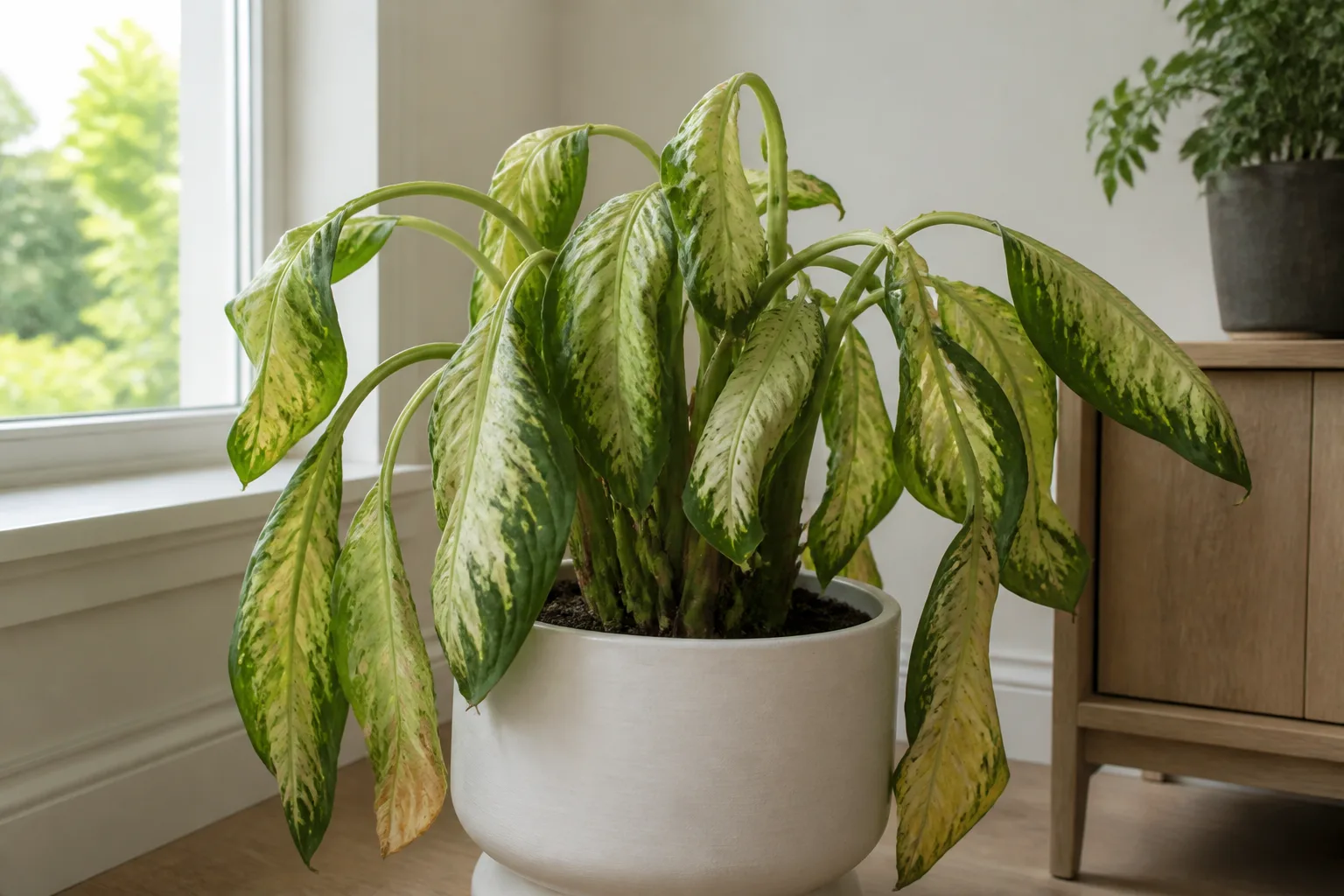
Wilting on Dieffenbachia: Causes, Checks & Fixes
This guide covers wilting on Dieffenbachia. See also the general Wilting guide, watering, and light pages for this plant.
Wilting on Dieffenbachia: Causes, Checks & Fixes
Quick answer
Wilting on Dieffenbachia (Dieffenbachia spp., dumb cane) means the large leaves have lost turgor because water is not moving from roots to foliage. That failure almost always starts below the soil line-not because the plant automatically “needs a drink.” A wilted plant with moist soil often has damaged roots that cannot absorb water.
First step: lift the pot and push your finger into the top inch of mix. A light, dry pot with limp leaves calls for a thorough soak. A heavy, wet pot with wilt means root stress or rot-stop watering and check crown firmness before you add more water.
What wilting looks like on Dieffenbachia
On a healthy dumb cane, broad variegated leaves stand at a slight angle from upright petioles and feel springy when brushed. Wilting changes that profile quickly-and the soil state tells you which branch to follow.
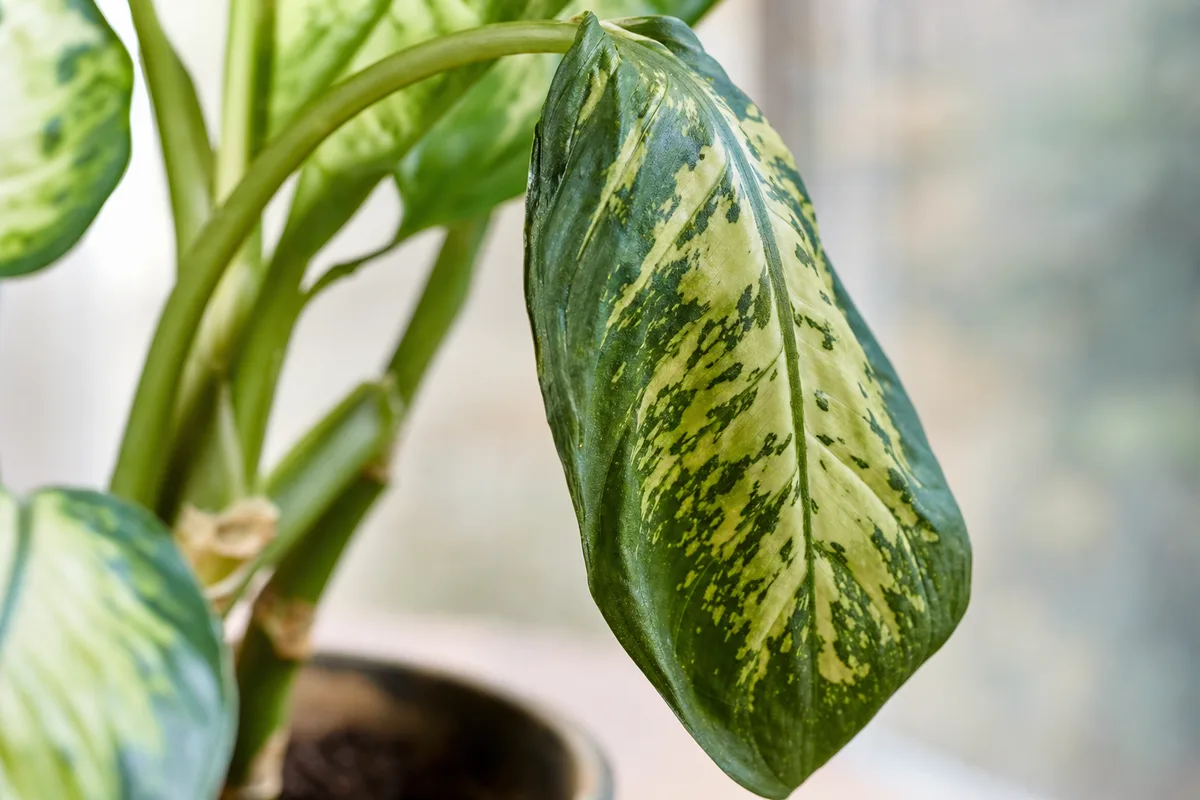
Wilting symptoms on Dieffenbachia - compare with healthy tissue on the same plant.
Wet-soil wilt is the most dangerous misread on Dieffenbachia. Lower leaves hang limp while the mix stays dark, cool, and heavy. Yellowing often starts on bottom leaves first. You may see fungus gnats near the soil surface or a faint sour smell from drain holes. The crown-the tight cluster where new leaves emerge-may feel soft if rot is advancing. Root rot usually results from a soil mix that does not drain quickly or overly frequent watering.
Dry-soil wilt shows limp or slightly curled leaves on a lightweight pot. The surface mix is pale and crumbly. Leaf edges may turn brown and crispy on older foliage. Water that runs straight through without darkening the mix suggests hydrophobic, dried-out peat. This pattern often follows a missed watering, a bright window that dried the pot fast, or winter heat pulling moisture from small nursery pots.
Sudden whole-plant flop within a day or two usually points to cold draft, repot shock, or rapid root failure-not gradual thirst. Dieffenbachia is cold-sensitive; temperatures from 60 to 75 °F are ideal, and the plant should be protected from cold and major temperature swings. A cane wilting after an AC vent blew on it overnight is a classic cold-stress pattern.
Gradual droop over weeks on an otherwise moist pot in a dim room can reflect insufficient light weakening stems. Dieffenbachia tolerates low light but growth slows; a plant marketed as “shade-tolerant” in a cool corner may still wilt from chronic overwatering because evaporation is slow. See the lookalike section before you increase water volume.
Why Dieffenbachia wilts
Dumb cane evolved in tropical understories with steady moisture and filtered light. Indoors, large leaves transpire quickly while aroid roots need both moisture and oxygen. When that balance breaks, wilt follows.
Overwatering and root rot are the leading causes. Saturated soil drives out oxygen; decaying roots cannot absorb water even when the pot is full. Owners often see limp leaves and pour more water, which accelerates crown failure. Heavy nursery peat, oversized pots, cachepots without drainage, and calendar watering in cool rooms all keep roots wet too long. Water thoroughly, then let soil dry to the touch to a depth of one inch before watering again-that dry window is what prevents chronic wetness.
Underwatering dries fine root hairs first. Without them, even a later deep watering cannot restore turgor instantly. Dieffenbachia in active growth with medium to bright indirect light often needs water every 7–10 days in summer and less in winter-but only when the top inch is actually dry. Allow the top 1-inch surface of the soil to dry completely before watering again.
Hydrophobic, aged potting mix repels water after a full dry cycle. The surface looks briefly damp after a quick pour while the center stays dry-so the plant keeps wilting “even after watering.”
Cold drafts and chilling damage tropical foliage quickly. Leaves can droop or spot even when soil moisture is fine. Check vents, winter windows, and AC blasts.
Repot shock interrupts water uptake when roots are torn or left in dry pockets after transplant. Open leaves may collapse for days even when you water correctly.
Pest-related wilt is less common but possible. Spider mites cause stippling before collapse on stressed plants. Inspect leaf undersides if wilt persists despite correct moisture and light.
Lookalike symptoms to rule out
| Pattern | Likely cause | Next step |
|---|---|---|
| Limp leaves, light pot, dry top inch | Underwatering | Underwatering guide |
| Limp leaves, wet heavy pot, yellow lower leaves | Overwatering / root stress | Overwatering guide |
| Soft crown, sour smell, mushy roots | Root rot | Root rot guide |
| Only oldest bottom leaves sag; crown firm | Natural aging or mild droop | Drooping leaves guide |
| Brown tips without full wilt | Low humidity or water quality | Low humidity or brown tips |
| Overnight flop near window or vent | Cold draft | Move to stable warmth; check soil before watering |
Wilting vs. drooping - Wilting is acute loss of turgor across multiple leaves. A few lower leaves naturally age and hang while the crown stays firm is often senescence, not a crisis. This page routes you to the cause; see drooping leaves if the pattern is mild and slow.
How to confirm the cause
Work through these checks in order so you do not water a rotting plant or soak one that only needs warmth.
- Top-inch moisture - Insert a finger to the first knuckle. Dry confirms underwatering; damp or wet with limp leaves suggests root failure.
- Pot weight - Lift the pot. If it feels light, it needs water. Heavy, cool pot plus wilt equals oversaturated mix or dead roots.
- Leaf pattern - Yellowing from the bottom up on wet mix strongly suggests root rot. Even wilt across all leaves on dry mix points to drought.
- Crown feel - Press the base of the stem cluster gently. Firm crown with wilted outer leaves is more recoverable. Soft, dark, or collapsing crown means rot may have reached the growing point-see root rot.
- Smell and drainage - Sour odor, water sitting in a saucer for days, or mix that stays wet a week after watering confirms chronic overwatering habitat.
- Light and placement - Dim shelf with leggy stems may need brighter indirect light, not more water. Dumbcanes thrive when given bright filtered light.
- Recent history - Repotting within the past two weeks, a vacation dry spell, a cold draft, or a switch to a much larger pot narrows the cause quickly.
- Root inspection - If wet wilt persists after stopping water for several days, slide the plant from the pot. Healthy Dieffenbachia roots are firm and pale; rotted roots are brown, translucent, or slimy.
Confirmed dry wilt: dry surface, light pot, firm stems at soil line, healthy roots at the edge of the root ball. Confirmed wet wilt: moist mix, yellow lower leaves, mushy roots, or sour smell. Suspected shock: wilt started right after repotting with mostly intact pale roots.
First fix for Dieffenbachia
Lift the pot and check top-inch soil moisture before any other action. That single test separates opposite fixes.
If the mix is dry and the pot is light, water thoroughly until moisture drains from the holes, then empty the saucer within 30 minutes. For hydrophobic mix that repels water, soak the pot until the soil is properly wetted again-bottom-water for 30–45 minutes if water runs straight through. Full dry-wilt protocol is on the underwatering page.
If the mix is wet and the plant is wilted, stop watering immediately. Plants in waterlogged soil may die because roots cannot absorb oxygen Set the pot on folded paper towels to wick excess moisture from drain holes. Move to brighter indirect light if the plant sits in deep shade-slow evaporation worsens wet soil. Inspect roots and crown if leaves keep declining after the mix dries. Full wet-soil protocol is on the overwatering page.
Make one correction, then wait several days before stacking repotting, fertilizing, and heavy pruning together.
Step-by-step recovery by cause
Dry wilt path
- Water until a small amount drains; discard all runoff from saucers.
- If the mix was severely dry, bottom-soak once if water runs through without wetting the center.
- Keep the plant in bright indirect light-not hot direct sun-while roots rehydrate.
- Resume normal rhythm only when the top inch of soil feels dry.
Wet wilt / root stress path
- Stop watering until the top inch approaches dry.
- Improve airflow and light slightly if the plant sits in a dim, cool corner.
- Inspect roots if yellowing spreads or the crown softens-trim only clearly mushy tissue and repot into fresh, well-drained mix if rot is confirmed.
- Hold fertilizer until you see firm new growth for several weeks.
Cold draft path
- Move away from vents, drafty windows, and exterior doors.
- Check soil moisture before watering-chilled leaves can droop even when mix is fine.
- Wait 24–48 hours in stable warmth; many leaves re-firm without any water change.
Repot shock path
- Keep soil evenly moist but not soggy for the first week after transplant.
- Avoid direct sun and fertilizer until new growth appears.
- Trim only fully collapsed leaves after the plant stabilizes. Wear gloves when handling cut stems-Dieffenbachia sap contains calcium oxalate crystals that irritate skin and mouth.
Recovery timeline
Mild dry wilt on an otherwise healthy Dieffenbachia often shows visible perk-up within hours to two days after a proper soak, because roots are still intact and large leaves rehydrate once water moves upward again.
Brown crispy tips and edges do not revert to green. They are permanent damage from cells that dried out. Damaged leaves may not fully recover; judge progress by new growth. Judge success by upright newer leaves and a firm central cane, not by old blemishes fading.
Wilt from chronic overwatering or root rot recovers slowly-one to several weeks if the crown stays firm. Soft crown tissue on wet soil may not be saveable even after corrective care.
If the plant stays limp after two thorough soaks with firm stems but dry mix that will not hold moisture, suspect hydrophobic or degraded soil rather than simple underwatering.
What not to do
- Water on droop alone without checking soil-Dieffenbachia’s most dangerous misread when roots are already drowning.
- Daily small cups of water that wet the surface but not the root ball.
- Fertilize a wilted plant before confirming moisture and root health.
- Repot, prune heavily, and spray pesticides on the same day-stacked stress hides which fix helped.
- Leave the pot in a full saucer after any watering event.
- Mist leaves instead of correcting root-zone moisture-surface moisture does not rehydrate a dry root ball or fix rot.
How to prevent wilting next time
Build a routine around how the pot dries in your home, not a calendar:
- Check the top inch before every major watering. Water when dry; wait when not.
- In active growth, expect roughly 7–10 days between drinks in summer and 14–21 days in winter as a starting range-then adjust to your pot size, light, and humidity. See the watering guide for full seasonal rhythm.
- Lift the pot when you walk by. Weight change is faster than guessing.
- Use pots with drainage holes and empty saucers within 30 minutes of watering.
- Protect large leaves from cold drafts below about 55°F (13°C).
- Refresh peat-heavy mix that repeatedly goes hydrophobic.
- Group plants or use a humidifier if crisp tips return even when watering is correct-Dieffenbachia prefers indirect light, moderate temperatures, and high humidity.
When to worry
Treat as urgent if the crown feels soft, the mix smells sour, roots are mushy on inspection, or the whole plant collapsed within days while soil stayed wet. Those signs suggest advancing root rot-not thirst. Follow the root rot guide immediately.
Also escalate if wilt persists after two proper soaks on confirmed dry soil with firm stems, or if new leaves stay wrinkled and limp for more than a week after correcting moisture. Another stressor-pests, chronic cold, or root-bound hydrophobic mix-may still be limiting recovery.
Related Dieffenbachia guides
- Dieffenbachia overview - baseline care and cultivar context
- Watering Dieffenbachia - top-inch dry rule and seasonal schedules
- Underwatering - soak protocol for dry wilt
- Overwatering - dry-down protocol for wet wilt
- Root rot - crown softness and root inspection
- Drooping leaves - milder or slower sag patterns
Wilting on Dieffenbachia is a routing symptom, not a single disease. Lift the pot, read the top inch of mix, and branch to the cause-specific guide before you water again. One correct fix beats a stack of guesses-and on dumb cane, wet-soil wilt and dry-soil wilt look identical from across the room.