Drooping Leaves on Dieffenbachia: Causes, Checks & Fixes
Quick answer
Drooping leaves on Dieffenbachia almost always trace to the root zone-underwatering, overwatering with failing roots, cold drafts, or recent repot shock. Lift the pot and probe the top 2 inches before you water: light dry soil needs a soak; wet heavy soil with limp leaves means stop watering and check the crown.
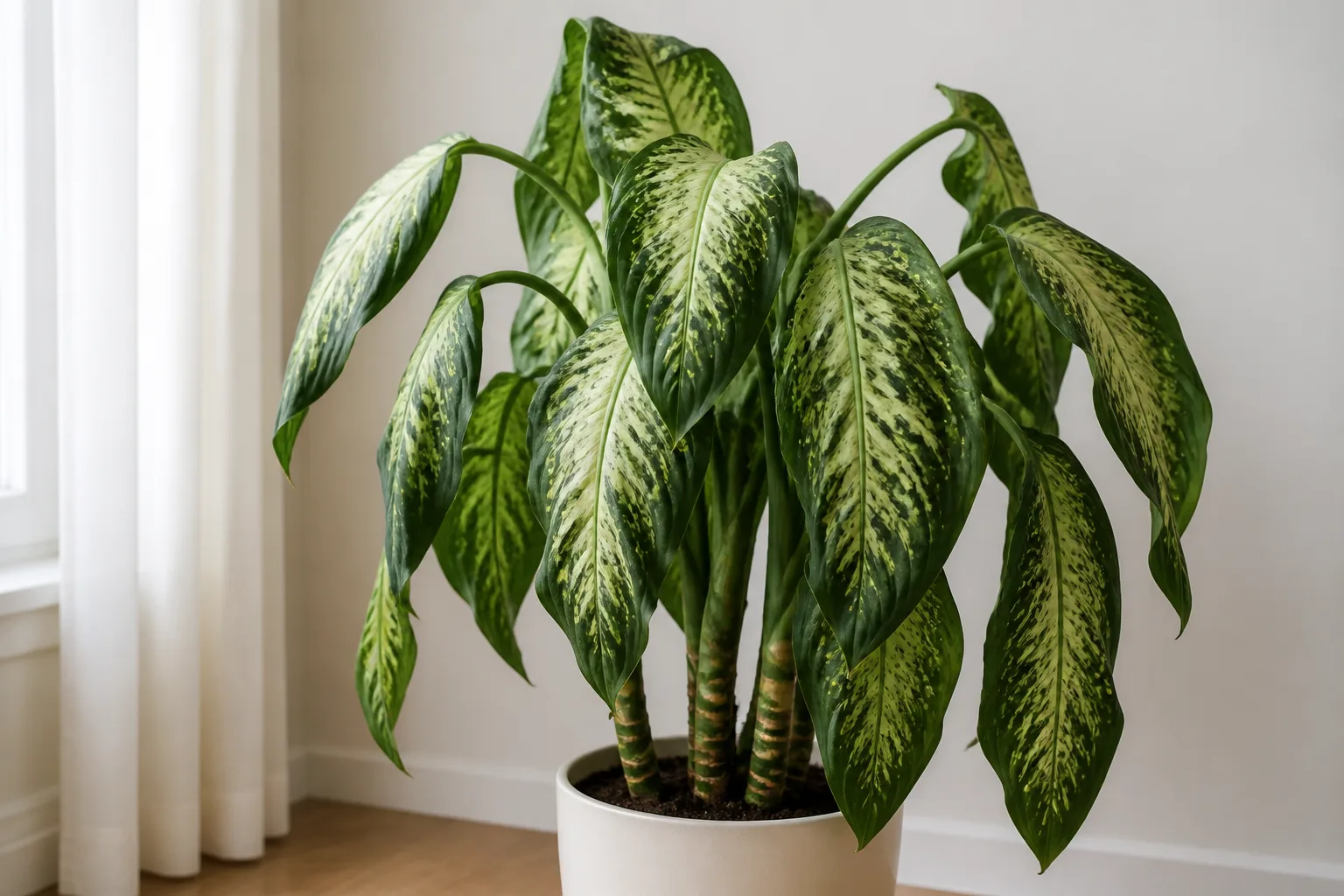
Drooping Leaves on Dieffenbachia: Causes, Checks & Fixes
This guide covers drooping leaves on Dieffenbachia. See also the general Drooping Leaves guide, watering, and light pages for this plant.
Drooping Leaves on Dieffenbachia: Causes, Checks & Fixes
Quick answer
When Dieffenbachia leaves go limp, the dangerous mistake is watering on sight alone. Both drought and rotting roots produce the same hanging foliage-large, patterned leaves that lose turgor and fold down from the petiole-yet they need opposite responses.
First step: lift the pot and check soil moisture at depth. A noticeably light pot with dry mix 2 inches down usually means underwatering. A heavy pot with soil that has stayed wet for days, especially with a softening crown, usually means overwatering or root failure-even though every instinct says to pour more water.
That wet-vs-dry split is what makes drooping leaves on dumb cane different from generic houseplant advice. Dieffenbachia carries broad leaves that transpire quickly in bright rooms, stores some moisture in its cane, and sits in the moisture-sensitive Araceae family. Small shifts in watering, drainage, or temperature show up as limp foliage before stems fail.
Wear gloves when handling wilted leaves for inspection. Dieffenbachia sap contains insoluble calcium oxalate crystals that irritate skin and can numb the mouth if ingested.
What drooping leaves look like on Dieffenbachia
Healthy dumb cane holds its leaves at a slight upward angle from thick petioles. When turgor drops, the whole leaf hangs straight down or curls slightly at the edges. Because mature leaves can span 8–14 inches, one limp leaf is obvious from across the room.
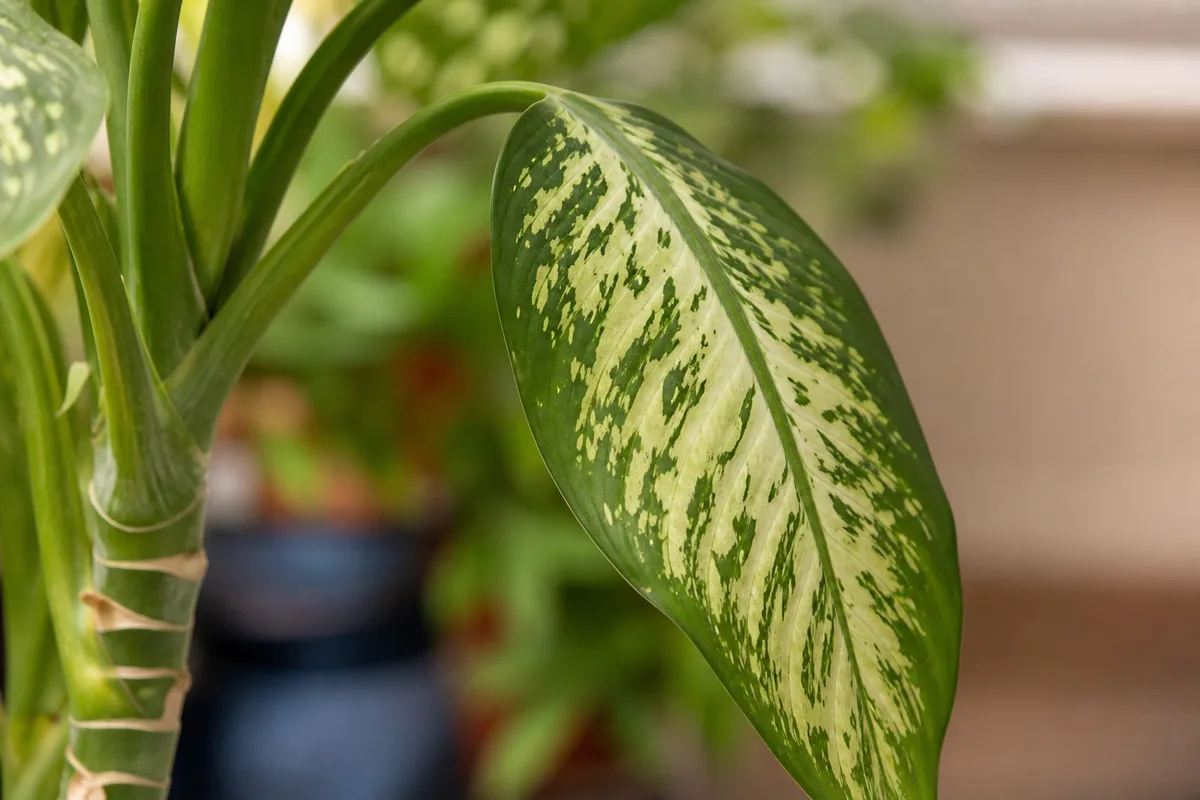
Drooping Leaves symptoms on Dieffenbachia - compare with healthy tissue on the same plant.
Common patterns on this plant:
- Limp lower leaves on wet, heavy soil - classic overwatering or early root rot. The pot feels dense when lifted; soil may look dark and stay cold and damp for many days after the last drink. Lower leaves often yellow on the same stem.
- Whole-plant wilt on light, dry soil - underwatering. Mix is dusty an inch or more down; the pot feels almost hollow. Leaf edges may be slightly crispy, but the cane at soil level stays firm.
- Sudden flop after a cold night - cold-draft stress. Soil moisture reads normal, but leaves near a winter window or AC vent collapse overnight. Petioles may show dark blotches after chill.
- Droop 3–14 days after Dieffenbachia repotting guide - transplant shock. Roots were disturbed and uptake lags even when you watered correctly. Cane stays firm; mix may be evenly moist but not soggy.
- Gradual limp on oldest leaves only - sometimes normal senescence on a healthy plant. One or two bottom leaves yellow and hang while the crown and new growth stay upright. Pair widespread limp foliage with soil checks before treating.
What drooping usually does not look like: crispy brown tips without full wilt (see the brown-tips guide), long bare cane with small top leaves (leggy growth from low light), or sticky residue on new growth (pest stress).
Why Dieffenbachia gets drooping leaves
Dieffenbachia is a tropical foliage plant that wants consistent moisture without sogginess. It grows best in bright indirect light with regular water during the growing season and less from fall through winter. When the balance breaks, leaves droop because water is not reaching leaf cells-either the soil is too dry, or roots are too damaged to absorb what’s already there.
Overwatering and root stress (the most dangerous misread)
Dieffenbachia is prone to root rot when kept wet in low light or dense nursery peat. Damaged roots cannot move water upward, so leaves wilt despite wet soil. Many owners see limp foliage and water again, which accelerates decay. Heavy cachepots, pots without drainage, and watering on a calendar instead of soil dryness all push this pattern.
Underwatering and fast transpiration
Large leaves lose water quickly in warm, bright rooms or near dry air from heating vents. A missed watering-or chronic shallow drinks that never wet the root ball-empties the mix. Hydrophobic peat that repels water after drying out produces wilt “even after watering” because the center stays dry.
Cold drafts and temperature swings
Dieffenbachia is not cold-hardy outdoors in temperate climates and dislikes chilled air indoors. Winter glass, open doors, and AC blasts can make leaves droop or spot when soil moisture is actually fine. Chill damage and thirst look similar at the leaf; pot weight and crown firmness separate them.
Repot shock and root disturbance
Fresh potting after root trimming or a move from tight nursery soil limits uptake for one to three weeks. Temporary droop with firm cane and no sour smell often resolves once new root hairs form-if the mix is not kept soggy during recovery.
Less common triggers
Sap-sucking pests on new crown leaves can weaken shoots enough that foliage hangs. Check sticky residue, stippling, or cottony clusters before assuming water is the only issue. Sudden move into harsh direct sun through glass can scorch and collapse leaves, but margins usually crisp rather than simply limp.
Lookalike symptoms to rule out
Wilting vs drooping - On Dieffenbachia the terms describe the same lost turgor. Use soil moisture, pot weight, and crown firmness rather than the label on the page. The wilting guide covers the same diagnostic path with slightly different framing.
Yellow leaves on wet soil - Yellowing lower leaves on constantly damp mix fits overwatering more than drought. See the overwatering and root-rot guides if yellow and limp arrive together.
Leggy pale growth - Long bare cane with small top leaves points to low light etiolation, not classic root-zone droop. Brighter filtered light helps; extra water does not.
Brown tips without full collapse - Dry air and fluoride often crisp margins while leaves otherwise stand. Cross-check the low-humidity and brown-tips guides if only edges are affected.
Quick pattern guide
| What you find | Likely cause | Next move |
|---|---|---|
| Light pot, dry soil 2 in. down, firm cane | Underwatering | Thorough soak; see underwatering |
| Heavy pot, wet soil 3+ days, soft base | Overwatering / root rot | Stop water; inspect roots - overwatering / root rot |
| Firm cane, moist soil, repotted <2 weeks ago | Transplant shock | Hold stable; avoid soggy mix |
| Firm cane, correct moisture, cold window | Chill / draft | Move away from glass or vent |
| Sticky new growth, pests visible | Sap suckers | Treat pests after soil check |
How to confirm the cause
Work through these checks in order. Each step narrows the field before you commit to a fix.
- Pot weight - Lift the pot off the saucer. Light and dry on top strongly suggests thirst. Heavy and wet suggests saturation or poor drainage.
- Finger or skewer test at depth - Push 2 inches into the mix. Dry, dusty soil confirms drought. Cold, wet, compacted soil means do not add water yet.
- Crown and stem base - Feel the cane at soil level through a gloved hand. Firm tissue fits drought or chill. Soft, spongy base with wet mix suggests rot.
- Smell and drainage - Sour or musty odor from the pot points to decay. Standing water in the saucer or cachepot confirms drainage failure.
- Recent context - Repotting, a heat wave, a missed vacation watering, or a cold night within the last two weeks explains temporary droop without disease.
- Root spot-check if still unsure - Slide the plant out gently. Healthy Dieffenbachia roots are firm and pale. Mushy brown roots with wet soil mean rot-even if leaves wilt like a dry plant.
Confirmed underwatering when mix is dry several inches down (or hydrophobic and repelling water), pot is light, stems are firm, and roots look healthy if inspected.
Confirmed overwatering or root stress when soil stays wet, pot stays heavy, lower leaves yellow on damp mix, crown softens, or roots are mushy.
Confirmed cold stress when soil moisture is appropriate, cane is firm, and droop followed exposure below comfortable room temperatures or direct chilled airflow.
The first fix to try
Lift the pot and probe the top 2 inches-then act on what you find, not on what the leaves look like.
If the pot is light and soil is dry at depth: move the plant to a sink, soak thoroughly until water drains from the bottom-or bottom-water 30–45 minutes if the mix has turned hydrophobic. Let excess drain completely. Full rescue steps are in the underwatering guide.
If the pot is heavy and soil has been wet for days: do not water. Empty the saucer, improve airflow, and unpot within 24–48 hours if the crown keeps softening or the mix smells sour. Trim mushy roots back to firm tissue and repot into fresh, well-drained mix only after you assess damage-see root rot.
If soil moisture is fine but the plant sits in a cold draft: move it several feet from the winter window or vent and let it warm in stable bright indirect light. Do not soak a plant whose only problem is chill.
If you repotted recently with firm cane and evenly moist (not soggy) soil: skip extra water for several days and keep conditions stable. The plant is likely adjusting.
One correction at a time. Stacking repot, prune, fertilizer, and pesticide on the same day hides which step helped or hurt.
Step-by-step recovery by cause
Dry-soil droop (underwatering)
Water from below or top until the entire root ball is moist, not just the surface. Wait 12–24 hours. Leaves that were simply thirsty often regain stiffness. Resume the rhythm from the watering guide: water when the top inch feels dry, roughly every 7–10 days in active growth and less in winter-then adjust to your home.
Wet-soil droop (root stress or early rot)
Stop all irrigation. Tip out saucer water. If roots are still mostly firm, drying the mix for one to two weeks in warm bright indirect light may stabilize the plant. If roots are black and soft, trim rotted tissue, let cuts air-dry briefly, and repot into fresh mix with perlite for drainage.
Post-repot droop
Keep the plant in bright indirect light without hot direct sun for a few days. Delay the first post-repot drink unless the top inch is completely dry and leaves stay limp. New white root tips or an unfurling crown leaf within two to three weeks mean recovery is underway.
Cold-draft droop
Warm the plant gradually and stabilize placement. Leaves damaged by chill may not fully re-stand; watch for firm new growth at the crown rather than old foliage perfection.
Recovery timeline
Expectations depend on how far stress progressed:
- Single missed watering - leaves often firm up within hours to two days after a proper soak when roots are intact.
- Repotting stress - one to two weeks for droop to ease; new crown growth confirms success.
- Early overwatering without crown rot - two to four weeks of corrected watering before stable new leaves.
- Advanced root rot after surgery - several weeks. Judge success by firm cane and new upright leaves, not by old limp foliage re-standing.
Cosmetically drooped leaves rarely return to perfect form. Brown crispy edges from drought do not turn green again. Recovery means the droop stops spreading and new growth looks turgid.
What not to do
- Watering because leaves look sad without a soil check-the most common Dieffenbachia mistake when rot is present.
- Daily small cups that wet the surface but not the root ball center.
- Leaving the pot in a full saucer after any watering, inviting rot right after drought rescue.
- Fertilizing a wilted plant before the root zone is stable; stressed roots absorb salts poorly.
- Repotting and pruning heavily on day one when the only problem was a missed drink or a draft.
- Misting leaves instead of fixing the root zone-surface moisture does not rehydrate a dry root ball or dry rotting roots.
How to prevent drooping leaves on Dieffenbachia
Match everyday care to how dumb cane actually grows in your home:
- Check the top inch before every major watering; water when dry, wait when not.
- Lift the pot when you walk by-weight change beats calendar guessing.
- Use well-drained peat-based mix in a pot with drainage holes; never let the plant sit in standing water.
- Keep the plant in bright indirect light with protection from direct hot sun and from winter glass chill.
- Refresh hydrophobic or aged peat that repeatedly dries out and repels water.
- Group plants or add humidity in dry winters if crisp edges return even when watering is correct.
The overview and watering guide cover baseline rhythm; this page focuses on limp-leaf diagnosis when something slips.
When to worry
Treat drooping as urgent if:
- The crown softens or feels spongy at soil level
- The mix smells sour or musty
- Lower leaves yellow and drop rapidly while soil stays wet
- Limp foliage worsens over 48 hours after you already soaked clearly dry soil
- Mushy brown roots fill more than half the root ball with no firm tissue left
Cold-draft droop on a firm cane with appropriate soil moisture is lower urgency-warmth and stable care usually suffice.
If the crown is fully mushy with no firm tissue, the plant may not be saveable. Take healthy stem cuttings from firm upper cane if any exists for propagation, and discard rotted tissue rather than composting it.
Related Dieffenbachia problems
- Underwatering - dry-soil rescue soak and hydrophobic mix
- Overwatering - wet-soil limp leaves without thirst
- Root rot - crown softness and mushy roots
- Wilting - overlapping limp-leaf intent with crown-first checks
- Watering - top-inch dry rhythm and seasonal adjustment
- Overview - species context, light, and toxicity
When to use this page vs other Dieffenbachia guides
- Dieffenbachia watering guide - Use for routine moisture checks before assuming drooping leaves is the main issue.
- Dieffenbachia problems hub - Browse all 16 common issues on this species.
- Underwatering on Dieffenbachia - Different entry point when symptoms overlap with drooping leaves.
- Overwatering on Dieffenbachia - Different entry point when symptoms overlap with drooping leaves.
- Root Rot on Dieffenbachia - Different entry point when symptoms overlap with drooping leaves.