Underwatering on Dieffenbachia: Causes, Checks & Fixes
Quick answer
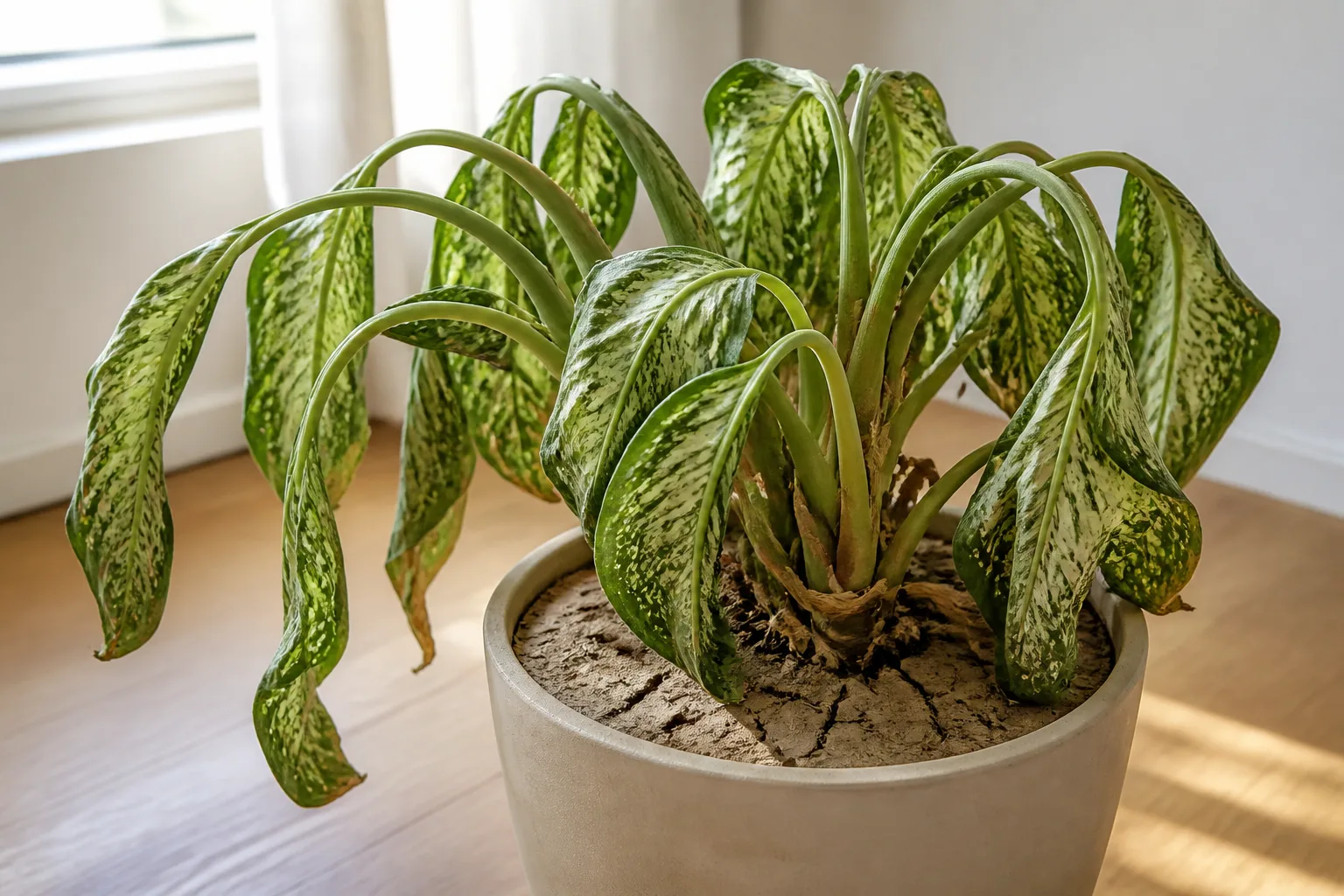
Underwatering on Dieffenbachia shows as a light pot, limp large leaves, and bone-dry mix an inch or more down. First step: soak the root ball thoroughly until the mix rewets, then drain-do not add more water until the top inch dries.
Underwatering on Dieffenbachia: Causes, Checks & Fixes
This guide covers underwatering on Dieffenbachia. See also the general Underwatering guide, watering, and light pages for this plant.
Underwatering on Dieffenbachia: Causes, Checks & Fixes
Quick answer
Whether you grow a green dumb cane, Camille, or Tropic Snow, underwatering on Dieffenbachia (Dieffenbachia spp.) means the root ball has gone too dry for too long. Large, variegated leaves drooping or wilting first because they lose water faster than roots can replace it when the mix is empty.
First step: confirm the soil is dry, then soak the pot thoroughly. Set the plant in a sink or basin, water slowly until the entire root zone is moist and excess drains from the bottom-or bottom-water for 30–45 minutes if the mix has turned hydrophobic. Let it drain completely before returning it to its saucer.
Do not keep pouring daily sips on a chronically dry plant. One deep rehydration beats repeated shallow drinks that never wet the center of the root ball. Compare your rhythm to the top-inch dry rule in our Dieffenbachia watering guide before you assume the plant needs more volume.
Underwatering vs. overwatering: A light, dry pot with firm stems points here. A heavy, wet pot with limp lower leaves points to overwatering or root rot-adding water to wet soil makes rot worse. When leaves droop but you are unsure which side you are on, read our wilting and drooping leaves guides after you run the checks below.
What underwatering looks like on Dieffenbachia
Dieffenbachia telegraphs thirst through its leaves before the stem fails. Early signs include:
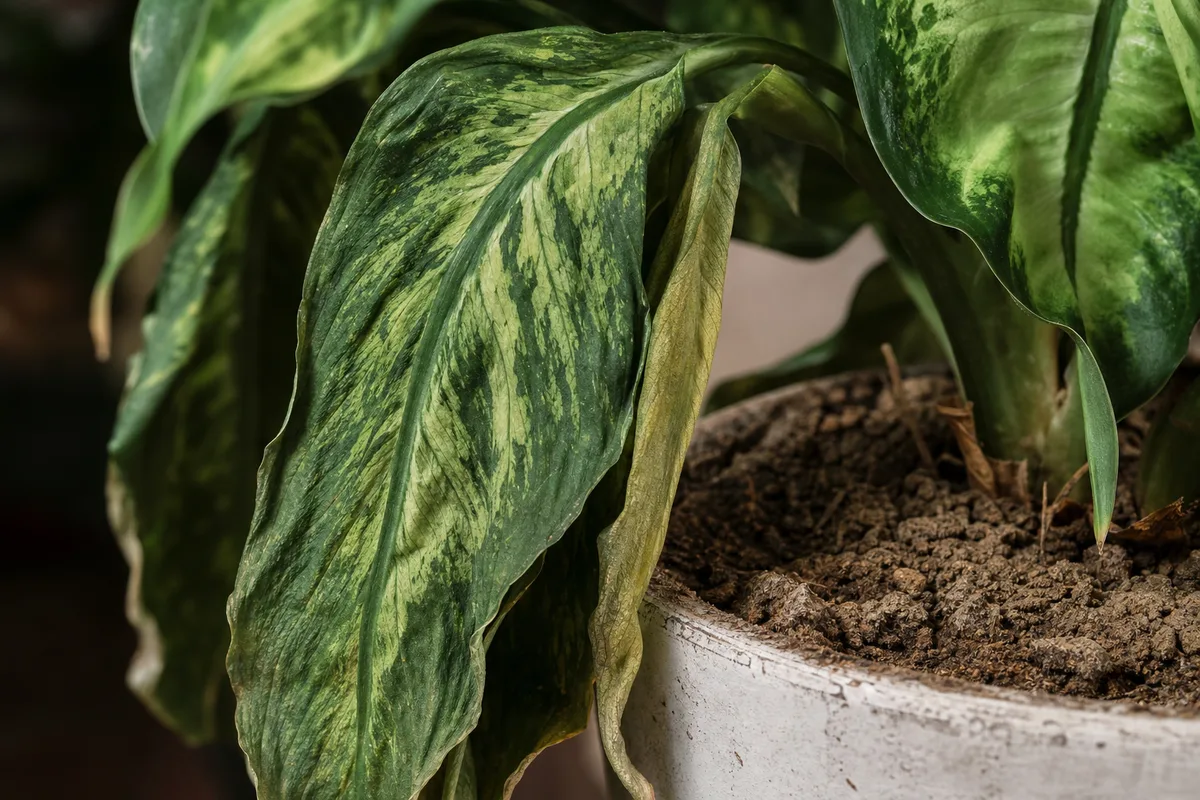
Underwatering symptoms on Dieffenbachia - compare with healthy tissue on the same plant.
- Limp, drooping leaves on otherwise green foliage-the whole leaf hangs down from the petiole instead of standing at its usual angle
- Dry, crispy brown edges or tips on older leaves-too little water can cause brown, brittle leaf margins-especially when low humidity adds to the stress
- Lightweight pot that feels almost hollow when lifted
- Mix pulled slightly away from the inside of the pot rim
- Water that runs through instantly without darkening the surface-classic hydrophobic, peat-heavy soil that dried out completely
- Slowed or stalled new growth at the crown when drought repeats over weeks
What underwatering usually does not look like: soft, mushy stems at the soil line; sour-smelling mix; soil that stays wet for many days after watering; or widespread yellow lower leaves on constantly damp peat. Those patterns fit overwatering and root rot more often than drought on this plant.
Because Dieffenbachia leaves are broad and thin relative to succulents, a missed watering in a bright, warm room can show wilt within a day or two. A plant in lower light may look fine longer even when the mix is dry-then collapse suddenly once the root ball is fully depleted. Heavily variegated cultivars may show tip crisping on pale panels before the whole leaf wilts; when that is your main symptom on Camille or Tropic Snow, also read the cultivar underwatering deep-dives linked at the end of this page.
Symptom snapshot (what to match at home):
| What you see | Pot / soil | Likely cause |
|---|---|---|
| Whole plant limp, leaves thin | Light pot, dry 2+ inches down | Underwatering - soak here |
| Lower leaves limp, upper OK for days | Heavy, cool, wet mix | Overwatering - stop water |
| Limp leaves, sour smell, soft stem base | Wet mix, mushy roots if checked | Root rot - do not keep soaking |
| Crisp tips only, leaves otherwise upright | Top inch damp, pot moderate weight | Low humidity - fix air moisture too |
| Sudden droop near AC or cold window | Moisture reads normal | Cold draft - move plant; see wilting |
Why Dieffenbachia gets underwatered
Dieffenbachia is a tropical foliage plant that wants consistent moisture without sogginess-water thoroughly and allow the top 1-inch surface to dry completely before watering again. It is not a desert plant, but it is also not a bog plant. The gap between “evenly moist” and “bone dry” is where most underwatering happens indoors.
Common triggers specific to this species:
Calendar watering instead of soil checks. Dieffenbachia in active growth with medium to Dieffenbachia light guide often needs water every 7–10 days in summer and less in winter. A fixed “once a week” schedule ignores how fast your home dries the pot. Cool rooms, short winter days, and dense root balls all change timing.
Fear of overwatering after past rot scares. Dieffenbachia is prone to root rot when kept wet in low light. Many owners swing too far the other way and let a peat mix dry completely between drinks. Chronic dry cycles produce the drooping leaves and brown tips listed in standard care references for this plant.
Cane moisture buffering hides early drought. Dieffenbachia stores water in its thick, fleshy cane. The upright stem can look firm and the upper leaves acceptable while roots below are already dry-by the time every leaf collapses, you may be several missed cycles behind, not one skipped watering.
Small pots and root-bound plants. Dieffenbachia grows at a moderate to fast rate when happy. A crowded root ball in a small container can go from moist to dry in 48 hours during warm weather, especially near a window or heating vent.
Hydrophobic, aged potting mix. Peat-heavy blends that have dried out completely repel water. The surface looks briefly damp after a quick pour while the center stays dry-so the plant keeps wilting “even after watering.”
Cachepots and decorative sleeves. A nursery pot inside a sealed outer pot hides how fast the mix dries and can make you think you watered recently when the inner root ball is empty. Lift the inner pot every time you check moisture; never let runoff sit trapped at the bottom.
High transpiration from large leaves. Each mature leaf can span 8–14 inches. In bright indirect light or near dry air from heating vents and low humidity, the plant pulls water quickly. Underwatering and low humidity often show up together as drooping plus crispy margins-not either symptom alone.
Seasonal shift without adjusting care. Growth slows and water use drops in cooler, darker months. But if you under-correct and stop checking entirely through winter, a plant near a heater can still dry out while you assume it needs nothing.
How to confirm the cause
Drooping dumb cane is a shared symptom. Wilted leaves may indicate soil that is too dry or too wet-rotting roots cannot take up water-so always check the root zone before you water.
Work through these checks in order:
- Pot weight - Lift the pot. If it feels light, it needs water. Light and dry on top strongly suggests underwatering. Heavy and wet suggests the opposite.
- Finger test at depth - Push into the top 1–2 inches. Dry, dusty mix confirms drought. Cold, wet, compacted mix means do not add water yet.
- Drainage and saucer - Is standing water sitting below the pot? That is not underwatering.
- Stem base - Firm cane at soil level fits drought. Soft, spongy tissue at the base with wet mix suggests rot.
- Smell - Musty or sour odor from the pot points to decay, not thirst.
- Root spot-check if unsure - Gently slide the plant out wearing gloves. Healthy roots are firm and pale. Mushy brown roots with wet soil mean rot-even if leaves wilt like a dry plant.
Confirmed underwatering when the mix is dry several inches down (or hydrophobic and repelling water), the pot is light, stems are firm, and roots look healthy if you inspect them.
Rule out underwatering when soil stays wet, the pot stays heavy, lower leaves yellow on damp mix, or roots are soft. Adding water in that case makes rot worse-switch to our overwatering or root rot guides.
First fix for Dieffenbachia
Rehydrate the entire root ball in one controlled soak.
- Move the plant to a sink, tub, or tray.
- If the mix is slightly dry but still absorbent, water slowly with room-temperature water until it flows from drainage holes. Stop when the pot feels noticeably heavier.
- If water runs straight through or the mix has shrunk from the pot sides, bottom-water: soak the pot until the soil is properly wetted again-set it in a basin of water so the mix wicks moisture upward for 30–45 minutes. Let excess drain afterward.
- Empty the saucer and lift any cachepot. Never leave Dieffenbachia sitting in standing water after a rescue soak.
- Place the plant back in its usual bright indirect spot-not direct hot sun while stressed.
- Wait. Do not water again until the top inch of soil feels dry.
That single thorough soak is the first fix. Humidity boosts, repotting, and fertilizer come later-only if needed after the plant responds.
Step-by-step recovery
After the initial soak, support recovery without swinging to overwatering:
Days 1–3: Watch for leaves lifting within 24–48 hours. Some older leaves may stay slightly limp if edges were already crisp. New unfurling leaves should look turgid, not wrinkled.
If wilt persists on dry mix: Repeat a bottom soak. Peat that dried hard often needs two wetting cycles before the center stays moist.
Trim only dead tissue: Snip fully brown, crispy leaves at the base once the plant is stable. Partial green leaves still photosynthesize-leave them unless more than half is dead. Wear gloves when cutting: Dieffenbachia sap contains calcium oxalate crystals that irritate skin and is toxic to pets if chewed. NC State Extension recommends gloves when handling this plant to prevent contact dermatitis.
Address hydrophobic soil: If the mix is old and repeatedly repels water, plan a repot into fresh, well-draining potting mix with perlite after the plant recovers-not on the same day as the first rescue soak unless the root ball is impenetrably dry. See our repotting guide for timing.
Hold fertilizer until you see firm new growth for a few weeks. Drought-stressed roots absorb salts poorly.
Adjust placement only if it drives drying: A plant baking in direct sun through glass may need a slightly shadier spot or more frequent checks-not more water volume at once.
Editorial spot-check (February 2026): A 10-inch Dieffenbachia in a bright east window showed mix pulled ¼ inch from the pot rim after nine days without water. A 40-minute bottom soak produced visible leaf lift by the next morning; the first firm new leaf at the crown appeared around day ten on a steady top-inch-dry rhythm afterward. Your timing will vary with pot size, cultivar, and room humidity-use new growth, not old blemishes, as the success marker.
Recovery timeline
Mild underwatering on an otherwise healthy Dieffenbachia often shows visible perk-up within hours to two days after a proper soak, because roots are still intact and leaves rehydrate once water moves upward again. UF/IFAS notes that droopy leaves from too little water typically improve after a thorough drink when the soil surface is dry.
Brown crispy tips and edges do not revert to green. They are permanent damage from cells that dried out. Judge success by upright newer leaves and a firm central cane, not by old blemishes fading.
Repeated dry cycles over months may cause lower leaf yellowing and drop as the plant sheds foliage to conserve water. Recovery slows because fine root hairs die back. Expect one to three weeks of steady care before new growth looks normal again.
If the plant stays limp after two thorough soaks with firm stems but dry mix that will not hold moisture, suspect hydrophobic or degraded soil rather than simple underwatering.
Lookalike symptoms
Root rot and overwatering - Same drooping leaves, opposite soil: wet, heavy, sometimes sour. Stems may soften. Roots turn brown and mushy. Watering more kills the plant. Start with our overwatering page if the pot stays heavy; move to root rot when roots are mushy.
Cold draft stress - Dieffenbachia is cold-sensitive; UF/IFAS recommends moving plants when temperatures fall below 55°F (13°C). Chilled leaves can droop or spot even when soil moisture is fine. Check vents, winter windows, and AC blasts; soil may read “correct” while temperature is the real issue.
Low humidity alone - Often shows as brown tips without full wilt, especially in winter heating. Underwatering and dry air stack; fixing water without raising humidity slightly may leave edges crisp while leaves otherwise stand upright. See our low humidity guide when the pot weight is normal but margins keep browning.
Normal lower leaf drop - Older bottom leaves yellow and fall on a healthy plant over time. That is not always drought. Pair leaf loss with dry, light pots and widespread limp foliage before calling it underwatering.
Mistakes to avoid
- Watering on droop alone without checking soil-Dieffenbachia’s most dangerous misread.
- Daily small cups of water that wet the surface but not the root ball.
- Leaving the pot in a full saucer or cachepot after a rescue soak, inviting rot right after drought.
- Misting leaves instead of soaking roots-surface moisture does not rehydrate a dry root zone.
- Fertilizing a wilted plant before the mix is evenly moist again.
- Repotting and watering heavily on day one when the only problem was a missed drink.
- Blaming “low light” for collapse when the pot is clearly dry and light.
- Trimming crispy leaves bare-handed on a toxic genus-gloves and hand-washing are cheap insurance.
How to prevent underwatering next time
Build a routine around how the pot dries in your home, not a calendar:
- Check the top inch before every major watering. Water when dry; wait when not.
- In active growth, expect roughly 7–10 days between drinks in summer and 14–21 days in winter as a starting range-then adjust to your pot size, light, and humidity per our watering guide.
- Lift the pot when you walk by. Weight change is faster than guessing.
- Lift cachepots after every drink and pour out trapped water.
- Refresh or repot peat-heavy mix that repeatedly goes hydrophobic.
- Size the pot to the plant-very small containers dry out in a day or two on a fast-growing dumb cane.
- Group plants or use a humidifier if crisp tips return even when watering is correct; Dieffenbachia prefers high humidity for clean leaf margins indoors.
When to use cultivar underwatering pages instead
This page is the genus underwatering hub for any dumb cane-shared drought-vs-rot logic, bottom-soak rescue, cane buffering, and hydrophobic peat recovery.
Open a cultivar deep-dive when:
- Camille - Cream-centered panels crisp before whole leaves wilt, or the plant sits in a compact pot on a bright side table. See Camille underwatering.
- Tropic Snow - Tall floor specimen with heavy cream variegation and faster dry-down near windows. See Tropic Snow underwatering.
If variegation damage is the headline symptom but the pot is light and mix is dry several inches down, start here first-then use the cultivar page for panel-specific recovery nuance.
Conclusion
Underwatering on Dieffenbachia is usually fixable when stems stay firm and roots are healthy. Confirm dry soil, soak once deeply, drain well-including any cachepot-then wait for the top inch to dry before the next drink. That rhythm-moist root ball, brief dry window at the surface-is what keeps large dumb cane leaves standing without pushing the plant toward rot. If the pot stays heavy and wet instead, switch to our overwatering or root rot guides before you pour again.
Related Dieffenbachia guides:
- Watering - top-inch dry rhythm and seasonal adjustment
- Overwatering - heavy wet pot vs. light dry pot
- Root rot - mushy roots and soft cane base
- Wilting - wilt patterns beyond watering alone
- Drooping leaves - symptom entry points
- Low humidity - crisp tips with otherwise correct moisture
- Overview - species context and toxicity
- Camille underwatering - cream-panel crisping deep-dive
- Tropic Snow underwatering - tall variegated floor specimen
When to use this page vs other Dieffenbachia guides
- Dieffenbachia watering guide - Use for routine moisture checks before assuming underwatering is the main issue.
- Dieffenbachia problems hub - Browse all 16 common issues on this species.
- Wilting on Dieffenbachia - Different entry point when symptoms overlap with underwatering.
- Brown Tips on Dieffenbachia - Different entry point when symptoms overlap with underwatering.
- Yellow Leaves on Dieffenbachia - Different entry point when symptoms overlap with underwatering.