Brown Tips on Dieffenbachia: Causes, Checks & Fixes
Quick answer
Brown tips on Dieffenbachia mean leaf margins are drying faster than roots can resupply water-often from dry indoor air, fluoride or minerals in tap water, or fertilizer salt buildup. First step: switch to filtered or distilled water and skip your next fertilizer dose.
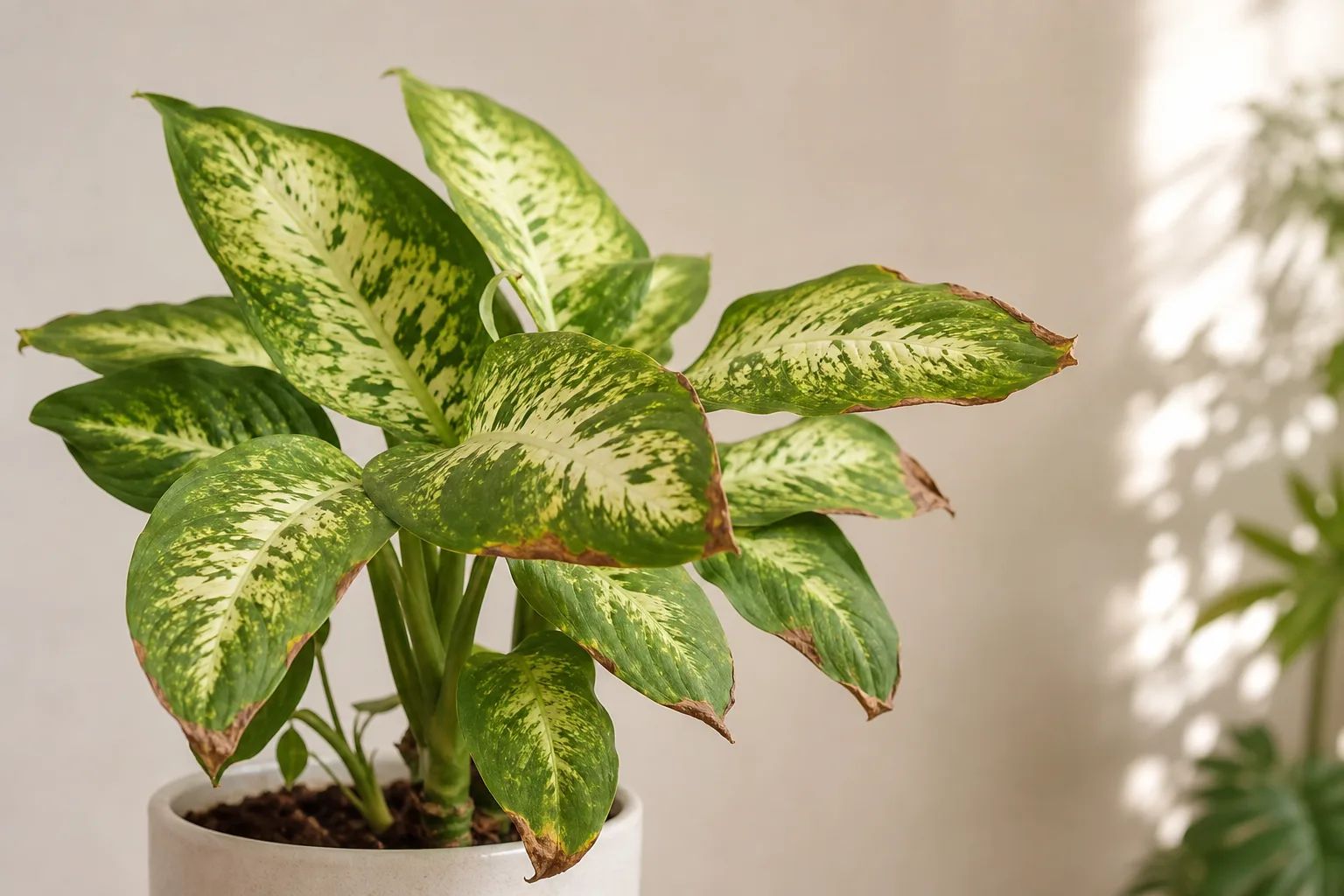
Brown Tips on Dieffenbachia: Causes, Checks & Fixes
This guide covers brown tips on Dieffenbachia. See also the general Brown Tips guide, watering, and light pages for this plant.
Brown Tips on Dieffenbachia: Causes, Checks & Fixes
Quick answer
Dieffenbachia - dumb cane - carries large tropical leaves that show water stress at the farthest point first: the tip. On this aroid, brown tips almost always trace to dry indoor air, fluoride or minerals in tap water, or fertilizer salts in the root zone-not a mysterious disease.
First move: switch all watering to filtered, distilled, or rainwater for the next four weeks and skip your next scheduled fertilizer dose. That single change addresses the two causes most specific to Dieffenbachia without pushing a stressed root system harder.
The watering guide covers the top-inch dry rhythm; this page focuses on why tips brown and how to read the pattern on cane growth.
What brown tips look like on Dieffenbachia
Tip burn on dumb cane is usually cosmetic before it becomes serious. You are looking for a distinct pattern:
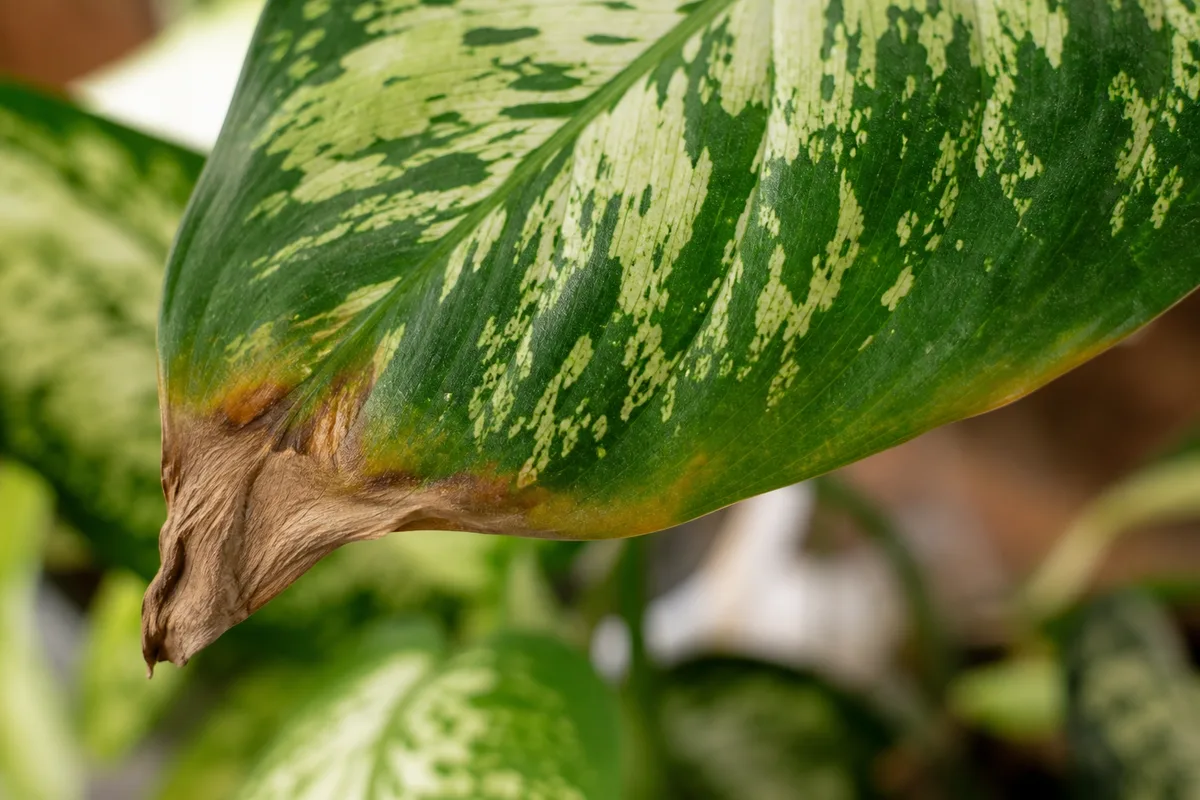
Brown Tips symptoms on Dieffenbachia - compare with healthy tissue on the same plant.
- Dry, tan-to-dark-brown tips that feel papery or crispy when you pinch them gently-not soft or wet.
- Damage starting at the leaf point and sometimes creeping a few millimeters down the margin; the rest of the blade stays green and firm.
- Older leaves affected first when winter heating or an AC vent is the trigger; newest leaves browning quickly when tap water or salts are the trigger.
- White or pale crust on the soil surface or pot rim-often paired with tip burn from overfeeding or hard water.
- No yellow halos, no mushy tissue-those point to rot or spot disease, not classic tip necrosis.
Variegated cultivars like Camille or Tropic Snow show tip burn clearly against pale or mottled tissue. Large-leaf types like Hilo or Paradise may hide early browning until several leaves are affected. As canes mature, lower leaves naturally drop to reveal trunklike stems-one or two browned tips on the lowest leaf of a tall cane can be normal aging if new growth stays clean.
Why Dieffenbachia gets brown tips
Dumb cane evolved in the shaded understory of tropical Americas. Indoors, its wide leaf blades lose moisture at the margins whenever the air or root zone works against even hydration.
Low humidity and dry winter air
Heated and air-conditioned rooms often sit below 40% relative humidity in winter. Dieffenbachia prefers elevated humidity for clean leaf margins, though many stable plants tolerate average household air when watering is correct. The leaf tip is the last section to receive water from thick cane stems and roots; when transpiration outpaces uptake, tips desiccate first.
Plants on radiator covers, near heat vents, or in drafty winter windows show this pattern: older leaf tips brown while the crown stays firm and new growth may look fine until humidity drops further.
Fluoride and minerals in tap water
Dieffenbachia is more sensitive to fluoride in tap water and accumulated salts than many common houseplants. Months of city-water watering can leave minerals in leaf tissue; tips brown on new leaves as well as old ones. Chlorine in tap water dissipates if water sits overnight, but fluoride does not-filtered or distilled water is the practical fix.
Fertilizer salt buildup
Dieffenbachia is a moderate feeder, but too much fertilizer can cause marginal leaf burn. Excess fertilizer concentrates soluble salts in the pot; roots pull less water, and leaf edges and tips scorch. This looks identical to fluoride damage-dry brown tips, sometimes with white residue on the soil.
underwatering on Dieffenbachia on large leaves
Long dry spells between waterings stress feeder roots on a plant with large leaf surface area. Tips can crisp even when humidity is fine if the top inch of mix stays bone-dry for weeks. This is less common than air or water chemistry on Dieffenbachia, but it happens on neglected floor plants in oversized pots.
Tip burn alone rarely means root rot, but brown tips plus wet soil, yellow lower leaves, and a soft stem base mean you should inspect roots before changing water or humidity.
Lookalike symptoms to rule out
| What you see | Often confused with | How to tell apart |
|---|---|---|
| Crispy tips only | Underwatering | Underwatering also wilts or curls whole leaves and leaves the pot very light; tips-only damage with firm leaves points to air or water chemistry. |
| Brown margins after Dieffenbachia repotting guide | Transplant shock | Shock fades if soil moisture stays even; chemical tip burn from old tap-water habits continues on new leaves weeks later. |
| Brown spots with yellow halos | Leaf spot disease | Spots are scattered on the blade, not confined to tips and margins; often follow wet foliage or cool stagnant air. |
| Brown tips + wet soil + yellow base leaves | Root rot | Rot smells sour and stems soften; pure tip burn keeps firm crowns and green centers. See overwatering and root rot if soil stays saturated. |
| Bleached patches on variegated tissue | Sun scorch | Direct sun hits pale cream or white sections first; damage is patchy on sun-facing tissue, not uniform tip necrosis on every leaf. |
How to confirm the cause
Work through these checks in order-they take five minutes and prevent the wrong fix:
- Newest leaf test - Find the most recently unfolded leaf. If its tip is already brown, suspect tap-water minerals, fluoride, or fertilizer salts. If only older lower leaves show tips and the newest leaf is clean, low humidity or a heat source is more likely.
- Soil surface - White crust or gritty film suggests salt buildup. Scratch the top inch: heavy mineral dust confirms you need a flush, not more fertilizer.
- Pot weight and moisture - Stick your finger into the top inch of mix. Bone-dry mix with crispy tips points to underwatering stress layered on dry air. Cold and damp mix with brown tips suggests root stress from overwatering-do not increase humidity or water until the mix dries.
- Placement scan - Is the pot within a metre of a heat vent, radiator, or blowing AC? Is it on a sunny windowsill where leaves heat and dry faster? Move the mental picture before moving the plant.
- Water and feed history - Hard tap water only, recent full-strength fertilizer, or feeding through winter? That history strongly supports water quality or salts.
Write down which pattern matches. One cause is usually dominant; stacking humidifier, flush, and repot the same day makes it hard to read what worked.
The first fix to try
Use filtered, distilled, or rainwater for every watering for the next four weeks, and cancel the next fertilizer application.
Pour until water runs freely from the drainage holes-the same thorough drink you would use with tap water. Do not swap in heavy feeding or repotting on the same day. Dieffenbachia responds slowly; you are removing the most common leaf-specific stressor without shocking roots.
If white salt crust is visible on the soil, make the first watering a flush: use plain filtered water at room temperature and run roughly two to three times the pot volume through the mix so salts leach out the bottom. Skip fertilizer for six weeks after a flush.
Wait two to three weeks and inspect the next leaf that unfolds. Clean tips on new growth mean you found the right track.
Step-by-step recovery
After the water switch, add these steps one at a time based on what you confirmed-not all at once:
- Raise local humidity toward 50–60% if only older tips were affected and new growth stayed clean. A small humidifier beats misting, which lifts humidity briefly and can leave foliage wet in low light. See the low-humidity guide if dry air is the main trigger.
- Move off heat paths - Pull the pot back from vents and radiators so leaves are not in a constant dry-air stream.
- Stabilize watering - Water when the top inch of mix feels dry, then soak until runoff. Avoid letting the pot go completely crisp for weeks and then flooding it.
- Trim cosmetic tips - Snip brown tips following the natural leaf curve, leaving a thin sliver of brown edge so you do not cut into living tissue. Wear gloves when trimming; Dieffenbachia sap irritates skin and the plant is toxic to cats and dogs if chewed.
- Resume feeding cautiously - After six to eight weeks with clean new tips, feed monthly at half strength during spring and summer only. Stop again if tips return.
If new tips keep browning on filtered water and humidity is stable, unpot and check roots. Mushy roots need a rot protocol; tight white roots in dry hydrophobic mix may need repotting into fresh, well-draining aroid mix-one size up at most.
Recovery timeline and what to expect
Brown tip tissue never turns green again. Judge recovery by new leaves:
- Weeks 1–2 - Existing tips stay brown; no new spread down margins is a good sign.
- Weeks 3–6 - The next one or two leaves should emerge with clean or mostly clean tips if water quality or humidity was the issue.
- After two months - Persistent browning on every new leaf despite filtered water and 40%+ humidity warrants a root inspection and salt flush or repot.
Dieffenbachia can grow quickly in bright filtered light or stall in dim corners. A plant that holds firm stems, keeps lower leaves green, and opens one clean new leaf is recovering even if older blemished leaves stay trimmed.
Mistakes to avoid
- Increasing fertilizer to “green up” tips-adds salts and worsens marginal leaf burn on a plant already sensitive to buildup.
- Misting alone as humidity fix; it does not sustain 50–60% RH through a heating season.
- Watering more because tips look dry; overwatering damages roots and can mimic tip stress on upper leaves later.
- Using cold tap water straight from the pipe in winter; shocks roots and browns margins on a cold-sensitive tropical.
- Repotting, flushing, pruning hard, and moving all on day one-Dieffenbachia stalls when every variable changes at once.
- Trimming into green tissue; small cuts into healthy margins invite more browning at the wound.
How to prevent brown tips next time
Build routine around how Dieffenbachia actually grows-moderately fast in bright filtered light, with large leaves that transpire heavily:
- Water quality - Filtered or rainwater for long-term leaf quality if your tap is hard or fluoridated. Tap water contains fluoride that causes leaf tip burn on sensitive tropical houseplants.
- Feed lightly - Half-strength balanced liquid fertilizer every two to four weeks from March through September; withhold in fall and winter when growth slows.
- Flush salts - Drench plants with water periodically to leach salts from the potting soil every few months during active growth if you feed regularly.
- Humidity and placement - Aim for 50–60% RH; keep pots away from heat vents and cold window panes.
- Water on dryness, not calendar - Top inch dry before the next soak; reduce frequency in dim or cool months when the plant uses less water.
Weekly glance at the newest leaf tip catches drift early-before every older leaf shows damage.
When to worry
Escalate beyond cosmetic trimming if:
- Every new leaf opens with brown tips after four weeks on filtered water and stable humidity-inspect roots and flush or repot.
- Browning spreads quickly from tips into large sections of multiple leaves.
- Stem bases soften, soil smells sour, or lower leaves yellow in clusters-treat as possible root rot, not tip burn.
- Temperatures drop below 60°F (15°C) repeatedly; Dieffenbachia prefers 60 to 75°F and chilling can look like marginal burn but will not fix with water alone.
For a firm plant with isolated tip damage, patience and one care correction at a time usually restore clean new growth within a month or two.
Dieffenbachia care cross-check
If brown tips keep returning after you adjust placement and water, compare your routine to what this species actually needs:
| Checkpoint | Healthy target | Brown-tip risk when wrong |
|---|---|---|
| Airflow | Stable room air; no vent drafts | Radiators, AC, cold glass drying margins |
| Soil moisture | Top inch dry before watering | Wet mix for days; roots cannot hydrate tips |
| Water quality | Clean new leaf tips over months | Hard tap water or heavy feeding burning new growth |
| Light | Bright filtered; no direct scorch | Sun bleaching variegated tissue |
| Feeding | Light; growth season only | Salt crust and recurring edge burn |
| Humidity | 50–60% ideal | Below ~30% RH with constant heat running |
Fix the condition that fails this check before repotting for size, adding fertilizer, or treating for pests you have not confirmed.
Related Dieffenbachia problems
- Overview - species context and toxicity
- Watering - top-inch dry rhythm and humidity FAQ
- Low humidity - dry-air margin burn
- Overwatering - wet-soil lookalike
- Root rot - when tips mean failing roots
When to use this page vs other Dieffenbachia guides
- Dieffenbachia watering guide - Use for routine moisture checks before assuming brown tips is the main issue.
- Dieffenbachia problems hub - Browse all 16 common issues on this species.
- Low Humidity on Dieffenbachia - Different entry point when symptoms overlap with brown tips.
- Underwatering on Dieffenbachia - Different entry point when symptoms overlap with brown tips.
- Overwatering on Dieffenbachia - Different entry point when symptoms overlap with brown tips.