Yellow Leaves on Dieffenbachia: Causes, Checks & Fixes
Quick answer
Yellow leaves on Dieffenbachia usually mean overwatering, low light, cold drafts, or the oldest leaf aging off a bare cane - not a nutrient crisis. First step: push your finger one inch into the mix near the pot edge. If wet, pause watering; if dry and the pot is light, water thoroughly. Separate one slow bottom-leaf fade from rapid multi-leaf yellowing on soggy soil before you fertilize or repot.
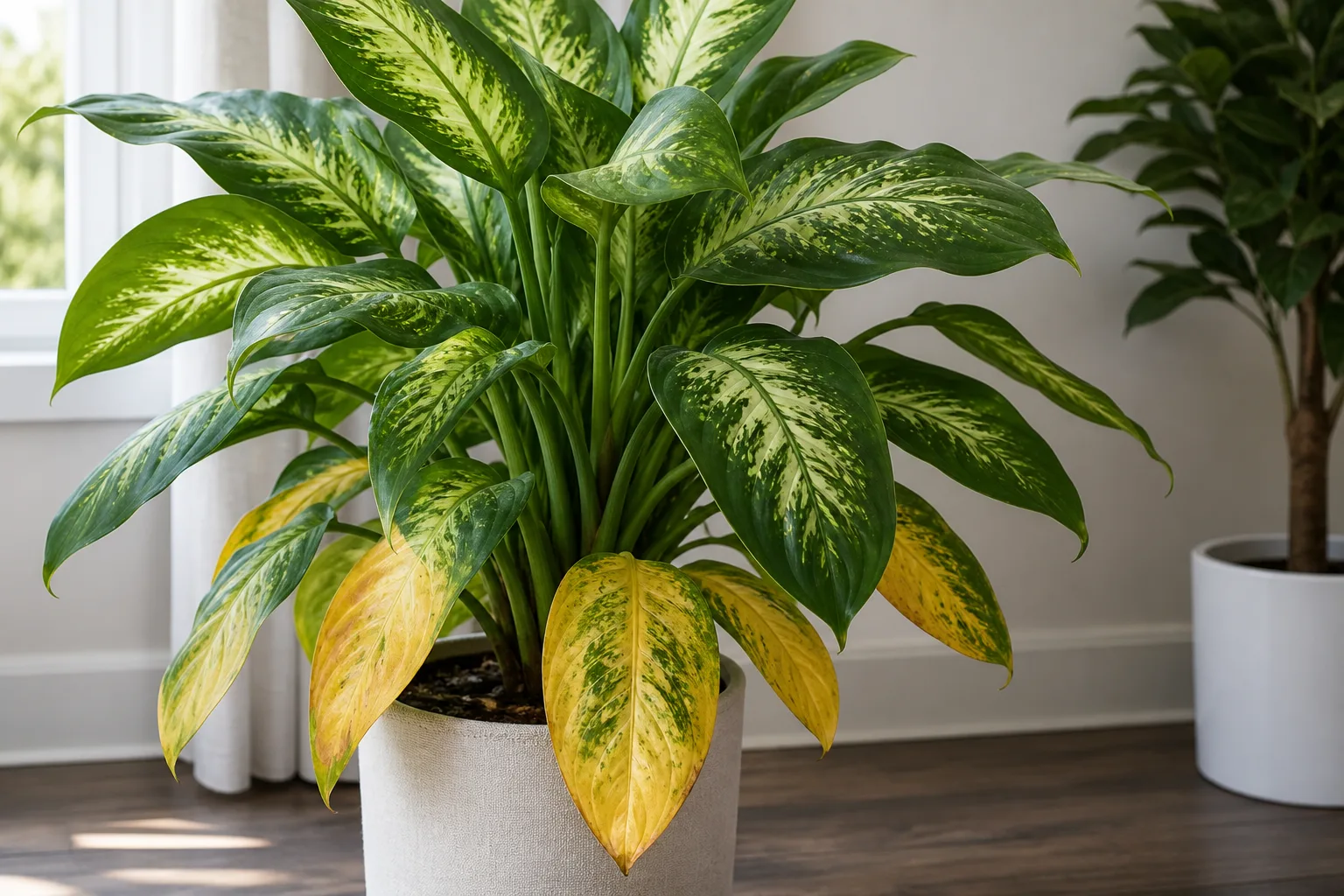
Yellow Leaves on Dieffenbachia: Causes, Checks & Fixes
This guide covers yellow leaves on Dieffenbachia. See also the general Yellow Leaves guide, watering, and light pages for this plant.
Yellow Leaves on Dieffenbachia: Causes, Checks & Fixes
Quick answer
Yellow leaves on Dieffenbachia are a symptom, not a diagnosis - and dumb cane shows the pattern differently than rosette plants like peace lilies or snake plants. Dieffenbachia grows as an upright cane with alternate leaves along a thick stem. As the plant matures, lower leaves naturally drop to reveal trunklike stems - so a single spent leaf at the cane base is often harmless turnover, not an emergency.
The dangerous mistake is treating every yellow leaf the same way. Chronic overwatering is the most common stress cause on dumb cane: root rot usually results from a soil mix that does not drain quickly or overly frequent watering, and yellow lower leaves on wet, heavy soil are the early warning. Low light bleaches variegation and slows growth until upper leaves pale. Cold drafts below the plant’s comfort band yellow leaves on the side facing the chill. Salt buildup from heavy feeding burns margins and can yellow tissue.
First step: check soil moisture one inch deep - the same standard in our Dieffenbachia watering guide. Push to a full inch near the pot edge, not just the surface crust. If the mix is still damp, pause watering and move the pot away from cold air sources. If the inch is dry and the pot feels light, water thoroughly and empty the saucer. Only after you know wet from dry should you prune yellow leaves, adjust light, or inspect roots.
Wear gloves when removing yellow foliage. Dieffenbachia sap contains calcium oxalate crystals that irritate skin and can numb the mouth if ingested.
What yellow leaves look like on Dieffenbachia
Healthy dumb cane holds broad, patterned leaves at a slight upward angle from thick petioles along an upright cane. Yellowing shows up in distinct patterns depending on cause:
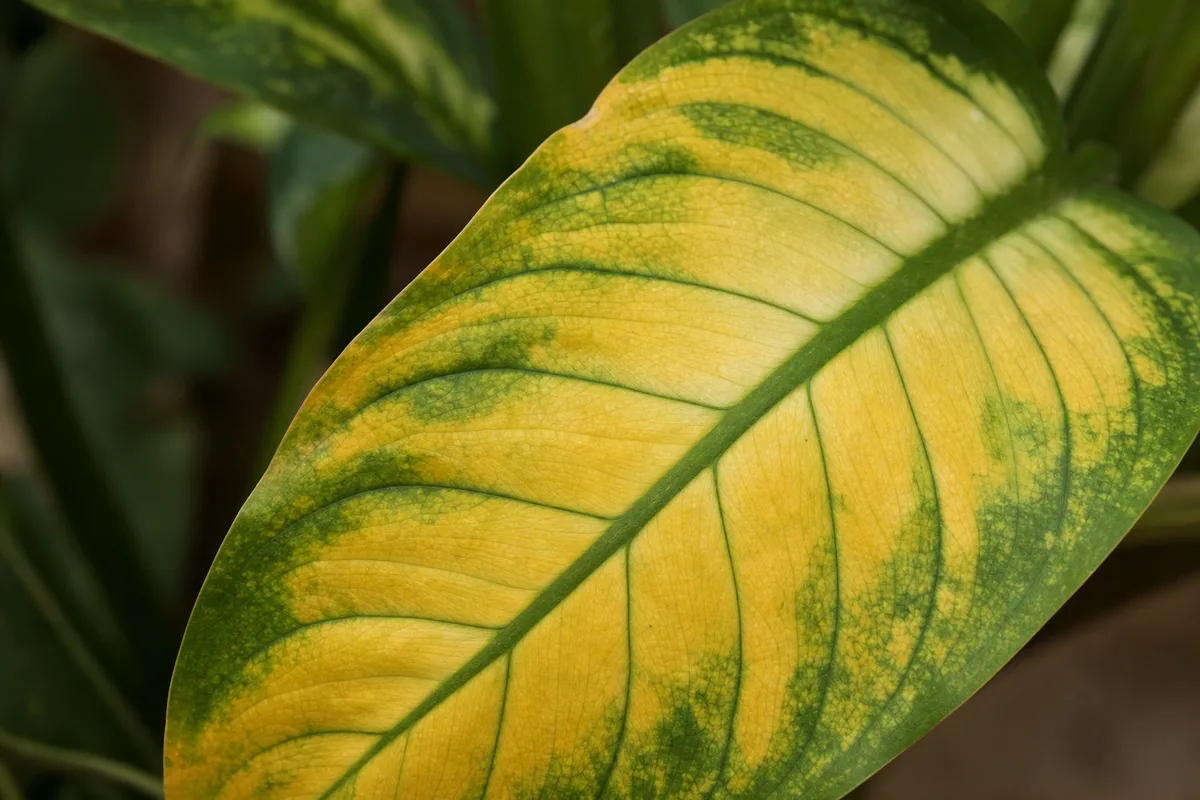
Yellow Leaves symptoms on Dieffenbachia - compare with healthy tissue on the same plant.
- Single oldest leaf at cane base - one lower leaf fades from tip or margin to full yellow over weeks while upper leaves stay green and the stem stays firm. The leaf may hang before dropping, leaving a bare section of cane below - normal senescence on a maturing plant.
- Multiple lower leaves soft-yellow on wet soil - two or more bottom leaves turn uniformly yellow while the pot feels heavy and mix stays damp five or more days after watering. Petioles may feel limp. Classic overwatering or early root stress.
- Pale, washed-out upper leaves with long internodes - new growth is smaller and lighter; cane stretches between leaves. Variegated cultivars like ‘Camille’ and ‘Tropic Snow’ lose cream or white sectors first. Points to not enough light.
- Yellowing localized to one side of the plant - leaves nearest a winter window, AC vent, or exterior door yellow first, sometimes overnight. Soil moisture may read normal. Cold-draft pattern.
- Yellow with brown leaf margins - edges crisp while centers yellow, often after months of heavy liquid fertilizer without flushing. Salt or fertilizer burn.
- Rapid yellow climb on soggy mix with soft stem - lower leaves yellow, then middle leaves follow; cane base feels mushy at soil level. Possible root rot escalation.
Yellow leaves will not re-green once chlorophyll is gone. Recovery is measured by new leaves at the cane tip, not old tissue color.
Why Dieffenbachia gets yellow leaves
Overwatering and wet winter soil
Dieffenbachia is an aroid, not a bog plant. Its roots need moisture and oxygen together. When soil stays saturated, roots lose function and the plant cannot move water upward - so lower leaves yellow even though the mix is wet. Clemson HGIC recommends letting soil dry to the touch to a depth of one inch before watering again.
Winter makes this worse indoors. Cooler rooms, shorter days, and dim corners slow evaporation and uptake. Owners who keep a summer watering calendar pour into already-damp mix. Office AC and cachepots that trap runoff extend wet cycles. The same conditions that invite fungus gnats yellow lower leaves first.
Low light and leggy stems
Dumb cane tolerates shade but growth will be reduced in low light. In dim placement, the plant stretches toward any light source, internodes lengthen, and new leaves emerge smaller and paler. Variegated types - ‘Camille’, ‘Tropic Snow’, ‘Compacta’ - depend on brighter filtered light to hold cream and white patterning; without it, leaves wash out to yellow-green. See leggy growth when stretch is the main issue.
Normal cane senescence
Unlike rosette houseplants where old leaves hide under new crown growth, Dieffenbachia sheds from the bottom of the cane upward as it ages. UF IFAS notes that the lowest leaves may turn yellow and begin to droop as part of the plant’s normal growth pattern - simply remove drooping leaves during regular upkeep. One leaf every few months on an otherwise healthy upright cane is expected. Multiple rapid losses on firm cane with correct watering are not.
Cold drafts and temperature stress
Dieffenbachia prefers temperatures from 60 to 75 °F and should always be protected from cold and major temperature swings. Chilled air from winter glass, frequently opened doors, or AC vents can yellow leaves on the exposed side within a day or two. Soil may still feel appropriately moist - the damage is thermal, not drought. UF IFAS adds that if leaves droop and fall without yellowing first, the plant may be too cold - move it where temperature will not fall below 55 °F.
Salt buildup from overfeeding
Too much fertilizer can cause marginal leaf burn on Dieffenbachia. If plants are lacking nutrients, they may yellow, produce smaller leaves, and become stunted - but indoor dumb cane more often yellows from wet roots or light stress than from true deficiency. Reaching for fertilizer on a chronically overwatered plant stacks salts on roots that already cannot absorb well.
Lookalike symptoms to rule out
| What you see | Likely cause | Quick check |
|---|---|---|
| One bottom leaf yellowing slowly, firm cane | Normal cane senescence | Top inch dries between drinks; new tip growth green |
| Multiple lower leaves yellow, heavy wet pot | Overwatering / root stress | Soil damp 5+ days; see overwatering |
| Whole plant limp, light dry pot | Underwatering | Mix dusty 2 in. down; see underwatering |
| Pale small top leaves, long bare cane | Low light | Move to brighter indirect; see not enough light |
| Yellow one side only, near window/vent | Cold draft | Soil moisture normal; warmth stable 60–75 °F |
| Yellow + mushy stem base, sour smell | Root rot | Unpot inspection; see root rot |
| Yellow with brown tips, recent heavy feed | Salt / fertilizer burn | Pause fertilizer; flush if mix is salty |
How to confirm the cause
Work through these checks in order before Dieffenbachia repotting guide, fertilizing, or pruning heavily:
- Which leaves? - Single lowest leaf only suggests aging. Two or more lower leaves, or yellowing climbing the cane, suggests stress.
- Soil moisture at one inch - Push a finger or skewer one inch deep near the pot edge. Wet and cool while you have been watering on schedule confirms overwatering. Dusty and dry points to underwatering - though underwatering more often causes wilting and crisp edges than uniform yellow.
- Pot weight - Lift the container. Heavy days after watering with limp yellow lower leaves fits saturated roots. Light with yellowing may mean drought or advanced root loss - check stem firmness.
- Stem firmness at soil line - The cane should feel solid, not spongy. Soft base on wet mix is urgent; see root rot.
- Light and placement - Note distance from windows, variegation fade on new leaves, and whether yellowing faces a draft source. Leggy spacing between leaves supports low light.
- Root spot-check (if wet soil + multi-leaf yellow) - Slide the plant partly out of the pot. Healthy roots are firm and white or tan. Mushy brown roots with sour smell confirm rot - do not water again until you trim and repot into fresh draining mix.
First fix for Dieffenbachia
Stop watering until the top inch of mix is dry if soil is currently wet and lower leaves are yellowing. Move the pot a few feet from cold windows, AC vents, and heating blasts that chill one side of the cane. That single dry-down cycle - paired with warmth - fixes the majority of non-rot yellowing cases without stacking repot, prune, and fertilizer on day one.
If the top inch is already dry and the pot is light with firm cane, give one thorough soak until runoff drains, then empty the saucer within 30 minutes. Do not sprinkle daily sips that keep only the surface damp.
Remove fully yellow leaves with clean shears or a sharp knife after you know the moisture diagnosis. Bag dropped leaves promptly if pets share the space.
Step-by-step recovery by confirmed cause
Overwatering (wet mix, firm cane, early yellow):
- Pause water until top inch dries - may take 7–14 days in a heavy pot.
- Move to medium Dieffenbachia light guide so the plant uses water steadily.
- Remove yellow spent leaves; do not fertilize.
- If yellowing continues after two dry cycles, unpot and inspect roots.
Underwatering (dry mix, light pot, yellow edges):
- Soak thoroughly until water exits drain holes; empty saucer.
- Resume top-inch dry rhythm - not a fixed weekday.
- Lower leaves may still drop if drought was prolonged; watch new tip growth.
Low light (pale upper leaves, leggy cane):
- Relocate to brighter filtered light - no direct hot sun on variegated leaves.
- Hold fertilizer until new growth looks normal size and color.
- Variegated owners with heavy cream fade may also read Dieffenbachia ‘Camille’ yellow leaves or Tropic Snow yellow leaves for cultivar-specific bleaching.
Normal aging (one bottom leaf, firm cane, correct watering):
- Snap or cut the spent leaf at the petiole base.
- No watering change needed if dry-down rhythm is already sound.
Cold draft (localized yellow, normal moisture):
- Move away from chill source; keep room in the 60–75 °F band.
- Remove damaged leaves; do not water extra “to comfort” a cold plant on already-damp mix.
Root rot (mushy roots, soft stem, sour smell):
- Follow the root rot protocol: trim mushy tissue, repot into fresh airy mix, reduce watering frequency afterward.
Recovery timeline
Fully yellow leaves drop within days to two weeks once you remove them or they detach on their own. New growth at the cane tip is the reliable success marker - expect a healthy unfurling leaf within two to four weeks after watering and light stabilize in non-rot cases. Root rot recovery takes longer: often four to eight weeks before consistent new leaves if enough roots remain.
Do not judge failure on old yellow tissue. Judge on firm cane, stable or improving new leaf size, and no further yellowing climbing the stem.
What not to do
Do not fertilize a yellowing dumb cane before fixing moisture and light - excess fertilizer burns margins and salts stress roots that may already be drowning. Do not increase watering when soil is wet “because leaves look sad.” Do not repot on day one unless mushy roots are confirmed - repot shock on an overwatered plant hides whether dry-down alone would have worked. Do not assume all bottom yellow leaves are normal aging when the pot stays heavy and multiple leaves are involved. Do not leave dropped yellow leaves on the floor near pets.
How to prevent yellow leaves on Dieffenbachia
Water when the top inch dries, not on a calendar. Reduce frequency in winter and dim offices. Use pots with drain holes and airy mix with perlite; empty saucers and cachepots after every drink. Keep temperatures in the 60–75 °F ideal range away from draft paths. Provide medium to bright indirect light so variegation holds and the cane transpires steadily. Feed lightly March through September per label directions - half-strength liquid every two to four weeks is typical - and skip feeding on stressed plants. Remove spent lower leaves before they decay on wet soil surface.
When to worry
Escalate beyond basic dry-down if:
- Yellow leaves climb the cane while soil stays wet five or more days
- The stem softens at the soil line or smells sour from drain holes
- Multiple canes or the whole plant yellows within a week
- New growth stalls and lower leaves drop rapidly on a heavy pot
- Yellowing returns after two correct dry-down cycles
Those patterns overlap root rot and advanced overwatering. Unpot, inspect, and trim before the crown collapses.
Dieffenbachia care cross-check
| Factor | Healthy range | Yellow-leaf link |
|---|---|---|
| Watering | Top inch dry before soak | Wet mix → lower leaf yellow |
| Light | Medium–bright indirect | Dim → pale, small new leaves |
| Temperature | 60–75 °F, no drafts | Chill → side-specific yellow |
| Pot / mix | Drain holes, airy soil | Poor drain → chronic wet roots |
| Feeding | Light, seasonal | Excess → margin burn, salt yellow |
| Cane check | Firm stem at base | Soft → rot urgency |
Pet safety when removing dropped leaves
The ASPCA lists Dieffenbachia as toxic to cats and dogs due to insoluble calcium oxalate crystals. Oral irritation, drooling, vomiting, and difficulty swallowing can follow ingestion. Yellow leaves that drop to floor level are easy targets - pick them up immediately, dispose in a closed bag, and wipe sap from floors. Wear gloves when pruning. Keep dumb cane pots off pet routes when lower leaves are senescing. Contact your veterinarian or ASPCA Poison Control at (888) 426-4435 if a pet chews any part of the plant.
Conclusion
Yellow leaves on Dieffenbachia split into two very different stories: one slow bottom-leaf fade on a firm upright cane is often normal maturation, while multiple soft yellow leaves on wet, heavy soil is a watering emergency in slow motion. Run the top-inch dry check first, protect the plant from cold drafts, and read new tip growth - not old yellow tissue - as your scorecard. When you align moisture, light, and temperature with what dumb cane actually needs, the cane keeps its pattern and new speckled leaves return.
Related Dieffenbachia guides:
- Watering - top-inch dry rhythm and seasonal adjustment
- Overwatering - wet-soil yellow leaves deep dive
- Root rot - mushy cane and root inspection
- Underwatering - dry pot lookalike
- Not enough light - variegation fade and leggy growth
- Wilting - limp leaves with wet or dry soil
- Overview - species context, cultivars, and toxicity
When to use this page vs other Dieffenbachia guides
- Dieffenbachia watering guide - Use for routine moisture checks before assuming yellow leaves is the main issue.
- Dieffenbachia problems hub - Browse all 16 common issues on this species.
- Overwatering on Dieffenbachia - Different entry point when symptoms overlap with yellow leaves.
- Underwatering on Dieffenbachia - Different entry point when symptoms overlap with yellow leaves.
- Not Enough Light on Dieffenbachia - Different entry point when symptoms overlap with yellow leaves.
Related Dieffenbachia guides
- Dieffenbachia overview
- Dieffenbachia watering
- Dieffenbachia light
- Dieffenbachia soil
- Overwatering on Dieffenbachia
- Underwatering on Dieffenbachia
- Not Enough Light on Dieffenbachia
- Root Rot on Dieffenbachia
- Dieffenbachia problems
Related tool
Use the Yellow Leaves Diagnosis Tool to narrow causes for yellow leaves on this plant before changing multiple variables at once.