Not Enough Light on Dieffenbachia: Causes, Checks & Fixes
Quick answer
Dieffenbachia survives dim rooms but needs bright indirect light to stay compact and keep its leaf pattern. In weak light the mix also stays wet longer, which can invite root rot-so fix placement first. Move the pot within a few feet of an east-facing window, or back from a south- or west-facing window with filtered light-or add a full-spectrum grow light 12 inches above the foliage.
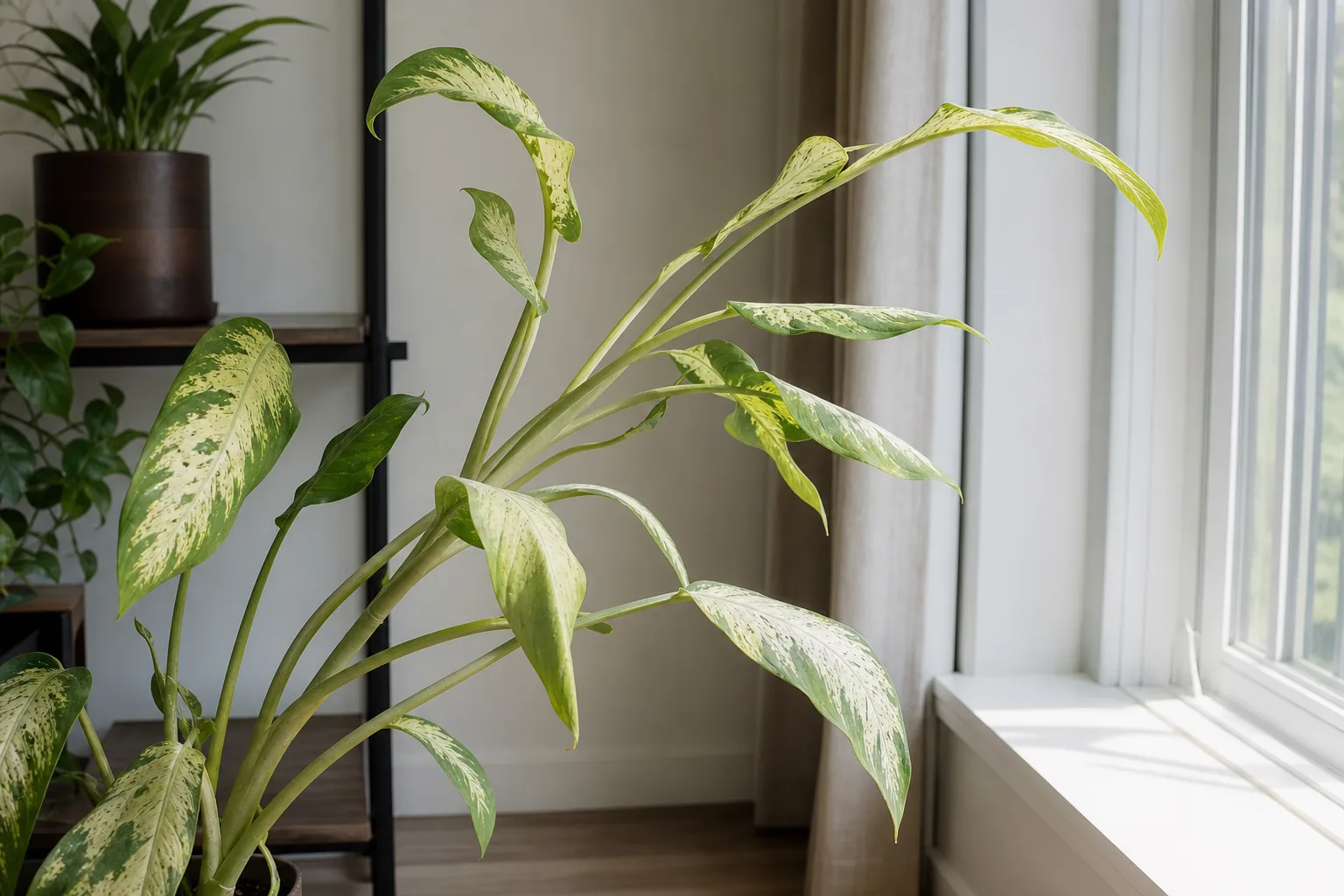
Not Enough Light on Dieffenbachia: Causes, Checks & Fixes
This guide covers not enough light on Dieffenbachia. See also the general Not Enough Light guide, watering, and light pages for this plant.
Not Enough Light on Dieffenbachia: Causes, Checks & Fixes
Quick answer
Dieffenbachia (Dieffenbachia spp., dumb cane) is sold as shade-tolerant, but indoors it performs best in bright indirect light with protection from direct sun. In dim corners the plant stretches toward windows, shrinks new leaves, and fades the cream, white, and yellow variegation that makes cultivars worth keeping. Growth slows, lower leaves drop to expose a bare cane, and the pot may stay wet longer because the plant is not using water-a combination that can invite root rot if you keep watering on the old schedule.
First step: move the pot today to the brightest safe indirect spot in your home-typically within two to four feet of an east-facing window, or several feet back from a south- or west-facing window with sheer curtains. If no window gives enough brightness, add a full-spectrum LED grow light about 12 inches above the leaves for 12–14 hours daily. Do not reach for fertilizer, repotting, or heavy pruning until you have corrected light and watched new growth for two weeks.
For proactive placement and foot-candle targets by cultivar, see the Dieffenbachia light guide. If the cane is already long and bare below the crown, read leggy growth for when to top a stretched stem after light improves.
What not enough light looks like on Dieffenbachia
Low light on dumb cane shows up in the cane and foliage before the whole plant fails. Common signs include:
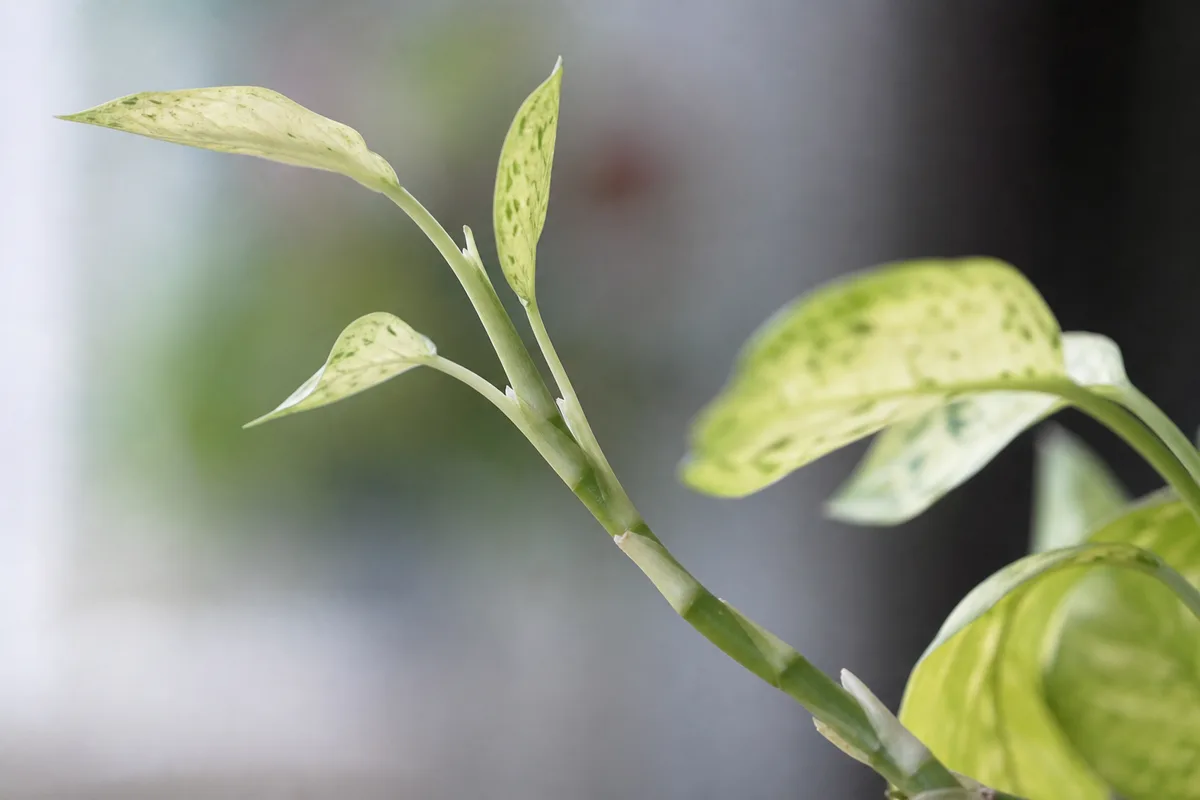
Not Enough Light symptoms on Dieffenbachia - compare with healthy tissue on the same plant.
- Long internodes-wide gaps between leaves along the upright stem
- Smaller new leaves compared with older ones from when the plant had better light
- Lean or one-sided growth as the cane reaches toward the brightest direction
- Dull or washed-out variegation-cream, white, and yellow patches lose contrast and may revert toward solid green
- Leaves clustered near the top of a tall bare stem, giving a “palm on a stick” look
- Slow or stalled growth even when watering and humidity seem unchanged
Heavily variegated cultivars such as ‘Camille’ and ‘Tropic Snow’ show color fade first. Solid green forms like ‘Compacta’ tolerate dimmer spots longer but still stretch and thin out over time. If variegation loss is your main worry on those cultivars, use the dedicated Camille or Tropic Snow pages.
Normal winter behavior: Dieffenbachia often slows in fall and winter when daylight shortens. That rest is different from year-round legginess on a permanently dark shelf. A resting plant still needs a firm lower stem and mix that dries within a reasonable window-not continuous stretch toward a distant window while soil stays damp for weeks.
A real recovery pattern to expect
A variegated dumb cane on a hall shelf about eight feet from a north window often shows the classic pattern: long bare cane, a small crown at the top, and new leaves mostly green. After moving three feet from a filtered east window with weekly rotation, the second new leaf is frequently the first reliable sign-shorter spacing between nodes, fuller blade size, and cream sectors returning on fresh tissue. Old stretched internodes do not shrink; judge success on that next foliage only.
Why Dieffenbachia gets not enough light
Dieffenbachia evolved in tropical forest understories, but filtered daylight outdoors still exceeds what a back hallway or interior bookshelf provides. Indoors, usable light drops sharply with distance from glass, dirty panes, tinted windows, and short winter days.
Illinois Extension lists dieffenbachia among houseplants that perform best in bright, indirect sunlight-brighter than many “low-light plant” labels suggest. A spot that feels comfortable to you may be too dark for a plant whose main feature is bold leaf pattern on large blades.
Common triggers in real homes:
- Decor placement - Corner shelves, bathroom alcoves, and rooms more than six feet from windows
- North-only exposure in winter, when daylight hours are shortest
- Obstructed glass - Sheers, frosted film, overhangs, or neighboring buildings
- Seasonal fade - A summer placement that becomes too dark after clocks change
- Misreading tolerance - Surviving in shade is not the same as thriving; stretch is the plant compensating for too few photons
There is a compounding risk specific to this species: when light is too low, photosynthesis and transpiration drop, so the pot stays wet longer. Dieffenbachia is already sensitive to soggy mix and root rot. Weak light plus wet soil invites yellow lower leaves and soft stems-so “not enough light” and “too much water” often overlap on the same plant. Cross-check the watering guide after any light move.
Cultivar brightness matters
UF/IFAS commercial guidelines give concrete targets: cultivars such as ‘Star Bright’ and ‘Snow Flake’ remain acceptable at roughly 50 foot-candles, while ‘Camille’ needs on the order of 150–250 foot-candles to stay attractive. (UF IFAS EP137) Inappropriate low light causes foliar variegation reduction and excess stem elongation-the exact pattern dumb cane owners describe as “losing stripes” or “going leggy.”
How this differs from leggy growth on Dieffenbachia
Not enough light is the cause; leggy growth is often what you see after months of that cause. This page covers diagnosis, placement, grow lights, and prevention while light is still marginal or recently corrected.
The leggy growth guide picks up when the cane is already bare for 30 cm or more below the crown and you need to know when to top after light improves. If the plant is compact but simply not producing new leaves, see slow growth instead.
| Your question | Start here | Then read |
|---|---|---|
| Is my window bright enough? Symptoms just starting? | This page | Light guide |
| Long bare cane-will old spacing shrink? | This page (no) | Leggy growth |
| When do I cut the cane back? | Leggy growth | Pruning guide |
| Compact plant, no new leaves | Slow growth | Light + watering cross-check |
How to confirm the cause
Work through these checks before changing fertilizer or repotting:
- Window distance and direction - Stand where the pot sits. Can you see sky from plant height? East windows often give gentle morning sun plus bright indirect light; deep north corners usually need supplemental light in winter.
- Hand-shadow or meter test - At midday, hold your hand about 30 cm above the leaves. A soft, defined shadow suggests medium light; almost no shadow means supplement or move closer. A phone lux app converted to foot-candles (divide lux by roughly 10.8) can confirm whether heavily variegated cultivars meet the 150–250 fc band from the light guide.
- Lean test - If the cane consistently faces one direction and new leaves emerge toward the glass, the plant is searching for light.
- New vs. old leaf size - Compare the smallest emerging leaf to one from six months ago (if you have a photo). Shrinking new foliage strongly suggests light limitation.
- Variegation intensity - Fading pattern on fresh leaves, not just older lower leaves, points to current light stress.
- Soil dry-down speed - Check the top inch of mix. If it stays wet for a week or more while growth is weak, low light may be slowing water use-do not solve that by watering less alone without adding brightness.
- Stem firmness - Press the lower cane. Firm tissue with stretchy upper growth fits light stress; soft, mushy stem with sour smell is rot-stop watering and inspect roots per the root rot guide.
- Two-week trial move - Shift the pot to a brighter indirect location (or add a grow light) without changing anything else. Compact new internodes confirm the diagnosis.
Lookalikes to rule out
| What you see | More likely cause if… |
|---|---|
| Brown crispy leaf tips | Low humidity or fluoride in tap water-not primary low light |
| Yellow lower leaves with wet soil | Overwatering or root rot-check stem firmness and roots |
| Pale leaves with bleached patches in direct afternoon sun | Too much light / sunburn-move back from glass |
| Sticky residue, webbing, or specks on leaves | Pests-inspect leaf undersides |
| Sudden wilt after a cold draft | Temperature stress-dumb cane dislikes cold air below about 55°F |
If stretch, fade, and lean appear without pests, scorch, or mushy cane, insufficient light is the leading explanation.
First fix for Dieffenbachia
Move the plant to bright, indirect light-or add a grow light if windows are inadequate.
Practical placement:
- East window: Often ideal; morning sun is gentle, afternoon is indirect.
- West or south window: Set the pot three to five feet back from the glass, or use a sheer curtain so hot midday rays do not scorch large leaves.
- North window: May slow stretch in summer; plan on supplemental lighting from autumn through spring.
If natural light cannot reach medium brightness at the leaf surface, use a full-spectrum LED positioned 12–18 inches above the foliage for 12–14 hours per day. Keep total daily light (sun plus lamp) at or below about 16 hours so the plant still gets a dark period. A regular warm desk lamp is not a substitute-variegated dumb cane needs broad-spectrum output at useful intensity.
After moving, rotate the pot a quarter turn weekly so both sides receive light and the cane does not grow lopsided.
Do not jump straight to direct sun to “fix” legginess-unfiltered hot rays can bleach or crisp variegated leaves. Increase brightness gradually over one to two weeks if the plant has been in deep shade for months.
Step-by-step recovery
Once light improves:
- Hold watering steady until you learn the new dry-down rhythm. Brighter spots use water faster; dim spots that were kept too wet need fewer drinks, not more. See the watering guide for dry-down cues.
- Wait for two new leaves before judging success. Look for shorter internodes and stronger variegation.
- Trim only after stabilization. If the cane has long bare sections, cut back to healthy tissue just above a node once new leaves emerge normally. Wear waterproof gloves-dumb cane sap contains insoluble calcium oxalate crystals that irritate skin and are toxic to dogs and cats if chewed. Keep plants away from curious pets and children; avoid contact with eyes or mucous membranes. Full cut placement is in the pruning guide.
- Resume diluted feeding only when active growth returns in spring-never feed a stressed plant in a dark corner hoping to “green it up.”
- Maintain humidity around 60% if your home is very dry; better light does not replace air moisture for leaf edge health.
Recovery timeline
Expect visible improvement in two to three weeks once light is adequate-faster in warm growing months, slower in winter. The first sign is more compact new growth, not reversal of old stretch.
Old elongated internodes and faded leaves do not revert-stretched growth does not shrink back; existing stretch remains until you prune it or lower leaves age off naturally. A plant that keeps producing small pale leaves after four weeks in a brighter spot may still be too far from the light source or need a stronger lamp.
Signs the problem is worsening: lower stem softening, yellowing that climbs the cane while soil stays wet, or leaf drop combined with constantly damp mix. Those patterns mean rot may be taking over-inspect roots, reduce watering, and improve airflow and light together.
Mistakes to avoid
- Placing in direct hot sun to compensate for months of shade-scorch is permanent on variegated foliage.
- Over-fertilizing a pale, stretched plant-nutrients cannot replace photons.
- Repotting on day one-root disturbance adds stress when the real issue is placement.
- Cutting back hard before light improves-you remove photosynthetic tissue the plant needs to recover.
- Ignoring watering after a move-soil that dried in ten days in shade may dry in five near a window.
- Assuming “low-light tolerant” means any dark corner-tolerance is survival, not compact healthy growth.
How to prevent not enough light next time
Choose placement by light first, décor second. Dieffenbachia rewards the brightest indirect spot you can offer without sunburn-details and cultivar foot-candle bands are in the light guide. Before buying, identify where medium to bright indirect light actually exists in your home-often an east windowsill or a desk with a clip-on grow lamp.
Seasonal habits that help:
- Clean windows in fall so winter rays are not filtered by grime.
- Add or extend grow lights when daylight drops below roughly ten hours.
- Rotate pots weekly for even growth.
- Track top-inch dryness after any move-light and watering move together per the watering guide.
If a room cannot supply enough brightness for bold variegated foliage, a truly low-light species will look better with less effort.
When to worry
Low light alone rarely kills dumb cane quickly, but weak light plus wet soil can. Treat as urgent if the lower stem feels soft, the plant collapses at the base, or soil smells sour-unpot, trim rot, and repot into fresh airy mix only after removing decay. Follow the root rot guide before cosmetic fixes.
Also escalate if, after four to six weeks of corrected bright indirect light or supplemental lamps, new leaves are still tiny and colorless. The plant may need a stronger light source, or another stressor (pests, chronic overwatering, cold drafts) is still limiting growth.
Related Dieffenbachia guides
- Dieffenbachia overview - species hub
- Light needs and window placement - foot-candle targets and grow-light specs
- Leggy growth - bare cane and when to top
- Pruning - safe cuts and sap handling
- Watering - dry-down rhythm after light changes
- Root rot - when weak light meets wet soil
- Camille not enough light - cream-center fade
- Tropic Snow not enough light - silver-vein fade