Slow Growth on Dieffenbachia: Causes, Checks & Fixes
Quick answer
Dieffenbachia is a moderate-to-fast grower in bright indirect light and warm temperatures-not a naturally slow houseplant. Worry when no new leaves appear across a full warm season, new foliage stays tiny or pale, or wet soil sits in a dim corner. First step: check light level and window distance before changing fertilizer or repotting.
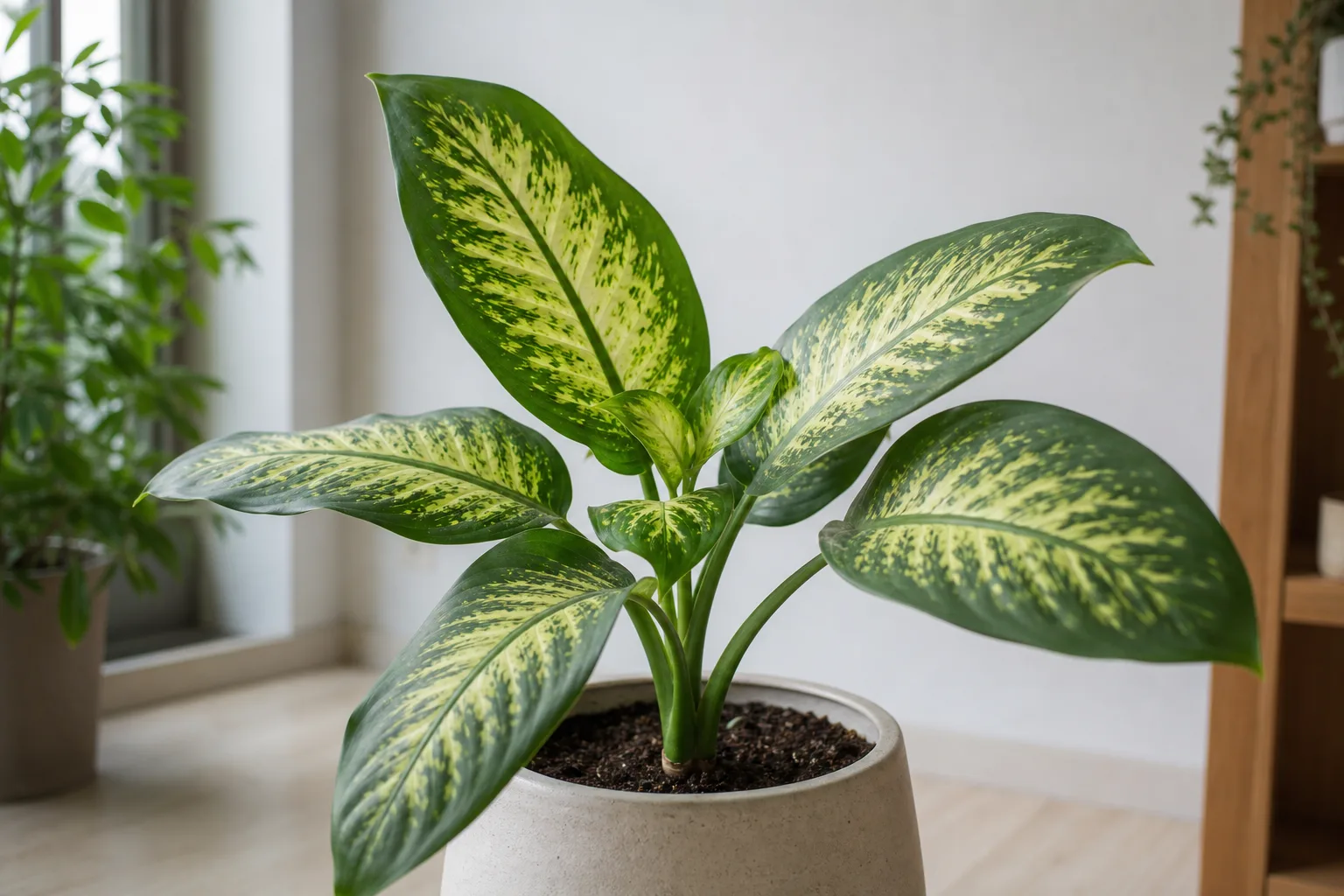
Slow Growth on Dieffenbachia: Causes, Checks & Fixes
This guide covers slow growth on Dieffenbachia. See also the general Slow Growth guide, watering, and light pages for this plant.
Slow Growth on Dieffenbachia: Causes, Checks & Fixes
Quick answer
Dieffenbachia (dumb cane) is marketed as an easy foliage plant, but it is not a naturally slow grower. In bright indirect light and stable warmth, a healthy cane regularly unfurls new leaves from the top-often every two to four weeks from spring through early fall. When growth stalls outside winter rest, the cause is almost always a care mismatch: too little light for the cultivar, cold drafts, a root-bound pot, or chronic overwatering in a dim corner.
First step: assess light before anything else. Stand where the pot sits and ask whether the plant receives bright indirect light for most of the day-not just ambient room brightness. Move it within two to four feet of an east window, or back from a filtered south- or west-facing window, and wait two weeks before repotting or fertilizing. Dieffenbachia shows its response on the next leaf, not the old ones.
What normal growth pace looks like on Dieffenbachia
Understanding baseline pace prevents panic over a healthy winter pause and catches real problems early.
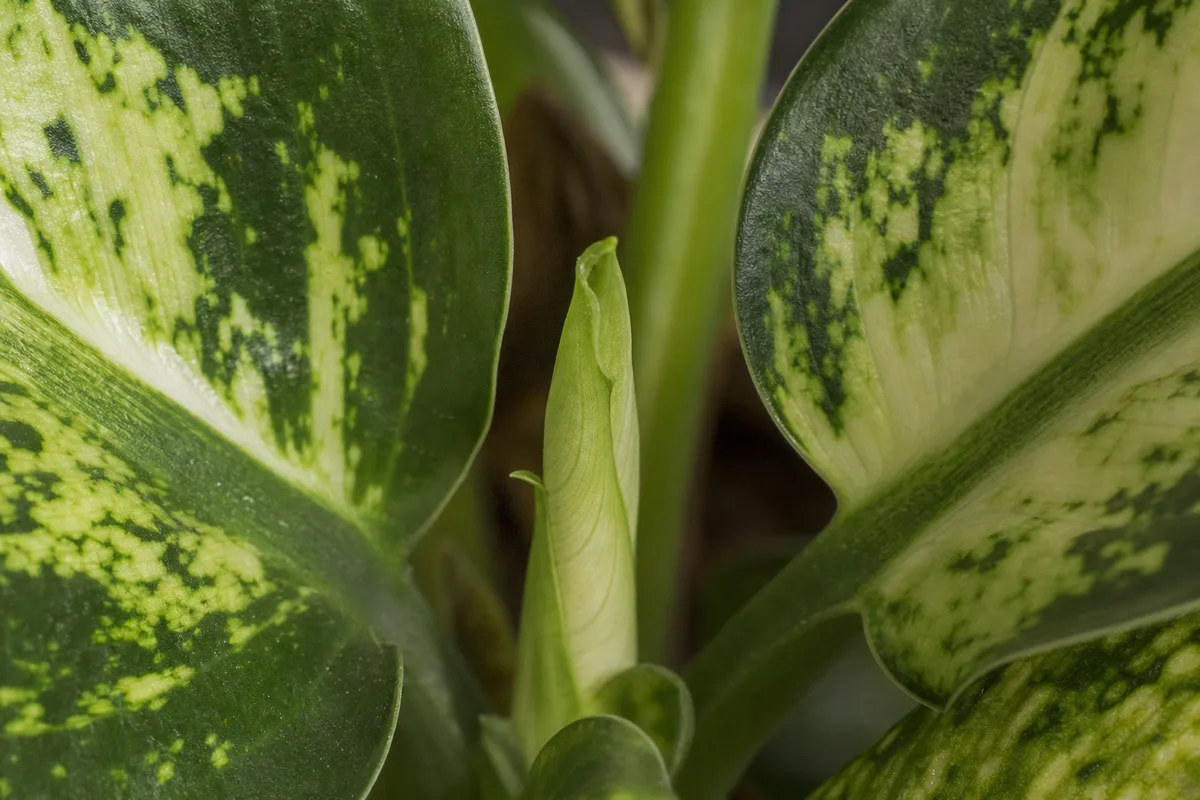
Slow Growth symptoms on Dieffenbachia - compare with healthy tissue on the same plant.
Expected pace indoors
Dieffenbachia grows as an upright cane that sheds lower leaves as it elongates, leaving a bare trunk topped by fresh foliage. In warm, bright conditions-think an east window or filtered south exposure-the plant is a moderate-to-fast grower, though maintaining aesthetic quality indoors is genuinely challenging when light or temperature drift out of range. New leaves emerge from the cane tip, unfurl over several days, and typically outsize the leaf below them when conditions are right.
During active months, expect roughly one new leaf every two to four weeks on a well-placed plant. Heavily variegated cultivars such as ‘Camille’ or ‘Tropic Snow’ need brighter light to sustain that pace than greener types like ‘Compacta’ or shade-tolerant ‘Star Bright’. When light is adequate, new internodes stay short, leaf blades reach full size for the cultivar, and variegation holds steady on fresh tissue.
Seasonal winter slowdown
Growth naturally slows when daylight shortens and room temperatures dip in fall and winter. Dieffenbachia may push few or no new leaves from late November through February even in a good window. That is normal dormancy-like rest, not a crisis-provided the lower stem stays firm, soil dries within a reasonable window between waterings, and the plant does not keep stretching toward distant light.
Signs of healthy winter slowdown:
- Firm upright cane with no soft spots
- Existing leaves hold color without widespread yellowing
- Soil dries more slowly but is not soggy for weeks
- Growth resumes within a few weeks after daylight lengthens in spring
When the pace is too slow even for winter
A Dieffenbachia in a north-facing room, interior hallway, or more than six feet from any window may produce no new leaves for months year-round. That is not temperament-it is insufficient light. The same plant in a bright office corner with AC blasting cold air may stall even in summer. Normal winter rest happens on a plant that grew actively the prior warm season; perpetual stall in a dim site is abnormal.
When slow growth is actually a problem
Slow growth becomes a diagnosis-not a season-when you see these patterns during warm months (roughly March through September in the Northern Hemisphere):
- No new leaves for two to three months while room temperatures stay above 65°F and the plant sits in what should be a bright spot
- Shrinking new leaves-each emerging blade smaller or paler than the one before
- Wet soil for a week or more in a dim corner, with yellow lower leaves and a firm or soft stem
- Fading variegation on new growth while older leaves still show strong pattern-often the first stall signal on white-heavy cultivars
- Visible pests on the cane tip where new tissue should be forming
Leggy stretch is a related but different problem. A Dieffenbachia that keeps getting taller with long gaps between leaves is still growing-just etiolating toward light. See the leggy growth guide if stems elongate rather than stall completely. Complete stall with no new leaf at the tip for months points to light below the survival threshold, root restriction, or root damage.
Why Dieffenbachia growth stalls
Dieffenbachia stalls when one environmental variable blocks the cane from building new tissue. The most common drivers indoors:
Light below cultivar tolerance
Dieffenbachia tolerates lower light longer than many tropicals, but tolerance is not thriving. In dim conditions photosynthesis drops, the plant uses less water, and new leaves arrive slowly-or not at all. Heavily variegated cultivars stall first because pale leaf zones photosynthesize less efficiently than green tissue.
Commercial interiorscape guidelines note that ‘Star Bright’ and ‘Snow Flake’ remain attractive at roughly 50 foot-candles, while ‘Camille’ needs approximately 150 to 250 foot-candles to hold variegation without excess stem elongation. Placing a Camille in a break-room corner that suits a greener type is one of the most common stall setups.
Cold drafts and low temperatures
Dieffenbachia prefers stable indoor temperatures between 65 and 80°F. Sustained exposure below about 60°F (15°C) slows or stops growth, and temperatures below 55°F can cause chilling injury. Problem zones include winter window sills, entry doors, and air-conditioning vents. A plant that grew well in summer may stall completely once cold drafts arrive-even if light is adequate.
Root-bound pot
Fast-growing Dieffenbachia in bright light can fill a pot within a year. When roots circle the inside of the container, emerge from drain holes, or cause water to rush straight through without wetting the mix, the plant cannot take up enough water and nutrients to support new leaves. Growth stalls even when light and watering look correct on paper.
Overwatering in shade
Low light slows water use. If you keep watering on a summer schedule after moving Dieffenbachia to a dimmer spot-or if a dark corner keeps mix wet for weeks-roots lose oxygen and function declines. The plant stops pushing new growth while lower leaves yellow. This overlap is why wet soil plus stall in a dim corner often signals root stress, not normal winter rest. See overwatering and root rot if the stem softens or the mix smells sour.
Pest damage on new growth
Aphids, mealybugs, and spider mites target the softest tissue-the unfolding leaf at the cane tip. Heavy feeding can stall or distort new growth while older leaves look fine. Inspect the topmost leaf and undersides before assuming the stall is purely cultural.
How to confirm the cause
Work through this checklist before repotting, fertilizing, or pruning:
- Season and temperature - Is it winter with shorter days and cooler rooms? If yes, two months without a new leaf may be normal rest on an otherwise firm plant.
- Window distance and direction - Can you see sky from plant height? East and filtered south/west exposures support active growth; deep interior shelves usually do not.
- Cultivar variegation - Is new growth paler or greener than six months ago? Fading pattern on fresh leaves strongly suggests light limitation. Full light guide for cultivar thresholds.
- New leaf size trend - Compare the smallest emerging leaf to an older one. Shrinking new foliage confirms stress; stable size with long gaps suggests seasonal slowdown.
- Soil moisture rhythm - Press the top inch. If it stays wet for seven to ten days while growth is zero, low light may be slowing uptake-or roots are struggling. Do not fertilize into wet soil.
- Stem firmness - Press the lower cane. Firm tissue fits light or seasonal stall; soft, dark, or collapsing stem means rot-inspect roots immediately.
- Root check - Slide the plant partly out of the pot. Dense root mat circling the soil, roots visible at drain holes, or water channeling through the pot point to root-bound conditions. Repotting guide for timing.
- Cane tip inspection - Look for pests, curled new leaves, or a completely dormant tip with no leaf bud. Pests need treatment before growth resumes.
Lookalikes to rule out
| What you see | More likely cause if… |
|---|---|
| Long bare stem, leaves clustered at top | Leggy etiolation from low light-not complete stall |
| No new leaves Nov–Feb, firm cane | Normal winter slowdown |
| Wet soil, yellow lower leaves, soft stem | Root rot or chronic overwatering |
| Tiny pale new leaves in dim room | Not enough light |
| Stall only after heavy pruning | Post-prune recovery pause |
| Sticky residue or insects on tip | Aphids or mealybugs |
First fix for Dieffenbachia
Move the plant to the brightest safe indirect light available-or add a grow light-before changing anything else.
Dieffenbachia stall in warm months most often traces to light below what the cultivar needs. Relocate the pot within two to four feet of an east-facing window, or several feet back from a south- or west-facing window with sheer curtains-bright indirect light with protection from direct sun is the baseline for active growth. If no window provides enough brightness, position a full-spectrum LED grow light about 12 inches above the foliage for 12 to 14 hours daily.
Hold off on repotting, fertilizer, and heavy pruning during this trial. Dieffenbachia responds to one major care change at a time; stacking treatments makes it impossible to read which fix worked. After the move, check the top inch of soil and water only when it dries-brighter light increases water use, but a previously overwatered plant in shade may still need the mix to dry fully before the next drink.
If light is already adequate (compact recent growth history, correct window placement) and the plant has not been repotted in two or more years, the next step after a two-week light trial is a root inspection. Root-bound Dieffenbachia should be repotted into a container one size larger with fresh well-drained mix-but not on the same day you fertilize or prune heavily.
Recovery timeline
Recovery speed depends on which stressor caused the stall and how long it lasted.
- Light correction - The first healthy new leaf often appears within two to four weeks after moving to adequate bright indirect light during warm months. Old leaves and any bare cane length already formed will not shrink back; judge success on the next one or two new leaves only.
- Seasonal winter rest - Growth typically resumes within two to four weeks after daylight lengthens in late winter or early spring without any intervention beyond normal care.
- Root-bound repot - Expect three to six weeks before a confident new leaf after repotting in spring or summer. Skip repotting in cold months if the plant is already stressed.
- Root rot recovery - Timeline stretches to several months if damage was significant. Some plants never resume active growth if the crown was affected.
- Cold-draft damage - After moving away from the cold source, new growth may take four to eight weeks to restart once temperatures stabilize above 65°F.
Damaged or yellowed lower leaves from the stall period will not revert to perfect form. Focus on firm cane tissue and clean new growth at the tip-that is your recovery signal.
What not to do
- Do not fertilize a stalled Dieffenbachia in dim light or wet soil. Feed cannot replace adequate light, and fertilizer on stressed roots can burn foliage.
- Do not repot and fertilize on the same day. Give the plant one stressor at a time.
- Do not remove healthy leaves because “nothing is happening.” Dieffenbachia needs foliage to photosynthesize while recovering; stripping leaves slows the comeback.
- Do not assume slow growth means underwatering. Check moisture first. Chronic overwatering in shade is more common than drought on a stall in a dim corner.
- Do not place a dark-acclimated plant into harsh direct window sun to force growth. Acclimate over 7 to 14 days or use bright indirect light to avoid scorch.
- Do not ignore a soft lower stem while waiting for new growth. Soft cane with sour-smelling soil is root rot-follow the root rot guide instead of adding light alone.
How to prevent slow growth next time
Prevention is mostly about matching cultivar to light and keeping the root environment breathable:
- Place Dieffenbachia where bright indirect light is realistic year-round, not only where the pot looks good in summer. See the light guide for window direction and cultivar thresholds.
- Keep temperatures stable between 65 and 80°F and away from AC vents, open winter windows, and cold entry drafts.
- Water when the top 1 to 2 inches of mix dry-faster in bright warm months, slower in winter. Match rhythm to how fast the pot dries in its current light. Watering guide for seasonal schedules.
- Repot before roots circle the pot for multiple years. Fast growers in bright windows may need annual repotting; slower plants in moderate light every 18 to 24 months.
- Fertilize at half strength monthly during active growth only when light is adequate and roots are healthy. Fertilizer guide for deficiency vs. over-feeding.
- Inspect the cane tip during weekly watering in warm months. A stall caught at the first missed leaf cycle is faster to fix than one that persisted through an entire season.
Related Dieffenbachia guides
- Dieffenbachia overview - baseline growth habit, toxicity, and cultivar context
- Light needs - bright indirect placement and low-light limits
- Fertilizer - when feed helps vs. when light is the limiter
- Repotting - root-bound diagnosis and timing
- Not enough light - stretch, fade, and stall from dim placement
- Leggy growth - etiolation vs. complete stall
- Root rot - wet soil stall with soft stem
- Overwatering - chronic moisture in shade