Yellow Leaves on Dieffenbachia Tropic Snow: Causes, Checks
Quick answer
Yellow leaves on Dieffenbachia Tropic Snow are a symptom-not a diagnosis. On this tall cane-forming cultivar, one fading lower leaf is often normal aging; multiple limp yellow leaves with wet soil mean stop watering and check roots. First step: probe the top inch of mix and note which leaves yellowed and whether a cold draft hits the pot.
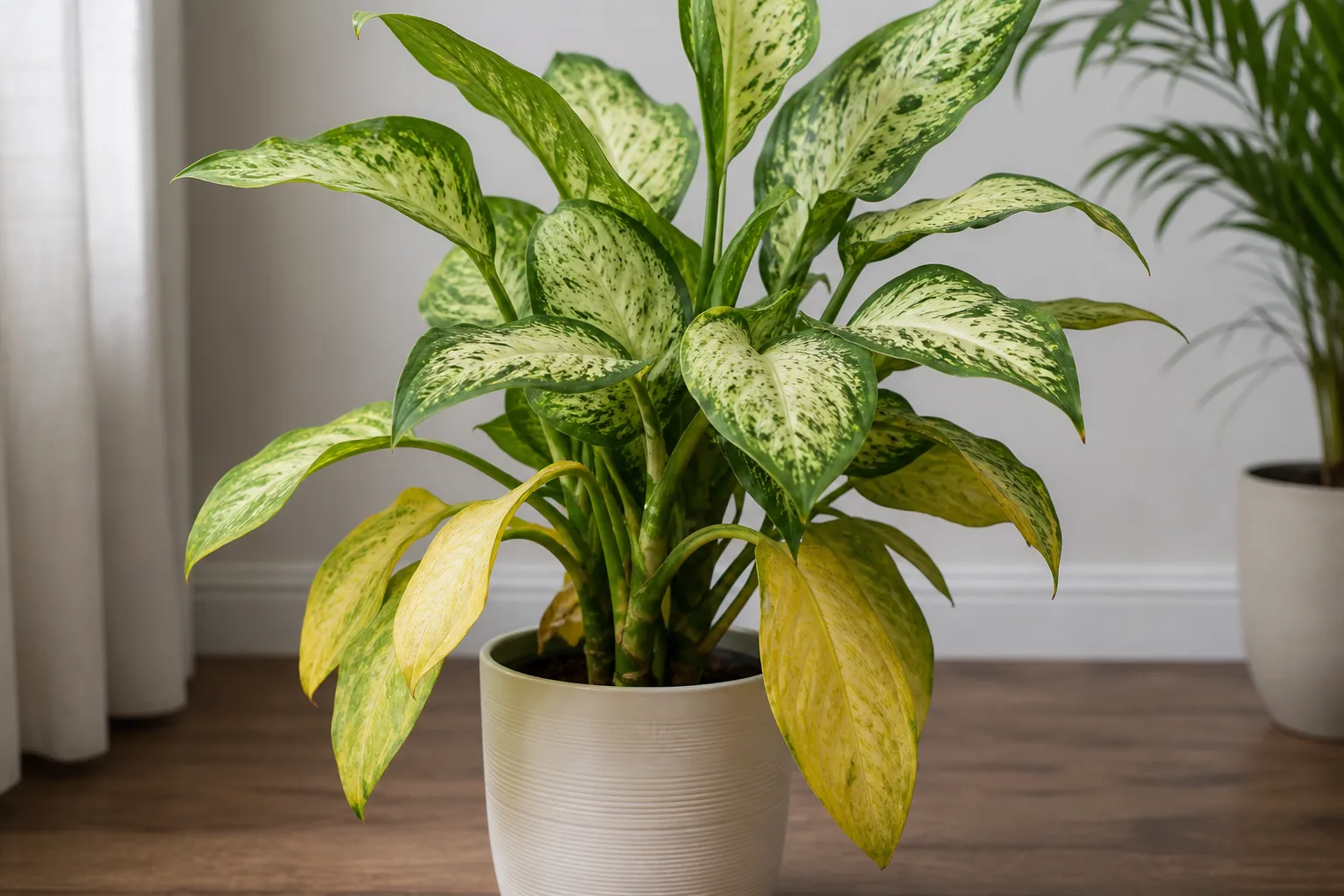
Yellow Leaves on Dieffenbachia Tropic Snow: Causes, Checks & Fixes
This guide covers yellow leaves on Dieffenbachia Tropic Snow. See also the general Yellow Leaves guide, watering, and light pages for this plant.
Yellow Leaves on Dieffenbachia Tropic Snow: Causes, Checks & Fixes
Quick answer
Yellow leaves on Dieffenbachia Tropic Snow (Dieffenbachia amoena ‘Tropic Snow’) are a symptom, not a diagnosis. This cultivar grows as a tall cane-forming dumb cane with broad cream-and-green mottled leaves-not a rosette plant-so the lowest leaves on each stem naturally yellow and drop as new foliage unfurls from the top. That slow, bottom-up pattern is often harmless. Multiple limp yellow leaves with wet, heavy soil usually mean overwatering or root stress instead.
First step: probe the top inch of mix, note which leaves yellowed, and check whether a cold draft hits the pot. Do not fertilize or repot until you know whether the cause is moisture, light, temperature, or normal cane aging.
For wet-soil overlap, see overwatering and root rot. For dry pots and crisp edges, see underwatering. For pale variegation loss, see not enough light and the Tropic Snow light guide.
What yellow leaves look like on Dieffenbachia Tropic Snow
Yellowing on Tropic Snow follows a few recognizable patterns tied to this cultivar’s cane architecture and heavy variegation:
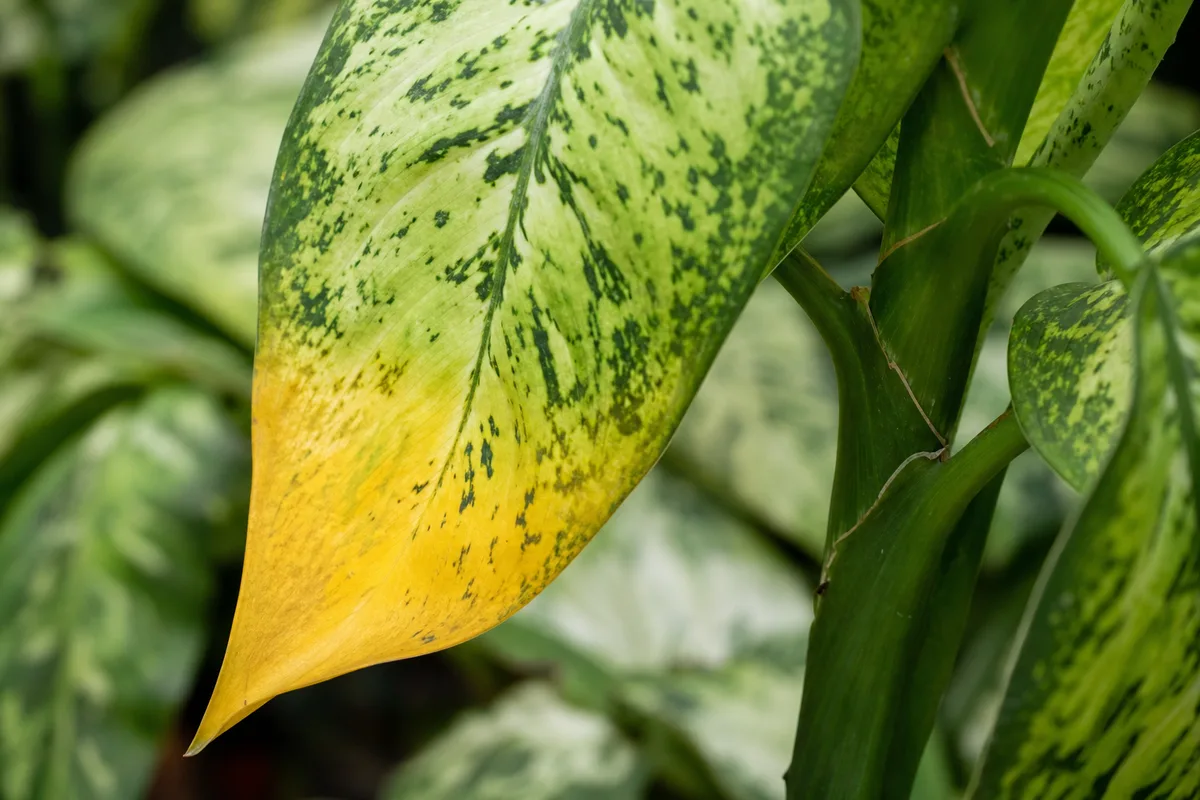
Yellow Leaves symptoms on Dieffenbachia Tropic Snow - compare with healthy tissue on the same plant.
- One or two lowest leaves turning evenly yellow over weeks, then drying and dropping while upper variegated foliage stays firm-classic normal cane senescence as the stem elongates
- Several lower leaves yellowing together with limp texture and cool, clinging mix-overwatering overlap; see overwatering
- Pale, washed-out cream patches turning yellow-green on new and mid-cane leaves with longer petioles and smaller blade size-variegation fade from insufficient light; white tissue photosynthesizes less than green margins
- Yellowing localized to one side of the plant nearest a window, door, or AC vent in winter-cold-draft stress; Clemson HGIC recommends protecting dieffenbachias from cold and major temperature swings
- Crisp yellow-brown edges on older leaves with a light, dry pot-underwatering or low humidity; check underwatering before soaking repeatedly
- Uniform pale yellowing on many leaves after months without feed-possible nutrient stress; confirm moisture and light first because lack of nutrients can yellow and stunt Dieffenbachia
Fully yellow leaves will not re-green. Judge recovery by new leaves unfurling from the top of each cane, not by old blade color.
Why Dieffenbachia Tropic Snow gets yellow leaves
Tropic Snow is one of the larger Dieffenbachia cultivars in commerce-NC State Extension lists ‘Tropic Snow’ at up to 6 feet with heavily cream-and-green variegated leaves. That size and mottling change how yellowing shows up compared with compact dumb cane varieties.
Overwatering is the leading stress cause. A floor-scale pot holds more mix that stays wet at the base while the top inch dries on schedule. Root rot usually results from a mix that does not drain quickly or overly frequent watering-roots fail first, and lower leaves yellow before the crown collapses.
Underwatering yellows older leaves when the cane’s internal water reserves run low after repeated dry cycles-especially in bright rooms where broad variegated leaves transpire heavily.
Low light hits Tropic Snow harder than solid-green Dieffenbachia because pale cream sections carry fewer chloroplasts. The plant compensates with smaller, greener new leaves; existing variegation looks dull and yellow-tinged before stretch sets in. Clemson HGIC notes that ‘Tropic Snow’ will tolerate lower light levels than most other dieffenbachias-but tolerance is not the same as optimal variegation.
Cold drafts and sub-60°F exposure slow metabolism and root function. Leaves facing the cold source yellow first; wet soil in a cool corner compounds the damage because roots take up less oxygen.
Normal cane aging is expected on mature Tropic Snow. As these plants mature, lower leaves naturally drop to reveal trunklike stems-on a tall floor plant that can mean one spent leaf every few months per cane, not a crisis.
Salt buildup from overfertilizing can yellow margins and stunt growth-more common after frequent feed on recovering roots than on a stable plant.
Lookalike symptoms to rule out
| Pattern | Likely cause | Key differentiator |
|---|---|---|
| One yellow lowest leaf, firm cane, normal dry-down | Normal cane aging | Remove leaf; no emergency |
| Multiple lower yellow leaves, wet heavy pot, firm cane base | Overwatering | Stop water until top inch dries-see overwatering |
| Wet soil + soft cane base + sour smell | Root rot | Unpot now-see root rot |
| Light dry pot, slightly thin leaves, crisp edges | Underwatering | Water once thoroughly, then resume dry-down rhythm |
| Pale variegation, small new leaves, slow growth | Low light / variegation fade | Brighten filtered light-see not enough light |
| Yellowing on window-facing side only (winter) | Cold draft | Move away from cold source; check soil moisture |
| Even yellowing after heavy feeding | Salt / fertilizer stress | Flush or hold feed; fix watering first |
| Limp whole plant, wet or dry mix unclear | Wilting overlap | See wilting; weigh pot first |
Yellow leaves with wet heavy soil point to moisture stress until proven otherwise. Yellow leaves with a light dry pot and firm cane usually mean drought or light-not rot.
How to confirm the cause
Work through these checks in order before changing fertilizer, Dieffenbachia Tropic Snow repotting guide, or moving the plant to direct sun:
- Leaf position and speed - One bottom leaf fading over weeks fits cane aging. Several leaves in days fits stress.
- Soil moisture at depth - Insert a finger or skewer into the top inch near the pot edge. Cool, clinging mix with yellow lower leaves supports overwatering. Dry mix throughout with crisp yellow edges supports underwatering.
- Pot weight - Heavy and cool days after watering versus light and warm suggests wet versus dry extremes on a large floor pot.
- Light and variegation on new growth - Compare the last two leaves unfurled from cane tips. Less white mottling and smaller blades mean light is likely too low.
- Temperature and drafts - Feel the air near the pot on the yellowed side. Ideal household range is 60 to 75 °F; cold windowsills and AC vents in winter are common triggers.
- Cane base and root spot-check - Press gently at the soil line. Firm tissue with wet mix is overwatering you can fix with dry-down. Soft tissue means unpot immediately-see root rot. Wear gloves; sap contains insoluble calcium oxalate crystals that irritate skin.
If only one old lower leaf is involved, soil moisture is appropriate, and new upper growth looks healthy, aging is the likely answer-snip the spent leaf and resume your normal rhythm from the watering guide.
First fix for Dieffenbachia Tropic Snow
Probe the top inch of mix and stop watering if it is still damp while multiple lower leaves are yellow and limp.
That single pause prevents converting overwatering into rot while you confirm light and temperature. NC State Extension recommends allowing the top one-inch surface to dry completely before watering again to help prevent root rot. If the mix is already dry and the pot feels light with slightly thin foliage, one thorough watering after confirming dryness is the first fix instead-see underwatering.
Do not fertilize a yellowing plant, repot during an active crisis, or remove half the canopy at once. Do not assume every yellow leaf needs more water.
Step-by-step recovery by confirmed cause
Once you know the trigger, follow one path-not all at once:
If overwatering (wet mix, firm cane base):
- Stop watering until the top inch dries and the pot lightens.
- Empty saucers and cachepots; confirm drainage holes are open.
- Resume watering only when dry to the knuckle-see overwatering recovery.
- Remove fully yellow spent leaves with gloved hands once decline slows.
If underwatering (dry mix, light pot, crisp edges):
- Water thoroughly until excess runs from holes; drain within thirty minutes.
- Resume top-inch dry-down rhythm from the watering guide.
- Hold fertilizer until new growth looks healthy for two weeks.
If low light / variegation fade (pale new leaves, no wet-soil smell):
- Move to the brightest indirect spot Tropic Snow tolerates-never hot direct sun on stressed variegated foliage.
- Watch the next two or three new leaves for restored white mottling over three to six weeks.
- See not enough light if stretch continues.
If cold draft (one-sided yellowing near window or vent):
- Move the pot away from the cold source the same day.
- Let mix dry if the cool spot kept soil wet longer than usual.
- Protect from major temperature changes through winter.
If normal aging (one bottom leaf, months-long timeline, firm plant):
- Snip the yellow leaf at the petiole base with clean shears while wearing gloves.
- No watering change needed if dry-down rhythm was already correct.
If root rot signs (soft cane, sour smell, mushy roots):
- Escalate to the root rot guide-dry-down alone is not enough.
Recovery timeline
Stabilization often takes one to two weeks once the correct stressor is removed-yellowing should slow and the cane base should stay firm.
New green or well-variegated leaves unfurling from cane tips are the best sign of success; expect them in two to six weeks during warm active growth, sometimes longer after winter cold or rot recovery. Old yellow blades will not green up again.
Example recovery path: A grower moved a floor Tropic Snow off a drafty January windowsill on the 10th after three leaves on the glass-facing side yellowed in five days while mix stayed wet. By the 17th the top inch was dry; one thorough watering followed on the 18th after weight dropped. A firm new speckled leaf appeared March 2-recovery tracked new cane growth, not the removed yellow blades.
Worsening signs: cane base softens, stems blacken upward from soil line, sour smell intensifies, or yellowing spreads to upper leaves while mix stays wet-those mean advancing root rot and need immediate unpotting.
What not to do
Do not fertilize yellowing Tropic Snow hoping to green old leaves-salt buildup from overfeeding can also yellow foliage, and stressed roots absorb feed poorly. Do not increase watering on a wet pot because leaves look limp.
Avoid repotting during active yellowing unless inspection shows mushy roots or blocked drainage-recovery is faster when roots stay undisturbed in a firm cane. Do not strip all yellow leaves at once; remove only fully spent blades once the crown is stable.
Do not place a stressed plant in direct hot sun to “fix” variegation fade-acclimated bright indirect light is the target. Do not handle cut stems bare-handed; sap is irritating and the plant is toxic to cats and dogs if chewed.
How to prevent yellow leaves on Dieffenbachia Tropic Snow
Match care to cane Dieffenbachia biology: water thoroughly, then let soil dry to the touch to a depth of one inch before the next drink, keep bright filtered light for variegation, and protect from cold drafts.
Use the Tropic Snow watering guide for seasonal dry-down ranges and the light guide for variegation maintenance. Remove spent lower leaves promptly with gloves so pests cannot hide in dying tissue.
For genus-level comparison when symptoms overlap multiple cultivars, see Dieffenbachia yellow leaves. For full cultivar context-size, toxicity, variegation reading-see the Tropic Snow overview.
When to worry
Escalate immediately if many leaves yellow within a week, the mix stays wet and smells sour, or the cane base dents under light pressure-inspect roots the same week via the root rot guide.
If the cane base stays firm, only one or two lower leaves fade slowly, and new upper growth looks healthy after a watering or light tweak, you are on track. Cosmetic yellowing on a single old leaf with appropriate dry-down can wait.
Conclusion
Yellow leaves on Dieffenbachia Tropic Snow reward a pattern-first diagnosis: cane aging starts at the bottom and moves slowly; stress yellowing often pairs with wet soil, dim variegation loss, or a cold-facing side in winter. Confirm with the top-inch probe, pot weight, and new-growth variegation-then apply one fix path. Tropic Snow bounces back when roots stay firm and the next speckled leaf unfurls from the cane tip.
When to use this page vs other Dieffenbachia Tropic Snow guides
- Dieffenbachia Tropic Snow watering guide - Use for routine moisture checks before assuming yellow leaves is the main issue.
- Dieffenbachia Tropic Snow problems hub - Browse all 16 common issues on this species.
- Overwatering on Dieffenbachia Tropic Snow - Different entry point when symptoms overlap with yellow leaves.
- Underwatering on Dieffenbachia Tropic Snow - Different entry point when symptoms overlap with yellow leaves.
- Not Enough Light on Dieffenbachia Tropic Snow - Different entry point when symptoms overlap with yellow leaves.
Related Dieffenbachia Tropic Snow guides
- Dieffenbachia Tropic Snow overview
- Dieffenbachia Tropic Snow watering
- Dieffenbachia Tropic Snow light
- Dieffenbachia Tropic Snow soil
- Overwatering on Dieffenbachia Tropic Snow
- Underwatering on Dieffenbachia Tropic Snow
- Not Enough Light on Dieffenbachia Tropic Snow
- Root Rot on Dieffenbachia Tropic Snow
- Dieffenbachia Tropic Snow problems