Wilting on Dieffenbachia Tropic Snow: Causes, Checks & Fixes
Quick answer
Wilting on Dieffenbachia Tropic Snow usually traces to wet roots in a dim corner, drought after a missed week, or cold drafts below about 55°F. First step: lift the pot and check whether the top inch of mix is wet or dry before you water-heavy wet soil means pause watering; light dry soil means one thorough soak.
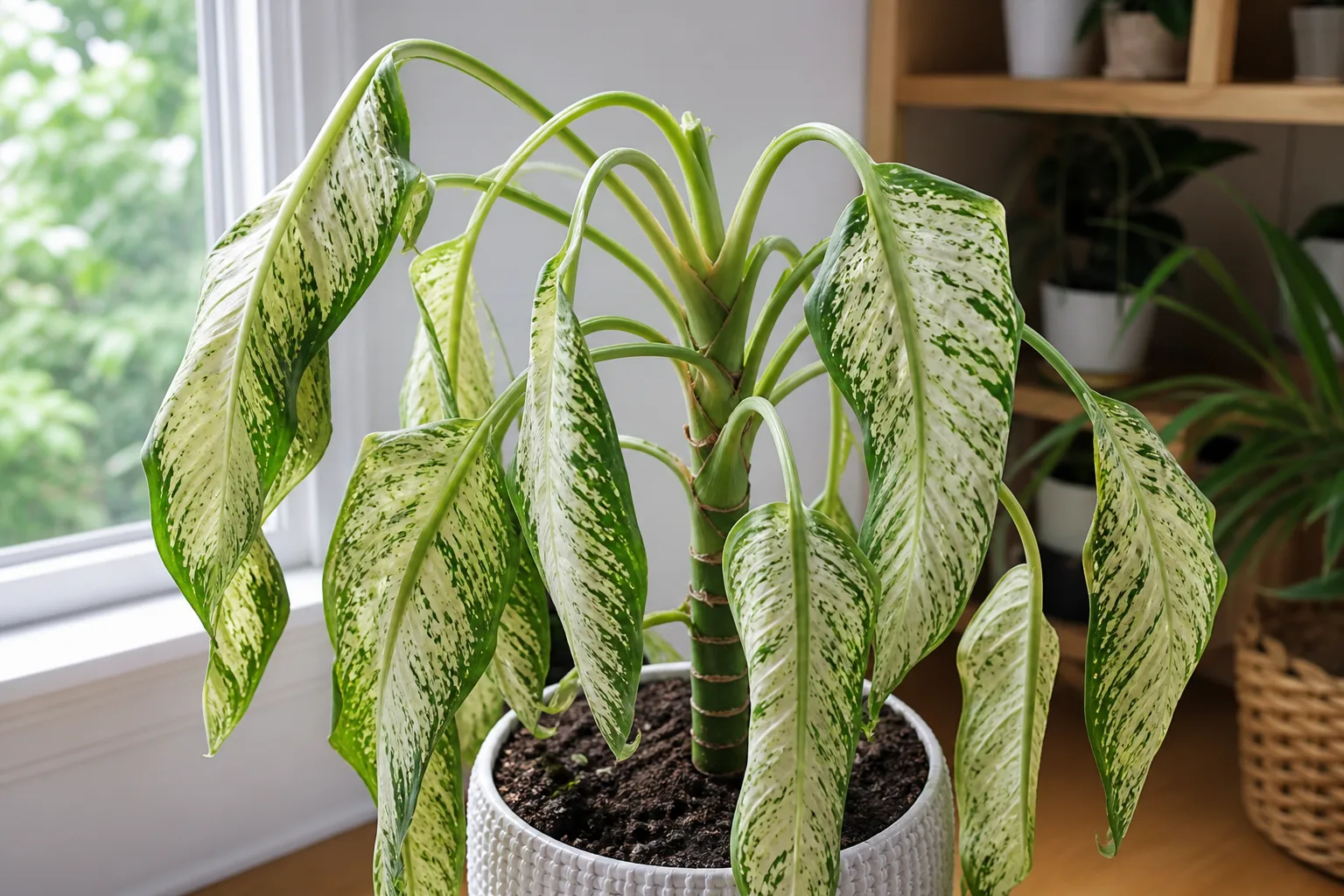
Wilting on Dieffenbachia Tropic Snow: Causes, Checks & Fixes
This guide covers wilting on Dieffenbachia Tropic Snow. See also the general Wilting guide, watering, and light pages for this plant.
Wilting on Dieffenbachia Tropic Snow: Causes, Checks & Fixes
Quick answer
Wilting on Dieffenbachia Tropic Snow (Dieffenbachia amoena ‘Tropic Snow’) means the broad, cream-splashed leaves and their petioles have lost turgor-they hang limp instead of holding their normal arch. On this tall cane-forming dumb cane, wilt can hit the whole plant or start on lower leaves while the crown still looks upright.
The same limp appearance comes from opposite causes. A light, dry pot with crispy leaf edges usually means underwatering. A heavy, wet pot with yellow lower leaves usually means root decline-the plant looks thirsty while roots cannot absorb water. Cold drafts below about 55°F (13°C) and low-light stretch on a heavy cane are also common Tropic Snow wilt triggers.
First step: lift the floor pot and check moisture in the top 1–2 inches (3–5 cm) of mix before you pour water. Dry and light → one thorough soak until drainage runs free, then empty the saucer. Wet and heavy → stop watering and inspect cane firmness at soil level. Clemson HGIC notes root rot usually results from mix that does not drain quickly or overly frequent watering-and wilt on wet soil is the signature mistake owners make when they assume limp leaves always need water.
Full watering rhythm and seasonal checks live on the Tropic Snow watering guide. For wet-soil cases, also see overwatering and root rot.
What wilting looks like on Dieffenbachia Tropic Snow
Healthy Tropic Snow holds broad, mottled leaves on stiff petioles that arch outward from a thick green cane. NC State Extension describes ‘Tropic Snow’ as heavily variegated with cream and green leaves on a cane that can reach about 6 feet indoors. Wilting removes that stiffness.
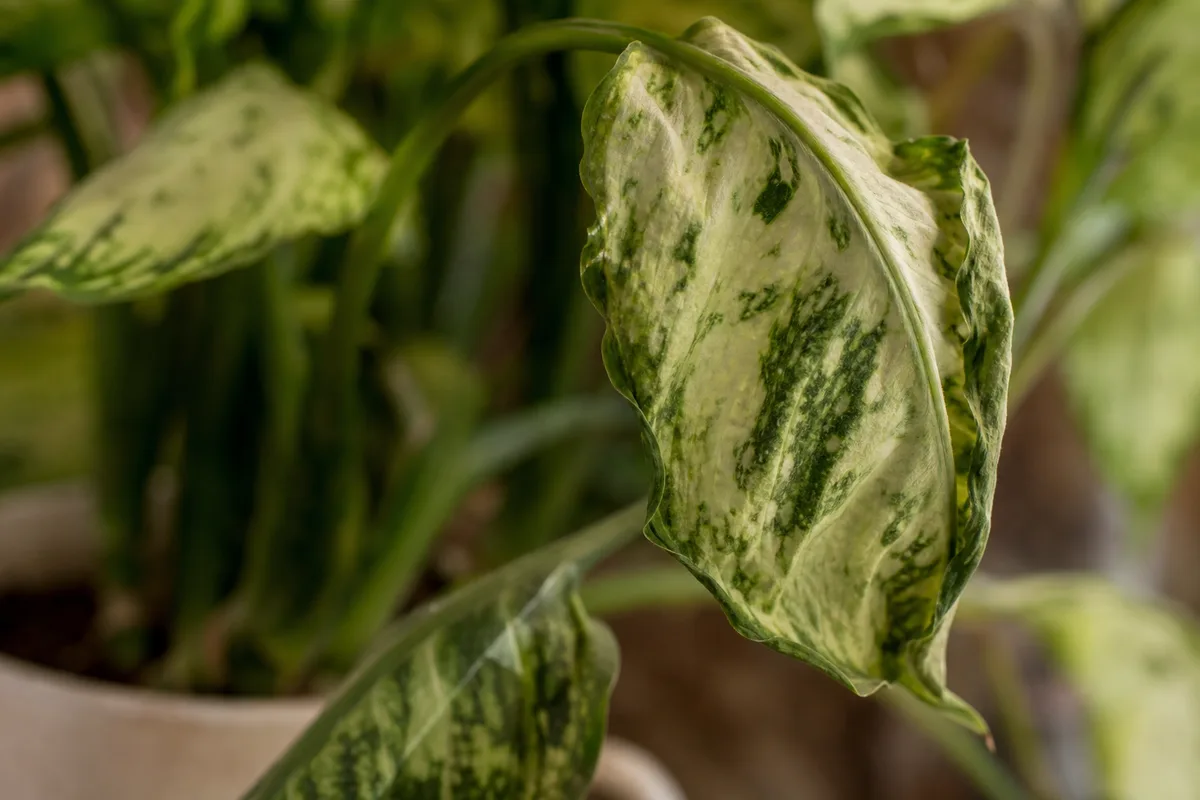
Wilting symptoms on Dieffenbachia Tropic Snow - compare with healthy tissue on the same plant.
Wet-pot wilt (overwatering / root decline):
- Leaves hang limp while mix stays dark and cool at the surface for many days
- Lower leaves yellow first; crown may still feel firm briefly on a water-storing cane
- Pot feels heavy; saucer or cachepot may hold stale runoff
- Earthy-sour smell from mix suggests advancing root problems
- Fungus gnats hovering near soil often coincide with chronic wetness
- Wilt persists or worsens after you water because damaged roots cannot transport moisture
Dry-pot wilt (underwatering):
- Whole-plant flop or limp petioles on a noticeably light pot
- Mix is pale and dry several inches down; surface may pull away from pot sides
- Leaf edges may be slightly crispy; older lower leaves yellow from drought stress
- Cane tissue at the base stays firm-no mush at soil line
- Leaves often re-firm within hours to two days after one proper soak if roots are intact
Cold-draft wilt:
- Sudden limpness after a window left open, AC blast, or winter glass contact
- Leaves may look translucent or water-soaked at margins without dry soil
- Often hits outer leaves first on the draft side
- Recovery follows moving off the cold source-not extra water if soil is already wet
Low-light structural wilt:
- Long, thin canes with small pale new leaves eventually flop under their own weight
- Soil moisture may be moderate-not clearly wet or bone dry
- Cane leans toward the brightest window; mottling dulls on recent foliage
- Fixing light and support matters as much as water-see not enough light
Single-cane collapse (stem rot):
- One cane goes limp and soft at the base while others stay upright
- Tissue at soil line feels mushy or hollow; may smell sour
- Leaves on that cane yellow and wilt rapidly over days
- This is urgent-localized rot can spread up the cane
Why Dieffenbachia Tropic Snow wilts - ranked causes
1. Overwatering and root oxygen loss
The leading wilt cause on dumb cane indoors. Tropic Snow’s thick cane stores water, so the plant can stay upright while roots suffocate in saturated mix-especially in a large floor pot in a dim corner where evaporation is slow. Clemson HGIC states too much or too little water are the main problems on dieffenbachia, with root rot from poor drainage or frequent watering. Calendar watering through winter without checking the pot is the classic trigger.
2. Underwatering after a missed cycle
Less common on a water-storing cane, but real after travel, heat waves, or assuming the thick stem means “skip this week.” When the entire root ball dries, turgor collapses fast on large leaves with high transpiration demand. Light pot plus dry depth confirms this branch-see underwatering.
3. Cold drafts and temperature shock
Tropic Snow prefers stable indoor warmth-Clemson HGIC lists ideal dieffenbachia temperatures from 60 to 75°F. Sustained exposure below about 55°F (13°C) stresses aroids and reduces root function; cold plus wet soil is especially damaging. Placement beside winter glass, HVAC vents, or entry doors causes rapid wilt without obvious pest signs.
4. Low light slowing evaporation while watering continues
‘Tropic Snow’ tolerates lower light better than many dieffenbachia cultivars-but shade-tolerant is not shade-optimal. Low light slows dry-down while owners keep a summer watering habit, producing wet-soil wilt even when they believe they are conservative. Pale, stretched new growth often appears alongside.
5. Stem or crown rot at the cane base
Localized stem rot from chronic wetness or crown splash can collapse one cane-Clemson HGIC notes stem rot fungi cause noticeable wilt with brown or black tissue at the soil line. Soft tissue at soil level with wet mix is the red flag-overlap with root rot.
6. Repot shock or recent move
Disturbed roots after Dieffenbachia Tropic Snow repotting guide or a cold truck ride home may underperform for one to two weeks. Temporary wilt with firm cane bases and evenly moist-not soggy-mix often resolves if light and temperature stabilize.
Lookalike symptoms to rule out
| Pattern | Soil / pot | Cane base | Likely cause | First branch |
|---|---|---|---|---|
| Limp leaves, yellow lowers, heavy pot | Wet days after “watering day” | Firm for now | Overwatering / root decline | Overwatering |
| Whole-plant flop, light pot, dry depth | Dry throughout | Firm | Underwatering | Underwatering |
| Limp on wet soil, soft base, sour smell | Soggy | Mushy | Root or stem rot | Root rot |
| Leaves angle down, tissue still fairly firm | Variable | Firm | Drooping (posture) | Drooping leaves |
| Wilt after cold night near glass | May be wet or moderate | Firm unless rot followed | Cold draft | Move off draft; do not auto-soak |
| Small pale leaves, long cane, lean | Often damp too long | Firm | Low light + wet roots | Not enough light |
How to confirm the cause
Work through these checks in order-do not water until steps 1–3 are complete:
- Pot weight - Lift the container. Noticeably light versus your last post-watering weight points to drought. Heavy and unchanged for a week points to overwatering.
- Top-inch moisture - Insert a finger or dry skewer 3–5 cm down. Clemson HGIC recommends letting soil dry to the touch to a depth of one inch before watering dieffenbachia. Wet at depth on a wilted plant means do not add water.
- Cane firmness - Press gently at soil line on each cane. Firm green tissue supports water-stress branches. Soft, collapsing tissue means rot escalation-inspect roots same day.
- Leaf pattern - Yellow lower leaves with wet mix fits root decline. Crispy edges with dry mix fits drought. Translucent patches after a cold night fit draft damage.
- Drainage audit - Confirm drainage holes are open, cachepots are emptied within 30 minutes, and no saucer holds standing water. Reabsorbed runoff keeps lower roots saturated.
- Light and draft position - Note distance to windows and proximity to AC, radiators, or winter glass. Dim rooms plus wet soil are a combined wilt driver on Tropic Snow.
First fix for Dieffenbachia Tropic Snow
Lift the pot and check top-inch moisture before any other action.
That single check prevents the worst mistake: soaking a wilted dumb cane that is already drowning. Branch immediately after the check:
If mix is dry and pot is light: Water thoroughly until a small amount runs from drainage holes, then empty the saucer completely. Wait 24 hours and reassess turgor. One well-timed soak fixes many drought wilts on healthy roots.
If mix is wet and pot is heavy: Stop watering until the top inch dries. Move to brighter filtered light if the plant sits in shade-faster evaporation helps oxygen return to roots. If leaves keep declining after the surface dries, inspect roots at drainage holes or unpot to assess rot before repotting into fresh airy mix.
If cane base is soft on wet mix: Treat as urgent rot. Stop watering, isolate from other plants, wear gloves because dieffenbachia sap contains irritating calcium oxalate crystals, and follow the root rot guide-trim mushy tissue and repot only into well-drained mix in an appropriately sized pot.
If wilt followed cold exposure and soil is not dry: Move off the draft source. Do not water solely because leaves look limp-correct temperature first.
Make one care correction at a time and read the plant’s response over the next week before stacking repot, prune, and fertilizer.
Recovery timeline
Mild drought wilt on firm roots often shows visible firming within hours to two days after one thorough soak. Large Tropic Snow leaves transpire heavily, so recovery can look dramatic when the diagnosis was correct.
Overwatering wilt takes longer. Leaves may stay limp until roots regain function-commonly one to three weeks once soil oxygen returns and watering pauses. Damaged lower leaves may not re-firm; watch for stable new growth at the crown instead.
Cold-draft wilt often improves within two to five days after moving to stable warmth-provided roots were not also waterlogged.
Stem rot on one cane may require removing the affected cane and propagating healthy upper sections. Multi-cane specimens can look sparse for weeks while replacements root.
Judge success by firm cane tissue, no spreading softness, and the next unfurling leaf holding normal mottling-not by old yellow foliage returning to green.
What not to do
Do not water a wilted Tropic Snow because the leaves “look thirsty” when the top inch of mix is already wet-that deepens root decline. Do not fertilize a stressed plant; Clemson HGIC notes too much fertilizer can cause marginal leaf burn and salts worsen weak roots. Do not repot into a larger container to “help drying”-oversized pots hold excess wet mix around underdeveloped roots.
Do not stack repotting, heavy pruning, and pesticide on the same day. Do not move a wilted plant into harsh direct sun to “strengthen” it-unfiltered afternoon sun scorches broad aroid leaves. When removing collapsed leaves or canes, wear gloves and keep pets away; sap is toxic if chewed.
How to prevent wilting next time
Match everyday care to how Tropic Snow actually grows in your room:
- Water when the top 1–2 inches dry-not on a fixed calendar-per the watering guide
- Keep bright filtered light so large pots dry predictably; review the light guide
- Use well-drained mix with perlite in pots with open drainage; never let cachepots hold runoff
- Maintain 65–80°F (18–27°C) and avoid winter glass contact and AC blasts
- Lift the pot weekly during problem seasons-weight tells you more than leaf posture alone
- In winter, stretch watering intervals when growth pauses and light drops
Inspect weekly while problems are still small. Cross-check baseline biology on the Tropic Snow overview when multiple symptoms overlap.
When to worry
Escalate same day if:
- Cane base is soft on wet mix-possible advancing crown or stem rot
- Wilt spreads to multiple canes within a week despite corrected watering
- Sour smell rises from soil with yellowing across many leaves
- Wilt persists 48+ hours after a confirmed thorough soak on a dry, light pot-inspect roots for hidden rot or extreme desiccation damage
Lower urgency-but still act this week-if a single dry spell caused flop on an otherwise firm plant, or if wilt followed one cold night without soft bases.
When pruning collapsed tissue, handle with gloves; NC State Extension notes sap can irritate skin and eyes. Keep the plant away from pets that chew foliage.
Tropic Snow care cross-check
| Factor | Healthy baseline | Wilting risk when wrong |
|---|---|---|
| Light | Bright filtered; tolerates lower but not dim wet corners | Slow evaporation + wet roots |
| Water | Top inch dry between soaks | Wet-soil wilt or drought flop |
| Temperature | 65–80°F stable | Cold-draft turgor loss |
| Pot / mix | Drainage holes; airy peat-perlite blend | Saturated root zone in cachepots |
| Cane biology | Thick stem stores water | Masks drought briefly; hides rot until sudden collapse |
Related Tropic Snow problems
- Tropic Snow overview - hub care and troubleshooting
- Overwatering - wet-soil limp leaves and yellow lowers
- Underwatering - light pot and dry-depth wilt
- Root rot - soft crown and sour soil escalation
- Drooping leaves - posture change without full turgor loss
- Watering guide - top-inch dry rhythm and seasonal checks
- Light guide - variegation and evaporation balance
Conclusion
Wilting on Dieffenbachia Tropic Snow is a water-pathway problem disguised by a thick water-storing cane. Confirm with pot weight and top-inch moisture, then branch: soak once if dry and light, stop watering and inspect roots if wet and heavy, move off cold drafts if temperature caused the flop. Old limp leaves may not fully recover, but a firm crown and the next well-mottled leaf mean the plant is back on track.
When to use this page vs other Dieffenbachia Tropic Snow guides
- Dieffenbachia Tropic Snow watering guide - Use for routine moisture checks before assuming wilting is the main issue.
- Dieffenbachia Tropic Snow problems hub - Browse all 16 common issues on this species.
- Underwatering on Dieffenbachia Tropic Snow - Different entry point when symptoms overlap with wilting.
- Overwatering on Dieffenbachia Tropic Snow - Different entry point when symptoms overlap with wilting.
- Root Rot on Dieffenbachia Tropic Snow - Different entry point when symptoms overlap with wilting.
Related Dieffenbachia Tropic Snow guides
- Dieffenbachia Tropic Snow overview
- Dieffenbachia Tropic Snow watering
- Dieffenbachia Tropic Snow light
- Dieffenbachia Tropic Snow soil
- Underwatering on Dieffenbachia Tropic Snow
- Overwatering on Dieffenbachia Tropic Snow
- Root Rot on Dieffenbachia Tropic Snow
- Drooping Leaves on Dieffenbachia Tropic Snow
- Yellow Leaves on Dieffenbachia Tropic Snow
- Dieffenbachia Tropic Snow problems