Dieffenbachia Tropic Snow Soil: Mix, pH, and Drainage
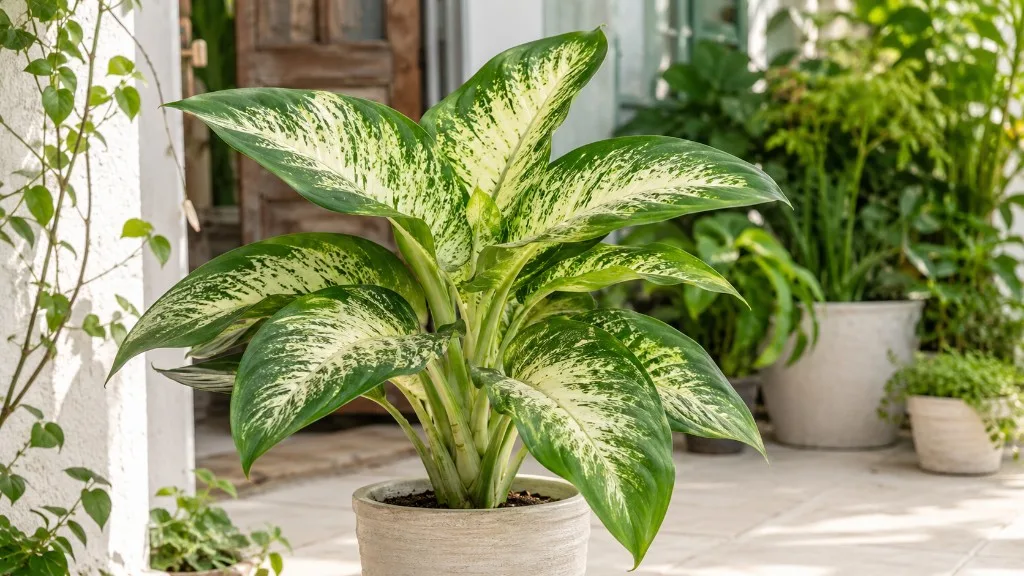
Dieffenbachia Tropic Snow Soil: Mix, pH, and Drainage
Dieffenbachia Tropic Snow Soil: Mix, pH, and Drainage
Author: sai-ananth · Reviewed by: LeafyPixels Review Board (2026-06-15) · Methodology: Botanical and extension references plus practical indoor growing constraints before publication.
A floor-scale Dieffenbachia Tropic Snow in a 25 cm (10-inch) nursery pot holds a root column three times deeper than a tabletop Camille in a 15 cm decorative pot - yet both plants often arrive from the same retailer with the same dense peat plug and the same tight cachepot hiding a dry saucer above a permanently wet bottom. On Tropic Snow, that mismatch shows up at the cane base first: thick stems store water internally, so the lower third of a deep pot can stay anaerobic for days while the top 3–5 cm feels merely damp to your finger. Mottled silver-and-green leaves mask the problem longer than Camille’s cream centers would, which is why growers blame light or watering when the real failure is substrate structure in a container built for visual impact, not root oxygen.
This page is the cultivar-specific soil anchor for Tropic Snow floor plants. For genus-wide dumb cane chemistry and UConn’s equal-parts recipes, read the genus Dieffenbachia soil guide. For compact tabletop cultivars with cream-centered variegation, see Camille soil. The Tropic Snow overview ties light, water, and mix together; repotting covers timing and pot sizing when you refresh this blend.
Taxonomy note: trade labels often list Dieffenbachia amoena ‘Tropic Snow’, while NC State Extension places former D. amoena cultivars under Dieffenbachia seguine. For soil purposes both names describe the same dumb cane biology - loamy, peaty, well-drained container media - but expert readers should treat seguine as the current extension reference species.
Quick Answer: The Right Floor-Plant Mix
The practical Dieffenbachia Tropic Snow soil mix for most homes is a well-draining peat-perlite aroid blend: 2 parts peat- or coir-based potting mix, 1 part coarse perlite, and 1 part medium orchid bark by volume. Aim for pH 5.5–6.5 in fresh mix, with 5.8–6.2 as a comfortable center. After a full watering, water should reach the drainage hole within 5–10 seconds. Refresh the substrate every 2–3 years before peat compacts and acidifies. In dim offices, north-window placements, or cachepot setups where the pot dries slowly, push perlite toward equal parts with base mix before upsizing the decorative outer pot.
Missouri Botanical Garden describes dumb cane indoors with loamy, peaty, well-drained potting soil and watering that allows soils to dry between drinks. UF/IFAS commercial production guidance for interiorscape Dieffenbachia recommends media with peat, pine bark, vermiculite, or perlite at pH 6.0–6.5, with rooted cuttings commonly planted in roughly 50% peat, 25% bark, and 25% perlite - a useful cross-check that your home 2:1:1 recipe sits in the same structural family as greenhouse batches.
Why Floor-Scale Tropic Snow Needs a Different Soil Mindset
Tropic Snow is sold as a structural floor plant: broad mottled leaves on thick upright canes, often 1.2–1.8 m (4–6 feet) indoors in favorable conditions per NC State’s cultivar notes. That scale changes soil physics, not just pot diameter. A small tabletop aroid can survive a slightly heavy mix if you water conservatively and the root zone is shallow. A Tropic Snow in a deep floor container holds a large organic column; if the lower third stays saturated for a week, the cane base - where rot often starts - sits in the wettest zone while upper leaves still look presentable.
The plant’s mottled variegation tolerates moderate root stress better than Camille’s cream centers, but weak substrate still produces thin leaning canes, smaller new leaves, and soft lower petioles. Stable mix structure supports the thick upright habit Tropic Snow is purchased for. When peat collapses into a brick, the plant invests energy in survival roots instead of the new cane tissue that keeps the silhouette full.
Deep-Pot Wet-Zone Physics
Think of a deep pot as a stacked reservoir. Water drains by gravity through connected pores; when fine peat compacts at the bottom, water perches in a saturated band above the drainage hole. On a floor specimen, that band can sit directly against the basal stem tissue. Clemson HGIC advises keeping Dieffenbachia moist but not overly wet - a goal that is only achievable when macro-pores stay open. Tropic Snow’s stem stores water; the mix should not duplicate that storage in the bottom third.
Cachepot rescue scenario: retail floor plants frequently ship in a nursery pot nested inside a sealed decorative shell. Water runs into the outer reservoir; the inner mix never fully aerates. First repot is often a rescue: slide the plant out, smell the bottom third, run the drainage test below, and replant into fresh 2:1:1 mix in a pot with a clear hole - not a larger glazed show pot with hidden standing water.
Tropic Snow vs Camille: When Soil Recipes Diverge
Core chemistry matches across dumb cane cultivars: peat-perlite aroid media with bark for structure. The divergence is container scale, dry-down speed, and how symptoms appear - not a different cactus mix for Tropic Snow.
| Factor | Tropic Snow (this page) | Camille (tabletop) | Genus baseline |
|---|---|---|---|
| Typical pot | 20–30 cm floor (8–12 in) | 12–18 cm tabletop | Variable |
| Default recipe | 2:1:1 peat mix : perlite : bark | 40/30/20/10 base-perlite-bark-compost | UConn 1:1 peat-perlite |
| Perlite tuning | Push higher in dim offices, cachepots | Push higher in plastic + low light | Match to pot scale |
| Practical pH center | 5.8–6.2 (5.5–6.5 band) | 6.0–7.0 on peat blends | 5.5–6.5 containers |
| Stress signal | Soft cane base, thin stems, smaller mottled leaves | Cream browning, heavy small pot | General yellowing |
| Read instead | Camille soil for desk scale | Tropic Snow soil for floor scale | Genus soil for shared chemistry |
When to read Camille soil instead: you grow a compact cream-centered dumb cane in a 15 cm pot on a shelf. Stay on this page when the plant is a multi-cane floor specimen in a deep container, especially if the first job is diagnosing wet feet after a cachepot purchase.
Four Jobs Your Aroid Mix Must Do
Every ingredient should serve at least one of four jobs simultaneously. Moisture retention keeps fine roots from swinging between flood and drought without leaving the profile soggy. Drainage and aeration let excess water exit and air refill pore spaces after each watering. Structure over time resists peat collapse into an anaerobic block across 12–24 months of normal indoor watering. Nutrient and pH compatibility keeps calcium, magnesium, and micronutrients soluble as you feed during active growth.
Fail any job and expect lower yellowing, soft stems, fungus gnats, or a perpetually heavy pot - patterns that overlap with overwatering and root rot, which is why testing how the mix actually behaves beats adjusting the calendar first.
Aroid Roots and Forest-Floor Logic
Dieffenbachia belongs to Araceae, the aroid family - the same broad group as philodendrons and alocasias. Aroid roots expect a chunky, humus-rich forest floor, not clay and not pure peat soup. In native range from the Caribbean through tropical South America, these plants grow in filtered light on decomposed leaf litter and bark that stays moist at the surface but drains fast deeper in the profile. Indoor care works best when you mimic structure and oxygen, not tropical rainfall on demand.
Fine roots need air-filled porosity immediately after watering. When water displaces air in a dense mix, roots switch to anaerobic metabolism within hours - the start of rot, not the first visible yellow leaf. An aroid-style mix with perlite and bark keeps channels open so water flows through, then leaves behind evenly damp - not dripping - root tissue. Tropic Snow’s thick canes mask uneven moisture longer than a small plant would, so pre-moisten components before filling a deep pot.
Best Soil Mix for Dieffenbachia Tropic Snow
The best soil for Dieffenbachia Tropic Snow is a well-draining, peat-perlite aroid mix amended with bark for long-term structure. “Well-draining” does not mean “dries out in two days.” It means water moves through the pot quickly, excess exits the drainage hole, and what remains is uniformly moist with air still in the pore spaces. Tropic Snow canes hold internal water; the mix should not duplicate that storage in the bottom third.
If you buy one bag and one amendment, choose a quality peat-based houseplant mix and coarse perlite. Mix 60% potting mix to 40% perlite as a minimum upgrade. For a floor plant you plan to keep two years, step up to the three-part recipe below.
Peat-Perlite Base Recipe
Use measuring by volume, not weight - a gallon bucket or nursery pot works fine.
| Component | Parts by volume | Role |
|---|---|---|
| Peat-based potting mix or peat moss | 2 | Moisture retention, organic matter, slight acidity |
| Perlite (#3 coarse if available) | 1 | Drainage, aeration, anti-compaction |
| Medium orchid bark | 1 | Long-term structure, fast lateral drainage |
| Worm castings (optional) | 1/2 | Gentle nutrients, microbial activity |
Blend dry in a tub until bark and perlite distribute evenly. Finished texture should look chunky and light. Squeeze a handful: brief hold, then crumble - not a tight ball.
How much perlite for a floor Tropic Snow? Minimum one part perlite to two parts base. In humid homes, heavy-handed waterers, or dim offices where pots dry slowly, push toward equal parts perlite and base mix. More perlite means more frequent finger checks; far less risk of cane rot. Less perlite means longer intervals - acceptable only if you consistently verify the top 3–5 cm dries before the next drink per your watering guide.
Chunky Aroid Upgrade for Large Floor Pots
For a mature Tropic Snow you intend to keep in the same pot size through two growing seasons, treat the mix like a chunky aroid blend. Increase bark to 20–30% of total volume and keep perlite at 25–30%. Some growers swap part of the peat fraction for coco coir; functionally similar if perlite and bark ratios stay high.
Decision tree for perlite ratio:
| Environment | Pot type | Perlite direction |
|---|---|---|
| Dim north office, AC year-round | Plastic + cachepot | Increase perlite 10–15% above default |
| Bright filtered living room | Glazed ceramic | Default 2:1:1 |
| Chronic over-waterer | Unglazed terra cotta | Slight decrease in perlite only if pot dries in 2–3 days |
| Post-cachepot rescue | Any, after sour smell | 30–35% perlite + 25% bark minimum |
Optional additions, each sparingly: horticultural charcoal (a handful per gallon) in slow-drying rooms; pumice instead of perlite for weight and permanence. Skip vermiculite as the primary amendment in oversized Tropic Snow pots - it holds water beautifully, which is the opposite of what a deep floor container usually needs.
Worked Volume for a 10-Inch Floor Repot
A 25 cm (10-inch) standard nursery pot roughly 18–20 cm tall holds about 9–11 liters (2.4–2.9 gallons) of mix when filled to 2–3 cm below the rim - enough for a typical floor Tropic Snow refresh one size up from an 20 cm pot.
For 2:1:1 by volume:
- Peat-based base: ~4.5–5.5 L (roughly 1.2–1.5 gal)
- Perlite: ~2.2–2.8 L
- Orchid bark: ~2.2–2.8 L
- Optional worm castings: ~0.5 L
Blend 10–15% extra to account for settling and side gaps around a firm root ball. After repotting, run the drainage test; if water pools on the surface, your batch was too fine - remix the surplus with additional perlite before discarding it.
Drainage Speed and the Wet-Feet Test
Drainage is the characteristic extension references emphasize most for dumb cane, and on floor Tropic Snow it is non-negotiable. Wet feet - roots sitting in saturated mix - precedes root rot, stem collapse, and the sour smell that tells you the substrate has gone anaerobic. Your mix passes if water visibly runs from the drainage hole within 5–10 seconds after you water thoroughly.
Run this one-minute drainage check after every repot and whenever you suspect trouble:
- Water until liquid flows steadily from the bottom hole.
- Time how long until the first drip exits - aim for under 10 seconds.
- Lift the pot ten minutes later; it should feel lighter than immediately after watering but still slightly cool and moist.
- Check again at 48 hours; the top 3–5 cm should be approaching dry in a typical heated room with moderate light.
A drainage hole is non-negotiable for long-term well-drained container culture. Decorative cachepots are fine visually, but the nursery pot inside must drain freely, and you must empty standing water in the outer shell within 15 minutes of watering.
pH Range and Nutrient Uptake
Dieffenbachia prefers slightly acidic soil. For container Tropic Snow culture, treat pH 5.5–6.5 as the working band, with 5.8–6.2 as the practical center in fresh peat-based mixes. NC State Extension lists field tolerance from acid through neutral (below 6.0 through 8.0) on their plant toolbox - a wide landscape band. Indoor peat culture rarely benefits from chasing the alkaline end; container peat drifts acidic over time.
pH controls nutrient solubility. Magnesium and calcium availability drops when peat-heavy mixes age below 5.5, sometimes producing interveinal yellowing on new leaves despite feeding. Alkaline tap water can push pH upward over time, locking out iron and showing pale new growth while older leaves stay dark.
When pH Drift Becomes a Real Problem
pH crises are slow and substrate-driven. Peat decomposes over 12–18 months, compacting and acidifying. If you have not repotted in three years and see new leaf chlorosis despite careful feeding, test the mix with a 1:1 slurry - equal parts distilled water and substrate, stirred and settled 15 minutes.
If pH reads below 5.5, refresh the mix at repot rather than chasing powders unless you have a clear test history. If tap water is very alkaline, alternating with filtered water helps, but fresh, well-structured mix fixes more problems than bottle amendments. Do not dump garden lime into a peat pot to “balance” acidic readings - container Dieffenbachia rarely needs that intervention.
Peat vs Coco Coir for Tropic Snow
Peat moss is the traditional base: light, acidic, excellent moisture retention. Coco coir is the common sustainable swap with similar water-holding capacity and a neutral-to-slightly-acid starting pH. Either works if perlite and bark supply drainage. Choose coir if sustainability matters; choose peat if you already trust a specific professional mix built on it.
Coir can carry salt residue from processing - rinse buffered coir products before blending if you buy raw bricks. Peat can become hydrophobic when it dries completely, shedding water down pot sides while the center stays dry; thorough initial soaking when repotting prevents channeling. Neither peat nor coir provides adequate drainage alone - the perlite and bark fractions are what keep a deep Tropic Snow pot safe.
Perlite, Bark, and Other Amendments
Perlite creates non-compressible pore space. Use coarse grade where available; fine perlite floats and settles over time. Orchid bark mimics forest litter and breaks down slowly, maintaining channels for air and lateral water movement. Pumice performs a similar role with more weight - useful for top-heavy floor plants prone to tipping in ultra-light mixes.
Avoid making sand the primary drainage amendment indoors; without sufficient organic matter it can settle into a concrete-like layer in plastic pots. Rocks at the bottom of the pot do not improve drainage - university extension research shows water does not move easily from fine-textured soil into coarser layers, which raises the saturated zone closer to roots (UC Master Gardeners of Santa Clara County - drainage in containers). Garden soil imports pathogens, compacts under indoor watering, and rarely drains fast enough for aroid roots in containers.
Worm castings at 10% or less of total volume add gentle nutrition without turning the mix into compost soup. They are optional if you follow the fertilizer guide during active growth.
Store-Bought Mix vs DIY Blend
Can you use regular potting soil for Dieffenbachia Tropic Snow? Yes - if you amend it. Straight bargain mixes heavy on fine peat often fail within a year as they compact. Premium mixes labeled for houseplants, aroids, or tropicals are closer to ready, but for Tropic Snow in a large pot, still add at least 20–30% perlite and a handful of bark per gallon.
Pre-made aroid or chunky mixes from reputable suppliers are reasonable if the label shows visible bark and perlite, not uniform black mush. When comparing bags, read texture through the packaging window: you should see particles, not paste.
DIY blending wins on control and refresh cost when you repot a big plant every two to three years. Store-bought wins on convenience for a single rescue plant. Either path works if the drainage test passes after blending.
Pot Size, Depth, Material, and Cachepot Traps
Soil performance depends on the pot system, not just the recipe. Choose a pot only one size larger than the root ball when repotting - roughly 2–5 cm wider in diameter. Oversized pots surround roots with wet mix that Tropic Snow cannot use fast enough. Match depth to cane habit: these plants root relatively shallowly compared to how tall they grow; an excessively deep pot keeps a large bottom reservoir permanently moist.
Plastic and glazed ceramic retain moisture longer - common for floor displays. Unglazed terra cotta pulls water through the wall and dries faster - helpful for chronic over-waterers, but it means checking moisture more often in bright rooms. All materials require at least one clear drainage hole; multiple holes help large floor pots.
Keep the cane base at the same depth it grew in the nursery pot. Burying the stem to stabilize a lean encourages stem rot in damp mix. Fix lean with light correction and a loose stake per the pruning guide, not deeper planting.
Oversized glazed show pots sold with floor Tropic Snow displays are a recurring trap: beautiful outer shell, root ball swimming in unused wet mix. Either repot to a fitted nursery pot inside the cachepot, or accept that you must amend aggressively and water only when the top 3–5 cm is dry.
Signs Your Soil Is Wrong
Wrong soil announces itself through root-zone symptoms before you have a diagnostic photo ready. Watch for these patterns on floor specimens:
- Chronic wet surface days after watering in a room that is not cold or dark
- Sour or swampy smell when you lift the plant or probe deep with a chopstick
- Soft, darkening base of the cane while top leaves still look green
- Yellow lower leaves repeating on a steady schedule despite careful watering
- Fungus gnats in large numbers - often linked to constantly moist organic mix
- White salt crust on the surface with brown leaf tip burn despite “normal” feeding
- Water running down the sides while the center ball stays dry - hydrophobic or compacted peat
If two or more items match, inspect roots gently. Healthy Dieffenbachia roots are firm and white or tan; mushy brown roots mean repot into fresh, chunkier mix and reduce watering until new growth resumes - see root rot before reaching for fertilizer.
When to Refresh or Repot the Mix
Repot Dieffenbachia Tropic Snow every 2–3 years, or sooner when roots circle heavily, water runs straight through without retaining moisture, or the mix smells sour. Peat-heavy systems rarely stay structurally sound past 24 months in active growth conditions.
Repot when:
- Roots emerge from drainage holes or wrap the root ball surface
- The mix dries abnormally fast (hydrophobic) or stays wet for 10+ days in normal conditions
- You see salt crust and flushing no longer helps
- You are correcting rot after inspecting mushy roots
Avoid repotting a severely stressed plant unless the substrate itself is the clear cause - sour smell, visible rot, or impossible drainage. Otherwise fix watering and light first, then repot in the next active growth window.
Repot steps in brief: water lightly the day before; wear gloves (ASPCA lists Dieffenbachia as toxic to pets); slide the plant out supporting the cane base; brush away the outer third of old mix; trim only mushy roots; replant at the same depth in fresh 2:1:1 mix; water once, verify drainage, skip fertilizer four to six weeks. Full timing and division notes live on the repotting guide.
Seasonal Repot Window for Floor Specimens
| Season | Repot? | Notes |
|---|---|---|
| Late winter – early summer | Best | Active growth resumes; roots repair fast |
| Mid-summer (stable temps) | OK | Avoid heat stress near west windows |
| Fall | Caution | Top-dress or wait unless rescue |
| Winter | Rescue only | Root rot, sour smell, impossible drainage |
Conclusion
On a floor-scale Tropic Snow, match perlite upward before upsizing the show pot - a 2:1:1 peat-perlite-bark blend with a 5–10 second drainage test beats any decorative cachepot that hides wet feet. Keep pH near 5.8–6.2, refresh every two to three years, and treat soft cane bases or sour smell as soil emergencies rather than watering tweaks. When the root zone breathes, thick canes and broad mottled leaves follow with less drama; when it does not, no amount of light or feed fully compensates.
When to use this page vs other Dieffenbachia Tropic Snow guides
- Dieffenbachia Tropic Snow overview - Start here for whole-plant context before deep-diving this topic.
- Dieffenbachia Tropic Snow problems hub - Jump to symptom-specific fix guides when this care topic does not resolve the issue.
- Root Rot on Dieffenbachia Tropic Snow - Escalate here when soil adjustments are not enough.
- Mold on Soil on Dieffenbachia Tropic Snow - Escalate here when soil adjustments are not enough.
Related Dieffenbachia Tropic Snow guides
- Dieffenbachia Tropic Snow overview
- Dieffenbachia Tropic Snow watering
- Dieffenbachia Tropic Snow light
- Dieffenbachia Tropic Snow propagation
- Dieffenbachia Tropic Snow fertilizer
- Dieffenbachia Tropic Snow repotting
- Root Rot on Dieffenbachia Tropic Snow
- Mold on Soil on Dieffenbachia Tropic Snow
- Dieffenbachia Tropic Snow problems
How this guide was reviewed: Recommendations were checked against NC State Extension Dieffenbachia seguine, Missouri Botanical Garden Dieffenbachia, UF/IFAS EP137 Dieffenbachia production media, Clemson HGIC Dieffenbachia, UC Master Gardeners container drainage, and ASPCA Dieffenbachia toxicity. Cross-linked with LeafyPixels Tropic Snow overview, watering, repotting, light, Camille soil, and genus soil guides.