Root Rot on Dieffenbachia Tropic Snow: Causes, Checks &
Quick answer
Root rot on Dieffenbachia Tropic Snow follows chronically wet mix in a large cane dumb cane that stores water internally-limp leaves on damp soil are the classic trap. First step: stop watering, lift the pot, and squeeze the cane above the soil line for firmness before you unpot or repot.
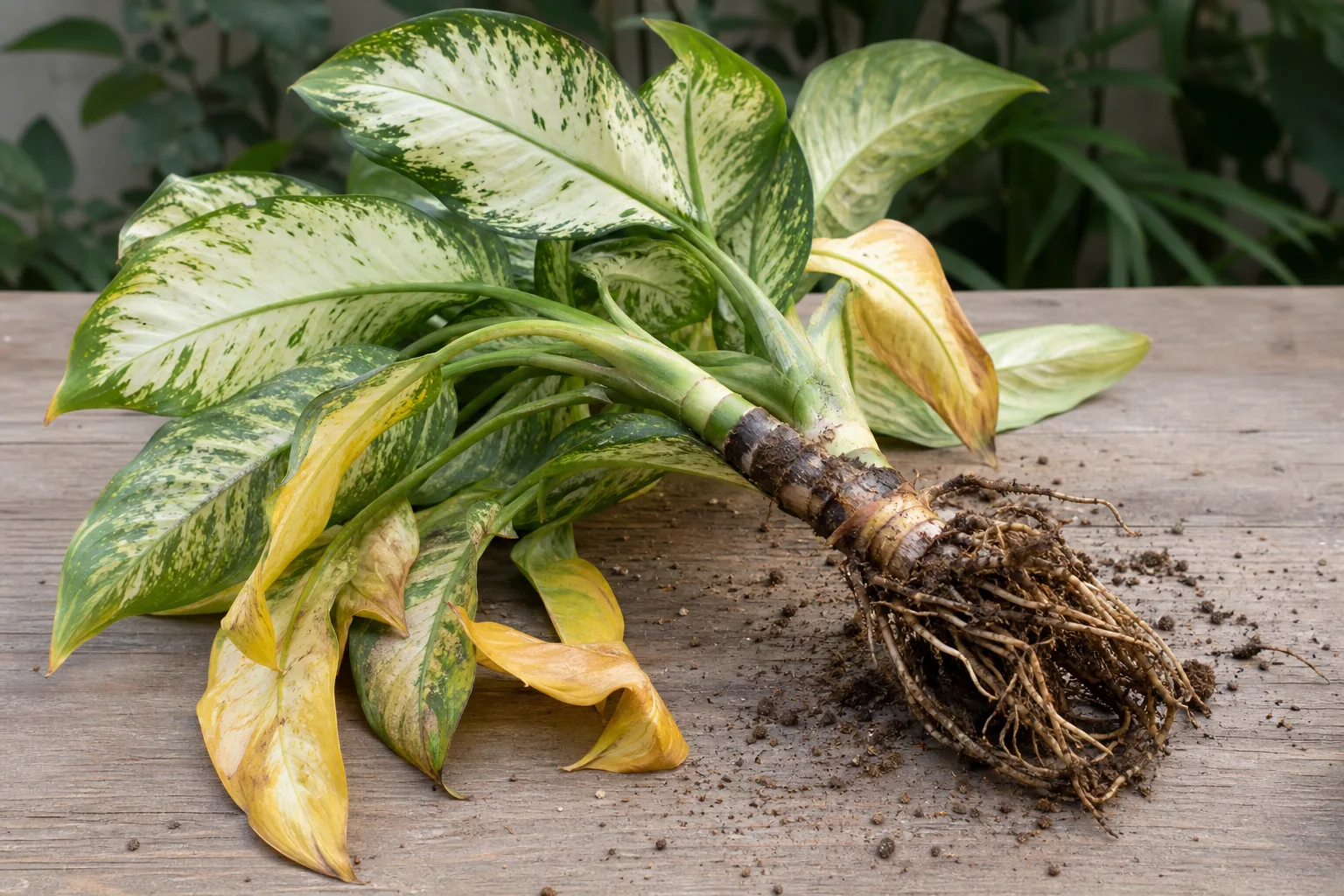
Root Rot on Dieffenbachia Tropic Snow: Causes, Checks & Fixes
This guide covers root rot on Dieffenbachia Tropic Snow. See also the general Root Rot guide, watering, and light pages for this plant.
Root Rot on Dieffenbachia Tropic Snow: Causes, Checks & Fixes
Quick answer
Root rot on Dieffenbachia Tropic Snow (Dieffenbachia amoena ‘Tropic Snow’) is almost always a watering and drainage failure, not a mysterious disease. This large cane-form dumb cane stores water in its thick stems, so limp leaves on damp soil are the signature trap-growers water again, and rotting roots lose even more function.
First step: stop watering immediately. Lift the pot. If the mix is wet and heavy, press your finger one to two inches deep near the pot edge. Wet clinging soil plus yellow lower leaves or a sour smell means treat root rot as likely. Squeeze the cane just above the soil line-firm tissue buys time; soft or collapsing cane means act the same day.
For cultivar context, size, and toxicity, see the Tropic Snow overview. This page focuses on cane-specific rot diagnosis, numbered recovery, and when to propagate instead of saving the base.
What root rot looks like on Dieffenbachia Tropic Snow
On this tall, cream-and-green mottled floor plant, rot rarely starts at the leaf tips. Symptoms climb from the root zone and lower cane while upper foliage can still look acceptable for days.
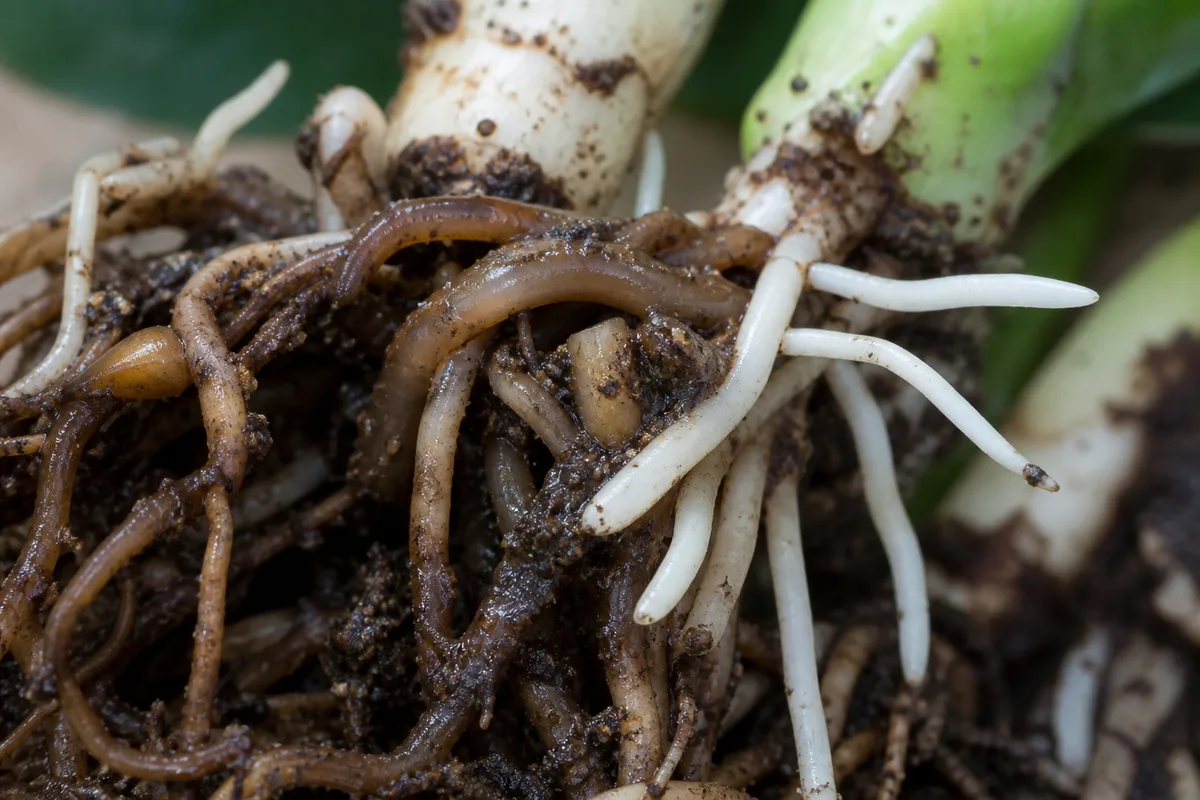
Root Rot symptoms on Dieffenbachia Tropic Snow - compare with healthy tissue on the same plant.
Early signs:
- Yellow lower leaves on multiple leaves at once-not one or two aging bottom leaves on an otherwise stable cane
- Limp, drooping foliage despite moist or heavy soil
- Sour or foul smell from drain holes or when you lift the pot edge
- Fungus gnats hovering over a surface that stays dark and damp five or more days after one drink
- Slow or stalled new growth while the mix never dries on schedule
Advanced signs:
- Soft or mushy cane base at or just above the soil line-stem rot climbing the cane
- Blackening tissue girdling the stem near soil level
- Brown, translucent, or slimy roots when you rinse the root ball
- Whole-plant collapse with no rebound after watering
Tropic Snow’s broad variegated leaves make the wilt paradox worse: the plant looks thirsty while roots are drowning. Do not interpret limp foliage as a pour command when the pot is heavy.
Root rot vs. overwatering vs. natural lower-leaf drop
Not every yellow lower leaf on a tall cane is rot. Tropic Snow naturally sheds older leaves as the cane matures-but rot-driven yellowing spreads faster and pairs with wet soil and soft tissue.
| Pattern | Pot weight | Soil at 1–2 inches | Cane at soil line | What it usually means |
|---|---|---|---|---|
| Root rot | Heavy | Wet, cool, clings to finger | Soft or blackening | Failed roots on saturated mix |
| Early overwatering (reversible) | Medium-heavy | Damp for days | Still firm | Wet-soil stress before roots die-see overwatering |
| underwatering on Dieffenbachia Tropic Snow | Light | Dry and crumbly | Firm and green | Turgor loss from drought |
| Natural cane aging | Normal | Dry on schedule | Firm | One or two oldest lower leaves yellow and drop slowly |
The wilt-on-wet-soil paradox is the clearest rot signal: wilting with moist soil often means roots cannot absorb water because they are decaying. Underwatered Tropic Snow wilts on a light, dry pot and perks after a thorough soak. Root rot produces collapse on heavy wet mix with no rebound.
For the full dry-pot versus wet-pot workflow, see the watering guide and wilting guide.
Why Dieffenbachia Tropic Snow gets root rot
Root rot usually results from a soil mix that does not drain quickly or overly frequent watering-not from one accidental heavy soak with proper drainage. Tropic Snow adds cultivar-specific risk because of its size, cane anatomy, and how people display it indoors.
Cachepots and standing water
Tropic Snow is often sold as a floor plant in a decorative cachepot. Water the inner nursery pot, wait for drainage, empty the outer pot, then replace. When runoff sits in the outer vessel, the bottom inch of mix goes anaerobic first-the exact zone where roots lose oxygen and decay. The top inch may dry on schedule while the core stays wet for weeks.
Oversized floor pots and wet lower zones
A ten- or twelve-inch nursery pot on a mature Tropic Snow holds substantial mix. Upsizing into an even larger decorative container without proportional roots creates a swimming pool of unused mix at the bottom. The cane stores water internally, so the plant looks fine while the lower root zone stagnates. Water thoroughly, then let the top one-inch surface dry completely before watering again-on deep floor pots, extending the check to two inches at the rim is reasonable if the center is not going bone dry.
Winter low light slowing soil dry-down
In cooler, dimmer months, Tropic Snow uses less water but many owners keep a summer calendar. Soil that dried in five days in July may take twelve or more in January after shorter days or a move away from a bright window. Overwatering becomes the dominant risk when evaporation drops and the pot stays wet at the cane base. Stretch the interval while keeping the same dry-down test-do not compensate for dry winter air by keeping soil constantly wet.
Dense or aged mix
Peat-based mix that has compacted over years behaves erratically: the top inch dries while the core stays saturated, or water channels down the pot wall without rewetting roots. Repotting into fresh well-drained mix often stabilizes watering more than changing your calendar-see the repotting guide and soil guide.
How to confirm root rot on Tropic Snow
Run these checks in order before you repot or trim.
- Pot weight - Lift the container. Heavy days after the last watering on a plant that looks wilted points to root failure, not thirst.
- Moisture at depth - Stick a finger or skewer one to two inches into the mix at the pot edge, not against the cane base where moisture can linger differently. Cool, clingy soil on a wilted plant is a red flag.
- Smell - Earthy is normal. Sour or foul from drain holes suggests rotting organic matter in saturated mix.
- Cane-base squeeze test - Press the cane firmly just above the soil line. Firm green or tan tissue is hopeful. Soft, hollow, or collapsing tissue means stem involvement-act promptly.
- Root inspection - Slide the plant out gently. Healthy roots are firm and pale; rotten roots are brown to black, mushy, and may smell foul. Rinse gently to see what remains.
- New growth check - Firm cane with mostly pale roots and only minor mush may recover with dry-down and careful repot. Soft cane with most roots gone means plan propagation salvage.
First fix: stop watering and inspect today
Do not repot on day one without looking. Do not fertilize a stressed plant. Do not keep watering because leaves look wilted when soil is already wet-watering a wilted plant with rotting roots makes the problem worse.
Today:
- Stop all watering until you complete inspection.
- Empty saucers and cachepots of any standing runoff.
- Confirm drainage holes are open-not blocked by roots, gravel plugs, or a tight cachepot.
- Unpot only if the pot is heavy and wet, the mix smells sour, the cane base is softening, or multiple lower leaves are yellowing on damp soil.
If the pot is only slightly heavy, the cane is firm, and roots look mostly pale when you peek at the drain hole, a strict dry-down for one full cycle may be enough before surgery-see overwatering for early-stage wet-soil stress without full rot.
Step-by-step recovery for Dieffenbachia Tropic Snow
When inspection confirms mushy roots or soft cane tissue, work through these steps in order.
1. Unpot and rinse
Slide the plant out gently. Shake off loose wet mix. Rinse roots under lukewarm running water so you can see firm versus mushy tissue clearly. Work over newspaper or outdoors-do not compost severely rotted tissue indoors.
2. Trim all mushy roots and soft cane tissue
Using clean, sharp shears, cut away every brown, black, slimy, or hollow root back to firm white or tan tissue. If the cane base is soft, trim upward until you reach firm green stem. Wear gloves-Dieffenbachia sap contains calcium oxalate crystals that irritate skin, and the plant is toxic to cats and dogs if chewed. Bag trimmed material and keep it away from pets and children.
3. Air-dry cut surfaces briefly
Let trimmed roots and cane cuts sit in shade with good airflow for two to four hours so cut surfaces callus slightly. This reduces reinfection risk when you repot. Do not leave the plant baking in direct sun while bare-root.
4. Repot into fresh, well-drained mix
Choose a pot sized to the trimmed root mass-often one size smaller than the original floor pot if you removed significant roots. Use airy potting mix with perlite or similar porosity. Most well-drained container soil mixes work for dumb cane. Do not repot into dense garden soil or a pot without drainage holes.
Backfill gently without packing hard. Water once lightly to settle mix, then drain completely. Do not soak repeatedly in the first week.
5. Resume watering on the top-inch dry rule
After the initial settle-in drink, return to strict dry-down: allow the top one-inch surface to dry completely before the next thorough soak. Do not keep soil moist “to help recovery”-damaged roots need oxygen between drinks.
6. Place in bright filtered light without direct scorch
Stable warmth and bright indirect light support recovery without baking variegated cream tissue. Avoid cold drafts and hot radiators that stress a plant with reduced root mass.
Optional fungicide note
Clemson Extension notes that if only a few roots are infected, cutting them out and repotting in sterile soil is the practical treatment-fungicides often cost more than a new plant for most indoor growers and do not replace removing mushy tissue. Discard contaminated old mix; scrub pots with soap before reuse.
Recovery timeline and what to expect
Recovery depends on how much healthy root and cane tissue remains, pot size, season, and light-not on saving every old leaf.
Mild rot (mostly firm roots, firm cane, yellowing limited to lower leaves): Stabilization often begins within one to two watering cycles after trim and repot, if you hold the dry-down rule. Old yellow leaves rarely re-green.
Moderate rot (30–50% root loss, firm cane above soil): Expect three to six weeks before consistent new growth from the crown in warm bright conditions. Lower leaves may continue to yellow and drop as the plant reallocates energy.
Severe rot (soft cane, most roots gone): The main cane may not recover. Plan stem cutting propagation from firm tissue above the rot zone-see the propagation guide.
Signs of improvement: Firm cane base, new leaves unfurling from the center with clean mottling, pot weight following a predictable wet-to-light cycle, no sour smell.
Signs of decline: Cane softening higher on the stem, black tissue spreading, continued collapse on damp soil, no new growth after six weeks in stable conditions.
Propagate a cane if roots are gone
When the base is mushy but firm cane sections remain higher on the stem, salvage the cultivar with cuttings rather than fighting a lost root ball.
Cut stem sections with at least one node each, let cuts callus for a few hours, and root in water or fresh airy mix. Tropic Snow roots readily from stem cuttings when tissue is still green and firm. Full technique, timing, and aftercare are in the propagation guide.
Wear gloves when cutting. Keep propagated material away from pets-Dieffenbachia is toxic if ingested.
What not to do
- Do not keep watering wilted leaves on wet soil-that accelerates rot.
- Do not fertilize until new growth resumes on a stable watering rhythm.
- Do not repot into a larger decorative pot “for stability” after aggressive root trim-extra mix holds extra water without roots to use it.
- Do not reuse contaminated mix or skip scrubbing pots that held rotting roots.
- Do not compost severely rotted roots or cane tissue indoors.
- Do not handle cut tissue bare-handed-sap irritation is common on dumb cane.
- Do not assume fungicide replaces surgery-mushy tissue must be removed.
How to prevent root rot next time
Prevention on Tropic Snow is mostly boring infrastructure applied every watering:
- Top-inch dry rule - Water thoroughly, then let soil dry to the touch to a depth of one inch before the next soak. On large floor pots, two inches at the rim is reasonable.
- Drainage holes - Non-negotiable. Confirm they stay open.
- Saucer and cachepot discipline - Empty within 30 minutes after every watering, every time.
- Right-sized pots - Match volume to root mass, not floor-display ambition.
- Seasonal adjustment - Stretch intervals in dim, cool winter rooms.
- Fresh mix on schedule - Repot every one to two years or when dry-down times swing wildly.
Cross-check your routine against the watering guide, soil guide, and light guide if problems keep returning.
Sap safety during trim and repot
Dieffenbachia sap can cause skin irritation and contact dermatitis-wear gloves when unpotting, trimming roots, or cutting cane. The ASPCA lists Dieffenbachia as toxic to cats and dogs; keep trimmed debris and tools away from pets and children. Wash hands and tools after handling. This page is plant-care guidance, not medical or veterinary advice-contact Poison Control or your vet if sap is ingested or causes a strong reaction.
When to worry
Treat root rot as urgent when:
- The cane base softens or black tissue climbs the stem
- Leaves collapse despite moist soil with no perk-up after 24 hours
- Most roots are mushy on inspection and the crown feels hollow
- Sour smell persists after you stop watering for several days
A firm cane with minor root mush and mostly pale roots is stressful but often recoverable with prompt trim and repot. A soft cane with no firm roots left is a propagation decision, not a watering fix.
Salvage decision checklist
Before you invest more time in the main plant, run this quick triage:
| Check | Save in place | Propagate instead |
|---|---|---|
| Cane above soil line | Firm and green | Soft or blackening |
| Roots after trim | Mostly firm pale tissue remains | Few or no firm roots |
| Crown / growing tip | Producing or ready to produce new leaves | Collapsed or rotting |
| Your timeline | Can wait 4–6 weeks for recovery signs | Need a backup plant now |
When propagation is the better path, follow the propagation guide while you still have firm cane tissue to cut.
Related Tropic Snow problems
- Overview - cultivar context and toxicity
- Watering - top-inch dry rhythm and wilt-on-wet-soil
- Overwatering - early wet-soil stage before roots die
- Repotting - mix and pot sizing after root trim
- Propagation - cane salvage when roots fail
- Fungus gnats - wet-soil early warning
- Yellow leaves - overlapping symptom branch
When to use this page vs other Dieffenbachia Tropic Snow guides
- Dieffenbachia Tropic Snow watering guide - Use for routine moisture checks before assuming root rot is the main issue.
- Dieffenbachia Tropic Snow problems hub - Browse all 16 common issues on this species.
- Overwatering on Dieffenbachia Tropic Snow - Different entry point when symptoms overlap with root rot.
- Yellow Leaves on Dieffenbachia Tropic Snow - Different entry point when symptoms overlap with root rot.
- Wilting on Dieffenbachia Tropic Snow - Different entry point when symptoms overlap with root rot.
Related Dieffenbachia Tropic Snow guides
- Dieffenbachia Tropic Snow overview
- Dieffenbachia Tropic Snow watering
- Dieffenbachia Tropic Snow light
- Dieffenbachia Tropic Snow soil
- Overwatering on Dieffenbachia Tropic Snow
- Yellow Leaves on Dieffenbachia Tropic Snow
- Wilting on Dieffenbachia Tropic Snow
- Mold on Soil on Dieffenbachia Tropic Snow
- Dieffenbachia Tropic Snow problems