Watering Dieffenbachia Tropic Snow: Schedule, Soil Checks &
Watering Dieffenbachia Tropic Snow: Schedule, Soil Checks & Mistakes
Watering Dieffenbachia Tropic Snow: Schedule, Soil Checks & Mistakes
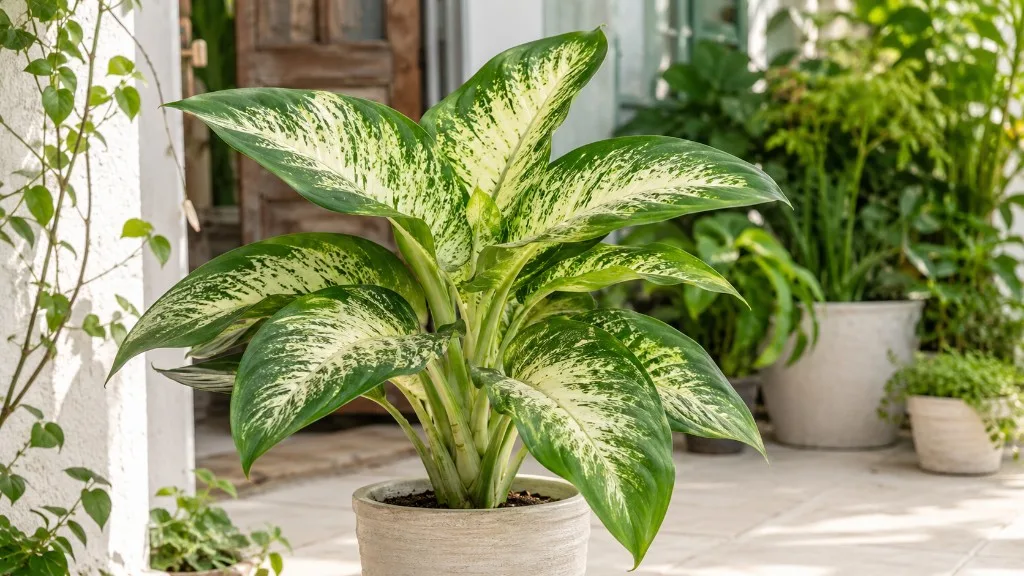
Dieffenbachia Tropic Snow looks like the kind of plant that wants steady pampering - broad mottled leaves, thick canes, a floor-plant presence that fills a corner. That visual confidence tricks people into watering on autopilot. The plant is an aroid from warm, humid forests, which means it likes access to moisture, but its roots also need oxygen between drinks. Water when the top inch of soil is dry, soak thoroughly until water exits the drainage holes, empty every saucer, and adjust for light, humidity, and season. That is the whole game. Everything else in this guide explains how to run those checks reliably on a cultivar that can grow taller and thirstier than smaller dumb cane varieties, and how to keep root rot on Dieffenbachia Tropic Snow from turning a structural foliage plant into a collapsing cane with sour-smelling soil.
Why Tropic Snow Watering Looks Calm Until Root Rot Starts
Dieffenbachia sends confusing signals because the symptoms of too much water and too little water overlap at the leaf. Yellow lower leaves can mean natural aging on a tall cane, but they can also mean the root zone has stayed wet too long. Wilting can mean drought, but it can also mean roots are drowning and cannot move water upward. A beginner sees limp foliage, adds water, and accidentally accelerates the problem that caused the wilt in the first place.
The core mistake is treating Dieffenbachia Tropic Snow (Dieffenbachia amoena ‘Tropic Snow’) like a moisture-loving fern or like a drought-tolerant succulent. It is neither. Clemson University’s Home & Garden Information Center advises watering thoroughly, then letting soil dry to the touch to a depth of one inch before watering again - a simple rule that only works if drainage, light, and pot size cooperate. (Clemson HGIC) Clemson also notes that root rot usually results from a soil mix that does not drain quickly or overly frequent watering - not from one accidental heavy soak with proper drainage. (Clemson HGIC)
Tropic Snow adds a few cultivar-specific wrinkles. It is a larger, bolder dumb cane with broad leaves and substantial canes that store some water internally. That storage buffers short dry spells, which makes the plant look fine even while the mix at the bottom of an oversized pot stays wet for days. A decorative cachepot that never gets drained, a dim office corner, and a weekly watering habit form the classic chain that ends in mushy roots. The watering schedule is never independent of where the plant sits and how fast the room air pulls moisture from leaves and soil.
What “Top Inch Dry” Means for Dieffenbachia Tropic Snow
The top inch dry rule is the most reliable default for dumb cane: insert your finger into the potting mix about one inch deep - roughly to the first knuckle - and water only when that layer feels dry to the touch. NC State Extension’s Plant Toolbox states that Dieffenbachia should be watered thoroughly and the top one-inch surface allowed to dry completely before the next watering, explicitly to help prevent root rot. (NC State Extension)
“Dry” does not mean the surface looks pale or dusty while the inch below is still cool and clingy. Peat-based mixes often dry on top first. The check is about moisture at depth, not surface colour. If your finger comes out with damp particles sticking at one inch, wait. If the inch feels dry and crumbly, it is time to water - provided the pot also feels lighter than it did right after your last thorough soak.
Some growers extend the check to the top two inches in large floor pots where the root mass sits deeper and the upper layer dries faster than the center. That is reasonable on a mature Tropic Snow in a ten- or twelve-inch nursery pot, but do not use a deeper dry-down as permission to let the entire root ball go bone dry. Penn State Extension guidance for dumb cane recommends waiting until the top two or three inches are completely dry, checked by inserting a finger to the second joint, with a typical cycle of seven to ten days in stable indoor conditions. (Penn State Ask Extension) The exact depth matters less than consistency: pick one method, apply it at the same spot in the pot each time, and adjust the interval when season or room conditions change.
The top inch rule also defines what “moderately dry” means before a full drench. You are not giving daily sips to keep the surface shiny. You are letting a measurable dry-down happen, then rewetting the entire root zone in one session so water moves through the mix rather than skimming the top.
How Often to Water Dieffenbachia Tropic Snow Indoors
Honest frequency answer: when the top inch is dry, which often works out to every 7–14 days during active warm growth and every 10–21 days in cooler, dimmer months - but your room will disagree with any chart until you confirm against your pot. A Tropic Snow in bright filtered light near a warm east window may hit the shorter end of that range. The same plant moved to a low-light office with air conditioning may need half as much water even though the leaves look identical.
Treat calendar numbers as reminders to check, not triggers to pour. NC State Extension recommends watering thoroughly and allowing the top one-inch surface to dry before the next watering - language that matches extension guidance without locking you into a weekly habit. That personal baseline beats any blog table because it accounts for your mix, pot material, and light.
Indoor humidity changes the interval more than beginners expect, even though it does not change the dry-down rule itself. Dieffenbachia prefers moderate to high humidity - NC State lists high humidity among its cultural conditions - and dry winter air below thirty percent can pull moisture from broad leaves faster, making the pot feel lighter sooner. (NC State Extension) Do not compensate by keeping soil constantly wet. High humidity plus soggy mix plus weak airflow is how root problems start in otherwise “well cared for” plants.
Finger Test, Skewer Probe, and Pot Weight
The finger test is the fastest daily check. Press into the mix one inch deep near the pot edge, not against the cane base where moisture can linger differently. Cool, clingy soil means wait. Dry, crumbly soil at that depth means water. If only the surface is dry but your finger picks up damp particles below, wait - surface colour lies, especially on aged peat mixes.
The pot weight test is the most reliable signal once you learn your container. Lift the pot right after a thorough watering and notice the heft. Lift it every few days. A nursery pot that feels dramatically lighter has lost much of its available moisture through the root zone, not just the top inch. Combine weight with the finger test when unsure: light pot plus dry top inch equals water; heavy pot plus wilted leaves equals trouble, not thirst.
A wooden skewer or chopstick works as a low-tech backup on deep pots. Insert to mid-depth, wait sixty seconds, pull it out. Damp skewer means wait; dry skewer with a light pot means water. A soil moisture meter can help if you distrust touch, but read it near the root zone, not only at the surface, and treat it as confirmation rather than a substitute for drainage discipline.
Seasonal Watering Changes for Tropic Snow
Dieffenbachia is a warm-climate foliage plant. Its water use tracks temperature, day length, and growth speed more closely than the day of the week. A seasonal framework helps you anticipate change without locking into bad habits that overwater the plant all winter.
In spring, as light strengthens and new leaves unfold, dry-down accelerates. Check every few days and expect to move from a longer winter interval toward the active-season rhythm. Freshly repotted Tropic Snow dries more slowly until roots explore new mix - resist keeping the old summer schedule immediately after upsizing.
In summer, peak warmth and long days maximize transpiration through those broad leaves. Many indoor Tropic Snow plants land on a 7–10 day cycle if they sit in bright filtered light, but hot, dry rooms with forced air can shorten that window. Outdoor shaded patio time also increases demand. Rain or humid weather does not suspend the need to check; a humid week still allows soggy soil if drainage fails.
In fall, cooler nights and shorter days slow growth. Stretch the interval between waterings and verify with soil checks. overwatering on Dieffenbachia Tropic Snow becomes the bigger risk as evaporation drops and pots stay wet longer at the cane base.
In winter, indoor Tropic Snow in cool, dim rooms may need water only every two to three weeks, sometimes longer. Growth slows, but dry heating air can still pull moisture from small pots near radiators. Reduce frequency, not thoroughness - when you do water, water fully and drain completely. Clemson and multiple extension sources recommend scaling back watering in cooler months; the plant simply uses less when it is not pushing new cane height.
Summer Growth and Winter Slowdown
Summer mistakes cluster around two extremes: forgetting a floor plant tucked behind furniture in a hot room, and watering every Sunday because that worked in June even though October soil stays wet until Wednesday. Heat increases evaporation; it does not suspend the need for drainage. If Tropic Snow looks tired at midday in a bright window, check soil before reacting - heat stress and drought stress require different responses.
Winter slowdown does not mean neglect. Dumb cane dislikes cold wet feet near drafty windows or AC vents. A pot that dried in five days in July may take twelve in January in the same spot if light dropped after tree canopy or shorter days. Adjust by check, not by memory of summer frequency. If you run a humidifier for winter comfort, remember that higher humidity slows soil dry-down even while it helps leaf edges - you may water less often while still hitting the top-inch dry threshold.
How Humidity Affects When You Water
Humidity and watering are connected, but not in the way social media suggests. Raising humidity does not replace soil checks. It changes how fast the plant loses water through its leaves, which changes how quickly the pot dries, which changes how often you reach the top-inch dry threshold. Penn State Extension recommends increasing humidity around dumb cane - ideally forty to sixty percent - using a pebble tray rather than guessing water needs from leaf appearance alone. (Penn State Ask Extension)
In dry air, Tropic Snow transpires more aggressively. The pot may lighten faster, and leaf edges may crisp even when watering technique is sound. Your response should be humidity support and consistent soak-and-drain watering when the top inch dries - not leaving the mix wet “because the air is dry.” Soggy roots in a dry room still rot.
In humid air - bathrooms, grouped plant corners, monsoon-season interiors - the mix holds moisture longer. The same seven-day summer schedule can overwater a plant in a dim humid room. Extend the interval while keeping the dry-down rule intact. Humidity helps prevent brown tips; it does not grant permission to skip drainage.
NC State lists Dieffenbachia among plants that prefer high humidity and partial shade with good drainage and soil that is moist but occasionally dry - a pairing worth reading twice. Moist does not mean wet. Occasionally dry at the top inch is the guardrail.
Humidity Trays, Grouping, and Humidifiers vs Mist
A pebble tray under the nursery pot - pebbles and water below pot bottom level - raises local humidity without saturating roots. Penn State Ask Extension recommends pebble trays to increase humidity around dumb cane alongside top-inch watering discipline. Grouping Tropic Snow with other plants creates a modest shared humidity bubble, especially on a tray.
A humidifier is the most stable fix for dry winter homes and beats misting for consistency. Set it to maintain moderate humidity in the room rather than chasing ninety percent right against the leaves. Stable humidity smooths transpiration so the pot dries on a more predictable rhythm - your checks still decide when to pour.
Misting produces a brief surface effect and wet leaves that can invite fungal spotting on broad dumb cane foliage. If you mist, do it sparingly in warm morning air with good circulation - not as a substitute for soil moisture or a humidifier. The watering decision still comes from the top inch, not from whether leaves look dull today.
Light, Temperature, and Pot Size as Hidden Water Drivers
Watering and light are one system. Your Tropic Snow light page and this watering page should agree: brighter filtered light increases water use; low light reduces it. A plant stretching in a dim office uses less water per week but is far more vulnerable to rot if you keep a bright-window schedule. When light drops, extend the interval and trust the finger test over habit.
Temperature works the same way. Dieffenbachia prefers stable indoor warmth - roughly 65–80°F (18–27°C) - and cold drafts or sudden drops slow uptake while slowing evaporation from soil in ways that confuse timing. A pot near a cold window in winter may look dry on top while the center stays cold and wet. Pull the plant back from the glass or check deeper before watering.
Pot size changes everything immediately. Tropic Snow is often sold as a floor plant in a pot that is already substantial; Dieffenbachia Tropic Snow repotting guide into an even larger decorative container without adding proportional roots is the fastest way to create a waterlogged bottom while the top inch dutifully dries on schedule. Large volumes of fresh mix stay wet longer. After repotting, expect slower dry-down until roots fill the space - many growers overwater freshly repotted dumb cane because they keep the old calendar.
Cachepots deserve explicit mention because Tropic Snow is frequently displayed in them. Water the inner nursery pot, wait for full drainage, empty the outer pot, then replace. Never let the inner pot sit in accumulated runoff. That standing water is the definition of wet feet, and Clemson identifies poor drainage plus frequent watering as the root rot pathway. (Clemson HGIC)
The Right Way to Water Tropic Snow Without Soaking the Crown
Technique matters on a cane plant because water trapped against the stem base invites decay, and splashing cold water on broad leaves can spot foliage you bought the plant to display.
Water slowly and evenly across the soil surface until moisture exits the drainage holes. That confirms the root ball rewetted rather than channeling down the inside wall of a dry pot. If water runs straight through in seconds, the mix may have gone hydrophobic - water in two passes five minutes apart, or bottom-water in a tub until the surface darkens, then drain fully.
Use room-temperature water. Very cold tap water can shock warm roots and is especially risky on heat-loving tropicals. If you use tap water, letting it sit overnight can help dissipate chlorine in some municipal supplies, though Dieffenbachia is less finicky than some calatheas about chemistry.
Aim the stream at soil, not the crown. Avoid routinely hosing down the leaf axils where water sits against thick tissue. If you must rinse dust, do it on a warm morning with airflow so foliage dries before night.
Always empty the saucer within thirty minutes. If you use a cachepot, lift, drain, return. Roots need air as much as water; the bottom inch of a pot sitting in runoff is the first zone to go anaerobic.
Penn State Extension emphasizes watering thoroughly until water drains from the holes, then withholding water until the top two or three inches dry - the same soak-and-wait rhythm expressed with slightly deeper check language for larger specimens. (Penn State Ask Extension) Thorough does not mean flood daily. It means one complete drink per dry-down cycle.
Signs You Are Overwatering Dieffenbachia Tropic Snow
Overwatering is the silent killer because the plant looks thirsty while roots fail. Watch for these patterns together, not in isolation.
Wilting despite wet soil is the hallmark. Roots damaged by low oxygen cannot transport water, so leaves droop even though moisture is present. Adding more water accelerates decline. Clemson HGIC ties chronic wet soil to root rot and notes that yellowing leaves often follow overwatering.
Yellow lower leaves often appear when the root zone stays wet too long. On a tall Tropic Snow, some lower yellowing is normal aging, but rapid yellowing across multiple leaves plus wet soil is a warning.
Soft or mushy cane bases, blackening at the soil line, and a sour or foul smell from the mix suggest advanced trouble. Penn State Extension notes that a foul odor when you smell the soil surface indicates overwatering that has led to rotting organic matter - distinct from a normal earthy smell. (Penn State Ask Extension)
No new growth for weeks while soil stays damp and lower leaves yellow can mean roots are functioning poorly even before obvious mush appears.
If several signs align, stop watering, improve airflow, confirm drainage holes are open, and inspect roots if decline continues. Wear gloves when handling cut tissue - Dieffenbachia sap contains calcium oxalate crystals that irritate skin and mucous membranes.
Signs Tropic Snow Is Thirsty or underwatering on Dieffenbachia Tropic Snow
Underwatered dumb cane is usually more straightforward than overwatered. The plant tells you earlier, and recovery is faster if you act before cane tissue desiccates.
Dry, crumbly soil pulling away from the pot edge means the root ball went too dry. Rewater in stages if water runs straight through cracks along the wall - first pass to swell the mix, ten-minute wait, second pass to full drainage.
Leaf curl, droop, and dull colour on multiple leaves - with a light, dry pot - point to drought. NC State Extension notes that soil should be moist but occasionally dry at the surface between thorough waterings.
Brown crisp edges on leaf margins can follow repeated boom-and-bust cycles or very dry air combined with inconsistent watering. Fix the soak-and-drain rhythm and humidity together rather than chasing daily sips.
Slow leaf unfurling in bright growth season may mean the plant lacks steady moisture access even if it is not collapsed yet.
When rehydrating a dry pot, water until drainage appears, wait ten minutes, water again, then drain completely. Do not leave the pot in standing water as “recovery therapy.”
Root Rot Prevention: Drainage, Mix, and Saucer Rules
Root rot prevention for Tropic Snow is mostly boring infrastructure: holes, mix, and saucer discipline applied every time - not dramatic rescue later.
Drainage holes are non-negotiable. At least one open hole sized for the pot volume, never blocked by roots, gravel plugs, or tight cachepots. Water must leave as easily as it enters.
Well-draining mix with perlite or similar porous amendment keeps air in the root zone between waterings. Clemson recommends most well-drained container mixes for Dieffenbachia and ties root rot to mixes that do not drain quickly. (Clemson HGIC) Dense, aged indoor mix that compacts into a brick stays wet on top and repels water in the center - the trap that turns a careful top-inch check into a false negative.
Right-sized pots matter. An oversized container holds moisture away from roots in ways that stagnate at the bottom even when the top inch dries on schedule. Tropic Snow needs room for its cane, not a swimming pool of unused mix.
Saucer and cachepot rules: drain after every watering, every time, no exceptions. If decorative display requires a cachepot, treat drainage as part of watering, not an optional cleanup step.
Low-light adjustment: when Tropic Snow moves to a dimmer spot, reduce watering frequency while keeping the same dry-down test. Less light means less water use and slower drying - the risk shifts from drought to rot.
What to Do if You Suspect Root Rot Has Started
If you suspect root rot, act quickly but with realistic expectations. Slide the plant out of the pot and inspect roots. Healthy roots are firm and pale. Rotten roots are brown, black, mushy, and may smell foul.
Trim all mushy tissue with clean shears, rinse gently, and repot into fresh well-draining mix in a slightly smaller pot if you removed significant root mass. Water once to settle mix, then return to strict top-inch dry cycles - do not keep soil moist “to help recovery.” Recovery depends on remaining healthy root area and stable warmth and Dieffenbachia Tropic Snow light guide without direct scorch.
Advanced rot on a tall Tropic Snow may not be fully recoverable on the main cane. Stem cuttings or air layering above healthy tissue can preserve the cultivar even when the base is lost - propagation is a backup plan, not a watering substitute. Wear gloves when cutting; sap is irritating.
Penn State Extension suggests repotting with fresh soil and checking roots if a long-held plant declines despite adjusted care - compacted mix loses aeration over time and mimics overwatering behavior. (Penn State Ask Extension)
Soil Mix and Repotting as Watering Foundations
Your watering skill cannot overcome a bad mix or a pot that has not been refreshed in years. Tropic Snow performs best in rich, well-draining potting mix with perlite - enough organic matter to hold some moisture, enough porosity to dry on a predictable rhythm.
When mix collapses, water behaves erratically: the top inch dries while the core stays saturated, or water channels out the bottom without rewetting roots. Repotting every one to two years - or when dry-down times swing wildly - often stabilizes watering more than changing your calendar.
At repot, choose a pot only one size up unless roots clearly circle the entire ball. Loosen the outer root mass gently, remove old soggy debris, and backfill with fresh mix without packing hard. Water once thoroughly, drain, then wait for the top inch to dry before the next session - expect a longer first interval while roots explore.
Pair soil work with light reality. A fresh mix in a brighter spot dries faster; in low light, slower. Reset expectations after every repot or move.
Water Quality and Timing for Dumb Cane Plants
Dieffenbachia is not among the most sensitive houseplants to water chemistry, but temperature and timing still matter. Room-temperature water avoids shocking roots on a warm windowsill. Very cold water in winter can slow uptake on a plant already stressed by short days.
Morning watering is the best default when your schedule allows. It aligns with daytime transpiration and gives any incidental splashes time to dry. If you water in the evening because that is when you are home, keep the stream on soil and skip wetting foliage before a cool night.
Avoid softened water heavy in sodium on long timelines if you have other options - occasional use is unlikely to kill Tropic Snow, but rainwater or filtered tap is gentler for chronic use.
Common Dieffenbachia Tropic Snow Watering Mistakes
Mistake: Watering every week because the app says so. Fix: Use the week as a reminder to check the top inch, not as a pour command. Two Tropic Snow plants in the same home can differ by five days.
Mistake: Daily sips to “keep it happy.” Fix: Water until drainage, then let the top inch approach dry. Sips keep the surface wet and the core thirsty or unevenly saturated.
Mistake: Leaving runoff in the saucer or cachepot. Fix: Empty within thirty minutes. Roots at the bottom drown first.
Mistake: Ignoring low light after a move. Fix: Stretch interval when the plant moves away from bright filtered light. Same top-inch rule, fewer drinks per month.
Mistake: Upsizing into a huge decorative pot for stability. Fix: Match pot volume to root mass. Extra mix holds extra water without extra roots to use it.
Mistake: Chasing wilt with water without checking weight. Fix: Wilting plus heavy wet pot means root stress; wilting plus light dry pot means drought. Different problems, different fixes.
Mistake: Raising humidity by keeping soil wet. Fix: Use pebble trays or humidifiers for air moisture; keep soil on soak-and-dry cycles.
Mistake: Misting instead of watering when leaves droop. Fix: Check the top inch. Mist does not rewet a dry root ball.
Building a Simple Weekly Watering Routine
You do not need a spreadsheet. You need a repeatable loop that respects how Tropic Snow actually behaves in your room.
Every three to four days in warm active growth: Finger-test the top inch. Lift the pot if unsure. Water deeply only when dry at depth. Empty saucers and cachepots.
Every five to seven days in cooler or dimmer months: Same checks, longer intervals. Do not assume winter means “barely water” - dry heating air still pulls moisture from pots near vents.
Once a week: Step back and evaluate the whole plant. Are new leaves firm and opening cleanly? Is lower yellowing increasing faster than normal cane aging? Is the cane firm at the base? Adjust interval by a day or two based on what the plant shows.
Pair checks with humidity and light: If you add a humidifier or move the plant to a brighter window, reset your expected interval. Humidity slows dry-down; brighter light speeds it.
Once a month in winter, or after any decline: Smell the soil surface when you check moisture - earthy is fine, foul means pause and inspect.
Conclusion
Watering Dieffenbachia Tropic Snow well comes down to principles that hold even when the calendar changes: wait until the top inch of soil is dry, water thoroughly until drainage, empty every saucer and cachepot, and adjust for light, humidity, temperature, and pot size. Active indoor growth often lands near a seven-to-fourteen-day rhythm in warm bright conditions; cooler low-light months stretch toward two or three weeks between drinks for many homes - but your finger and pot weight tell the truth faster than any range.
Humidity supports the leaves; it does not replace soil checks. Root rot prevention is mostly drainage discipline applied every time, not a rescue skill you hope to learn later. Tropic Snow rewards consistency - deep drinks separated by real dry-down - more than fussy daily attention. Run that loop, read the cane and leaves honestly, and you will spend less time fighting yellow mushy bases and more time enjoying a floor plant that actually earns its corner.
When to use this page vs other Dieffenbachia Tropic Snow guides
- Dieffenbachia Tropic Snow overview - Start here for whole-plant context before deep-diving this topic.
- Dieffenbachia Tropic Snow problems hub - Jump to symptom-specific fix guides when this care topic does not resolve the issue.
- Overwatering on Dieffenbachia Tropic Snow - Escalate here when watering adjustments are not enough.
- Underwatering on Dieffenbachia Tropic Snow - Escalate here when watering adjustments are not enough.
- Root Rot on Dieffenbachia Tropic Snow - Escalate here when watering adjustments are not enough.
Related Dieffenbachia Tropic Snow guides
- Dieffenbachia Tropic Snow overview
- Dieffenbachia Tropic Snow light
- Dieffenbachia Tropic Snow soil
- Dieffenbachia Tropic Snow propagation
- Dieffenbachia Tropic Snow fertilizer
- Dieffenbachia Tropic Snow repotting
- Overwatering on Dieffenbachia Tropic Snow
- Underwatering on Dieffenbachia Tropic Snow
- Root Rot on Dieffenbachia Tropic Snow
- Wilting on Dieffenbachia Tropic Snow
- Drooping Leaves on Dieffenbachia Tropic Snow
- Mold on Soil on Dieffenbachia Tropic Snow
Related tool
Try the Plant Watering Calculator with dieffenbachia-tropic-snow pre-selected to estimate needs for your setup.