Drooping Leaves on Dieffenbachia Tropic Snow: Causes
Quick answer
Drooping on Dieffenbachia Tropic Snow usually means water stress-overwatered roots, dry soil, cold drafts below 60°F, or dim light on heavy mottled leaves. First step: poke the top inch of mix and squeeze the cane base; wet soil plus soft stem means pause water, dry soil plus firm stem means soak once.
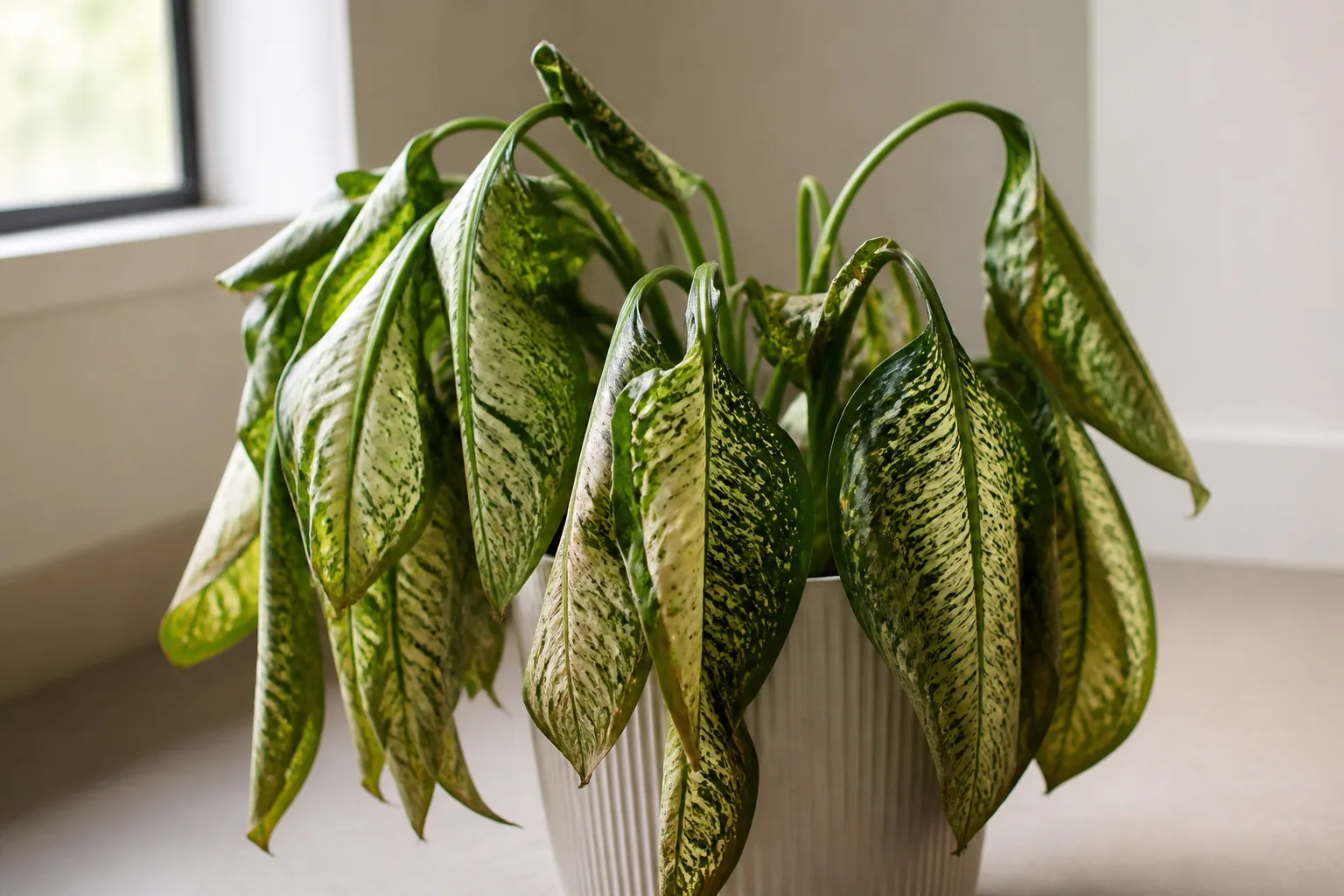
Drooping Leaves on Dieffenbachia Tropic Snow: Causes, Checks & Fixes
This guide covers drooping leaves on Dieffenbachia Tropic Snow. See also the general Drooping Leaves guide, watering, and light pages for this plant.
Drooping Leaves on Dieffenbachia Tropic Snow: Causes, Checks & Fixes
Quick answer
Drooping leaves on Dieffenbachia Tropic Snow (Dieffenbachia amoena ‘Tropic Snow’) mean the cane and its broad, white-mottled foliage have lost turgor-the internal water pressure that keeps stems upright. On this cultivar, large speckled leaves hang heavily when roots cannot supply water, whether from saturated soil damaging roots or from bone-dry mix after a missed watering cycle.
First step: insert your finger one inch into the mix and gently squeeze the cane at soil level. Wet soil with a soft, spongy base means stop watering and investigate overwatering or root rot. Dry soil with a light pot and firm cane means one thorough soak per the watering guide-not daily sips. Wear gloves when handling cut or broken tissue; Dieffenbachia sap contains calcium oxalate crystals that irritate skin and are toxic if chewed.
What drooping looks like on Dieffenbachia Tropic Snow
On Tropic Snow, drooping rarely stays on one leaf. The entire cane segment often sags-thick stems bow outward and wide green leaves with creamy white splashes hang at sharper angles than normal. Lower leaves may droop first while the center still looks upright, especially when overwatering stresses roots from the bottom up.
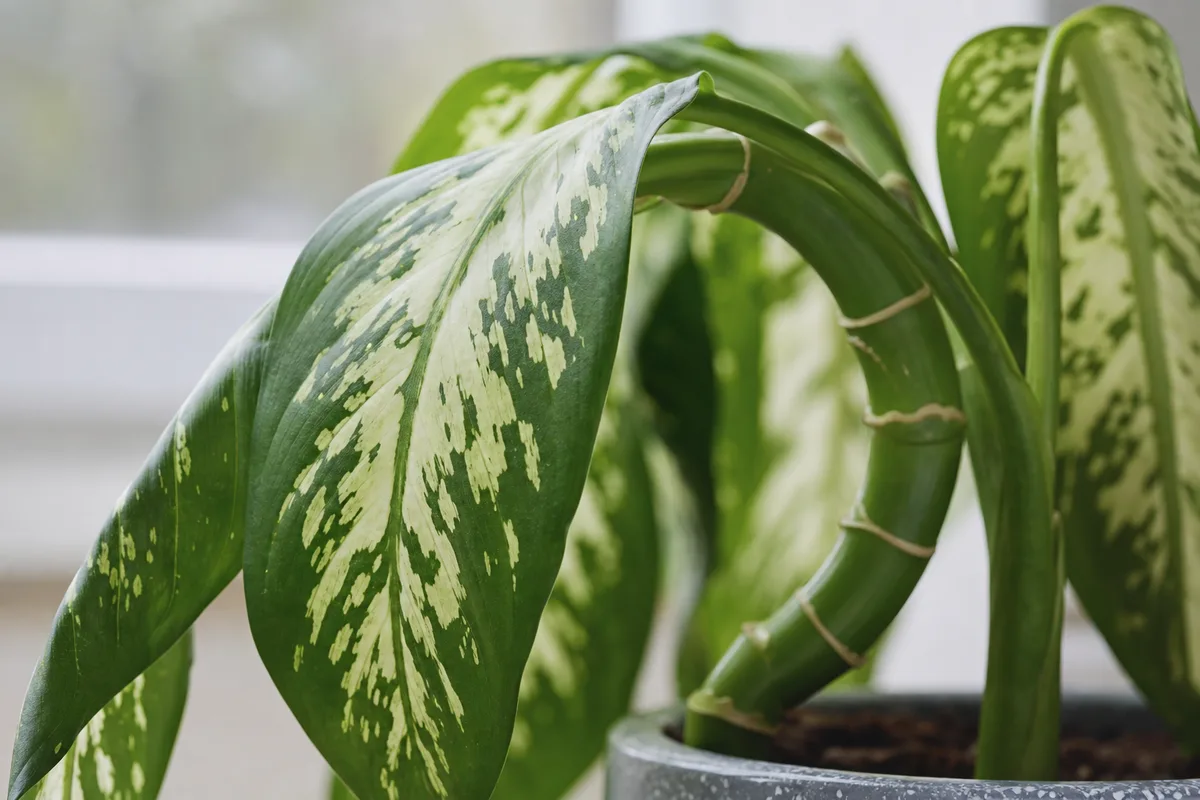
Drooping Leaves symptoms on Dieffenbachia Tropic Snow - compare with healthy tissue on the same plant.
Underwatering droop shows a lightweight pot, dry mix pulled slightly from the pot edge, and limp leaves on firm green canes. Leaf edges may crisp before the whole blade collapses. After one proper soak, foliage often perks within hours if roots are intact.
Overwatering or root-rot droop appears while soil stays wet for days. The pot feels heavy. The cane base softens at soil line before widespread yellow leaves appear. A faint sour smell from the mix is a red flag-see root rot before adding more water.
Cold-draft droop hits after nights near a window or AC vent. Leaves may droop and drop without yellowing first when temperatures fall below about 55°F (13°C). Stems stay firm; moving to warmer stable air often stops further collapse within a day.
Low-light droop develops slowly on variegated Tropic Snow. Heavy white patches contain less chlorophyll, so dim corners produce limp upper growth and faded mottling before the plant outright collapses. This overlaps not enough light and leggy stretching-not acute thirst.
Why Dieffenbachia Tropic Snow gets drooping leaves
Overwatering and root failure
Clemson HGIC notes that root rot usually results from soil that does not drain quickly or overly frequent watering. Tropic Snow is a large floor-plant cultivar with wide-spreading leaves; in an oversized decorative pot or dim office corner, mix at the bottom stays wet long after the surface looks dry. Damaged roots cannot move water upward, so leaves droop despite wet soil-the same visual signal as drought, which is why finger-testing matters before you pour.
Underwatering after dry-down
UF/IFAS lists droopy leaves as a sign of too little water: when the soil surface is dry, water well, then wait until the surface dries again. Tropic Snow stores some moisture in its cane, but one missed dry-down in winter heating can collapse heavy speckled leaves quickly because transpiration outpaces what remains in the stem.
Cold exposure and drafts
Dieffenbachias prefer temperatures from 60 to 75°F (15–24°C) and need protection from cold and sudden temperature swings. Clemson also advises always protecting dieffenbachias from major temperature changes. A cold window sill plus wet soil-a common office placement-combines root slowdown with saturated mix and produces limp canes that look like overwatering but improve once warmth returns.
Low light on heavily variegated foliage
Clemson lists ‘Tropic Snow’ as tolerating lower light than most dieffenbachias, but heavy variegation still needs bright filtered light to maintain firm growth. NC State Extension describes Tropic Snow as heavily variegated with cream and green leaves on canes up to six feet tall. In shade, new leaves emerge smaller and weaker; long-term limpness follows reduced photosynthate, not a single bad watering.
Repotting shock and root-bound stress
Recent repotting or a root-bound plant in a too-small pot can droop temporarily. Disturbed fine roots reduce uptake for one to two weeks. Cramped roots circling a dry pot edge also fail to absorb evenly-overlap with underwatering when the center of the ball stays dry while you water the surface only.
Drooping vs. wilting - when it is a different problem
Both terms describe limp foliage, but the fix path differs:
| Pattern | Soil | Cane at base | Likely cause | Read next |
|---|---|---|---|---|
| Limp speckled leaves, heavy pot | Wet days | Soft or spongy | Overwatering / root rot | Overwatering, root rot |
| Limp leaves, light pot | Dry 1–2 in. | Firm | Underwatering | Underwatering |
| Drooping without yellow first | Any | Firm | Cold draft | Move above 60°F |
| Slow limp upper stems | Any | Firm | Low light | Light guide |
| Sudden collapse after repot | Moist | Variable | Transplant shock | Stabilize; no fertilizer |
Use the dedicated wilting page when collapse is rapid and uniform across the whole plant after a single stress event; use this drooping guide when canes sag gradually and the moisture check splits over- from under-watering.
How to confirm the cause
Work through this numbered checklist in order:
- Moisture at one inch - NC State recommends allowing the top one-inch surface to dry before watering again to prevent root rot. If your finger finds damp clingy soil at that depth, do not water. If dry and crumbly, underwatering is likely.
- Pot weight - Lift the container. Heavy plus wilted leaves means root stress, not thirst. Light plus limp leaves means soak once.
- Cane firmness - Press the base above the soil. Spongy tissue with wet mix demands root inspection. Firm tissue supports a watering correction only.
- Temperature scan - Check overnight lows near the plant. Below 55°F (13°C) with firm stems points to cold, not rot.
- Light audit - Fading white mottling and long gaps between leaves on an otherwise watered plant suggest insufficient light per the light guide.
- Recent care timeline - Repot, move, or heavy prune within two weeks? Temporary droop is common until roots re-anchor.
- Smell and drainage - Sour odor, full saucers, or blocked holes confirm chronic wetness. Empty standing water before any other step.
First fix for Dieffenbachia Tropic Snow
Match one action to what the checklist showed-do not stack repotting, fertilizer, and extra water the same day.
If soil is wet and the cane base is soft: Stop watering immediately. Move the plant to bright indirect light with good airflow, empty the saucer, and read root rot if decline continues after the top inch dries. Do not repot into a larger pot while soil is soggy.
If soil is dry one inch down and the cane is firm: Water thoroughly until runoff exits drainage holes, drain the saucer within 30 minutes, and resume the top-inch dry rhythm from the watering guide. UF/IFAS advises watering when the surface is dry to the touch, then waiting until the surface dries again.
If cold is the trigger: Move off the window sill or away from AC vents into stable 60–75°F (15–24°C) air. Do not compensate with extra water.
If light is the trigger: Shift toward bright filtered light over 7–14 days. Do not place Tropic Snow in hot direct afternoon sun-the pale patches scorch before the cane stiffens.
Recovery timeline
Simple underwatering often shows perkier leaves within 6–24 hours after one full soak. Cold-draft droop stabilizes within a day or two once temperatures stay above 60°F. Overwatering recovery takes longer: allow the top inch to dry, then judge success by firm new leaf unfurling from the cane tip over two to four weeks-not by old drooped blades re-erecting.
Damaged leaves may stay angled even after the plant is stable. Lower leaves may yellow and droop as part of normal aging; remove spent foliage with gloved hands or clean shears. Severe root rot with mushy cane may not recover-propagation from healthy cane sections is the backup path on the propagation guide.
What not to do
Do not water a drooping Tropic Snow without checking moisture first-the classic mistake when wet roots already fail. Do not fertilize stressed plants; Clemson HGIC notes too much fertilizer can burn leaf margins. Do not repot on day one unless roots are clearly rotting and you’ve read the repotting guide. Do not remove all drooping leaves immediately; wait to see which tissue recovers. Do not handle cut stems bare-handed near pets or children-ASPCA lists Dieffenbachia, including Tropic Snow, as toxic to dogs and cats.
Safety: gloves, sap, and pets
All Dieffenbachia parts contain needle-like raphides that cause burning and swelling if ingested. Clemson HGIC warns that sap can cause skin rash in sensitive people and that ingestion can swell the throat. NC State recommends wearing gloves when handling the plant. Wear gloves when removing drooping leaves, wash hands afterward, and keep fallen foliage away from curious pets.
How to prevent drooping leaves next time
Align daily care with Tropic Snow’s actual rhythm:
- Water when the top inch dries, not on a calendar-details in the watering guide.
- Keep 60–75°F (15–24°C) and avoid cold window sills in winter.
- Provide bright indirect light so variegated leaves stay firm; see the light guide.
- Empty saucers after every soak so roots never sit in runoff.
- Turn the pot quarterly for even growth per UF/IFAS guidance.
- Inspect weekly while the plant is stable so small dry-downs or wet spots do not become full cane collapse.
Return to the Dieffenbachia Tropic Snow overview for baseline culture. If drooping pairs with rapid yellowing, read yellow leaves after you rule out moisture and temperature using the checklist above.
When to worry - crown softening and root rot
Escalate immediately if the cane base turns mushy, soil stays wet and smells sour, or drooping climbs the stem while multiple leaves yellow at once. That pattern indicates advancing root rot rather than reversible thirst. Unpot, trim black mushy roots, repot into fresh well-draining mix only after removing rot, and withhold fertilizer until new growth appears.
Low urgency: firm cane, correctable dry soil, or cold draft with no soft tissue-fix the environment and wait 48 hours before deeper intervention.
Conclusion
Drooping on Dieffenbachia Tropic Snow is a moisture-and-environment signal, not a mystery disease. Check soil one inch deep and cane firmness before you water. Wet heavy pots need drying and possible root inspection; light dry pots need one thorough soak. Protect from cold below 55°F and give bright indirect light so heavy mottled leaves stay turgid. Judge recovery by firm new growth at the cane tip, wear gloves when removing damaged foliage, and use the related problem guides when your checklist points beyond simple thirst.
When to use this page vs other Dieffenbachia Tropic Snow guides
- Dieffenbachia Tropic Snow watering guide - Use for routine moisture checks before assuming drooping leaves is the main issue.
- Dieffenbachia Tropic Snow problems hub - Browse all 16 common issues on this species.
- Underwatering on Dieffenbachia Tropic Snow - Different entry point when symptoms overlap with drooping leaves.
- Overwatering on Dieffenbachia Tropic Snow - Different entry point when symptoms overlap with drooping leaves.
- Root Rot on Dieffenbachia Tropic Snow - Different entry point when symptoms overlap with drooping leaves.
Related Dieffenbachia Tropic Snow guides
- Dieffenbachia Tropic Snow overview
- Dieffenbachia Tropic Snow watering
- Dieffenbachia Tropic Snow light
- Dieffenbachia Tropic Snow soil
- Underwatering on Dieffenbachia Tropic Snow
- Overwatering on Dieffenbachia Tropic Snow
- Root Rot on Dieffenbachia Tropic Snow
- Wilting on Dieffenbachia Tropic Snow
- Dieffenbachia Tropic Snow problems