Yellow Leaves on Dieffenbachia Camille: Causes, Checks &
Quick answer
Yellow leaves on Dieffenbachia Camille are a symptom, not a diagnosis. Push your finger into the top inch of mix first-wet, heavy soil with yellow lower leaves means stop watering; dry, light soil with pale new growth may need a drink. One or two yellow leaves on the lowest cane section are often normal aging.
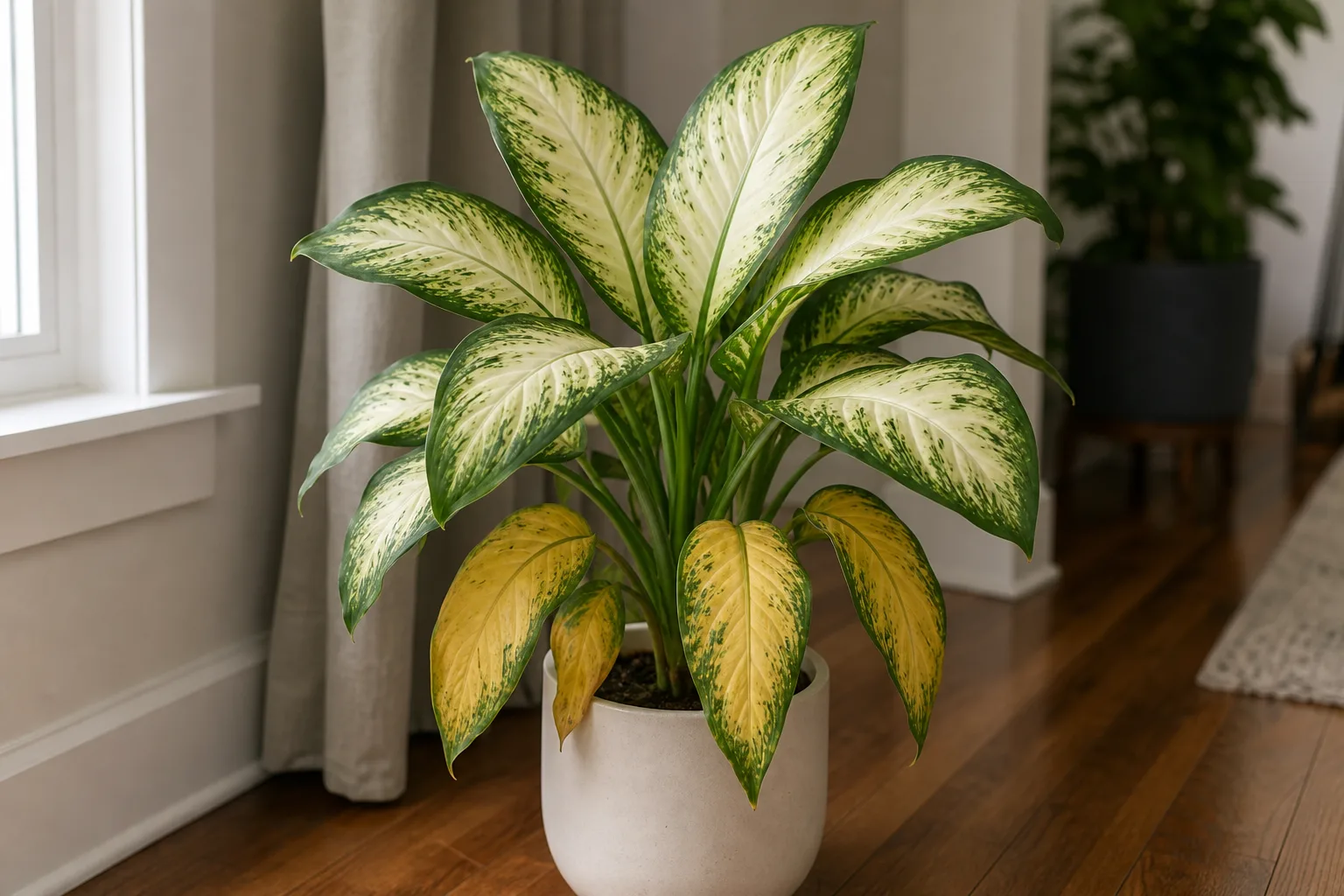
Yellow Leaves on Dieffenbachia Camille: Causes, Checks & Fixes
This guide covers yellow leaves on Dieffenbachia Camille. See also the general Yellow Leaves guide, watering, and light pages for this plant.
Yellow Leaves on Dieffenbachia Camille: Causes, Checks & Fixes
Quick answer
Yellow leaves on Dieffenbachia Camille (Dieffenbachia seguine ‘Camille’) are a symptom, not a diagnosis. The cream-centered dumb cane grows on upright cane segments, and yellowing usually starts on the oldest lower leaves-or signals stress when several leaves fade at once while soil stays wet, new growth washes to plain green, or pale cream centers bleach and crisp near a window.
First step: push your finger into the top inch of mix and lift the pot. Wet, heavy soil with yellow lower leaves means stop watering and check cane firmness. Dry, light soil with limp or pale new leaves may need a thorough drink followed by drainage. One or two fully yellow leaves on the lowest cane section over months are often normal aging-separate that pattern from stress before you fertilize or repot.
What yellow leaves look like on Dieffenbachia Camille
Camille’s variegation makes the pattern readable. Healthy leaves show a broad cream or yellow-white center bordered by green margins on thick petioles along an upright cane. Yellowing changes that look in distinct ways:
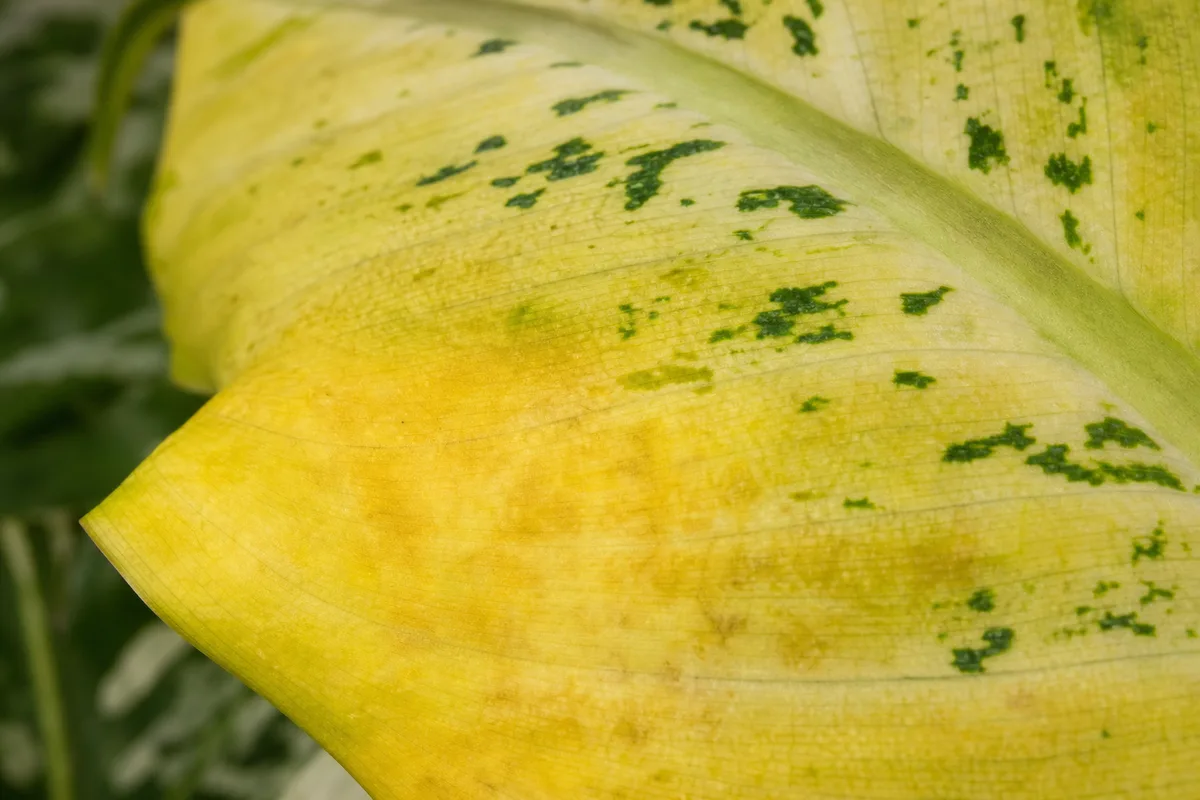
Yellow Leaves symptoms on Dieffenbachia Camille - compare with healthy tissue on the same plant.
Normal lower-cane aging - One or two oldest leaves at the bottom of the cane turn evenly yellow, then brown and drop, while upper leaves stay firm and new center growth stays green-and-cream. Soil moisture is normal. The cane above the yellow leaf feels solid. This bottom-up pattern on an otherwise healthy plant is expected on Dieffenbachia as the stem elongates.
Wet-soil stress - Multiple lower leaves yellow at once while the mix stays dark, cool, and damp for many days after watering. Leaves may feel soft or limp. The pot feels heavy. You may notice fungus gnats near the soil surface or a faint sour smell from drain holes. Yellowing can climb the cane if roots fail.
Dry-soil stress - Yellowing may appear with limp leaves on a lightweight pot and pale, crumbly surface mix. Cream center panels can look washed out or develop crispy brown edges before the whole leaf yellows. This often follows a missed watering or a bright window that dried a small pot quickly.
Low-light fade - New leaves emerge mostly green with thin cream streaks, petioles stretch longer, and older variegated leaves below look sharper than the top growth. Lower leaves may yellow and drop slowly in dim rooms where the plant uses water slowly and soil stays wet too long.
Sun scorch on cream centers - Pale center panels bleach white or develop crisp brown patches while green margins stay intact. Damage is usually worst on the window-facing side. This is not the same as uniform yellowing from wet roots.
Cold-draft injury - Sudden yellowing or water-soaked patches on young leaves after a night near an AC vent or cold glass. Lower leaves may yellow and droop together when temperatures drop below what tropical foliage tolerates.
Why Dieffenbachia Camille gets yellow leaves
Dieffenbachia Camille is not a rosette plant-it grows as an upright cane with alternate leaves along the stem. The lowest leaves age out as new foliage opens above. That architecture means bottom-up yellowing is common when care is otherwise sound.
Overwatering and root stress are the most common cause of widespread yellowing. Dieffenbachia in soggy soil is prone to root problems Saturated mix drives out oxygen; damaged roots cannot move water or nutrients even when the pot is full. Camille in dim corners dries its pot slowly, so calendar watering in low light often keeps roots wet too long. Heavy peat mix, oversized pots, and cachepots holding standing water make the problem worse.
Underwatering dries fine root hairs and stresses variegated tissue with less chlorophyll in cream panels. A light pot, dry top inch, and limp leaves with crispy cream edges point here-not wet soil.
Insufficient light for a high-variegation cultivar weakens Camille more than all-green dumb cane types. UF/IFAS production guidelines note that ‘Camille’ needs roughly 150–250 foot-candles to remain attractive indoors, while some darker cultivars tolerate far dimmer spots. In low light, new leaves green out, stems stretch, and the plant yellows lower leaves while soil stays damp.
Direct sun on pale tissue scorches cream centers faster than green margins. Unfiltered south or west afternoon rays bleach and crisp the least pigmented zones. Owners sometimes mistake scorch for disease or thirst.
Cold drafts and chilling damage tropical foliage quickly. Dieffenbachia needs protection from cold drafts and the lowest leaves may turn yellow and droop when temperatures fall too low.
Natural senescence sheds the oldest leaf on each cane section as the plant grows taller. The lowest leaves may turn yellow and begin to droop as part of normal growth-simply remove spent foliage during regular upkeep.
Salt buildup from overfeeding can yellow or brown leaf edges when fertilizer is applied to stressed or wet roots-curled, browning leaves can follow excessive fertilizer application. This is a secondary cause-confirm moisture and light before reaching for more feed.
Lookalike symptoms to rule out
Aging vs. overwatering - One yellow bottom leaf on firm cane with normal soil moisture is aging. Three or more yellow leaves on wet, heavy soil is stress. If unsure, stop watering until the top inch dries and watch whether yellowing spreads.
Sun scorch vs. nutrient deficiency - Scorched cream centers show crisp brown patches on the pale zone with green margins intact, usually on the brightest side of the plant. Uniform pale yellowing on new leaves in a dim room points to low light, not fertilizer shortage.
Low light vs. overwatering - Both can yellow lower leaves, but low light also shows stretched petioles and greener new leaves. Wet soil that stays damp for a week without watering strongly suggests overwatering even in dim light. See the not-enough-light guide if variegation fade and stretch dominate.
Wilting vs. yellow-only - Limp leaves on wet soil may be wilt without obvious yellow yet. Pair your moisture check with the wilting page if turgor loss is the main symptom.
Root rot escalation - Soft cane at the base, sour smell, and mushy roots mean yellow leaves are a warning, not the whole story. See root rot if those signs appear.
How to confirm the cause
Work through these checks in order so you do not fertilize a wet plant or water a rotting one.
- Top-inch moisture - Insert a finger to the first knuckle near the pot edge. Allow the top 1-inch surface of soil to dry completely before watering again Dry and light confirms drought stress; damp or wet with multiple yellow leaves suggests root stress.
- Pot weight - Lift the pot. Heavy and cool between waterings means oversaturated mix. Light and dry means underwatering.
- Which leaves yellow - Only the lowest one or two on the bottom cane section suggests aging. Several leaves at once, or yellowing climbing upward, suggests stress.
- New growth quality - Mostly green new leaves with long petioles mean low light. Bleached crisp cream centers on the window side mean too much direct sun.
- Cane firmness - Press the base gently. Firm cane with one yellow bottom leaf is reassuring. Soft, dark, or collapsing cane needs root inspection.
- Smell and drainage - Sour odor, fungus gnats, or water sitting in a cachepot for days confirms chronic wet soil.
- Light and drafts - Note distance from windows, sheer curtains, AC vents, and recent moves. Camille needs bright filtered light-not dim corners or harsh direct beams.
- Recent history - Vacation dry spell, Dieffenbachia Camille repotting guide, winter slowdown, or a switch to a larger pot narrows the cause quickly.
Confirmed aging: one or two bottom leaves yellow over months, firm cane, normal moisture, green new growth. Confirmed overwatering: wet mix, heavy pot, multiple yellow lower leaves, possible gnats or sour smell. Confirmed underwatering: dry top inch, light pot, limp leaves, crispy cream edges. Confirmed low light: greener stretched new leaves in a dim spot. Confirmed scorch: crisp brown on cream centers facing the window.
First fix for Dieffenbachia Camille
Check top-inch soil moisture and pot weight before any other action. That single test separates opposite fixes.
If the mix is wet and leaves are yellowing, stop watering immediately. Plants in waterlogged soil may die because roots cannot absorb oxygen Let the top inch dry fully before the next drink. Empty any standing water from saucers and cachepots. Move to brighter filtered light if the plant sits in deep shade-slow evaporation worsens wet soil. Inspect roots and cane if yellowing spreads after the mix dries. Full wet-soil protocol is on the overwatering page.
If the mix is dry and the pot is light, water thoroughly until a small amount drains from the holes, then discard all runoff within 30 minutes. Wait 24 hours and reassess before repeating-one good drink, not repeated flooding.
If only one or two bottom leaves are fully yellow on an otherwise healthy plant with firm cane and appropriate moisture, remove the spent leaves with gloved hands and watch the next center leaf. No watering or light overhaul is needed when aging is the only pattern.
If new growth is green and stretched in a dim spot, move the pot to brighter filtered light-within a few feet of an east window or behind a sheer curtain on south or west-before you change the watering schedule.
Make one correction, then wait one to two weeks before stacking repotting, fertilizing, and heavy pruning.
Step-by-step recovery by cause
Overwatering / root stress path
- Stop watering until the top inch of mix is dry.
- Wick excess moisture with paper towels under the pot if soil is soggy.
- Remove fully yellow leaves that will not recover; wear gloves because Dieffenbachia sap contains calcium oxalate crystals that irritate skin and are toxic to pets if chewed.
- If roots are mushy on inspection, trim decayed tissue and repot into fresh well-drained mix sized to remaining roots-see root rot.
- Resume watering only on the top-inch dry rule once the plant stabilizes.
Underwatering path
- Water thoroughly until moisture exits drain holes; empty the saucer.
- Keep the plant in bright filtered light while roots rehydrate-not hot direct sun on cream panels.
- Resume normal rhythm when the top inch dries again.
Low-light path
Move Camille to brighter filtered indirect light. Hold watering steady; do not compensate for dim rooms by watering more often. Judge improvement on the next one or two leaves-cream centers should stay distinct and petioles should shorten. Details are on the light guide.
Sun scorch path
Filter south and west afternoon rays with a sheer curtain or pull the pot back from glass. Do not prune heavily into healthy tissue the same day-remove only fully damaged leaves with gloves. New growth tells you whether light is corrected.
Cold-draft path
Move away from AC vents, cold windows, and outside doors. Keep temperatures stable and warm. Yellowed leaves from brief chilling may drop; firm cane and new growth indicate recovery.
Normal aging path
Remove the yellow leaf at the petiole base with gloved hands. Wipe sap from blades. No repot or feed needed if the cane is firm and new growth is healthy.
Recovery timeline
Normal aging resolves when the yellow leaf drops and the next center leaf opens green-and-cream-usually within one to two weeks.
Mild overwatering often stabilizes once the top inch dries and yellowing stops spreading. Judge success by new upright growth, not old leaf color Expect two to three weeks for a clean new leaf after care correction.
Root rot or chronic wet soil recovery spans one to four weeks when the cane is still firm and enough healthy root remains. Yellow lower leaves rarely green up again.
Underwatering recovery often shows firmer leaves within one to two days after proper watering if roots were still healthy.
Low-light recovery may take two to four weeks after a brighter placement as variegation returns on new leaves.
Scorched cream centers do not heal; only new foliage emerges clean after light is filtered.
What not to do
Do not assume every yellow leaf needs fertilizer-salt buildup from overfeeding can also yellow foliage, and feeding stressed roots on wet soil makes damage worse. Do not increase watering when soil is already wet and leaves are yellowing-that is how reversible stress becomes cane rot. Do not place a yellowing Camille in harsh direct sun to “give it energy”; cream panels scorch easily. Do not repot on day one unless root rot, failed mix, or severe compaction is confirmed. Do not remove yellow leaves bare-handed; sap irritates skin and the plant is toxic to pets if leaves are chewed.
How to prevent yellow leaves on Dieffenbachia Camille
Water only when the top inch of mix feels dry-use your finger or pot weight, not a calendar. Give Camille brighter filtered light than you would a deep-green dumb cane so variegation stays crisp and soil dries on a predictable rhythm. Use well-drained mix with perlite in a pot with drain holes sized to the root mass-not an oversized cachepot holding standing water. Keep the plant in stable warm temperatures away from AC vents. Empty saucers within 30 minutes of every drink. Remove spent lower leaves promptly with gloves during regular upkeep. Full watering and light details are on the watering and light guides.
When to worry
Act immediately if the cane softens at the base, the mix stays wet while yellowing spreads up the stem, roots are brown and mushy on inspection, or the whole plant collapses within days. Those signs suggest advancing root rot-not simple aging.
You can wait and observe if only one bottom leaf yellows over weeks, the cane is firm, soil moisture is appropriate, and new center growth stays healthy.
Dieffenbachia Camille care cross-check
| Check | Healthy baseline | Yellow-leaf red flag |
|---|---|---|
| Top inch of mix | Dry before next drink | Wet for 7+ days while leaves yellow |
| Pot weight | Light when dry, moderate after watering | Stays heavy and cool between waterings |
| Leaf position | Oldest bottom leaf may age out | Multiple leaves yellow at once or climb upward |
| New growth | Cream centers distinct from green margins | Mostly green, stretched, or bleached crisp |
| Cane base | Firm along the stem | Soft, dark, or collapsing |
| Light | Bright filtered indirect | Dim shelf or harsh direct sun on cream panels |
Related Dieffenbachia Camille problems
- Overwatering - wet soil with yellow lower leaves
- Underwatering - dry mix, light pot, crispy cream edges
- Not enough light - green faded new growth, stretch
- Root rot - soft cane, sour smell, mushy roots
- Brown tips - dry air or salt burn on cream margins
- Dieffenbachia Camille overview - full care hub
When to use this page vs other Dieffenbachia Camille guides
- Dieffenbachia Camille watering guide - Use for routine moisture checks before assuming yellow leaves is the main issue.
- Dieffenbachia Camille problems hub - Browse all 16 common issues on this species.
- Overwatering on Dieffenbachia Camille - Different entry point when symptoms overlap with yellow leaves.
- Underwatering on Dieffenbachia Camille - Different entry point when symptoms overlap with yellow leaves.
- Not Enough Light on Dieffenbachia Camille - Different entry point when symptoms overlap with yellow leaves.
Related Dieffenbachia Camille guides
- Dieffenbachia Camille overview
- Dieffenbachia Camille watering
- Dieffenbachia Camille light
- Dieffenbachia Camille soil
- Overwatering on Dieffenbachia Camille
- Underwatering on Dieffenbachia Camille
- Not Enough Light on Dieffenbachia Camille
- Root Rot on Dieffenbachia Camille
- Dieffenbachia Camille problems