Underwatering on Dieffenbachia Camille: Causes, Checks &
Quick answer
Underwatering on Dieffenbachia Camille shows as a light pot, limp leaves, and dry mix at one inch depth. First step: soak the root ball thoroughly until water drains, then wait until the top inch dries before watering again.
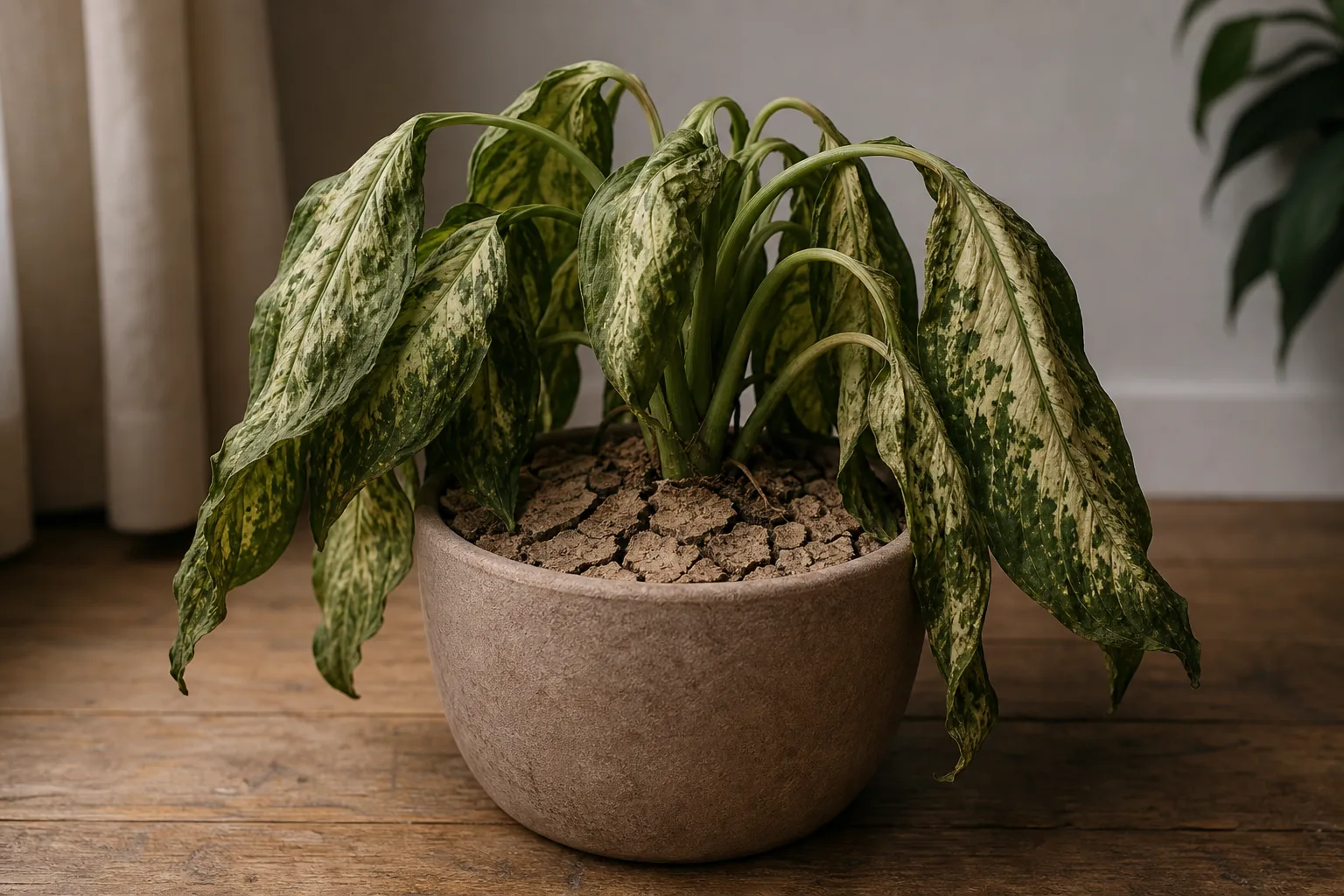
Underwatering on Dieffenbachia Camille: Causes, Checks & Fixes
This guide covers underwatering on Dieffenbachia Camille. See also the general Underwatering guide, watering, and light pages for this plant.
Underwatering on Dieffenbachia Camille: Causes, Checks & Fixes
Quick answer
Cream-centered panels on Dieffenbachia Camille are the first place drought stress shows-pale tissue crisps and droops before solid-green margins fail, and a compact pot on a bright stand can go from fine to collapsed in one missed watering cycle. Underwatering here means the root zone stayed dry too long for this moisture-loving aroid to replace what its broad, variegated leaves lose.
First step: confirm dry soil at one inch depth, then give one thorough soak. Water slowly until moisture runs from the drainage holes, or bottom-water until the surface darkens. Do not add fertilizer, repot, or daily splashes until the root ball is evenly moist again. For year-round rhythm, see the Camille watering guide. For wet-soil wilt that looks similar, see overwatering and root rot. Shared dumb-cane biology lives on the genus underwatering page; this guide focuses on cream-variegation drought patterns on the compact Camille cultivar.
Six-step Camille underwatering check
- Finger at one inch - Bone dry near the pot edge supports drought; cool clinging mix does not.
- Pot weight - Light container since the last drink means roots have used available moisture.
- Stem firmness - Firm green cane at the base fits thirst; soft tissue with wet soil points to root rot.
- Smell - Earthy dry soil fits drought; sour odor does not.
- Leaf texture - Thin, slightly leathery leaves on dry mix; soft yellow leaves on wet mix.
- Recovery test - One thorough soak should perk leaves within hours to one day if drought was the cause.
What underwatering looks like on Dieffenbachia Camille
Camille sends clear thirst signals through its large leaves before the cane itself shrivels. Common patterns include:
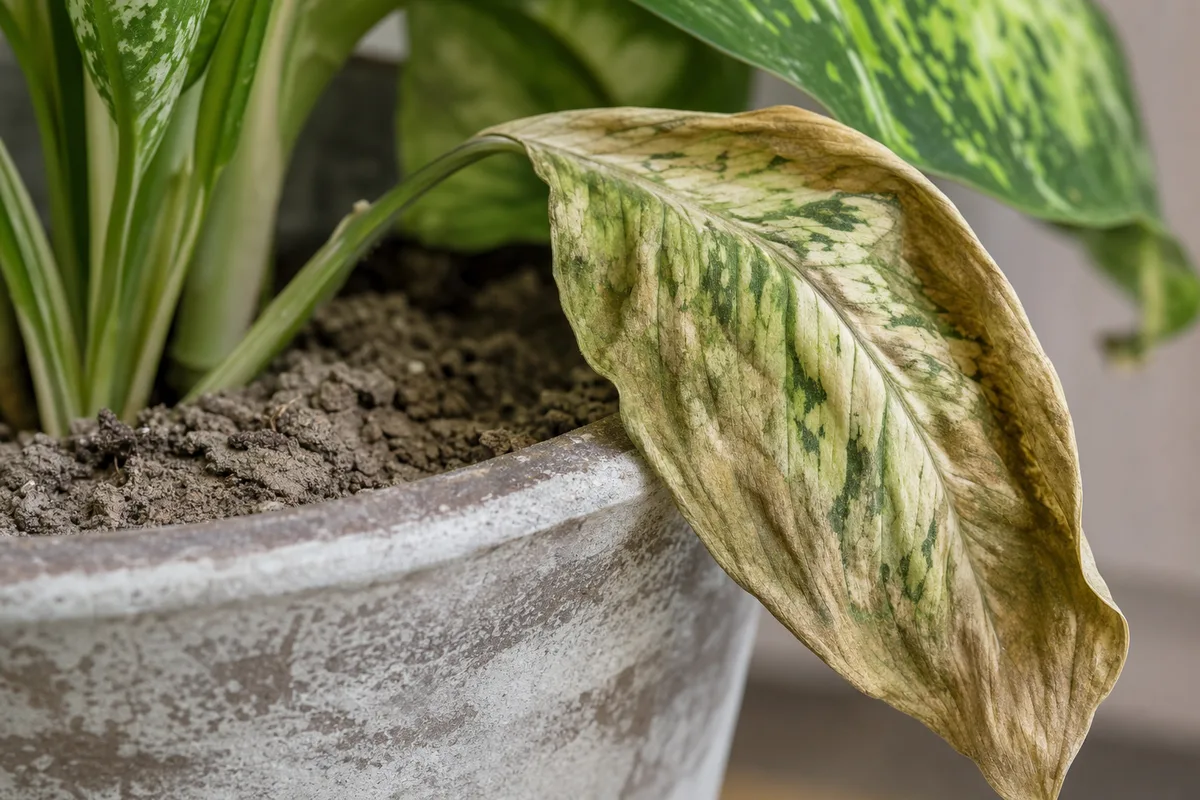
Underwatering symptoms on Dieffenbachia Camille - compare with healthy tissue on the same plant.
- Drooping or limp leaves that hang down from the petioles instead of standing at their usual angle - droopy leaves on dieffenbachia are often caused by too little water
- Dry, lightweight pot that feels noticeably lighter than right after watering
- Mix pulled away from the pot edge, leaving a gap between soil and container
- Crispy brown tips or patches on the cream variegation, often before green margins show damage - overlaps with brown tips when fluoride or low humidity share blame
- Thin, papery lower leaves that yellow and drop after repeated dry cycles
- Slowed or stalled new growth at the crown when drought persists for weeks
Unlike overwatering, stems usually stay firm and green, and the soil smells earthy rather than sour. Roots, if you unpot to check, should be pale and firm-not dark, mushy, or smelly.
Camille’s variegation adds a wrinkle: the pale center panels can crisp in dry winter air even when roots are only slightly behind on water. If edges brown but the pot still feels heavy and damp, low humidity may share blame. When the mix is dry several inches down and the pot is light, underwatering is the primary suspect.
Original symptom photos showing a light dry pot with pulled-away mix and cream-panel crisping are pending for a future update.
Why Dieffenbachia Camille gets underwatered
Dieffenbachia evolved in humid tropical forests and prefers consistently moist, well-drained soil-not bone-dry periods followed by panic watering. NC State Extension recommends watering thoroughly and allowing the top 1-inch surface to dry completely before watering again. Camille is a compact cultivar with cream-heavy leaves that transpire steadily in bright filtered light. When water intake falls behind, the showy foliage is the first place stress appears.
Camille vs. all-green dumb cane in the same window
In identical light and pot size, solid-green dumb cane typically dries the mix faster than Camille because more chlorophyll drives transpiration-so an all-green neighbor may need water a day or two sooner on the same shelf. Camille’s cream-centered panels carry less chlorophyll per leaf area, which slows water use in dim corners but speeds visible crisping on pale tissue when drought does arrive. Do not copy the green plant’s calendar; check Camille’s pot on its own dry-down cycle. For shared dumb-cane biology, see the genus underwatering guide.
Common Camille-specific triggers:
- Calendar watering in winter while the plant still sits in a bright window-evaporation continues even when growth slows
- Fear of overwatering after a past root-rot scare, leading to long dry stretches-see overwatering for the wet-soil branch
- Small pots on sunny stands that lose moisture in a few days during summer
- Hydrophobic old mix that repels surface water while the center stays dry
- Heating vents or dry winter air increasing water loss from cream panels faster than roots are replenished
- Root-bound pots where the crowded root ball dries out unevenly between drinks
- Terracotta in bright light - porous clay pulls moisture from the mix faster than plastic; a Camille in a 6-inch terracotta pot on a west window may need water every five to seven days in summer, while the same plant in plastic may stretch toward seven to ten days
- Plastic in dim corners - non-porous sides slow surface dry-down; the top inch can look damp while the root ball center has been dry for days-always probe depth, not just the surface crust
Camille stores some moisture in its thick cane, so the plant can look acceptable above soil while roots are already stressed below. By the time every leaf droops, drought may have been building for one or two missed cycles-not just one skipped watering.
Lookalike symptoms to rule out
| What you see | Likely cause | Quick check | Urgency |
|---|---|---|---|
| Limp leaves, light dry pot, crispy cream edges | Underwatering | Soak once; firm cane, dry mix throughout | Routine - water when top inch dries |
| Limp leaves, heavy wet pot, yellow lower leaves | Overwatering or root rot | Stop watering; inspect roots if sour smell or soft cane | Same day if cane base softens |
| Crispy cream margins, firm roots, correct moisture | Low humidity | Hygrometer at canopy; do not drench for humidity alone | Low - humidity fix |
| One or two yellow bottom leaves, otherwise perky | Normal old-leaf drop | Balanced moisture; see yellow leaves | Low - monitor |
| Sudden droop near AC vent or cold window | Cold draft stress | Move plant; check soil before watering | Within 24 hours if soil is dry |
| Leggy pale growth, slow surface dry-down | Not enough light | Fix placement first-more water will not replace light | Medium - light before water |
| Gradual sag over days | Drooping leaves overlap | Pot weight and one-inch probe decide drought vs. rot | Check today |
How to confirm the cause
Underwatering and root rot both cause wilting on dumb cane, but they need opposite responses. Dry soil can cause wilting while wet soil with damaged roots produces a similar limp look. Work through the six-step check at the top before you pour:
- Finger test at one inch - Push your finger one inch deep near the pot edge. Bone dry with a light pot supports drought. Cool, clinging soil with a heavy pot points away from underwatering.
- Pot weight - Lift the container. A dramatic weight drop since the last watering means the root zone has used available moisture.
- Stem firmness - Camille stems should feel solid. Soft, collapsing tissue at the base with wet soil suggests rot, not thirst.
- Smell - Earthy dry soil fits drought. A sour or swampy odor from wet mix does not.
- Leaf texture - Underwatered leaves feel thinner or slightly leathery; overwatered leaves may yellow while still soft with wet soil.
- Recovery test - After one thorough soak, underwatered Camille often perks within hours to one day - water when the soil surface is dry to the touch and drooping typically eases once roots rehydrate. If leaves stay limp while soil stays soggy, inspect roots before watering again.
If only the cream margins are crisp but the top inch is still damp, check humidity and placement near vents before assuming the plant needs more water.
Recovery case note
A compact Camille in a 6-inch plastic pot on a bright east windowsill above a floor register showed mix pulled from the rim and every leaf collapsed after two missed waterings in mid-January. Bottom-soak in a sink for forty-five minutes brought leaves upright in about twenty hours; the first clean cream-centered unfurl appeared twelve days later. The fix was one deep drink plus moving the pot six inches off the direct heat draft-not fertilizer or Dieffenbachia Camille repotting guide on day one.
First fix for Dieffenbachia Camille
Soak the root ball once, thoroughly, when the top inch is dry and the pot is light.
Place the pot in a sink or use a watering can to wet the mix slowly until water runs freely from the drainage holes. Empty the saucer within thirty minutes. If water races through and the surface barely darkens, the mix may be hydrophobic-set the pot in a tray of water for thirty to forty-five minutes so moisture wicks up from the bottom, then let excess drain.
That single deep drink is the correct first action. Do not follow with fertilizer, pruning every damaged leaf, or repotting on the same day.
Cachepot trap: If Camille sits in a decorative outer sleeve, lift the inner nursery pot when you soak. Standing water trapped in the outer pot after recovery watering can swing you toward overwatering within days.
Step-by-step recovery
After the initial soak, stabilize care in this order:
- Let the plant drain completely - Never leave Camille sitting in a full saucer or cachepot of runoff.
- Wait for the top inch to dry - Before the next watering, confirm dryness at depth, not just a pale surface crust.
- Adjust rhythm to your room - Bright sheer-curtained windows and small plastic pots may need water every seven to ten days in summer; terracotta in the same light may need five to seven days. Low light and cool winter rooms may stretch toward two or three weeks-but only when the inch is actually dry.
- Address hydrophobic mix if needed - If water repeatedly channels through dry pockets, bottom-water twice in one session or repot into fresh well-draining mix with perlite when the plant has recovered-wear gloves because Dieffenbachia sap is irritating.
- Raise humidity if cream panels crisp - A humidifier or pebble tray helps leaf edges when indoor air is dry, but humidity does not replace root-zone moisture.
- Trim only fully dead tissue - Snip brown crispy tips or yellow papery leaves with gloved hands once new growth looks stable; living green tissue may still photosynthesize. Keep trimmed leaves away from pets-Dieffenbachia is toxic to cats and dogs if chewed.
- Hold fertilizer - Rehydrate first. Feeding drought-stressed roots can burn tender regrowth.
Recovery timeline
Mild dehydration often shows improvement within hours to twenty-four hours after a proper soak-leaves should feel turgid and stand higher.
Moderate drought with several yellowed lower leaves may take one to two weeks before new growth at the crown looks normal. Those yellow leaves will not green up again; they can be removed when the plant is stable.
Severe or repeated underwatering that damaged fine roots can stall recovery for several weeks. Watch for new unfurling leaves as the real success marker, not old blemished panels.
Worsening signs: continued collapse after a thorough soak with dry soil, stems softening at the base, or spreading yellowing with damp mix-those suggest root damage or rot and need inspection, not more blind watering.
What not to do
Do not mist leaves instead of soaking soil-roots need soil moisture; misting only raises surface humidity briefly. Avoid daily shallow splashes that wet the top while the center stays dry. Do not drench on a calendar when the top inch is still damp; that swings toward overwatering.
Do not fertilize a dry Camille to “perk it up.” Do not repot immediately unless the mix is clearly hydrophobic and failing-recovery comes from even moisture first.
Because Dieffenbachia sap contains calcium oxalate crystals that irritate skin and mucous membranes, wear gloves when trimming damaged leaves and wash hands after handling the plant. Keep the plant out of reach of pets and children who might chew fallen leaves.
How to prevent underwatering on Dieffenbachia Camille
Match drinks to how fast your pot dries in your light-the same top-inch dry rule detailed in the watering guide. Camille prefers evenly moist, well-drained soil, meaning a full soak followed by enough dry-down for roots to breathe before the next drink.
Practical prevention:
- Check every three to four days during active growth; less often in cool, low-light winter if the inch stays damp longer
- Match water to placement - Brighter windows, terracotta, and smaller pots dry faster; adjust accordingly
- Use pots with drainage holes and empty saucers after watering; lift cachepots to confirm no standing water
- Refresh peat-heavy mix that has gone hydrophobic after years in the same pot
- Rotate the plant weekly so variegated leaves do not lean and dry unevenly toward the window
- Watch cream panels in winter - Dry indoor air plus missed waterings double stress on pale tissue
When Camille stays upright, new leaves unfurl with clean cream centers, and the pot weight follows a predictable wet-to-light cycle, your rhythm matches what this cultivar needs indoors.
When to worry
Escalate immediately if every leaf has collapsed, the mix has pulled away from the pot sides, or the plant sat dry in hot bright light for more than a week-severe drought can kill fine roots and a slow bottom soak is safer than repeated surface splashes.
If leaves stay limp after a thorough soak while soil remains soggy, stop watering and route to root rot inspection-panic rehydration on a previously dry plant can overlap with rot when drainage is poor.
One crispy lower leaf on an otherwise firm plant with appropriate dry-down can wait for the next scheduled check.
Related Dieffenbachia Camille problems
- Overview - baseline light, water, and toxicity for Camille
- Watering - top-inch dry rhythm and seasonal ranges
- Overwatering - wet soil wilt lookalike
- Root rot - soft cane plus damp mix
- Low humidity - cream-edge crisping with correct moisture
- Brown tips - fluoride and edge burn overlap
- Drooping leaves - gradual sag symptom overlap
- Wilting - limp leaves with different soil clues
- Genus underwatering - shared dumb-cane drought biology
Conclusion
Underwatered Camille forgives a missed drink far more willingly than a wet, shaded pot-but only if you soak once when the top inch is dry and the pot is light, then match the next drink to how your container actually dries. Crisp cream with dry mix → thorough soak, not misting. Crisp cream with damp mix → humidity or placement, not another drench. Limp leaves with wet heavy soil → overwatering or root rot, not thirst. Judge success by upright leaves within a day and clean new cream-centered growth at the crown-not by old brown panels that will never re-green.
FAQs
Why do only the cream centers on Camille crisp while the green margins stay fine?
Pale center panels transpire faster in dry winter air and show brown patches before all-green tissue fails. If the top inch is still damp and the pot feels heavy, low humidity-not root drought-is the likelier cause; see the low-humidity guide. True underwatering pairs crisp cream with bone-dry mix several inches down and a noticeably light pot.
What should I check first when Camille leaves droop?
Check soil moisture at one inch depth and compare pot weight before adding water. Camille wilts from both drought and root rot, but drought comes with dry mix and a light pot while rot keeps soil damp and stems may soften at the base.
Will crispy Dieffenbachia Camille leaves recover after underwatering?
Brown or crispy tissue on cream panels will not turn green again. Recovery shows as leaves that stand upright within hours to a day after a proper soak, plus firm new growth at the crown over the following weeks.
Can missed winter watering near a heater kill my Camille?
A Camille on a sunny windowsill above a heat register can lose moisture from cream panels faster than roots are replenished-two skipped waterings in January often collapse every leaf even though the cane still feels firm. Bottom-soak forty-five minutes once the top inch is dry, then move the pot off the direct heat draft while it recovers.
How do I prevent underwatering on Dieffenbachia Camille?
Water when the top inch of mix dries, adjust for season and light, and never rely on a fixed calendar alone. Camille in a bright window or small pot dries faster than the same plant in low light-check the pot every few days during active growth.
When to use this page vs other Dieffenbachia Camille guides
- Dieffenbachia Camille watering guide - Use for routine moisture checks before assuming underwatering is the main issue.
- Dieffenbachia Camille problems hub - Browse all 16 common issues on this species.
- Wilting on Dieffenbachia Camille - Different entry point when symptoms overlap with underwatering.
- Brown Tips on Dieffenbachia Camille - Different entry point when symptoms overlap with underwatering.
- Yellow Leaves on Dieffenbachia Camille - Different entry point when symptoms overlap with underwatering.
Related Dieffenbachia Camille guides
- Dieffenbachia Camille overview
- Dieffenbachia Camille watering
- Dieffenbachia Camille light
- Dieffenbachia Camille soil
- Wilting on Dieffenbachia Camille
- Brown Tips on Dieffenbachia Camille
- Yellow Leaves on Dieffenbachia Camille
- Overwatering on Dieffenbachia Camille
- Drooping Leaves on Dieffenbachia Camille
- Dieffenbachia Camille problems