Drooping Leaves on Dieffenbachia Camille: Causes, Checks &
Quick answer
Drooping on Dieffenbachia Camille usually means overwatering or root stress, underwatering after dry-down, cold below 60°F, or weak light in a dim room. First step: check soil moisture and stem firmness at the base-wear gloves when handling cut tissue.
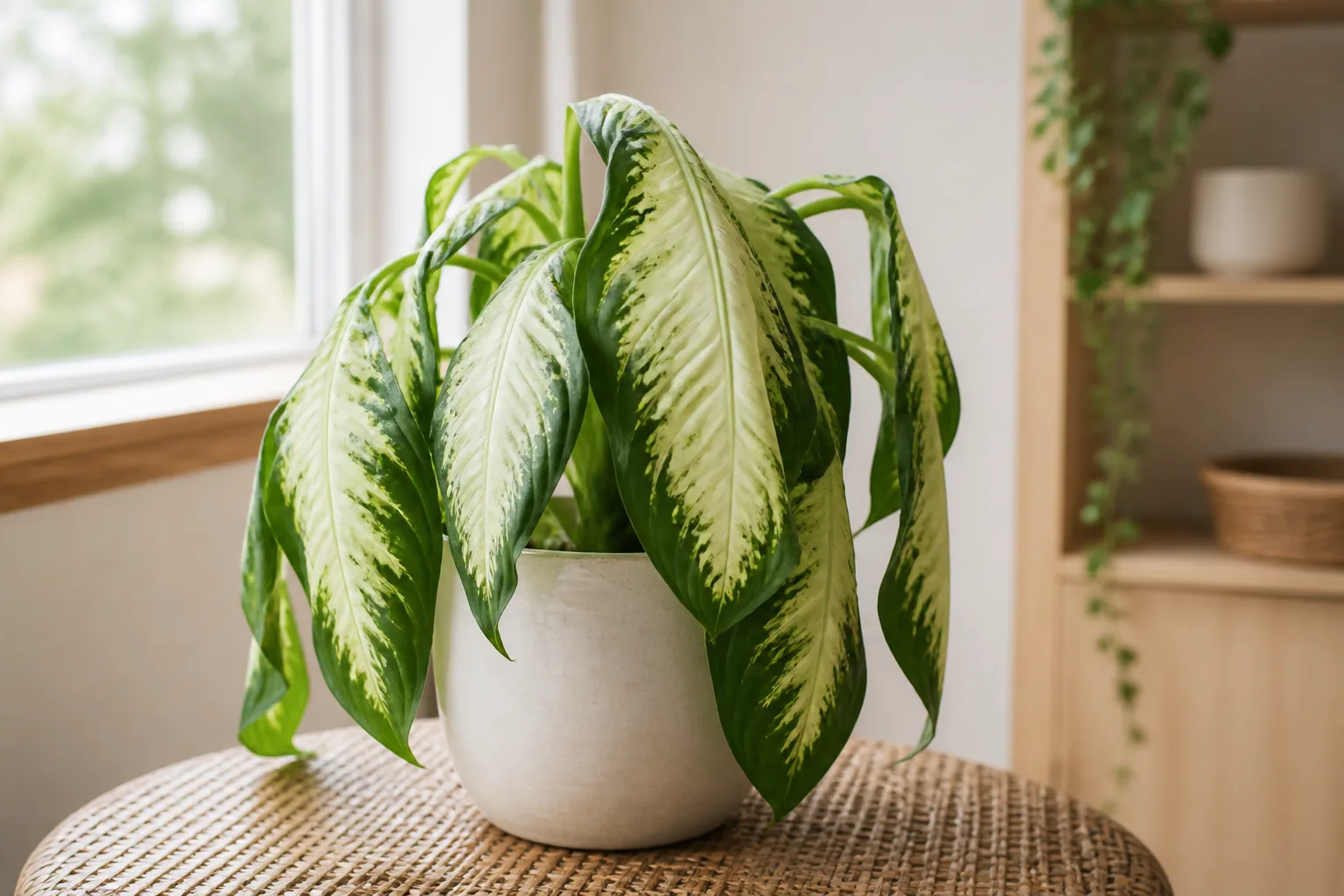
Drooping Leaves on Dieffenbachia Camille: Causes, Checks & Fixes
This guide covers drooping leaves on Dieffenbachia Camille. See also the general Drooping Leaves guide, watering, and light pages for this plant.
Drooping Leaves on Dieffenbachia Camille: Causes, Checks & Fixes
Quick answer
Drooping leaves on Dieffenbachia Camille (Dieffenbachia seguine ‘Camille’) mean the cane lost turgor-internal water pressure-before you have a final diagnosis. On this cream-centered cultivar, droop shows up fast because pale leaf panels carry less chlorophyll and the thick cane stores less reserve than taller all-green dumb cane types.
The most common indoor causes are overwatering or root rot, underwatering after the mix dried too far, cold drafts below about 60°F (15°C), and low light in a dim room where soil stays wet too long. Less often, recent Dieffenbachia Camille repotting guide or a sudden move to harsh sun triggers temporary collapse.
First step: check soil moisture one inch deep and squeeze the lowest inch of cane above the soil line. Firm stems with dry mix → water thoroughly. Soggy mix with soft base → stop watering and inspect roots. Wear gloves when removing limp leaves-Dieffenbachia sap contains calcium oxalate crystals that irritate skin and are toxic if chewed by pets or children.
What drooping looks like on Dieffenbachia Camille
Healthy Camille holds its broad cream-and-green leaves at a slight upward angle from upright cane segments. When drooping starts, entire leaf blades hang downward and petioles lose stiffness. The pattern tells you which stressor to test first.
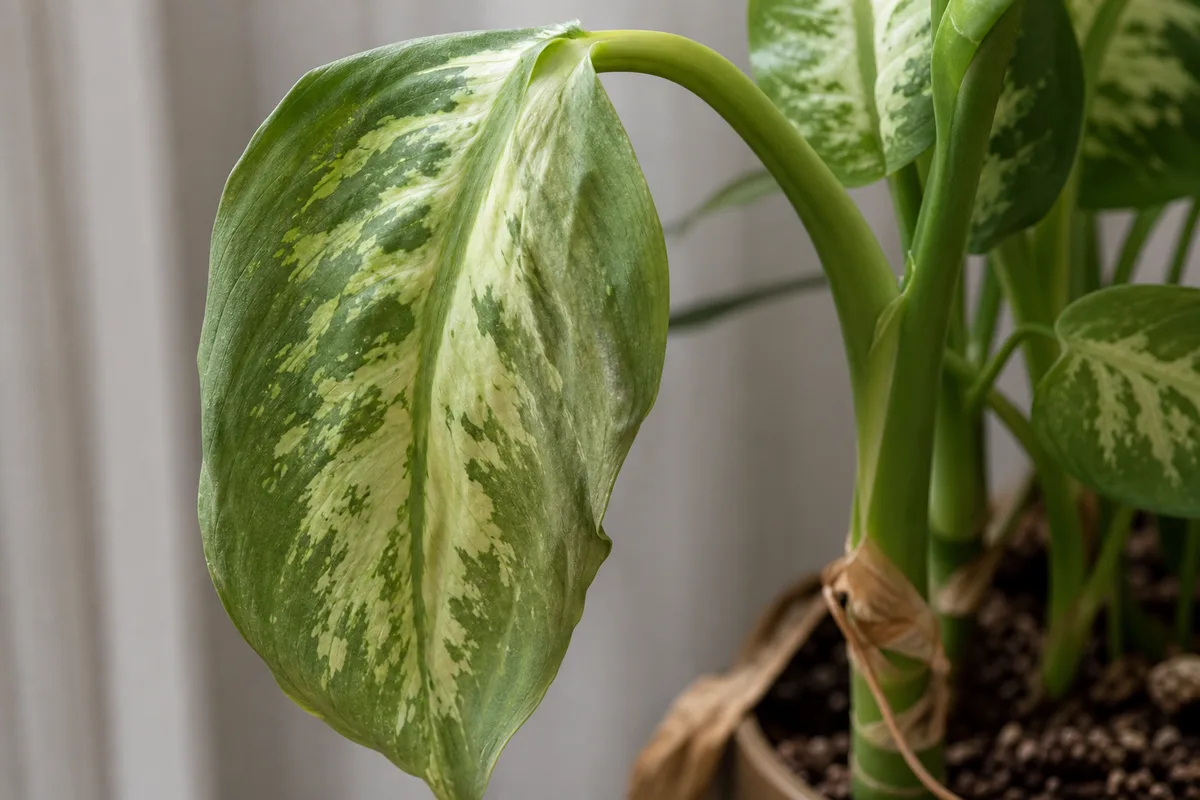
Drooping Leaves symptoms on Dieffenbachia Camille - compare with healthy tissue on the same plant.
Whole-cane limpness - Every leaf on one stem segment droops together while the cane still feels firm. Common with underwatering, cold shock, or recent repot stress. Cream center panels may look slightly dull before green margins show damage.
Lower-leaf droop only - Bottom leaves sag while the crown stays upright. Often pairs with natural aging, early overwatering, or cold exposure on outer leaves near a window. Yellowing may follow on the same leaves-see yellow leaves on Dieffenbachia Camille.
Top-heavy collapse - Newest leaves and upper petioles go limp while lower foliage still looks normal. Points to root failure from chronic wet soil-the plant cannot supply water to new growth even though mix feels damp. Escalate to root rot checks.
One-sided droop - Leaves on the window side limp after a cold night on the sill, or the side facing an AC vent collapses first. Draft and temperature stress, not uniform thirst.
Dry-pot limp - Mix is light brown throughout, pot feels feather-light, but stems stay firm and green. Classic underwatering. Camille in bright light can reach this state in a few days in summer; in winter a missed dry-down cycle on a table away from the window is a frequent Camille-specific trigger.
Why Dieffenbachia Camille gets drooping leaves
Overwatering and root rot
Dieffenbachia roots need moisture and oxygen at the same time. When soil stays saturated for days, roots suffocate, turn mushy, and stop absorbing water. Leaves droop despite wet mix because damaged roots cannot move water upward-a pattern Clemson HGIC links to poor drainage and overly frequent watering.
Camille in low light dries its pot slowly, so the same weekly watering habit that works in summer can leave dim-corner soil soggy through winter. Cream variegation does not forgive that pattern; the cane goes limp before lower leaves turn yellow. Full workflow: overwatering on Dieffenbachia Camille.
Underwatering
Allowing the entire root ball to dry out-or watering only the surface while the center stays dust-dry-drops turgor fast. Missouri Botanical Garden recommends letting the top inch of soil dry between waterings for dumb cane, then soaking thoroughly. Camille’s thick cane stores some moisture, so droop can appear suddenly after one long dry spell rather than gradual yellowing. See underwatering.
Cold drafts and temperature swings
Dieffenbachia is tropical. Clemson HGIC lists ideal household temperatures from 60 to 75°F and warns to protect plants from cold and major temperature changes. NC State Extension notes cold damage below about 60°F stalls growth and stresses foliage.
Winter window sills, AC vents, and exterior doors create the cold + wet soil combo common on office and dining-table Camille placements: roots slow in chill while mix stays damp from reduced evaporation, and the whole cane limps within a day.
Low light with slow dry-down
Camille tolerates lower light than it needs for crisp variegation, but dim conditions slow transpiration. Soil stays wet longer between your usual waterings, mimicking overwatering stress without you adding extra cups. Long petioles and pale new leaves often accompany the droop-cross-check the light guide and not enough light page.
Repotting shock and recent moves
Fresh repotting disturbs fine roots; temporary droop for one to two weeks is normal if stems stay firm and mix is neither bone-dry nor sour. A sudden move to direct afternoon sun can also collapse leaves through scorch and rapid water loss-filter light before assuming root disease.
Drooping vs. wilting - when it is a different problem
Both symptoms mean lost turgor, but the timeline and soil context differ.
Drooping on Camille often develops over days as care drifts-chronic wet feet, slow underwatering, or a drafty winter spot. Leaves hang but may stay fully green initially. Petioles feel soft; blades point down.
Wilting tends to look more dramatic and uniform-every leaf on the plant collapses quickly, sometimes within hours. Severe underwatering, heat shock, or advanced root failure can present as wilt. If the whole plant looks flaccid overnight with no obvious cold event, read wilting on Dieffenbachia Camille for the acute-collapse branch.
When droop pairs with yellow lower leaves and sour soil, treat as root stress first-not a separate wilting disease.
How to confirm the cause
Work through this checklist in order. Stop when one branch clearly matches-do not stack fixes.
- Soil moisture at one inch - Dry and crumbly with a light pot → underwatering track. Cool, clinging damp with heavy pot → overwatering track. Probe depth, not just surface color.
- Cane firmness at soil line - Soft, dark, or indented base with wet mix → root rot urgency. Firm green cane → reversible water or temperature stress.
- Pot weight - Lift after watering once to learn the heavy feel. A wilted-looking Camille in a heavy pot is rarely thirsty.
- Temperature scan - Thermometer or hand test near leaves. Below 60°F (15°C) overnight on a window ledge explains limp leaves with otherwise adequate moisture.
- Light context - Beyond 1–1.5 meters (3–5 feet) from glass with wet soil weeks after watering → low-light overwatering pattern. Indoor light falls sharply with distance from windows.
- Which leaves droop - Lower only vs. whole cane vs. crown-first. Crown collapse with wet soil is root failure, not aging.
- Recent care timeline - Repotted, moved, or fertilized in the last two weeks? Temporary droop may need stability, not root surgery.
- Smell and drainage - Sour mix, standing water in saucer, or no drainage holes confirms chronic saturation.
- Pest scan - Mealybugs and spider mites are less common droop causes but worth a quick axil check before repotting.
First fix for Dieffenbachia Camille (by likely cause)
Make one primary change, then wait 24–72 hours before adding more treatments.
If soil is dry and the cane is firm: Water thoroughly until runoff drains from the bottom, empty the saucer within thirty minutes, and recheck turgor in six to twelve hours. Severe dryness may need a ten-minute bottom soak. Full rhythm: watering guide.
If soil is wet and the base is soft: Stop watering immediately. Slide the plant out, trim brown mushy roots with clean shears (gloves on), repot into fresh well-drained mix, and place in bright filtered light-not a dark corner. Details: root rot and overwatering.
If cold draft is the trigger: Move off the sill or away from the vent into a stable 65–80°F (18–27°C) spot. Do not water extra “to warm it up” when mix is already damp-UConn notes Dieffenbachia prefers evenly moist soil in bright filtered light at roughly 65–75°F.
If low light keeps soil wet: Improve filtered brightness first-east window or sheer-curtained south or west glass-then adjust watering to the top-inch dry rule. Brighter placement often fixes droop without repotting.
If repot shock: Hold a consistent moisture rhythm, avoid fertilizer, and keep bright indirect light. Firm stems should recover without another disturbance.
Recovery timeline
Simple underwatering: Leaves often firm within 6–24 hours after a full soak if roots are healthy.
Cold draft: Recovery in 2–5 days after relocation if tissue has not turned black or mushy. Blackened leaves will not green up-remove them with gloves.
Overwatering caught early: Pause water, improve light and drainage; cane may stiffen in one to two weeks. New upright leaf from the crown confirms roots are working again.
Root rot after trimming: Three to six weeks before trustworthy new growth; some lower leaves drop permanently.
Old drooped leaves: Damaged petioles rarely return to their original angle. Judge progress by new firm leaves, not old ones.
Worked example: A Camille on a winter window sill drooped after two nights below 55°F with damp soil. Moved to a table 1 meter back from the same window, saucer emptied, no extra water for ten days. Cane firmed in four days; a new leaf opened upright three weeks later.
What not to do
Do not water on schedule when droop appears-always read moisture and stem firmness first. Overwatering wet soil is a common mistake when leaves look tired.
Do not repot into a larger pot while soil is soggy-that traps more moisture around stressed roots.
Do not fertilize a drooping Camille to perk it up. Feed only after turgor returns and new growth is active.
Do not remove every limp leaf the first day-wait to see which tissue recovers, and wear gloves when cutting because of sap irritation.
Do not stack repotting, pruning, and pesticide on the same day. Make one care correction at a time so you can read the plant’s response.
Safety: gloves, sap, and pets
All Dieffenbachia parts contain calcium oxalate-sap from cut or broken petioles irritates skin and causes severe mouth and throat burning if ingested. ASPCA lists Dieffenbachia as toxic to cats and dogs.
Wear gloves when removing drooping leaves, inspecting roots, or wiping sap from surfaces. Keep fallen leaves away from pets and small children. Wash tools and hands after handling. This is especially relevant on Camille because limp leaves often break off when the plant is moved for diagnosis.
How to prevent drooping leaves next time
Match everyday care to how Camille actually dries in your room:
- Watering: Top inch dry between thorough soaks; slower rhythm in winter and dim light per the watering guide.
- Light: Bright filtered light so cream variegation holds and soil cycles properly-see light requirements.
- Temperature: Keep above 60°F; no winter sill contact with cold glass.
- Drainage: Pot with holes; empty saucers after every water.
- Rotation: Quarter-turn every few days for even growth per UF/IFAS Dieffenbachia guidance.
Weekly finger checks catch droop while stems are still firm-Camille shows stress on leaves before the cane collapses if you catch the pattern early.
When to worry - crown softening and root rot
Escalate immediately when:
- The cane base feels mushy or hollow above the soil
- Sour smell rises from mix despite dry surface
- Every leaf droops within 48 hours while soil stays wet
- New crown leaves collapse before older lower leaves
- Black or water-soaked patches spread after cold exposure
Those patterns point to crown or root rot-not reversible thirst. Inspect roots, trim damage, repot dry, and accept that severely rotted cane may not recover. When multiple symptoms overlap, start from the Camille overview and linked problem pages below.
Lookalike symptoms
| What you see | Likely cause | First direction |
|---|---|---|
| Light pot, dry inch, firm cane | Underwatering | Thorough soak; underwatering |
| Heavy pot, wet inch, soft base | Overwatering / root rot | Pause water; overwatering, root rot |
| Limp after cold night, damp soil | Cold draft | Relocate; no extra water |
| Whole plant limp in hours | Acute wilt / severe thirst | Wilting |
| Lower leaves droop then yellow | Aging or root stress | Yellow leaves |
| Long stems, pale cream, wet soil | Low light + overwatering | Not enough light, brighter spot |
Related Dieffenbachia Camille problems
- Overwatering - wet-soil droop and saucer mistakes
- Root rot - soft cane base and sour mix
- Wilting - sudden whole-plant collapse
- Underwatering - dry pot with firm stems
- Yellow leaves - lower-leaf drop after droop
- Not enough light - dim-room wet feet
- Watering - top-inch dry rhythm
- Light - variegation and placement
- Camille overview - cultivar baseline and care hub
When to use this page vs other Dieffenbachia Camille guides
- Dieffenbachia Camille watering guide - Use for routine moisture checks before assuming drooping leaves is the main issue.
- Dieffenbachia Camille problems hub - Browse all 16 common issues on this species.
- Underwatering on Dieffenbachia Camille - Different entry point when symptoms overlap with drooping leaves.
- Overwatering on Dieffenbachia Camille - Different entry point when symptoms overlap with drooping leaves.
- Root Rot on Dieffenbachia Camille - Different entry point when symptoms overlap with drooping leaves.