Mold on Soil on Dieffenbachia: Causes, Checks & Fixes
Quick answer
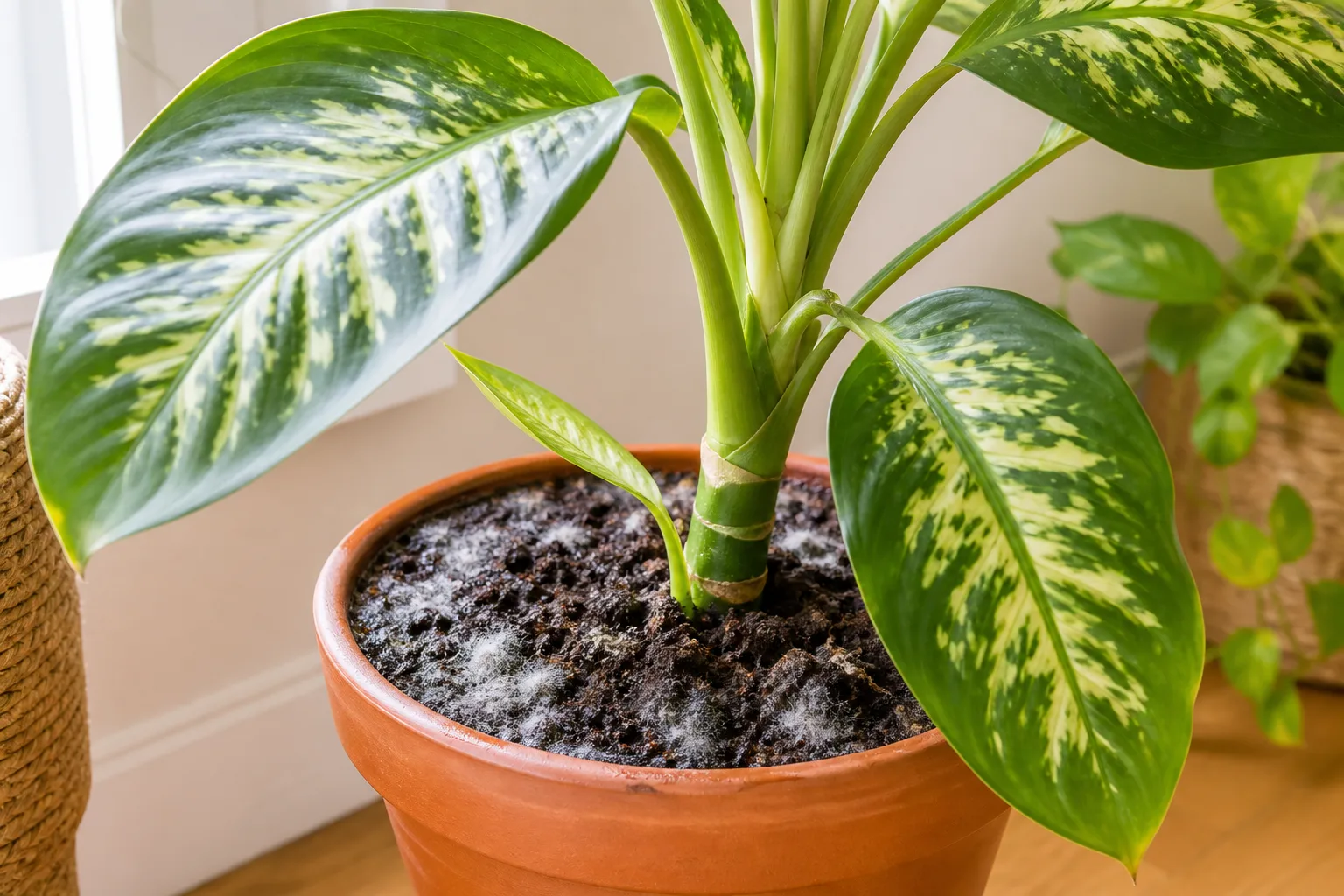
Fluffy white or gray mold on Dieffenbachia's soil is usually harmless saprophytic fungus feeding on wet organic matter-not a leaf disease. First step: scrape the surface mold off, then stop watering until the top inch of mix is dry.
Mold on Soil on Dieffenbachia: Causes, Checks & Fixes
This guide covers mold on soil on Dieffenbachia. See also the general Mold on Soil guide, watering, and light pages for this plant.
Mold on Soil on Dieffenbachia: Causes, Checks & Fixes
Scope: This page covers surface mold on potting mix-the white or gray fuzz that appears when the top layer stays wet. If your cane base is already soft, lower leaves are yellowing in clusters on wet soil, or the mix smells sour, open the root rot guide instead. For chronic wet-soil stress before roots decay, see overwatering. Grow a compact Camille or variegated Tropic Snow cultivar? Those pages add compact-form and dim-light drying differences.
Quick answer
White or gray fuzz on Dieffenbachia potting mix is almost always saprophytic mold-a fungus breaking down organic matter in soil that stays wet at the surface. It looks alarming on a plant with large tropical leaves, but it is not the same as a leaf disease attacking living tissue.
First step: scrape off the visible mold and any loose, damp debris on top, then stop watering until the top inch of mix feels dry. Dieffenbachia stores moisture in its thick cane and prefers steady humidity, so owners often keep the root zone wetter than the plant needs. Surface mold is the early warning that moisture and airflow at the pot rim are out of balance-fix that before reaching for fungicide or repotting.
Humid air ≠ saturated roots. Dieffenbachia likes moisture in the air around its leaves, not a permanently wet soil surface. That distinction is the most common reason mold returns after scraping alone.
What mold on soil looks like on Dieffenbachia
On Dieffenbachia (Dieffenbachia spp., dumb cane), surface mold usually appears as:
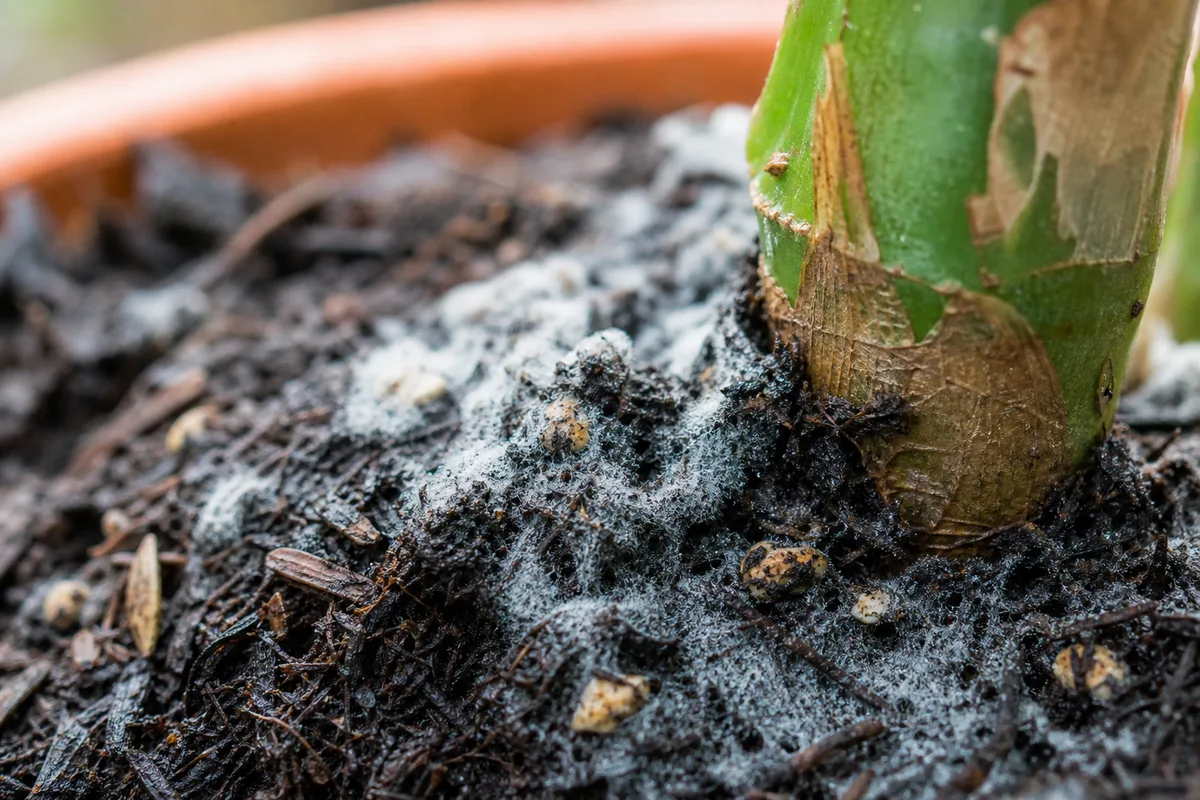
Surface mold on wet dieffenbachia potting mix - scrape the top layer and let the top inch dry before the next drink.
- White, gray, or occasionally yellowish fuzzy patches on the top of the potting mix
- Soil that looks dark and stays damp for several days after you water
- A musty smell when you lift fallen leaves off the soil
- Small flies hovering near the pot base when fungus gnats share the same wet habitat
The plant itself may look fine. Large variegated leaves can stay upright and glossy while only the soil surface changes. That is typical of saprophytic fungi, which feed on dead organic matter rather than living leaves or stems.
Mold often shows up where Dieffenbachia’s growth habit creates extra food on the soil. Lower leaves naturally senesce as the cane elongates, and those broad leaves fall onto the mix and hold moisture against the surface. If you mist heavily or water over the foliage, drips and debris collect around the crown and decay there.
Not mold: Green slick algae on the pot rim in very low light; powdery white patches on leaf surfaces (different problem); water-soaked brown leaf spots with yellow halos (bacterial or fungal leaf disease, not soil fuzz).
Photo check (what to compare at home): Surface mold = fluffy white-gray fuzz on damp soil with a firm green or tan cane at the soil line. Cane rot = soft, sunken, yellow-brown tissue at the base with sour-smelling wet mix. You do not need a microscope-press the lowest inch of cane gently with a gloved finger.
Why Dieffenbachia gets mold on soil
Dieffenbachia is a medium-water tropical foliage plant that likes humidity but still needs the root zone to breathe between drinks. Missouri Botanical Garden recommends allowing soils to dry between waterings and reducing water from fall through late winter-yet the plant’s lush leaves make it easy to assume it wants constant moisture.
The most common chain on Dieffenbachia:
- Surface stays wet too long - watering on a calendar, saucers holding runoff, or heavy peat-rich mix that dries slowly at the top
- Organic debris accumulates - fallen leaves, old bark fines, and top-dressed moss provide food for saprophytic fungi
- Air movement is weak - grouped plants, corners with low airflow, or high humidity trays keep the surface from drying
- Light is softer than the plant needs - in dim spots, Dieffenbachia uses less water, so the same schedule leaves the mix wet longer
University of Maryland Extension notes that fungi on potting media form a white to grayish layer under moist conditions and are usually not detrimental to plants-but excessive growth can crust the surface, interfere with water absorption, and attract fungus gnats.
Dieffenbachia-specific triggers that repeat this pattern:
- Overhead watering that soaks the soil surface every time without letting it dry
- Oversized pots where a modest root ball sits in a large wet zone that never dries at the rim
- Winter watering at summer frequency when growth slows and uptake drops
- Humidity trays or pebble beds kept constantly full, raising moisture around the pot base without increasing root demand
- Cachepots and decorative sleeves - large floor Dieffenbachias often sit in an outer pot with no drainage. Runoff pools at the bottom and wicks back into the mix, keeping the surface damp for weeks even when you think you watered lightly
- Plastic vs. terracotta - unglazed terracotta breathes through the walls and dries the outer rim faster; plastic and glazed ceramic hold moisture longer at the surface. In a cool office with winter AC, a plastic pot on the same schedule as summer can leave the top inch wet for ten days or more
Surface mold does not cause root rot by itself. The shared problem is chronic wetness. Overwatering deprives roots of oxygen, and on Dieffenbachia that can progress to soft stem tissue at the soil line-far more serious than cosmetic mold.
How to confirm the cause
Work through these checks before repotting or spraying:
- Stem firmness at the soil line - Gently squeeze the lowest inch of cane. Firm green or tan tissue with fuzzy soil only = surface mold. Soft, sunken, or yellow base = possible stem rot; unpot and inspect per the root rot guide.
- Top-inch moisture - Stick your finger in. If the surface is wet but an inch down is still saturated days after watering, you are overwatering for current light and season.
- Pot weight - Lift the container. A heavy pot days after watering confirms slow drying; a light pot with surface mold may mean you recently watered an already-wet mix.
- Debris on soil - Peel back any fallen Dieffenbachia leaves. Decaying tissue underneath often explains where mold started.
- Drainage - Confirm holes are open, the saucer is empty 30 minutes after watering, and no cachepot is holding standing water beneath the inner pot.
- Pests - Tap the pot rim. Tiny flies rising suggest fungus gnats sharing wet-soil conditions; they thrive in damp organic mix.
- Leaf pattern - Healthy firm leaves with only soil fuzz points to environmental mold. Rapid lower-leaf yellowing with wet soil and limp stems points to root stress instead.
If stems are firm, roots are not exposed, and smell is earthy rather than sour, you can treat this as a surface moisture problem and skip emergency repotting.
First fix for Dieffenbachia
Scrape off the moldy top layer today, remove fallen leaves and debris, and withhold water until the top inch of mix is dry.
Use a spoon or fork to lift the fuzzy quarter-inch to half-inch of soil and discard it in the trash-not the compost pile indoors. Wear gloves; Dieffenbachia sap can irritate skin. Do not blow mold spores toward your face.
Pet and child safety: Dieffenbachia is toxic to cats and dogs if chewed or ingested. Scraping exposes sap and moldy debris at soil level where curious pets investigate. Bag trimmings immediately, work at a table away from floor-level pets, and wash hands before touching pet bowls or toys.
After scraping:
- Do not water until the top inch feels dry to your knuckle
- Move the pot slightly away from dense plant groupings so air reaches the soil surface
- Empty any standing water in saucers, pebble trays, or cachepot bases
This single step addresses both the visible fungus and the condition that fed it. If the pot is extremely heavy and has smelled sour for weeks, plan a root inspection after the surface dries-but do not repot on day one for mild fuzz alone.
Step-by-step recovery
Once the first fix is done, follow this sequence over the next two to three weeks:
Days 1–3: Dry the surface
Let the top layer dry completely. Dieffenbachia light guide speeds evaporation without scorching Dieffenbachia leaves. A small fan on low across the room-not directly blasting the plant-helps break up stagnant humidity pockets.
Days 3–7: Adjust watering
When the top inch is dry, water thoroughly until a little runs from drainage holes, then empty the saucer. Align with the top-inch dry rule in our Dieffenbachia watering guide-in most homes that means roughly every 7–10 days in active growth and every 14–21 days in cooler months when light and room temperature drop, always confirmed by finger test, not the calendar.
Days 7–14: Refresh the surface if needed
If a thin crust returns, scrape again and top-dress with a small amount of dry, well-draining potting mix mixed with perlite. Breaking up or removing the upper layer of media removes the fungal mat.
If fungus gnats appear
Dry topsoil is your main control. Add yellow sticky traps for adults if flies are annoying. Address gnats and mold together-they share the same wet-soil habitat. See the dedicated fungus gnats guide for escalation steps.
When to repot
Repot only if mold returns within days after you corrected watering, the mix stays waterlogged at depth, or inspection reveals soft brown roots. Choose a pot only one size larger with drainage holes and a light, airy mix with perlite. Follow the repotting guide for mix ratios and timing.
If the cane base softens during recovery
Stop watering immediately. Trim mushy tissue back to firm cane with at least one healthy node, then root the upper section as a cane cutting per our propagation guide. Dieffenbachia roots readily from cane sections when warmth and bright indirect light are adequate-salvage is often possible even when the base has failed, as long as firm tissue remains above the rot line.
Recovery timeline
Surface mold should disappear within a few days of scraping and drying. It should not return within one to two weeks once the top inch reliably dries between waterings.
Case snapshot (observed recovery): A 60 cm Dieffenbachia in a dim corner (plastic pot, no cachepot) showed white fuzz across the top quarter-inch in early March 2026. Owner scraped the surface, removed two fallen lower leaves, and withheld water. Top inch dried by day 4; first careful drink on day 8 after finger check. No mold return through day 14; a new crown leaf unfurled cleanly on day 18. Cane tissue at the soil line stayed firm throughout.
Signs you are on track:
- Soil lightens in color at the surface within 3–5 days
- No new fuzzy patches after two dry-wait watering cycles
- Dieffenbachia holds leaf turgor without wilting
- New leaves unfurl from the top without yellowing
Signs the underlying problem is worsening:
- Cane base softens or smells sour - open root rot
- Lower leaves yellow in clusters while soil stays wet - see yellow leaves and overwatering
- Mold returns within 48 hours of every watering despite surface scraping
- Wilting with wet mix-roots may already be damaged
Damaged lower leaves that yellowed from overwatering will not green up again; judge recovery by firm cane tissue and new top growth, not old blemished foliage.
Lookalike symptoms and when to worry
| What you see | Likely cause | What to do |
|---|---|---|
| White fuzz on soil only; firm cane | Saprophytic mold on wet surface | Scrape, dry top inch, adjust watering |
| Green film on soil in dim corner | Algae from constant surface moisture + low light | Dry surface; slightly brighter indirect light |
| Soft yellow stem at soil line | Stem rot from chronic overwatering | Stop water; unpot, trim rot, repot dry - root rot guide |
| Brown leaf spots with yellow halos | Leaf spot disease, not soil mold | Isolate; improve airflow; remove affected leaves |
| Tiny flies when you water | Fungus gnats in wet mix | Dry topsoil; traps; fungus gnats guide |
Surface mold is rarely urgent on its own. Stem rot is urgent. If the cane feels mushy, treat that immediately-stem cuttings above clean tissue may be the salvage path, but prevention through dry cycles is simpler.
Mistakes to avoid
- Drenching with fungicide for harmless saprophytic mold when drying the soil fixes the problem
- Scraping repeatedly without changing watering-mold will return every time the surface stays wet
- Covering soil with decorative moss or rocks that trap moisture at the rim
- Misting heavily while soil is already wet, especially in closed rooms
- Assuming humidity needs mean wet soil-Dieffenbachia likes humid air, not saturated roots
- Repotting into an oversized container that holds moisture longer and worsens surface wetness
- Leaving the plant in a full cachepot after watering without emptying the outer sleeve
How to prevent mold on Dieffenbachia soil
Long-term prevention ties directly to how this plant is normally grown:
- Water when the top inch is dry, reducing frequency in fall and winter when growth slows - see watering guide
- Remove fallen leaves promptly before they decay on the mix
- Use well-draining potting mix with perlite and a pot with drainage holes sized to the root ball
- Place in medium to bright indirect light so the plant uses water at a steady rate
- Keep gentle airflow around pots; avoid cramming Dieffenbachia into corners with no air movement
- Bottom-water or water at the soil line if overhead watering constantly soaks the surface
- Empty saucers and cachepots after every drink so the bottom of the mix is not re-wicking standing water
Keeping the soil surface free of dead leaves and allowing it to dry between waterings reduces both fungal growth and pest habitat. Treat recurring mold as a moisture audit, not a mystery disease.
Cultivar-specific guides
This page is the genus hub for dumb cane surface mold. Two common cultivars dry at different speeds:
| Cultivar | When to use the cultivar page |
|---|---|
| Dieffenbachia Camille | Compact side-table pots, cream-variegation in dim corners, faster surface wetness on small root balls |
| Dieffenbachia Tropic Snow | Tall floor specimens, heavy variegation, winter office AC slowing dry-down |
If your plant tag matches one of those cultivars and your pot dries slowly despite correct watering, the cultivar page may describe your setup more precisely.
Conclusion
Mold on Dieffenbachia soil is a moisture and hygiene signal, not a reason to panic. Scrape the surface, let the top inch dry, clear debris, and align watering with how fast your pot actually dries in its spot. Firm cane tissue and clean new leaves mean the fix worked. Soft stems, sour smell, or rapid yellowing with wet mix mean look deeper-stem or root rot may already be underway, and surface scraping alone will not save the plant.
Related Dieffenbachia guides:
- Overview - species context and toxicity
- Watering - top-inch dry rhythm and seasonal adjustment
- Overwatering - wet-soil stress before roots decay
- Root rot - mushy cane and root salvage
- Fungus gnats - chronic wet-soil warning sign
- Yellow leaves - lower-leaf yellowing with wet mix
- Repotting - when surface fixes are not enough
- Propagation - cane cutting salvage when the base fails
Revision note (2026-06-17): Added scope banner, internal cross-links, cachepot and pot-material notes, pet-toxicity callout, stem-cutting salvage path, cultivar routing table, date-stamped recovery snapshot, Dieffenbachia-specific FAQs, and on-page authorship per E-E-A-T audit. Original comparison photos pending for a future update.
When to use this page vs other Dieffenbachia guides
- Dieffenbachia watering guide - Use for routine moisture checks before assuming mold on soil is the main issue.
- Dieffenbachia problems hub - Browse all 16 common issues on this species.
- Fungus Gnats on Dieffenbachia - Different entry point when symptoms overlap with mold on soil.
- Overwatering on Dieffenbachia - Different entry point when symptoms overlap with mold on soil.
- Root Rot on Dieffenbachia - Different entry point when symptoms overlap with mold on soil.