Mealybugs on Dieffenbachia: Causes, Checks & Fixes
Quick answer
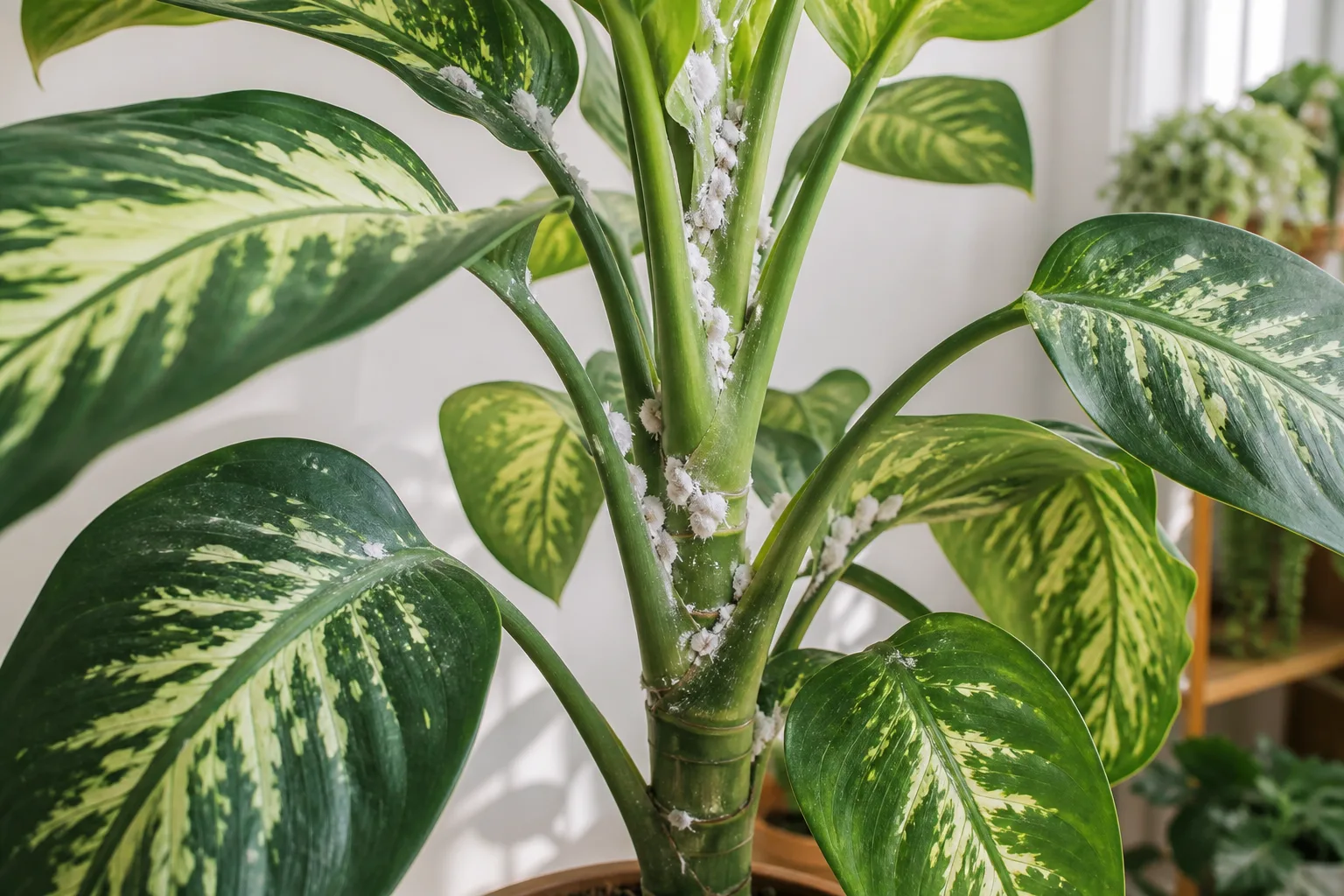
Mealybugs on Dieffenbachia hide in leaf axils and the crown where new leaves unfurl. First step: move the plant away from others and inspect those tight joints with a magnifier before applying any spray.
Mealybugs on Dieffenbachia: Causes, Checks & Fixes
This guide covers mealybugs on Dieffenbachia. See also the general Mealybugs guide, watering, and light pages for this plant.
Mealybugs on Dieffenbachia: Causes, Checks & Fixes
Quick answer
Mealybugs on Dieffenbachia are soft, wax-covered sap suckers that cluster in the protected spots this plant offers-leaf axils, the crown where new leaves emerge, and along bare lower stems on taller specimens. You may notice white cottony patches, sticky honeydew on broad leaves, or yellowing lower foliage before you ever see a moving insect.
First step: isolate the plant and inspect the crown and leaf joints with a magnifier. Dieffenbachia’s large, arching leaves hide colonies in places a casual glance misses. Confirm live mealybugs before reaching for sprays; several lookalikes mimic white fuzz without being pests at all. For species background and toxicity during hands-on cleanup, see the Dieffenbachia overview.
What mealybugs look like on Dieffenbachia
On Dieffenbachia, mealybugs usually show up as white, cottony masses tucked where the petiole meets the main stem, along the central crown, and on the undersides of older leaves near the soil line. UF/IFAS lists cottony masses on stems and leaf undersides as the classic sign on this plant.
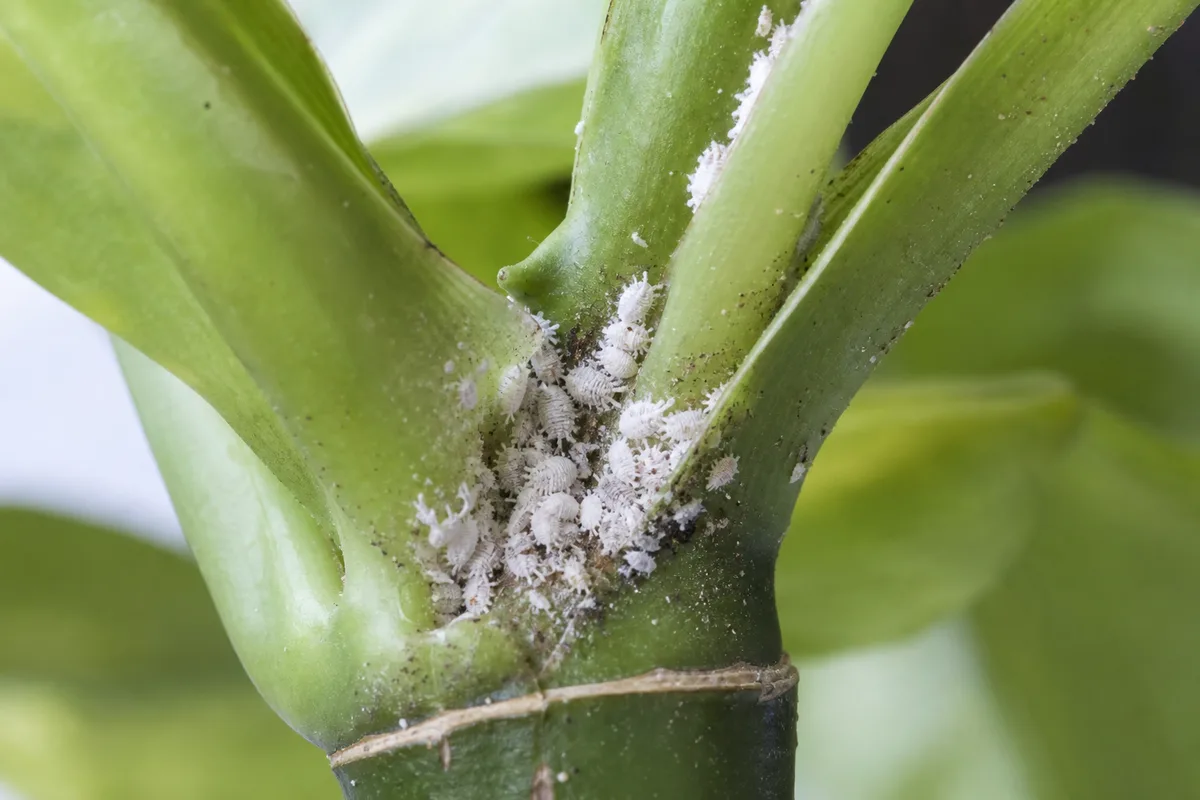
White cottony mealybug colony tucked in a dieffenbachia leaf axil - isolate and inspect the crown with a magnifier before spraying.
Individual insects are small, oval, and coated in wax. Colonies look like bits of cotton wool clumped in a line up the stem. When populations build on Dieffenbachia’s 8–14 inch leaves, you may also see:
- Sticky honeydew shining on leaf surfaces or dripping onto the pot rim-the same residue that drives owners to our aphids guide when the pest species differs
- Black sooty mold growing on that honeydew
- Yellowing or stunted leaves, often starting on lower foliage where pests feed longest-sort against normal yellow leaves aging before you treat
- Ant activity on the pot or saucer, drawn to honeydew
Newly hatched crawlers lack heavy wax and can move briefly before settling-check with a magnifying glass rather than assuming a clean upper leaf means the plant is clear.
Foliar vs. root mealybugs on dumb cane
Most indoor Dieffenbachia infestations are foliar mealybugs-citrus mealybug (Planococcus citri) and longtailed mealybug (P. longispinus) are the species extension services most often find on foliage plants, including Dieffenbachia. They feed at stem tips, leaf junctures, and new growth.
Root mealybugs are a separate escalation path. UF/IFAS MREC notes white cottony masses on roots that may go undetected for months while the plant yellows, wilts, or stalls despite what looks like correct watering. If stems look clean but the dumb cane keeps declining, unpot and inspect the root ball before assuming the problem is overwatering alone.
Why Dieffenbachia gets mealybugs
Mealybugs are not caused by a single care mistake. They arrive on new plants, hitchhike on tools or hands, or spread from an infested neighbor. Once present, Dieffenbachia gives them ideal shelter: wide leaf bases, a dense crown, and upright stems with many joints on mature plants.
Indoor conditions favor them year-round. Plants in greenhouses and homes lack the natural enemies that keep outdoor populations in check, and mild room temperatures let colonies rebuild between treatments.
Dieffenbachia-specific stress can make an existing infestation worse:
- Overwatering or slow-drying mix in low light weakens roots and slows new growth, so the plant has less energy to outgrow damage-see watering rhythm and overwatering signs before blaming pests alone
- Crowded shelves where arching Dieffenbachia leaves touch neighboring pots give crawlers a bridge spider mites use the same way
- Dusty leaf surfaces in dry winter air reduce light capture and leave plants less vigorous
- Recent purchase without quarantine-the top introduction route for indoor mealybugs
High humidity alone does not cause mealybugs, but Dieffenbachia’s preference for around 60% humidity does not repel them either. The issue is shelter plus uninterrupted feeding, not humidity level by itself.
Owners of heavily variegated ‘Camille’ or ‘Tropic Snow’ cultivars may find cream sectors hide early colonies longer than on solid-green types. This genus page covers dumb cane architecture broadly; cultivar-specific visibility notes live on the Camille and Tropic Snow mealybug guides when variegation changes where you look first.
How to confirm the cause
Work through these checks before treating:
- Location on the plant - Mealybugs cluster in joints and protected areas. Random white mineral spots on leaf faces usually wipe off dry; mealybugs stay put and smear when crushed.
- Crush test - Dab a cluster with a dry cotton swab and press. Mealybugs leave a pink or reddish smear; dust, perlite, or dried water spots do not.
- Movement - Disturb a colony gently. Slow crawling or exposed pale nymphs confirm live insects.
- Honeydew pattern - Sticky residue below leaf axils or on the pot rim supports a sap-feeding pest, not a fungal leaf spot.
- Nearby plants - Check plants touching Dieffenbachia or sharing a windowsill. Mealybugs spread before symptoms show on every pot.
- Root zone - If stems look clean but the plant keeps declining, some species feed on roots. Root-feeding mealybugs may not be visible until you unpot.
Confirmed mealybugs mean pest treatment, not a watering or fertilizer adjustment. Yellow lower leaves from normal Dieffenbachia aging drop cleanly without cottony clusters-do not confuse that pattern with heavy feeding damage.
First fix for Dieffenbachia
Move the plant away from other houseplants today.
Place it in a spot with the same light it had before-abrupt moves to dim corners or hot windows add stress on top of pest damage. Once isolated, sit down with a magnifier and map every colony on the crown, leaf axils, and stem joints. That inspection tells you whether you are facing a few dab-and-done clusters or a plant-wide infestation needing repeated sprays.
Do not shower the whole plant, drench with oil, and repot on day one. Isolation plus a thorough hand inspection comes first; secondary treatments depend on what you find.
Step-by-step recovery
After isolation and inspection, work in this order:
- Manual removal - Dab each visible mealybug with a cotton swab dipped in 70% isopropyl alcohol. Alcohol dissolves the wax and kills on contact. Test one leaf first-alcohol can burn foliage on some houseplants, and Dieffenbachia sap is irritating to skin, so wear gloves.
- Wash honeydew - Wipe sticky leaves with a damp cloth to reduce sooty mold and make the next inspection easier.
- Spray for missed crawlers - If colonies span multiple stems or leaf undersides, follow manual removal with insecticidal soap or horticultural oil labeled for houseplants. Coat leaf undersides, stem joints, and the crown until runoff. Soaps and oils work only on contact and have no residual effect. Clemson Extension lists Dieffenbachia among houseplants sensitive to insecticidal soap-spot-test one leaf for 48 hours before treating the whole plant.
- Repeat on a schedule - Re-treat every five to seven days for at least three to four cycles to catch newly hatched nymphs. Eggs and wax-protected adults survive a single pass; mealybug eggs can hatch within days, which is why a two-week quarantine minimum beats a single treatment pass.
- Monitor at every watering - Check the crown and lowest leaf axils each time you water. Dieffenbachia’s top growth hides reinfestation quickly.
- Escalate only if needed - For heavy, persistent infestations on a valuable plant, systemic products containing imidacloprid watered into the soil can supplement contact sprays. Read labels carefully; these are slow-acting and not appropriate for every situation-especially if the plant moves outdoors where pollinators visit.
If mealybugs appear in the root ball after repeated foliar treatment, unpot, rinse roots gently, remove visible insects, and repot into fresh mix in a cleaned container. That step is for confirmed root colonies-not a day-one default.
Editorial recovery example
A floor-scale Tropic Snow Dieffenbachia with crown axil colonies was isolated on day one. Alcohol dabs targeted every visible cluster on days 1, 6, 12, and 18; one insecticidal soap spray followed manual removal on day 7 after a 48-hour leaf spot-test passed. The first clean new leaf unfurled around week three; quarantine ended week six after four weekly crown checks with no new cottony masses. Older lower leaves kept yellow stippling but did not spread-success was judged on new growth, not cosmetic repair of damaged blades.
Recovery timeline
Visible colony counts should drop within one to two weeks of consistent alcohol dabbing and weekly follow-up. Calling the plant “clear” takes longer: wait until you see no new cottony clusters for three to four weeks of scheduled checks at the crown and stem joints.
Old leaves with yellowing or stippling will not revert to full variegation. Judge success by clean new leaves, firm stems, and no fresh honeydew-not by cosmetic recovery of damaged tissue.
Worsening signs: colonies spread to new stems despite weekly treatment, black sooty mold covers most of the leaf surface, or neighboring plants develop white clusters. Those patterns mean escalate treatment or consider discarding a heavily infested plant rather than risking the whole collection. Heavily infested houseplants are often best discarded when treatment fails after persistent effort.
Lookalike symptoms
| What you see | Mealybugs | Scale insects | Mineral deposit | Powdery mildew | Normal lower-leaf aging |
|---|---|---|---|---|---|
| Location | Leaf axils, crown, stem joints | Flush tan/brown bumps on stems | Flat crust on leaf faces | White dust on leaf surface | Bottom leaves only |
| Texture | Cottony, waxy clusters | Hard, immobile shells | Crust wipes off dry | Even powder rubs off | No cottony mass |
| Crush test | Pink/red smear | No smear; shell stays | No smear | No smear | N/A |
| Honeydew | Common | Common | Absent | Absent | Absent |
| Dieffenbachia note | Hides under arching leaf bases | Often on bare lower cane after leaf drop | From hard tap water on large blades | Rare indoors on dumb cane | Natural senescence on tall canes |
For pest neighbors that share honeydew symptoms, compare aphids (soft green or black clusters on tender growth) and spider mites (stippling and webbing, not cottony wax).
What not to do
Do not return the plant to a shared shelf after one treatment. Two weeks with no new activity is a safer minimum before ending quarantine-and four weeks of clean crown checks is better when crawlers were already on neighboring pots.
Avoid spraying alcohol over the entire plant in hot direct sun-phytotoxicity risk rises on wax-coated foliage. Spot-dab colonies instead of misting undiluted alcohol broadly.
Do not compost infested prunings indoors or leave trimmings near other pots. Crawlers walk short distances and hitchhike on debris.
Skip fertilizer boosts to “help the plant recover” while pests are actively feeding. Fix the infestation first; feed only after new growth looks stable for two weeks.
When trimming damaged leaves, wear gloves-Dieffenbachia contains calcium oxalate crystals that irritate skin and are toxic if chewed. Keep treated plants away from pets and children until sprays have dried. Contact your veterinarian or ASPCA Poison Control at (888) 426-4435 if a pet ingests plant material during cleanup. For human exposure, see Poison Control guidance on Dieffenbachia.
Dieffenbachia care cross-check
Mealybugs exploit weak plants, but removing pests matters more than tweaking every care variable at once. After isolation, confirm these basics support recovery:
- Light - Medium to bright indirect light helps Dieffenbachia dry its pot predictably and push clean new leaves.
- Watering - Water when the top inch of mix is dry; a pot that stays wet for days in dim light adds root stress on top of sap loss.
- Airflow - Gentle circulation between plants reduces reinfestation risk on crowded shelves.
- Quarantine discipline - New Dieffenbachia should sit apart for two weeks with axil inspections before joining the group.
How to prevent mealybugs next time
Inspect leaf axils and the crown during weekly care-not just the visible leaf faces. Dieffenbachia’s size makes it easy to water the top and miss the stem base where colonies start.
Quarantine every new plant for at least two weeks before placing it near existing pots. Most indoor mealybug introductions trace to a recent purchase or gift plant.
Keep plants healthy and unstressed: appropriate light, dry-down watering, and no saucers holding standing water. Regular monitoring at watering time catches small colonies before they coat an entire stem.
Isolate at the first white cluster rather than waiting for honeydew to appear on your floor or furniture.
When to worry
Treat immediately if white cottony masses appear on multiple stems, honeydew attracts ants, or other plants on the same bench show similar clusters. Mealybugs spread faster than most owners expect once crawlers disperse.
Consider discarding a Dieffenbachia with stem-to-soil colonies, repeated treatment failures over six to eight weeks, and a declining crown-especially if the plant is inexpensive to replace. Saving one pot is not worth losing a whole collection.
Escalate to systemic products or professional advice when contact treatments fail on a high-value specimen you cannot replace.
Related Dieffenbachia guides
- Dieffenbachia overview - species context, toxicity, and general care
- Spider mites - stippling and webbing lookalike in dry indoor air
- Aphids - another honeydew-producing pest on tender growth
- Yellow leaves - lower-leaf yellowing without cottony clusters
- Overwatering - stress factor that weakens recovery
- Watering - dry-down rhythm for prevention
- Light - bright indirect light for healthy new growth
- Camille mealybugs - variegated cultivar visibility notes
- Tropic Snow mealybugs - cream-sector hiding patterns
Conclusion
Mealybugs on Dieffenbachia are a shelter-and-spread problem on a plant with plenty of hiding spots in crown axils and arching leaf bases. Confirm cottony colonies with the crush test, isolate first, then remove insects by hand with alcohol and repeat treatments until crawlers stop appearing. Old leaf damage may stay cosmetic, but firm stems and clean new growth mark success. When honeydew or stippling could be a different pest, route to the aphids or spider mites guides before stacking treatments.