Spider Mites on Dieffenbachia (Dumb Cane): Causes, Checks &
Quick answer
Spider mites on Dieffenbachia show as fine stippling and webbing in warm, dry indoor air-often near heaters or sunny glass. First step: isolate the plant and rinse every leaf underside with lukewarm water before any spray. Dieffenbachia is insecticidal-soap sensitive; spot-test one leaf for 48 hours if you need a spray.
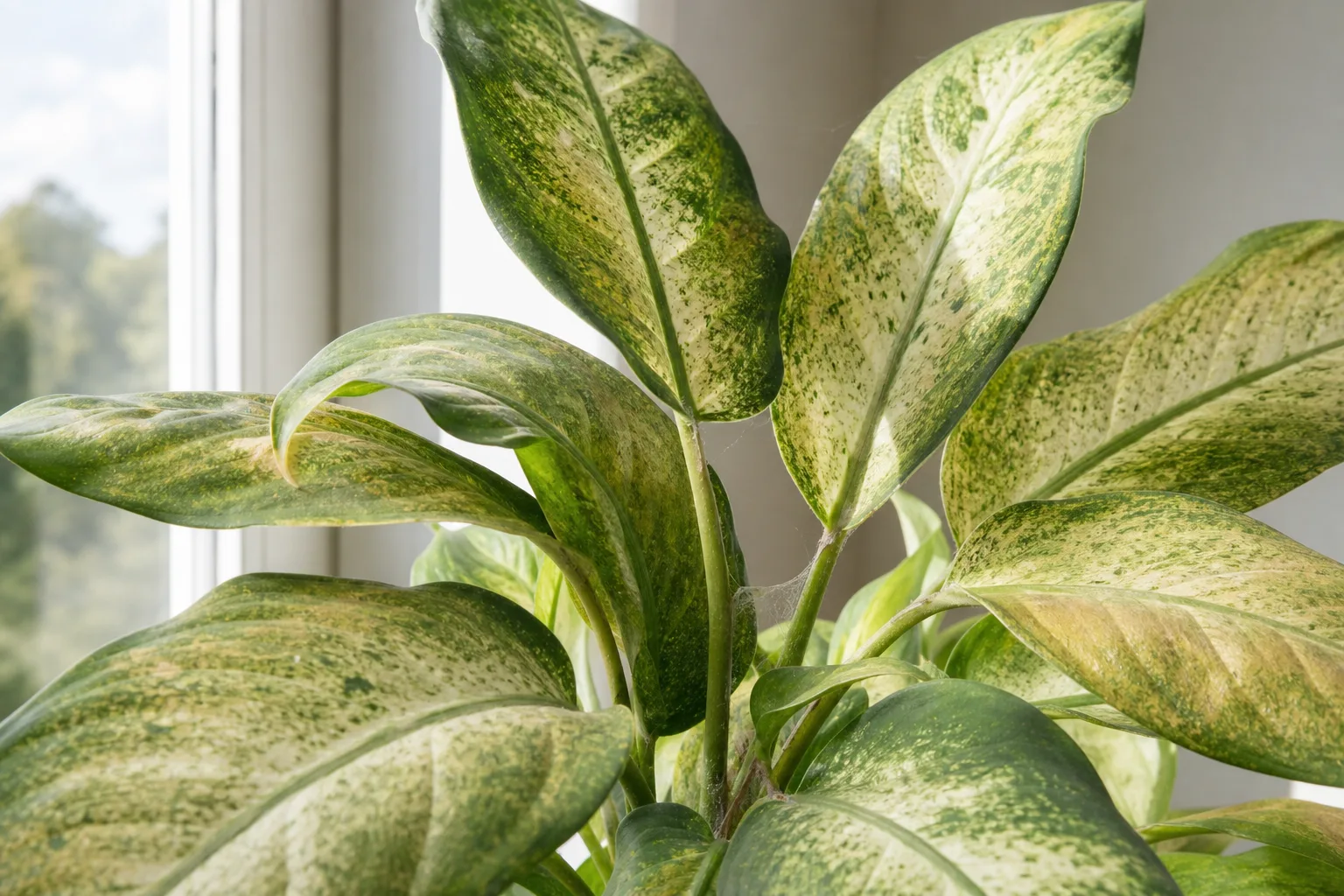
Spider Mites on Dieffenbachia: Causes, Checks & Fixes
This guide covers spider mites on Dieffenbachia. See also the general Spider Mites guide, watering, and light pages for this plant.
Spider Mites on Dieffenbachia: Causes, Checks & Fixes
Quick answer
Spider mites on Dieffenbachia (dumb cane) are tiny sap feeders that explode when warm, dry indoor air strips moisture from this plant’s large tropical leaves. You may notice fine yellow speckles on variegated blades, bronzing that spreads across the leaf face, or delicate webbing tucked at leaf bases-while wondering whether winter dryness alone is browning the margins.
First step: isolate the plant and rinse every leaf underside with lukewarm water. Dieffenbachia grows as an upright cane with 8–14 inch arching leaves; mites concentrate on the sheltered undersides and axils a quick top-side glance misses. Knock down live mites and webbing before reaching for sprays-and remember this species is sensitive to insecticidal soap, so water is the safer opening move.
Wear gloves when wiping stems or removing damaged leaves. Dumb cane sap contains calcium oxalate crystals that irritate skin and mucous membranes during hands-on rinsing.
What spider mites look like on Dieffenbachia
On dumb cane, early mite damage is easy to misread as dry air or fluoride burn because the symptoms overlap on large patterned leaves. Look for these patterns:
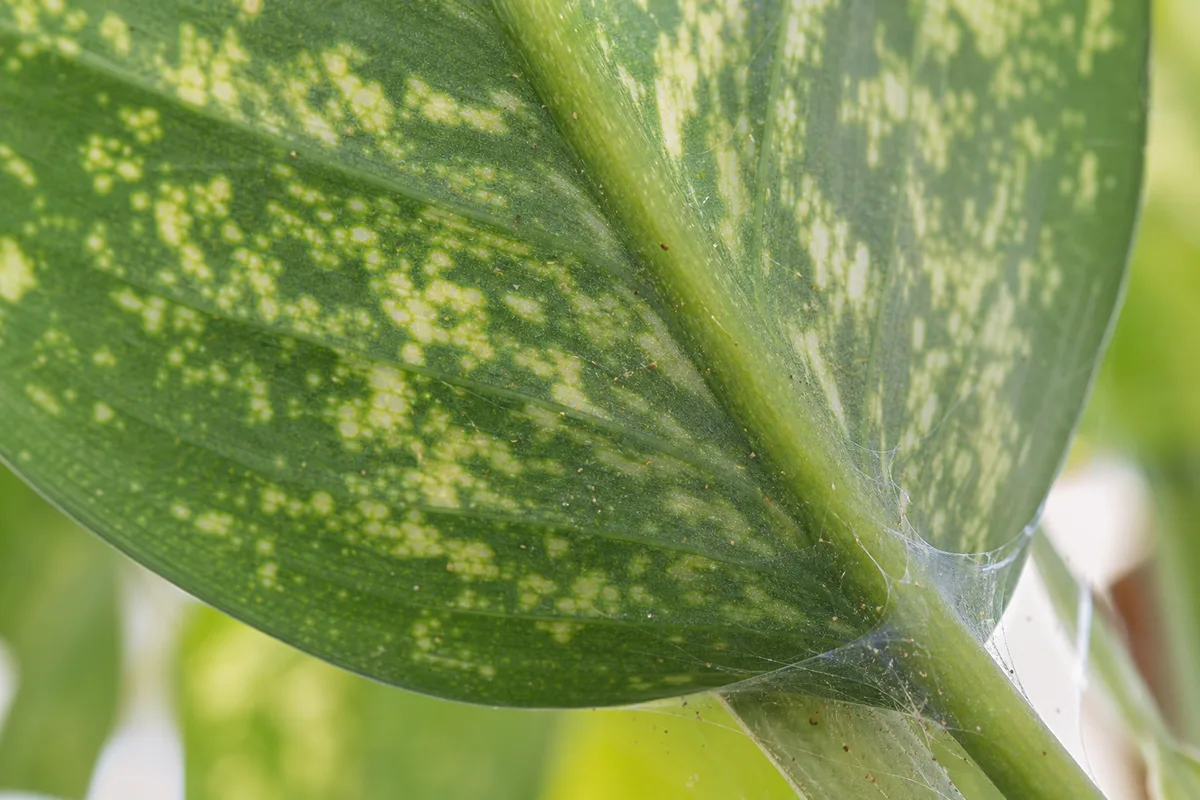
Fine yellow stippling and silk webbing on a dieffenbachia leaf underside - rinse every leaf before any soap on this sensitive species.
- Fine yellow or white stippling on the upper leaf surface-each dot marks a cell drained by mites feeding on undersides
- Bronzing or dull gray patches that spread across the blade while the central vein may still look green
- Delicate silk webbing at the base of petioles, between overlapping leaves, or on bare lower cane nodes after older foliage drops
- Crisp, curling leaf edges on heavily fed blades-mite damage plus transpiration loss in dry air accelerates browning
- Slow-moving pepper-like specks on a white-paper tap test
Dieffenbachia-specific visibility quirks matter. On heavily variegated cultivars such as ‘Camille’ and ‘Tropic Snow’, pale cream sectors can hide early stippling until bronzing spreads across the patterned zone. Dark green types like ‘Compacta’ often show dots sooner. Because leaves arch horizontally from the cane, underside damage runs ahead of what you see on top-lift each blade and inspect the midrib zone with a hand lens.
Floor-scale specimens add another hiding spot: when lower leaves yellow and drop naturally, exposed cane joints can hold webbing that never appears on the showy upper foliage.
Why dumb cane gets spider mites
Spider mites are not caused by one watering mistake. They arrive on new plants, spread from infested neighbors, or flare when environmental stress favors reproduction indoors.
Dieffenbachia-specific triggers include:
Winter heating and sunny glass. Forced-air heat and south- or west-facing windows drop relative humidity beside the pot into the 20–30% band while leaf surfaces near glass heat up. Spider mites prefer warm, dry conditions and reproduce quickly when foliage stays dry for hours-exactly the microclimate around a tall dumb cane on a radiator ledge.
Large leaf surface area. Broad 8–14 inch blades offer extensive feeding territory. A modest colony on one leaf can stipple a wide zone before webbing becomes obvious on variegated tissue.
Crowded shelves. Dieffenbachia is a common living-room and office plant, often grouped with pothos, aglaonema, and other mite-susceptible species. Touching leaves bridge crawlers between pots.
Recent purchase without quarantine. Nursery stock can carry mites that show no webbing until the plant settles near your heating vent.
Dieffenbachia performs best at 40–60% relative humidity. Low humidity alone causes margin crisping, but sustained dry air below ~30% both stresses foliage and favors mite outbreaks-see our low humidity on Dieffenbachia guide when margin burn appears without stippling.
Confirm mites vs. low humidity, thrips, scale, fluoride, and mealybugs
Work through these checks before spraying anything:
- Stippling pattern - Mites leave evenly distributed yellow speckles across the leaf face. Low humidity browns entire margins without speckles. Fluoride or salt burn from tap water tends to affect tips across the plant regardless of placement-see brown tips when tips persist after you raise humidity.
- White-paper tap test - Hold white paper under a suspect leaf and tap the blade. Slow-moving specks confirm live mites. No movement after two tests a week apart points away from an active colony.
- Webbing location - Fine silk at leaf bases or cane axils supports mites. Mealybugs leave cottony wax clusters in joints, not stippling. Aphids cluster on soft new growth at the cane tip with honeydew, not webbing.
- Underside inspection - Spread the crown and check undersides along the midrib and overlapping axils. Thrips leave silvery scrape marks and black specks; mites leave stippling plus webbing.
- Scale check - Immobile brown or tan bumps flush with stems are scale, not moving mites.
- Nearby plants - Matching stippling on shelf neighbors confirms spread, not a one-off cultural issue.
| What you see | Likely cause | How to tell apart |
|---|---|---|
| Yellow speckles + webbing at leaf bases | Spider mites | Moving specks on paper test |
| Even margin crisping, no speckles, near vent | Low humidity | Hygrometer below 40% RH beside pot |
| Brown tips on many leaves, no insects | Fluoride / salt burn | Persists after humidifier; tap-water pattern |
| Cottony white masses in axils | Mealybugs | Pink smear when crushed |
| Soft clusters on new cane tip | Aphids | Pear-shaped insects, honeydew |
| Silvery scars + black specks | Thrips | No webbing; scrape marks on leaves |
Confirmed mites mean pest treatment plus humidity correction-not a watering or fertilizer adjustment alone.
First fix for Dieffenbachia
Isolate the plant and rinse leaf undersides with lukewarm water.
Move dumb cane to a bathroom, shower stall, or sink away from other houseplants. Slip a plastic bag over the pot and tape it at the soil line so mix does not wash down the drain. Use a gentle but firm stream on every leaf underside, stem joints, and the crown where leaves overlap. Spraying sturdy plants forcefully with water, including undersides, dislodges mites and breaks up webs.
Wear gloves if you are wiping stems by hand-sap exposure during repeated rinses adds up. Keep treated plants away from pets and children until foliage dries.
Do not open with insecticidal soap on the whole plant. Clemson Extension lists Dieffenbachia among species sensitive to insecticidal soap and notes that injury symptoms may take at least 48 hours to appear after a spray. Water rinsing is the safer first treatment on this species.
After the first rinse, inspect with a magnifier. If mites remain, hold off on oils until you have knocked numbers down and confirmed the plant is not drought-stressed or sitting in hot direct sun.
Step-by-step recovery
Once isolation and the first rinse are done, follow this sequence:
- Keep the plant quarantined until you see no live mites and no fresh webbing for at least two weeks after the last treatment.
- Repeat water rinses every five to seven days for at least three cycles. Mite eggs survive a single pass; hatchlings emerge within days and rebuild colonies if you stop early.
- If rinsing alone fails after two weeks, spot-test horticultural oil or neem oil labeled for houseplants on one leaf. Wait 48 hours. If the test leaf shows no burn, coat undersides and stem joints until runoff-avoid midday sun on the plant.
- Use insecticidal soap only after a successful spot test on Dieffenbachia-and even then treat cautiously. Many extension guides recommend against applying soap to this species without testing first.
- Raise humidity toward 40–60% with a room humidifier or plant grouping while treating. Fixing dry air slows reproduction even though humidity alone does not kill existing colonies.
- Prune only heavily damaged leaves you can spare without stripping the cane. Bag prunings and discard outdoors-not in an indoor compost pile.
- Pause fertilizer until new growth looks clean for two weeks. Stressed dumb cane does not need extra nitrogen while recovering from sap loss.
- Check neighbors weekly during quarantine. Treat any matching stippling before returning Dieffenbachia to its usual spot.
Avoid letting rinse water pool in the dense crown overnight. Dieffenbachia’s overlapping leaves at the cane tip can hold moisture against the stem-towel the crown gently or rinse earlier in the day so foliage dries before night.
Recovery timeline
With consistent rinsing, stippling should stop spreading within one to two weeks. Visible mite counts drop sharply after the first few cycles; calling the plant “clear” takes longer.
Wait until you see no fresh webbing for three to four weeks of scheduled checks at leaf axils and the crown. Old stippled or bronzed leaves will not re-green-especially on variegated blades where pale tissue stays cosmetically marked. Judge success by clean new crown leaves, firm cane stems, and no new speckling on emerging foliage.
Worsening signs: webbing climbs toward the growing tip despite weekly rinses, multiple leaves yellow and drop within days, or neighboring plants develop matching stippling. Those patterns mean escalate treatment or consider discarding a heavily infested inexpensive plant rather than risking the whole collection.
Lookalike symptoms
- Low-humidity margin crisping - Even brown edges without stippling or webbing; improves on new growth when RH rises. No moving specks on paper test.
- Fluoride or salt edge burn - Tip-focused browning from tap water; not tied to heater placement alone. See brown tips.
- Mealybugs - White cottony clusters in axils with sticky honeydew, not fine stippling across the leaf face.
- Aphids - Soft insects on the newest unfolding leaf at the cane tip; honeydew on upper leaf surfaces.
- Thrips - Silvery streaks and black frass specks; insects are elongated, not round mites.
- Scale - Immobile bumps on stems; no webbing or stippling pattern.
What not to do
- Do not spray insecticidal soap on the whole plant without a 48-hour spot test-Dieffenbachia is documented as soap-sensitive.
- Do not assume insecticides labeled for insects will kill mites-mites need miticides, horticultural oils, or repeated water dislodging. Many broad insecticides miss spider mites entirely.
- Do not apply oils or soaps to wilted, sun-stressed, or drought-stressed plants. Treat underlying stress first.
- Do not let the crown stay soaking wet overnight after a heavy rinse-dense leaf overlap at the cane tip can hold moisture against the stem.
- Do not handle damaged leaves bare-handed if you have sensitive skin-calcium oxalate sap irritates during wiping and pruning.
- Do not return the plant to a shared shelf after one rinse. Two weeks with no new activity is a safer minimum before ending quarantine.
- Do not compost infested prunings indoors where crawlers can reinfest clean pots.
Dieffenbachia care cross-check during recovery
Spider mites exploit dry, stressed foliage, but removing pests matters more than tweaking every care variable at once. After isolation, confirm these basics support recovery:
- Humidity - Aim for 40–60% RH beside the pot; move the plant away from heating vents and hot window glass.
- Watering - Follow top-inch dry rhythm-soggy mix in dim corners weakens roots while mites drain sap from above.
- Light - Medium to Dieffenbachia light guide helps dumb cane push clean new leaves without scorching rinsed foliage in direct sun.
- Airflow - Gentle circulation between plants reduces reinfestation risk on crowded shelves.
- Quarantine discipline - New Dieffenbachia should sit apart for two weeks with underside inspections before joining the group.
If stippling persists despite correct humidity and repeated rinses, re-check for hidden colonies on bare lower cane nodes or root-zone stress from overwatering.
How to prevent spider mites next time
Prevention on dumb cane pairs humidity management with early detection:
- Measure RH beside the pot during heating season-not just soil moisture. Sustained readings below 30% favor mites and margin burn together.
- Inspect leaf undersides and cane axils during weekly watering-Dieffenbachia’s size makes it easy to water the top and miss the stem base where webbing starts.
- Quarantine new plants for at least two weeks before placing them near existing pots.
- Keep plants slightly spaced on shelves so arching leaves do not touch neighboring foliage.
- Rinse or wipe dusty leaves occasionally in winter-clean surfaces are easier to inspect and less favorable to some pests in dry rooms.
- Use a room humidifier for large floor specimens where a single pebble tray cannot buffer whole-room dryness.
Variegated owners who struggle to spot early stippling on cream sectors may also read cultivar-specific guides for Dieffenbachia ‘Camille’ and Tropic Snow when symptom visibility differs by pattern.
When to escalate - miticides and extension help
Treat immediately if webbing spreads across multiple leaves, stippling climbs toward the crown, or other plants on the same bench show matching damage. Mites walk short distances and hitchhike on hands, tools, and touching leaves.
Escalate beyond water and oils when:
- Three to four weekly rinse cycles fail to reduce live mites
- Valuable specimens cannot be replaced and populations cover most foliage
- You need miticide products labeled specifically for spider mites on ornamentals-read labels carefully and never use outdoor-only chemicals indoors
Heavily infested houseplants are sometimes best discarded when treatment fails after persistent effort-especially inexpensive dumb cane that would cost less to replace than risking your entire collection.
Contact your local cooperative extension office or master gardener helpline when you need help identifying mites vs. lookalikes from a clear photo of stippling and webbing on leaf undersides.
Conclusion
Spider mites on Dieffenbachia are a dry-air pest problem on a plant with large leaves, cane architecture, and plenty of hidden undersides. Confirm stippling and webbing against low-humidity margin burn and fluoride tips, isolate first, then rinse leaf undersides repeatedly before any spray. Treat this species as soap-sensitive, wear gloves around irritant sap, and judge recovery by clean new crown growth-not by saving every stippled blade. Prevent the next outbreak with humidity checks beside the pot and underside inspections during every watering-not once webbing reaches the showy upper leaves.
For broader dumb cane culture, see the Dieffenbachia care overview.
When to use this page vs other Dieffenbachia guides
- Dieffenbachia watering guide - Use for routine moisture checks before assuming spider mites is the main issue.
- Dieffenbachia problems hub - Browse all 16 common issues on this species.
- Low Humidity on Dieffenbachia - Different entry point when symptoms overlap with spider mites.
- Slow Growth on Dieffenbachia - Different entry point when symptoms overlap with spider mites.