Aphids on Dieffenbachia (Dumb Cane): Causes, Checks & Fixes
Quick answer
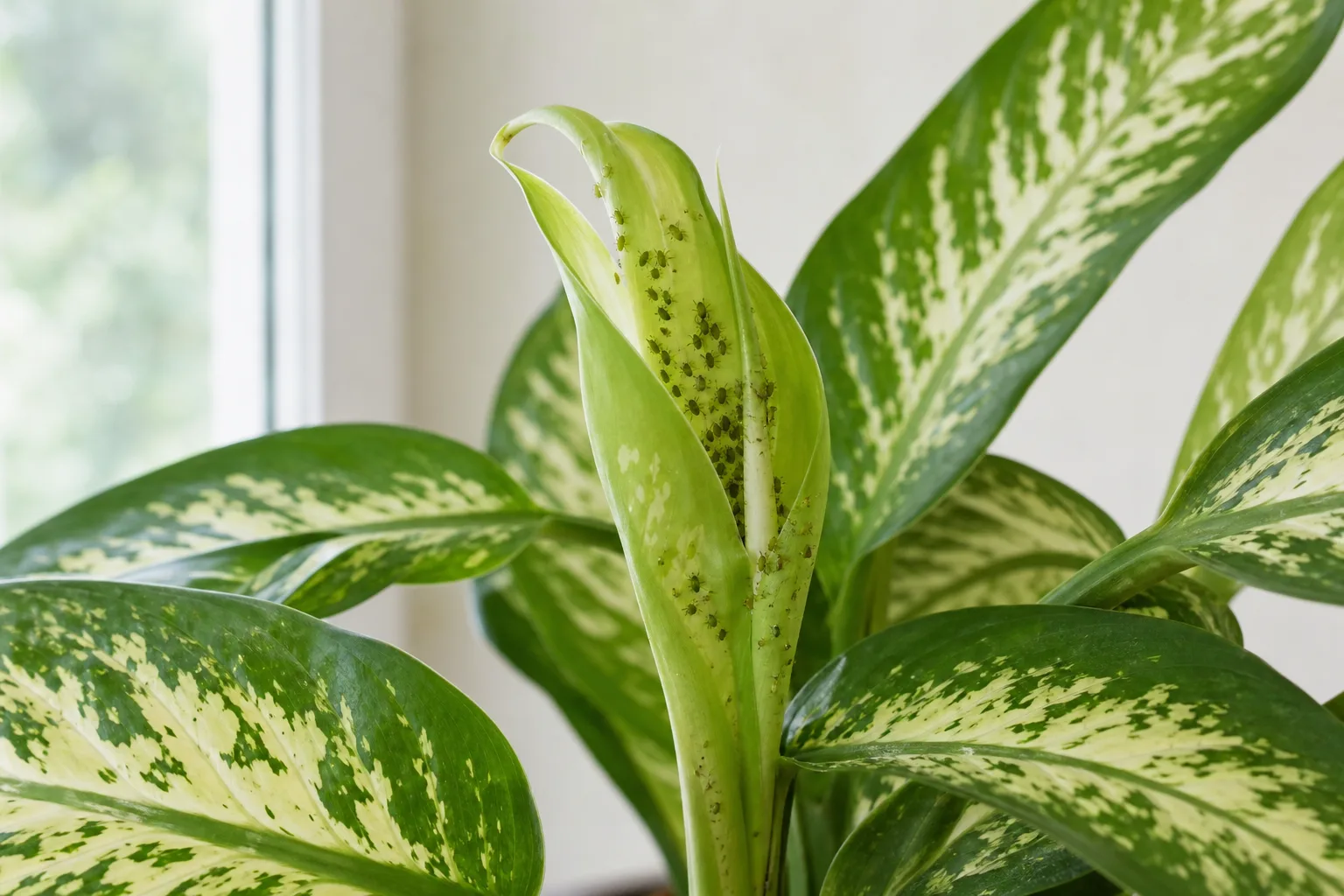
Aphids on Dieffenbachia cluster on the newest unfolding leaves at the cane tip. First step: isolate the plant and rinse stems and leaf undersides with lukewarm water-avoid insecticidal soap until you have tested a single leaf, because Dieffenbachia is soap-sensitive.
Aphids on Dieffenbachia (Dumb Cane): Causes, Checks & Fixes
This guide covers aphids on Dieffenbachia. See also the general Aphids guide, watering, and light pages for this plant.
Aphids on Dieffenbachia (Dumb Cane): Causes, Checks & Fixes
Quick answer
Pear-shaped insects on the unfolding leaf at your dumb cane tip are almost certainly aphids-not a watering mistake. Dieffenbachia pushes new blades from an upright cane, and aphids colonize that soft tissue before they spread to older foliage.
First step: isolate the plant and rinse stems and leaf undersides with lukewarm water. Wrap the pot in plastic so mix stays put, then shower the cane tip and newest leaves until aphids dislodge. This confirms the pest, knocks numbers down, and buys time before any spray.
Dieffenbachia adds a critical safety wrinkle: Clemson HGIC lists dumb cane among houseplants sensitive to insecticidal soap, and UConn IPM notes phytotoxicity symptoms may take 48 hours to appear. Start with water and careful manual removal. Escalate to alcohol swabs or neem only after spot-testing one leaf-not soap as your opening move.
What aphids look like on Dieffenbachia
Dieffenbachia grows as an upright cane with large, patterned leaves held horizontally. Aphids target the softest tissue, which on dumb cane means:
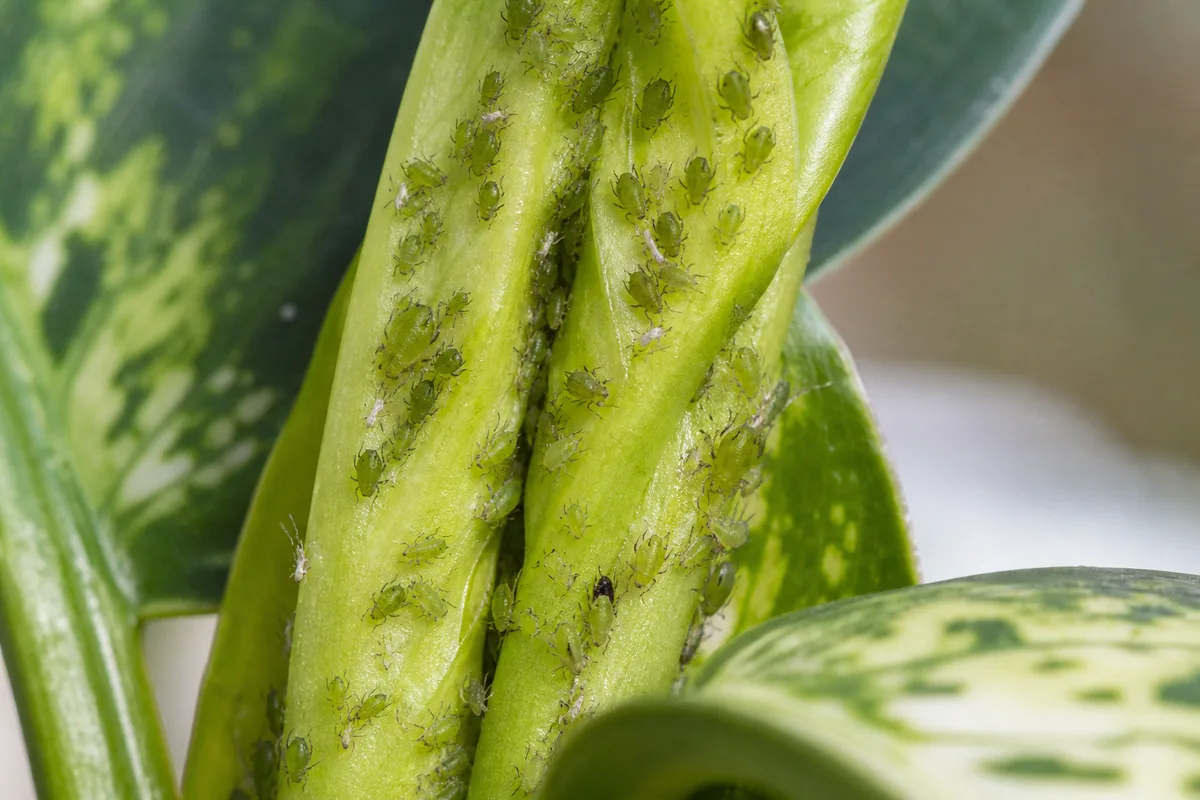
Aphids symptoms on Dieffenbachia - compare with healthy tissue on the same plant.
- The cane tip where the next leaf is opening
- Undersides of the newest one or two leaves, especially along the midrib
- Leaf axils where the petiole meets the stem on fresh growth
- Occasionally lower leaves if the infestation has been ignored for weeks
Individual aphids are tiny-roughly 1/16 to 1/8 inch long-with pear-shaped bodies, visible legs, and antennae. Most are wingless and green, but species on houseplants can also appear black, brown, yellow, or pink. When populations surge, winged adults may appear and drift to neighboring pots on a crowded shelf.
Damage on Dieffenbachia shows up as:
- Curled or puckered new leaves that fail to open flat
- Yellowing or stunted top growth while older leaves look normal
- Shiny, sticky honeydew on leaf surfaces or the floor below
- Black sooty mold growing on honeydew, dulling the variegation
- White cast skins shed by growing nymphs, often mistaken for dust
Because Dieffenbachia leaves are broad and held horizontally, honeydew on upper surfaces is easy to spot-unlike narrow-leaved plants where stickiness hides on undersides alone. Photo reference: when inspecting, hold the newest leaf at eye level and look from below with a hand lens; cane-tip clusters are often visible only from that angle.
Why Dieffenbachia gets aphids
Aphids rarely appear from nowhere indoors. The usual entry routes for dumb cane owners:
- New or recently moved plants from an office plant swap or nursery run without quarantine
- Open windows in warm weather, when winged aphids can drift in
- Spread from an infested neighbor-Dieffenbachia often shares windowsills with pothos, aglaonema, and other soft-leaved species aphids also colonize
Once present, aphids thrive on Dieffenbachia for plant-specific reasons:
Fast spring and summer growth. Dieffenbachia pushes new leaves regularly in medium to bright indirect light. Aphids prefer tender shoots and reproduce quickly on actively growing tissue-populations can increase with great speed on a well-fed plant.
Soft, nitrogen-rich new leaves. Monthly fertilizer during active growth produces lush shoots. Heavy feeding from the fertilizer schedule creates exactly the soft tissue aphids prefer-overfertilized dumb cane often shows aphids on the newest flush while the rest of the plant looks fine.
Indoor shelves without scouting rhythm. Unlike outdoor gardens where lady beetles and lacewings knock aphids back, a heated living room offers uninterrupted feeding unless you inspect cane tips during weekly care. Office environments compound the risk: shared plant racks, recycled cachepots, and hands moving between pots spread crawlers before anyone notices sticky new leaves.
Crowded plant displays. Tall Dieffenbachia canes touching neighboring foliage give wingless aphids a bridge to mealybugs and spider mites hosts on the same shelf.
Stress alone does not cause aphids, but a plant in weak light with soggy soil grows slowly and poorly-making it harder to outgrow damage once feeding starts. Cross-check overwatering if lower leaves yellow without insects on the cane tip.
How to confirm aphids vs. mealybugs, scale, thrips, and cultural damage
Work through these checks before spraying anything:
| What you see | Likely cause | How to tell apart |
|---|---|---|
| Sticky new leaves + pear-shaped clusters | Aphids | Slow movement on tender cane-tip tissue |
| White cottony masses in leaf axils | Mealybugs | Woolly wax; crush smears pink |
| Flat brown bumps on stems | Scale | Immobile; scrape test confirms |
| Silvery scrape marks, no honeydew shine | Thrips | Linear scars; elongated insects |
| Dry crusty leaf tips, no insects | Fluoride or low humidity | No stickiness; tips brown without clusters |
| Yellow lower leaves only | Overwatering, natural aging | No insects on cane tip |
Numbered confirmation steps:
- Location on the plant - Aphids cluster on living, soft tissue. If insects sit on brown crispy edges or old leaf scars, look elsewhere.
- Movement - Gently brush a cluster with a cotton swab. Aphids move slowly. Mealybugs feel waxy and smear; scale adults are immobile bumps.
- Honeydew test - Sticky shine on new leaves with insects present confirms sap feeders. Dry crusty tips without insects are more likely fluoride or low-humidity damage on Dieffenbachia.
- Shape and color - Pear-shaped soft bodies with long legs point to aphids. Cottony white masses in leaf axils suggest mealybugs. Hard brown domes on stems are scale.
- Cast skins - Fine white specks that are shed exoskeletons, not live insects, still confirm an active aphid colony nearby.
- Nearby plants - Check all pots within a few feet. Aphids on one Dieffenbachia often mean a hidden colony on a newer purchase.
If you find sticky leaves but no insects after two inspections a week apart, wash the foliage and monitor-crawlers may have moved to another plant.
First fix for Dieffenbachia
Isolate the plant and rinse it with lukewarm water.
Move Dieffenbachia to a bathroom, shower stall, or sink away from other houseplants. Slip a plastic bag over the pot and tape it at the soil line so mix does not wash down the drain. Use a gentle but firm stream on leaf undersides, the cane tip, and stem joints. Aphids drop off when disturbed; many will not climb back if you repeat rinses every few days.
Wear gloves if you are wiping stems by hand-Dieffenbachia sap contains calcium oxalate crystals that irritate skin and mucous membranes. If sap contacts eyes or mouth during wipe-down, rinse with water and seek medical care. If a pet chews infested or treated foliage, contact your veterinarian or ASPCA Animal Poison Control at (888) 426-4435.
Do not reach for insecticidal soap as your opening move. Extension guides list Dieffenbachia among houseplants sensitive to insecticidal soap, and recommend testing any product on a small area first-symptoms of soap burn may take 48 hours to appear. Water rinsing is safer as the first treatment on this species.
After the first rinse, inspect with a hand lens. If a few aphids remain on tight leaf folds:
- Wipe them with a cotton swab dipped in rubbing alcohol, testing one leaf first if you are unsure about alcohol tolerance on variegated blades
- Prune only heavily infested new leaves you can spare without stripping the cane
Hold off on neem oil, horticultural oil, or any labeled insecticide until you have knocked numbers down with water and confirmed the plant is not drought-stressed or sitting in hot direct sun-oils and soaps can burn foliage under those conditions.
Treatment escalation on dumb cane
Use this ladder-do not skip steps or stack multiple products on day one:
| Step | Action | Dieffenbachia notes |
|---|---|---|
| 1 | Lukewarm water rinse every 3–5 days | Safest first move; wrap pot to keep soil in place |
| 2 | Alcohol swab on remaining clusters | Spot-test one leaf; avoid midday sun after treatment |
| 3 | Neem oil spot test, then full spray if clean after 48 h | UMN Extension lists neem for indoor aphids; coat undersides; repeat per label |
| 4 | Insecticidal soap spot test only | Last contact option-Dieffenbachia is documented soap-sensitive |
| 5 | Systemic granules (e.g., imidacloprid) | Only if rinses and contact sprays fail after two weeks; UMN notes imidacloprid for houseplant aphids-follow label; toxic to bees if plant goes outdoors |
On dumb cane, steps 1–3 clear most mild-to-moderate infestations. Reserve soap and systemics for stubborn colonies that survive repeated rinses and neem cycles.
Step-by-step recovery
Once the first rinse is done, follow this sequence:
- Keep the plant isolated until you see no live aphids for at least two weeks after the last treatment.
- Repeat water rinses every three to five days until colonies disappear. Aphids reproduce quickly; one wash rarely clears them.
- Wash honeydew and sooty mold off leaves with lukewarm water and a soft cloth. Mold does not harm Dieffenbachia directly but blocks light and looks like a new disease.
- If rinsing fails after two weeks, spot-test neem oil on one leaf at label dilution. Wait 48 hours. If the test leaf shows no burn, apply thoroughly to undersides and stems, avoiding midday sun on the plant. Repeat applications are usually necessary because contact products miss eggs tucked in curled cane-tip folds.
- Avoid insecticidal soap on Dieffenbachia unless a spot test on a single leaf shows no injury after 48 hours-and even then use caution in early morning or evening only. Many references list this species as soap-sensitive.
- Pause fertilizer until new growth looks clean for two weeks. Feeding during an active infestation produces more soft tissue for aphids to colonize.
- Check neighbors weekly while Dieffenbachia is in quarantine. Treat any new colonies on pothos, aglaonema, or other shelf mates before returning dumb cane to its usual spot.
When to consider systemic treatment
If live aphids persist on multiple cane tips after two weeks of rinsing plus at least one neem cycle, Clemson HGIC notes imidacloprid granules applied to soil can control aphids on houseplants-including species taken outdoors for treatment. Systemics move through sap and reach insects feeding in tight leaf folds contact sprays miss.
Use systemics only as a last resort indoors: follow the product label exactly, keep treated plants away from pets that chew foliage, and do not use imidacloprid on bee-attractive plants you set outside in summer. For chronic reinfestation despite labeled products, contact your local cooperative extension office for regional pesticide guidance before escalating further.
Recovery timeline
With consistent rinsing, visible aphid numbers should drop sharply within one to two treatment cycles (roughly one to two weeks). New leaves emerging from the cane tip should open flat and free of insects-that is your best recovery signal.
Curled or yellowed leaves from earlier feeding will not fully flatten; they can stay cosmetically marked until you prune them or they age out naturally. Focus on clean new growth rather than saving every damaged blade.
Sooty mold clears within days once honeydew stops and you wipe leaves. If top growth stays stunted after four weeks of no live aphids, look for a secondary issue-root rot from overwatering, cold drafts, or not enough light-not a hidden aphid colony.
What not to do
- Do not spray insecticidal soap on the whole plant without a spot test-Dieffenbachia is documented as soap-sensitive.
- Do not apply oils or soaps to wilted, sun-stressed, or drought-stressed plants. Treat underlying stress first.
- Do not compost infested prunings indoors where crawlers can reinfest clean pots.
- Do not assume one treatment finished the job. Aphid nymphs hatch continuously; plan on multiple passes.
- Do not increase fertilizer to “help the plant recover.” Soft new growth feeds the next wave of aphids.
- Do not handle bare stems and sap without gloves if you have sensitive skin-the common name “dumb cane” reflects the plant’s irritant sap, not the pest.
Dieffenbachia care cross-check
Aphids exploit growth flushes, but reinfestation often tracks back to placement and feeding rhythm:
| Factor | What to verify | Why it matters for aphids |
|---|---|---|
| Light | Bright indirect per light guide | Weak light produces pale, soft shoots aphids prefer |
| Watering | Top inch dry rule | Overwatered pots in dim corners grow soft tissue; drought-stressed plants burn under sprays |
| Fertilizer | Monthly at label strength | Excess nitrogen pushes lush cane-tip flushes |
| Humidity | Stable room air | Extreme dry air stresses leaves but does not prevent aphids |
| Quarantine | Two weeks for new pots | Top entry route for indoor aphids |
For the full seasonal rhythm, see the Dieffenbachia overview and linked care guides below.
How to prevent aphids
Prevention on Dieffenbachia is mostly about catching hitchhikers early and avoiding overly lush, soft growth:
- Quarantine new plants for at least two weeks before placing them near dumb cane.
- Inspect cane tips and leaf undersides during weekly watering-early colonies are easy to rinse away.
- Fertilize at half strength during active growth and skip feed when the plant is stressed or pest-affected.
- Keep stable light and watering so growth is steady, not a sudden flush of tender shoots after neglect.
- Space plants slightly on shelves so you can see stems and lower leaves without lifting every pot.
- Rinse foliage occasionally when dust builds up-clean leaves are easier to inspect.
If aphids keep returning on an otherwise healthy Dieffenbachia, trace the source: a nearby herb garden on the windowsill, a plant that goes outdoors in summer, or shared tools that move between pots without cleaning.
When to worry
Most dumb cane aphid problems resolve with persistent rinsing and one round of contact treatment. Escalate when:
- Colonies cover most new cane-tip flushes and top growth yellows across multiple leaves
- Winged aphids appear on several plants in the same collection
- Ants are farming honeydew across the pot rim and floor-often signaling a larger colony than you can see
- Sooty mold coats so much leaf surface that variegation disappears and growth stalls
- Live aphids remain after two weeks of rinsing plus labeled neem or alcohol cycles
At that point, consider soil-applied systemics per label directions or replacing a severely weakened young plant rather than nursing cosmetically damaged canes that no longer produce clean new leaves.
Conclusion
Aphids on Dieffenbachia are a cane-tip problem on soft new growth-not a mystery disease. Isolate, rinse with lukewarm water, and spot-test any spray on one leaf before treating the whole plant. Skip insecticidal soap as your opening move; dumb cane is documented as soap-sensitive. Judge recovery by clean new leaves opening from the cane tip, not by old curled blades. When rinses and neem fail after two weeks, systemics are a labeled last resort-after you have ruled out reinfestation from an untreated neighbor on the same shelf.
Related Dieffenbachia guides:
- Overview - species context and toxicity
- Watering - weekly scouting rhythm during care
- Fertilizer - nitrogen-soft-growth connection
- Light - steady growth vs. weak pale shoots
- Mealybugs - cottony lookalike in leaf axils
- Spider mites - dry-air pest with different symptoms
- Low humidity - fluoride and tip-burn lookalikes
- Overwatering - lower-leaf yellow without insects
When to use this page vs other Dieffenbachia guides
- Dieffenbachia watering guide - Use for routine moisture checks before assuming aphids is the main issue.
- Dieffenbachia problems hub - Browse all 16 common issues on this species.
- Mealybugs on Dieffenbachia - Different entry point when symptoms overlap with aphids.
- Spider Mites on Dieffenbachia - Different entry point when symptoms overlap with aphids.
- Yellow Leaves on Dieffenbachia - Different entry point when symptoms overlap with aphids.