Monstera Deliciosa Light Needs: Best Window & Warning Signs
Monstera Deliciosa Light Needs: Best Window & Warning Signs
Monstera Deliciosa Light Needs: Best Window & Warning Signs
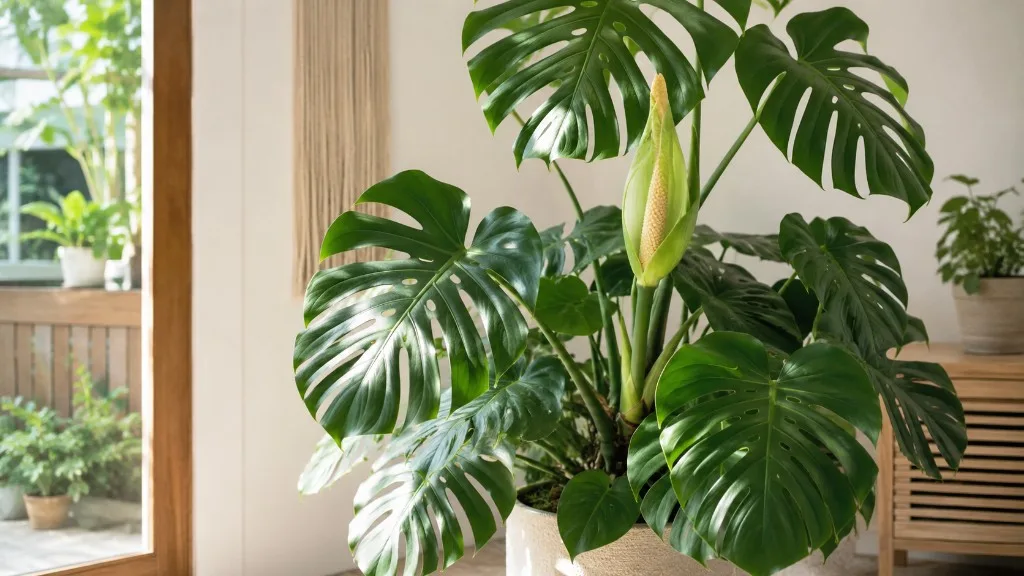
Monstera deliciosa is not a low-light philodendron that happens to grow big leaves. It is a climbing woody vine native from Mexico to Panama that starts on the forest floor, then ascends tree trunks as a hemiepiphyte, pushing larger perforated leaves toward brighter canopy light. Indoors, that biology means your Swiss cheese plant needs sustained bright indirect exposure, a stable moss pole, and enough room that you can actually reposition a floor-sized specimen when winter sun angle drops. The most common light mistake is judging by how bright the room feels to your eyes instead of how the newest leaf responds at the plant-facing window.
Quick answer: Place mature Monstera deliciosa where it receives bright indirect light for most of the day - roughly 200–400 foot-candles at the leaf surface for reliable fenestration development, with variegated cultivars such as ‘Albo Variegata’ and ‘Thai Constellation’ needing brighter exposure than solid-green plants because white sectors photosynthesize less efficiently. NC State Extension recommends moderate brightness but not direct sunlight indoors; Wisconsin Horticulture Extension adds that Monstera will not develop leaf perforations when light is inadequate, even under fluorescent supplementation that keeps the plant alive.
This guide covers measurable light targets, window-by-window placement for large floor specimens, direct-sun acclimation, grow-light setup, variegated burn risk, repositioning logistics, and links across the Monstera deliciosa care cluster.
Why Light Matters More for Monstera Deliciosa Than Most Houseplants
Light is the throttle on fenestration - the splits and holes that make deliciosa iconic. Mature perforations require plant age, adequate brightness, and usually climbing support so the vine behaves like an adult liana rather than a sprawled juvenile. Cutting leaves or adding fertilizer cannot substitute for photons. Wisconsin Horticulture Extension describes how wild seedlings grow as tight “shingle plants” up a trunk until they reach brighter positions, then develop the large lobed foliage houseplant growers expect.
That juvenile-to-adult transition explains a frustrating pattern: a young Monstera near a window may produce solid heart-shaped leaves for years even when care looks perfect. The plant is not broken - it may still be in juvenile morphology, or light may be bright enough for survival but below the threshold where deliciosa commits energy to large split blades. Compare with Monstera adansonii, which fenestrates on smaller leaves in tighter spaces; deliciosa is slower, heavier, and more architectural once settled, but also slower to reposition when you realize the corner was too dim.
Light also couples directly to watering. A brighter Monstera transpires faster and dries its pot sooner. A dim plant in the same weekly watering routine sits wet longer, inviting root rot while leaves look merely “slow.” Fix light before you chase humidity gadgets or fertilizer.
How Much Light Monstera Deliciosa Needs Indoors
Penn State Extension advises placing Monstera near a sunny window where it receives bright light but not direct sun. In practice that means the leaf surface receives strong ambient brightness without prolonged harsh beams on glossy tissue. Deliciosa is not a shade-floor specialist like some calatheas; it is a rainforest-edge climber that evolved under dappled high brightness with intermittent direct sun at the canopy margin.
Use two mental tiers. Survival light - a north room or interior spot several meters from glass - can keep an established plant alive for months, but new leaves stay smaller and splits stall. Growth light - the bright indirect band where new leaves emerge firm, deep green (or stable variegation), and progressively larger - is what you want for a floor specimen worth the floor space.
Foot-Candle and Bright-Indirect Targets for Fenestrations
Extension guidance and indoor-grower references converge on a practical indoor band: roughly 200–400 foot-candles (about 2,000–4,000 lux) at the leaf surface for reliable fenestration development on a mature climbing plant, aligned with the Monstera deliciosa overview light section. Below ~100 foot-candles, growth often stalls and perforations rarely advance even on older vines. Above ~400–800 foot-candles of bright indirect exposure, many specimens push larger blades and wider splits - provided they are acclimated and not receiving hot direct glass glare.
You do not need a meter to start. On a clear day, hold your hand between the plant and the window. A soft, readable shadow with defined edges near the foliage usually indicates bright indirect light in the functional range. A faint or absent shadow means low light - survivable short term, poor for splits. If the leaf surface feels hot within an hour of sun hitting it, you are in direct exposure that may need filtering or distance.
Worked placement example: A 5-foot deliciosa on a moss pole set 3 feet back from an east-facing window with white walls often receives adequate brightness for spring-through-fall growth in mid-latitude homes. After a gradual move over three weeks from a north corner, the next two leaves showed wider marginal splits within six weeks - new growth confirming the placement, not old leaves magically repairing. Your room may differ; treat this as a diagnostic pattern, not a guarantee.
Best Window Placement by Orientation
Window direction is a starting point. Overhangs, trees outside, tinted glass, and pot distance change intensity more than compass labels suggest. Still, orientation gives a reliable first guess in the northern hemisphere.
Place the pot where leaves receive light, not where the room looks bright. A Monstera on a bookshelf across from a window is décor. A Monstera with its canopy within a few feet of the glass on an appropriate exposure is horticulture. Rotate the container a quarter turn weekly when growth leans; leaning is normal directional growth, not always a crisis.
East, North, West, and South for a Floor-Sized Specimen
| Window | Typical intensity | Floor deliciosa suitability | Notes |
|---|---|---|---|
| East | Moderate-high morning sun, bright indirect rest of day | Excellent default | Gentle direct morning rays; set pole 2–4 ft from glass for large canopies |
| North | Low-moderate indirect all day | Maintenance only | Often 100–200 fc in winter; supplement or accept slow growth |
| West | Strong afternoon sun + heat | Good with filtering | Sheer curtain or 4–6 ft setback; watch summer scorch |
| South | Highest total daily light | Good with distance/filter | 4–6 ft back or sheer fabric; best winter boost at mid latitudes |
An east window is the safest default for most homes: bright enough for steady growth without the thermal load of unfiltered west or south afternoon sun on thick glossy leaves. Penn State Extension notes Monstera will get “leggy” in lower light - elongated petioles and smaller blades reaching toward the glass - a pattern covered in depth on the leggy growth page.
North-facing windows can maintain an established plant but rarely deliver enough brightness for vigorous fenestration without a grow light. South- and west-facing windows work well when you manage distance and sheer fabric; treat hot afternoon beams as the main scorch risk, not morning sun.
Seasonal shift: A placement that works in June may be too dim by December. Re-check in late winter if new leaves shrink or stall. Move closer to the glass in winter, slightly farther back in midsummer if leaf surfaces heat up.
Direct Sun: When It Works and How to Acclimate
NC State Extension lists cultural light as partial shade - direct sunlight only part of the day, 2–6 hours - which maps to gentle morning exposure or filtered beams, not blazing south glass all afternoon. Wisconsin Horticulture Extension states Monstera does best in bright light in summer and direct sun in winter indoors - a useful nuance: lower winter sun angle and intensity can make brief direct exposure safer than the same rays in July.
Problems start when intensity jumps faster than the plant adjusts. Leaves formed in dim shops or north corners lack the photoprotective capacity for unfiltered midday sun. Bleached patches, crisp sun-facing zones, and sudden collapse after a move mean pull back and acclimate more slowly. See crispy leaves when scorch manifests as permanent brown or papery tissue.
Two-to-three-week acclimation protocol:
- Week 1: Place the pot in the target room but 4–6 feet back from the final window position. Watch newest leaves only.
- Week 2: Move halfway to the intended distance. If you see bleaching on fresh growth, hold here another week.
- Week 3: Settle at the final spot - typically 2–4 feet from east glass or filtered south/west - unless heat stress appears.
Do not stack repotting, fertilizing, and a major light jump in the same week. Change light first; let one or two new leaves confirm success before other interventions.
Low Light: Survival vs. Splits and Vigor
Low light is a poor long-term strategy for deliciosa. The plant may survive in a dim corner - thick stems and stored reserves mask trouble for months - but it loses vigor: smaller new leaves, longer internodes, solid juvenile blades on a vine old enough to split, and soil that stays wet too long. Wisconsin Horticulture Extension is explicit: Monstera will not develop leaf perforations when light is inadequate.
The signature low-light pattern is new leaves staying solid and heart-shaped on elongated petioles while the whole plant leans toward the brightest direction - different from a young plant’s normal first leaves and different from a brief growth pause. Full diagnostic steps live on not enough light.
If you must keep a floor Monstera in a marginal room, reduce watering frequency to match slower metabolism and add artificial light rather than accepting permanent juvenile foliage. Dim survival plus routine soaking is how healthy-looking plants arrive at overwatering symptoms.
Grow Lights for Dark Rooms and Winter
When windows cannot deliver enough daily brightness - deep offices, winter at high latitudes, north-only exposures, or a beautiful living-room spot far from glass - full-spectrum LED grow lights are a legitimate fix, not an enthusiast luxury. Wisconsin Horticulture Extension confirms Monstera can grow under fluorescent light but will not develop perforations without adequate intensity - quantity matters as much as duration.
Choose a fixture labeled for houseplants or seedlings, not a standard room bulb optimized for human lumens. Full-spectrum white LEDs in the roughly 4000K–6500K range work well for foliage.
Duration, Distance, and Heat Check
Starting placement: Position the fixture 12–18 inches (30–45 cm) above the tallest leaf tip. If leaves pale or stretch toward the lamp, lower slightly or extend hours. If edges crisp only under the beam, raise the fixture.
Daily hours: Run lights 10–12 hours per day on a timer for consistent photoperiod. Supplemental LED plus a mediocre window often outperforms either alone.
Heat check: Modern LEDs run cool, but enclosed domes or lamps pressed into the canopy can stress aerial roots and new unfurling leaves. Leave air space; watch the softest new leaf first.
After adding a lamp, check watering after two weeks - total daily light increased even if the window did not change.
Moving or Repositioning Without Shock
Monstera deliciosa reacts to sudden light shifts with leaf drop, curling, scorch, or stalled growth depending on the direction and magnitude of change. Large floor specimens add logistics: a 12-inch pot with a four-foot pole can weigh 30 pounds or more when the root ball is saturated. Plan moves as a two-person job - one stabilizes the pole, one slides the pot - rather than dragging by the stem.
Change one variable at a time. Move the pot, then wait two to three weeks for a new leaf to unfurl before adjusting water or feed. When upgrading light, prefer gradual acclimation over heroic rescues from dark corners.
If the plant must move for renovation or seasonal furniture shifts, mark which face was toward the window and try to preserve similar orientation to reduce twist stress on tied stems.
Reading Your Plant: The New-Growth Light Test
Old damage does not heal. The newest leaf or unfurling shoot is your light report card. After any placement change, wait for one full new leaf before deciding the spot failed.
Good light signs on deliciosa: firm leaf texture, appropriate deep green color (or stable variegation pattern), petiole length proportional to the leaf blade, and - on mature climbing stems - progressively larger blades with developing splits near the midrib and margin.
Too little light signs: smaller successive leaves, long thin petioles, solid heart-shaped blades on vines that should be adult, pronounced lean toward glass, and potting mix that stays damp more than 10–14 days without growth.
Too much light signs: bleached or white-yellow patches on sun-facing tissue, crisp brown zones that feel papery, sudden damage within days of a move, and faded or washed-out variegation from photobleaching rather than healthy cream sectors.
Judge by two weeks of new growth minimum. Cosmetic scars from an old apartment are historical.
Light Changes and Watering Adjustments
Every light change changes water use. Brighter exposure increases transpiration; dimmer placement slows it. After moving deliciosa closer to a south window or adding a grow light, check soil moisture more often for the first month - but still wait until the appropriate depth is dry before soaking. After moving dimmer, extend dry intervals and hold fertilizer until new growth confirms the plant remains active.
This coupling is why generic “water every seven days” advice fails on floor Monsteras. The watering guide pairs with this page: light sets the throttle, moisture is the fuel line.
Variegated Cultivars: Extra Light, Faster Burn Risk
NC State Extension notes variegated cultivars need more sunlight than darker green cultivars because white or cream sectors contain less chlorophyll. ‘Albo Variegata’ and ‘Thai Constellation’ - both listed on NC State’s cultivar notes - are stunning but less forgiving of dim corners and faster to burn on unacclimated direct sun.
Practical rules for variegated deliciosa:
- Target the upper end of the bright indirect band - closer to 400+ foot-candles sustained - while still avoiding harsh midday beams on white tissue.
- Acclimate more slowly than solid-green plants; cream sectors scorch before green tissue shows stress.
- Watch for brown crispy patches on variegated zones specifically; that pattern differs from faded leaves from nutrient issues.
- Rotate weekly so one variegated face does not dominate toward the window.
Variegation stability is genetic - light cannot fix an reverting stem - but insufficient brightness is the main reason new leaves emerge smaller and greener than the parent leaf on Thai and Albo plants.
Pole-Height Light Gradient on Tall Specimens
A six-foot deliciosa on a moss pole is really three plants in one pot. Lower leaves may sit in moderate indirect light while the top canopy approaches the window’s brightest zone. Upper leaves often drive the most impressive new splits; lower leaves age and yellow naturally.
Implications for placement:
- Set the pole top where brightness is adequate, not just the pot rim. A pot on the floor in a south room may leave the upper canopy in excellent light while basal leaves shade themselves - usually acceptable.
- When the vine hits the ceiling, horizontal training or pruning changes the light profile; do not assume the lowest leaf’s dimness represents the whole plant.
- Keep the moss pole moist per Wisconsin Horticulture Extension so aerial roots at the brighter top stay functional - light and support work together for adult foliage.
Monstera Deliciosa vs. Adansonii Light Needs
Both species want bright indirect aroid light, but scale and leaf architecture differ. Deliciosa pushes large pinnatifid blades on thick stems and rewards floor space plus a sturdy pole. Adansonii fenestrates on smaller, thinner leaves and tolerates trellis or basket culture in tighter bright windows.
Under identical windows, adansonii often looks fenestrated sooner because its adult leaves are smaller; deliciosa may still show solid heart-shaped juveniles while the stem thickens. Deliciosa needs more horizontal and vertical space to align canopy with glass. Do not assume adansonii’s “happy on a sill” placement satisfies a 5-foot deliciosa without raising the canopy or supplementing light.
For adansonii-specific placement, see Monstera adansonii light.
Warning Signs: Too Much vs. Too Little Light
| Symptom | Likely too little light | Likely too much sun / heat |
|---|---|---|
| New leaf size | Smaller than previous | May be normal size but scorched |
| Fenestration | Absent or stalled on mature vine | N/A - scorch precedes split development |
| Petiole | Elongated, leaning | Short; leaf may curl in peak sun |
| Leaf color | Darker green; variegation dulls | Bleached patches; brown crisp zones |
| Soil dry-down | Very slow; wet for weeks | Faster; may dry unevenly |
| Timeline after move | Slow decline over months | Damage within days on new growth |
When symptoms overlap - a plant near hot glass in a dim winter room - remove direct beam and heat load first, then assess total brightness and add grow light if growth stays absent.
Related Monstera Deliciosa Guides
- Monstera deliciosa overview - full care including moss poles and pet safety
- Watering - how light changes dry-down speed
- Soil and potting mix - drainage that makes bright-light watering safer
- Propagation - cuttings need moderate bright light, not dim shelves
- Pruning - when ceiling height limits top-light access
- Not enough light - stalled splits and lean diagnosis
- Leggy growth - elongated petioles toward windows
- Crispy leaves - permanent scorch and edge damage
How We Wrote and Verified This Guide
Author: sai-ananth - indoor plant care editor at LeafyPixels.
Reviewed by: LeafyPixels Review Board (reviewed 2026-06-15).
Methodology: Care topic guidance is reviewed against the plant’s natural rhythm, soil type, and seasonal growth phase before publication. Recommendations are checked against botanical and extension references and cross-checked with LeafyPixels Monstera deliciosa grower notes.
Primary sources consulted: NC State Extension Plant Toolbox, Penn State Extension, Wisconsin Horticulture Extension, Missouri Botanical Garden Plant Finder, University of Minnesota Extension houseplant propagation guidance.
On-site observation: Window-placement notes and acclimation timelines reflect hands-on repositioning of mature deliciosa specimens in east-window and winter-room conditions, used as illustrative examples rather than universal rules.
Conclusion
Monstera deliciosa light needs reduce to one distinction: survival brightness is not fenestration brightness. The plant can persist in a north corner, but it will not behave like the split-leaf floor specimen in design photos without sustained bright indirect exposure near 200–400 foot-candles, climbing support, and time for adult leaves to develop.
Place the pot where new growth proves the light works - firm blades, appropriate color, and progressively larger splits on a moss pole - not where the room merely looks acceptable. Use east windows as the default, filter or distance on south and west, and LED supplementation when winter or architecture blocks the glass. Acclimate before increasing intensity, link watering to the brighter throttle, and treat variegated cultivars as higher-light, faster-burn versions of the same species.
When something looks wrong, read the newest leaf, adjust one factor at a time, and use the problem pages above before stacking fertilizer, repotting, and another window move in the same weekend.