How to Prune Monstera Deliciosa: When, Where & What to Cut
How to Prune Monstera Deliciosa: When, Where & What to Cut
How to Prune Monstera Deliciosa: When, Where & What to Cut
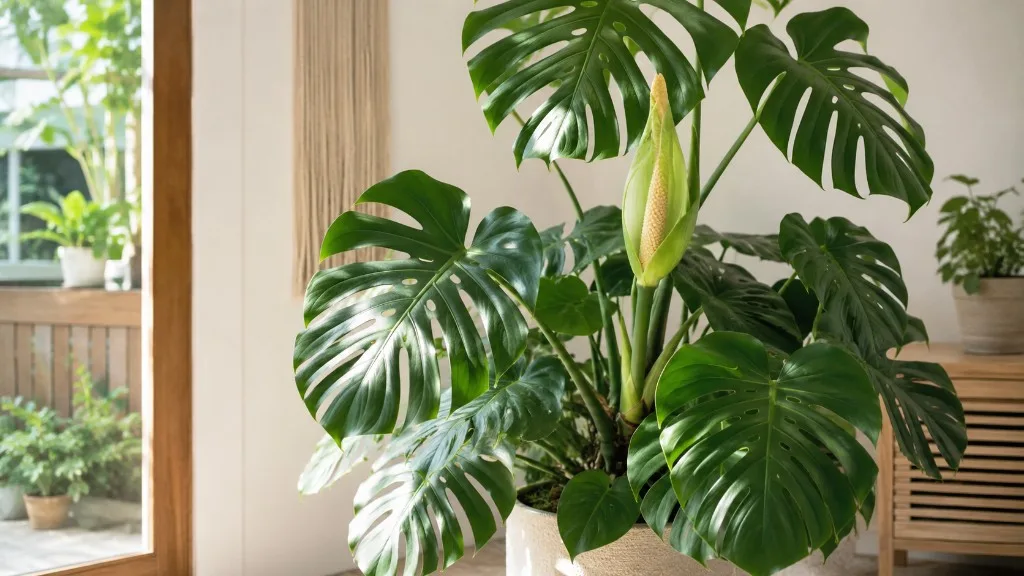
Monstera deliciosa pruning starts with inspection, not scissors. On a mature split-leaf floor plant, the first move is to remove only fully yellow, brown, or torn leaves at their petiole bases - then step back and decide whether the vine still needs shortening. Deliciosa is a large climbing aroid that can reach ceiling height within a few seasons on a moss pole; node-aware cuts control that spread, thicken bare lower stems, and supply propagation material without fighting the plant’s upward architecture.
Unlike faster-growing Monstera adansonii, deliciosa carries heavier leaves on thicker vines. NC State Extension describes it as a hemiepiphytic tropical vine; Missouri Botanical Garden notes mature indoor leaves can exceed 60 cm when climbing support is adequate. Pruning manages size and fullness - mature fenestrations come from age, Monstera Deliciosa light guide, and climbing, not from cutting leaves.
The ASPCA lists Monstera as toxic to cats and dogs due to calcium oxalate crystals. Sap irritates skin - wear gloves and keep trimmings out of pet reach.
What Pruning Does - and Cannot Do
Pruning on deliciosa serves practical goals:
- Size control when vines exceed ceiling height or sprawl across floors
- Bushier lower growth by cutting above nodes on long bare stems
- Removing damaged foliage after watering or pest issues stabilize
- Harvesting node-bearing cuttings for water or sphagnum propagation
- Managing obstructive aerial roots without stripping every anchor point
Pruning does not create more leaf splits. Splits depend on plant maturity, light intensity, and whether vines climb a stable pole. RHS emphasizes support for healthy monstera growth - scissors redirect energy; poles and light deliver the architectural leaves owners expect.
When to Prune Monstera Deliciosa
Yellow or dead leaves: remove any time once mostly yellow, after correcting chronic overwatering if that was the cause.
Structural vine cutbacks: late spring through early summer for fastest bud activation. Clemson HGIC groups spring and summer as the active care window for monstera - the same period when pruned plants rebound fastest.
Aerial root trimming: year-round for dry, broken, or walkway-blocking roots.
Light maintenance: tip cuts above upper nodes during active growth if vines grow past support ties.
Avoid major cutbacks immediately after Monstera Deliciosa repotting guide, relocation, or during visible root stress. Let the plant settle two weeks before removing large vine sections.
What to Check Before Cutting
Walk the plant once before opening pruners:
- Nodes - swollen rings where leaves, aerial roots, or leaf scars attach; every structural cut must reference a node
- Aerial roots - which anchor to the moss pole and which hang loose or block paths
- Support - whether remaining vines can stay tied after shortening; deliciosa top-heaviness increases after hard cuts without re-tying
- Leaf health - separate yellow leaves (often watering) from structurally sound vines worth keeping
- Pet access - sap and fallen leaves near floor level
Mark mentally where bare internode sits below the foliage cluster. On deliciosa, two feet of naked stem below leaves is common on ceiling-bound specimens - that bare zone is where multiple node cuts create fullness.
The First Cut: Remove Damaged Leaves Only
Start by snipping fully yellow, brown, or pest-damaged leaves at the petiole base where it meets the vine. Do not pull - tearing damages tissue and invites rot entry on thick stems.
If every leaf on a vine section is dead and the stem is woody-brown and brittle, that section can come out entirely. Otherwise, stop after cleanup and reassess. Many owners discover that removing five yellow lower leaves solves the visual problem without touching healthy climbing growth.
Where to Cut: Node Placement
Identify nodes as slight swellings with leaf scars, aerial root stubs, or active roots. Cut 6–10 mm above the node at a slight angle so water runs off the wound.
New growth emerges from buds at or just below the cut - never from mid-internode tissue. UMN Extension confirms cuttings without nodes fail to produce new growth; the same node biology drives post-prune branching.
For maximum bushiness on a leggy vine, make several cuts along one long stem - each above a different node - rather than one tip-only trim that leaves feet of bare internode below the foliage crown.
Aerial Roots
Healthy aerial roots anchor deliciosa to moss poles and absorb moisture in humid rooms. Leave them unless they:
- Block walkways or damage paint
- Are dry, broken, or clearly dead
- Must be shortened on an overgrown specimen you are deliberately downsizing
Cut cleanly with sharp snips; never rip roots from the vine. Removing every aerial root on a top-heavy plant without confirming pole ties and remaining anchors risks instability.
How Much You Can Safely Remove
Follow the one-third rule: remove no more than one-third of total foliage per session on a healthy plant during active growth. Deliciosa tolerates moderate pruning when roots and light are strong, but stripping half the leaves on a dim-corner specimen produces long bare shock.
For floor plants neglected for years, stage dramatic rejuvenation across two or three spring sessions spaced four to six weeks apart. Each round removes another third of excess vine length while leaving enough leaf surface to fuel recovery.
Pruning for Size Control on Moss Poles
When a deliciosa vine hits the ceiling, shorten it in planned sections rather than one dramatic chop:
- Trace the vine from base to tip and note node positions
- Decide target height - usually 15–30 cm below the ceiling to allow new growth
- Cut above a node at that height; re-tie the shortened vine to the pole immediately
- If multiple stems compete, shorten the longest first while keeping at least one leader climbing
After shortening, expect new shoots from nodes two to four below the cut within two to four weeks during spring growth. Without re-tying, new stems sprawl horizontally instead of climbing - defeating the architectural look deliciosa is grown for.
Propagation From Prunings
Every section with at least one node and preferably one leaf roots in water or moist sphagnum. UMN Extension notes nodes are mandatory - leaf-only pieces rot without branching.
Root cuttings in the same pot at the base for immediate fullness on sparse specimens, or water-propagate until roots reach 5 cm before planting. Keep the original lower end downward; orientation affects root development.
Aftercare and Recovery
Post-prune care is straightforward:
- Bright indirect light - essential; pruned deliciosa in dim corners re-elongates internodes within weeks
- Water when top 3–5 cm dries - reduce frequency slightly if many leaves were removed
- Hold fertilizer two to three weeks, then resume monthly balanced feed during summer
- Re-tie vines to the moss pole after every structural cut
- Expect visible buds in two to four weeks during active growth; slower in winter
Signs pruning worked: new shoots from nodes below cuts, stable remaining leaves, tighter overall silhouette, and climbing growth re-attaching to support.
Signs pruning was too aggressive or badly timed: widespread yellowing on remaining leaves, soft stems at the base, or no bud break after six weeks in spring light.
Mistakes to Avoid
Cutting mid-internode - the stub dies back; no branching occurs.
Pruning without a moss pole plan - new growth sprawls across floors instead of climbing.
Removing all aerial roots on heavy vines - torn petioles and tipping risk.
Expecting more fenestration from pruning - splits need maturity and light, not scissors.
Ignoring oxalate sap - skin irritation and pet toxicity from fresh cuts and fallen leaves.
Overwatering after a hard prune - remaining roots in wet soil yellow more leaves.
When Not to Prune
Delay structural cuts when the plant was repotted within two weeks, just moved to a new room, shows active root rot on Monstera Deliciosa (sour soil, collapsing stems), or is in winter dormancy with no growth for months - unless removing clearly dead material.
Emergency removal of diseased or pest-infested leaves is always appropriate; wait on size-control cuts until underlying stress resolves.
Conclusion
Monstera deliciosa pruning is node-aware management of a large climbing vine: inspect first, remove only damaged leaves, then cut above nodes for bushiness or height control while keeping moss pole support in place. Prune in spring for speed, respect the one-third limit on floor-sized plants, propagate cuttings instead of discarding them, and trim aerial roots only when they cause real problems. Scissors control size and fullness; poles and bright light deliver the split leaves that make deliciosa worth the floor space.
When to use this page vs other Monstera Deliciosa guides
- Monstera Deliciosa overview - Start here for whole-plant context before deep-diving this topic.
- Monstera Deliciosa problems hub - Jump to symptom-specific fix guides when this care topic does not resolve the issue.
- Leggy Growth on Monstera Deliciosa - Escalate here when pruning adjustments are not enough.
- Plant Leaning on Monstera Deliciosa - Escalate here when pruning adjustments are not enough.
- Brown Tips on Monstera Deliciosa - Escalate here when pruning adjustments are not enough.