Root Rot on Monstera Deliciosa: Causes, Checks & Fixes
Quick answer
Root rot on Monstera Deliciosa usually starts when chunky aroid mix stays wet too long. First step: stop watering, probe 5–7 cm deep, lift the pot, and inspect roots before repotting.
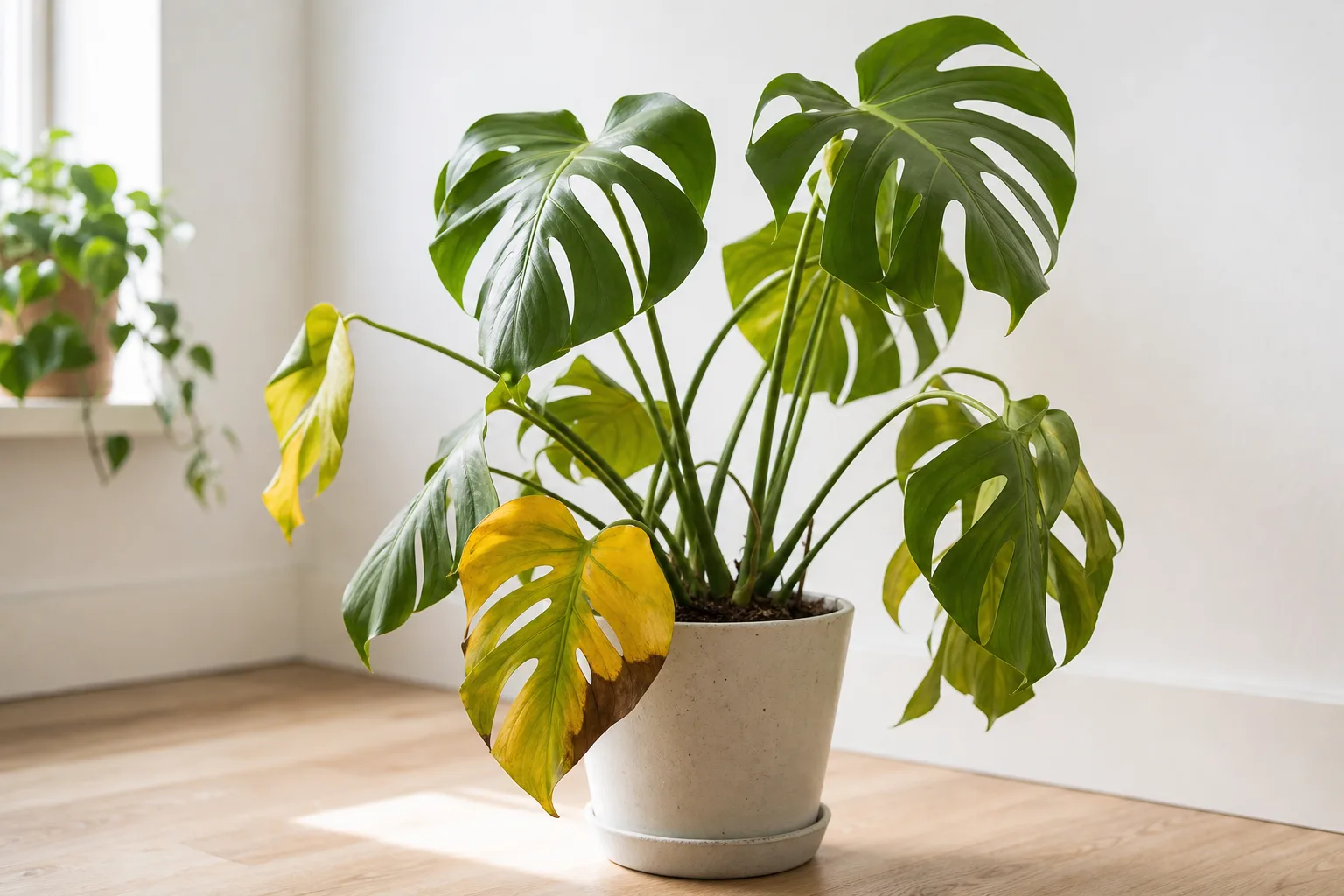
Root Rot on Monstera Deliciosa: Causes, Checks & Fixes
This guide covers root rot on Monstera Deliciosa. See also the general Root Rot guide, watering, and light pages for this plant.
Root Rot on Monstera Deliciosa: Causes, Checks & Fixes
Quick answer
Root rot on Monstera Deliciosa is almost always a watering and drainage failure, not a mysterious disease. Monstera deliciosa is a large climbing aroid in the Araceae family with fenestrated leaves and aerial roots-its chunky mix must dry predictably between drinks, not stay saturated for weeks.
First step: stop watering and check whether soil is wet 5–7 cm deep while leaves are limp. That pattern-wilt on wet soil-is the hallmark pre-rot signal on floor-sized Monsteras. Lift the pot (heavy = wet), press the stem base near soil (soft = advanced rot), and smell the drainage hole (sour = confirmed). Only after that triage should you unpot, trim mushy roots, and repot into fresh mix. For wet-vs-dry wilt triage before rot is confirmed, see wilting on Monstera Deliciosa.
Root rot vs. other Monstera problems
Root rot is confirmed decay of root tissue, usually after chronic oversaturation. It is not the same as every yellow leaf or limp petiole.
| Pattern | Likely cause | Key check |
|---|---|---|
| Limp leaves, wet mix 5–7 cm down, heavy pot | Root rot or uptake failure | Unpot; roots brown/slimy |
| Limp leaves, dry mix, light pot | Underwatering / thirst wilt | Soak and drain; see underwatering |
| Limp leaves right after repot | Repot shock | Firm stem; wait 5–10 days; avoid overwatering |
| Lower yellow leaves, outer soil wet for weeks | Pot too large | Root ball fills less than half the pot |
| Small leaves, no splits, damp mix in dim room | Low light + slow dry-down | See not enough light |
This page focuses on confirmed or strongly suspected rot-when inspection shows mushy roots, sour mix, or persistent wet-soil wilt. If you are still deciding wet versus dry, start with the wilting guide.
What root rot looks like on Monstera Deliciosa
Because mature Deliciosa leaves are broad and fenestrated, the plant can look healthy from across the room while roots fail underground. Rot often shows on the lower leaves and stem base first while newer vine growth still appears firm-for a while.
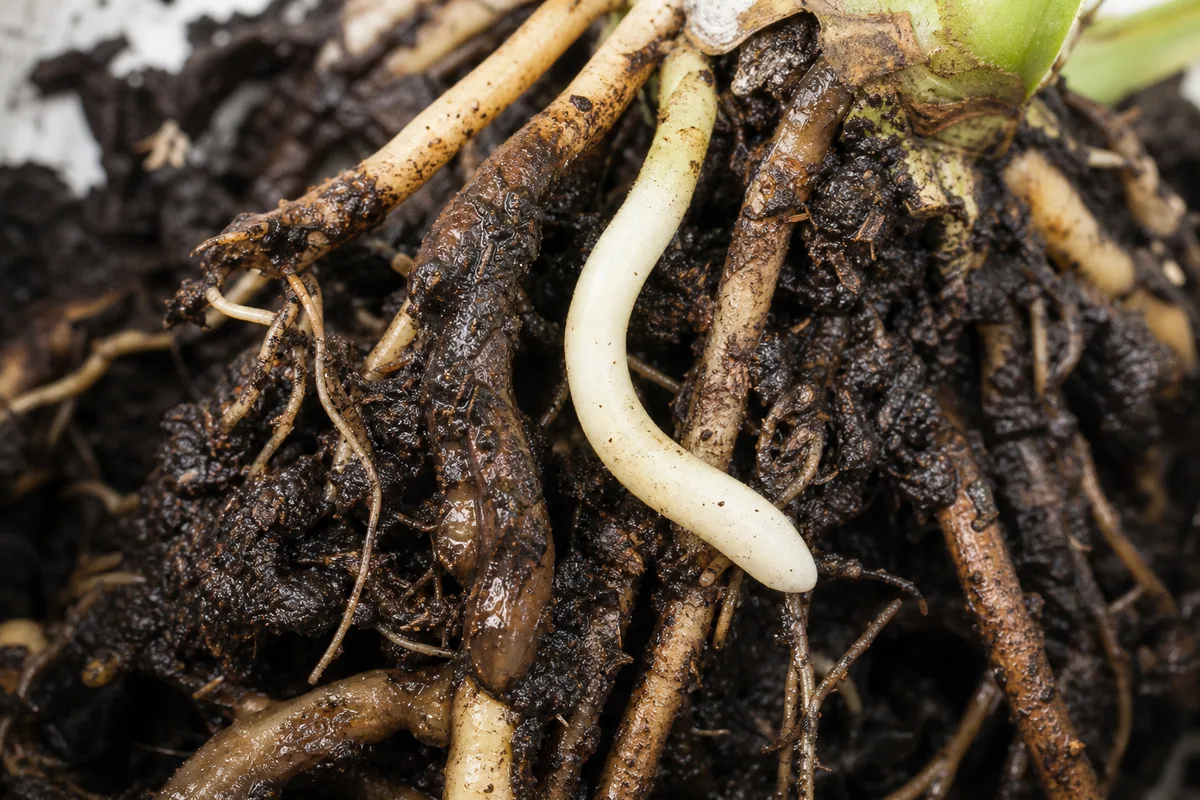
Root Rot symptoms on Monstera Deliciosa - compare with healthy tissue on the same plant.
Early signs
- Wilt on wet soil - Large leaves hang limp even though the top 3–5 cm feels moist and the pot stays heavy for days
- Lower leaf yellowing - Older leaves yellow at the edges while mix remains damp
- Sour or musty smell from the drainage hole or surface of the mix
- Fungus gnats hovering over persistently wet chunky mix - see fungus gnats if insects are the main issue
- Softening at the soil line - The lower stem feels less firm when pressed
Advanced signs
- Mushy stem tissue at or above the soil line; multiple nodes turning brown
- Canopy collapse - Most leaves limp at once despite soggy mix
- Translucent, brown, or hollow roots on unpotting; healthy Monstera roots are firm and pale
- Aerial roots on the moss pole shriveling or turning black while base roots have failed
- No new unfurling leaves for several weeks after you corrected watering
Damaged mature leaves rarely re-green. Judge recovery by firm new leaves unfurling on the vine, not by saving every old blade.
Why Monstera Deliciosa gets root rot
Monstera deliciosa is a climbing woody vine native from Mexico to Panama. Indoors it still behaves like a tropical aroid: it needs steady moisture at the roots with oxygen in the mix-not a permanently wet root zone.
Overwatering and poor drainage are the primary triggers. Penn State Extension notes that overwatering can result in root rot on Monstera. When mix stays saturated, roots lose access to oxygen and fine roots die first. The plant then wilts because decaying roots cannot move water upward-exactly like drought, except the pot is heavy.
Common Monstera-specific setups that cause rot:
- Calendar watering in a dim winter room while the top 3–5 cm still feels cool and damp
- Cachepots and saucers that hold runoff after every drink on a large floor plant
- Oversized decorative pots with weeks of wet outer soil beyond the root ball - covered in depth on pot too large
- Heavy peat mix without enough perlite or bark; Penn State recommends a well-draining soilless mix amended with charcoal, bark, or perlite
- Low light slowing evaporation so the top quarter to one-third never dries at the pace you expect
- Repotting into wet mix and watering heavily before cut roots callus - see repotting for timing
Large fenestrated leaves transpire heavily in warm, bright conditions-but in a cool corner with oversize pot volume, the same leaf mass masks root stress until a sudden collapse.
How to confirm the cause
Work through this checklist before repotting, fertilizing, or taking cuttings:
- Pot weight - A heavy container with limp foliage points to saturation or root failure, not thirst.
- Moisture at 5–7 cm - Surface dryness with a wet core is common in deep Monstera pots. Use a finger, skewer, or probe-not just the top crust.
- Wilt pattern - Whole-plant limpness on wet mix for more than 48 hours strongly suggests rot. One lower yellow leaf while the vine tip stays firm may be senescence.
- Stem base and smell - Soft tissue at the soil line or sour odor confirms you are past prevention-only stage.
- Drainage and cachepot - Are holes open? Is the nursery pot sitting in standing water inside a decorative sleeve?
- Root inspection - Knock the plant gently from the pot. Rotted roots are brown, slimy, or hollow; firm white or tan roots support a milder diagnosis.
- Recent history - New repot, moved to a darker room, or winter slowdown without reduced watering all raise rot risk.
If soil is wet throughout, the stem base is soft, and roots are mostly mushy, treat as confirmed root rot. If soil is wet but roots are still mostly firm and smell is neutral, you may be in early uptake failure-stop watering, improve airflow and light, and re-inspect in 48 hours before aggressive trimming.
First fix for Monstera Deliciosa
Stop watering immediately and move the plant to bright indirect light with good airflow. Do not fertilize, mist heavily, or repot on reflex.
Your next action depends on severity:
- Early wet-soil wilt, firm stem, mostly firm roots - Hold water until the top half of the mix dries; confirm drainage; see Monstera watering for dry-down rhythm.
- Sour smell, soft stem base, or mushy roots on quick inspection - Unpot within 24 hours and begin the numbered rescue below.
The worst mistake is adding water because large leaves look limp when soil is already wet-that deepens anaerobic conditions and crown rot.
Step-by-step rescue
Follow these steps in order when inspection shows decay:
- Unpot gently - Slide the root ball out; rinse away old mix so you can see all roots and nodes. Monstera deliciosa is toxic to cats and dogs and can irritate skin; wear gloves when handling rotted tissue and sap.
- Trim all mushy roots - Cut brown, slimy, or hollow roots back to firm white tissue with clean, sharp scissors or pruners. Sterilize blades between cuts on severely infected plants.
- Assess the stem - If the stem base is firm and green above the rot line, the plant can recover in soil. If multiple nodes are mushy, proceed to step 6.
- Air-dry cut surfaces - Let trimmed roots and any stem cuts dry 1–2 hours on a clean surface so fresh cuts callus slightly before repotting.
- Repot into fresh chunky mix - Use aroid mix with perlite and bark in a pot sized to the trimmed root mass, not the former canopy size. Open drainage holes are mandatory. Penn State advises a well-draining organic mix; avoid dense garden soil.
- Node-cutting salvage - When roots are mostly gone but firm nodes and stems remain above the rot line, cut sections with at least one node (and an aerial root when present). Root in water or sphagnum, then pot once new roots are 5–8 cm long. Full technique: Monstera propagation.
- Hold water briefly - Wait until the top 3–5 cm of new mix is dry before the first thorough drink unless leaves are visibly limp and the repotted mix is bone dry.
- Reattach the moss pole - Support the vine immediately so aerial roots are not stressed by flopping weight during recovery.
Do not stack repotting, heavy pruning, relocation, and fertilizer on the same day.
Recovery timeline
Mild cases - After trimming and repotting into appropriate mix, the pot should feel lighter on a predictable schedule within one to two weeks. You are looking for stopped spread of yellowing and the first firm new leaf unfurling on the vine within two to four weeks in warm, bright conditions.
Moderate cases - Expect three to six weeks before new growth looks normal. Old wilted leaves may not re-harden; that is cosmetic.
Severe crown involvement - When the stem base is mushy through multiple nodes, the mother plant is often not saveable. Shift effort to node cuttings from firm tissue above the rot line.
Worsening signs - Stem softening continues up the vine, leaves collapse further after repot, or no firm new growth appears after four weeks of corrected care.
What not to do
- Do not keep watering because leaves look wilted when soil is already wet - watering a plant with rotting roots worsens the problem
- Do not repot into a much larger pot as a rescue move; extra wet volume invites repeat rot - see pot too large
- Do not use dense garden soil or a pot without drainage holes
- Do not fertilize until new growth resumes; salts stress damaged roots
- Do not move a rotting plant into direct sun to dry it out - Monstera needs bright light but not direct sun and transpires harder in sun
- Do not assume every limp leaf means rot - run the wet-vs-dry check on wilting first
How to prevent root rot next time
Match watering to how your pot dries in your room, not a calendar. Water thoroughly and allow the soil to dry slightly between waterings; on Deliciosa that usually means letting the top 3–5 cm of mix dry before the next drink during active growth, and slowing down in cooler, darker months when the root zone stays moist longer.
Prevention checklist:
- Use chunky aroid mix with perlite and bark - details on Monstera soil
- Empty saucers and cachepots within 30 minutes of watering so the plant never sits in standing water
- Size pots to the root mass - upsize only 2–5 cm when roots circle the pot
- Place the plant in bright indirect light so it uses water steadily without stale wet soil - see Monstera light
- Probe depth, not just surface color, before every drink - the watering guide covers pot-weight and seasonal rhythm
- Watch for fungus gnats as an early warning of chronically wet mix
When to worry
Escalate immediately if the stem base softens, most roots are mushy on inspection, wilt spreads to every leaf while soil stays soggy, or the plant collapses further after you stopped watering and improved drainage.
Lower urgency when only one or two lower leaves yellow, the stem is firm, smell is neutral, and roots are mostly pale on a quick check - you may still be in early overwatering, not advanced rot. Correct the watering rhythm before aggressive surgery.
Conclusion
Root rot on Monstera Deliciosa is a rescue problem, not a mystery disease: wilt on wet soil, sour mix, and mushy roots tell the story on this climbing aroid. Stop watering, confirm with depth checks and unpotting, trim decay, repot into appropriately sized chunky mix, and judge success by new firm leaves on the vine. When the base is lost, firm nodes above the rot line can still become new plants through propagation. For day-to-day prevention, pair bright indirect light with the dry-down protocol in the watering guide - and use wilting when you are still deciding whether the problem is rot or thirst.
When to use this page vs other Monstera Deliciosa guides
- Monstera Deliciosa watering guide - Use for routine moisture checks before assuming root rot is the main issue.
- Monstera Deliciosa problems hub - Browse all 18 common issues on this species.
- Yellow Leaves on Monstera Deliciosa - Different entry point when symptoms overlap with root rot.