Yellow Leaves on Monstera Deliciosa: Causes, Checks & Fixes
Quick answer
Yellow leaves on Monstera deliciosa are a symptom, not a diagnosis. First step: lift the pot and probe soil 3–5 cm deep-heavy wet mix with soft yellow lower leaves usually means overwatering; a light dry pot with crisp yellow edges usually means underwatering. Fix moisture before fertilizing or repotting.
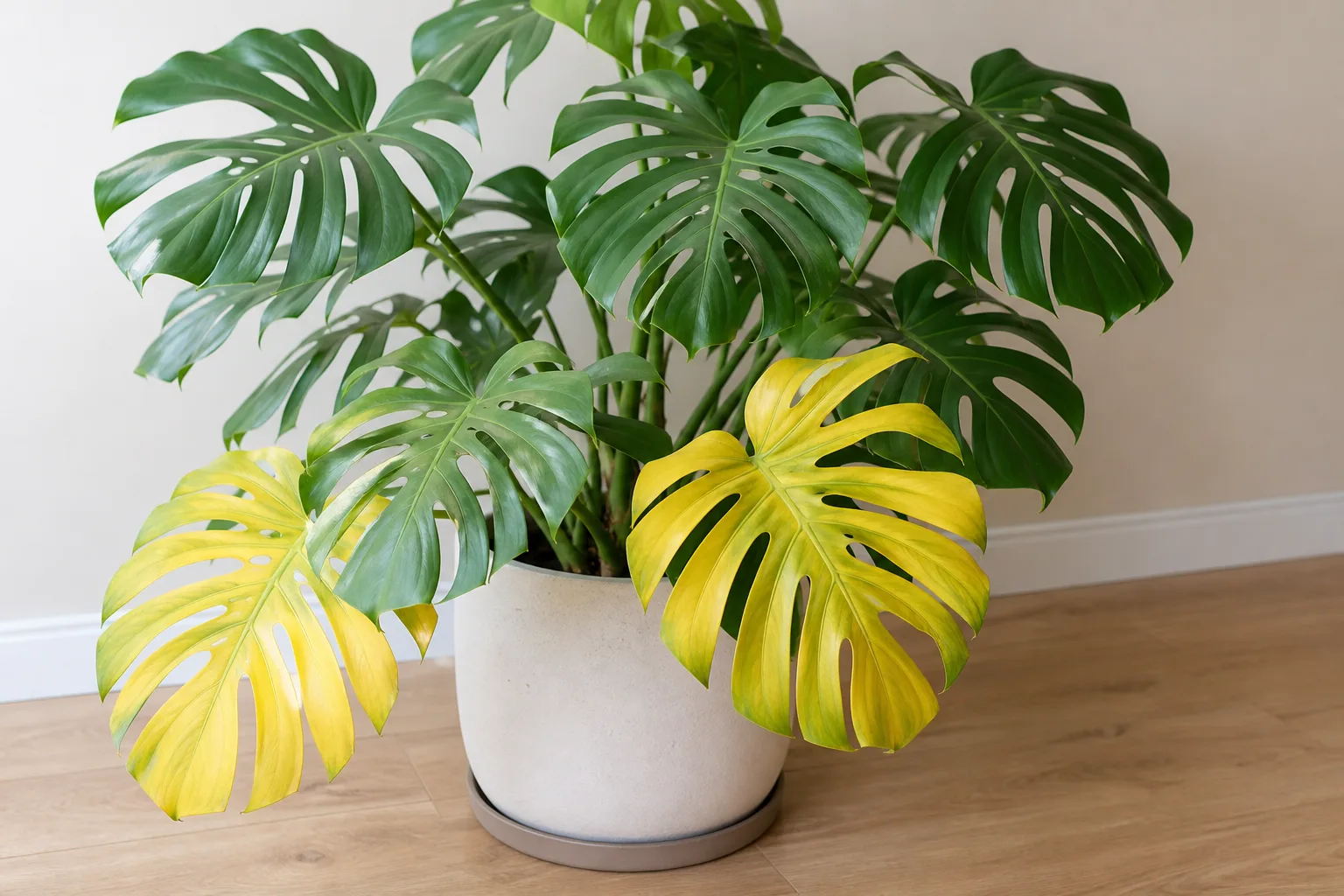
Yellow Leaves on Monstera Deliciosa: Causes, Checks & Fixes
This guide covers yellow leaves on Monstera Deliciosa. See also the general Yellow Leaves guide, watering, and light pages for this plant.
Yellow Leaves on Monstera Deliciosa: Causes, Checks & Fixes
Quick answer
Yellow leaves on Monstera deliciosa (Monstera deliciosa) are a symptom, not a diagnosis. A single large fenestrated blade turning butter-yellow can look like catastrophe even when the climbing vine tip is pushing healthy green growth-but widespread yellowing on wet soil is a genuine stress signal that needs action before rot spreads.
The diagnostic trap on this species is the same one that catches owners on drooping leaves: underwatering and overwatering both yellow foliage, and the leaf color alone does not tell you which. Yellowing often follows overwatering when roots cannot function in saturated mix. A heavy, waterlogged pot with soft yellow lower leaves points to roots drowning in soggy mix. A feather-light pot with crisp yellow edges on the lowest leaf points to drought stress. Uniform pale yellow across several leaves with long, stretched petioles often means insufficient light-not a watering problem at all.
First step: lift the pot and probe soil moisture 3–5 cm deep. Do not reach for fertilizer, repotting mix, or the watering can until you know whether the root zone is dry, evenly moist, or waterlogged. Fixing the wrong variable is how a recoverable yellow lower leaf becomes a whole-plant root crisis on a Monstera that prefers drying between drinks.
What yellow leaves look like on Monstera Deliciosa
Healthy Monstera deliciosa holds glossy green, leathery blades on stiff petioles along a climbing apical vine. Yellowing breaks that pattern in ways that narrow the cause if you read the whole plant-not just the most dramatic leaf.
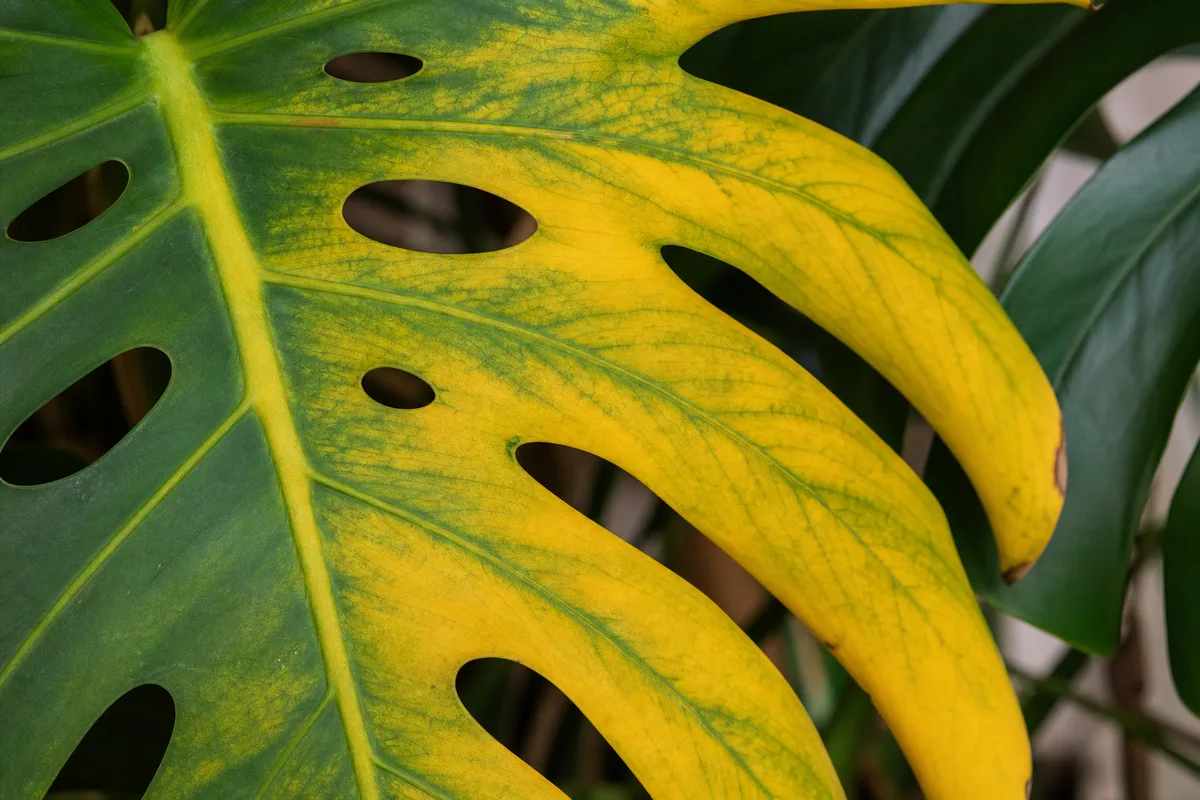
Yellow Leaves symptoms on Monstera Deliciosa - compare with healthy tissue on the same plant.
Typical yellow patterns on this species:
- Single lowest leaf, uniform yellow - The oldest leaf at the bottom of a moss-pole vine fades evenly from tip to base over weeks while new growth at the tip stays green. Often normal senescence on a mature climber.
- Multiple lower leaves, soft texture, wet soil - Yellow spreads up from the base with limp petioles and sometimes droop. Classic overwatering or root stress; may follow chronic soggy mix in an oversized pot.
- Crisp yellow or brown edges on lowest leaves, light dry pot - Dry-down went too far; edges desiccate before the whole blade yellows. Underwatering or inconsistent watering in fast-draining aroid mix.
- Uniform pale yellow on several leaves, long petioles, leggy internodes - Insufficient light weakens chlorophyll across the canopy; new leaves may stay smaller and solid without fenestrations. See not enough light if splits disappeared on recent growth.
- Spotty yellow or bronze speckles with fine webbing - Spider mite feeding on large leaf surfaces; soil moisture may be normal. Check undersides of fenestrations and petiole joints.
- Yellow after recent repot - Transplant shock or root damage from handling; usually temporary if stem bases stay firm and moisture is balanced.
Monstera leaves are large relative to the petiole, so one yellow lower leaf on an otherwise green vine can dominate the visual field. Always check the newest unfurling leaf at the vine tip before panicking-that tissue tells you whether the plant is still actively healthy.
Not the same as normal color: Variegated cultivars show natural cream sectors that are stable-not spreading yellow. New leaves emerge tightly rolled and lighter green for days before hardening off; that is growth, not chlorosis.
Why Monstera Deliciosa gets yellow leaves
This tropical climbing aroid evolved with episodic rain and sharp drainage in forest canopy gaps. Indoors, yellow foliage almost always traces to how water, oxygen, and light interact in the pot-not a mysterious leaf disease.
Overwatering and root oxygen loss
Saturated mix drives out soil oxygen. Fine roots die; remaining roots cannot move water and nutrients even though the soil feels wet. The plant shows nutrient and water stress in abundance-yellow lower leaves, limp petioles, sometimes droop on heavy, cool soil. This is the most common cause on Monstera deliciosa and the most dangerous misread, because the instinct to “help” with more water accelerates decay.
Heavy peat mix, pots without drainage, oversized containers, and dim rooms where evaporation slows all keep the root zone wet too long. Fungus gnats and sour smell often appear alongside yellowing when the pattern is chronic.
Underwatering and drought stress
Monstera uses water quickly through its large leaf surface in bright light. When the mix dries beyond what roots can access-especially if bark has shrunk and pulled away from the pot wall-lower leaves yellow from the edges inward or fade uniformly. Calendar watering in winter while the plant still grows under a grow light can produce the same pattern.
Natural senescence on climbing vines
On a moss-pole Monstera, the lowest attached leaf eventually yellows and drops as the apical vine extends upward. That is normal aging on an alternate-leaf climber-not rosette “crown” turnover. One leaf every few months at the base while new perforated blades unfurl above is low concern.
Insufficient light
In a dim corner, the plant produces less chlorophyll. Leaves turn uniform pale yellow-green; petioles stretch and internodes lengthen as the vine reaches toward the brightest window. Metabolism slows, so owners often keep watering on a summer schedule while the mix stays wet-combining light stress with overwatering yellowing.
Spider mites and stippling damage
Large Monstera foliage offers plenty of surface area for spider mites in dry indoor air. Feeding removes chlorophyll in tiny patches that merge into yellow or bronze speckling. Webbing under leaves or at petiole bases distinguishes this from moisture yellowing.
Repot shock, salt buildup, and nutrient stress
Recent repotting can yellow a leaf or two while fine roots re-establish. Accumulated fertilizer salts or chronic underfeeding can also yellow lower foliage-but never assume fertilizer deficiency before checking moisture and light. Salt buildup from overfeeding yellows leaves while roots are otherwise healthy; flushing the pot and pausing fertilizer is the fix, not more NPK on day one.
Large-pot surface-dry mismatch
Monsteras in 10-inch pots and bigger often show dry surface soil while the root mass below stays wet. Surface checks alone mislead; yellow lower leaves on wet core soil mean too much water overall, not thirst.
How to confirm the cause
Work through these checks in order. Each step narrows the cause before you treat.
- Soil moisture at 3–5 cm - Insert a finger, skewer, or moisture meter probe to the middle of the root ball, not just the surface. Dry at depth with a light pot = thirst. Wet, cool, dark soil at depth with a heavy pot = pause watering.
- Pot weight - Lift the container before and after a normal watering when the plant is healthy so you learn what “dry” and “moist” feel like. A yellowing plant in a feather-light pot almost always needs water; a yellowing plant you can barely lift is likely oversaturated.
- Which leaves yellow - Lowest node only, slowly, with green apical unfurling = senescence. Multiple lower leaves at once on wet soil = root stress. Upper/new leaves yellow = light, mites, or systemic stress-investigate further.
- Texture and smell - Soft limp yellow leaves on wet mix differ from crisp yellow edges on dry mix. Sour smell from drainage holes suggests active rot.
- Watering history - When did you last water? Bottom-water with a full saucer? Calendar schedule in a dim winter corner?
- Light level - Leggy stretched stems with pale uniform yellow point to insufficient light even if soil moisture is fine.
- Pest scan - Hold a leaf to the light and check undersides for stippling, webbing, or moving specks. Mites need isolation and treatment-not a watering change.
- Root peek (if soil is wet and yellow spreads) - Slide the plant partly out of the pot. Healthy roots are firm and light-colored; brown, mushy, smelly roots confirm rot-related yellowing.
If dry soil and a light pot confirm dehydration, you do not need to unpot. If soil is wet and multiple leaves have yellowed over a week, inspect roots before the next watering.
First fix for Monstera Deliciosa
Lift the pot and probe soil at 3–5 cm depth-then act on what you find, not on how alarming one yellow leaf looks.
That single check prevents the two most common mistakes: drowning an overwatered plant or letting a thirsty one sit another week. Everything else follows from dry versus wet.
- If dry: Water thoroughly until a small amount runs from drainage holes, then empty the saucer. For severely dry mix that repels water, bottom-soak the pot in a basin for 20–30 minutes, then drain fully.
- If wet: Do not water. Move to brighter indirect light if the plant is in deep shade-faster dry-down helps. Wait until the top 3–5 cm of mix dries before reassessing. Unpot only if yellowing continues after the surface has dried appropriately.
- If one lowest leaf only, soil balanced, green apical growth: Remove the fully yellow leaf at the petiole base with clean shears. No other treatment needed-watch the next leaf cycle.
Do not fertilize, repot into a larger container, or prune half the plant on day one. Those add stress before you know whether the problem is moisture balance, light, pests, or normal senescence.
Step-by-step recovery
Once you know dry versus wet-or confirmed senescence, mites, or light stress-follow the matching path.
Thirst recovery (dry soil, crisp yellow edges)
- Water deeply once, or bottom-soak if the mix has shrunk away from the pot edge.
- Drain completely-never leave the pot standing in water.
- Move the plant out of direct hot sun while it rehydrates.
- Remove fully yellow leaves that will not re-green; trim crisp brown edges only if they bother you cosmetically.
- Resume watering when the top 3–5 cm dries again.
- Judge recovery by turgid existing leaves and the next unfurling leaf opening green-not by old yellow tissue regaining color.
Wet-root recovery (soggy soil, soft yellow lower leaves)
- Stop watering until the top quarter to one-third of the mix dries.
- Ensure drainage holes are clear and the saucer stays empty.
- If yellowing spreads after appropriate dry-down, unpot and trim mushy roots back to firm tissue with clean scissors.
- Repot into fresh, chunky aroid mix-perlite and orchid bark in standard potting soil-not a bigger pot unless roots truly filled the old one.
- Wait five to seven days after repot before the first light watering if you trimmed rot.
- Hold fertilizer until new growth looks healthy for two weeks. Read root rot if stems soften at the base.
Normal senescence (one lowest leaf, green vine tip)
- Wait until the leaf is mostly yellow-fully senescent tissue drops cleanly.
- Cut at the petiole base with clean pruners if it hangs awkwardly on the moss pole.
- No watering or light changes needed if soil rhythm and new growth stay healthy.
Low-light recovery (pale uniform yellow, leggy stems)
- Move to bright indirect light within a few feet of an east or filtered south/west window-or add a grow light for 10–12 hours daily.
- Adjust watering to the new dry-down rate; brighter spots use water faster.
- Do not expect old stretched petioles to shorten; watch the next two or three new leaves for greener color and shorter internodes.
Spider mite recovery
- Isolate the plant from others.
- Rinse leaf undersides thoroughly in the shower or with a hose.
- Confirm active mites before applying horticultural oil or insecticidal soap per label directions.
- Repeat treatment on the schedule the product requires; misting alone does not control mites.
- Read the full spider mites guide before stacking treatments.
Recovery timeline
Simple underwatering: Crisp edges may brown further, but existing green tissue firms within 12–48 hours after a proper soak. The next unfurling leaf should open green within one to two weeks.
Overwatering without major rot: Once the mix dries to the appropriate depth and oxygen returns, yellow spread should stop within three to seven days. New apical leaves opening without yellow are the best sign.
Root damage or repotting: Recovery stretches to two to four weeks or longer in cool seasons. Judge success by firm new roots, stable stem bases, and fresh green unfurling leaves-not by old yellow blades re-greening.
Normal senescence: The single yellow leaf drops within one to three weeks; no further yellowing should appear on higher nodes if care is stable.
Worsening signs: Spreading yellow despite corrected dry-down, softening stems at the soil line, sour smell, or new growth opening yellow mean the root zone or environment is still failing-escalate to full root inspection.
Fully yellow leaves will not turn green again. Recovery is always measured by new apical growth, not by hoping spent lower foliage revives.
Lookalike symptoms
- Drooping before yellow - Turgor loss often precedes color change on wet or dry extremes. Use soil moisture to diagnose; see drooping leaves for the wet-vs-dry fork.
- Wilting on wet soil - Uptake failure from damaged roots, not thirst. Do not soak; read wilting.
- Brown tips with partial yellow - Often underwatering progressed further or low humidity; see crispy leaves if edges stay brown after rehydration.
- Solid new leaves without splits - Low light, not moisture yellowing. See not enough light.
- Black or brown spots - Fungal leaf spot or physical damage, not uniform moisture yellow. Improve airflow; avoid wetting foliage at night.
- One old leaf on a thriving moss-pole vine - Normal senescence, not overwatering-unless soil stays wet and more leaves join it.
What not to do
Do not fertilize yellow leaves on a stressed plant-salts on damaged roots worsen yellowing. Fix moisture and light first; flush accumulated salts only after the plant stabilizes.
Do not increase watering when soil is already wet because leaves look sad. That converts recoverable lower-leaf yellow into rot.
Do not repot into a much larger pot to “help drying”-extra wet soil volume makes overwatering worse.
Do not assume every yellow leaf needs immediate removal-wait until fully yellow on senescing lower leaves so the plant can reclaim mobile nutrients.
Do not propagate from a yellowing base without confirming firm white roots and healthy nodes above the damage.
When trimming yellow tissue, wear gloves if sap irritates your skin-Monstera deliciosa contains calcium oxalate crystals and is toxic to cats and dogs if chewed. Contact your veterinarian if a pet ingests trimmed leaves.
How to prevent yellow leaves next time
Match watering to how fast your pot dries in its actual spot. For most indoor Monstera deliciosa plants, that means watering when the top 3–5 cm of chunky, well-drained mix is dry-roughly every 7–10 days in warm bright conditions, less often in winter.
Use a pot with drainage holes and empty saucers after watering. Keep the plant in bright indirect light so it uses water steadily without baking in direct sun. Provide a moss pole so heavy leaves do not stress petioles sideways.
When repotting, size up gradually and use aroid mix with perlite and bark-not straight peat that stays wet for days. After moving the plant or changing seasons, recheck dry-down weekly instead of assuming last month’s schedule still fits.
Remove fully yellow spent leaves promptly to reduce pest hiding spots and improve airflow around the base of the vine.
When to worry
Treat as urgent if many leaves yellow at once on soggy soil, stems soften at the base, or the mix smells sour. A plant that yellows again within days of watering while soil is still damp needs root inspection-not another drink.
Slow yellowing of one old lower leaf while a new leaf unfurls green at the vine tip is low urgency-often normal senescence on a climbing Monstera.
Escalate to the root rot guide if trimming mushy roots becomes necessary or if yellow spreads after a week of corrected dry-down.
When to use this page vs. sibling guides
| Your question | Best page |
|---|---|
| Yellow leaves-need wet-vs-dry triage first | This page |
| Chronically wet soil, soggy mix, watering too often | Overwatering |
| Limp leaves before or with yellow-turgor problem | Drooping leaves |
| Unsure if soil is wet or dry | Wilting |
| Mushy roots, sour smell, soft stem base | Root rot |
| Pale yellow, leggy stems, no fenestrations | Not enough light |
| Stippling, webbing, speckled yellow | Spider mites |
| Everyday watering rhythm | Watering guide |
Related Monstera deliciosa guides
- Monstera deliciosa overview - species hub and yellow-leaf quick reference
- Watering guide - dry-down rhythm and seasonal checks
- Overwatering - chronic wet-soil yellowing deep dive
- Drooping leaves - limp foliage wet-vs-dry triage
- Root rot - when yellow follows failed root recovery
- Spider mites - stippled yellow with webbing
- Not enough light - pale uniform yellow and leggy growth
Conclusion
Yellow leaves on Monstera deliciosa look alarming because the blades are large-but the diagnosis is usually straightforward. Lift the pot, feel soil at depth, note which leaves yellow and whether the vine tip still unfurls green. Thirst yellow clears after one proper soak; wet-root yellow needs dry-down and sometimes root cleanup; a single lowest leaf on a moss pole often needs nothing at all. Build prevention around dry-down rhythm, drainage, and bright indirect light, and judge recovery by new apical growth-not by old yellow tissue turning green again.