Plant Leaning on Monstera Deliciosa: Causes, Checks & Fixes
Quick answer
Monstera Deliciosa leans when heavy vines reach for one-sided light or climb without support. First step: rotate the pot so the lean faces your brightest indirect window, then install a sturdy moss pole if weight-not light-is pulling the plant sideways.
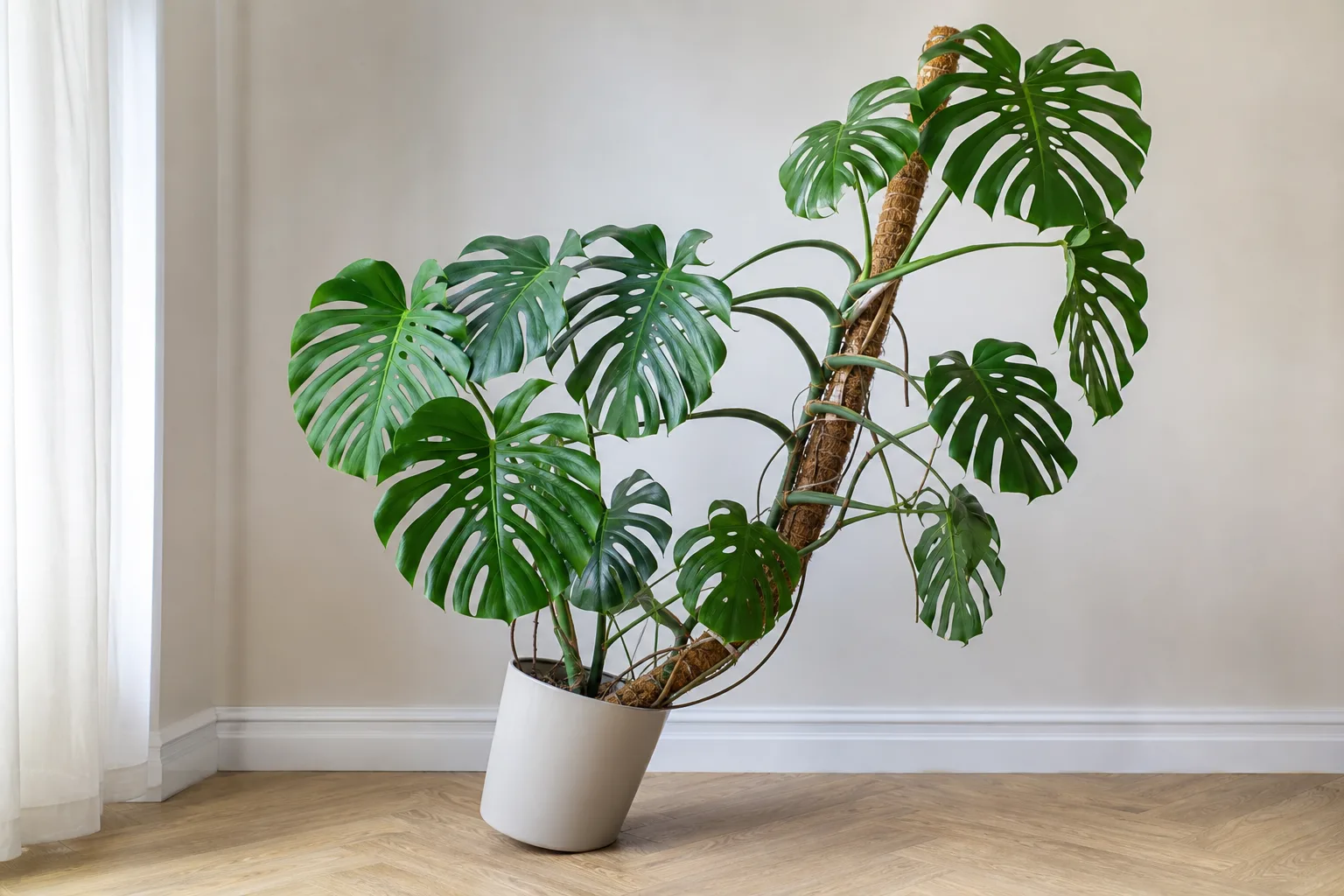
Plant Leaning on Monstera Deliciosa: Causes, Checks & Fixes
This guide covers plant leaning on Monstera Deliciosa. See also the general Plant Leaning guide, watering, and light pages for this plant.
Plant Leaning on Monstera Deliciosa: Causes, Checks & Fixes
Quick answer
A leaning Monstera Deliciosa (Monstera deliciosa, split-leaf monstera) is usually reaching for light or trailing without the support its growth habit expects. In nature Monstera Deliciosa overview is a vining plant that attaches to tree trunks with aerial roots; indoors, heavy split leaves on a shelf or in a small nursery pot can tilt the whole display even when roots are healthy.
First step: rotate the pot a quarter turn so the current lean faces your brightest indirect window, then watch new growth for two weeks. If stems keep stretching with long gaps between leaves, move to brighter indirect light. If the lean is mechanical-the pot tipping from vine and leaf weight-install a sturdy moss pole and gently tie stems so nodes contact the support. Sturdy support is necessary to prevent stems from breaking on a plant whose mature leaves can span more than a foot.
What plant leaning looks like on Monstera Deliciosa
Healthy Deliciosa sits upright in its pot while the main stem climbs a pole with architectural leaves held on stiff petioles. Leaning shows up as a tilted main stem, vines arching sharply toward one window, or a pot that feels top-heavy and wants to tip. On this species specifically, watch for these patterns:
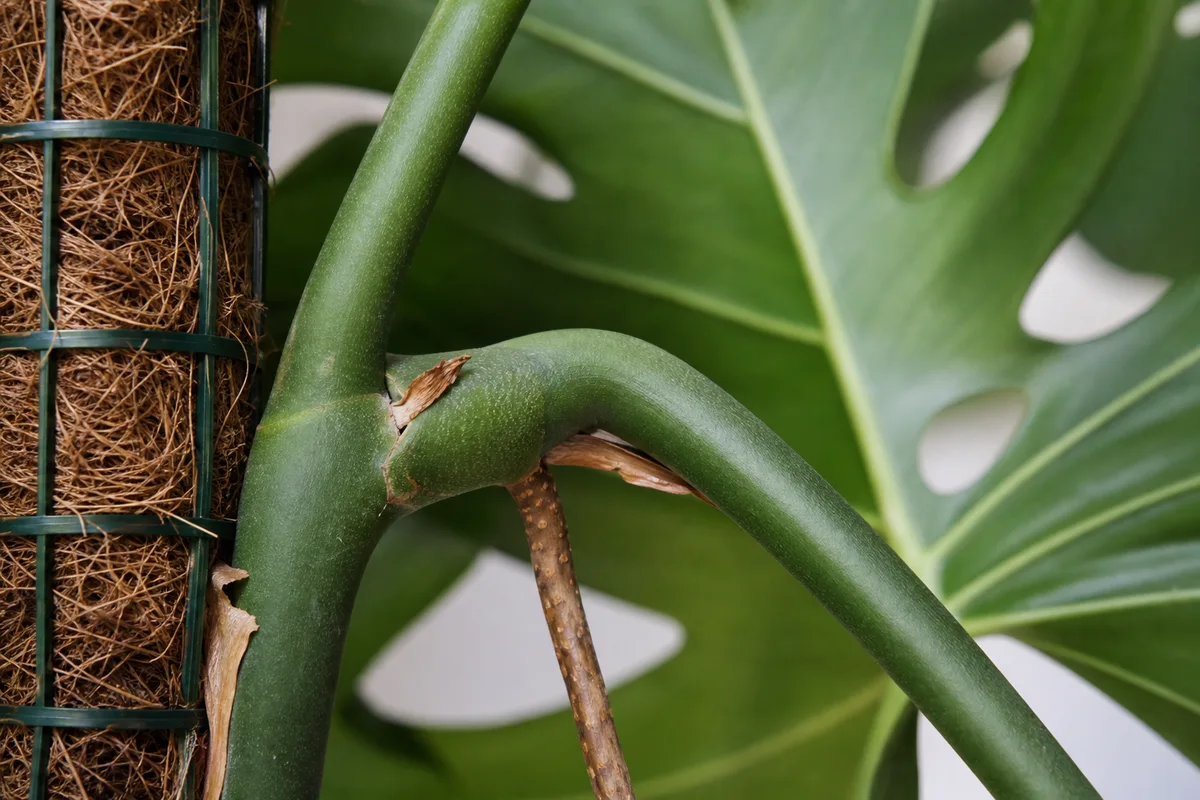
Plant Leaning symptoms on Monstera Deliciosa - compare with healthy tissue on the same plant.
- One-sided reach - new tips and split leaves point the same direction while the shaded side stays sparse
- Long bare stems on the leaning vine with leaves clustered only at the ends
- Aerial roots searching - nodes produce roots that grab furniture, walls, or neighboring pots when no moss pole is available
- Pot instability - a nursery pot supporting a rapidly growing climber that can reach 6 to 8 feet indoors creates leverage that pulls the plant sideways
- Smaller new leaves on the reaching side compared to older foliage near the base
This differs from normal trailing length. A long vine with closely spaced healthy leaves on a supported climber is fine. A vine that tilts the whole display or stretches with empty gaps between leaves is a care signal.
Why Monstera Deliciosa leans
Phototropism is the most common cause. When light reaches plants from one direction, they can develop a lean as foliage grows toward the brightest zone. Deliciosa’s thick vining stems respond because the species evolved as an understory climber reaching canopy light in tropical forests.
Missing climbing support is especially common on Deliciosa. Monstera deliciosa is a climbing vine in the arum family that starts terrestrial and turns epiphytic once it contacts a sturdy tree. Extension guidance notes that sturdy support is necessary to prevent stems from breaking. Without a moss pole or trellis, heavy leaves and long petioles pull the plant sideways rather than growing upright with firm attachment.
Insufficient light deepens one-sided reach. Deliciosa prefers moderate brightness but not direct sunlight; in dim corners internodes stretch, petioles weaken structurally, and the plant searches for photons. Indoor plants become spindly as they stretch to reach for more light.
Top-heavy growth adds mechanical lean. Deliciosa has a rapid growth rate and produces gigantic leaves up to a foot or more wide on long petioles. A small pot with several feet of unsupported vine and massive foliage creates leverage that pulls the plant sideways even when roots are healthy. UMN Extension notes that overgrown plants can tip over easily in undersized containers.
Weak roots from overwatering cause a different lean. Stems lose turgor and flop rather than actively reach. Wet soil, yellow lower leaves, and soft nodes mean you are dealing with root stress from overwatering, not phototropism alone. Deliciosa leaves droop dramatically when the root zone fails because each blade is heavy relative to the petiole.
Recent moves can trigger temporary lean. A plant shifted from bright light to a darker corner may redirect all new growth toward the nearest window within days.
How to confirm the cause
Work through these checks before changing much else:
- Direction test - mark which way stems and leaf tips point. If every tip aims at the same window, phototropism is likely.
- Support check - is a moss pole, trellis, or stake present and stable? Vines with aerial roots waving in open air often lean from missing structure, not disease.
- Internode comparison - measure gaps between leaves on the leaning stem versus compact growth near the pot. Long gaps confirm stretch from low light.
- Pot weight and moisture - lift the container and feel soil at 3–5 cm depth. Light dry pot with firm stems means drought is not the lean driver. Heavy wet pot with soft stems means check roots.
- Stability test - gently upright the plant. If it springs back and stems are firm, structure is sound. If stems bend at nodes or feel mushy, inspect roots before staking.
Confirmed phototropism with firm roots and normal soil moisture does not need Monstera Deliciosa repotting guide on day one.
First fix for Monstera Deliciosa
Rotate the pot a quarter turn so the leaning side faces your brightest indirect light source, then leave it there for one week.
This single step tells you whether the lean is normal one-sided growth. Deliciosa should start producing more even tips within two to three weeks when light is adequate. If new growth still stretches with long internodes, move the entire plant closer to an east window or a few feet from a south window filtered by sheer curtain-not into harsh direct sun that scorches large thin leaves.
If the pot tips from vine and leaf weight rather than directional reach, insert a sturdy moss pole deep into the mix and loosely tie the main stem so nodes with aerial roots contact the moss. Use a heavy ceramic or terracotta pot with drainage so the pole and plant do not tip together. Do not water heavily, fertilize, or repot solely because the plant tilts.
Step-by-step recovery
After the initial rotation:
- Improve light if stretch continues - relocate to the brightest indirect spot available. Acclimate over a week if moving from deep shade.
- Install or extend a moss pole - buy or build trellising to support and encourage your Monstera to climb. Place the pole deep enough to stay stable as the plant grows. Guide stems with soft ties at node intervals-never tie petioles, only the main vine. Keep moss moist to encourage aerial root attachment.
- Prune bare leaning vines - once light is better, cut long empty stems just above a node with clean shears. Trim above a node to encourage branching when conditions support new growth.
- Establish a rotation habit - turn the container weekly so all sides receive similar exposure.
- Check roots only if stems soften - if wet soil and yellow leaves accompany lean, slide the plant out and inspect for brown mushy roots before repotting in fresh chunky aroid mix with perlite and orchid bark.
Propagate healthy tip cuttings from pruned vines in water or moist sphagnum rather than discarding them-each cutting needs a node to root.
Lookalike symptoms
Drooping leaves mean turgor loss from drought or root rot on Monstera Deliciosa-stems hang limp rather than actively reach toward light. Leggy growth overlaps with leaning but emphasizes long gaps between leaves rather than pot tilt. Wilting after repot is temporary transplant stress with limp foliage across the whole plant, not directional reach.
If lean worsens while soil stays soggy and lower leaves yellow, treat as a root-zone problem first.
Recovery timeline
Rotation shows a change in growth direction within two to three weeks when light is sufficient. After a light upgrade, moss pole installation, and node cutback, expect new side shoots in two to four weeks during active growth. Hardened curved stems will not fully straighten; new compact growth from pruned nodes and anchored aerial roots defines success.
Mistakes to avoid
Do not stake heavily without fixing light-ties on weak stretched stems only hold a struggling plant in place. Do not move suddenly into direct afternoon sun; Deliciosa leaves burn quickly on large exposed blades. Do not over-fertilize in dim light hoping to thicken stems. Do not repot into an oversized container expecting stability; extra wet soil raises rot risk. Do not use a flimsy pole that wobbles when the plant leans on it-the whole setup can topple. Wear gloves when pruning and keep cuttings away from pets-Monstera Deliciosa contains calcium oxalate crystals and is toxic to cats and dogs if chewed.
How to prevent leaning next time
Place Deliciosa where Monstera Deliciosa light guide is realistic for most daylight hours, not only where a floor pot looks decorative. Provide a sturdy moss pole from early growth so aerial roots anchor before leaves become top-heavy. Rotate weekly, prune long vines each spring before they overwhelm a small pot, and match container size to root mass with open drainage-a heavy pot prevents tipping as the climber matures. Consistent light and support keep fenestrations developing and internodes shorter.
Conclusion
Monstera Deliciosa leaning is a placement and support problem far more often than a disease. Rotate toward better light, add a sturdy moss pole when heavy vines pull the pot sideways, upgrade brightness when stretch appears, and prune bare reaching stems. Firm roots, new compact growth, and even tip direction tell you the fix is working.
When to use this page vs other Monstera Deliciosa guides
- Monstera Deliciosa watering guide - Use for routine moisture checks before assuming plant leaning is the main issue.
- Monstera Deliciosa problems hub - Browse all 18 common issues on this species.