How Much Light Does a Monstera Really Need?
How much light does a Monstera really need? Learn survival vs growth light, species differences, variegated burn risk, and a step-by-step brighter-light plan.
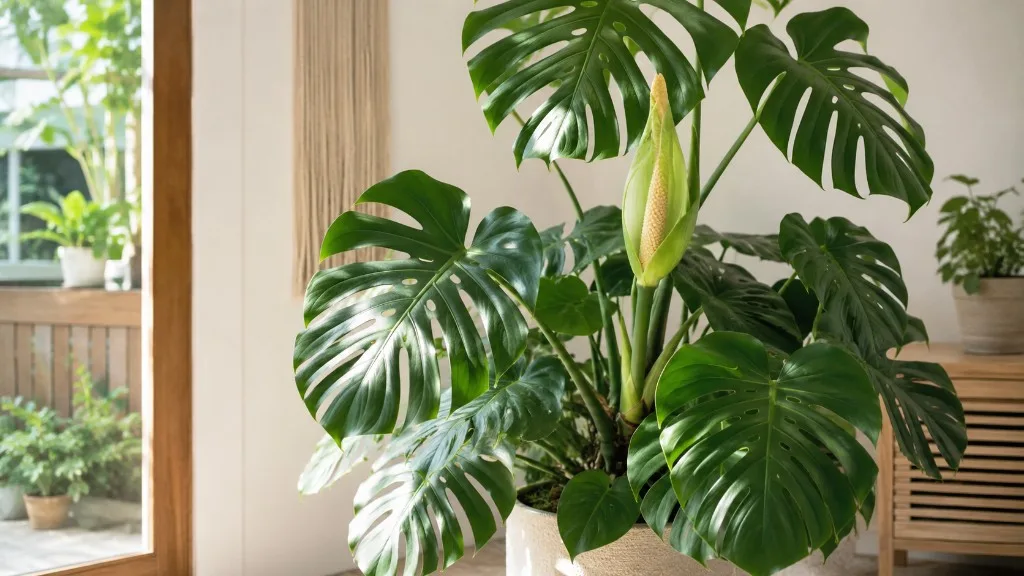
“Bright, indirect light” is the phrase every Monstera care tag repeats—and the phrase that causes the most arguments at the kitchen window. Your plant can look fine for months in a dim corner while slowly stretching toward the glass, or it can scorch in a single afternoon against unfiltered south glass. The real question is not whether Monstera likes light. It is how much usable brightness reaches the leaves that are growing right now, and whether that level supports survival, steady growth, or the large fenestrated foliage most people bought the plant to grow.
Quick answer: Mature Monstera deliciosa grows best with bright indirect light for most of the day—roughly 200–400 foot-candles at the leaf surface as a practical indoor working band for solid-green plants pushing larger split leaves. NC State Extension recommends moderate brightness but not direct sunlight indoors; Wisconsin Horticulture Extension adds that Monstera will not develop leaf perforations when light is inadequate, even under fluorescent lamps that keep the plant alive. Below about 100 foot-candles, most specimens survive but stall. Variegated cultivars generally need brighter exposure than green plants because pale tissue photosynthesizes less efficiently—while also scorching faster in harsh sun.
This guide translates those targets into window distances, shadow tests, grow-light hours, species differences, and symptom-based fixes. For full window tables and cultivar-specific placement, see the Monstera deliciosa light care page and Monstera light requirements guide. If symptoms are already severe, start with Monstera light deficiency recovery.
Why Monstera Light Needs Beat Generic “Low-Light Plant” Advice
Monstera is often sold beside pothos and snake plants, which tolerates dim corners far better. That merchandising creates a false expectation. Monstera deliciosa is a climbing hemiepiphyte from Central American forests. Seedlings start in shade, then climb trunks toward brighter canopy margins. Indoors, the plant is not asking for a dark bookshelf—it is asking for the brightest filtered position you can give it without baking the leaves.
RHS guidance on Swiss cheese plants describes the ideal as indirect light, such as by a west- or east-facing window or in a brighter room set back from the glass. Direct summer sun scorches foliage; very low light produces leaves with fewer holes. Missouri Botanical Garden lists houseplant culture as bright indoor light with no strong direct sun—a useful ceiling for indoor placement.
Juvenile Leaves, Maturity, and Fenestrations
Solid heart-shaped juvenile leaves are normal. Fenestrations—splits and holes—require plant age, climbing support, and adequate brightness working together. A young Monstera near a window may stay juvenile for years even when watering and humidity look perfect. Wisconsin Horticulture Extension is explicit: perforations do not develop under inadequate light.
That is why “my Monstera won’t split” is often a light question, not a fertilizer question—though maturity and moss-pole support matter too. Read why Monstera leaves won’t split when you need a full fenestration troubleshooting path. Light raises the ceiling; it does not rewrite leaves already hardened on the plant.
How Light Drives Watering and Root Health
Light and water move together. A brighter Monstera transpires faster and dries its pot sooner. A dim plant in the same weekly watering routine sits wet longer, which invites root rot while leaves merely look “slow.” Penn State Extension advises watering after the top 1 to 2 inches of soil dry—easy to misread when low light has slowed metabolism and the mix stays damp for ten days.
Before you buy a humidifier or change fertilizer, confirm whether the newest leaves are getting enough photons. Judge the canopy at the window, not how bright the room feels to your eyes.
Survival Light vs Growth Light for Monstera Deliciosa
Think in two tiers instead of one vague label.
Survival light keeps an established plant alive: a north room, a spot several meters from glass, or winter days when sun angle drops. Growth may continue, but internodes stretch, new leaves shrink, and fenestrations stall.
Growth light is the brighter indirect band where new leaves emerge firm, deep green (or stable variegation), and progressively larger on a supported vine. That is the target for a floor specimen worth the space.
Penn State Extension notes Monstera becomes leggy in lower light—longer spaces between leaves and lean toward the brightest source. Leggy architecture is structural evidence, not a cosmetic flaw you prune away.
Foot-Candle Targets and What They Mean in Real Rooms
Extension and indoor-growing references converge on a practical editorial band of about 200–400 foot-candles (roughly 2,000–4,000 lux) at the leaf surface for reliable fenestration development on a mature climbing deliciosa. Below ~100 foot-candles, perforations rarely advance even on older vines. Above ~400–800 foot-candles of bright indirect exposure, many acclimated specimens push larger blades—provided heat and direct beam duration stay controlled.
These numbers are working guides, not species-specific lab thresholds. Window tint, outdoor trees, and pot distance change readings more than compass direction alone. Use them to compare spots in your home, not as a single magic dial.
| Light level (editorial band) | Typical indoor feel | What green deliciosa usually does |
|---|---|---|
| Below ~100 fc | Faint shadow, far from glass | Survives; small leaves; few splits |
| ~100–200 fc | Soft readable shadow | Maintains; slow fenestration |
| ~200–400 fc | Clear soft shadow at foliage | Steady growth; better splits on mature vines |
| ~400–800 fc bright indirect | Strong shadow, no hot beams on leaves | Larger leaves when acclimated |
| Direct hot sun on tissue | Leaf surface heats within an hour | Burn risk; curl; bleached patches |
The Shadow Test, Calibrated
You do not need equipment to start. On a clear day, hold your hand between the plant and the window at leaf height.
- No readable shadow: likely below growth band—plan a move or grow light.
- Soft shadow with fuzzy edges: filtered or indirect light—often workable for green deliciosa if the canopy is within a few feet of glass.
- Sharp, high-contrast shadow: direct sun—fine for a minute during gentle morning exposure on an acclimated plant; risky for hours of afternoon glass glare.
Repeat at 9 a.m., noon, and 4 p.m. A spot that looks perfect at breakfast can become a solar oven by late afternoon on a west or south exposure. That daily arc is why “it gets morning sun” is not the whole answer.
Phone lux apps and dedicated light meters help compare two corners numerically. Measure at the topmost leaf, not the floor. If readings disagree with plant behavior, trust the newest leaf over the app—biology beats a single snapshot.
Light Needs for Adansonii, Siltepecana, and Variegated Cultivars
“Monstera” is a genus, not one light recipe. Species and cultivars differ in leaf size, chlorophyll distribution, and burn tolerance.
Smaller Monstera Species in Tighter Spaces
Monstera adansonii fenestrates on smaller leaves and tolerates slightly tighter placements than a floor-sized deliciosa, but it still wants bright filtered exposure—not a bathroom with a frosted window as the only source. Compare with the Monstera adansonii light guide. Penn State Extension notes M. adansonii is denser and more vigorous in typical houseplant culture, which often means it shows low-light stretch faster in a crowded shelf setup.
Trailing M. siltepecana juveniles can look silver and compact in moderate light; upright, mature foliage generally wants brighter exposure to develop typical fenestrations. Treat species labels as real differences, not marketing synonyms.
Thai Constellation, Albo, and Other Variegated Monsteras
NC State Extension states variegated cultivars need more sunlight than darker green types because white and cream sectors contain less chlorophyll. That does not mean full afternoon sun on a south window. It means the upper end of the bright indirect band, careful acclimation, and fast response when pale tissue turns papery or tan.
Variegated burn shows on the white first. Brown crispy patches on cream zones are often light damage, not underwatering—especially if soil is still moist. Increase brightness gradually; do not jump from a dim corner to unfiltered glass in one weekend.
Best Window Placement by Direction and Distance
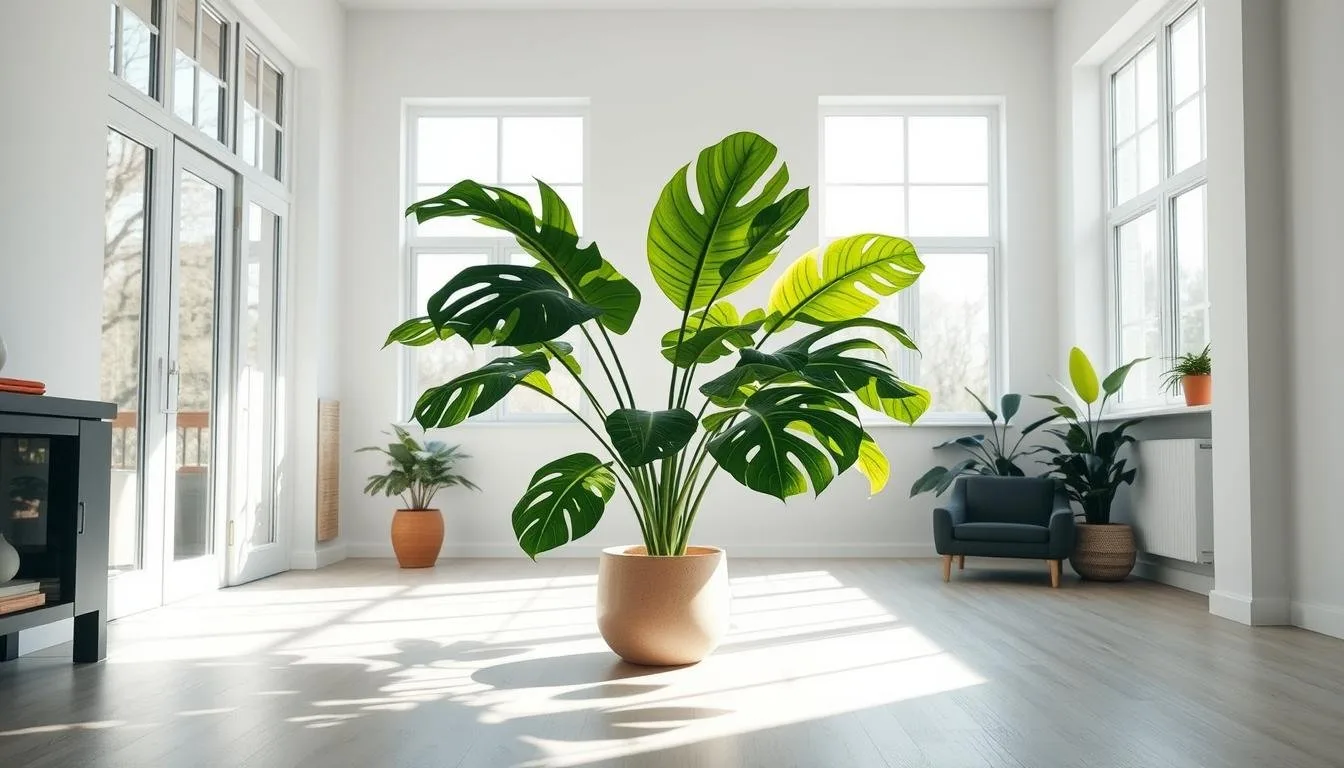
Window direction is a starting guess. Overhangs, trees, tinted glass, and interior walls matter as much as compass labels. Place the canopy where leaves receive light, not where the room merely looks bright to you.
East, South, West, and North Windows for Floor Specimens
| Window | Typical pattern | Green deliciosa placement starting point |
|---|---|---|
| East | Gentle morning sun, bright indirect afternoon | Best default: moss pole 2–4 ft from glass |
| South | Strong all-day brightness; harsh midday–afternoon beams | 4–8 ft back, or sheer curtain; watch summer intensity |
| West | Hot late-day sun | Filter or distance; afternoon burn is common |
| North | Low–moderate indirect; weaker in winter | Maintenance only unless supplemented |
An east window often delivers the sweet spot most indoor growers are hunting: enough brightness for growth without the west-window scorch lottery. Near south or west glass, a sheer curtain or an extra foot of distance beats heroic watering after sunburn.
Rotate the pot a quarter turn weekly when growth leans. Leaning is directional growth toward photons—not always an emergency, but a clue the brighter vector is off-center.
Sheer Curtains, Distance, and Outdoor Summer Light
If the only bright spot is a south or west window with direct beams, filter the glass or move the plant until leaves no longer heat up within an hour of sun contact. Wisconsin Horticulture Extension warns that container plants moved outdoors or into stronger light without gradual acclimation will sunburn.
Summer outdoors on a shaded porch can exceed indoor brightness—but only under bright shade or dappled light, not open midday sun. Acclimate over two to three weeks, the same way you would moving closer to indoor glass.
Signs Your Monstera Is Not Getting Enough Light

Suspect insufficient light when two or more structural signs appear together:
- Longer gaps between leaves on the main vine (leggy internodes)
- Smaller successive leaves on the growing tip
- Strong lean toward the brightest source
- Solid leaves persisting on a mature, supported plant that should be fenestrating
- Soil staying wet much longer than it did in brighter seasons, with weak new growth
Yellow leaves alone are unreliable. Overwatering, root damage, pests, and normal senescence also yellow foliage. Low light becomes a stronger diagnosis when yellowing pairs with stretch, damp mix, and a dim location.
Do not wait for collapse. A gradual move or grow-light supplement is cheaper than rehabbing root rot after months of slow metabolism. Full recovery steps live in Monstera light deficiency.
Signs Your Monstera Is Getting Too Much Light
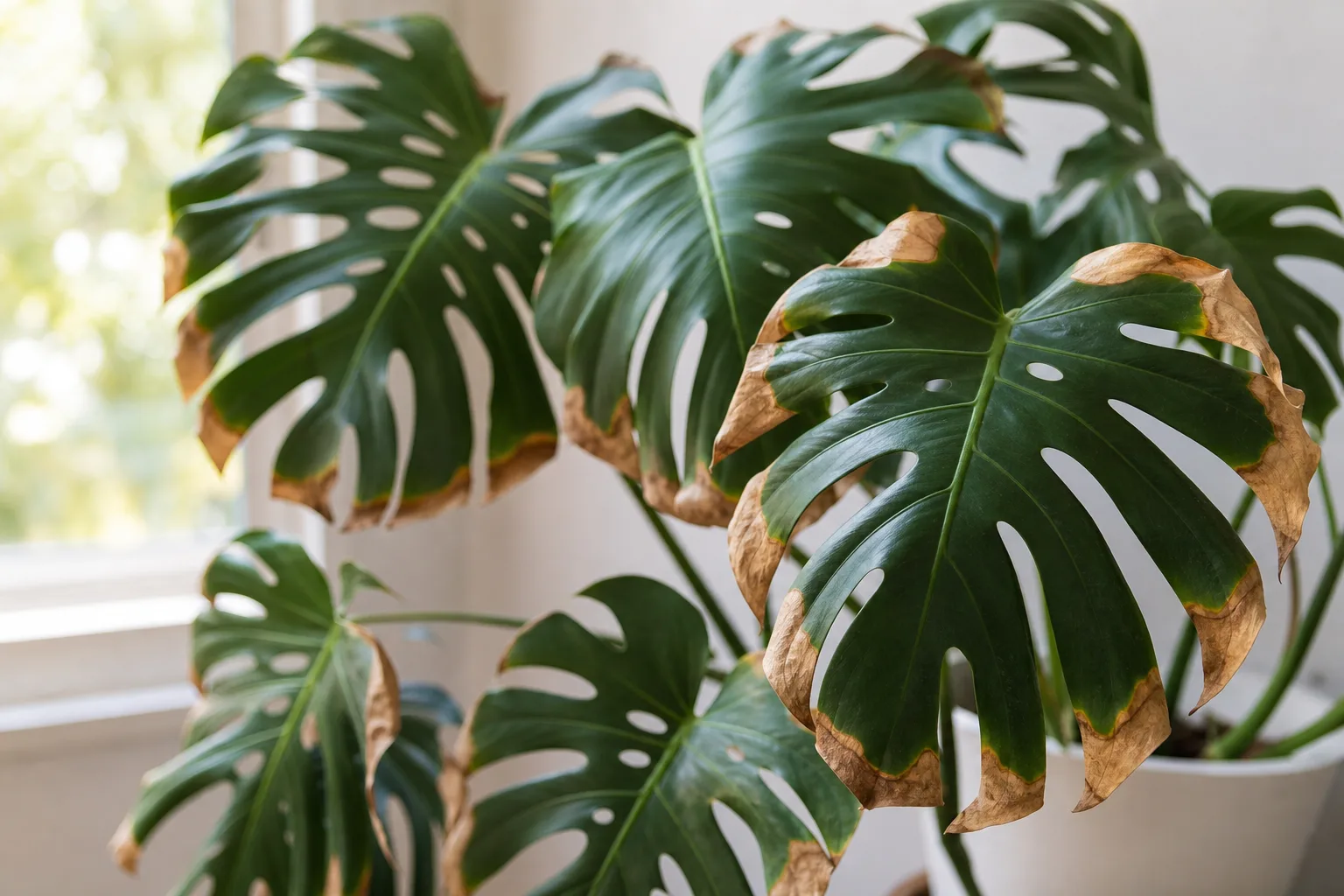
Too much light usually damages faster than too little starves. Watch for:
- Bleached, faded, or tan patches on the window-facing side of leaves
- Crispy brown edges that appear soon after a placement change
- Curling or folding leaves away from the glass
- Soil drying extremely fast with leaf damage—not healthy vigorous growth
Sunburn does not heal out of existing tissue. Move to filtered light and judge the next two leaves. Do not flood a sunburned plant automatically; damaged leaves look dry while roots may still sit in moist mix. Check the root zone before changing watering.
Afternoon sun through clear glass is the most common indoor culprit. Morning sun on an acclimated plant is gentler—but still monitor white variegated sectors.
Grow Lights: How Much Supplemental Light Monstera Needs
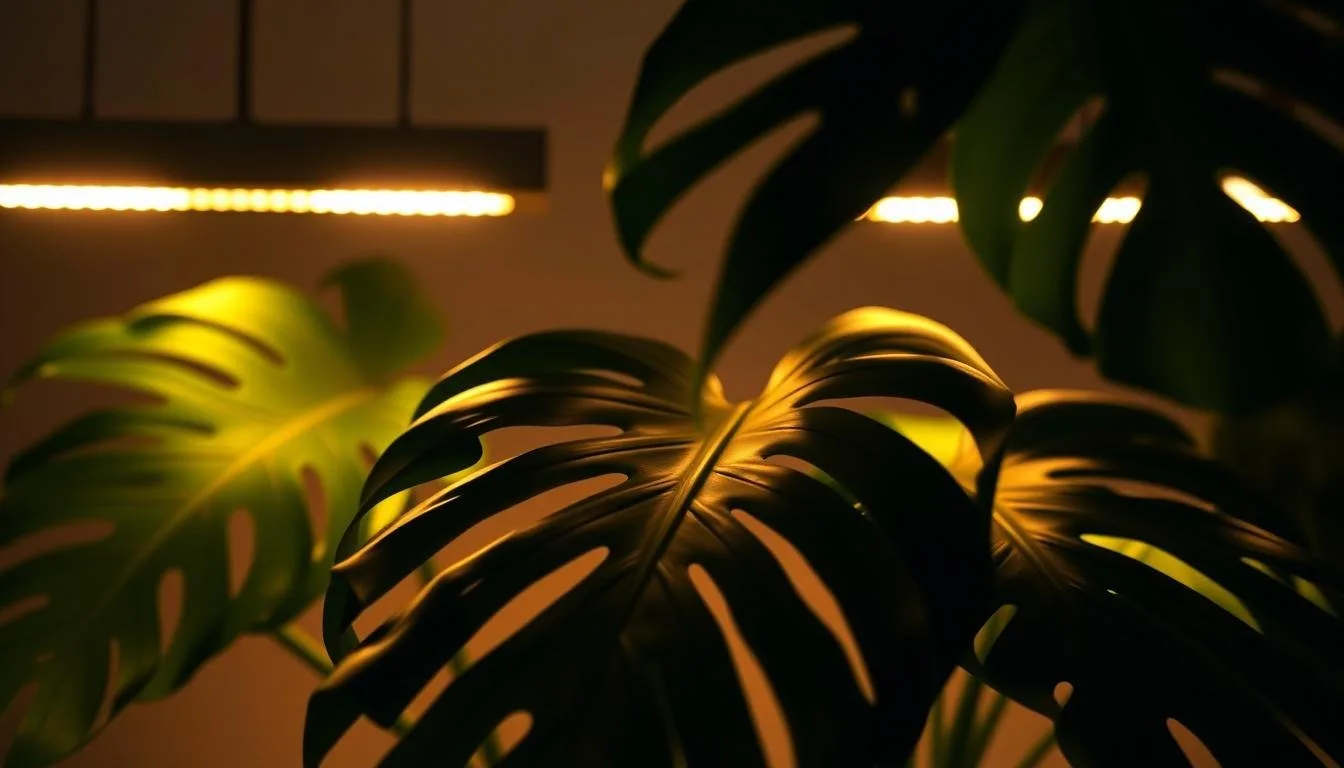
When windows cannot reach the growth band—north rooms, winter dips, or office interiors—a full-spectrum LED grow light can supplement or replace window light.
Practical starting point for deliciosa:
- 10–12 hours daily on a timer—not 24-hour continuous exposure
- Fixture 12–18 inches above the tallest leaf unless manufacturer data says otherwise
- Enough output that the canopy passes the soft readable shadow test under the lamp alone
Wisconsin Horticulture Extension confirms Monstera can grow under fluorescent light but will not perforate leaves when light is inadequate—a dim bulb left on all day is not a substitute for intensity. For fixture selection, distance, and PPFD basics, use the grow lights complete guide.
After adding light, check soil moisture more often. Transpiration rises even when the window seat stays the same.
Seasonal Light Shifts and Winter Adjustments
Indoor brightness is not static. Winter lowers sun angle and daylight length; summer pushes intensity through the same glass.
- October–February: Move eligible plants closer to glass or extend grow-light hours slightly; do not fertilize your way out of a light deficit.
- May–August: Watch south and west windows for new burn as beam strength rises; add sheer filtration before leaves crisp.
- After moving furniture or trimming outdoor trees: Re-run the shadow test at leaf height—rooms change when surroundings do.
Wisconsin Horticulture Extension notes houseplant Monstera does best in bright light in summer and direct sun in winter in their northern indoor context—meaning weaker winter sun through glass can be tolerated more than harsh summer glare. Translate that as seasonal flexibility, not a mandate to bake the plant in July.
For cold-month routines tied to light and watering together, see winter Monstera care.
How to Move a Monstera Brighter Without Sunburn
Large specimens are hard to relocate. Use a staged upgrade instead of one heroic shove against the window:
- Week 1: Move halfway toward the target bright spot, or add a sheer curtain while shifting closer.
- Week 2: Close another foot or remove one layer of filtration if leaves look stable.
- Week 3: Settle at the final position; wait for two new leaves before declaring success or retreat.
Do not combine a major light jump with repotting, heavy feed, or a first moss-pole install in the same week. Stress stacks. If new leaves bleach or crisp, back up one step and hold there for two weeks.
Clean dusty leaves monthly. RHS notes that dust removal helps leaves use available daylight more efficiently—cheap leverage in borderline rooms.
Conclusion
A Monstera does not need mystery light. It needs enough filtered brightness at the growing tip to fuel mature foliage—typically the 200–400 foot-candle growth band for green deliciosa, brighter for variegated cultivars, and honest supplementation when windows cannot deliver. Survival in a dim corner is possible; the split leaves and architectural scale most owners want are not.
Use the shadow test at multiple times of day, separate too little from too much using structural symptoms, and adjust seasonally as sun angle changes. Link the technical targets on the Monstera deliciosa light page, the window placement guide, and the deficiency recovery guide when you need deeper tables or rehab steps. Get the photons right first—watering, humidity, and fertilizer only work once the plant can actually use them.