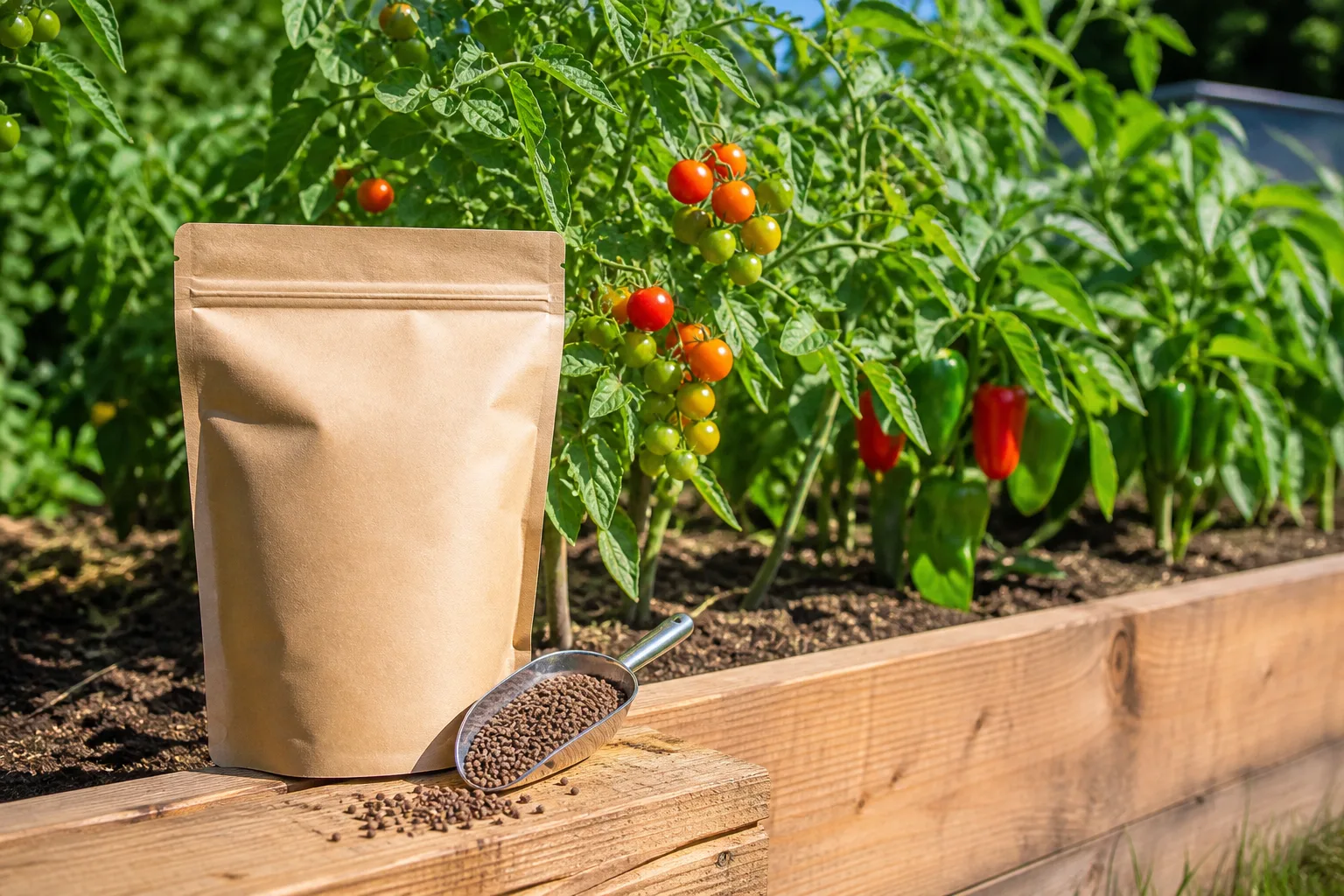
Fertilizing Indoor Plants: When, How Much and What to Use
Feed houseplants correctly with this guide to fertilizer types, schedules, dilution, seasonal timing and common mistakes.
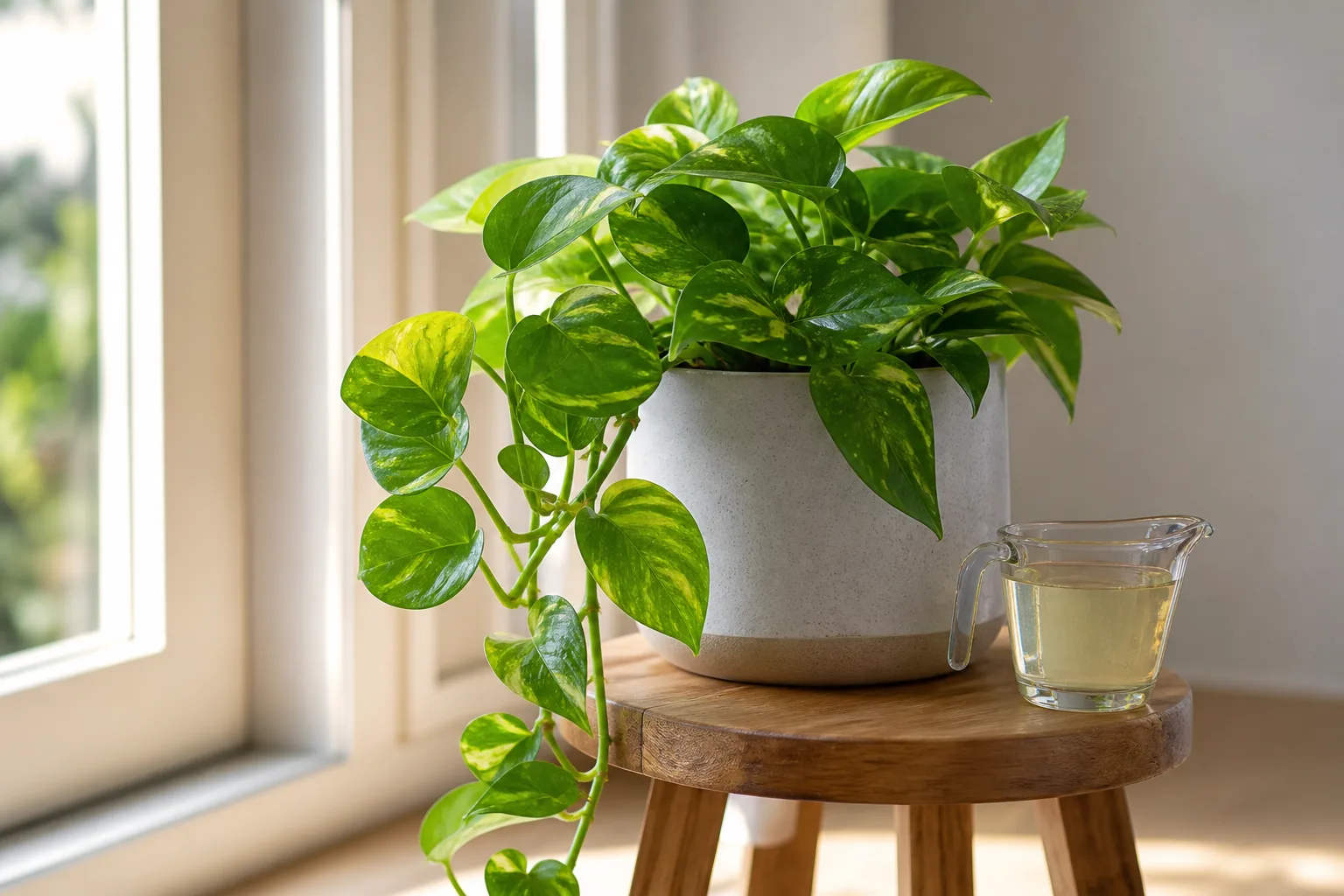
Indoor plants do not need constant feeding. They need the right nutrients at the right time, in the right concentration, while the plant has enough light and water to use them. Many weak, yellow, or slow-growing houseplants are not hungry at all—they are sitting in low light, wet soil, compacted potting mix, or a pot with poor drainage, and fertilizer can make those problems worse.
The safest way to think about fertilizing indoor plants is simple: fertilizer supports growth that is already happening. It does not force a struggling plant back to health. A pothos pushing out new leaves in bright indirect light can use a diluted feed. A snake plant sitting cold and damp in a dark corner probably cannot. Read the plant, the season, the potting mix, and the growth rate before adding nutrients.
Editorial note: In a LeafyPixels test, a golden pothos under bright indirect light responded best to quarter-strength balanced liquid fertilizer every four weeks from March through September—steady new leaves, no tip burn. Full label strength on the same plant produced brown tips within two weeks.
Why Indoor Plants Need Fertilizer
A plant growing outdoors has access to decomposing organic matter, soil biology, rain, mineral particles, and a much larger root zone. A houseplant lives in a small container. Every watering moves dissolved nutrients through the potting mix, and the plant uses the rest as it grows. Over time, even high-quality potting mix becomes less nutrient-rich, especially after many months in the same container.
That does not mean indoor plants need heavy feeding. Most houseplants grow more slowly indoors than in a greenhouse because indoor light is weaker and day length changes. Fertilizer should match that slower pace. Feeding too much can cause soluble salts to build up in the potting mix, and extension sources warn that excess salts can damage roots, brown leaf tips, and interfere with water uptake. (Extension | University of New Hampshire)
Think of fertilizer as a maintenance tool, not a rescue treatment. It replaces nutrients the plant has used or that watering has leached away. If the plant is not getting enough light, if roots are rotting, or if the pot has no drainage, fertilizer becomes a distraction from the real issue.
Potting Mix Runs Out of Nutrients
Most indoor potting mixes are built for drainage, aeration, and moisture balance. Some mixes arrive with controlled-release fertilizer already blended in; others are nearly nutrient-free and depend on the grower to feed after the plant settles.
This is why two identical-looking plants can need different feeding schedules. A newly purchased plant may still have slow-release fertilizer in the nursery mix—pause feeding until you see active new growth. A plant that has been in the same pot for two years may have a depleted mix and mineral buildup. A plant recently repotted into fresh pre-fertilized mix may not need additional fertilizer for weeks or months.
Watering also changes the nutrient picture. Every time water drains from the bottom, it carries some soluble nutrients with it. Container plants depend on periodic nutrient replacement. The University of Maryland Extension notes that micronutrients can become deficient in indoor plants and may need replacement through a commercial indoor plant fertilizer containing micronutrients. (University of Maryland Extension)
Fertilizer Is Not the Same as Plant Food
The phrase “plant food” is common, but it is technically misleading. Plants make their own food through photosynthesis, using light, carbon dioxide, and water. Fertilizer supplies mineral nutrients that help the plant build leaves, roots, stems, flowers, and enzymes. Without enough light—including supplemental grow lights where natural light is weak—fertilizer cannot do much because the plant lacks energy to turn nutrients into growth.
This distinction prevents one of the most common indoor plant mistakes: feeding a plant because it looks weak. If a plant is pale, stretched, or producing tiny leaves, the main issue may be low light rather than low nutrients. If a plant is yellowing because roots are damaged from overwatering, fertilizer can irritate stressed roots and increase salt pressure in the pot.
When to Fertilize Indoor Plants
The best time to fertilize indoor plants is when they are actively growing. For many homes, that means spring through early fall, when days are longer and plants receive more light. In warm, bright homes or under grow lights, some plants may grow year-round and can handle light feeding outside the usual season.
Calendar-based advice is a starting point, not a rule. A monstera near a bright window may need more regular feeding than a ZZ plant in medium light. A succulent in a sunny window may need only occasional feeding. A plant in a cool, low-light room may need very little even during the growing season.
Feed when the plant is producing healthy new growth and the potting mix is not already loaded with fertilizer. New leaves, new stems, active roots, flower buds, and visibly faster water use are signs the plant may be ready. Dormant plants, stressed plants, recently shocked plants, and plants with wet roots should not be fertilized simply because the calendar says it is time.
Feed When the Plant Is Actively Growing
Active growth is the clearest signal that a plant can use fertilizer. New leaves on a pothos, fresh aerial roots on a monstera, or fresh shoots on herbs tell you the plant is using energy and nutrients. During that phase, a diluted fertilizer can support stronger, more consistent growth.
Active growth is not just about visible leaves. Sometimes roots grow before foliage does, especially after repotting—but wait until the plant is stable before feeding. If the plant has not changed in weeks, is sitting in low light, or is using water very slowly, reduce or pause feeding.
Fertilizer damage can look like other plant problems. Brown leaf tips may be blamed on humidity. Yellow leaves may be blamed on nutrient deficiency. Wilting may be blamed on underwatering. In reality, excess salts can damage roots and interfere with water uptake, creating drought-like symptoms even when the soil is moist. (K-State Blogs)
How Seasons Change the Feeding Schedule
Most indoor plants slow down in fall and winter because light levels drop. Even if your home stays warm, shorter days and weaker sunlight reduce photosynthesis. When growth slows, nutrient demand drops too. Feeding at the same rate through winter can leave unused fertilizer in the potting mix, increasing the risk of salt buildup and root stress.
Many extension sources recommend reducing or stopping fertilizer when houseplants are dormant or semi-dormant. The University of Nebraska-Lincoln advises against fertilizing dormant plants because it can cause harmful fertilizer salt buildup. (Lancaster Extension) University of Maryland Extension recommends fertilizing from March through September and avoiding winter feeding when reduced light slows growth. (University of Maryland Extension)
Exceptions include orchids in active bloom, African violets under consistent light, indoor herbs under grow lights, citrus in a bright sunroom, and plants kept under strong artificial lighting. Even then, lighter feeding is usually safer than full-strength feeding.
How to Choose the Right Indoor Plant Fertilizer
The best fertilizer for indoor plants is usually a complete, balanced or mildly balanced fertilizer that includes nitrogen, phosphorus, potassium, and ideally micronutrients. For most foliage houseplants, a general indoor plant fertilizer used at a diluted rate is enough. You do not need a shelf full of specialized bottles unless you grow orchids, succulents, citrus, or flowering plants with specific needs.
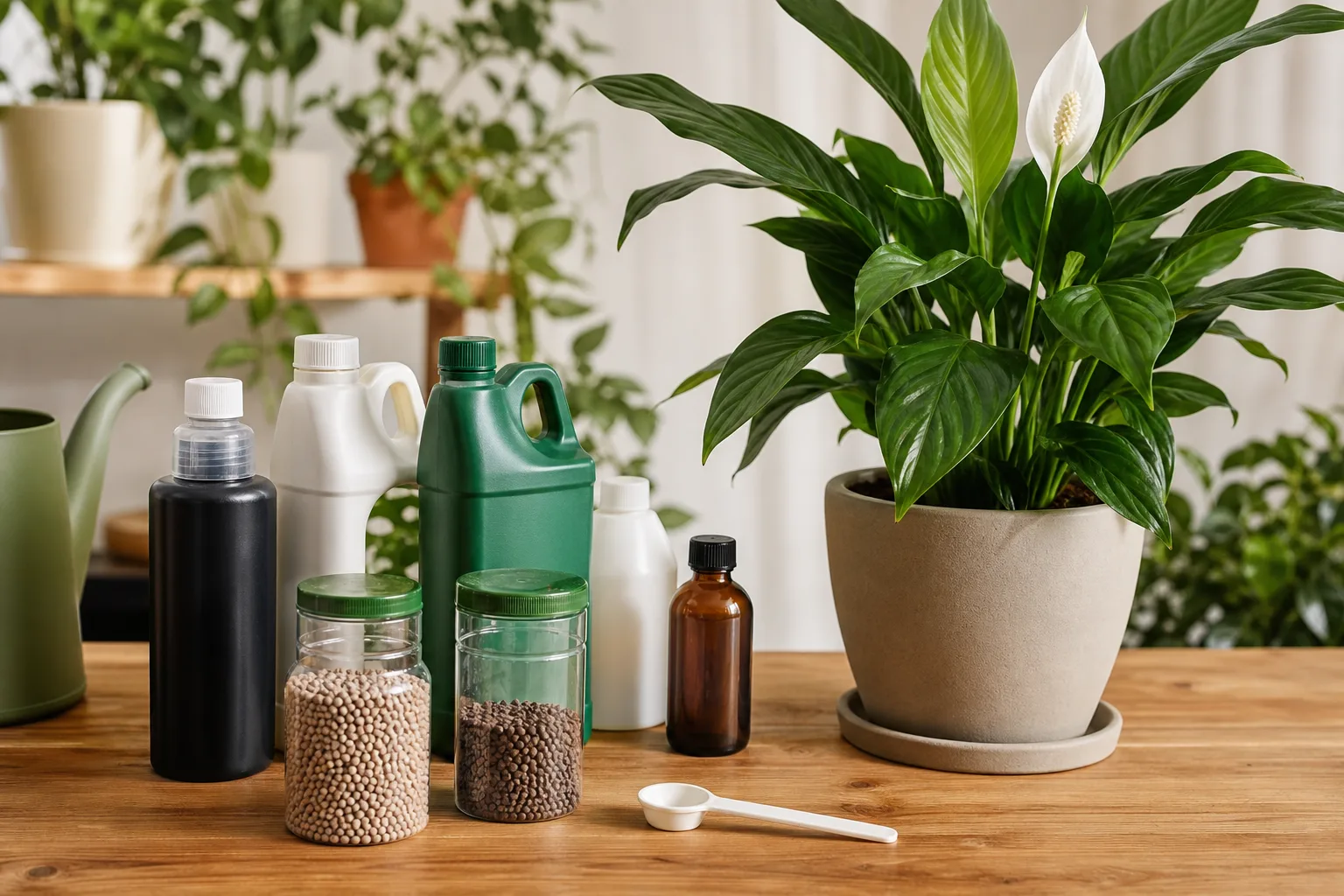
Common beginner-friendly options (non-affiliate examples of product types, not endorsements):
- Balanced 3-1-2 liquid houseplant fertilizer — mild nitrogen lean suited to foliage; easy to dilute.
- Water-soluble 20-20-20 — highly concentrated; almost always use at half-strength or less indoors.
- Slow-release 14-14-14 granules — useful in nursery mixes; harder to stop if the plant slows down.
Do not choose fertilizer by assuming stronger numbers mean better results. A 20-20-20 fertilizer is more concentrated than a 5-5-5 fertilizer, not automatically more effective. Concentration affects dilution. Indoor plants are often safer with a weaker solution applied consistently during active growth than with a strong dose applied occasionally.
What NPK Numbers Actually Mean
The three large numbers on the package are the NPK ratio—the percentage by weight of nitrogen (N), phosphate (P₂O₅), and potash (K₂O). A 10-10-10 fertilizer has equal percentages of the three listed nutrients. A 3-1-2 ratio has more nitrogen relative to phosphorus and potassium, which often suits foliage growth.
Nitrogen supports leafy growth and chlorophyll. Foliage plants such as pothos, philodendron, monstera, peace lily, spider plant, and dracaena generally benefit from adequate nitrogen during active growth. Too much nitrogen, especially in low light, can produce soft, stretched growth.
Phosphorus supports energy transfer, root development, and flowering processes. Most houseplants do not need excessive phosphorus. Bloom fertilizers are marketed heavily, but more phosphorus is not automatically better unless the plant actually needs it.
Potassium supports water regulation, stress tolerance, and root function. A complete fertilizer also includes secondary nutrients and micronutrients such as calcium, magnesium, iron, manganese, zinc, copper, boron, and molybdenum—needed in smaller amounts, but not optional.
For most indoor plant owners, choose a complete fertilizer made for indoor plants, use it weakly, and watch the plant’s response over several weeks. If leaf tips brown, white crust appears, or the plant looks stressed after feeding, the dose or frequency is too high.
Liquid, Slow-Release, Organic, and Spikes
Different fertilizer forms can all work, but they behave differently in indoor pots.
| Fertilizer type | Best for | Main advantage | Main risk |
|---|---|---|---|
| Liquid fertilizer | Most houseplants | Easy to dilute and adjust | Easy to overuse if applied too often |
| Water-soluble powder | Growers with many plants | Cost-effective and flexible | Requires careful measuring |
| Slow-release granules | Busy plant owners | Feeds gradually over time | Harder to stop if plant becomes stressed |
| Organic fertilizer | Soil-building approach | Often gentle and broader in nutrients | Odor, slower release, fungus gnats if overused |
| Fertilizer spikes | Very low-effort feeding | Convenient | Uneven nutrient distribution and root-zone hot spots |
Liquid fertilizer is the easiest option for most indoor plants because you can dilute it to half-strength or quarter-strength and adjust quickly. Slow-release fertilizers are useful when mixed into potting media at the right rate, but if a plant moves into lower light or enters a rest period, nutrients may continue releasing. Fertilizer spikes can concentrate nutrients in one area instead of distributing them evenly.
Organic fertilizers can be excellent, but “organic” does not mean impossible to overdo. Some organic products smell, attract fungus gnats, or break down slowly indoors where microbial activity is lower than in outdoor soil.
Special Rules for Succulents, Orchids, Herbs, and Flowering Plants
Succulents and cacti usually need less fertilizer than tropical foliage plants. See the dedicated indoor succulent care guide for light and watering context—a diluted balanced fertilizer once or a few times during active growth is often enough.
Orchids need a different approach because many are grown in bark rather than standard potting soil. Fertilizer salts can accumulate in bark media if not flushed. Many orchid growers use a weak, regular feeding approach during active growth, with occasional plain-water flushing.
Indoor herbs are a special case because you eat them. They need enough nutrients to replace harvested growth, but overfeeding can produce soft growth with weaker flavor. For edible plants, follow label directions and use products appropriate for food crops.
Flowering plants such as African violets, peace lilies, anthuriums, begonias, and holiday cacti can benefit from plant-specific fertilizer when actively growing or setting buds. Blooms still depend heavily on light, maturity, watering, and rest cycles—fertilizer alone will not trigger flowering if the environmental trigger is missing.
How Much and How Often to Fertilize
Most indoor plants do better with less fertilizer than the label’s maximum rate. A safe starting point is half-strength or quarter-strength liquid fertilizer during active growth. For many common foliage plants, feeding every four to six weeks in spring and summer is enough. Faster growers in bright light may benefit from feeding every two to four weeks. Slow growers and low-light plants may need feeding only a few times a year.
Plants are limited by light before they are limited by fertilizer. Matching greenhouse-level feeding to home-level light is how many people end up with brown tips and salt buildup.
Canonical dilution schedule (starting points for active growth):
| Plant group | Dilution | Frequency (spring–summer) | Winter |
|---|---|---|---|
| Common foliage (pothos, philodendron, peace lily) | Half-strength | Every 4–6 weeks | Pause unless actively growing under strong light |
| Fast growers / herbs / citrus under bright light | Half-strength | Every 2–4 weeks | Reduce or pause |
| Snake plant, ZZ plant, slow succulents | Quarter-strength | 1–2 times total | Pause |
| Orchids in bark | Quarter-strength | Weak feed during active growth; flush monthly | Pause unless blooming under lights |
A Simple Indoor Plant Feeding Schedule
For common foliage plants in bright indirect light, start with a diluted balanced fertilizer every four weeks from spring through early fall. If the plant is growing rapidly and watering needs increase, you can feed a little more often. If the plant is slow, small, recently repotted, or in medium-to-low light, feed less often.
For low-maintenance plants such as snake plants, ZZ plants, and many succulents, use a much lighter schedule—these plants are often damaged by too much attention rather than neglect. A weak feeding once or twice during active growth may be enough.
For heavy feeders or fast growers, such as indoor herbs, citrus, monstera in bright light, and plants under strong grow lights, feeding may need to be more regular. See the species-specific Monstera fertilizer guide for a deeper feeding schedule on that plant. Even then, the plant should earn the feed through active growth.
Why Dilution Is Safer Than Full-Strength Feeding
Dilution gives you control. A quarter-strength fertilizer applied consistently to a growing plant is less likely to shock roots than a full-strength dose applied to dry soil. Indoors, pots are small and root systems have nowhere to escape if salts concentrate.
Worked example: A water-soluble label reads 1 teaspoon per gallon of water, monthly. For a typical foliage houseplant indoors, mix ¼ teaspoon per gallon (quarter-strength) and feed every four weeks during active growth—or ½ teaspoon per gallon (half-strength) every six weeks. For a 24-8-16 formula at quarter-strength, you are delivering roughly 6-2-4 effective NPK per gallon, which is gentler than the full label rate.
The University of Missouri Extension warns against applying liquid fertilizer to a wilted plant and recommends watering first, then fertilizing only after the plant has recovered and the soil has dried slightly. (MU Extension) Texas A&M guidance similarly recommends using fertilizers at or weaker than label strength, never stronger, especially for young or recently rooted plants. (Texas A&M AgriLife)
How to Apply Fertilizer Without Damaging Roots
Applying fertilizer safely is mostly about timing, moisture, and drainage. The plant should be hydrated but not waterlogged. The pot should have drainage holes. The fertilizer should be measured accurately. Excess solution should drain away rather than sit in a saucer and get reabsorbed as a concentrated salt bath.

Never treat fertilizer as a substitute for watering. If the potting mix is bone dry, water first with plain water. Very dry peat-based mixes can repel water, causing fertilizer solution to run down the sides without evenly moistening the root ball.
Also avoid fertilizing immediately after major stress. A plant that was just repotted, shipped, divided, pest-treated, sunburned, chilled, or heavily pruned may need recovery time. Stressed roots often need oxygen, stable moisture, and time before they can use added nutrients.
The Pre-Feeding Checklist
Before fertilizing, check five things. First, look for active growth—new leaves, stems, roots, or buds. Second, check light; if the plant is in weak light and barely growing, reduce or skip feeding. Third, check soil moisture; do not fertilize a severely wilted plant or a dry root ball. Fourth, check drainage. Fifth, check whether the plant was recently repotted into a mix that already contains fertilizer.
If you are unsure, choose the gentlest option: skip feeding for a week or two, improve light if needed, water correctly, and observe new growth.
Step-by-Step Fertilizing Method
Start by reading the fertilizer label carefully. Mix the fertilizer at half-strength or quarter-strength for the first application, especially if the plant is small, recently purchased, or unfamiliar.
Water the plant lightly first if the potting mix is dry. Once the root ball is evenly moist, apply the diluted fertilizer solution until a little drains from the bottom. Empty the saucer after drainage finishes. Do not let the plant sit in leftover fertilizer water.
After feeding, watch the plant over the next few weeks rather than expecting overnight results. Healthy fertilizer response usually appears as steady new growth, stronger color, and normal leaf size. If leaf tips brown, the soil surface develops a crust, or the plant wilts despite moist soil, stop feeding and investigate salt buildup, root health, and watering.
Troubleshooting Fertilizer Problems
Fertilizer problems are common because the symptoms overlap with other houseplant issues. Too little fertilizer can cause pale growth, smaller leaves, and slow performance in plants that otherwise have good light and healthy roots. Too much fertilizer can cause brown leaf tips, marginal burn, wilting, root damage, white crust on the soil or pot, and sudden decline after feeding.
The most useful troubleshooting question is not “What fertilizer should I add?” It is “What changed before the plant started declining?” If the problem appeared shortly after feeding, increasing fertilizer is the wrong move.
Signs of Overfertilizing and How to Fix It
Common signs of overfertilizing include white or yellowish crust on the soil surface, crust around clay pot rims or drainage holes, brown leaf tips, burned leaf edges, wilting even when soil is moist, slowed growth, and root damage.
Kansas State University Extension notes that excess fertilizer can build up as salts in potting soil and may burn roots or leaves that contact salt residue. (K-State Blogs) University of Connecticut guidance recommends leaching with plenty of water or repotting into fresh medium when fertilizer salts are excessive. (Home & Garden Education Center)
To fix mild salt buildup, stop fertilizing and flush the potting mix. Place the plant where water can drain freely. Slowly pour room-temperature water through the pot until it runs from the drainage holes, wait, and repeat. Penn State Extension recommends applying enough tap water that it pours out the bottom, then repeating the leaching process again a few hours later or the next day when soluble fertilizer salts are excessive. (Penn State Extension)
If the plant is badly damaged, inspect the roots after flushing. Trim dead roots with clean tools, repot into fresh mix, and wait for signs of recovery before feeding again.
Hard Water, Salt Buildup, and Watering
Salt buildup is not always from fertilizer alone. Hard tap water can leave mineral deposits on soil surfaces and pot rims, compounding fertilizer salts. The University of Maryland Extension explains that mineral and fertilizer salt deposits can harm plants by competing for available moisture and causing tissue burn. (University of Maryland Extension)
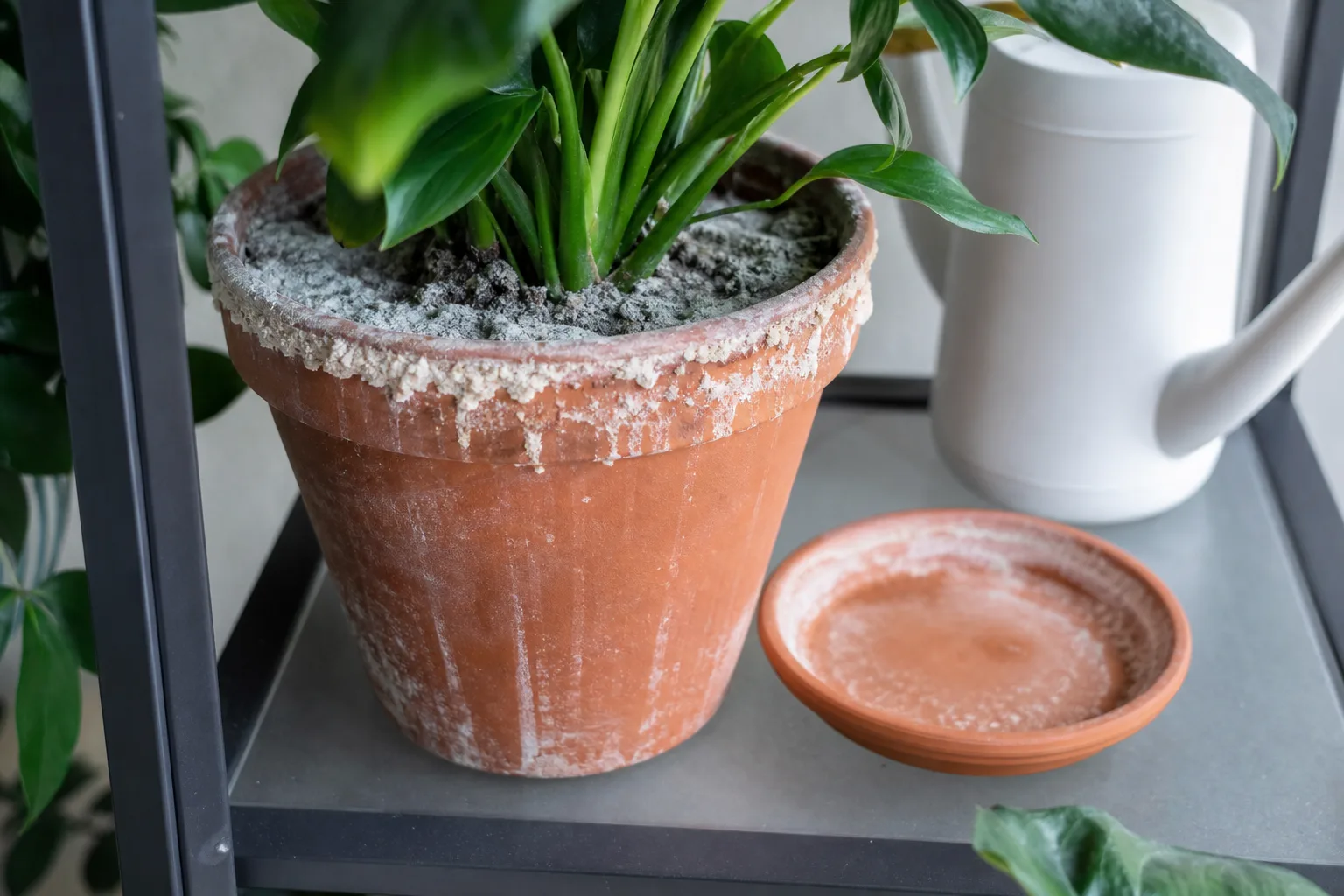
If white crust returns quickly even with careful feeding, review your watering routine, drainage habits, and whether you empty saucers after each watering. In hard-water areas, occasional plain-water flushes between feedings help. Sensitive plants may do better with filtered or rainwater for both watering and mixing fertilizer.
Controlled-release fertilizer already in nursery mix is another hidden source. If a new plant pushes growth without your feeding it, assume the mix contains fertilizer and wait six to eight weeks before adding more.
Conclusion
Fertilizing indoor plants works when it follows growth—not a calendar. Match dilution to light, pause when growth slows, and treat fertilizer as maintenance for healthy plants, not medicine for stressed ones. When in doubt, feed less, observe longer, and fix light and watering before reaching for the bottle.
What to Read Next
- How to Water Indoor Plants the Right Way — watering rhythm affects nutrient uptake and salt concentration
- Repotting Houseplants — fresh mix and timing around feeding
- Grow Lights Complete Guide for Indoor Plants — light limits how much fertilizer a plant can use
- Fertilizing Monstera Deliciosa — species-specific feeding for a heavy foliage grower
- Snake Plant Care and Indoor Succulent Care — lighter feeding schedules for slow growers