Monstera Brown Tips: Causes, Fixes and Prevention Guide
Diagnose brown tips on Monstera leaves and fix issues with watering, humidity, fertilizer, light or salt buildup.
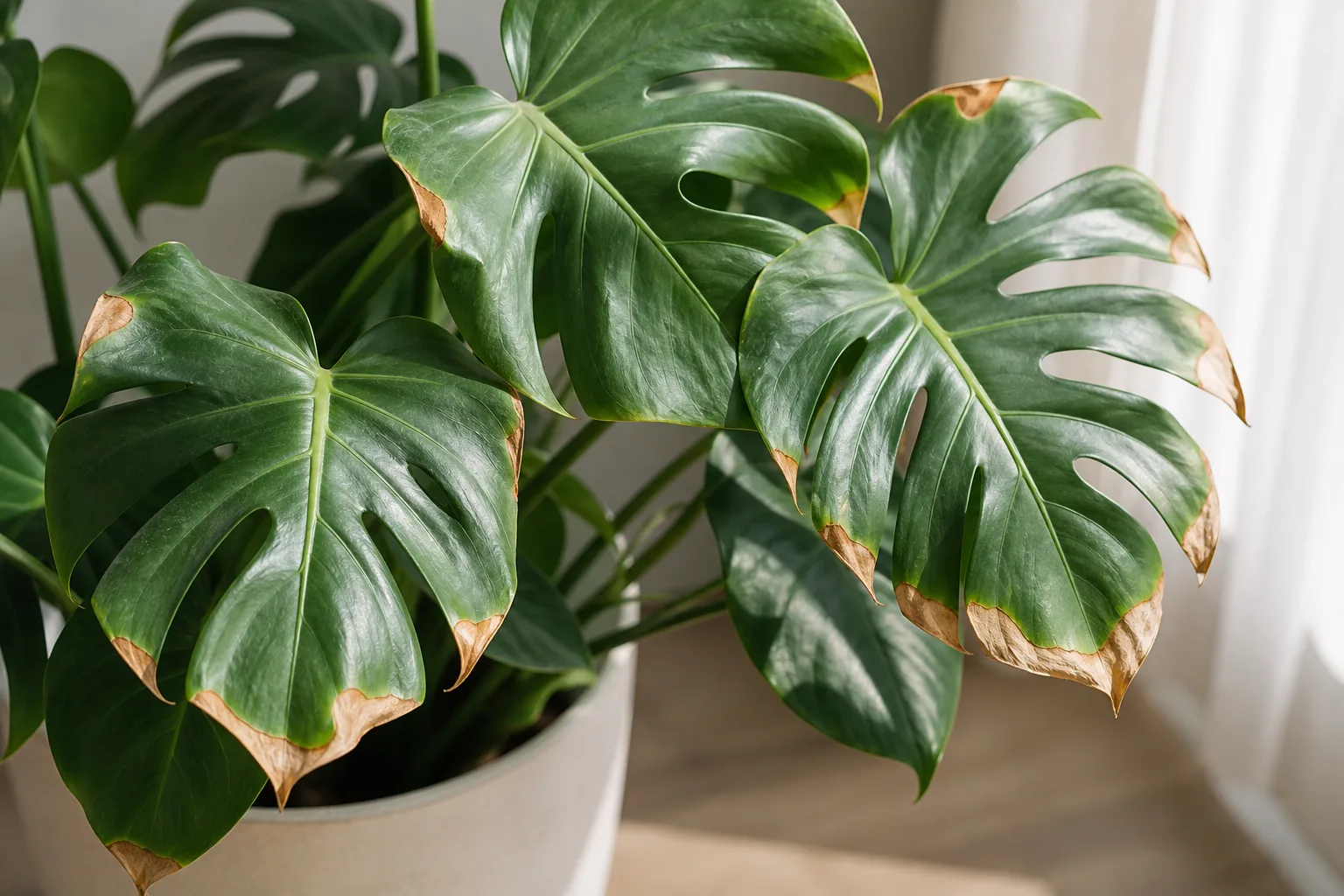
Quick answer: what brown tips mean
Monstera brown tips usually indicate a water-balance problem, but the leaf alone cannot tell you whether the plant is too dry or its roots are too wet. Dry air, uneven watering, salt buildup, direct heat, and impaired roots can all leave similar dead tissue at the leaf edge. Diagnose the pot and the room before adding water, fertilizer, or fresh soil.
This guide is primarily about Monstera deliciosa. If you want the shortest species-specific checklist, start with the brown-tips page for Monstera deliciosa. Stay here for the fuller diagnostic workbook: measured humidity, soil depth, pot weight, symptom patterns, and a controlled recovery sequence.
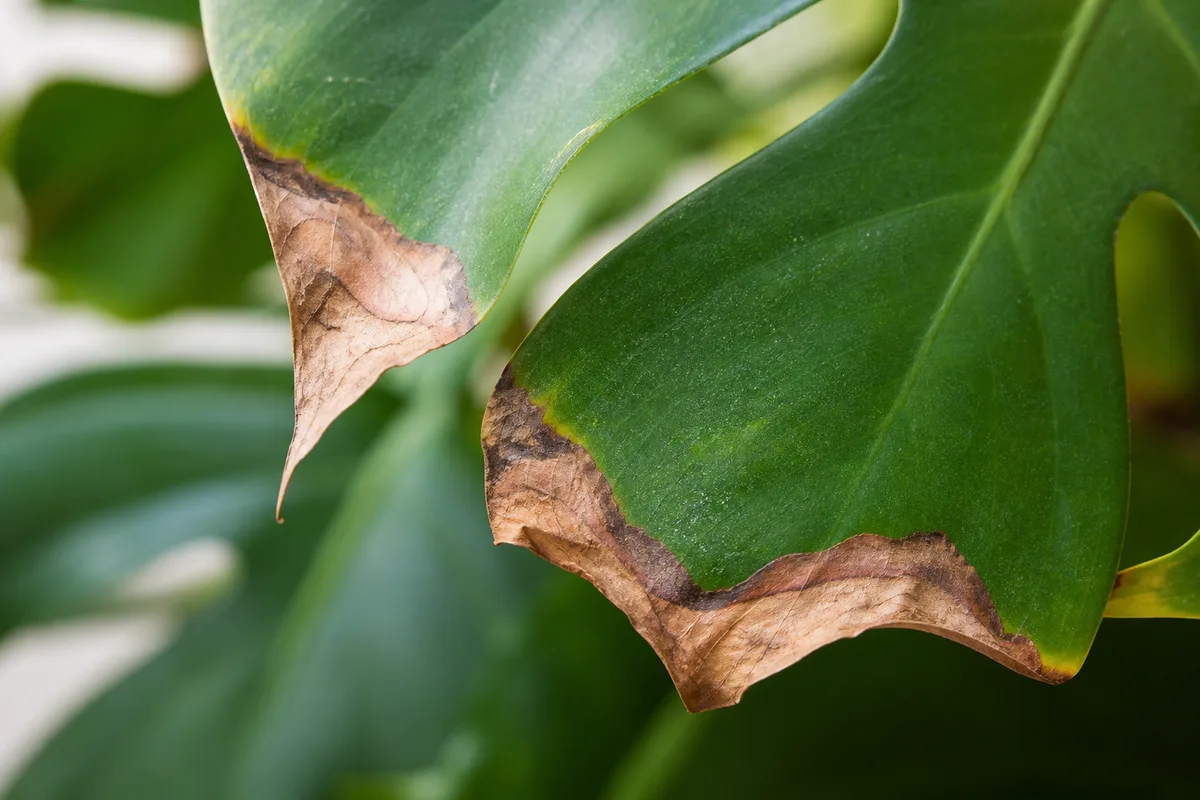
Diagnostic photo 1 - inspect the boundary between green and brown tissue. A dry, sharply defined margin suggests environmental stress; soft or water-soaked tissue needs the urgent checks below.
Your first 60 seconds of diagnosis
Do three checks before you treat anything. Put a hygrometer next to the affected foliage, probe the mix below its dry surface, and look for yellowing, soft lesions, or a sour-smelling pot. These observations separate a reversible room-condition problem from a root or disease problem that needs faster action.
Write the readings down instead of relying on memory. A one-day snapshot is not perfect, but it is more useful than “the room feels humid” or “I water regularly.” If two causes remain plausible, change one variable first and watch the next leaf rather than changing the whole care routine at once.
Measure humidity where the leaf lives
Place a basic digital hygrometer beside the leaves, not across the room or on a humidifier. Penn State Extension recommends humidity above 50% for Monstera, while also recommending bright light without direct sun. Record morning and late-afternoon readings for at least a day because heating, air conditioning, and sunlight can create large local swings.
A reading below 40–45% makes dry air a credible contributor, especially when tips are crisp and the plant sits near forced air. A reading above 50% does not prove humidity is irrelevant, but it moves roots, watering rhythm, light, and salts higher on the list. Penn State’s humidity guidance also notes that misting raises humidity only until the droplets evaporate, so a misting habit is not a substitute for measurement.
Check soil depth and pot weight
Push a finger or wooden chopstick 3–5 cm into the mix, then lift or gently tilt the pot. Penn State advises watering thoroughly and allowing the top 1–2 inches to dry before watering again. UConn gives a similar 2–3 inch range and stresses well-draining media, but the exact depth must be interpreted with pot size, mix structure, light, and season.
A dry surface above a heavy, cool pot means the lower root zone may still be wet. A very light pot with mix pulling from the sides is evidence of a drought or a root ball that has become hard to rewet. The Monstera watering guide is the better next page when moisture timing, rather than symptom identification, is the main problem.
Rule out urgent wet or spreading damage
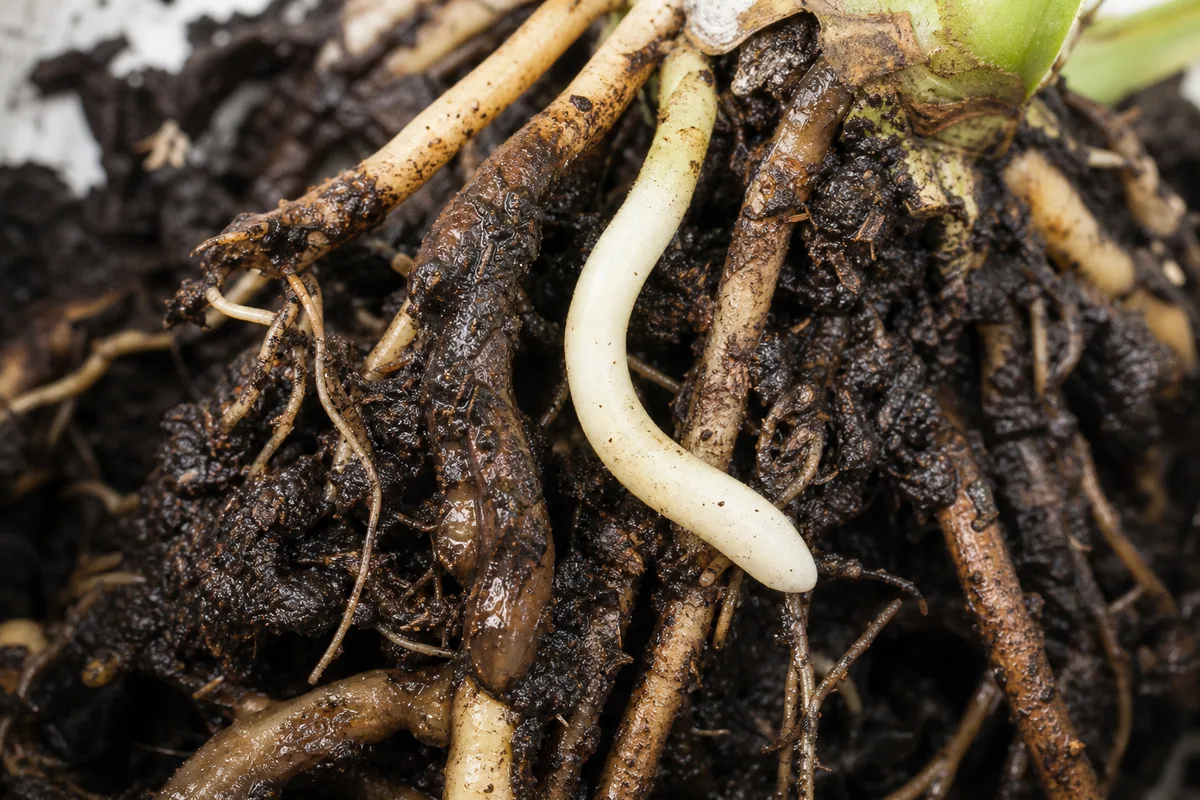
Brown tips alone are rarely an emergency. Escalate when brown or black tissue is soft, water-soaked, rapidly enlarging, or paired with widespread yellowing, wilting in wet mix, a sour smell, or mushy roots. UConn describes affected roots in root and stem rot as brown or black, soft, and easily pulled apart.
Do not respond to those signs with a humidifier or another drink. Inspect drainage and roots, isolate the plant if lesions appear to spread between leaves, and use the Monstera root-rot guide when the pot remains wet and roots are failing. UConn also distinguishes bacterial leaf spot by dark spots with yellow borders and advises avoiding misting when disease is suspected.
Read the damage pattern before changing care
The most useful clues are texture, location, speed, and what the pot is doing. Color by itself is weak evidence. Two plants can both have brown tips while one has a dry root ball and the other has oxygen-starved roots in saturated mix.
Check several leaves, including the newest one. Damage limited to an old leaf may record a past dry spell; repeated damage on each new leaf means the stress is active. Damage only on the window-facing side points more strongly to direct sun or heat than a whole-plant humidity problem.
Crispy tip burn versus soft brown tissue
Dry, tan, papery tips with a clean transition to green tissue fit inconsistent moisture, low humidity, soluble salts, or heat. Clemson Extension lists hot dry air, improper watering, insect feeding, and salt accumulation among causes of brown leaf tips and margins. White or gray crust on the soil surface or pot rim strengthens the salt hypothesis.
Soft, dark, or greasy-looking damage is different. When it comes with yellow halos, sticky ooze, rapidly expanding patches, or persistently wet soil, investigate disease and root stress rather than assuming “crispy tips.” This is a limitation of photo-only diagnosis: lighting can hide texture, so touch the dead edge and inspect the root zone.
Diagnostic table: symptom, evidence, first action
| What you see | Strongest supporting evidence | First action |
|---|---|---|
| Crisp tips on several leaves | Hygrometer below 45%; heater or AC nearby | Move from forced air and raise room humidity gradually |
| Crisp tips; pot extremely light | Mix dry well below the surface; soil pulling from pot | Rehydrate evenly and adjust the watering trigger |
| Brown tips plus lower yellow leaves | Heavy pot; mix wet for many days | Pause watering and inspect drainage and roots |
| Edge burn after feeding | White crust; recent full-strength fertilizer | Stop feeding and leach the mix if roots are sound |
| Brown area on window-facing side | Direct midday or afternoon sun reaches the leaf | Filter or increase distance from the window |
| Soft spots with yellow margins | Lesions expand independent of leaf tips | Isolate, keep foliage dry, and investigate disease |
Use the table to select a test, not to declare a diagnosis from one symptom. UC Agriculture and Natural Resources lists overwatering, excessive dryness, fertilizer or soluble salts, low humidity, chilling, and excess light as overlapping explanations for scorched tips or leaf damage. More than one factor can be active, but one usually deserves attention first.
The seven cause buckets, tested in order
Start with the factors you can measure without disturbing the plant: moisture, pot weight, humidity, placement, and recent fertilizer use. Root inspection comes later unless the pot smells sour, stays saturated, or the plant is collapsing. Unnecessary repotting can add stress while leaving the original room problem untouched.
The seven familiar causes are best treated as evidence buckets rather than seven separate diagnoses. Watering and root aeration overlap; humidity and HVAC overlap; fertilizer and water quality overlap. The goal is to find the factor that explains the whole pattern with the fewest assumptions.
Inconsistent or shallow watering
Repeated droughts can kill leaf-edge tissue, but a regular schedule does not prove the root ball is watered evenly. Small sips may wet the surface and leave dry pockets below. When the pot is ready, pour slowly across the mix until water exits the drainage holes, let it drain completely, and never leave the pot standing in the runoff.
Then wait for the correct dry-down rather than watering again by date. Iowa State identifies inconsistent watering, especially excessive drying between waterings, as a common cause of brown tips. If water races around a shrunken root ball, apply it in two slow passes or briefly bottom-soak, then return to top watering so salts can leave the pot.
Waterlogged mix and damaged roots
Overwatering is usually a frequency, drainage, light, or pot-size problem-not the volume used in one thorough watering. Saturated mix loses air space, and damaged roots cannot supply distant leaf margins even though the pot contains plenty of water. That is why a wet pot can produce leaves that look dehydrated.
UConn recommends consistent watering, well-draining media, and no standing water; it also notes that Monstera tolerates being somewhat pot-bound better than being placed in an oversized pot. If roots are firm and the mix simply dries slowly, improve light and spacing and extend the interval. If roots are mushy, remove dead material and follow the root-rot protocol rather than merely waiting longer.
Low humidity as a stress multiplier
Low humidity can brown Monstera edges, but it is often a multiplier rather than the only cause. Wisconsin Horticulture states that leaf edges turn brown when humidity is too low, while recommending thorough watering followed by slight drying. A plant with steady roots may tolerate an average room; the same room becomes damaging when the root ball is also repeatedly dry or salty.
Use a humidifier when readings remain low, keep leaves out of direct heater or AC airflow, and monitor rather than chasing the highest number possible. The Monstera humidity guide covers equipment and seasonal adjustments. Avoid treating high humidity as a cure-all: crowded, wet foliage with poor airflow can make leaf disease harder to manage.
Fertilizer and mineral salt buildup
Soluble salts from fertilizer and water can accumulate as water evaporates, injuring roots and leaf margins. Iowa State notes that excess fertilizer salts can cause brown leaf tips. Clemson adds a practical clue: white-to-gray crust on the mix or rim can indicate salt buildup.
If the plant has healthy roots and the pot drains freely, remove surface crust and slowly run about two to three pot volumes of room-temperature water through the mix. Let it drain fully and pause feeding until growth is stable. Use rainwater or another lower-mineral source when repeated crust and local water hardness make water quality a credible factor; RHS says Swiss cheese plants ideally receive rainwater rather than tap water.
Direct sun, heat, drafts, and HVAC
Bright indirect light supports growth, but a plant moved suddenly into direct summer sun can scorch. RHS warns that direct summer sun can scorch leaves, while very dry air or a nearby radiator can brown edges. Sun damage usually follows exposure: the side facing the glass is hit hardest and the pattern can be broader than a neat tip.
Move the plant back gradually or filter harsh light with a sheer curtain. Keep it out of heater, radiator, and AC streams, and avoid cold drafts. Penn State gives a broad indoor temperature range of 60–85°F and explicitly notes that Monstera dislikes cold drafts, so stable placement is more useful than reacting to a single room-temperature reading.
Dense mix, poor drainage, or crowded roots
Potting mix should hold some moisture while retaining air after watering. Dense, collapsed mix stays wet too long; an extremely crowded root ball may dry so quickly or unevenly that the center never hydrates well. Both conditions can produce recurring edge damage despite careful scheduling.
Repot only when evidence supports it: circling roots fill most of the pot, water runs through without wetting the root ball, drainage is blocked, or decomposed mix remains wet for an excessive period. Move up one modest pot size and use the Monstera soil-mix guide to match bark, mineral aeration, and moisture retention to the room. A very large new pot increases the volume of wet mix around a limited root system.
Brown tips on new and variegated leaves
A new leaf may record conditions from the days it expanded and unfurled. One imperfect leaf after a move, missed watering, or repot is less concerning than the same damage on several consecutive leaves. Do not pull or manually force an unfurling leaf; stabilize moisture, humidity, and light, then judge the next growth cycle.
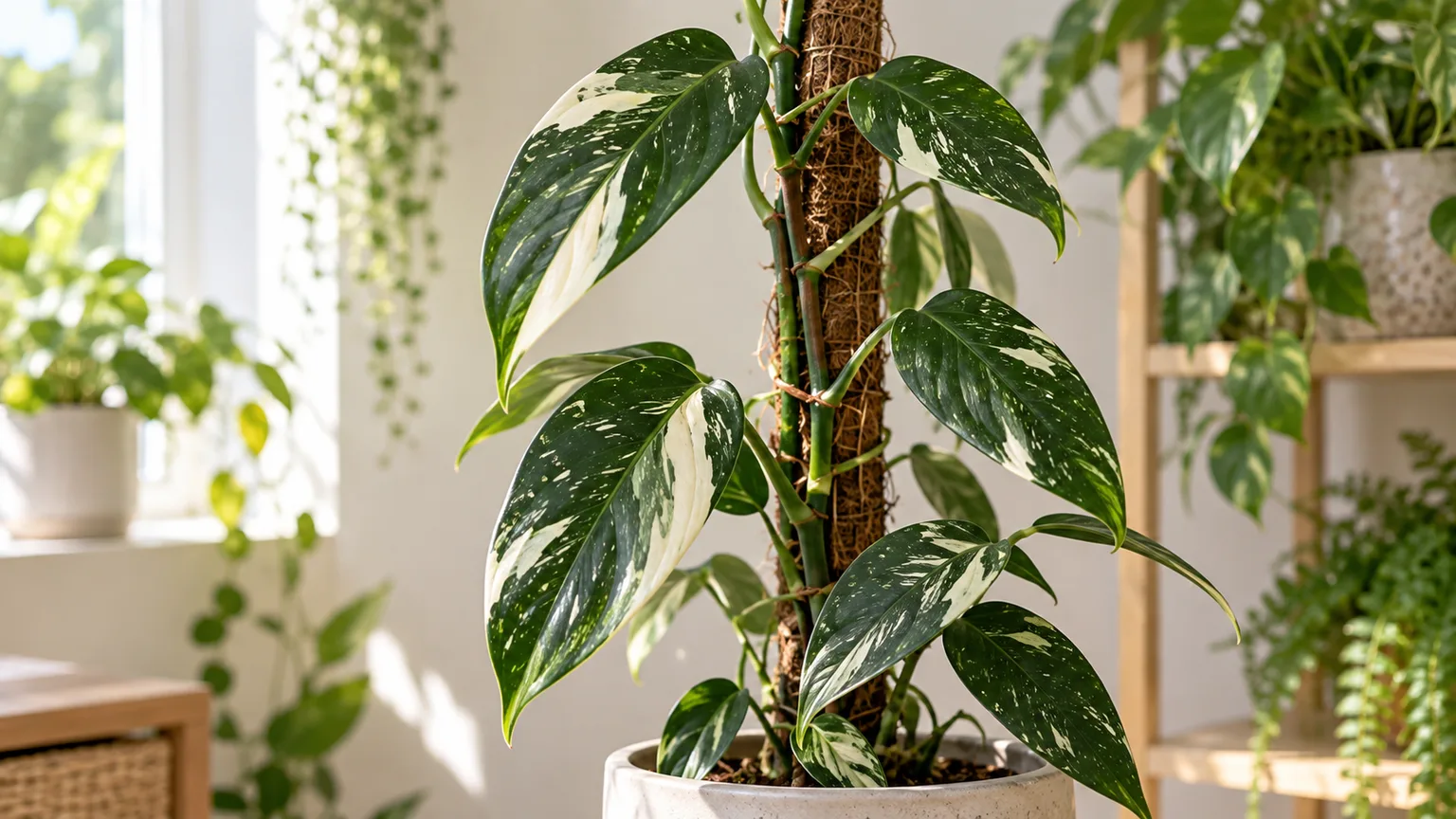
Variegated leaves deserve extra caution because pale tissue has less chlorophyll and can scorch more readily. RHS advises bright indirect light for variegated Monstera and notes that the white or pale areas are more susceptible to sunburn. Keep the diagnostic standard the same-measure first-but be conservative about abrupt light increases.
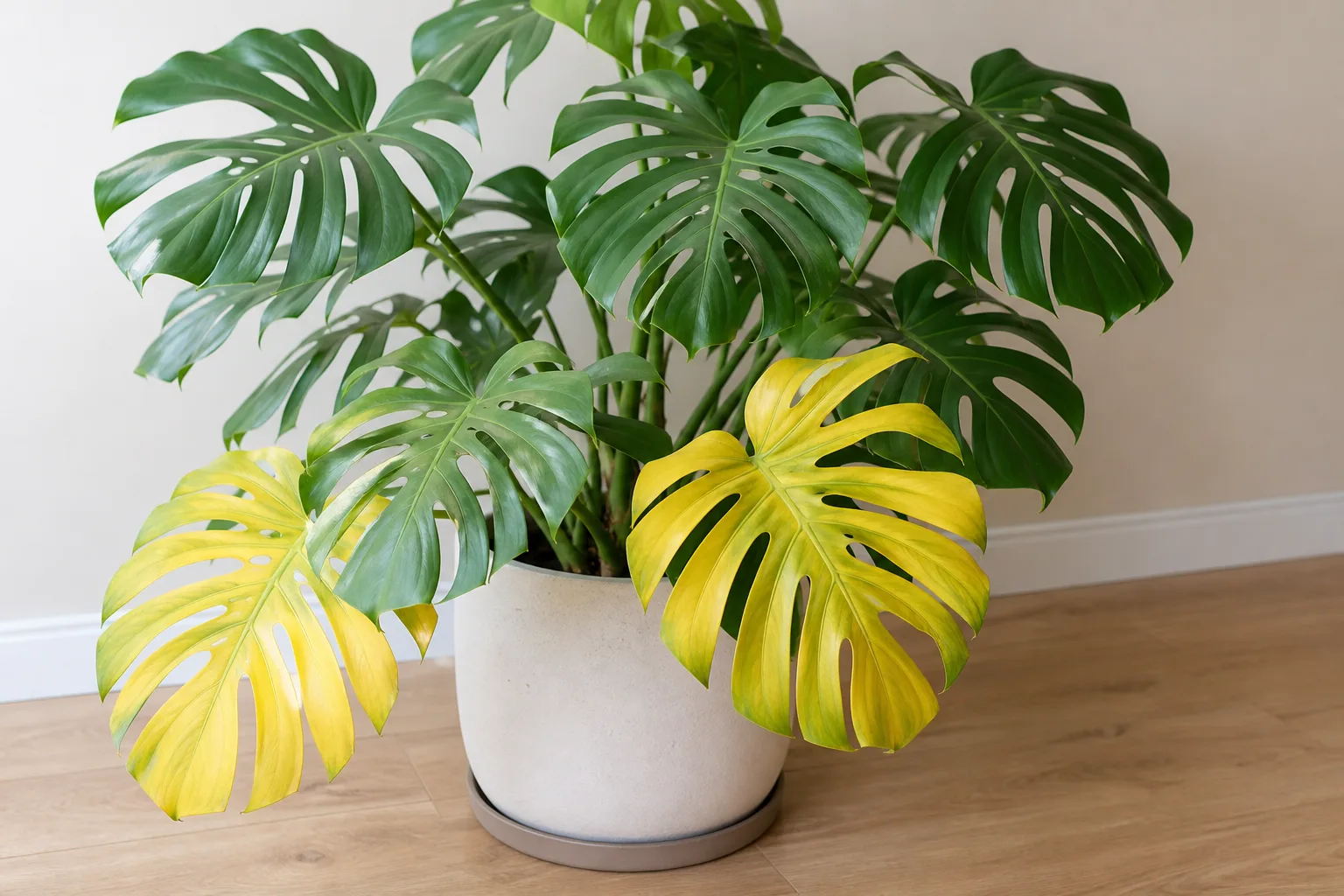
Diagnostic photo 2 - yellowing around brown damage changes the diagnosis. Check wet mix and roots before treating humidity or trimming the edge.
A recovery plan that avoids overcorrecting
Use this sequence and stop when the evidence identifies a cause:
- Record the baseline. Note humidity at leaf level, moisture at 3–5 cm, pot weight, light exposure, and recent fertilizer use.
- Correct an obvious water error. Rehydrate a genuinely dry root ball, or withhold water and inspect drainage when the pot is heavy and wet.
- Move away from forced air or harsh sun. Make a small placement change rather than relocating the plant repeatedly.
- Leach salts only when drainage and roots are sound. Pause fertilizer afterward.
- Inspect roots when warning signs justify disturbance. Sour odor, persistent saturation, yellowing, or mushy roots are stronger reasons than cosmetic tip burn alone.
- Judge new growth. Existing dead tissue will not turn green; cleaner new margins show that the correction worked.
You may trim a dry tip with clean scissors for appearance, following the leaf’s natural outline and leaving a narrow dead margin rather than cutting deeply into green tissue. Iowa State notes that trimming improves appearance but new browning continues if the cause remains. Keep a mostly green leaf because it still contributes to the plant; remove a whole leaf only when damage or disease justifies it.
When to use the species page and related guides
Use the species-specific brown-tips page for a compact symptom checklist and recovery timeline. Use this guide when the cause is unclear, several stressors overlap, or you want to document readings and test one variable at a time. For Monstera adansonii, use its separate brown-tips page because its smaller, thinner foliage and pot scale can change the practical dry-down pattern.
- Monstera deliciosa overview - species-wide care baseline.
- Monstera deliciosa watering - moisture triggers and technique.
- Monstera deliciosa light - placement and scorch prevention.
- Monstera deliciosa root rot - urgent response for failing roots.
- Why Monstera leaves turn yellow - when yellowing is more prominent than dry tip burn.
Conclusion
Monstera brown tips are useful evidence, not a diagnosis. Measure humidity where the leaves sit, check moisture below the surface, compare pot weight, and look for salts, exposure patterns, or root warning signs before changing care. Protect the next leaf rather than trying to restore dead tissue: a clean new margin is the clearest sign that you fixed the right cause.