Pebble Tray Myths: What Actually Helps Houseplants in Dry Air
Separate pebble tray facts from myths and learn which humidity fixes actually help indoor plants with dry leaves.
What a Pebble Tray Is Actually Supposed to Do
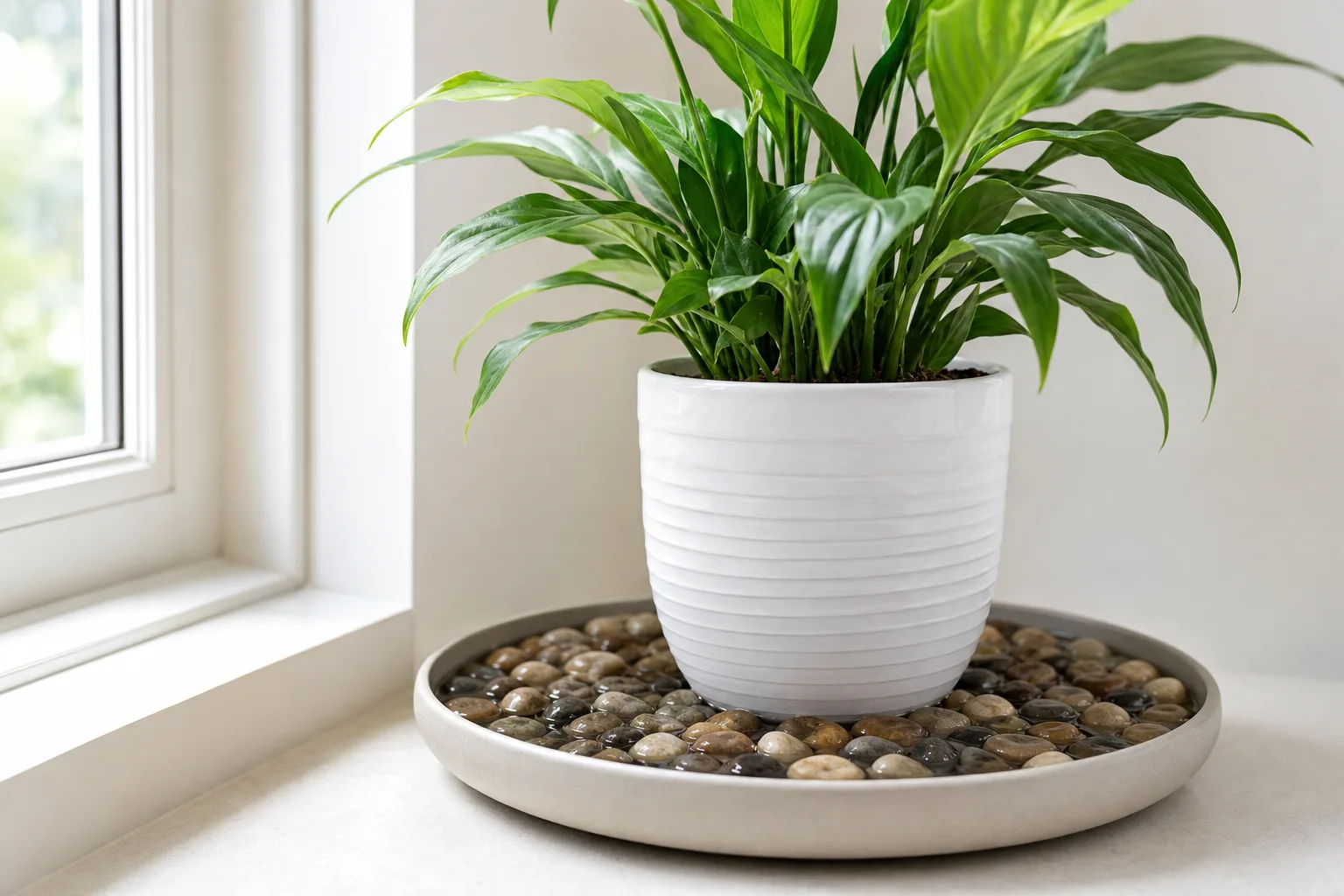
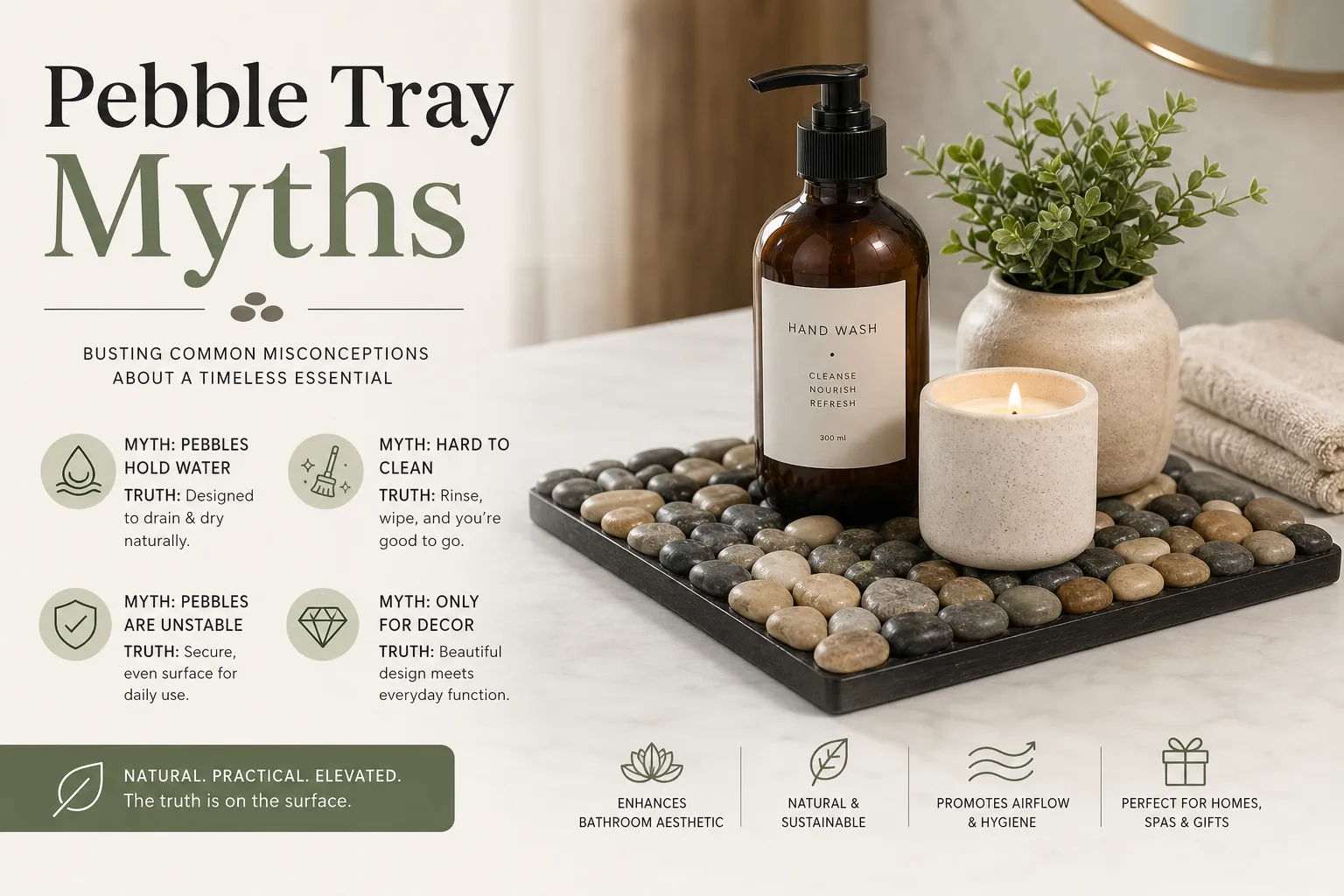
A pebble tray is a shallow dish of stones and water with the plant pot resting above the waterline. Evaporation is real. What gets oversold is the scale: a small tray is not a room humidifier, and it is not a substitute for checking whether your plant actually has a humidity problem. For the full definition and setup walkthrough, see what is a pebble tray and how to set up a pebble tray. This guide stays focused on the myths.
Myth vs. Reality Quick Reference
| Myth | Why people believe it | Reality | Better fix |
|---|---|---|---|
| Trays dramatically raise humidity | Water evaporates, so air must get wetter | Local bump of a few percentage points near the tray; room RH unchanged | Humidifier or measured humidity guide |
| Evaporation fixes a sick plant | More moisture sounds like the answer | Brown tips, wilting, and crisp leaves have many causes | Diagnose watering, salts, light, and roots first |
| Trays work like misting | Both add water to the air | Misting is fleeting; trays are steadier but still weak | See misting comparison |
| Every tropical needs a tray | Jungle plants love humidity | Many common tropicals tolerate average home air | Match fix to species sensitivity |
| Brown tips = dry air | Dry-looking edges feel humidity-related | Watering inconsistency and fertilizer salts are common culprits | Brown-tip guide |
| Trays replace humidifiers | Trays are cheaper and easier | Humidifiers change ambient RH; trays do not | Pebble tray vs humidifier |
| Big plants benefit equally | A tray is a tray | Low, compact foliage sits closer to the effect | Humidifier or grouping for tall plants |
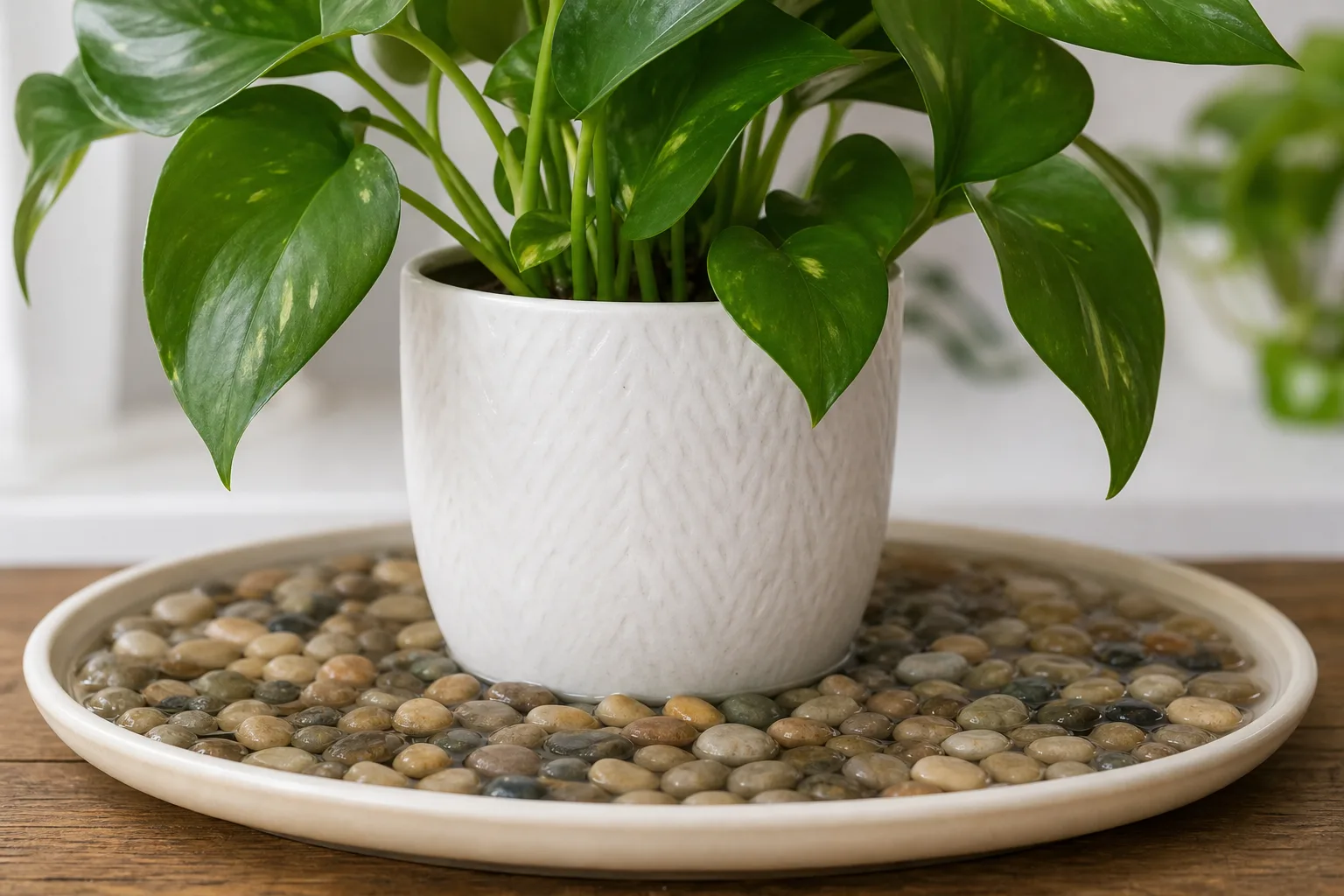
| Any setup with water works | The idea is simple | Pot-in-water wicking and tiny saucers undermine the whole point | Wide tray, pot above waterline |
| Trays are risk-free | They look harmless | Neglected standing water and wicking create real problems | Clean trays; never soak the pot |
| Dry room? Tray first | Low-cost default advice | Measure first; trays rarely fix severe winter dryness | Hygrometer, then right-sized tool |
 |
Why Pebble Trays Became Standard Advice
Pebble trays spread because they are cheap, passive, and logical on paper. Extension and garden references still mention moist gravel or hydroleca as one local humidity tactic (RHS), which keeps the advice alive even as skeptical testing shows how small the effect usually is. The gap is not whether evaporation happens. It is whether the amount of water leaving a saucer can meaningfully change the air your plant actually breathes - especially in a heated room with normal airflow.
Myth 1: Pebble trays dramatically raise humidity
This is the central myth, and it fails on measurement, not theory. Robert Pavlis, a horticulturist who writes at Garden Myths, reports an orchid grower’s winter hygrometer test: relative humidity was 3% higher at 1.5 inches above the tray, 2% at 4 inches, and no measurable increase at 12 inches compared with the rest of the room. A change of one to three percentage points is within normal daily indoor fluctuation from cooking, showers, and air exchange - not a reliable plant-care intervention. (Robert Pavlis - Garden Myths)
That matches what extension services describe qualitatively: pebble trays may help in the vicinity of the plant, not throughout the room. University of New Hampshire Extension puts most houseplants in roughly the 40% to 60% relative humidity band, while many heated winter rooms sit far lower. A tray that nudges the air from 32% to 34% near the stones does not close a 20-point gap for a finicky calathea. For LeafyPixels editorial hygrometer readings at 2, 6, and 12 inches from a tray - including leaf-level results - see the indoor humidity and pebble trays measured guide.
Better Homes & Gardens also notes that trays work best for small, low-growing plants because larger canopies sit farther from the evaporation surface and room air circulation disperses moisture quickly. The honest takeaway: trays create a small local effect, not room-wide humidity control.
Myth 2: If a tray evaporates water, your plant is fixed
Evaporation is not a repair system. A struggling plant may be dealing with low light, inconsistent watering, salt buildup, cold drafts, root damage, overfertilizing, or pests. Brown tips are the classic trap. Iowa State Extension lists inconsistent watering and excess fertilizer salts among the most common causes of brown leaf edges and tips - problems a tray cannot touch. (Iowa State Extension)
When a tray “does not work,” the diagnosis may have been wrong from the start. Humidity gets blamed because it is invisible and trays look proactive. The smarter order is symptom first, cause second, humidity tool third.
Myth 3: Pebble trays and misting do the same job
They do not, but this page does not need to re-litigate the full comparison. Misting wets leaves and briefly raises humidity until droplets evaporate - often within minutes in a dry room, per Penn State Extension guidance on houseplant humidity. Pebble trays evaporate passively and more steadily, yet still produce only a modest local effect. Neither replaces changing room conditions when that is what the plant needs. For timing, disease risks on fuzzy foliage, and side-by-side hierarchy, read pebble tray vs humidifier.
Myth 4: Every tropical plant needs a pebble tray
Many tropical houseplants prefer higher humidity, but plenty survive average indoor air without a tray under every pot. University of New Hampshire Extension notes that most houseplants do well around 40% to 60% relative humidity, while some sensitive species want more. Pothos, philodendrons, monsteras, snake plants, and peace lilies often live perfectly decent lives in ordinary homes. (University of New Hampshire Extension)
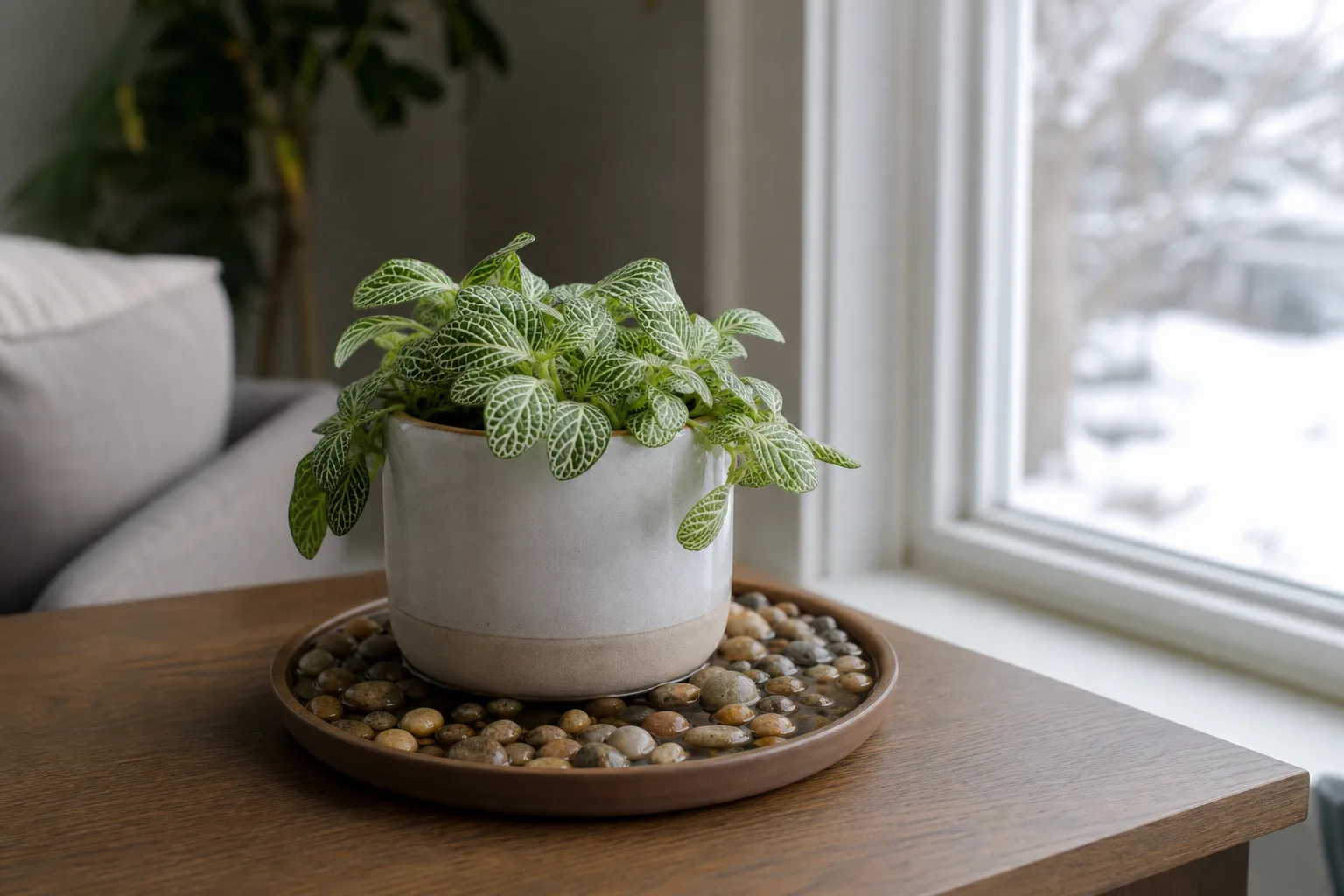
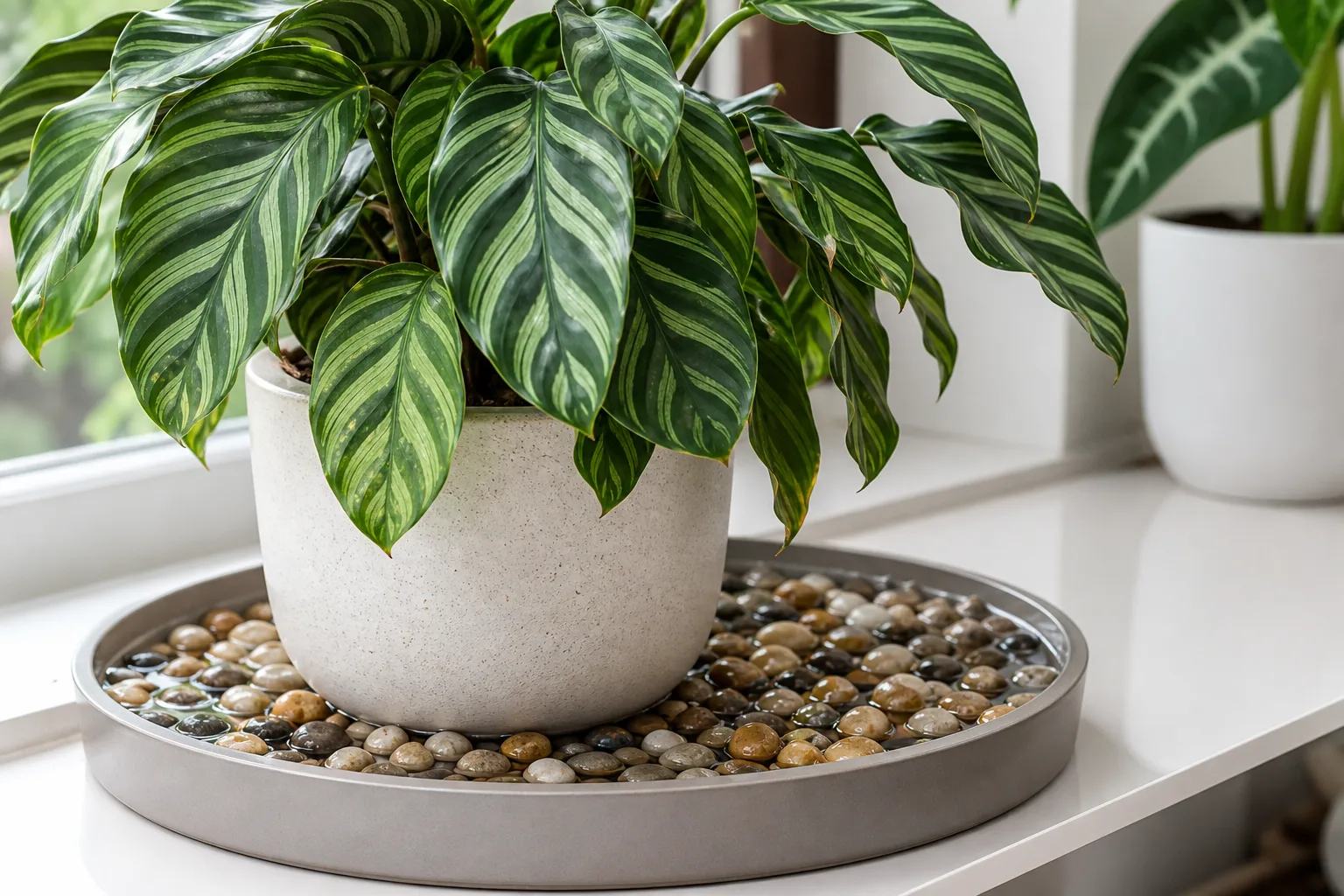
The mistake is treating all tropicals as equally demanding. A fittonia, selaginella, or finicky calathea is not the same as a pothos that shrugs off 35% winter air. Trays make the most sense at the sensitive end of that spectrum - and even there, only as a minor support tool.
Myth 5: Brown leaf tips always mean low humidity
Dry-looking tips sometimes mean dry air. Often they do not. Iowa State Extension again points to inconsistent watering and excess fertilizer salts as frequent causes. Brown tips are a symptom, not a diagnosis. Humidity may contribute, but so can underwatering, overwatering, poor roots, draft stress, and minerals from tap water and fertilizer. (Iowa State Extension)
If you add a tray and nothing changes, that does not prove trays are useless. It may mean humidity was never the problem. Check soil moisture habits, fertilizer strength, water quality, drainage, and vent exposure before you humidify anything. The dedicated walkthrough lives in can a pebble tray really fix brown leaf tips.
Myth 6: A pebble tray can replace a humidifier
For consistent, measurable humidity change across a room, a humidifier wins. Costa Farms and multiple extension sources rank humidifiers first when dry winter air is the actual constraint. A tray may add a few points locally; a humidifier changes the environment your whole plant collection shares. That is a different job entirely. See pebble tray vs humidifier for sizing, EPA comfort ranges, and when a tray is still worth keeping as a drip saucer.
Myth 7: Bigger plants benefit just as much as smaller ones
They usually do not. Better Homes & Gardens explains that pebble trays help most for small, low-growing plants whose foliage sits near the water surface. A waist-high plant with leaves far above a narrow saucer is mostly getting decoration. Size, canopy height, tray width, and airflow explain why two growers can swear opposite things and both be right - from different setups. (Better Homes & Gardens)
Myth 8: Any tray setup is fine as long as there is water
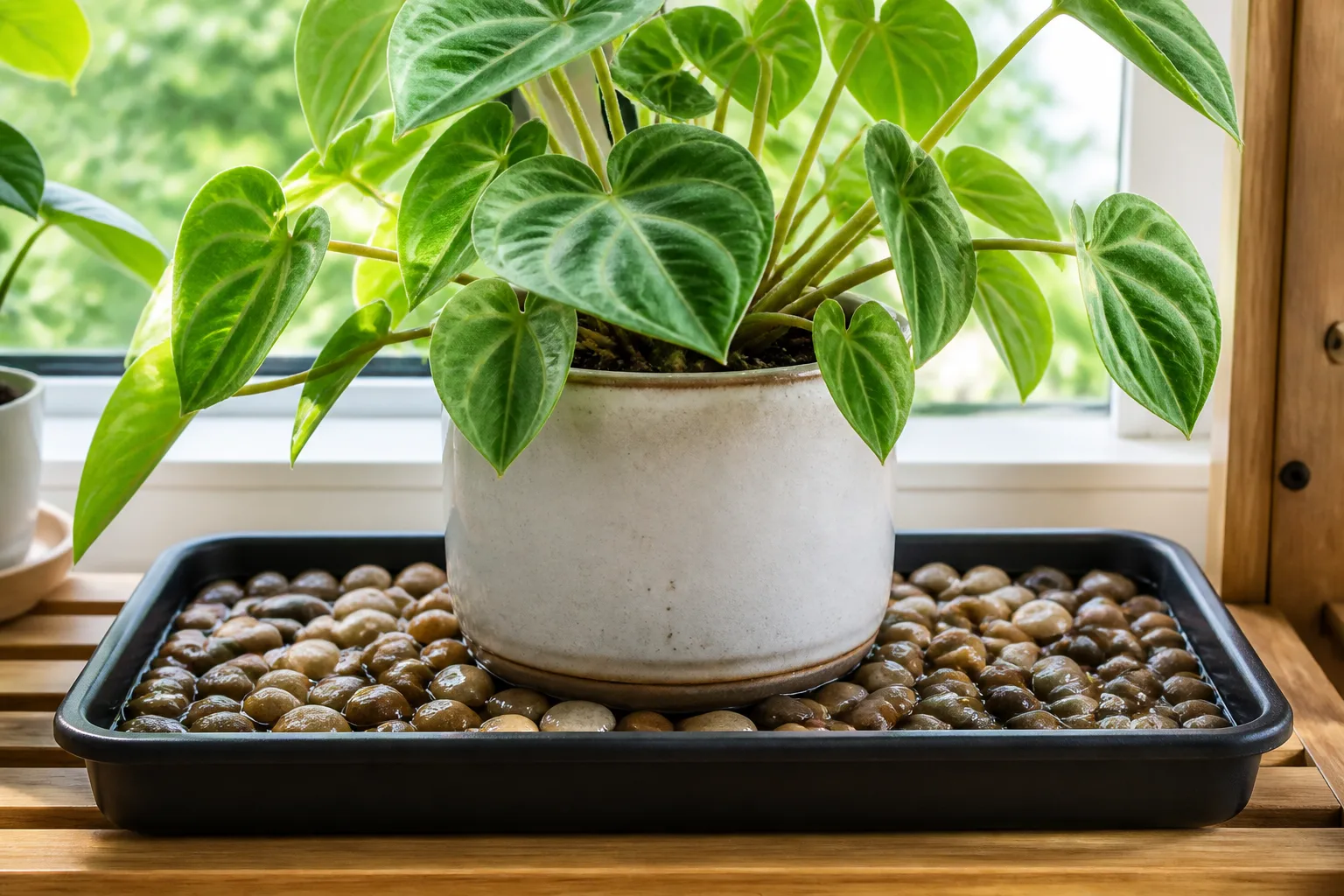
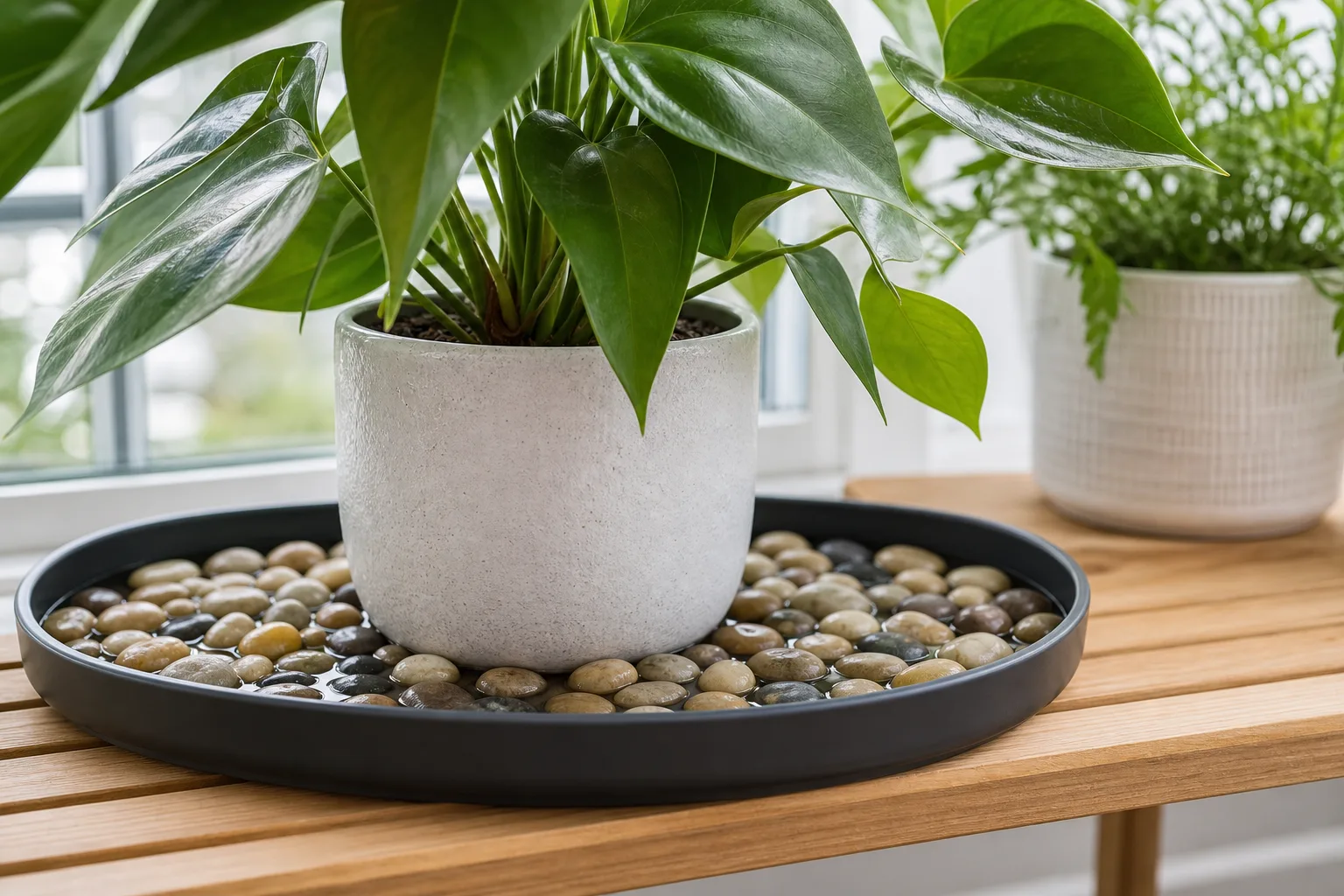
Setup matters. The pot must sit above the waterline or potting mix can wick moisture upward and stay too wet - the opposite of what you want. Minnesota Extension and RHS both stress keeping drainage holes out of standing water when using gravel or hydroleca trays. (University of Minnesota Extension) (RHS)
The right way to set up a pebble tray
Use a wide, shallow tray wider than the pot base, add clean pebbles or LECA, and pour water to just below the top of the stones. Refill as needed and clean often enough to prevent algae, mineral crust, and stale water. If the tray barely extends beyond the pot, there is little exposed water surface to evaporate.
Materials and specs
| Item | Practical spec | Why it matters |
|---|---|---|
| Tray width | At least 1.5× pot diameter | More evaporation surface; better micro-zone |
| Tray depth | 1–2 inches | Holds water without submerging stones |
| Pebbles / LECA | ½–1 inch layer above tray floor | Keeps pot base dry |
| Water fill line | Below top of stones | Prevents wicking into potting mix |
| Refill cadence | When exposed water drops | Dry stones = no evaporation |
| Cleaning | Weekly in warm months; as needed in winter | Cuts algae, gnats, mineral buildup |
Full DIY sourcing and styling options live in DIY pebble tray that works.
Myth 9: Pebble trays are risk-free
Low-risk is not no-risk. The biggest failure mode is a pot sitting in water so soil stays wet too long, raising root-stress risk. Neglected trays with standing water, debris, and algae are also harder to defend as “harmless.”
Fungus gnats, mineral residue, and root problems
Fungus gnats breed in chronically moist potting mix, not in dry gravel. Penn State Extension ties persistent gnat problems to overwatered soil. Wisconsin Horticulture Extension notes that larvae feed in damp organic media and that reducing soil moisture is the foundation of control. (Penn State Extension) (Wisconsin Horticulture Extension) A pebble tray does not cause gnats by itself, but a messy, constantly wet setup around already soggy plants makes things worse. Hard-water areas may also see white mineral crust on stones - cosmetic, but a sign the tray needs a rinse.
Myth 10: If your room is dry, pebble trays are the best first fix
Usually they are not. The best first fix is measurement. A hygrometer tells you whether the room is actually below what your plants need - or whether you are solving a problem that does not exist. The EPA recommends keeping indoor relative humidity roughly 30% to 50% for human comfort and mold prevention, which overlaps with what many common houseplants tolerate. (US EPA) If your meter reads 45% and your pothos looks fine, a tray is optional decor, not urgent care.
When readings stay severely low through winter and several humidity-sensitive plants show stress, skip the tray shopping spree and pick a tool sized to the gap - starting with the decision tree in do pebble trays really increase humidity.
What works better when humidity is the real issue
Ranked by typical impact when low humidity is confirmed - not re-explained here because sibling guides cover each option in depth:
- Humidifier - best for room-wide change (pebble tray vs humidifier)
- Grouping plants - shared transpiration micro-zone (pebble tray alternatives)
- Better placement - bathrooms or kitchens only if light is adequate
- Small enclosures / terrariums - for species that tolerate trapped moisture
- Pebble tray - modest local support for compact plants (measured humidity guide)
Which plants may still benefit from a pebble tray
A tray may still be worth using for small, humidity-loving, low-growing plants with foliage near a broad tray - think fittonia, small ferns, or a compact creeping fig. Better Homes & Gardens specifically calls out small plants as better candidates than large floor specimens. (Better Homes & Gardens)
There is also a non-humidity case: trays keep saucers tidy, elevate pots above runoff, and look better than bare plastic. If you like the look, keep the setup clean, and treat it as a modest helper rather than a cure, there is no reason to ban trays. What deserves to go is the myth that they are universal plant medicine.
How to decide whether a pebble tray is worth using
Use a tray when the cost is low, the plant is small, foliage sits near the tray, and a hygrometer shows you are already close to adequate humidity and want a slight local bump. Skip it when you are trying to rescue a tall plant in a very dry room, fix chronic brown tips without diagnosis, or avoid a humidifier you probably need.
Ask one blunt question: am I trying to create a slight local improvement, or solve a real humidity deficit? If it is the second, the tray is too small a tool. Measure, diagnose, match the fix to the species, and use the strongest appropriate option.
Related pebble tray guides
This page is the cluster myths hub. For depth on adjacent topics:
- Indoor humidity and pebble trays - hygrometer math and measured tray readings
- Do pebble trays really increase humidity? - effectiveness decision tree
- Pebble tray vs humidifier - full comparison when you need room-wide change
- How to set up a pebble tray - step-by-step setup
- Pebble tray FAQs - quick answers to common tray questions
FAQ
Do pebble trays work for calatheas? They can help a little, but they are rarely enough on their own if your room is very dry. Calatheas are among the houseplants more likely to react to low humidity, so a tray may serve as minor support while a humidifier or better microclimate usually has more impact.
Can I use LECA instead of pebbles in a humidity tray? Yes. RHS mentions hydroleca, and the principle is the same: the plant sits above the water while moisture evaporates from the tray. What matters more than the material is keeping the pot out of standing water and keeping the tray clean.
How often should I refill and clean a pebble tray? Refill whenever the water level drops below usefulness, and clean often enough that you do not get algae, mineral crust, or stale water buildup. Regular refilling and cleaning are part of proper use, not optional maintenance.
Are pebble trays bad for succulents and cacti? Usually they are unnecessary. Many dry-climate plants prefer lower humidity than tropical foliage plants, so adding trays under them solves a problem they often do not have.
Should the bottom of the pot touch the water? No. The pot should sit above the waterline. If the base of the pot touches water, the growing medium can wick it up and stay too wet, which raises the risk of root issues instead of improving plant health.
Conclusion
The biggest pebble tray myth is not that trays do nothing. It is that they do enough to deserve their reputation. Named hygrometer tests put the local gain at a few percentage points that fade with distance and disappear at room scale. Brown tips, tall plants, dry winter rooms, and humidifier replacements are where the mythology breaks down.
Keep the nuance, drop the hype: measure first, diagnose before you humidify, use trays as minor support for small sensitive plants, and reach for stronger tools when the hygrometer says the gap is real.