Container Petunias in Winter: Care, Pruning and Protection Tips
Help container petunias survive cold weather with practical winter care, watering, pruning and frost-protection advice.
Quick Answer: Should You Overwinter This Pot?
Save the container if the plant is healthy, drains well, and you can keep it above freezing in bright light. Protect outdoors overnight if you get occasional frost but not months of deep freeze. Take cuttings and let the mother plant go if the basket is woody, pest-heavy, or too large for indoor space. Replace in spring if stems are mushy, roots are rotten, or repeated freezes have collapsed the crown.
This guide is the container overwintering deep-dive for patio pots and hanging baskets. For full species culture, symptom rescue, and propagation steps, start at the Petunia hub. For summer pot sizing and bloom maintenance, see container petunias: grow fuller pots that bloom longer.
Can Container Petunias Survive Winter?
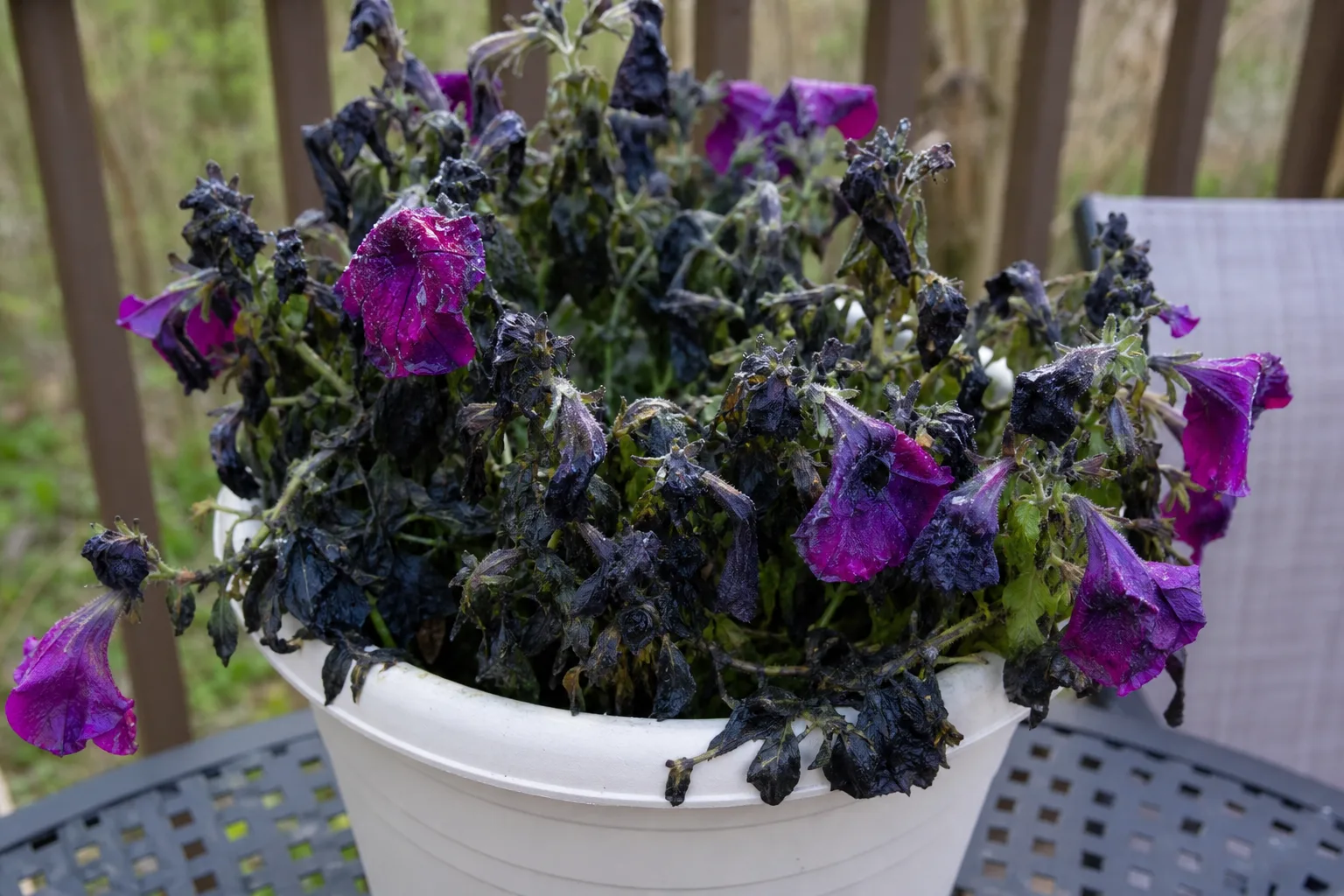
Container petunias can survive winter in frost-free climates and protected spaces, but they usually do not survive repeated freezing outdoors. That is the practical line most gardeners need. A petunia in a warm-winter region may continue as a cool-season bedding plant, especially where summer heat is the bigger problem. University of Florida IFAS recommends October and November as the best planting time for petunias in Florida, where they grow best in full sun and moist, well-drained soil. (Gardening Solutions)
In colder climates, the same plant is a different story. University of Minnesota Extension advises waiting until soil warms to about 60°F and frost danger has passed before transplanting petunias outdoors, which tells you a lot about their comfort zone. Petunias are not plants you can reliably leave in a small exposed pot through winter and expect a strong comeback. Frost, frozen potting mix, and prolonged wet cold can collapse foliage, damage roots, or invite rot. (University of Minnesota Extension)
Why Petunias Act Like Annuals in Cold Climates
Petunias are often sold beside annuals because that is how most gardeners use them: plant after frost, enjoy months of color, replace after the season ends. Missouri Botanical Garden classifies common garden petunias as tender perennials winter-hardy in USDA Zones 10–11 and grown as annuals in colder climates. That distinction matters because it prevents two bad assumptions - that every petunia is doomed after summer, and that because petunias can be perennial somewhere, they should overwinter outside anywhere. (Missouri Botanical Garden)
Survival depends on the coldest temperatures the plant faces, cold duration, container size and insulation, potting mix wetness, and overall plant condition going into winter. Spreading Wave-type petunias often carry more stem length and pest load into fall than compact grandiflora baskets, which can make indoor carryover harder even when the genetics are similar.
Why Containers Make Winter Harder
Containers expose roots to temperature swings that in-ground plants do not experience as severely. Soil in the ground has mass around it, so it cools and warms more slowly. Potting mix in a hanging basket or patio planter is exposed from the sides, top, and often bottom. Texas A&M AgriLife Extension notes that container plants are especially susceptible because roots have limited ability to acclimate, and container soil can become nearly as cold as the surrounding air. (Urban Programs Travis County)
That is why a petunia that might limp through a brief cold spell in a protected bed can fail in a pot. A sheet over the flowers may protect the top from frost, but it does not fully protect the root ball if the pot freezes solid. Smaller pots and hanging baskets are especially vulnerable because they have less soil volume. If you want to save container petunias, think about the whole container, not just the visible foliage.
The Temperature Line That Matters
The most important winter care rule is simple: protect container petunias before frost, not after the damage is obvious. Missouri Extension describes petunias as half-hardy plants that can tolerate light frosts but may not fare well when temperatures drop into the 20s°F; potted plants face greater cold risk and survive better when moved into a house or garage until temperatures rise. (MU Extension)
For practical gardening, treat around 40°F (4°C) as the point where you start paying attention, near 32°F (0°C) as the point where protection becomes urgent, and anything below freezing for several hours as a serious risk. Exact damage varies by cultivar, exposure, wind, humidity, plant hydration, and whether the potting mix freezes.
Light Frost, Hard Freeze, and Root-Zone Risk
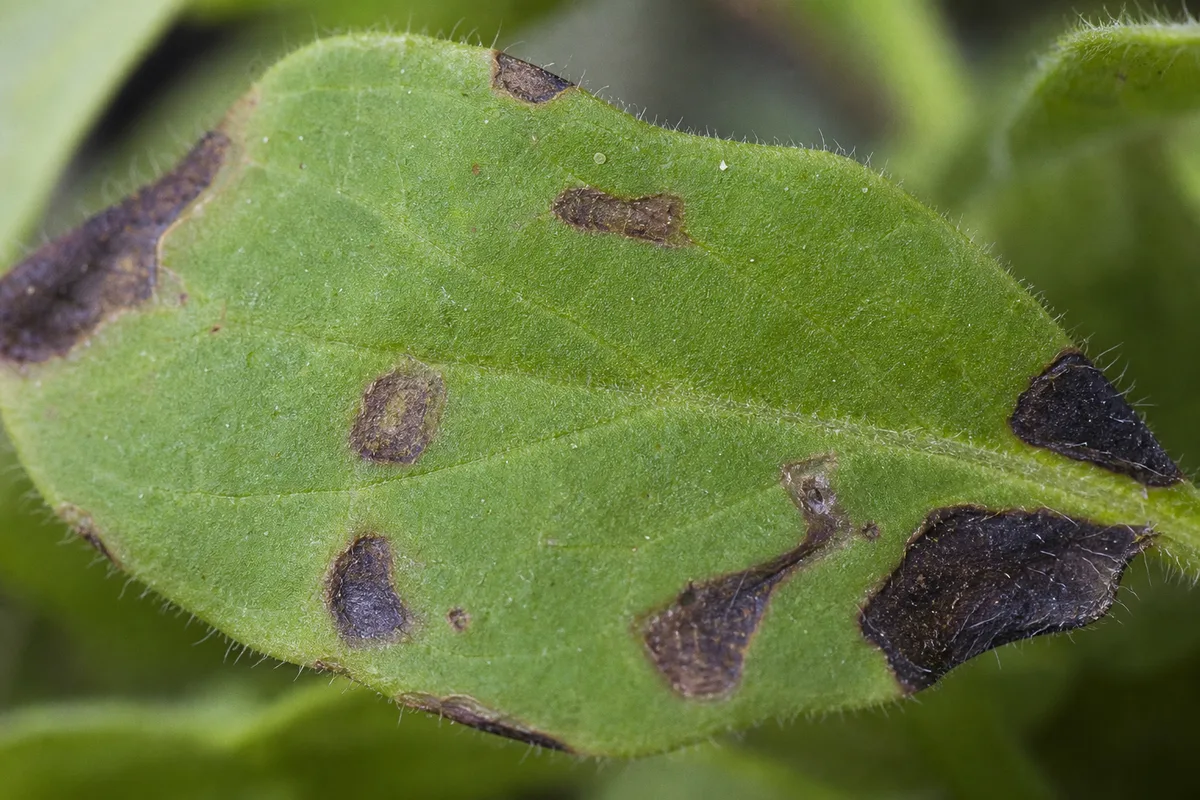
A light frost can damage flowers and tender new growth without necessarily killing the entire plant. You may see limp blooms, darkened leaf edges, or water-soaked tips - patterns detailed on the petunia cold-damage page with diagnostic photos. If stems remain firm and green below the damaged tissue, the plant may recover after trimming. A hard freeze is different. Once foliage turns mushy and the crown collapses, the old plant is usually not worth saving unless firm live growth remains near the base.
Containers add another layer of risk because root-zone temperature can fall quickly. Penn State Extension advises that roots of above-ground container plants can be the same temperature as winter air, and for containerized plants it recommends choosing plants hardy to two zones colder than the local zone as a safety margin. That advice targets hardy perennials, but the principle applies strongly to petunias: a pot gives far less winter protection than the ground. (Penn State Extension)
Why Mild Winters Change the Plan
In mild-winter regions, petunias may be treated as cool-season color rather than summer-only color. Advice for Florida, coastal climates, and many subtropical regions can look completely different from advice for northern gardens. In warm climates, winter care may mean regular light watering, grooming, sun exposure, and occasional frost protection rather than full indoor overwintering. (Gardening Solutions)
The trap is copying advice from the wrong climate. A gardener in a frost-prone zone should not assume petunias can stay outdoors all winter because someone in a warm region grows them from October to March. A warm-climate gardener should not cut back and store petunias like dormant northern perennials if the plants are actively blooming in good winter light. The best winter care plan starts with your actual lowest temperatures, not the calendar month.
The Best Winter Care Plan by Climate
The right plan depends on whether your winter is freezing, occasionally frosty, or generally mild. Petunias do not need complicated care, but they do need climate-appropriate care. In all zones, the basics are the same: bright light, excellent drainage, moderate moisture, and protection from freezing. What changes is how aggressively you protect them and whether overwintering the same plant is realistic.
Use this quick-reference matrix before you drag a tired basket indoors or cover a healthy patio pot for one cold night:
| Climate profile | Example zones | Primary action | Best location | Winter water rhythm | Realistic bloom expectation |
|---|---|---|---|---|---|
| Cold-winter (repeated freeze) | 3–6 | Move indoors or take cuttings before first hard frost | Bright window, grow light, or frost-free porch | Check weekly; water when top inch dries | Survival focus; little indoor bloom |
| Mild frost-prone (occasional dips) | 7–8, parts of 9 | Shelter + overnight protection on forecast nights | Wall, porch roof, garage on cold nights | Check every 5–7 days; more if under cover without rain | Sporadic bloom possible in mild spells |
| Warm-winter (mostly frost-free) | 9–11, mild coasts | Active care; watch for surprise cold snaps | Full sun outdoors; move/cover before rare frost | Keep evenly moist, not soggy | Continued bloom in good light |
Before choosing a method, inspect the plant. A vigorous container petunia with firm stems, healthy roots, and only moderate legginess is a candidate for saving. A plant with blackened stems, sour-smelling soil, fungus gnats, heavy aphids, or a root ball that stays wet for days is a poor candidate. In that case, taking healthy cuttings before frost - see the petunia propagation guide - may be smarter than carrying a tired mother plant through winter.
Cold-Winter Regions
In regions with repeated freezes, snow, or long periods below freezing, do not leave container petunias outdoors and expect reliable survival. Move the plant indoors before frost, place it in the brightest location you have, and reduce watering so the mix stays lightly moist rather than wet. A sunny window may work for smaller pots, but a grow light gives more consistent results. The plant may not bloom much indoors, and that is normal. Your goal is survival, not a perfect winter display.
Worked example (USDA Zone 7, 12-inch patio pot): A healthy Wave petunia on a south-facing patio may survive one or two light frosts with fabric cover, but once lows hit the mid-20s°F, the rim stems blacken first while interior growth looks briefly fine - the same rim-first pattern the cold-damage page documents. Moving the pot to a bright enclosed porch at 38–45°F with a thermometer beats guessing in an unheated garage that drops below freezing on the coldest nights.
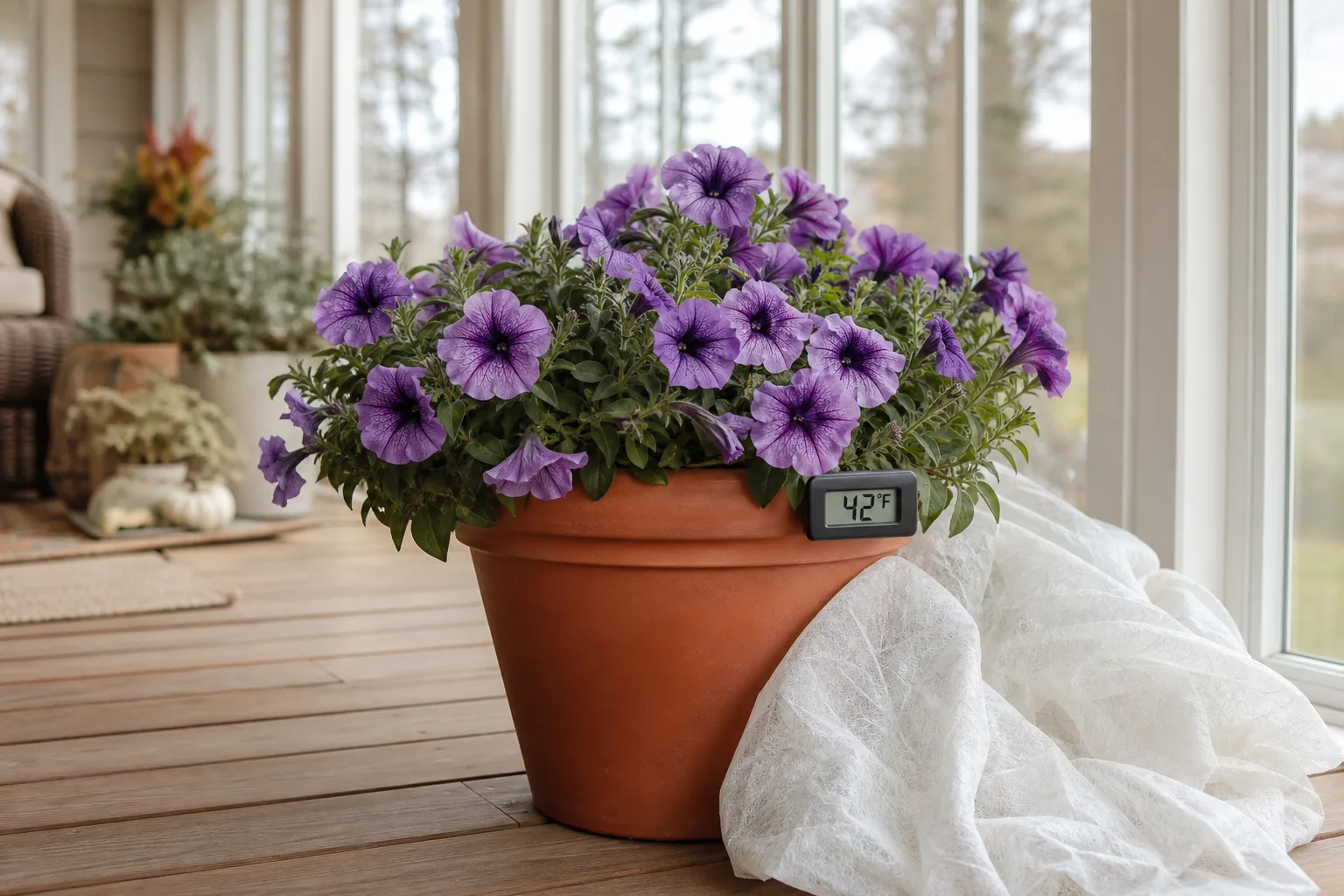
If the plant is too large or messy to bring inside, take cuttings before the first frost. Cuttings are often easier to overwinter than a huge, tired basket because they take less space, carry fewer pests, and adapt better to indoor light.
Mild Frost-Prone Regions
In areas with occasional frost but not constant deep freezes, you can often keep container petunias outdoors most of the winter with temporary protection. Move pots close to a wall, under a porch roof, or into a sheltered corner before cold nights. Group containers together to reduce exposure, and nest small pots inside larger decorative pots with insulating space around them. If frost is forecast, move the container into a garage, shed, enclosed porch, or other protected space overnight.
Do not cover petunias with plastic directly against the leaves. Fabric, frost cloth, old sheets, or breathable covers are safer because they trap some warmth without pressing cold wet plastic onto the foliage. Remove covers in the morning once temperatures rise so the plant gets light and air. If a hard freeze is predicted, covering alone may not be enough for a small container. Move it if you can.
Warm-Winter Regions
In warm-winter climates, container petunias may keep growing through winter and can be managed as active plants. Give them full sun, keep the potting mix evenly moist but never soggy, and trim lightly to prevent legginess. University of Florida IFAS notes that petunias grow best in full sun and well-drained soil kept moist, which is especially relevant where winter is a growing season rather than a survival season. (Gardening Solutions)
Even in warm regions, do not ignore cold snaps. A single unusual frost can damage container petunias that have been actively growing in mild weather. Keep a plan ready: move hanging baskets down, shift pots against the house, and cover or relocate plants before the coldest night. Winter petunias in warm climates often fail less from cold alone and more from the combination of wet soil, poor air movement, and sudden temperature drops.
Preparing Container Petunias Before Cold Weather
Winter preparation should begin before the first serious cold, while the plant is still firm enough to recover from trimming and handling. Waiting until after frost damage limits your options. A container petunia that goes into winter clean, lightly pruned, pest-free, and in draining soil has a much better chance than one dragged indoors after a freezing night with soggy roots and dead flowers.
Start by removing spent blooms, yellow leaves, dead stems, and debris sitting on the potting mix. Petunias have sticky foliage that catches old petals and dust, and messy growth can hide aphids, mites, whiteflies, or fungal problems. Cleaning the plant also improves airflow around the crown. This matters more indoors or under cover because still air and low light can turn small issues into major decline.
Look at the plant from the top, sides, and base. Healthy petunia stems should feel firm, not hollow or slimy. Some woodiness near the base is normal late in the season, but a plant with only a few leaves at the tips of long bare stems is harder to overwinter attractively. If you can slide the root ball partly from the pot, inspect the roots. Healthy roots are usually pale, tan, or white and smell earthy. Brown, mushy, sour-smelling roots point to rot - take cuttings if any firm stems remain, discard the diseased root ball, and restart with fresh mix.
Pruning, Cleaning, and Pest Checks
Before bringing a petunia indoors or into a protected winter space, cut it back enough to reduce stress but not so severely that you remove every growing point. A practical cut is to shorten long trailing stems by one-third to one-half, leaving firm green growth and several nodes on each stem. This makes the plant easier to manage and reduces the amount of foliage the roots must support in low winter light. For technique details during the growing season, see petunia pruning.
Pest inspection is not optional. Outdoor petunias can carry aphids, thrips, whiteflies, spider mites, and fungus gnat larvae into the house. Rinse foliage gently, remove damaged leaves, and isolate the plant for a week or two before placing it near houseplants. If pests appear, treat early with a method appropriate for the pest and always follow product labels. The goal is not to make the plant look perfect in winter; it is to keep it healthy enough to resume stronger growth in spring.
Do not automatically repot every petunia before winter. Repotting can help when the mix is compacted, hydrophobic, sour, or root-bound, but unnecessary repotting can stress a plant right before it enters low-light conditions. If water runs down the sides without wetting the root ball, or if the mix stays soggy, repotting into fresh, well-drained potting mix is usually worth it. Choose a container with drainage holes, and if you use a decorative outer pot indoors, remove the inner pot to water, let it drain fully, then put it back.
Watering Petunias in Winter Without Rotting the Roots
Winter watering is where many container petunias fail. Gardeners often keep watering as if it were summer, even though the plant is growing more slowly and using less water. Cool, wet potting mix is a perfect setup for root rot. At the other extreme, a hanging basket stored under cover can dry completely because rain no longer reaches it. The answer is not a fixed schedule. The answer is testing the mix.
RHS container guidance is useful here: container moisture should be checked rather than assumed, and pots can dry differently depending on weather and exposure. In winter, that principle matters even more because the top of the mix may look dry while the lower root zone stays wet. (RHS) For summer container rhythm contrast, see petunia watering.
Use your finger, a wooden skewer, or the weight of the pot. Push a finger about an inch into the mix for small containers and deeper for larger planters. If the mix feels cool and damp, wait. If it feels dry at the root zone and the pot feels light, water thoroughly until excess drains from the bottom, then empty saucers. Indoor petunias usually need less water than outdoor summer containers. A plant under a grow light in a warm room may dry faster than a plant in a cool porch, so the environment matters.
Do not push overwintered petunias with heavy fertilizer in low light. Fertilizer encourages growth, and winter indoor conditions often cannot support strong growth unless you provide excellent light. Wait until you see clear new growth in late winter or spring before resuming regular feeding. The University of Minnesota petunia guidance emphasizes full sunlight and warm soil for outdoor growth, which is a good reminder that feeding works best when the plant is actually ready to grow. (University of Minnesota Extension)
Indoor and Sheltered Overwintering Methods
There are three realistic ways to carry container petunias through winter: keep the whole plant growing in bright indoor conditions, store it in a protected frost-free space with minimal growth, or take cuttings and overwinter smaller young plants. Each method has trade-offs. The whole-plant method gives you continuity but takes space and can bring pests indoors. Sheltered storage is simple but works only if temperatures stay above freezing and light is adequate enough to prevent collapse. Cuttings require more setup but often produce better spring plants.
Do not expect a petunia to behave like a dormant bulb. Petunias are not usually stored dry and dark for months. If you put a leafy petunia in a dark garage for winter, it will likely stretch, yellow, rot, or die. A cool, bright, frost-free space is much better than a warm dark room or a freezing shed.
A bright south- or west-facing window can work for smaller container petunias, especially if winter sun is strong in your region. Keep the plant away from cold glass at night and away from heating vents that dry foliage too quickly. A grow light is often more reliable than a windowsill alone. For overwintering survival—not heavy bloom—University of Minnesota Extension recommends 12 to 14 hours of supplemental light daily for foliage houseplants, with LEDs 12 to 24 inches above the canopy (fluorescent fixtures closer at 6 to 12 inches). If you are pushing for occasional winter flowers, their flowering-houseplant guidance runs 14 to 16 hours at the 6 to 12 inch range; raise the fixture if leaves bleach or feel warm. Use a timer and rotate the pot weekly so growth stays balanced. (University of Minnesota Extension)
A frost-free greenhouse, enclosed porch, conservatory, or bright garage can be useful if it stays above freezing. RHS notes that conservatories are useful for overwintering tender perennials and marginally hardy plants in frost-prone areas, especially plants needing good light and dry, frost-free conditions. (RHS) The phrase frost-free is doing the heavy lifting. An unheated garage that drops below freezing is not safe for petunias just because it is indoors. Use a thermometer rather than guessing.
Cuttings as the Backup Plan
Cuttings are often the most practical way to preserve a favorite container petunia. Choose healthy, non-flowering tips if possible. Cut a 3- to 4-inch section below a node, remove the lower leaves, and place it in moist, well-drained propagation mix. Keep it in bright indirect light until rooted, then move it into stronger light. Not every cutting will root, so take several. Full step-by-step timing, temperature, and mix guidance lives on the petunia propagation guide.
This method is especially useful for trailing petunias in hanging baskets. Large baskets are awkward indoors, dry unevenly, and often contain old, depleted mix by the end of the season. Cuttings let you keep the genetics of a plant you love without babysitting a tired root system all winter. In spring, young rooted plants usually shape better than old woody stems.
What to Do After Frost Damage
After frost, do not immediately throw away every petunia. First, wait until the plant thaws and the damage becomes clear. Frost-injured flowers and leaves often look water-soaked, limp, gray-green, brown, or black. Trim off collapsed flowers and mushy foliage. Then check the stems. If the lower stems are still firm and green inside, the plant may recover in mild weather or under protection.
For symptom identification, rim-first basket patterns, and the 48–72 hour wait-before-pruning rule, use the dedicated cold damage on petunia page rather than guessing from leaf color alone. If the entire plant is mushy down to the crown, the odds are poor. A hard freeze that penetrates the pot can kill both top growth and roots. Remove the plant and compost it if disease is not present. If you see signs of fungal disease, rot, or pest infestation, discard it rather than composting. Wash the container before reuse.
For partially damaged plants, move the pot into bright shelter and keep the soil just lightly moist. Do not fertilize immediately. Once new growth appears from firm stems, trim back dead sections more neatly and resume gentle care. If no new growth appears after a reasonable recovery period in mild conditions, let it go and restart.
Spring Recovery
Spring recovery is where overwintering succeeds or fails. A petunia that survived indoors is not ready to be thrown straight into full sun, wind, and cold nights. It has softer leaves, weaker stems, and a root system adjusted to protected conditions. Move too fast, and the plant can scorch, wilt, or stall. Move gradually, and it can become a strong container plant again.
Start by increasing light before increasing fertilizer. When days lengthen and new growth becomes steady, prune lightly to shape the plant. Remove thin, weak stems and keep the strongest branching growth. If the plant is root-bound or sitting in tired mix, repot into fresh, well-drained potting mix. Petunias perform best with full sun and well-drained conditions, and Proven Winners container guidance recommends at least six hours of direct sun for vigorous blooming in petunia planters. (Proven Winners)
Harden the plant off after frost danger has passed. Put it outdoors in a sheltered bright spot for a few hours, then bring it back in. Over a week or more, increase exposure to sun and wind. Do not rush this step because overwintered petunias can be more sensitive than nursery-grown plants that have already been conditioned. Once nights are reliably mild and the plant is actively growing, return to normal petunia care through the Petunia hub: full sun, consistent moisture, good drainage, periodic feeding, and trimming when stems get leggy.
If the old plant survived but looks weak, combine it with fresh young plants rather than expecting it to carry the whole display. Old petunias often have woody centers and uneven branching. They can still be useful, but new plants or cuttings usually create a fuller container faster. The best spring decision is not sentimental. Keep what is healthy, replace what is weak, and build the container for the season ahead.
Related Guides
- Petunia hub - full species care, pet safety, propagation, and problem index
- Petunia cold damage · propagation · watering · pruning
- Container petunias: grow fuller pots that bloom longer - summer pot sizing, feeding, and midsummer reset
Conclusion
Match your winter plan to climate and plant condition—then act before frost, not after damage shows. When the old pot is not worth saving, cuttings or a spring restart are smarter than forcing a failing plant through winter.