Rubber Plant Care Guide: Light, Water, Soil and Growth Tips
Grow Ficus elastica indoors with the right light, watering, soil, pruning and fixes for leaf drop or brown edges.
When to Use This Guide vs. the Rubber Plant Hub
Start here if you want a decision-focused read on why rubber plants stall in ordinary homes - how light changes watering, why variegated leaves revert, and what air layering actually costs in time. For the full species reference - cultivar comparison table, grow-light specs, pest treatment workflows, repotting steps, and links to sixteen symptom pages - open the Rubber Plant hub on LeafyPixels.
Use this guide for the mental model. Use the hub and its topic guides when you need a checklist:
- Light - window placement, acclimation, grow lights
- Watering - soak-and-dry rhythm, seasonal shifts
- Soil - mix structure and drainage
- Propagation - cuttings step-by-step
- Pruning - branching cuts and timing
- Fertilizer and Repotting - when and how much
If you already know the symptom - yellow leaves, leaf drop, spider mites - skip straight to the matching problem page on the hub rather than rereading general care.
Why Rubber Plants Fail in Real Homes (Not Nursery Conditions)
A rubber plant (Ficus elastica) looks easy because it survives neglect better than a fiddle-leaf fig. That forgiveness is misleading. The plant can sit in a dim corner for months with dull leaves and wet soil while you tell yourself it is “fine.” Indoors it usually stays between roughly 2 and 10 feet, depending on light, pruning, and time - far smaller than wild trees in its native range from the eastern Himalaya to northern Malaysia, but still large enough to dominate a room when conditions align. Outdoors it is reliably hardy only in USDA Zones 10 through 12; everywhere else it is a container or indoor plant. (Plant Toolbox; Missouri Botanical Garden)
Nursery benches offer bright, even light, warm roots, and staff who water on observation. Your home offers one window, heating cycles, and a watering day you picked because life is busy. The gap between those environments explains most failures: not mystery disease, but light too weak, soil too wet, or the plant moved twice in one month. Ficus species dislike abrupt change; a rubber plant that dropped leaves after you brought it home from the shop is often reacting to relocation, not declaring war on you. (Clemson HGIC)
The National Garden Bureau named 2026 the Year of the Ficus, which reflects real momentum - more people buying rubber plants and placing them in rooms that were never tested for light. That trend is useful context: you are not alone if your glossy Instagram reference plant looks leggy in your actual living room. The fix is not buying a fifth fertilizer. It is reading what the leaves say about light and roots.
The Four Non-Negotiables for Indoor Rubber Plants
Treat these as gates, not suggestions.
Bright indirect light drives everything else. Without enough light, the plant grows slowly, soil stays wet longer, and pruning cuts recover poorly. Drainage matters as much as watering skill - a hole in the pot, empty saucer, and mix that holds air, not soup. Stability means consistent warmth without cold drafts below about 55°F, and as few surprise moves as you can manage. Observation beats calendars: finger in the soil, weight of the pot, color of the newest leaf.
Miss one gate and the others stop compensating. A rubber plant in strong light with soggy soil still rots. A perfectly watered plant beside a drafty winter window still drops leaves. The hub’s watering guide walks through rhythm; this guide explains why rhythm depends on light first.
Light as the Growth Lever
The best light for a rubber plant is bright, indirect light for most of the day - often described as six to eight hours of strong ambient light without harsh afternoon sun on the leaves. East windows work well; south and west exposures usually need distance or a sheer curtain. Soft morning direct sun is often fine after acclimation; baking midday rays scorch large leaves quickly.
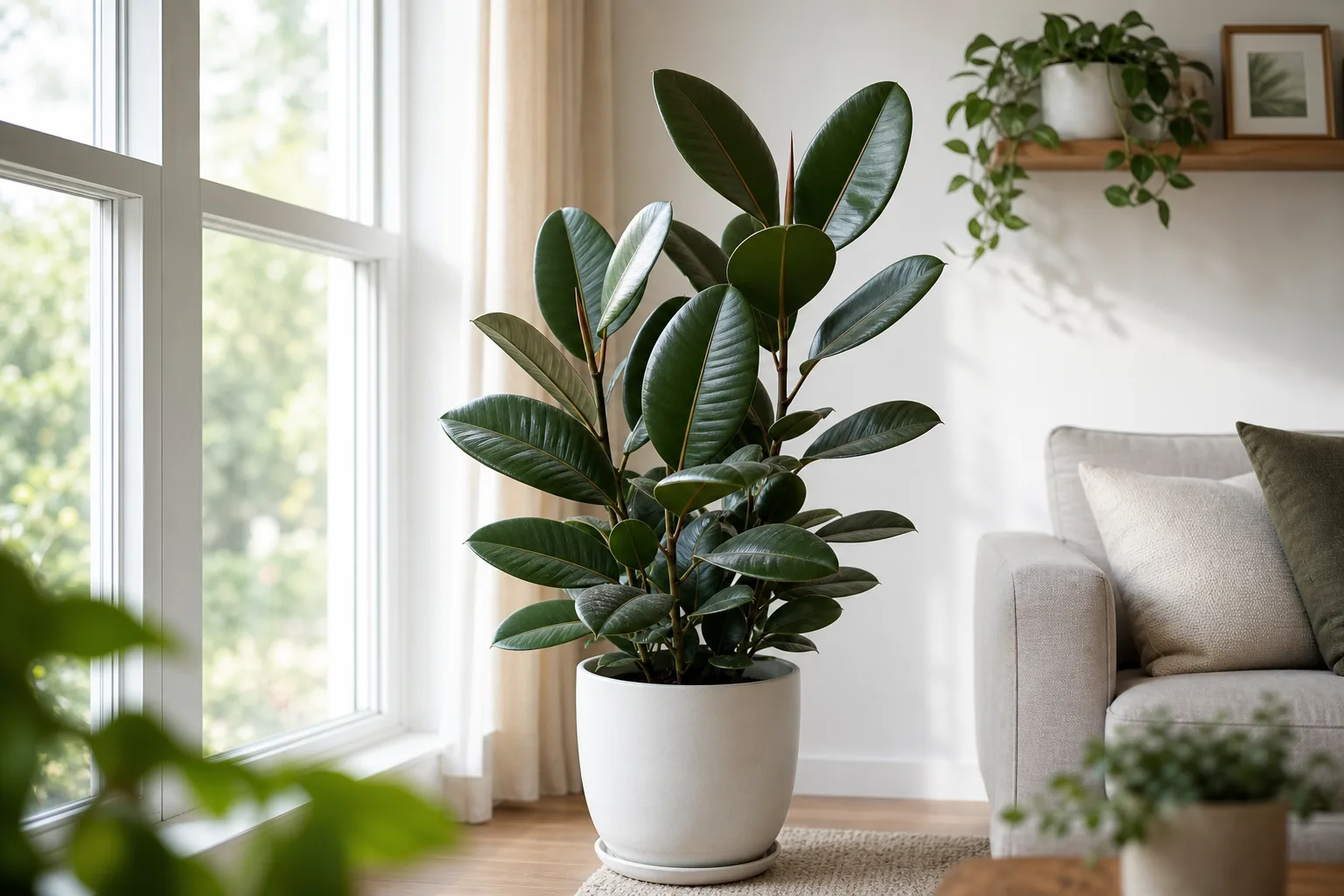 Light is the growth lever because it changes more than speed. In good light, leaves stay glossy, internodes stay shorter, and the soil dries on a predictable cycle - which makes watering easier to get right. In weak light, the plant etiolates: long bare stems, small pale leaves, lower leaf loss. Critically, low light also slows water uptake, so the mix stays wet longer and overwatering risk rises even if you have not changed your schedule. That feedback loop catches beginners who “only water weekly.”
When light is too strong too fast, you see bleached or crispy patches on sun-facing leaves. Move gradually over one to two weeks when upgrading brightness. Rotate the pot every week or two so growth stays upright rather than leaning hard toward the glass. For window-by-window placement detail, see the light guide.
Variegation, Reversion, and Cultivar Light Demands
Solid-green cultivars like Robusta and Burgundy tolerate moderate bright light better than variegated types. Tineke, Belize, and Ruby need more brightness because pale sections carry less chlorophyll - they cannot photosynthesize as efficiently. In dim rooms, new leaves emerge greener, pink fades, and the plant looks like a different cultivar within a few months.
When a variegated rubber plant sends out vigorous all-green shoots, treat that as reversion, not a bonus. RHS ornamental fig guidance recommends removing green shoots on variegated plants so they do not outcompete the patterned growth. Pair that pruning with brighter filtered light - otherwise reversion returns. For a full cultivar comparison table, use the Rubber Plant hub; here the decision rule is simple: buy the leaf color your window can support.
Watering Without Calendar Rituals
Water when the top inch or two of soil is dry, then soak until a little runs from the drainage hole and empty the saucer. NC State advises regular watering without overwatering and reduced water in dormancy; Clemson gives the same finger-test baseline. Neither source supports watering every Sunday because your phone reminder says so. (Plant Toolbox)
Your rubber plant does not experience weeks. It experiences light intensity, pot size, mix structure, and whether it is actively growing. Summer near a bright window can mean water every week; the same plant in winter may need half as often. Deep watering followed by partial drying beats daily sips that leave the center of the root ball dry while the surface looks moist.
Overwatering vs. Underwatering Signs
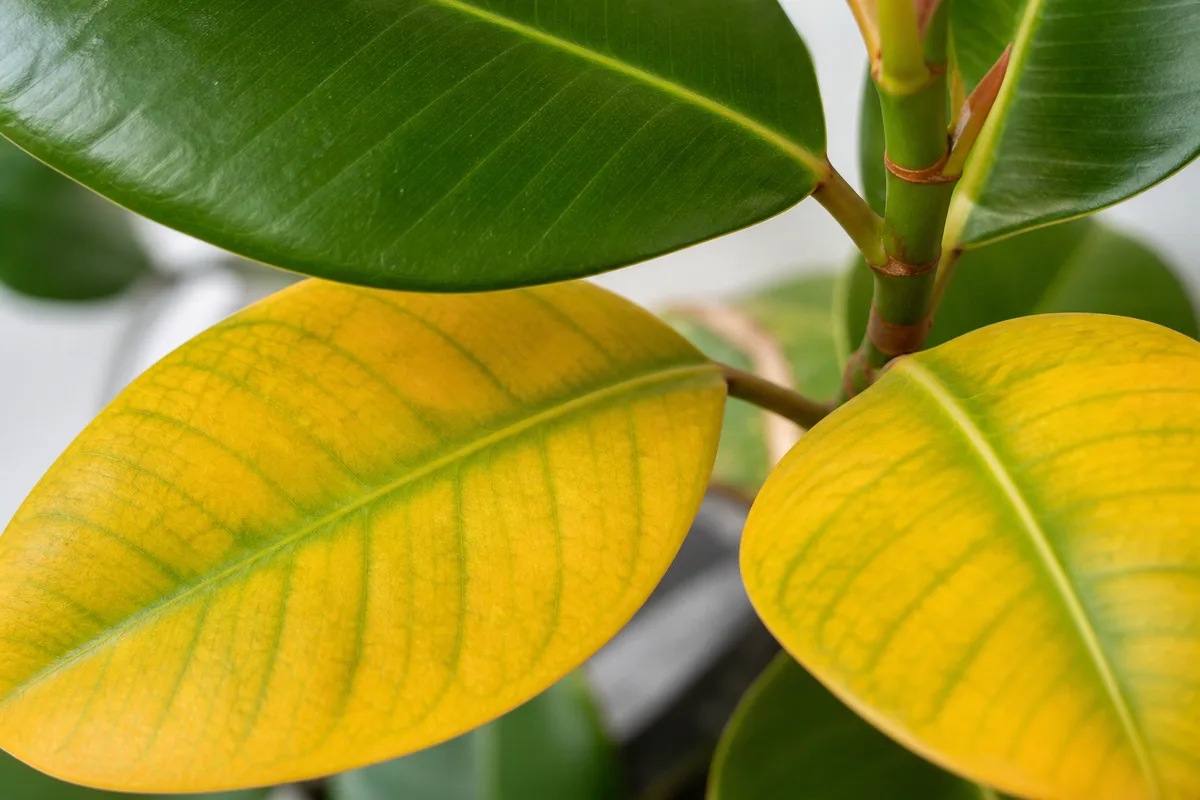
Overwatering usually shows yellow lower leaves, heavy wet pots, soft stems, and sometimes a sour smell from the mix. It is the leading cause of yellow leaves and leaf drop on rubber plants indoors. Underwatering looks sharper: drooping, crispy edges, lightweight pots, and dry soil throughout - fix with a thorough soak, not more misting.
One older yellow leaf at the bottom can be normal aging. A pattern climbing the plant is stress. Always read pattern, not panic.
The Low-Light and Overwatering Compounding Trap
The hardest cases are mixed mistakes: dim placement plus generous watering. Roots in wet, oxygen-poor mix begin to fail. The plant cannot take up water well, so leaves droop as if thirsty. Many growers add more water and fertilizer, which accelerates decline.
If soil is wet and the plant looks wilted, assume root stress before thirst. Stop watering until the appropriate dryness level returns, confirm drainage, and improve light if possible. Do not repot repeatedly while the plant is already shocked - stability matters. When rot is suspected, the hub’s root rot page covers recovery steps; this guide flags the diagnostic trap so you do not water a drowning plant.
Soil, Pots, and Cachepots
Rubber plants want a well-draining indoor potting mix that still holds some moisture - not cactus grit, not heavy garden soil. NC State recommends a soil-based potting mix indoors; RHS lists houseplant compost. The outcome matters more than a branded recipe: water drains within minutes, and the mix still feels lightly moist a day later, not compacted and soupy. (Plant Toolbox)
Use a pot with a drainage hole. Decorative outer pots work when the nursery pot sits above any standing water - lift it out after watering, pour off runoff, and return. That cachepot trick gives you the look without trapping roots in stagnant water. For mix ratios and refresh timing, see soil guide.
Going up only one pot size at repotting keeps the wet-to-root ratio sane. Huge pots are a common hidden cause of the compounding overwatering trap above.
Temperature, Humidity, and Draft Microclimates
Rubber plants prefer stable warmth, roughly 65°F to 85°F in active growth, with damage risk below about 50°F to 55°F including leaf yellowing and drop. Drafts from exterior doors, AC vents, and cold window glass count as stress even when the thermostat reads fine.
Humidity helps but is secondary for most homes. Clemson notes rubber plants prefer humid conditions yet tolerate dry indoor air - average room humidity is often enough. Very dry winter air can worsen spider mites when combined with irregular watering. If leaf edges crisp in heated rooms, address low humidity with a humidifier or grouping plants rather than relying on mist alone.
Feeding During Active Growth Only
Feed during active growth, not year-round on autopilot. RHS recommends a high-nitrogen fertilizer monthly in growth and sparing water in winter. A balanced liquid houseplant fertilizer at half label strength every few weeks in spring and summer is a practical home schedule. Pause feeding after repotting, during obvious dormancy, or while the plant recovers from root stress - salts on stressed roots add injury. (RHS)
Fertilizer cannot fix dim light or wet soil. Treat it as support once the four non-negotiables are met. Details and NPK notes live on the fertilizer guide.
Pruning, Sap Safety, and Shape Decisions
Rubber plants tend toward one vertical stem indoors unless you intervene. Prune just above a node in spring or summer to encourage branching. NC State notes pruning main branches creates a bushier habit; leaving the leader alone yields a taller tree form. That single cut is often the difference between a stick and an architectural plant. (Plant Toolbox)
Cutting releases milky latex sap that can irritate skin and stain fabrics. Wear gloves, keep towels handy, and wash skin if sap contacts you. RHS warns the sticky white sap may aggravate allergies - sensible handling, not fear.
Choose your silhouette deliberately: tree form keeps one leader; shrub form uses repeated node cuts and occasional rotation for even growth. Heavy specimens may need staking. Step-by-step timing is on the pruning guide.
Repotting Triggers and Pot-Size Discipline
Repot when roots circle heavily, water runs straight through exhausted mix, or the plant becomes top-heavy - not because the calendar says spring. RHS advises topdressing annually and repotting every two to three years as a baseline. Rubber plants also dislike unnecessary moves; repot only when triggers are clear. (RHS)
After repotting, expect a short settle-in period: hold fertilizer, keep light bright but not harsh, and resist repotting again at the first yellow leaf. The repotting guide covers mix refresh and root inspection.
Propagation: Cuttings vs. Air Layering
Two methods work reliably: stem cuttings and air layering. RHS lists both semi-hardwood cuttings and air layering for Ficus elastica. Cuttings suit smaller material; air layering suits leggy, woody stems where you want a rooted top without losing the parent immediately. (RHS)
Take cuttings in spring or summer from healthy growth with at least one node. Let sap dry briefly before rooting in moist mix or water changed weekly. Warm, bright, stable humidity improves odds. Weak parent plants produce weak cuttings - propagate from strength, not desperation.
Realistic Air-Layering Timelines
Air layering keeps the stem attached while roots form in moist moss around a wound - ideal when a tall rubber plant has a bare trunk and a good crown you want to salvage. RHS air-layering guidance says to leave the wrap in place for up to a year, checking occasionally for roots. That timeline surprises people expecting cuttings-speed results.
Plan air layering as a season-long project, not a weekend hack. When roots fill the moss, sever below the new root ball and pot without stripping moss from roots. Full illustrated steps are on the propagation guide.
Problems Worth Delegating to Symptom Guides
Most rubber plant trouble is stacked stress, not a rare disease. Work in order: soil moisture, recent moves, light level, drafts, then pests.
| Symptom | Likely first check | Deeper read |
|---|---|---|
| Yellow lower leaves | Overwatering, drainage | Yellow leaves |
| Sudden leaf drop | Draft, move, water | Leaf drop |
| Webbing, stippling | Dry air, mites | Spider mites |
| Leggy sparse growth | Low light | Leggy growth |
Pests - spider mites, thrips, mealybugs, scale - appear on stressed plants in warm dry air. Isolate, inspect undersides and stem joints, and treat consistently through the pest life cycle. The hub covers ID and treatment depth this guide intentionally skips.
Clean dusty leaves monthly with a damp cloth. Dust blocks light on large leaves more than people expect - functional hygiene, not decoration.
Choosing a Cultivar for Your Room
Match the plant to the window, not the photo.
Robusta and Burgundy are the most forgiving for average bright rooms. Tineke, Belize, and Ruby need stronger filtered light to hold variegation and pink tones. Melany stays compact for smaller spaces but follows the same water and drainage rules.
If newest leaves shrink or lose pattern, light is the first variable - not a new pot. See the cultivar table on the Rubber Plant hub before buying another variety hoping for an easier win.
Pet Safety: Toxicity and Sap Irritation
Rubber plant is toxic to cats and dogs. The ASPCA lists Ficus elastica as toxic; the milky sap contains compounds including ficin and ficusin that can cause oral irritation, drooling, vomiting, and diarrhea if ingested. This applies to all cultivars - variegation does not change toxicity.
Keep plants out of reach of chewers, and call your veterinarian or the ASPCA Animal Poison Control Center at (888) 426-4435 if you suspect ingestion. Sap on skin can irritate humans too; wash after handling cuts. Do not confuse Ficus elastica with Peperomia obtusifolia, sometimes sold as “American rubber plant,” which is a different species with different care and toxicity.
Pet owners should treat placement as seriously as light - a toxic plant on a wobbly shelf near a curious cat is a setup failure, not bad luck.
Related Guides
- Rubber Plant hub - full species reference, cultivar table, pests, and grow-light specs
- Rubber Plant watering - soak-and-dry rhythm and seasonal intervals
- Rubber Plant propagation - numbered cuttings and air-layering workflow
- How to water indoor plants the right way - soil-check habits that prevent root rot across species
- Grow lights complete guide for indoor plants - when natural light is not enough for variegated cultivars
Conclusion
Rubber plant care is not about memorizing a weekly watering day. It is about light strong enough to dry soil on a honest cycle, pots that drain, stable warmth, and pruning with a shape in mind. Watch newest leaves - they report light before older ones do. When symptoms outrun this overview, use the Rubber Plant hub and its topic or problem guides instead of guessing.
Get those basics right and Ficus elastica repays you with glossy structure that reads intentional in a room. Miss them and the plant will tell you - usually with yellow leaves, bare stems, or wet soil that never quite dries. Listen early; fix one variable at a time.