Container Petunias: Grow Fuller Pots With More Blooms
Learn how to grow petunias in containers with the right light, watering, feeding, pruning and deadheading routine.
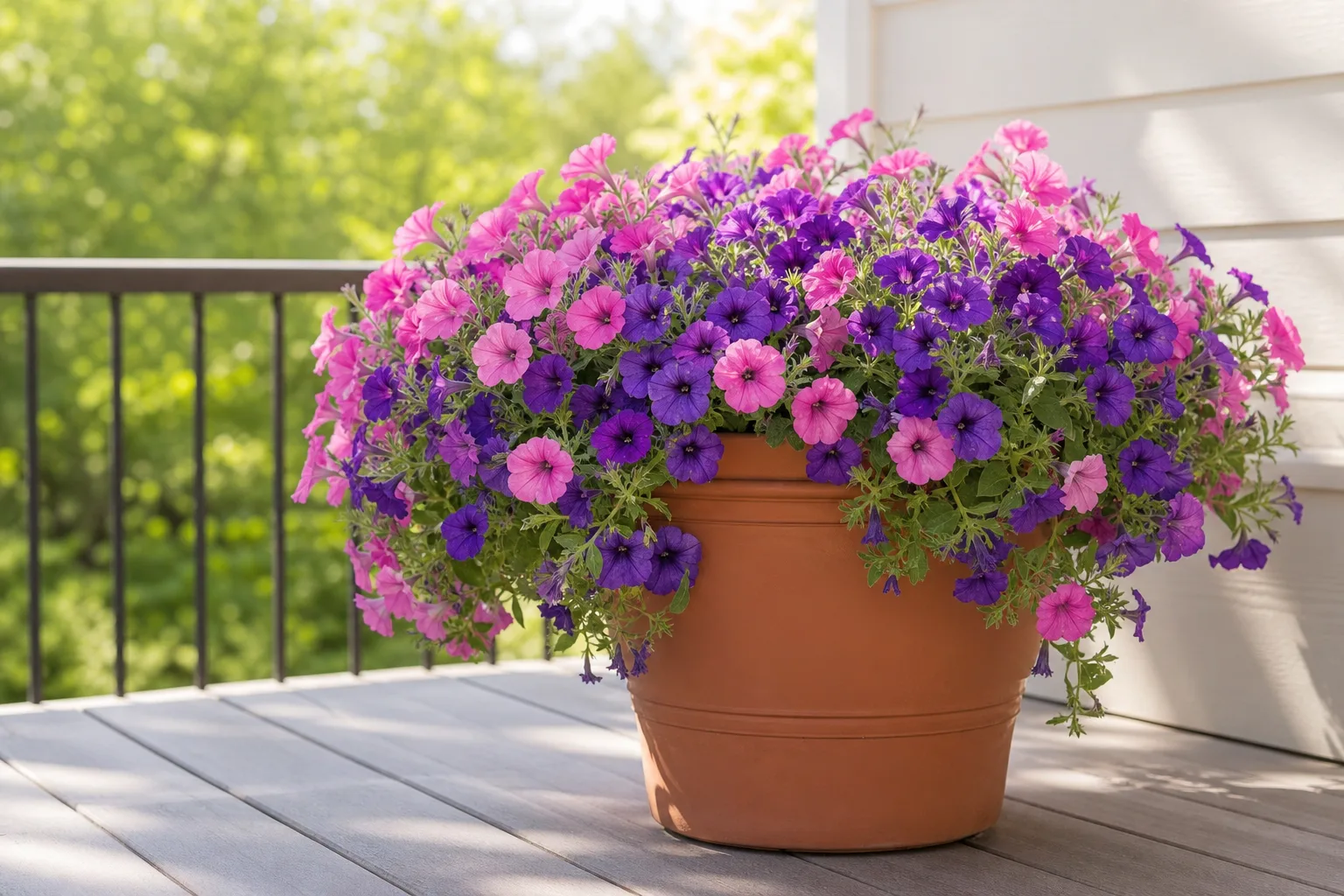
Container petunias are one of the fastest ways to turn a bare balcony, porch, patio, railing, or sunny doorstep into a heavy-flowering display. They bloom generously, trail over pot edges, and work in spaces where a garden bed is not possible. But a petunia in the ground can search a wider soil area for moisture and nutrients; a petunia in a pot depends entirely on the small root zone you give it. That difference explains most container failures - and most midsummer disappointments.
This guide is the container deep-dive for fuller pots and longer bloom. For species biology, pet safety, propagation, and forty-plus symptom-specific rescue pages, use the Petunia hub instead. Here you get pot sizing, variety matching, balcony microclimates, feeding rhythm, and the midseason reset that keeps baskets from going bare by July.
Why Container Petunias Fail Where Garden Beds Succeed
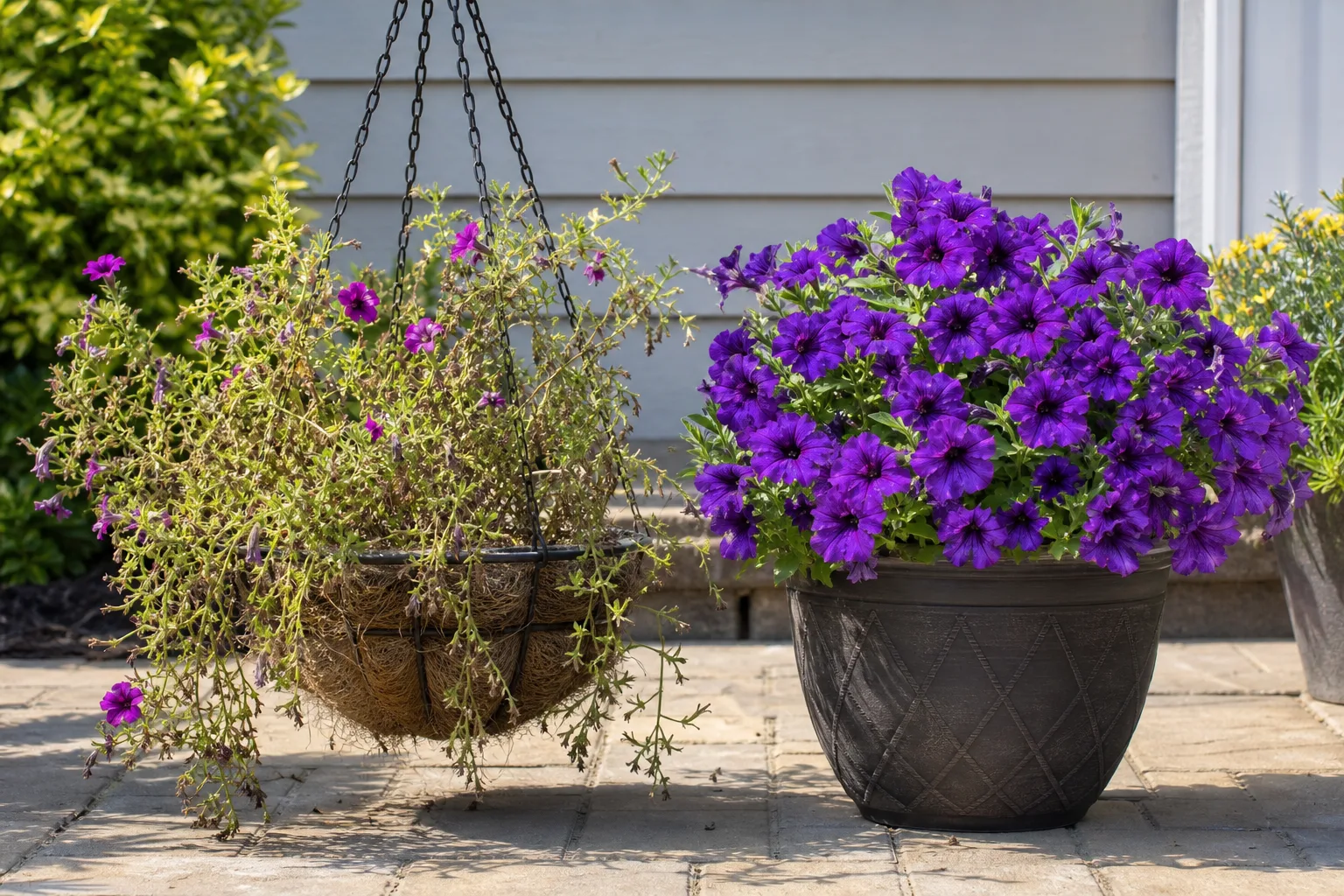
A May basket that looked stuffed and perfect can look thin, sticky, yellow, and exhausted by midsummer when the pot is too small, the mix dries hard, nutrients wash out, or stems are never trimmed. Petunias are not difficult, but they are demanding in a predictable way. Give them strong light, a roomy container, fast-draining potting mix, regular water, steady feeding, and timely pruning, and they can stay impressive for months.
University of Minnesota Extension notes that petunias need at least 5 to 6 hours of good sunlight and bloom better with full sun all day; more shade means fewer flowers. (University of Minnesota Extension) That one fact should shape every container decision - from where the pot sits to which companion plants you combine. For the full light placement framework across beds and pots, see the Petunia light guide.
When to Use This Guide vs the Petunia Hub
Use this guide when you are choosing pots, matching trailing vs compact varieties, sizing a hanging basket, fixing a midsummer fade, or designing a mixed patio container. It is built for balcony and porch gardeners who want sustained bloom from a limited root zone.
Use the Petunia hub when you need the full species profile - four petunia types, in-ground vs container watering splits, pet-safe ASPCA status, propagation, and links to dedicated watering, soil, fertilizer, and pruning pages. When one symptom dominates - leggy growth, no flowers, overwatering, or aphids - start on the matching problem page rather than rereading general culture here.
For end-of-season overwintering or cool-weather carryover, see container petunias winter care.
Best Uses for Container Petunias
Petunias shine where you want strong color without building a permanent bed. They suit hanging baskets, window boxes, porch planters, patio pots, balcony railing containers, and mixed summer arrangements. Their root systems adapt well to containers when the pot has enough volume and drainage, and their flowers keep coming when the plant has enough sun and food.
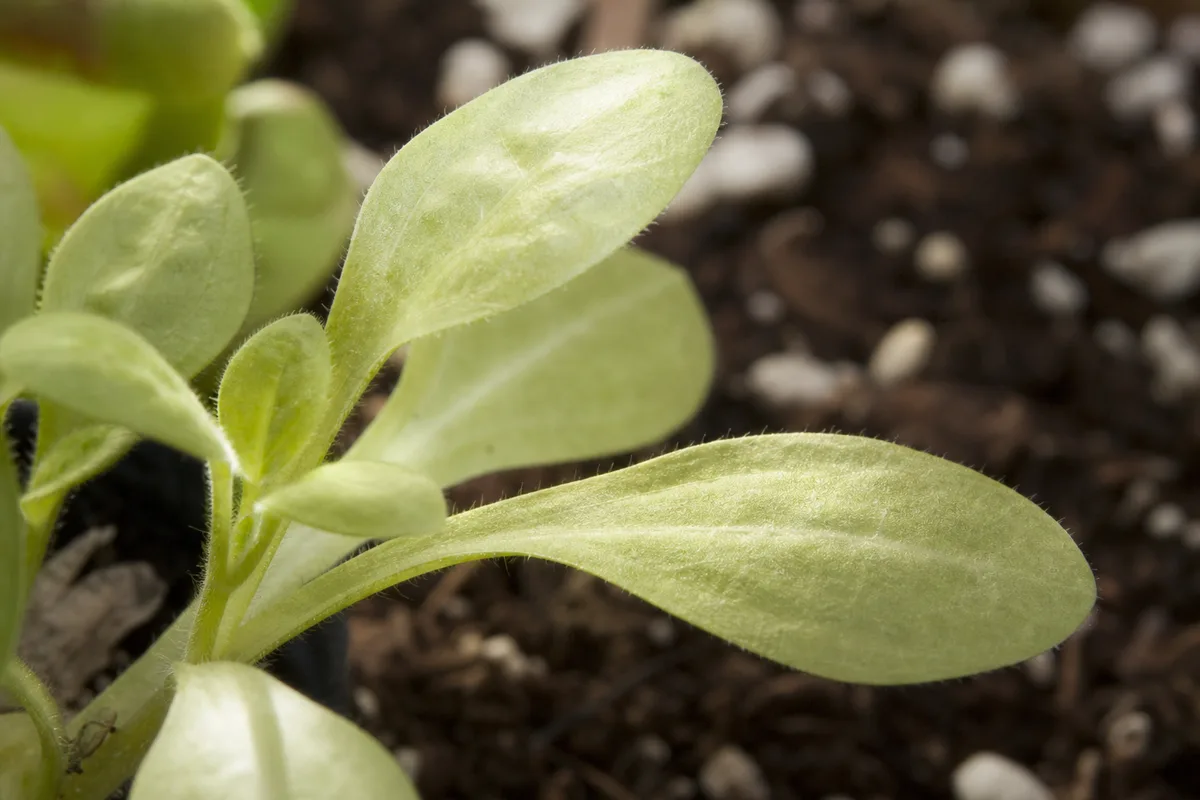
Caption: Early May — trailing petunias in a sunny porch basket about four weeks after transplant; foliage still filling in before peak bloom.
The best use case is a sunny container you can reach easily for watering. Petunias in a high hanging basket look beautiful but dry faster because air moves around the basket from all sides. A large patio pot is more forgiving because it holds more mix and buffers roots against heat. Window boxes perform well only with drainage holes and enough spacing that foliage is not constantly wet and crowded.
Hanging Baskets vs Patio Pots
Hanging baskets demand the most attention. A 12-inch basket in full sun and wind may need water once or twice daily during a heat wave. Patio pots with 14 to 18 inches of soil volume usually go two to three days between waterings in mild weather. Window boxes sit between those extremes - shallow boxes dry fast; deeper boxes behave more like small patio pots.
Petunias are less ideal for deep shade, neglected pots, or containers with no drainage. They dislike staying constantly wet. If your only spot gets two hours of morning light and the pot sits under a roof with poor airflow, petunias will stretch, bloom lightly, and become more disease-prone - often showing not enough light before anything else.
Match the Variety to Your Container
Choosing the right petunia matters because not all types behave the same in pots. The practical question is not “Which petunia is prettiest?” It is “How will this plant grow after six weeks in this container?” A vigorous trailing petunia in a tiny pot may look crowded and thirsty. A compact petunia in a large basket may never create the cascade you expected.

For the full four-type taxonomy - grandiflora, multiflora, milliflora, and spreading - see the Petunia hub. In containers, think in two buckets:
Trailing and spreading types - including Wave, Easy Wave, and Supertunia Vista series - cover baskets and tall pots fast. One plant can fill a 12-inch basket, but vigor means higher water and fertilizer demand. Mississippi State University Extension recommends full sun, well-drained potting mix, and regular feeding for container petunias during summer. (MSU Extension Service)
Compact and mounding types - including many milliflora and smaller multiflora cultivars - suit 10- to 12-inch patio pots, tabletop containers, and mixed planters where you need a tidy shape rather than a three-foot cascade.
Proven Winners notes that container-grown petunias rely on nutrients inside the pot, and watering flushes fertilizer through drainage holes - which is why feeding container petunias is more critical than feeding plants in open ground. (Proven Winners) Buy for the container you actually have: trailing for baskets and window boxes; compact for small pots and narrow ledges.
Supertunia Vista vs Easy Wave in a 12-Inch Basket
In the same 12-inch hanging basket, Supertunia Vista and Easy Wave behave differently enough to matter for spacing and watering. Vista is the heavier drinker and faster spreader: one plant can dominate a basket within four to six weeks, but the larger frame dries the mix quicker in heat and responds well to weekly liquid feed once growth takes off. Easy Wave fills more gradually, often tolerates slightly longer intervals between soakings, and may need two plants if you want instant edge-to-edge color on planting day. Last season I ran both on the same south-facing railing—Vista needed a morning check once highs passed 85°F by late May, while Easy Wave on the same schedule held an extra half-day of moisture in identical baskets. Neither is “better”; match Vista to large baskets where you want maximum cascade, and Easy Wave when you want reliable color with a bit more forgiveness on missed waterings.
Container Size, Drainage, and Pot Material
Container size controls root space, water reserve, and nutrient capacity. A small pot can look charming for a week, then become a daily emergency when the plant dries out too quickly. A larger pot gives the root zone stability and makes summer care easier.
Caption: 10-inch vs 14-inch patio pots (approximate diameters) — the larger volume holds moisture longer and supports fuller midsummer bloom.
For one compact petunia, a 10- to 12-inch pot can work. For a fuller display, 14 to 16 inches is more forgiving. For vigorous trailing types, large hanging baskets or wide patio pots beat tiny decorative containers. The more sun, wind, and heat the container receives, the more valuable extra soil volume becomes.
Pot material matters too. Terracotta breathes well but dries faster. Plastic, resin, and glazed ceramic retain moisture longer. Metal containers can heat roots quickly in strong sun unless you use an inner nursery pot. Wooden containers work when they drain properly and are safe for plants.
Pot Size Guide by Use
| Container use | Practical size | Best petunia type | Care note |
|---|---|---|---|
| Small tabletop pot | 8–10 inches | Compact or milliflora | Close moisture checks |
| Single patio pot | 10–14 inches | Compact or mounding | Good beginner option |
| Full patio planter | 14–18 inches | Mounding or trailing | Better water reserve |
| Hanging basket | 12–16 inches+ | Trailing or spreading | May need daily water in heat |
| Window box | 6–8 inches deep min. | Trailing or compact | Avoid overcrowding |
| Large mixed container | 16–20 inches+ | Petunias plus sun annuals | Match sun and water needs |
A 12-inch basket in a mild coastal climate behaves differently from the same basket on a hot, windy balcony. Extra soil volume and steady feeding usually outperform a cramped pot even with the same variety.
Drainage Mistakes That Shorten Bloom Season
The container must have drainage holes. Decorative pots without holes trap water at the bottom and push oxygen out of the root zone. Petunia roots need moisture and air. When roots sit in saturated mix, the plant can wilt even though the soil is wet - a pattern that overlaps with overwatering and root rot.
One common mistake is adding gravel at the bottom to “improve drainage.” NC State Extension warns that a gravel layer can cause water to collect in the potting mix above the gravel rather than solving saturation. (NC State Extension) Use real drainage holes and suitable potting mix from top to bottom.
Another mistake is letting a saucer stay full of water. Empty standing water after watering so the mix can drain. If you use a cachepot, lift the inner pot occasionally and check that water is not trapped below it.
Soil, Planting Depth, and Spacing
Petunias in containers need mix that holds enough moisture to prevent constant wilting but drains fast enough to avoid rot. Garden soil is usually too dense for pots - it compacts, drains poorly, and carries weed seeds. A quality potting mix gives roots a better balance of air, water, and support. For mix ingredients and refresh rules, see the Petunia soil guide.
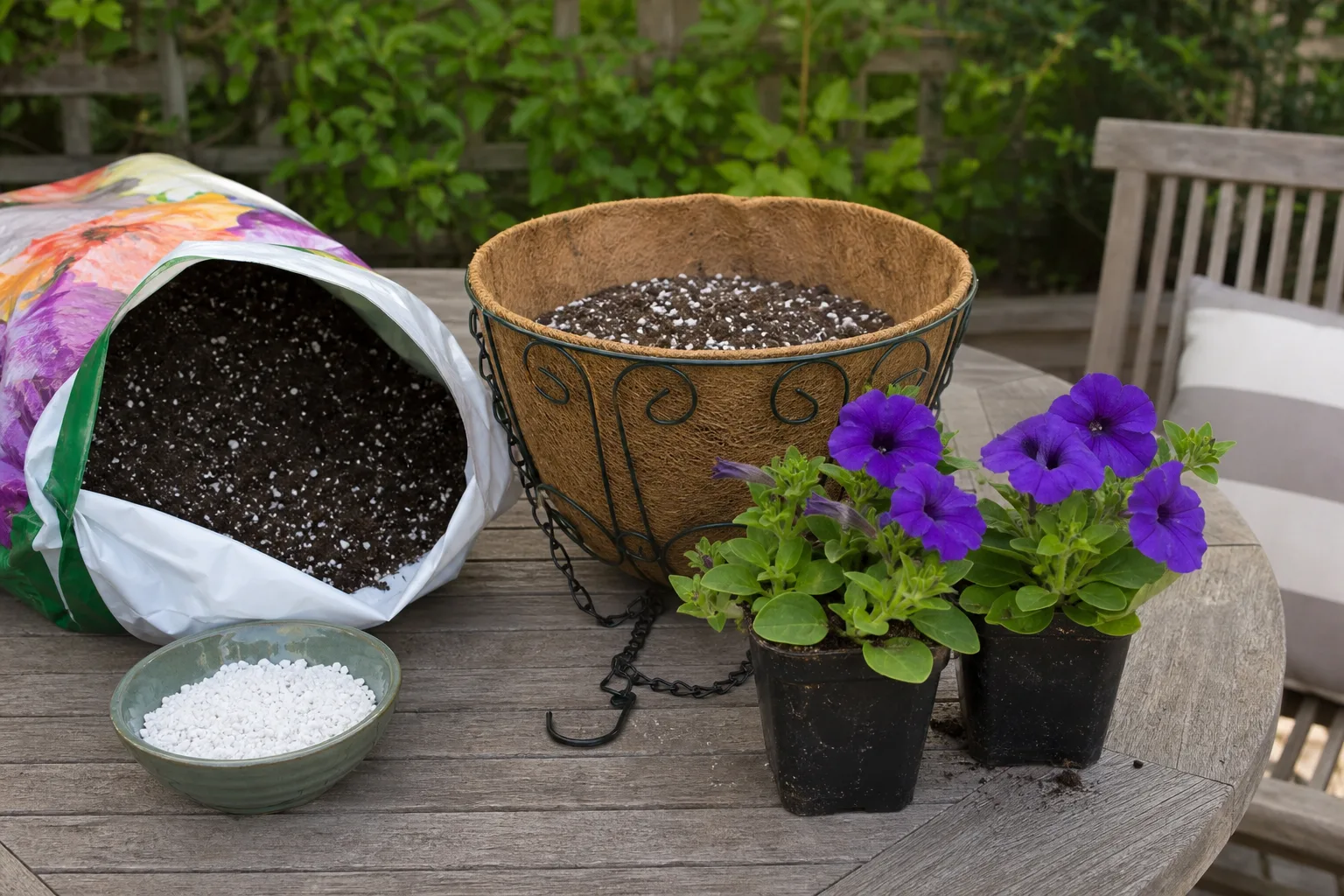
University of Maryland Extension describes commercial potting mixes as lightweight, well-draining, and generally free of weeds, insects, and diseases - commonly containing peat moss, perlite, vermiculite, composted bark, coir, lime, and starter fertilizer. (University of Maryland Extension)
Plant after frost danger passes. Water transplants before planting, loosen circling roots if root-bound, and set each plant at the same depth it grew in the nursery pot. Leave a watering lip below the rim. Press mix gently around roots without packing hard, then water until excess drains from the bottom.
Spacing callout: For a 12-inch hanging basket, one to three petunia plants is usually enough depending on variety. One vigorous Supertunia Vista may fill the basket alone; compact types may need two or three for fullness. Overplanting gives instant density but often causes faster drying, poor airflow, and weaker midsummer performance.
Sun, Placement, and Balcony Microclimates
Petunias are sun plants. In too much shade they stretch, produce fewer blooms, stay damp longer after rain, and become more vulnerable to disease. If potted petunias are green but not flowering, light is the first check - see no flowers on petunia for the full diagnostic chain.
Caption: Mid-July — same basket after a one-third trim and two weeks of steady feed; new branching replaces the bare center common in untrimmed midsummer baskets.
For most containers, aim for at least 6 hours of direct sun. Morning sun with afternoon protection can work in very hot climates where containers heat quickly. In cooler climates, full-day sun usually gives the strongest bloom. University of Minnesota Extension’s full-sun guidance applies directly to container petunias that must support repeated flowering from a limited root zone. (University of Minnesota Extension)
Placement should account for convenience. A basket that requires a ladder to water will eventually suffer. Put containers where you can check soil, remove tired stems, and rotate the pot if one side gets stronger light.
Containers heat and dry faster than garden beds. Wind pulls moisture from leaves and mix. Balconies can be especially harsh because reflected heat from walls, tiles, glass, and railings intensifies stress. A petunia that handles full sun in a bed may struggle in a small black pot on a west-facing balcony - often showing heat stress before obvious wilting from dry soil.
Watering Container Petunias by Pot Size and Weather
Watering is where most container petunia problems begin. Too little water causes wilting, crispy edges, poor flowering, and stalled growth. Too much causes yellowing, weak roots, fungal problems, and collapse. The goal is evenly moist root zone with oxygen returning between waterings - not watering by calendar alone.
Check the top inch or two of mix. If dry, water deeply until water runs from drainage holes. Small pots and hanging baskets may need water daily in hot weather. Large pots may go longer. Water the mix rather than spraying flowers and leaves. Shallow watering encourages surface roots and dry pockets lower in the pot.
There is no universal schedule. A 16-inch resin pot in morning sun may need water every two or three days in mild weather. A 12-inch basket in full sun and wind may need water once or twice daily during a heat wave. Combine touch and weight: push your finger in, and lift small pots when freshly watered vs dry to learn the difference.
If mix dries so hard that water runs down the sides, rehydrate slowly - water once, wait a few minutes, water again. For a severely dried basket, set it in a tub of water until the root ball absorbs moisture, then drain completely. Do not leave it sitting in water afterward. Full container watering logic lives on the Petunia watering guide.
A Climate Example: Coastal Basket vs Hot Balcony
Coastal 12-inch basket, mild June: Morning marine layer, afternoon sun, moderate wind. Mix may dry in 24 to 36 hours. One Easy Wave plant can fill the basket; water when the top inch is dry, usually daily by late summer.
Hot west-facing balcony, same basket size: Reflected heat from concrete and glass, 95°F afternoons, dry wind. Mix may dry in 8 to 12 hours. The same variety needs water twice daily in peak heat, afternoon shade relief, and a larger basket or grouped pots if you cannot keep up. If you miss even two hot afternoons, the plant may go leggy and bloom only at stem tips - fix with trim and steady feed, not more water alone.
Feeding for Continuous Bloom
Container petunias are heavy bloomers, and heavy blooming requires steady nutrition. Every flower pulls energy from a limited amount of potting mix. Frequent watering leaches soluble nutrients, especially nitrogen. That is why a basket petunia often needs more regular feeding than the same plant in the ground.
A strong approach: mix slow-release fertilizer into the potting mix at planting, then supplement with water-soluble fertilizer during the growing season. Follow the product label - overfeeding can burn roots or create salt buildup.
Richmond County Center describes petunias as “hungry plants” and recommends regular feeding with a complete water-soluble fertilizer for season-long performance. (Richmond County Center) Mississippi State University Extension suggests liquid fertilizer every two to three weeks for container petunias during summer. (MSU Extension Service) Frequency varies by climate, container size, product strength, and cultivar vigor - see the Petunia fertilizer guide for NPK basics and label reading.
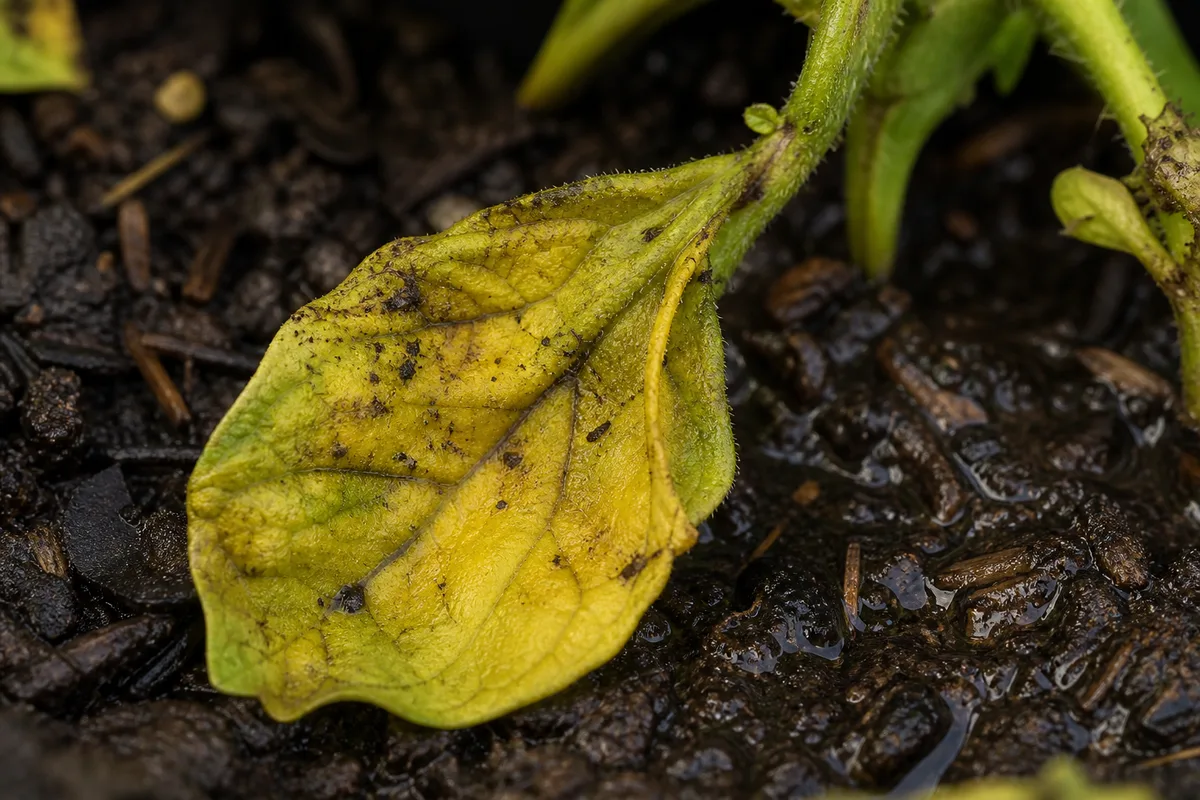
Yellow leaves can signal low nitrogen, overwatering, root stress, or natural aging. Check soil moisture, drainage, and pot size before assuming the plant needs more fertilizer.
Pruning, Deadheading, and Midseason Reset
Petunias look best when they are not allowed to run endlessly without grooming. Even vigorous types can become long, thin, and woody midsummer. Pruning redirects growth, improves shape, lets light reach the center, and encourages fresh branching.
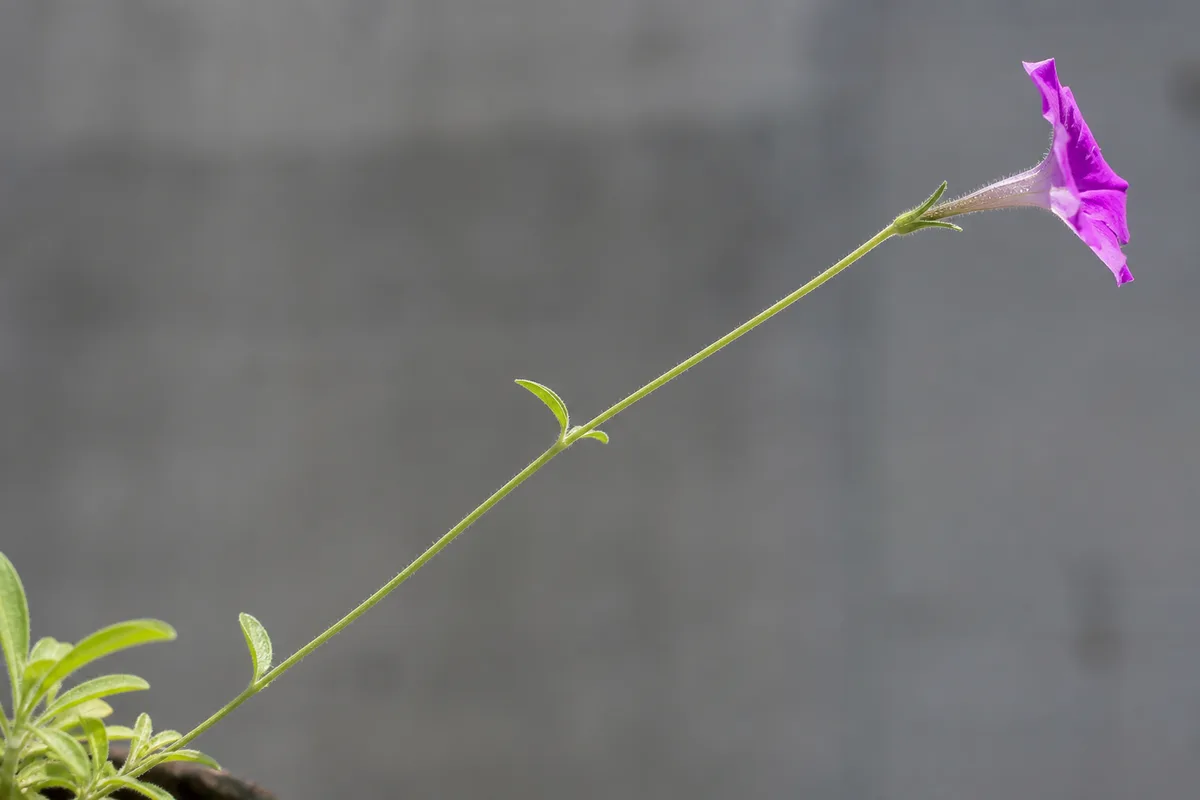
Deadheading depends on type. Many modern trailing petunias are self-cleaning and drop old flowers without constant removal. Older large-flowered types still look better when spent blooms and seed pods are removed. If you deadhead, remove the faded flower and the small green structure behind it, not just the petals. Full type-by-type rules are on the Petunia pruning guide.
A midseason reset helps when a basket looks tired but roots are still healthy. Cut long stems back by about one-third, remove dead or yellow growth, water well if dry, and resume steady feeding once heat stress passes. The basket may look smaller for a week or two, but fresh growth often returns stronger - especially when stems were flowering only at the tips and the center was bare, a pattern covered on leggy growth.
In my own baskets, the difference is obvious on a calendar: a Vista-filled 12-inch basket planted mid-April looks stuffed by late May, then thins at the center by early July unless I trim and feed through June. The same basket photographed two weeks after a one-third cut in mid-July usually shows tighter branching and more buds at the rim than the pre-trim photo from the first week of July. You do not need a spreadsheet—just note planting week and trim date on your phone when you reset.
Do not cut back severely during extreme heat or drought. Water first, let the plant recover, and prune when conditions ease.
Pests, Diseases, and Quick Symptom Routing
Container petunias can attract aphids, whiteflies, thrips, spider mites, slugs, and budworms. UC IPM lists petunias as commonly grown in containers and identifies several pest categories associated with them. (UC IPM) Inspect early - small problems are easier to manage than a basket declining for weeks.
Aphids cluster on tender growth and leave sticky honeydew - see aphids on petunia. Tobacco budworm damage appears as holes in buds and flowers with dark droppings; Washington State University Hortsense highlights checking for larvae, damaged buds, and frass. (Hortsense)
Diseases are more likely when plants are crowded, overwatered, shaded, or kept wet overnight. Penn State Extension’s petunia disease resource reinforces that diagnosis depends on specific symptom patterns. (Penn State Extension) In containers, prevention starts with drainage, airflow, sanitation, and avoiding wet foliage late in the day.
Quick routing: leggy growth → light or pruning; few flowers → sun, feed, or stress; yellow lower leaves → overwatering or aging; sticky leaves → aphids vs natural petunia stickiness; sudden collapse → severe drying or root rot. Do not spray first and diagnose later.
Petunias are listed as non-toxic to cats and dogs by the ASPCA - useful for pet-aware balcony gardeners - though soil, fertilizer, and pesticides still require safe handling. The Petunia hub covers full ASPCA details.
Container Design and Companion Plants
Petunias can carry a container alone, but they combine well with other sun-loving annuals. A single-color mass in a generous pot often looks cleaner than an overcrowded mix. For mixed containers, pair petunias with plants that share sun and moisture needs: calibrachoa, verbena, bidens, sweet potato vine, bacopa in moderate heat, alyssum in cooler conditions, and upright accents like salvia or angelonia.
The thriller-filler-spiller method works well: upright height, petunias as filler or spiller, trailing foliage to soften the edge. In hanging baskets, skip the thriller and let trailing petunias do the main work.
White petunias brighten evening patios. Deep purple reads rich up close but can disappear from a distance. Pink, coral, red, and magenta show strongly from the street. Striped or veined flowers work best with restraint so the container does not look busy.
Related Guides
- Petunia hub - full species care, pet safety, propagation, problem index
- Petunia watering · soil · fertilizer · pruning · light
- Leggy growth · no flowers · overwatering · aphids
- Container petunias winter care - end-of-season and cool-weather options
Midseason Checklist
When bloom slows in July, run this before replacing the basket:
- Light: Still getting at least 6 hours of direct sun?
- Dry test: Top inch dry before the next deep soak?
- Feed: Slow-release at planting plus liquid feed on schedule since June?
- Trim: Cut leggy stems back by one-third if the center is bare
- Symptom routing: One problem keeps returning → start on the matching Petunia hub problem page, not a generic leaf-color guess