Summer Plant Care: Indoor Humidity, Watering and Heat Tips
Help houseplants handle summer heat with smarter watering, humidity checks, airflow, light control and pest prevention.
Why Summer Changes Indoor Plant Care
Summer houseplant care is not winter care with more water. Heat changes how fast soil dries, how quickly leaves lose moisture, how intense window light feels, and how much stress air conditioning adds. A plant that looked stable in spring can show brown edges, droop, faded color, or stalled growth once rooms get hotter and brighter. A useful summer routine adjusts the right variables at the right time instead of doing more of everything at once. (University of Maryland Extension)
Heat speeds up water loss
When temperatures rise, plants lose water faster through transpiration, and potting mix can dry much more quickly than it did a month earlier. University of Maryland Extension notes that many foliage houseplants grow best around 70–80°F (21–27°C) during the day, with cooler nights helping recovery from moisture loss. Once indoor conditions move beyond that comfort zone-especially near hot glass or in stuffy rooms-the plant has to work harder to stay hydrated. That does not mean every plant needs constant soaking. It means your old watering rhythm may stop matching reality. (University of Maryland Extension)
Editorial check: In a LeafyPixels summer test in a 14 × 12 ft AC-cooled room, a hygrometer at plant-canopy height read 34% RH while the return vent path beside the shelf read 29%. Moving a peace lily back 4 feet from the vent and adding a small humidifier on low brought the canopy reading to 48% within two hours-without changing the thermostat. Distance from the vent mattered as much as the humidifier.
AC, vents, and sudden dryness
Summer also brings air conditioning, ceiling fans, and cold dry blasts from vents that can strip moisture from leaves faster than many people expect. University of Maryland Extension warns against placing indoor plants near heat or air-conditioning sources because sudden drafts and brief temperature shifts can damage growth and foliage quality. If your plant sits in front of a vent, the problem may look like underwatering even when the soil is still damp. That mismatch is one reason summer plant care gets misdiagnosed so often. (University of Maryland Extension)
What Indoor Humidity Actually Means
Humidity is the amount of water vapor in the air. For houseplants it helps determine whether leaves stay supple or turn crisp. When humidity is low, plants transpire quickly and can struggle even when roots are fine. The RHS explains that low humidity speeds water loss through foliage, which can leave a plant wilting if leaves lose water faster than roots can replace it. Leaf texture, edge browning, and overall vigor can shift before you change your watering can. (RHS)
The ideal humidity range for most houseplants
For most indoor plants, a practical target is 40% to 60% relative humidity. UNH Extension says most houseplants prefer that range, while many tropical species do better around 70% to 80%. Missouri Botanical Garden guidance also cites 40–60% for many common houseplants. In plain terms: most foliage plants are comfortable in the middle zone, but rainforest-style plants usually want more than the average cooled home provides. (Extension | University of New Hampshire)
For home health, balance plant needs with room safety. The EPA recommends keeping indoor relative humidity below 60%, ideally 30–50%, to limit mold and condensation. That is why the goal for tropicals is usually a local microclimate-humidifier near the plant, grouping, or a pebble tray-not pushing the entire house toward rainforest levels. For full humidifier types, sizing, and room-level strategy, see the houseplant humidity guide.
| Plant type | Typical humidity comfort zone | Summer note |
|---|---|---|
| Most common foliage houseplants | 40–60% | Usually fine if watering and light are adjusted |
| Many tropical houseplants | 60–80% | More likely to show crisp edges in dry AC rooms |
| Succulents and cacti | Lower humidity is usually fine | Extra humidity is rarely the main need |
Which plants want more humidity and which do not
Not all houseplants should be treated the same. Calatheas, ferns, peace lilies, many orchids, and some philodendrons and monsteras usually appreciate more moisture in the air, especially if you want clean leaf edges and steady growth. At the other end, cacti, succulents, and snake plants tolerate drier indoor conditions much better and can suffer if you respond to every dry-looking leaf by raising humidity and watering more. A useful rule: the thinner and softer the foliage, the more likely the plant is to notice dry air; the thicker and fleshier the leaf, the more tolerant it usually is. Research published in 2024 also found species differences in moisture release, with Epipremnum showing high humidification potential and Sansevieria among the lowest. (ScienceDirect)
Summer Watering Without Causing Root Rot
Summer often pushes people into two opposite mistakes: watering too little because they fear rot, or watering too much because “it is hot, so the plant must be thirsty.” Both can damage the plant, and the symptoms can overlap enough to confuse experienced growers. RHS lists brown leaf edges as a possible sign of underwatering, while collapse or yellowing leaves that drop can point to overwatering. The answer is not a strict calendar. The answer is reading the pot, the mix, the plant type, and the location together. (RHS)
For a deeper watering framework year-round, start with how to water indoor plants the right way.
How to check soil before you water
Stop asking, “How often should I water?” and start asking, “How dry is the root zone right now?” Missouri Botanical Garden and RHS both recommend checking whether the pot needs water before adding more. For many houseplants, water when the top 1–2 inches of mix feel dry-not every Tuesday because a blog said so. Small plastic pots in bright rooms dry much faster than large ceramic pots in shade, and a pothos in active growth will not use water the same way a snake plant does. (Missouri Botanical Garden)
When to water and what to avoid
Morning is usually the cleanest time to water in summer because the plant has the full day to use moisture and leaf surfaces are less likely to stay wet into cooler evening conditions. RHS notes that feeding and growth are strongest from spring to autumn, which is also when many houseplants use more water, but water should still be applied based on need rather than habit. Avoid drenching a plant that already feels heavy and wet, and avoid “little sips” that only dampen the top layer while leaving the root ball unevenly moist. A thorough watering through a pot with proper drainage is usually better than frequent shallow splashes. (RHS)
Root rot is the summer danger people forget because they associate it with winter. University of Maryland Extension explains that root rot symptoms can include yellowing, browning, dieback, wilting, and roots that turn brown to black, soft, or mushy. Warm temperatures plus constantly wet conditions can create exactly the environment pathogens like Rhizoctonia favor. Many plants need more frequent checks in summer, but that does not mean keeping the mix permanently soaked. (University of Maryland Extension)
Practical Ways to Raise Humidity Indoors (Summer)
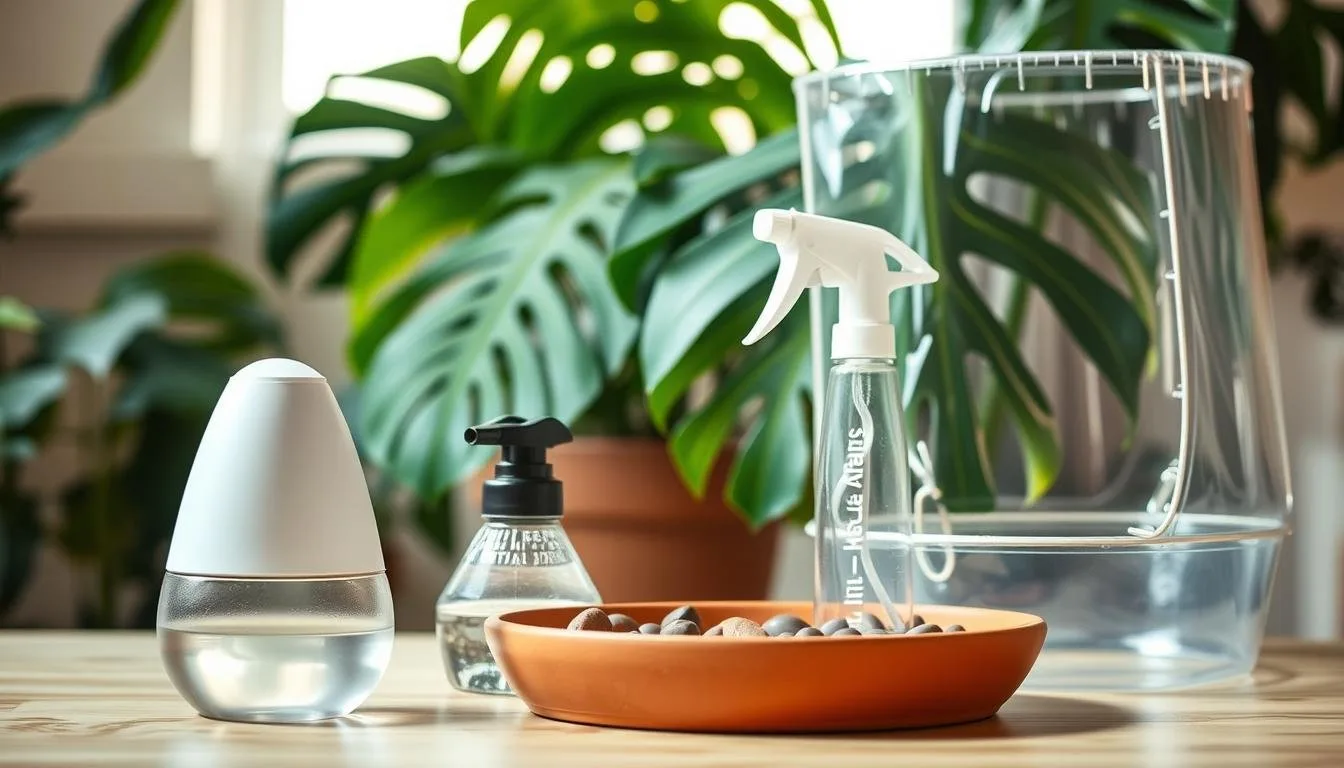
Humidity advice online mixes methods that feel helpful with methods that measurably change the plant’s environment. The useful approach is to measure first, improve the plant’s microclimate second, and avoid turning the room into a swamp. A little more humidity around the plant can help a lot. Raising humidity for an entire home is usually unnecessary and sometimes counterproductive when AC is already fighting moisture. (Extension | University of New Hampshire)
Humidifiers and hygrometers
If you want the most reliable fix, use a humidifier and a hygrometer. A hygrometer tells you whether the room is actually dry instead of leaving you to guess from leaf damage that might have other causes. UNH Extension recommends checking conditions and choosing locations that promote humidity rather than hinder it. For humidifier types and sizing trade-offs, read the houseplant humidity guide or pebble tray vs humidifier comparison. (Extension | University of New Hampshire)
Brown leaf margins can come from dry air, underwatering, direct sun, salt buildup, or root trouble. Once you have a humidity reading, you can stop treating every crisp leaf as proof that the air is the problem.
Grouping plants, pebble trays, and smart placement
If you do not want a humidifier running all day, there are still useful low-tech options. Grouping plants together can help create a small microclimate as they release moisture, and placing humidity-loving plants in naturally moister spaces like bright bathrooms or kitchens can help if light is adequate. Pebble trays can raise humidity right around the plant if the pot sits above the water line rather than in it. The point is giving the leaf zone slightly moister air without waterlogging the roots. (Extension | University of New Hampshire)
A 2024 study on indoor plants and office humidity found that plants can make a small but significant contribution to moisture, but air exchange had a greater impact on relative humidity than the plants themselves. In summer, higher ventilation rates reduced the detectable humidity effect even when plants were releasing more moisture. Grouping and leafy specimens help at close range, but they are not a substitute for a genuinely dry room problem. (ScienceDirect)
Why misting has limits
Misting is the most overpromised humidity tip in houseplant care. Maryland Extension says it is questionable whether misting really increases humidity, and advises that if you do mist, do it early in the day and avoid fuzzy-leaved plants such as African violets. A few droplets on the leaf are not the same thing as sustained humidity in the surrounding air. (University of Maryland Extension)
That does not mean misting is always useless. Some humidity-loving plants may enjoy a light mist, and it can temporarily freshen foliage or help remove dust when done carefully. But it should be treated as a minor supportive tactic, not your main plan. If a calathea is browning because the room sits at 28% humidity under an AC vent, a spray bottle is not the answer. Better placement, a humidifier, and a cleaner watering routine are.
Light, Placement, and Airflow in Hot Weather
Summer plant problems are often blamed on watering when the real issue is placement. Light intensity rises, afternoon sun gets harsher, window glass amplifies heat, and a plant that tolerated a spot in March can scorch there in June. Summer care works best when you treat light, heat, airflow, and humidity as one system instead of separate boxes. (University of Maryland Extension)
Window distance, direct sun, and leaf scorch
Many indoor plants want bright indirect light, not hard midday sun pressing through glass. If leaves are bleaching, crisping, or getting scorched patches, move the pot back from the window, filter the light with a sheer curtain, or rotate the plant so one side is not taking the full hit every day. RHS-style care guides repeatedly flag summer sun exposure as a reason plants dry out faster and suffer avoidable stress. This is especially true for thin-leaved tropical foliage that looks lush in bright conditions but burns quickly in direct heat. (RHS)
Airflow without draft stress
Airflow also needs balance. Good ventilation helps reduce fungal issues and stagnant conditions, and RHS notes that improved ventilation helps reduce problems like grey mould and leaf spot when foliage stays wet. But “good airflow” does not mean a plant should sit directly in the path of cold AC or a harsh fan. Gentle circulation is good. Repeated blasts are stress. (RHS)
Common Summer Problems and How to Fix Them
Summer symptoms can look dramatic, but they are usually readable once you connect them to the environment. Crispy edges often point to dry air, inconsistent watering, or too much direct sun. Yellow leaves can mean overwatering, root stress, or sometimes a plant cycling out old growth. Droop can show up in both thirsty plants and waterlogged ones, which is why checking the soil and roots matters more than guessing from the leaves alone. The same symptom can come from opposite causes. (RHS)
Crispy tips, yellow leaves, droop, and pests
Start with crispy or brown tips. If the soil is bone dry and the pot feels light, underwatering is the likely issue. If the soil is moist but the room is dry, especially with AC running, low humidity may be the main driver. If the affected side faces a hot window, light stress may be doing the damage. UNH Extension notes dry, brown, brittle margins as a clue that extra humidity may be needed, but that clue is only useful when you rule out the other suspects. (Extension | University of New Hampshire)
Yellowing and limp growth need a different lens. University of Maryland Extension describes root rot patterns that include yellowing, browning, dieback, wilting, and mushy roots even when moisture is present. If the pot smells sour, the soil stays wet for too long, or the roots are dark and soft, watering more will make the problem worse. The real fix is reducing moisture, improving drainage, trimming rotten roots if needed, and repotting into a cleaner, airier mix when appropriate. (University of Maryland Extension)
Pests become more likely when plants are stressed, and dry conditions can make that worse. Colorado State University Extension says spider mites feed more under dry conditions, and University of Minnesota Extension notes they thrive in warm, dry environments. That makes summer rooms with hot light, dry air, and stressed foliage a setup for mites. If you see fine webbing, pale stippling, or a dusty look on the leaves, check the undersides early before the problem spreads. (CSU Engagement and Extension)
A simple troubleshooting sequence works better than panic: check the light, check the soil depth (not just the surface), check whether the plant sits near an AC vent or harsh window, check humidity with a meter if the plant is humidity-sensitive, then inspect for pests. That order stops you from treating low humidity with more water or treating root rot with a humidity fix alone.
Winter vs. Summer Humidity
This URL is the summer seasonal hub: heat-driven dry-down, AC vent drafts, window scorch, and faster watering checks. In winter the opposite pattern dominates-furnaces and cold glass drop humidity and slow growth. For brown tips, curling, and “is the air too dry?” symptom logic in heating season, use signs your houseplants need more humidity this winter. For year-round humidity methods and equipment choices, use the houseplant humidity guide. For broader seasonal shifts including light and fertilizer, see winter houseplant care.
Related Guides
- Houseplant humidity guide - year-round RH targets, humidifier types, and room-level strategy
- Signs your houseplants need more humidity this winter - winter twin for dry-air symptom logic
- Indoor humidity and pebble trays - setup and limits when you skip a humidifier
- Pebble tray vs humidifier - when each tool fits summer AC rooms
- How to water indoor plants the right way - finger test, drainage, and overwatering checks
- Winter houseplant care - seasonal counterpart for light, water, and humidity in cold months
Conclusion
Good summer plant care is about control, not fuss. Put the plant in the right light, away from harsh drafts, water when the root zone actually needs it, and give enough humidity for its species rather than for some generic “houseplant” category. Most indoor plants are fine in the 40–60% humidity range, many tropicals want more locally, and succulents usually do not. Measure conditions, watch the soil, and adjust placement before you overcorrect-that is the difference between constantly rescuing houseplants and keeping them steady through the hottest part of the year. (Extension | University of New Hampshire)