Signs Your Houseplants Need More Humidity and What to Do
Spot dry-air symptoms like crispy tips and curling leaves, then choose practical humidity fixes for indoor plants.
Three-piece rule: Humidity is the likely culprit when (1) the symptoms match dry-air patterns, (2) the plant is humidity-sensitive, and (3) the room air is actually dry-usually below 40% relative humidity (RH) in a heated home. One brown tip alone is not a diagnosis.
What Low Humidity Does to Houseplants (and Why Winter Makes It Worse)
Low humidity is not just “dry air.” For a plant, it changes how fast water leaves the foliage through transpiration. The Royal Horticultural Society explains that when air humidity is low, plants lose water from leaves faster and can wilt even when roots are still supplying moisture. Penn State Extension notes indoor RH is commonly recommended in the 30% to 60% range, yet winter heating can push whole rooms below 30%-exactly when many houseplants start looking rough. The Missouri Botanical Garden adds that many houseplants prefer around 50% humidity or more, with some tropical species needing substantially higher air moisture.
Winter makes the gap worse for three mechanical reasons. Forced-air furnaces cycle hot, dry air through living spaces and can drop RH near vents into the mid-20s within hours. Radiators and fireplaces create localized hot, moving air that crisp leaf margins on nearby plants long before the rest of the room feels “dry.” Cold windows pull heat from foliage that touches glass at night, compounding transpiration stress even when a hygrometer mid-room reads an acceptable number. That is why the same calathea that looked fine in September may curl and crisp by January without any change to your watering schedule.
Many popular indoor plants are tropical understory species adapted to warm, moist air-not a heated living room beside a return vent. When the air dries out, the plant shifts into stress management: sacrificing leaf tissue, slowing growth, aborting buds, or becoming easier prey for pests. You rarely get one dramatic symptom. More often you get a pattern: crispy margins, stalled new growth, leaves curling inward, and a plant that never quite looks settled even when you are watering on schedule. (RHS growing guide)
Editorial check: In a forced-air Ohio living room last January, a hygrometer at canopy height beside a Calathea read 28% RH while the mix two inches down was lightly moist. Within ten days the outer leaves showed crisp margins and new spears stalled half-unfurled. Moving the plant three feet from the floor vent and running a small humidifier until readings held 48–52% produced clean new leaves within three weeks-old brown edges did not revert, but unfurling normalized. That timeline matches what extension sources describe: judge recovery on new growth, not old damaged tissue.
The Clearest Visible Signs
Dry-air stress usually shows in foliage first, but not every damaged leaf means humidity is the problem. The useful question is not “Do I see brown?” It is “Do I see the kind of damage low humidity usually causes, on a plant that actually cares about humidity, in a room where the air is dry?” When those three pieces line up, the diagnosis gets much stronger. (Penn State Extension)
Brown Tips and Crispy Edges
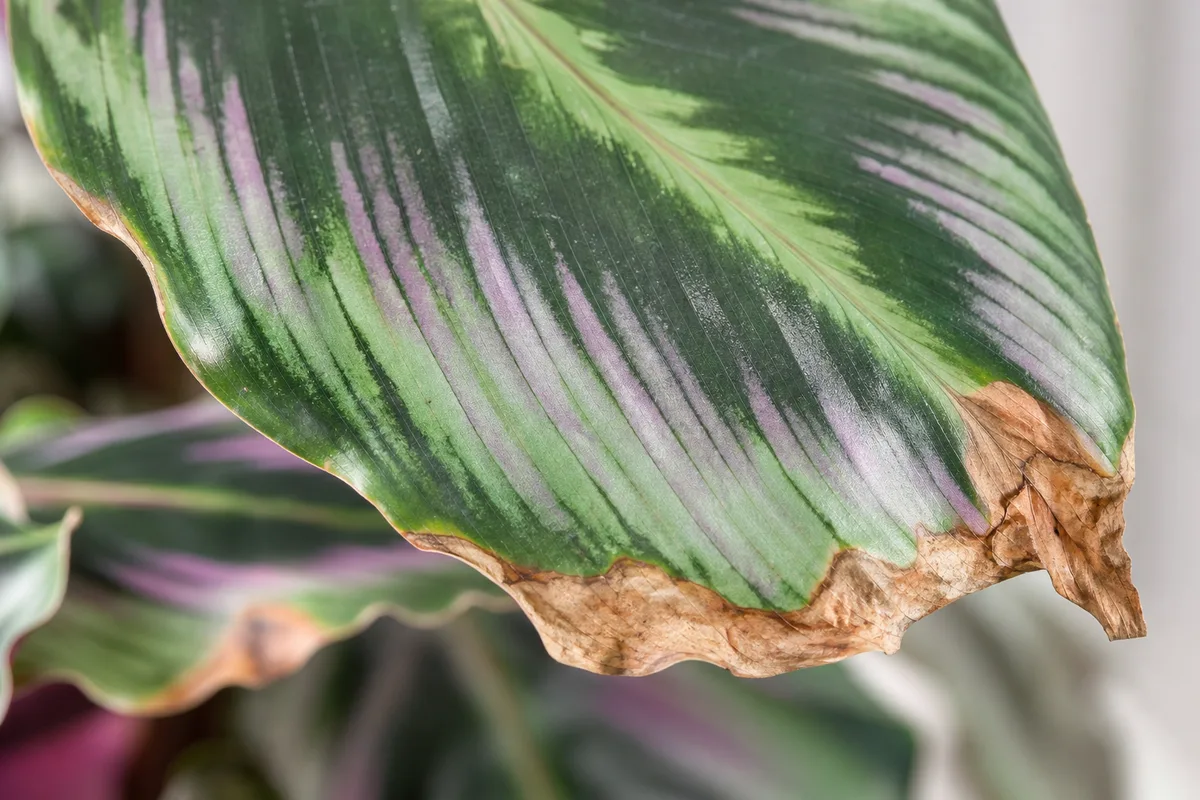
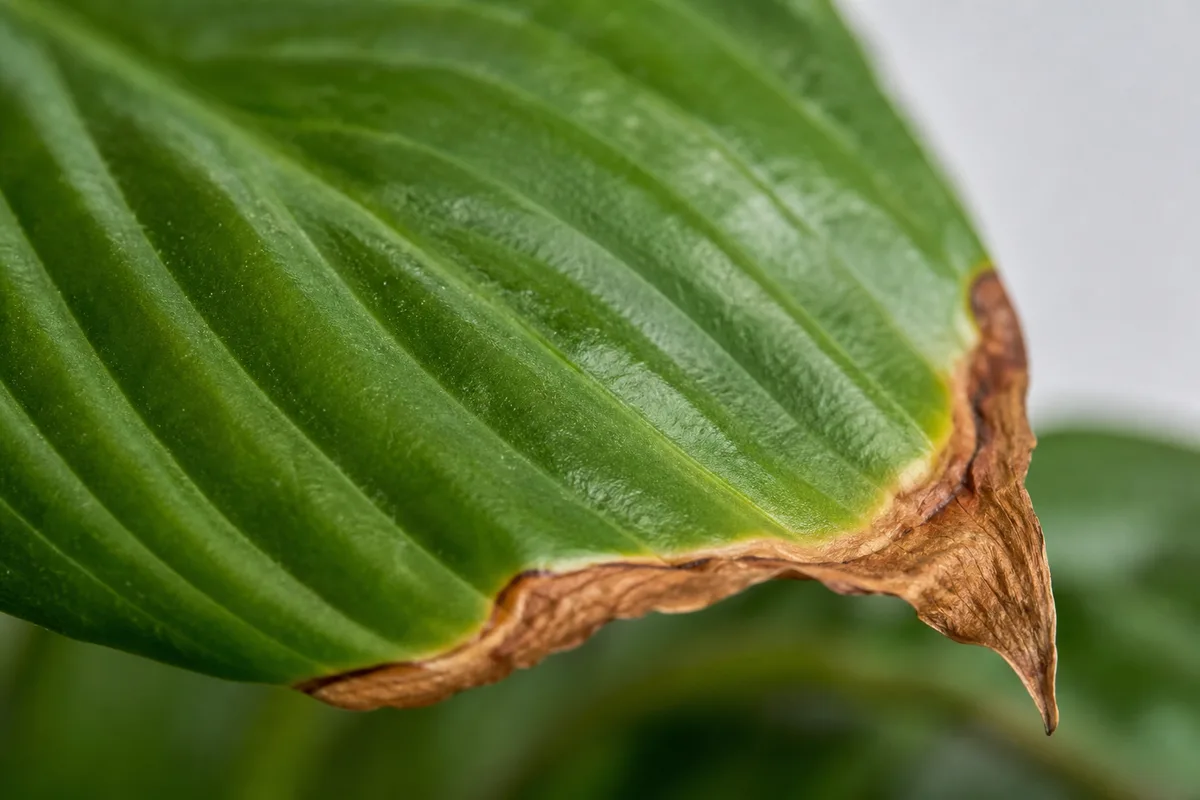
This is the classic signal. When houseplants lose water from leaves faster than they can replace it, the thinnest outer tissue often dies first-brown tips and dry, crispy margins before the whole leaf declines. Edge and tip damage on thin-leaved tropicals in heated rooms is one of the most repeatable humidity-stress patterns extension guides describe. (RHS leaf damage)
Still, brown tips are not exclusive to dry air. They can also come from underwatering, salt buildup from fertilizer, inconsistent watering, or sun scorch. The clue is the pattern: humidity stress tends toward even edge and tip browning on multiple leaves, especially on humidity-sensitive species. Random center blotches push you toward disease or sun damage. Brown tissue also does not turn green again-the goal is to protect the next round of growth, not “heal” dead margins.
Curling, Cupping, and Papery Leaves
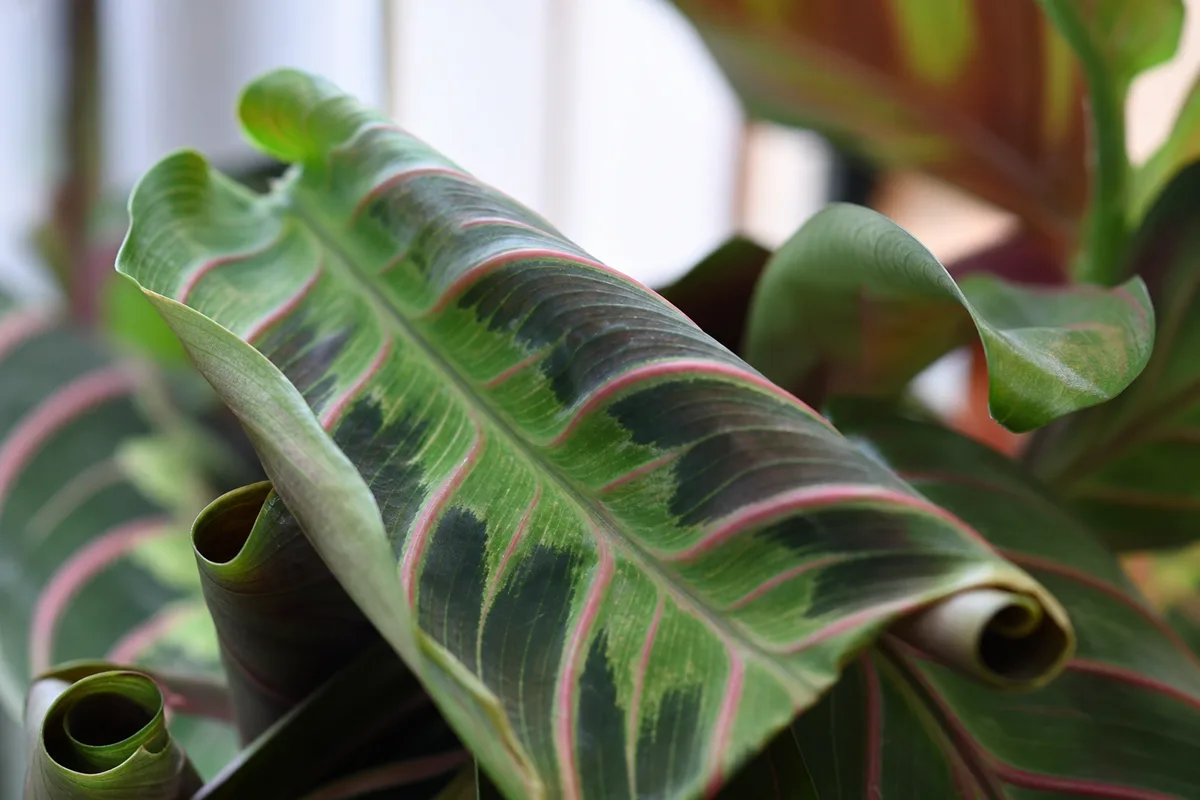
Leaves that curl inward, cup, wrinkle, or feel papery are another strong humidity clue, especially on prayer plants, calatheas, and ferns. RHS guidance notes that in bright light and a dry atmosphere, leaves of plants such as Maranta can curl inward. Dry air shifts the moisture balance across the leaf surface, and some plants respond by curling to reduce exposed area and slow water loss. The Missouri Botanical Garden lists low humidity among common environmental causes of leaf curl and marginal burn on indoor plants.
The feel of the leaf matters. A humidity-stressed leaf often feels thin, dry, or crisp rather than heavy and limp. The change is usually gradual. Oldest leaves and newest delicate leaves react first, while tougher mature leaves hold on longer. If the plant sits near direct heating, a fireplace, or a forced-air vent, damage can appear faster because the leaf deals with both dry air and moving air.
Wilting Even When the Potting Mix Is Still Damp
A plant can wilt from dry air even when the potting mix is not bone dry. That sounds backward until you remember the RHS point: low humidity speeds transpiration. If leaves lose water rapidly, the plant can look limp or tired even though roots sit in moisture. This is one reason people accidentally overwater a humidity problem-they see droop, assume thirst, and add water to a plant that was really losing moisture through foliage faster than it could regulate. (RHS poorly houseplants)
Check soil before you reach for the watering can. If the upper layer is still slightly moist, light is reasonable, and room air is dry, humidity becomes a more plausible suspect. If you keep “fixing” wilt with more water, you can create a second problem-oxygen-starved roots and eventual root damage. A plant can be stressed by both low humidity and poor watering at the same time, which is why a clean diagnosis matters. (Missouri Botanical Garden watering guide)
Bud Drop, Stalled Growth, and Smaller New Leaves
Dry air does not always announce itself with dramatic leaf damage. Sometimes the plant just stops performing. Flower buds may fail to open, fall off early, or produce short-lived blooms. Growth may slow, and new leaves may emerge smaller, thinner, or misshapen. Gardening Know How and multiple extension sources flag bud drop, poor flowering, and small leaves as recurring low-humidity symptoms on sensitive indoor plants.
New growth is especially revealing because it is the most delicate tissue the plant makes. If a leaf struggles to unfurl cleanly, stays distorted, or dries at the edges before it fully expands, dry air should move up your suspect list. This is common with aroids, marantas, calatheas, and many ferns. Growth also stalls in winter for more than one reason-lower light is a big one-so humidity is rarely the only variable. But if you see slow growth plus edge damage plus curling, you are no longer looking at a random cosmetic issue. The Missouri Botanical Garden groups stunted growth and bud failure with other environmental stressors when light, temperature, and humidity fall out of range together.
Spider Mites and Other Stress Clues
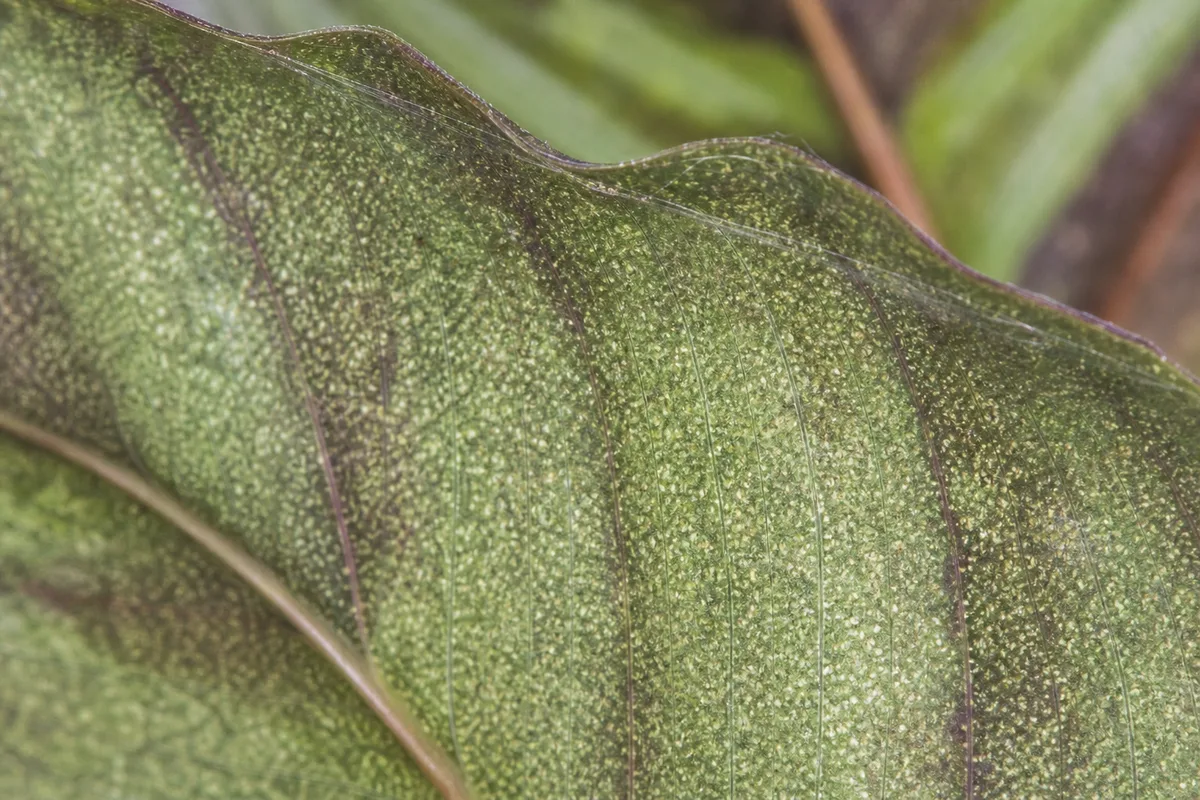
If a plant keeps developing spider mites, dry air may be part of the setup. University of Minnesota Extension notes spider mites thrive in warm, dry conditions, and RHS describes their damage as pale mottling and early leaf loss. The pest is not proof of low humidity by itself, but it is a strong supporting clue-especially if the plant already shows crispy edges and curl.
Many plant owners treat the mites but ignore the environment that helped them take off. A stressed plant in dry air is easier for sap-feeding pests to exploit. If you repeatedly clean, spray, and isolate the same plant but leave it beside a heater in 25% indoor humidity, you have not solved the underlying problem. Persistent pest pressure can be a humidity story wearing a pest costume. (University of Minnesota Extension)
Which Houseplants Show Humidity Stress First
Not all houseplants care about humidity the same way. Some tolerate average household air just fine. UF/IFAS notes that heartleaf philodendron prefers higher humidity but can tolerate typical household levels, and many tough plants such as ZZ plants are widely grown in ordinary indoor air. By contrast, plants adapted to humid tropical environments are much more likely to complain when indoor air dries out. (UF/IFAS Gardening Solutions)
That is why the plant itself is part of the diagnosis. If your ZZ plant or snake plant has one dry tip, humidity is not the first place to look. If your calathea, maidenhair fern, maranta, orchid, peace lily, or anthurium is curling, crisping, or dropping buds in winter, low humidity becomes much more believable. The Missouri Botanical Garden notes that while many indoor plants handle lower household humidity, ferns and some orchids often perform poorly or show drying foliage when humidity drops.
Calatheas, Ferns, Orchids, and Other Tropicals
Some plants are humidity detectors with roots. Calatheas and marantas often curl or crisp first-see low humidity on Calathea for species-specific RH targets and humidifier placement. Ferns such as maidenhair lose their soft look and go brittle at the edges when air stays dry; compare patterns on maidenhair fern low humidity. Orchids may keep leaves but lose bud quality or bloom performance. Peace lilies and some aroids push out smaller or rougher new growth when the air is too dry-peace lily low humidity walks the full check sequence. These patterns align with what extension and horticultural sources describe for humidity-sensitive indoor plants. (RHS leaf damage)
A practical shortcut: ask where the plant comes from and what the leaf feels like. Thin, soft, lush foliage usually complains sooner in dry indoor air. Thick, waxy, leathery, or succulent foliage buys more margin. That is not a perfect rule, but it saves time. If your plant naturally belongs in a steamy greenhouse corner, it is probably not going to love the same room conditions your cactus shrugs off. (RHS poorly houseplants)
Plants That Tolerate Dry Air (and What That Really Means)
Plants with tougher foliage usually cope better than delicate tropicals. Examples commonly treated as more tolerant include ZZ plants, snake plants, and some philodendrons, while calatheas, ferns, orchids, and many tropical understory plants tend to complain sooner. Tolerance is not the same as preference-a plant can endure average air without truly thriving in it. The Missouri Botanical Garden describes ZZ plant as tolerant of a wide range of indoor conditions, which is why a single dry tip on an otherwise firm ZZ usually points to watering, light, or salt-not whole-room humidity failure.
How to Tell Humidity Apart From Watering and Disease
This is where most plant advice gets sloppy. Brown edges do not automatically mean low humidity. Yellow leaves do not automatically mean overwatering. Curling does not automatically mean thirst. Good diagnosis comes from stacking clues instead of chasing one symptom. You want the symptom, the plant type, the room conditions, and the soil moisture reading to tell the same story.
Underwatering usually comes with a potting mix that is genuinely dry and often pulls away from the pot sides. Overwatering more often shows persistently wet soil, yellowing, mushy tissue, blackened stem bases, or fungus gnat activity. Disease may create distinct spots, halos, or spreading lesions. Sun scorch tends to hit the light-facing side. Humidity stress usually shows tip and edge crisping, curl, stall, bud issues, and dry-feeling foliage, often in a plant that otherwise has reasonable soil moisture.
Symptom Comparison Table
| What you see | Low humidity | Underwatering | Overwatering | Too much direct sun | Disease |
|---|---|---|---|---|---|
| Damage location | Tips and margins, often several leaves | Whole leaf wilt; older leaves yellow first | Yellowing, mushy bases; lower leaves first | Bleached or crispy patches on window-facing side | Spots, halos, spreading lesions |
| Soil moisture | Often moist at depth while leaves crisp | Dry throughout pot; pot feels light | Wet for days; sour smell possible | Variable; not the primary clue | Variable |
| Leaf feel | Thin, papery, crisp edges | Limp, dull, sometimes crispy after prolonged drought | Soft, yellow, translucent patches | Dry, bleached zones on exposed side | Distinct lesion borders |
| Typical plant types | Calathea, fern, maranta, orchid, peace lily | Any plant after long dry spell | Moisture-loving plants in dim rooms | Succulents moved suddenly to hot window | Any plant; worse with wet foliage + stagnant air |
| Room context | Heated winter air; RH often below 40% | Any season; forgetful watering | Cool dim room; cachepot holds water | After sudden move to south/west glass | After overhead watering with poor airflow |
| Pests often involved | Spider mites in warm dry air | Rare unless drought is chronic | Fungus gnats | Uncommon | Depends on pathogen |
Use the table as a tie-breaker, not a verdict machine. Two problems can coexist-especially low humidity plus slight overwatering when someone keeps adding water to fix wilt.
A Simple Four-Part At-Home Check
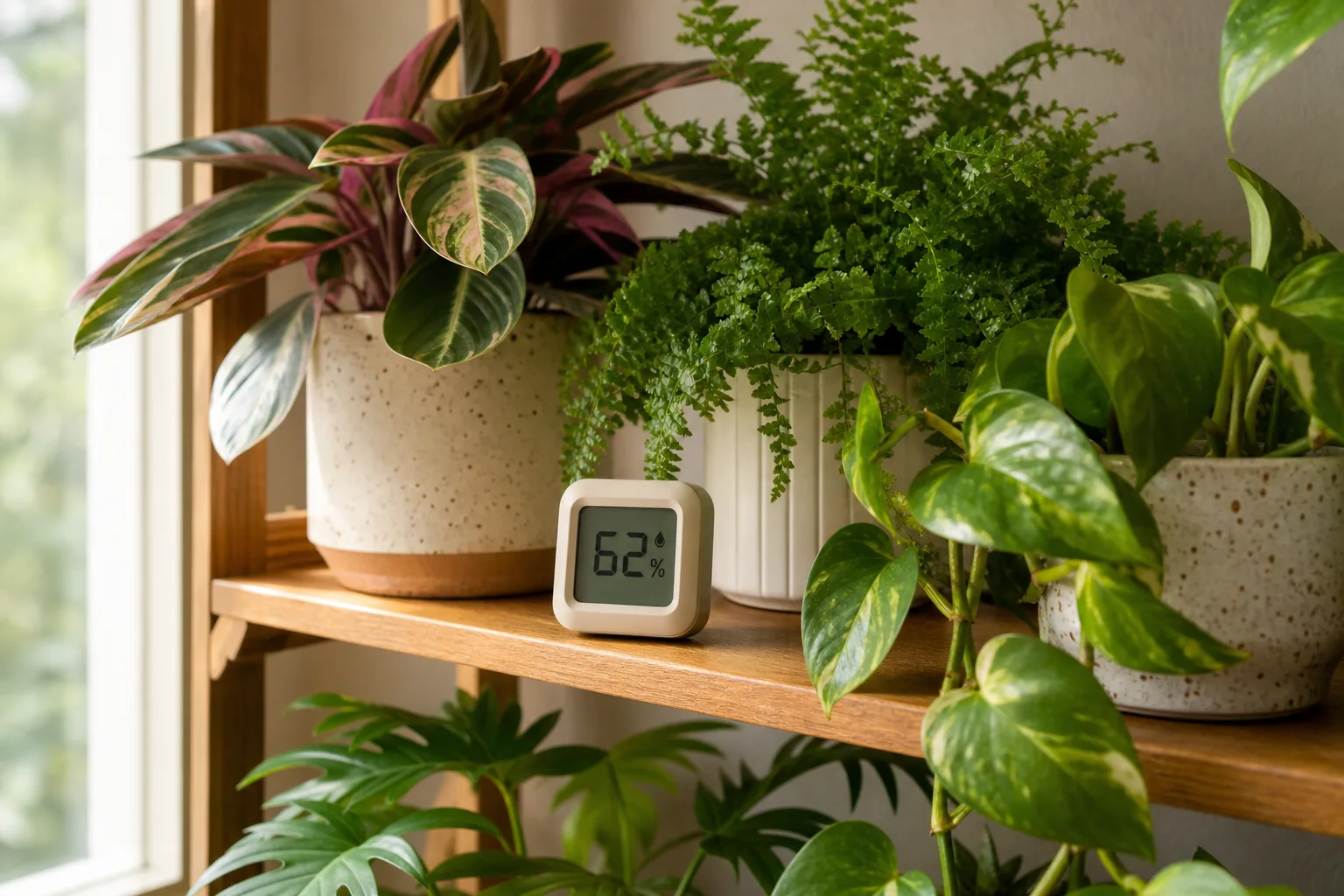
Do a four-part check before you change anything. First, feel the potting mix two inches down or use a moisture meter-compare with how to water indoor plants. Second, look at where damage sits on the leaf-edges and tips suggest humidity or watering; center blotches push you toward disease or sun. Third, check the room: is the plant near a radiator, heater, fireplace, drafty window, or forced-air vent? Fourth, measure actual humidity with a hygrometer at canopy height, not on the floor. Penn State Extension notes indoor RH commonly drops below 30% in winter, while many houseplants prefer around 40% to 50% or more at the foliage zone.
If your hygrometer reads 25% to 35%, the plant is humidity-sensitive, soil is not badly dry or waterlogged, and you see curling or crispy edges, humidity is the leading suspect. If the reading is already 50% and the plant still looks bad, look harder at watering, light, temperature swings, roots, and pests. The point is not to blame humidity for everything-it is to stop ignoring it when the evidence is obvious. (Penn State Extension)
What to Do Next
This page is a signs and diagnosis guide, not a full humidity setup manual. Once you confirm dry air is the problem, use focused guides for implementation:
- Houseplant humidity guide - RH targets, measurement, and room-level strategy
- Best low-cost humidity solutions at home - humidifier, grouping, and placement options ranked by effect
- Pebble tray vs humidifier - when localized trays help and when they do not
- Indoor humidity and pebble trays - realistic limits of tray methods
- Why houseplants struggle in winter - full seasonal diagnostic chain when multiple stressors stack
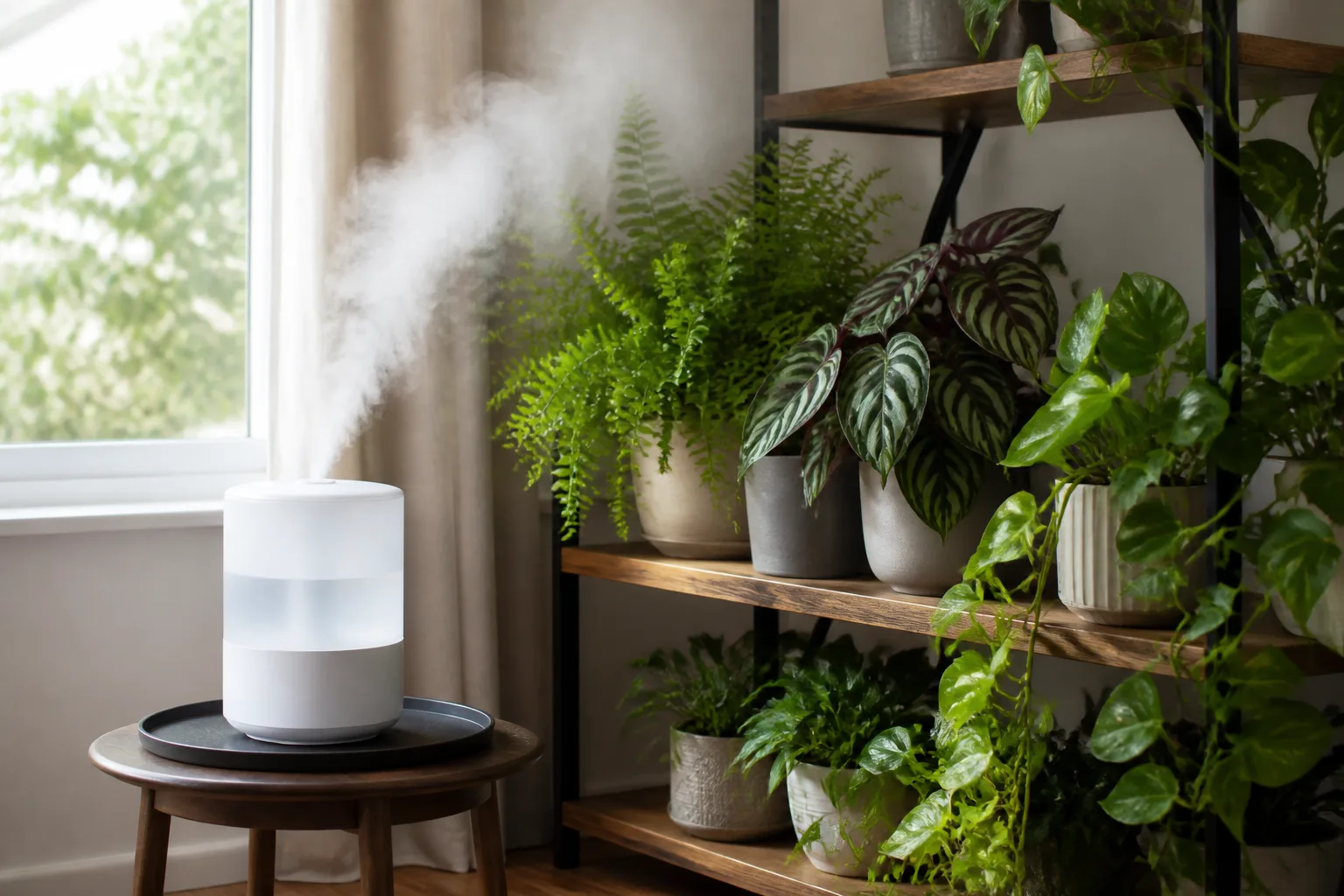
Raise humidity without creating stagnant, soggy conditions. Plants need better air moisture balance, not wet leaves and stale air. The EPA recommends keeping indoor relative humidity between 30% and 50% for human health and mold prevention-aim for the upper end of that band for tropical foliage, but do not chase greenhouse levels in a bedroom. If you run a humidifier, clean it on schedule and watch walls and windows for condensation.
Conclusion
When brown tips, crispy edges, curling leaves, stalled new growth, bud drop, or repeat spider-mite outbreaks stack on a humidity-sensitive plant in a dry heated room, air moisture-not another watering-usually deserves the first fix. Measure RH at canopy height, move plants off vents and cold glass, then follow the humidity guides above for a lasting bump. Judge success on the next leaves, not the brown tissue already on the plant.
Related guides
- Winter houseplant care checklist - weekly maintenance rhythm after diagnosis
- Why houseplants struggle in winter - full seasonal cause chain beyond humidity alone
- How to water indoor plants the right way - separate root-zone moisture from air moisture
- Houseplant humidity guide - RH targets and measurement basics
- Integrated pest management indoors - when spider mites persist after humidity improves