ZZ Plant Care Guide: Light, Water, Soil and Low-Maintenance Tips
Grow a nearly indestructible ZZ plant indoors with simple light, watering, soil, repotting and troubleshooting tips.
ZZ Plant Care at a Glance
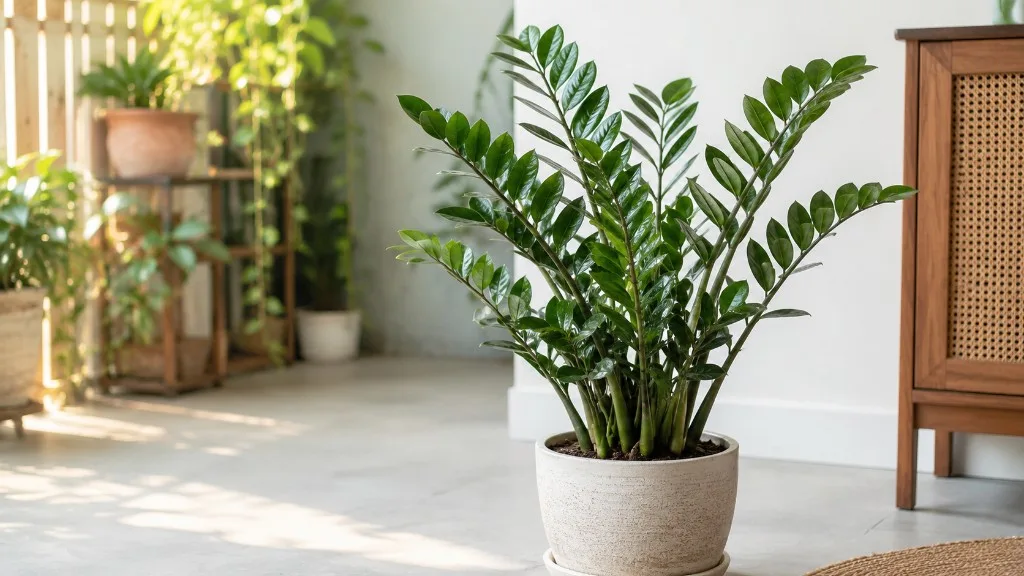
The ZZ plant (Zamioculcas zamiifolia) is one of the few houseplants that genuinely earns its low-maintenance reputation, but that reputation causes more damage than neglect. Many people hear “hard to kill” and assume the plant wants dark corners, random splashes of water, and total indifference. A ZZ plant can tolerate those conditions for a while, but tolerance is not healthy growth. The safest routine is simple: bright indirect light when possible, a well-draining pot and mix, water only after the soil has dried, and protection from cold, wet roots and harsh direct sun.
Good ZZ plant care is less about doing more and more about knowing when to stop. The plant does not need misting rituals, heavy fertilizer, or a complicated watering calendar. It needs a setup that prevents soggy soil and enough light to support steady, compact growth. Once those basics are right, most of the work is observation: check the soil, watch the stems, clean the leaves, and let the plant grow at its naturally slow pace.
How This Guide Relates to Our ZZ Plant Hub
This page is a consolidated beginner guide for people who want ZZ plant care basics in one read. For deeper, symptom-first troubleshooting, cultivar detail, and topic-specific depth, use our canonical ZZ Plant care hub - it links to dedicated guides on watering, light, soil, propagation, repotting, fertilizer, pruning, and 27 problem pages such as overwatering, yellow leaves, and root rot. Think of this guide as the on-ramp; the hub is where you go when you already know something is wrong or you want step-by-step depth on one topic.
If you are new to indoor watering logic in general, pair this guide with how to water indoor plants the right way - the dry-soil mindset transfers directly to ZZ plants because their rhizomes store water like a backup tank.
What Makes the ZZ Plant So Easy to Grow
ZZ plants are forgiving because they are built for storage and patience. Thick rhizomes, waxy leaflets, and sturdy stems let them ride out missed watering better than many tropical houseplants. Iowa State University Extension recommends bright, indirect light and watering only when the potting mix has dried, which captures the core of ZZ care in one practical rule. (Yard and Garden) The plant can also perform in shaded indoor conditions, but it will usually grow more slowly when light is limited.
The main thing to understand is that a ZZ plant fails differently from a thirstier plant. A peace lily may wilt dramatically when dry, then bounce back after watering. A ZZ plant often looks unchanged for weeks because it is drawing on stored moisture. That calm appearance tempts people to water “just in case,” but unnecessary watering is usually more dangerous than waiting. When roots and rhizomes sit in wet soil too long, rot can develop before the top of the plant looks seriously stressed.
This is why ZZ plants suit busy people, frequent travelers, offices, and beginners who forget schedules. They are less ideal for people who love watering, misting, and constantly adjusting care. The plant rewards restraint. The best routine is consistent, dry-leaning, and based on the actual condition of the soil - not sympathy for a plant that still looks green.
Botanical Profile and Natural Growth Habit
Zamioculcas zamiifolia belongs to the aroid family, Araceae, alongside peace lilies, pothos, and philodendrons. Brooklyn Botanic Garden notes the species is native to East Africa, from Kenya to South Africa, and can produce a spadix-type flower indoors, although flowering is not the main attraction. (Brooklyn Botanic Garden) Indoors, people grow ZZ plants for glossy leaves, upright habit, and ability to stay attractive with modest care.
A mature indoor ZZ plant usually grows slowly and steadily. North Carolina State Extension describes it as a slow grower that can reach about 2 to 4 feet in height and width, with bulbous rhizomes and glossy leaves that contribute to drought tolerance. (Plant Toolbox) That slow growth is normal. If your plant looks healthy but produces new shoots only occasionally, it may simply be behaving like a ZZ plant.
New shoots often emerge as thick spears from the soil, then unfurl into upright stems. Once a stem has formed, it does not branch like many shrubs. If a stem is damaged, yellowing, or rotting, remove it cleanly rather than expecting self-repair.
Popular cultivars extend the range beyond standard green: ‘Raven’ matures to near-black foliage, ‘Chameleon’ opens yellow and greens with age, ‘Zenzi’ stays dwarf at roughly 10 to 12 inches, and variegated forms add cream or white patterning at a typically smaller mature size. Clemson HGIC lists these cultivars and notes Raven can reach about 2.5 feet while Zenzi stays compact. (Home & Garden Information Center) All follow the same rhizome-first care logic; do not overwater a slow dwarf just because the pot looks empty.
Why Rhizomes Change the Care Routine
The most important ZZ plant care detail is the rhizome. These swollen underground structures store water and energy, which helps the plant survive dry spells. They also make the plant vulnerable to heavy soil, oversized pots, and repeated watering before the mix has dried. In practical terms, ZZ care should be closer to succulent care than fern care, even though the plant is not a cactus.
Rhizomes change how you interpret signals. A dry top inch may not mean the whole root zone is dry, especially in a deep plastic pot or low-light room. The plant may still have moisture around lower roots and rhizomes. For small pots, check deeper with your finger or a wooden skewer. For large pots, lift the container and learn the difference between wet weight and dry weight.
Rhizomes also explain why “a little water often” is a poor strategy. Small, frequent splashes keep the upper soil damp while failing to flush the full root zone. Over time that encourages fungus gnats, salt buildup, and shallow rooting. Water thoroughly when the soil is genuinely dry, let excess drain out, then leave the plant alone until it dries again.
Best Light for a ZZ Plant
The best light for a ZZ plant is bright, indirect light, but the plant handles a wide range of indoor brightness. The RHS says ZZ plant can be grown indoors in well-drained compost with indirect light to full shade and describes it as tolerant of neglect. (RHS) That flexibility is one reason the plant is popular for apartments, offices, and dim corners where fussier plants decline.
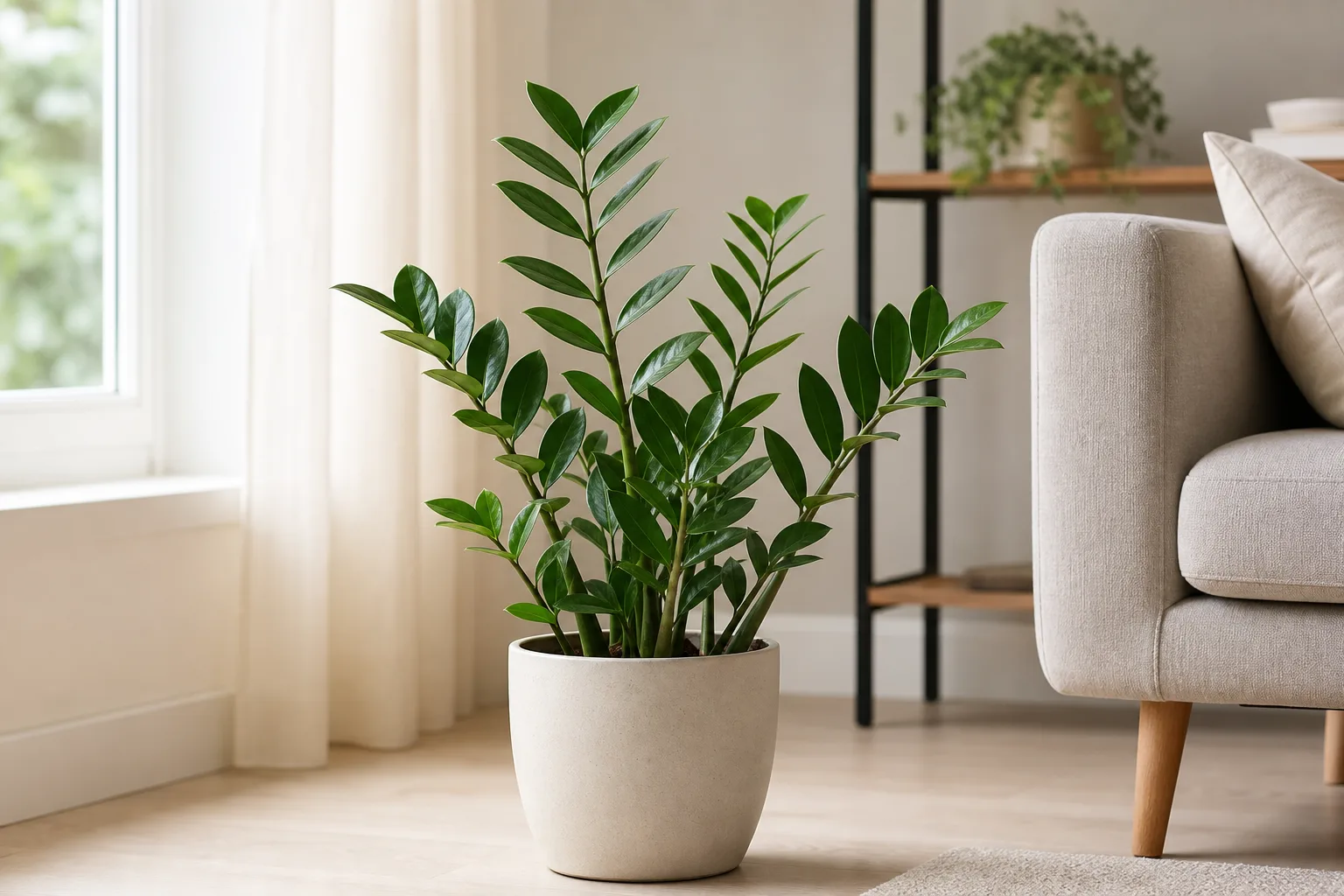 Still, light tolerance has limits. A ZZ plant in a dim hallway may stay alive but grow more slowly, produce fewer shoots, and use water more slowly. A plant near a bright window with filtered light will generally look fuller. The best placement is often a few feet from an east- or west-facing window, near a bright north-facing window, or set back from a strong south-facing window where direct afternoon sun does not hit leaves.
For topic-specific placement diagrams and weekly rotation notes, see our ZZ Plant light guide. Artificial light works in offices, especially when lights run most of the day. If the room feels too dark to read comfortably without a lamp, the plant may survive but should not be expected to grow quickly.
Low Light vs Bright Indirect Light
A ZZ plant can survive in low light, but it usually grows better in bright indirect light. In low light, water use drops sharply, soil stays wet longer, new growth slows, and overwatering risk rises. In brighter indirect light, the plant photosynthesizes more efficiently and is more likely to produce strong new shoots.
Low light is acceptable when the plant is mostly decorative and you water very sparingly. A credenza ZZ several feet from a window can look good for a long time if the pot drains well and soil dries fully between drinks. If you want faster growth and fuller stems, move it closer to filtered light. The routine does not become harder; the plant simply has more energy.
The practical test is growth and water use. If your ZZ remains firm and green but barely changes for months, low light may be the reason. If soil stays damp for two or three weeks after watering, light is probably too low, the pot is too large, the soil is too dense, or all three. Improve light and drainage before fertilizing. Fertilizer cannot compensate for insufficient light.
This low-light trap is the most common reason healthy-looking ZZ plants develop root rot in offices. For stretched stems with leaflets clustered at tips, see leggy growth on ZZ Plant.
Signs Your ZZ Plant Is Getting Too Much Sun
ZZ plants do not like harsh direct sun, especially hot afternoon sun through glass. Direct exposure can scorch leaflets, causing pale patches, brown crispy areas, or a bleached look on the window-facing side. NC State Extension notes scalding and browning can occur with too much direct light. (Plant Toolbox) This is most common when a plant moves suddenly from a dim spot to a strong window.
Sun damage is often mistaken for underwatering because both create brown, dry-looking tissue. The difference is location: sun scorch usually appears on the most exposed leaves as irregular tan or brown patches. Underwatering tends to affect the plant more broadly, with wrinkled stems, dry soil, and leaf drop after prolonged neglect. If only window-facing leaves are marked, light is the likely issue.
Brown tips from fluoride, chlorine, or salt buildup in tap water are a separate problem - see brown tips on ZZ Plant for sun vs. salt diagnosis. The fix for scorch is simple: move the plant back from the window, use a sheer curtain, or place it where it gets morning sun but not intense afternoon exposure. Damaged tissue will not turn green again, but the plant can grow normally once stress is removed. Do not respond to scorch by heavily watering unless soil is actually dry.
How Often to Water a ZZ Plant
Water a ZZ plant only when the potting mix has dried out. Frequency changes with pot size, light, season, room temperature, soil type, and plant size. A small ZZ in bright light may dry faster than a large ZZ in a dim corner. A terracotta pot may dry faster than plastic. A warm summer room dries faster than a cool winter room.
Authoritative sources consistently warn against wet soil. Missouri Botanical Garden recommends watering regularly but allowing soil to dry between applications and avoiding wet soils. (Missouri Botanical Garden) UF/IFAS describes ZZ plant as slow-growing and recommends low-dose fertilizer only twice per year, reinforcing that this is not a plant pushed with constant water and nutrients. (Ask IFAS - Powered by EDIS) The most common failure is too much moisture around the roots, not neglect.
For many homes, watering every two to four weeks may be common, but treat that as a rough range, not a command. In low light or winter it may be longer. In bright light, warm air, and a small draining pot it may be shorter. The plant responds to oxygen and moisture in the root zone, not the calendar. Our ZZ Plant watering guide walks through seasonal rhythm in more detail.
The Dry-Soil Rule
The dry-soil rule means soil should dry significantly before you water again. For small pots, test below the surface with your finger. For deeper pots, a wooden skewer is more reliable: push it down, wait a moment, pull it out. Damp soil stuck to the skewer means wait. Mostly clean and dry means closer to needing water.
When it is time to water, water thoroughly. Pour slowly until water runs from drainage holes, then let the pot drain completely. Empty any saucer or cachepot so the plant is not sitting in water. This soak-and-dry approach encourages healthier roots than tiny frequent sips.
There is one exception: if soil has become extremely dry and hydrophobic, water may run down the sides without wetting the root ball. Water slowly in rounds, or bottom-water briefly by setting the nursery pot in shallow water until the mix rehydrates, then drain fully. Do not leave the plant soaking for hours. The goal is even rehydration, not a swamp.
Seasonal Watering Adjustments
ZZ plants usually need less water in winter because light is lower, days are shorter, and growth slows. A plant that needed water every two or three weeks in summer may need much longer in winter. UF/IFAS notes active growth can be reduced and injury may occur below 50°F, while ZZ plants prefer warm tropical conditions. (Ask IFAS - Powered by EDIS) Cooler rooms slow water use, so the same summer routine can become risky in winter.
Heating and air conditioning complicate the picture. A heated room may dry the top quickly while the lower root zone stays moist. A plant near a cold window may stay wet longer than expected. Check the pot, not the month.
After repotting, fresh mix often holds moisture differently, and a larger pot increases soil volume around roots. Step up only one pot size when possible, and allow mix to dry before watering again. If you move a ZZ into a pot much bigger than its root system, unused soil can remain wet and increase rot risk.
Soil, Pot, and Drainage
ZZ plants need well-draining soil and a pot with drainage holes. Dense, moisture-retentive soil keeps rhizomes wet too long, especially in low light. A no-drainage container makes the problem worse because excess water has nowhere to go. Even a drought-tolerant plant can rot if its root zone stays saturated.
The RHS recommends well-drained compost for ZZ plants, and Missouri Botanical Garden emphasizes medium moisture, well-drained soil while avoiding wet conditions. (RHS) Drainage is not only about water leaving the pot; it is also about air returning to the root zone after watering. Our ZZ Plant soil guide expands on mix troubleshooting and compaction.
Best Potting Mix for ZZ Plants
The best potting mix is loose, chunky, and fast-draining while still holding a little moisture. Clemson HGIC recommends a coarse blend of roughly 50% peat moss or coir-based potting soil, 25% perlite, and 25% sand. (Home & Garden Information Center) A standard indoor mix amended with perlite, pumice, orchid bark, or coarse coco chips also works. The goal is mix that feels light and crumbly rather than dense and muddy.
Avoid garden soil in indoor pots. It compacts, drains poorly, and can bring pests indoors. Avoid mixes designed to stay wet for moisture-loving plants unless you amend them heavily. ZZ plants need a root zone that gets watered well, drains well, then dries.
A commercial cactus or succulent mix can work, but some versions become water-repellent when dry. If water runs straight through without soaking, add quality potting soil or water more slowly. If mix stays wet too long, add more perlite or pumice. The best mix is the one that dries predictably in your room.
When and How to Repot
Repot when rhizomes are crowded, the pot is distorting or cracking, water runs through too quickly because roots fill the container, or the plant dries out much faster than before. Slow growth alone is not always a reason to repot. ZZ plants naturally grow slowly, and unnecessary repotting can stress the plant. A slightly snug pot is usually fine if the plant is healthy and water drains properly.
Spring or early summer is the best time because the plant is entering active growth. Choose a pot only one size larger. Remove the plant gently, inspect rhizomes and roots, and trim anything black, mushy, or foul-smelling with clean tools. Replant at the same depth, firm mix lightly, and water only if mix is dry or barely moist. If the root ball was already wet, wait before watering.
Repotting is also the easiest time to divide a large ZZ plant. Division is faster than leaf propagation because each section already has rhizomes and roots. Stem cuttings root in four to eight weeks; single leaf cuttings often take three to nine months - see our ZZ Plant propagation guide for step-by-step timing. Make sure each division has healthy rhizome mass and stems, then pot each into a container that fits its size. Do not place a small division into a huge pot.
Temperature, Humidity, and Placement
ZZ plants prefer normal warm indoor conditions. UF/IFAS lists a warm tropical preference of 65°F to 90°F and notes injury may occur below 50°F. (Ask IFAS - Powered by EDIS) University of Connecticut recommends keeping ZZ plants between 55°F and 80°F, with faster growth at warmer temperatures. (Home & Garden Education Center) Clemson HGIC advises keeping plants above 60°F and notes sensitivity to cold. (Home & Garden Information Center) If the room is comfortable for people and not drafty, it is usually acceptable for a ZZ plant.
Humidity is rarely a major problem. Unlike ferns or calatheas, ZZ plants do not need high humidity. Average household humidity is generally enough, and misting is not necessary. Misting can leave mineral spots or encourage leaf surface issues in dusty rooms. Clean leaves with a damp cloth instead.
Placement should consider light, temperature, pets, and traffic. Keep the plant away from cold drafts, exterior doors, heating vents, and harsh direct sun. Place it where stems will not be brushed repeatedly, because damaged stems do not repair like flexible vines.
Pet toxicity: ASPCA lists ZZ plant among common houseplants containing insoluble calcium oxalates, which can irritate the mouth and digestive tract if chewed. (ASPCA) Wear gloves if you have sensitive skin, wash hands after pruning or division, and keep fallen leaves off the floor. If a pet chews the plant and shows drooling, vomiting, pawing at the mouth, swelling, or distress, contact a veterinarian or ASPCA Animal Poison Control at (888) 426-4435. Toxicity is about ingestion, not casual contact.
Fertilizer and Growth Expectations
ZZ plants need very little fertilizer. They are slow-growing by nature, and feeding heavily will not turn them into fast tropical vines. UF/IFAS recommends low-dose liquid fertilizer according to manufacturer instructions twice per year. (Ask IFAS - Powered by EDIS) Clemson HGIC similarly advises fertilizing only once or twice during the growing season with a balanced fertilizer. (Home & Garden Information Center) Use a balanced houseplant fertilizer during spring or summer when the plant has enough light and warmth to use nutrients. See ZZ Plant fertilizer guide for salt-flush and recovery notes.
Do not fertilize a stressed ZZ plant as a first response. If leaves are yellowing, stems are soft, soil smells sour, or the plant sits in a dark corner, fix water, light, drainage, or root health first. Fertilizer added to a struggling root system can increase salt stress.
Healthy growth is measured in new shoots, firm stems, glossy leaves, and stable color. A ZZ plant may produce several new stems during a good season, or only a few. Growth speed depends heavily on light. Raven ZZ and other dark-leaved cultivars follow the same logic; new growth may emerge lighter and darken over time. Firm, evenly colored new growth is usually fine; mushy stems, spreading yellowing, or blackened bases suggest a care problem.
Black spots on stems are often completely normal on healthy ZZ plants - Clemson HGIC notes black spots on stems indicate typical, healthy tissue. (Home & Garden Information Center) Do not prune firm stems with scattered dark markings if leaflets stay glossy. Soft, mushy black stems at the soil line are rot and need immediate action.
Pruning, Cleaning, and Shaping
ZZ plants need minimal pruning. The RHS states no pruning is required beyond removing faded leaves and flowers at soil level. (RHS) Indoors, pruning is mostly about removing damaged, yellow, or dying stems. Use clean scissors or pruners and cut affected stems close to the soil line. Do not remove healthy stems to force branching, because ZZ stems do not branch usefully that way. Our ZZ Plant pruning guide covers tool hygiene and recovery pacing.
Cleaning leaves matters more than many people realize. Dust dulls glossy leaflets and reduces light capture. Wipe leaflets gently with a soft damp cloth every few weeks. Avoid commercial leaf-shine products that clog surfaces or leave residue.
If the plant leans, check light direction. ZZ stems angle toward the strongest light. Rotate the pot every few weeks for balanced growth. If a stem is bent or creased, it will not fully straighten. Remove badly damaged stems rather than staking indefinitely.
Common ZZ Plant Problems and Fixes
Most ZZ plant problems come from a short list: too much water, poor drainage, low light combined with wet soil, direct sun, cold exposure, or pests on neglected leaves. The plant’s toughness can delay visible symptoms, so by the time leaves yellow or stems soften, the root zone may already be stressed. Inspect the whole system, not just the leaf that changed color.
Start with soil. Is it wet days or weeks after watering? Does it smell sour? Is the pot sitting in a cachepot with collected water? Does the container have drainage holes? Then check light. Is the plant in a very dark corner where water use is slow? Is it pressed against a hot sunny window? Finally inspect stems and leaves. Are bases firm or mushy? Are pests clustered under leaflets or along stems? This order prevents treating symptoms while ignoring cause.
A ZZ plant can recover if rhizomes are still firm. If all rhizomes are mushy, blackened, or foul-smelling, recovery is unlikely. If some remain firm, remove rotten sections, repot into fresh dry-leaning mix, and restart careful watering. The earlier you act, the better the odds.
Yellow Leaves, Soft Stems, and Root Rot
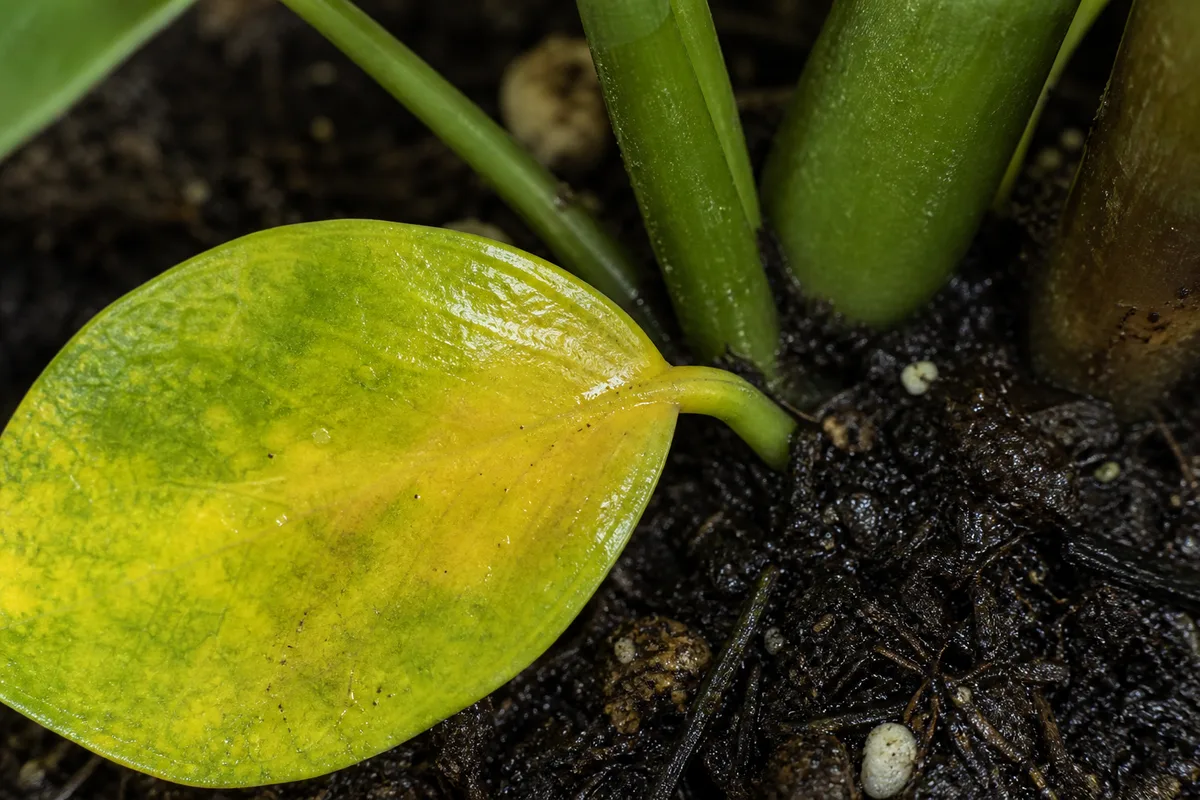
Yellow leaves are the most common complaint, and they do not have one cause. Older leaves can yellow naturally as they age. Underwatered plants may yellow after a long dry period. Sudden direct sun can damage exposed leaves. When yellowing appears with soft stems, wet soil, or blackened bases, overwatering and root rot should be the first suspicion.
Use this quick checklist before adding water:
- Soil moisture at depth - wet mix plus yellow leaves means stop watering and inspect rhizomes.
- Stem firmness at the base - mushy collapse usually means advanced rot; remove affected stems.
- Light level - dim rooms slow drying; adjust watering before blaming disease.
- Recent repot or pot upsize - extra wet soil around small root systems is a common trigger.
- Natural aging - oldest leaflets on long stems may yellow while new growth stays green.
To assess rot, slide the plant out of the pot if symptoms are serious. Healthy rhizomes feel firm. Rotten tissue feels mushy, looks dark, and smells unpleasant. Trim rotten material with clean tools, discard old wet soil, and repot healthy sections into fresh well-draining mix. Do not immediately soak if rhizomes were already wet.
Soft stems usually mean internal damage is advanced. A yellow but firm stem may be aging or stressed. A stem that collapses at the base is often connected to rot. Remove it cleanly at soil level.
Underwatering looks different: bone-dry soil, very light pot, slightly wrinkled stems, and leaf drop after prolonged drought. Water thoroughly once, then let the plant recover gradually. Do not compensate with daily watering.
Pests and slow growth: ZZ plants are generally pest-resistant but not pest-proof. Mealybugs, scale, spider mites, and fungus gnats may appear on dusty plants or in damp soil. Inspect undersides of leaflets and stem joints. Fungus gnats usually point to soil staying too wet - fix moisture before chasing adults. For species-specific treatment paths, see mealybugs, scale insects, spider mites, and fungus gnats on ZZ Plant. Slow growth is often normal in low light; increase bright indirect light before heavy feeding. Persistent slow growth with firm green foliage may simply be the plant’s pace.
Next Steps: Deeper ZZ Plant Guides
Once basics are in place, use the hub for ongoing care and troubleshooting:
- ZZ Plant care hub - canonical overview and cluster navigation
- ZZ Plant watering - seasonal rhythm and dry-down checks
- ZZ Plant light - placement, rotation, and office lighting
- ZZ Plant propagation - division, stem, and leaf timelines
- Yellow leaves on ZZ Plant - symptom-first diagnosis
Related guides
- How to water indoor plants the right way - general dry-soil logic for all houseplants
- Repotting houseplants - when and how to size up any container plant
- Why houseplants struggle in winter - seasonal watering traps that affect ZZ plants in dim rooms
Conclusion
ZZ plant care works when you respect rhizome storage instead of fighting it. Give bright indirect light when possible, use a draining pot and airy mix, water only after soil dries, and keep the plant above cold drafts. The biggest mistake is loving the plant with extra water - a ZZ forgives missed drinks far better than soggy soil.
If you remember one rule, make it this: check the soil before watering, drain fully after watering, and use the ZZ Plant hub when symptoms outgrow a beginner summary. A healthy ZZ should look firm, glossy, and steady, producing occasional new shoots without demanding your schedule.