Low-Cost Plant Humidity Solutions That Actually Help Indoors
Compare budget humidity fixes for houseplants, from grouping plants to trays, bathrooms and simple room adjustments.

Why Dry Indoor Air Stresses Houseplants
Most homes run drier than many popular houseplants would choose. The EPA recommends keeping indoor relative humidity around 30% to 50% for comfort and indoor air quality, while ASHRAE Standard 62.1 expects mechanical systems with dehumidification to limit occupied-space humidity to 65% or less to manage moisture and air-quality risk. Extension houseplant guidance often targets 40% to 60% for foliage plants, and demanding tropicals may prefer 60% to 80% locally—even when the rest of the room should stay drier for human health. (US EPA) (ASHRAE)
That mismatch is why a plant can look “fine” in a normal room yet still show brown tips, crisp margins, curling new growth, or spider mite flare-ups. Ferns, calatheas, marantas, African violets, and some orchids complain first; pothos, snake plant, and ZZ plant tolerate average room air more easily. A plant beside a heater, AC vent, or drafty window often sits in air harsher than the room average feels to you. (Extension | University of New Hampshire)
EPA home ranges vs. plant preferences
The practical takeaway is not “make the whole house a greenhouse.” It is build a small humidity zone around sensitive plants while keeping home RH in a mold-safe band. For year-round humidity theory, targets, and equipment types, start with the houseplant humidity guide—this page is the budget stack: ranked cheap fixes and when to escalate.
Measure First With a Cheap Hygrometer
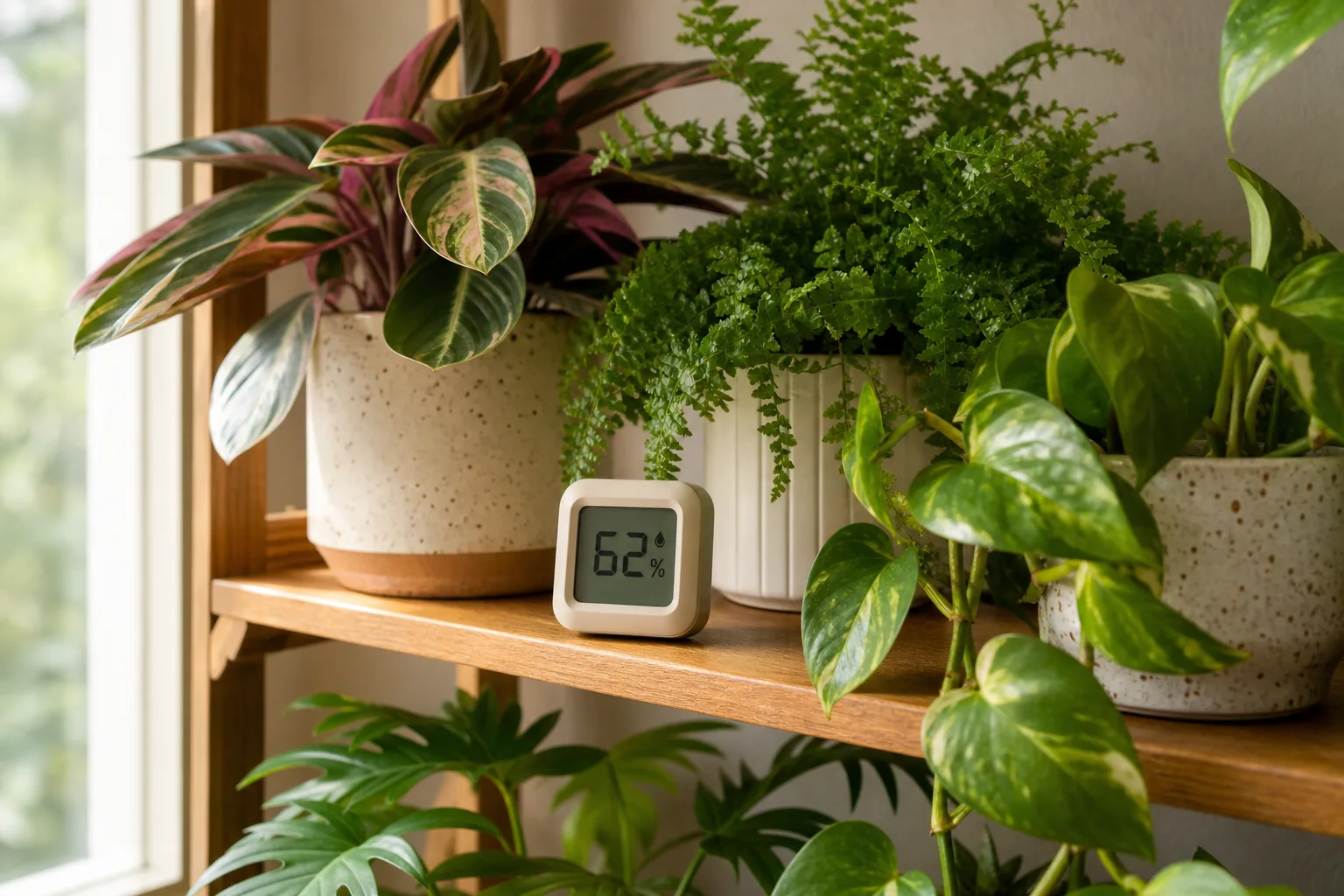
The cheapest tool that prevents wasted effort is a digital hygrometer—typically $8 to $15. Without one, growers mist randomly, overwater pots, or buy gear the room does not need. A reading near 30%, 45%, or 55% changes which fix belongs at the top of your stack. (US EPA)
Place the sensor on the plant shelf or windowsill where the plant lives, not in a hallway across the house. Bedroom corners, bathrooms after showers, and bright living rooms near AC vents can differ by 10+ percentage points. A hygrometer also helps separate watering problems from humidity problems—crisp edges can come from underwatering, salt buildup, or dry air. (Extension | University of New Hampshire)
Separate watering problems from dry air
Before you buy trays or tents, run a quick triage. Push a finger into the potting mix: if the top 2 inches stay wet for days while leaf edges crisp, you may be dealing with salt stress, root damage, or poor drainage—not humidity alone. See how to water indoor plants the right way for soil-check basics. If the mix dries on a normal schedule and the plant still shows dry-air symptoms, humidity tactics belong on the list. Overwatering to “compensate” for dry air is one of the fastest ways to rot roots while the air stays harsh.
Room microclimates matter
Your target is humid enough for the plant, not as humid as possible. Keep the home within EPA-friendly ranges and add localized moisture only where tropicals need it. If whole-room RH already sits at 45% to 50%, free tactics may be enough; if winter readings hold at 25% to 30%, weak fixes will disappoint until you add a tent or humidifier.
Choose Your Stack: Budget Decision Tree
Use your hygrometer reading and plant type to pick a starting stack—then layer methods instead of betting on one trick.
| If your room RH is… | And your plant is… | Start here | Escalate to… |
|---|---|---|---|
| 45%–55% | Moderate tropicals (Monstera, pothos) | Move off vents + group plants | Pebble tray if edges still crisp |
| 35%–45% | Ferns, calatheas, African violets | Group + tray + humid bathroom/kitchen spot | Clear-bin tent for worst offenders |
| Below 35% | Any humidity-sensitive tropical | Fix drafts first, then tent or humidifier | Small evaporative humidifier ($25–$50) |
| Any RH | Snake plant, ZZ, succulents | Nothing—match plant to air | Stop over-humidifying |
Comparison Table: Nine Low-Cost Methods Ranked
This table is what the “best” in the title refers to: ranked by typical cost, effort, realistic RH impact, and best use case. The RH impact column shows approximate local lift at the plant based on extension guidance and LeafyPixels shelf tests—not lab measurements. Treat every percentage band as an editorial estimate unless your own hygrometer confirms it in your room.
| Rank | Method | Typical cost | Effort | Approx. local RH impact* | Best for | Mold risk if overused |
|---|---|---|---|---|---|---|
| 1 | Move off vents/drafts | Free | Low | Indirect (stops loss) | Every plant | Low |
| 2 | Group plants | Free | Low | +2–5 pts local | Moderate tropicals near target | Low if not overcrowded |
| 3 | Bathroom/kitchen spot | Free | Medium | +5–15 pts when room in use | Bright bath/kitchen ferns | Low with airflow |
| 4 | Pebble tray | $0–$5 | Low | +1–4 pts local | One pot or small cluster | Medium if stagnant water |
| 5 | Double-pot damp moss | $5–$15 | Medium | +3–7 pts local | Decorative cachepot setups | Medium if soggy moss |
| 6 | Clear humidity tent/bin | $5–$15 | Medium | +15–30 pts inside enclosure | Calatheas, rehab cuttings | High without vent holes |
| 7 | Misting | Free | High (daily) | Minutes only | Dust rinse, brief bump | Medium (leaf spot) |
| 8 | Hygrometer (measure) | $8–$15 | One-time | N/A—diagnostic | Every grower on a budget | N/A |
| 9 | Budget evaporative humidifier | $25–$50 | Medium | +5–15 pts room/zone | Chronic <35% rooms | High if uncleaned/over-run |
* Approximate editorial ranges, not guaranteed outcomes. Grouping and trays: UNH Extension and Nebraska Extension describe a small local benefit that scales with plant count and low airflow—not whole-room change. Pebble trays: Penn State Extension notes evaporated tray moisture diffuses into the room with almost no overall RH impact; expect only a modest pocket near the pot. Tents/cloches: UNH Extension and PSU Extension treat glass or plastic enclosures as the strongest localized fix short of a humidifier. Misting: PSU Extension reports humidity rises only until water evaporates—often minutes. Humidifiers: extension sources recommend portable units for consistent lift when free tactics fail.
Plants also raise moisture through transpiration—a 2024 naturally ventilated office study found indoor plants produced a small but significant humidity increase—but not enough to rescue a bone-dry room alone. Stack methods. (ScienceDirect)
LeafyPixels Multi-Method Hygrometer Log
Numbers below come from a LeafyPixels editorial winter shelf check in north-central Ohio (USDA zone 6a), January 2026, in a 68°F heated living room with baseline room RH 28–30%. Sensor placement: 6 inches above pot rim at leaf height. Your readings will differ—use this as a pattern guide, not a promise.
| Method tested | Setup | RH before → after | Time window | Notes |
|---|---|---|---|---|
| Grouping | Five medium tropicals on one 36” shelf | 38% → 42% | 48 hours | Modest pocket; no whole-room change |
| Pebble tray | 12” tray, pot 6” above water line | 30% → 32% near tray vs. 30% control 3 ft away | 24 hours | Within normal daily swing |
| Clear bin tent | Vented 18 qt bin over one calathea | 31% room → 58–62% inside bin | 6 hours | Strongest local lift on the list |
| Humidifier corner | Basic evaporative unit, 4 hr/day near shelf | 29% → 38% at shelf | 3 days | Steadier than trays; cleaned weekly |
The pattern matches extension expectations: free tactics nudge a few points; enclosures and humidifiers move the needle when RH sits below 35%. Re-measure after every change you stack.
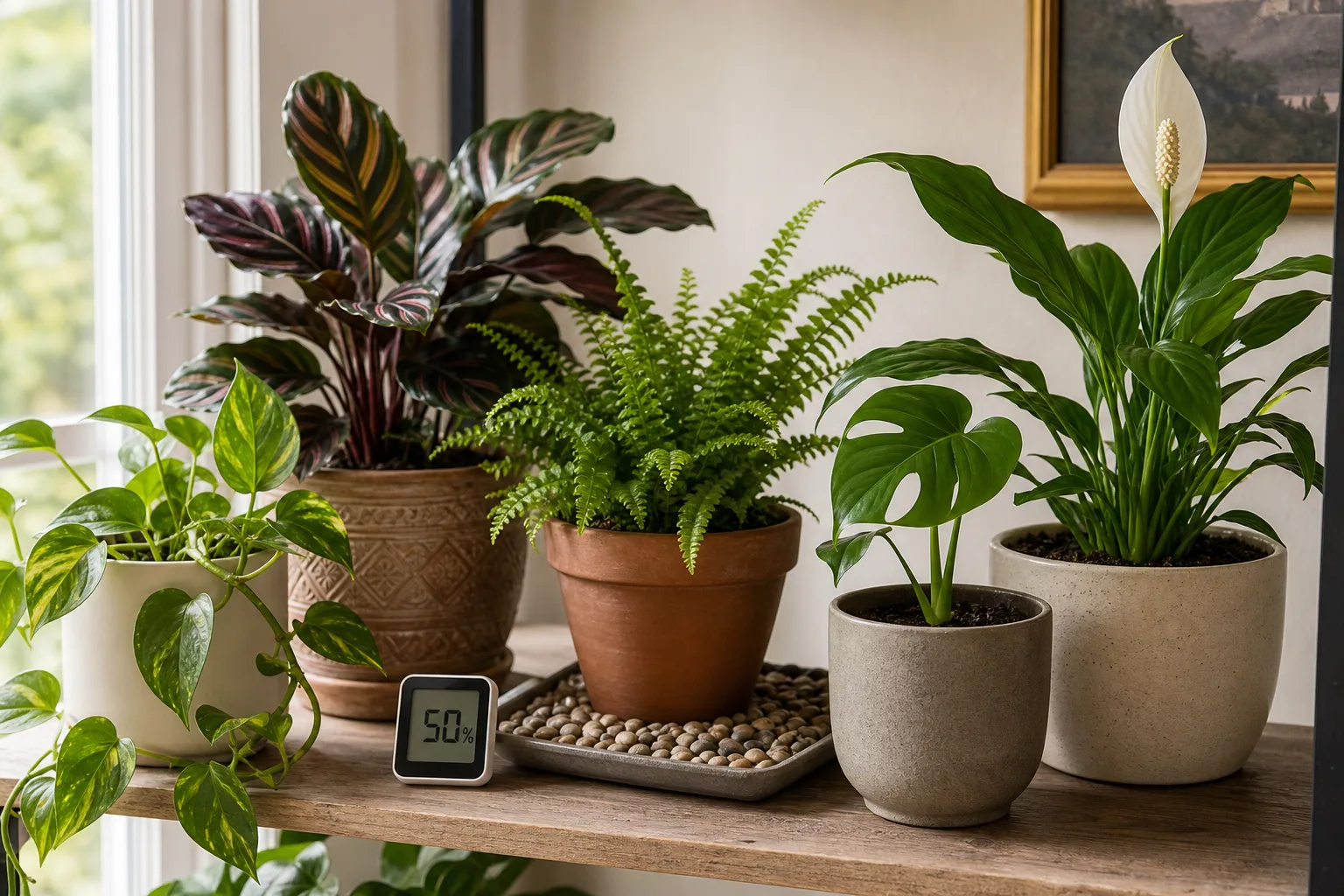
Group Plants to Share Transpiration Moisture
Grouping is the best near-free fix because it uses moisture plants already release. When several pots share a shelf or cart, transpired water lingers slightly longer around the cluster. UNH Extension recommends clustering because evaporating potting mix and transpiring leaves create a microclimate—strongest with several plants in a small room with low airflow. (Extension | University of New Hampshire)
Scale matters: a cluster creates a pocket, not a 15-point room jump. Penn State Extension notes effectiveness depends on plant count and room size. Combine grouping with vent avoidance and, if needed, a tray. Keep foliage clustered, not crammed—stagnant wet crowns invite disease. (Penn State Extension)
Pebble Trays (Summary Only)
A pebble tray evaporates water around the pot base for a modest local bump. Set the pot on stones with the bottom above the water line—never submerged unless the species requires it. Refill before the tray dries out; clean often to avoid algae and mineral crust.
This guide does not repeat full tray math and depth rules—that belongs on the dedicated indoor humidity and pebble trays page and the DIY pebble tray build guide. Penn State Extension is blunt: tray moisture diffuses through the room, so trays rarely change overall RH—treat them as support, not a conservatory replacement, especially when RH sits below 35%. (Penn State Extension) (University of Minnesota Extension)
Move Plants to Naturally Humid Rooms
Sometimes the smartest fix is relocation. Bathrooms and kitchens often run more humid during showers, cooking, and water use. The Old Farmer’s Almanac and RHS both note that moisture-loving plants can do well in bright bathrooms when the rest of the home runs dry. (Almanac) (RHS)
Light still rules: a humid but dim bathroom is not a substitute for adequate light. Choose shade-tolerant species or add a grow light. PSU Extension suggests checking bathroom RH with a hygrometer before committing—benefit varies with shower frequency. Avoid blasting leaves with hot steam or parking pots in cold drafts right after showers. (Penn State Extension)
DIY Humidity Tents and Clear Bins
For high local humidity on a low budget, small enclosures beat almost every free trick. UNH Extension points to terrariums, cloches, and aquariums as effective ways to hold moisture around individual plants. A clear storage bin with vent holes, a propagation box, or a glass cloche can rehab fussy calatheas or baby cuttings far cheaper than humidifying a whole room. (Extension | University of New Hampshire)

Tent airflow and vent placement
Stale, sealed air invites fungus. Use a simple vent pattern—two holes low on one side, two holes high on the opposite side—so warm moist air can cycle without cooking the plant in direct sun:
        [ lid — lift 1×/week ]
    ┌─────────────────────────┐
 ○  │                         │  ○   ← upper vents (opposite corners)
    │      calathea pot       │
 ○  │                         │  ○   ← lower vents
    └─────────────────────────┘
         pebble tray optional
Watch for condensation on walls, overheating in sun, and stale air. Drill or cut airflow holes, open the lid briefly every few days, and wipe excess moisture before fungus moves in. UNH Extension recommends occasionally lifting closed lids to prevent excess moisture buildup. One struggling calathea in a vented bin often costs less than running a humidifier 24/7 for an entire bedroom.
Misting: When It Helps and When to Skip It
Misting is easy to oversell. Penn State Extension reports that after misting, humidity rises only until the water evaporates—often within minutes—so daily misting does not meaningfully change RH around a plant. Extension guidance for humidity-sensitive ferns adds that misting is not very effective for sustained RH and can increase foliar leaf spot risk. (Penn State Extension) (University of Minnesota Extension) The Guardian houseplant clinic reaches the same practical conclusion for most homes—brief surface moisture, not rainforest air. (The Guardian)
Use misting as a minor add-on—dust rinse, occasional bump—not the core plan. Skip fuzzy-leaved species and plants prone to rot. Mist in the morning so leaves dry before cool nights. If crisping continues despite daily sprays, upgrade the method instead of spraying harder.
Double-Potting With Damp Moss
Double-potting nests the nursery pot inside a larger decorative container with lightly damp sphagnum moss packed in the gap. The logic mirrors a pebble tray—evaporation from the gap raises moisture near the stem zone—but moss holds water longer and hides the setup inside a cachepot. Nebraska Extension describes pebble-tray evaporation raising humidity around the foliage when water sits below the pot; the same microclimate idea applies when damp moss fills the gap, provided the inner pot never sits in standing water. (Nebraska Extension)
Maintenance is the catch: moss must stay lightly moist and clean, not soggy. If the outer pot traps water against the inner root ball, you trade dry air for root rot. RHS humidity guidance emphasizes matching method to plant need—this tactic suits one or two display plants on a shelf where an open tray looks messy, not whole collections in dry rooms. (RHS)
Cut Dryness From Vents, Drafts, and Heaters
The cheapest humidity fix is often subtraction. A plant under a heating vent, beside a radiator, or in an AC stream loses moisture faster than any tray replaces. Moving it even a few feet can matter more than new gear. UNH Extension lists heat vents, radiators, and poorly insulated doors among the first placement fixes before any humidity gadget. (Extension | University of New Hampshire)
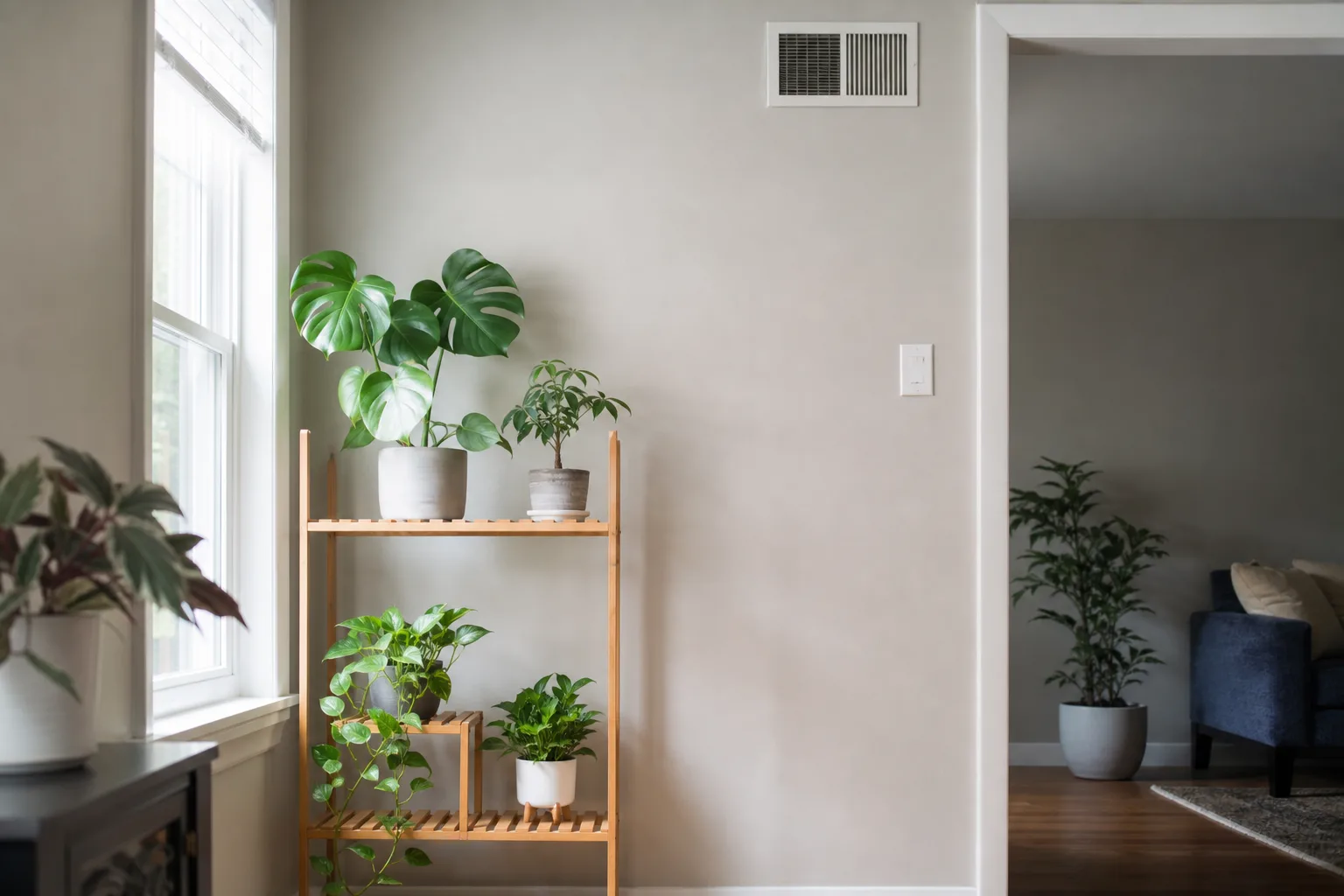
Shelf layout counts: top shelves near ceilings run warmer and drier; corners by bathroom doors may stay gentler. Fix placement, then reassess RH before spending money.
Pick Plants That Match Your Home’s RH
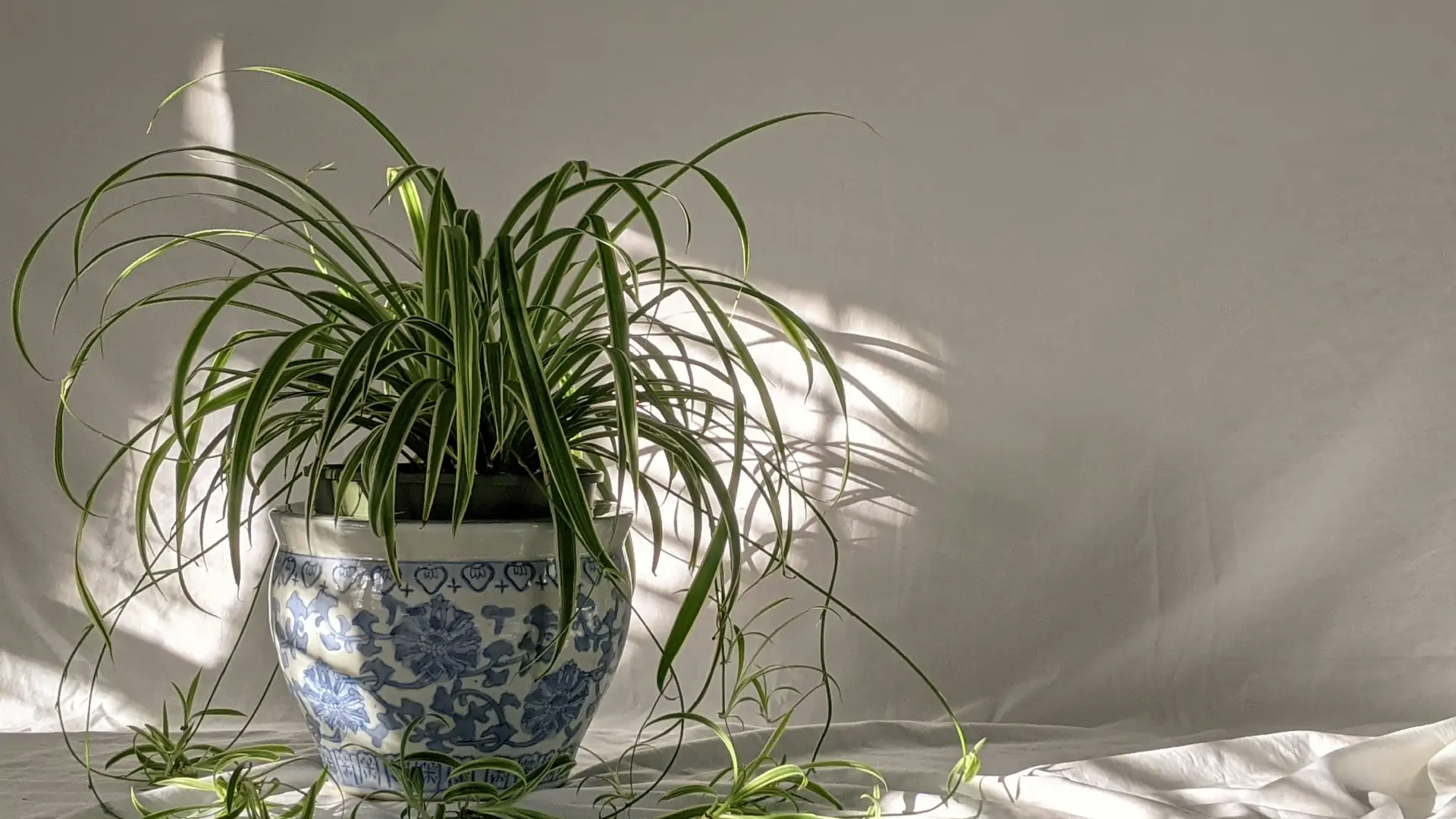
Stop fighting your house. If RH stays near 35% to 45% and you will not run gear, choose forgiving species. Iowa State Extension and NC State Extension both highlight pothos, snake plant, spider plant, and ZZ plant as low-maintenance options that tolerate drier indoor air and inconsistent care. (Iowa State Extension) (NC State Extension)
Humidity-hungry ferns and calatheas can thrive at home—but usually need a better microclimate, not optimism. Keep a smaller tropical collection and set up their zone properly, or lean into adaptable species across the rest of the house. For symptom logic when air turns dry in winter, see signs your houseplants need more humidity.
When a Budget Humidifier Beats Every Free Fix
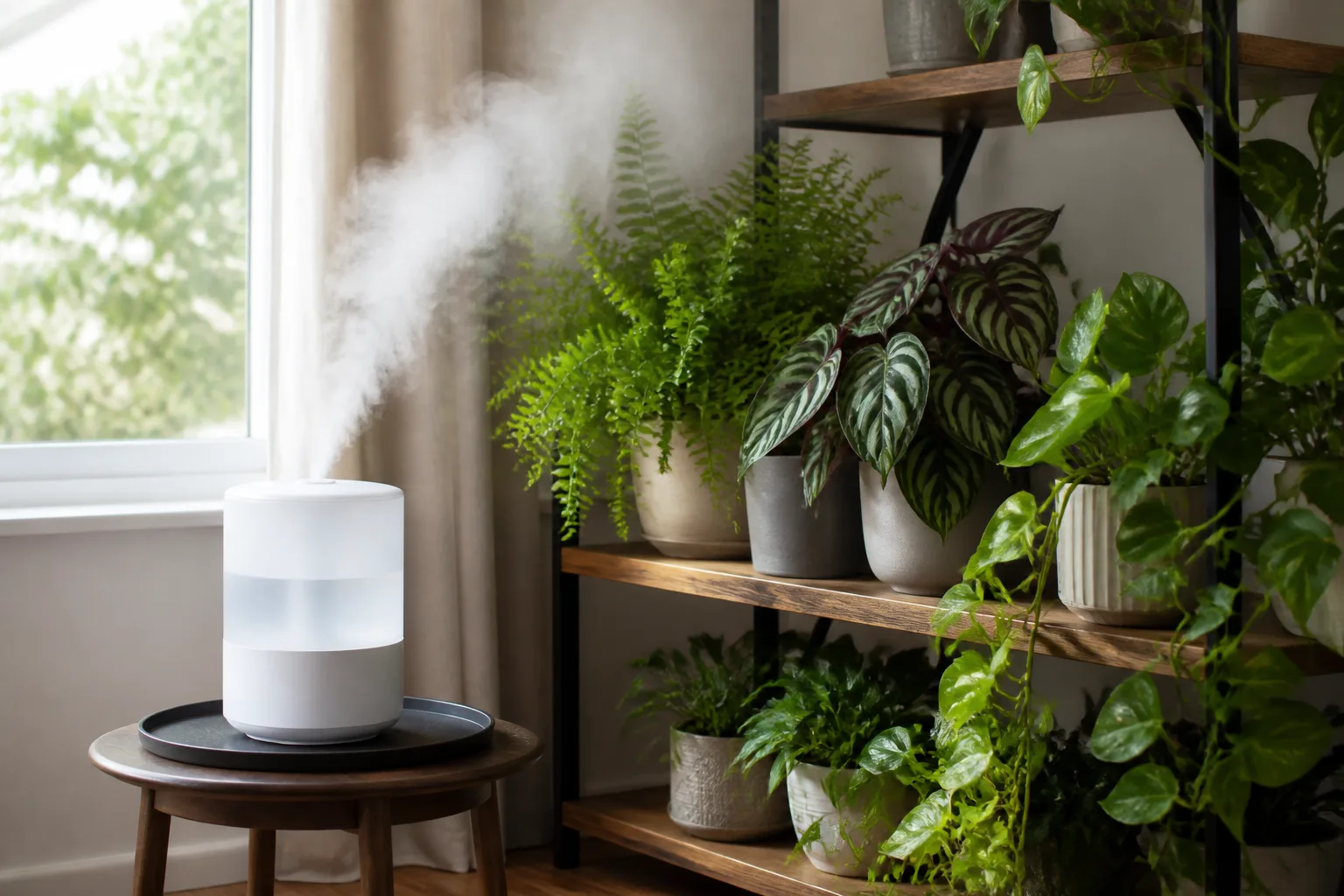
When RH holds at 25% to 30% and the plant is a fern, calathea, or similar tropical, a small evaporative or ultrasonic humidifier ($25 to $50 for basic models) often beats weeks of weak workarounds. Extension sources note humidifiers deliver steady moisture misting and trays cannot match. (University of Minnesota Extension)
The EPA warns that excess humidity fuels mold; empty and clean the tank at least weekly (more often if biofilm appears) and stop chasing jungle numbers if windows sweat or walls feel damp. Target a plant corner, not an entire sealed room above 50% to 55% unless you accept home-health tradeoffs. (US EPA)
Common Mistakes That Waste Money or Stress Plants
Confusing humidity with watering tops the list—brown tips lead to extra water and root rot while air stays dry. Relying on misting alone for calatheas and ferns is second. Ignoring vents while topping pebble trays is third.
Overshooting is the home-health mistake: keep occupied spaces within EPA 30% to 50% guidance and ASHRAE 62.1’s 65% ceiling for dehumidified buildings. Constant condensation means pull back. (US EPA) (ASHRAE)
One setup for every species fails too—match the method to the plant using the comparison table above.
Related Guides
- Houseplant humidity guide — year-round RH targets, humidifier types, and room-level strategy
- Indoor humidity and pebble trays — tray setup, limits, and when trays fail
- DIY pebble tray — materials, depth, and build steps for budget trays
- Do pebble trays really increase humidity for houseplants? — evidence-focused tray reality check
- Signs your houseplants need more humidity — winter symptom logic when air dries out
- Pebble tray vs humidifier — when each tool wins on cost and effort
Conclusion
If you only do three things: buy or borrow a hygrometer, move plants off vents and into a sensible stack, and match the method to the plant using the ranked table—not every tropical needs a humidifier, and not every pothos needs a tent. Free fixes (grouping, placement, draft control) belong first; pebble trays and moss double-potting support moderate gaps; vented clear bins solve the worst single-plant cases; a $25–$50 humidifier wins when RH stays below 35% for humidity-sensitive species.
The honest ceiling is home health: keep whole-room moisture in EPA-safe bands, localize jungle air where it matters, and re-measure after every change instead of guessing. That is how budget growers stop replacing crispy calatheas every February.