Air Plant Care Guide: How to Water and Grow Tillandsia Indoors
Learn Tillandsia care basics, including light, soaking, drying, airflow and mistakes that kill air plants indoors.
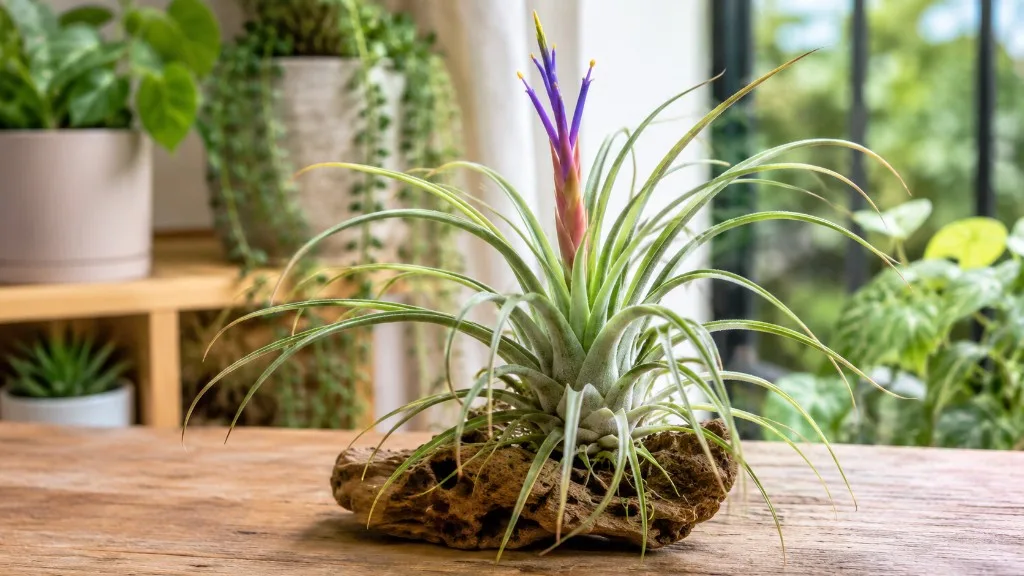
Most tillandsia failures are not mysterious. They come from a handful of repeatable mistakes - misting instead of soaking in dry homes, sealing plants in glass, ignoring whether a species is xeric or mesic, watering on autopilot, decorating before the plant dries, and treating air plants like unkillable shelf props. This guide names those errors in order, shows what to do instead, and points you to the full Tillandsia care hub when you need soak protocols, grow-light specs, or problem-specific fixes.
What “Air Plant” Gets Wrong About Tillandsias
Tillandsias belong to the bromeliad family, with 687 accepted species listed by Kew. The nickname air plant suggests they live on air alone. They do not. They are epiphytes that anchor to bark and rock while absorbing moisture and nutrients through leaf trichomes, not through soil roots. (Plants of the World Online)
That mental-model error drives most beginner care. A tillandsia does not want potting mix, a closed globe, or water trapped in its crown. It wants bright filtered light, full leaf hydration, and fast drying with airflow - the same trio the Tillandsia overview builds into a complete soak-and-dry routine. Once you stop asking how little the plant needs and start asking what habitat it is adapted to, failures become predictable instead of random. (RHS)
Roots on most tillandsias are anchors, not feeders. The work happens in the leaves, where trichomes pull in water and dissolved minerals. Soil would hold moisture where the plant does not want it - one reason the hub treats mounting and soil-free display as core care, not optional styling.
Mistake 1 - Relying on Misting Instead of Soaking
The first mistake is treating a cosmetic mist as real watering. Penn State lists misting, rinsing, and soaking as methods, but in ordinary dry indoor air, misting alone rarely fully hydrates inner leaf bases. It wets outer trichomes while the plant stays thirsty deeper in. (Penn State Extension)
Soaking is the dependable baseline for most mesic tillandsias: submerge the plant, swirl gently so water reaches overlapping leaves, then shake off excess and dry upside down so nothing pools in the crown. NCSU and extension sources stress that trapped water causes rot faster than any single watering interval. (NC State Extension)
Misting still has a role - as a supplement in very dry homes between soaks, not as the only hydration strategy. If your tillandsias curl tightly, feel brittle, or never plump up despite daily misting, the fix is almost always a thorough soak-and-dry cycle, not more spray bottle passes.
What proper soak-and-dry looks like indoors
For mesic types, start with a 20- to 30-minute soak once per week in room-temperature water, then at least four hours upside down before returning the plant to a mount or holder. Penn State and the Tillandsia watering guide align on that drying minimum - overnight is safer for dense rosettes. Xeric species with silvery, stiff leaves often need shorter soaks every 10 to 14 days instead of a weekly bath.
Use rainwater, filtered water, or tap left out 24 hours when possible. BHG cautions against routine softened or distilled water because tillandsias lack soil to buffer minerals. (Better Homes & Gardens) If tips stay brown despite good light, water quality is worth checking before you change anything else.
Mistake 2 - Sealing Tillandsias in Glass Globes
Closed glass globes and narrow terrariums are the second classic mistake. They look perfect on a shelf and work against the plant’s biology by trapping humidity, slowing evaporation, and - in sunny spots - building heat. Current care reporting, including Financial Times coverage of decorative air-plant displays, warns that enclosed vessels increase rot risk when airflow cannot match the moisture you add during watering. (Financial Times)
RHS is equally direct: tillandsias need superior ventilation because they evolved in windy canopy zones, not sealed jars. (RHS) An open glass holder may work if the plant still dries fully after each soak and light reaches all sides. A closed globe almost always makes overwatering and root rot more likely, even when you water carefully.
The better display rule is simple: biology first, decoration second. Cork bark, driftwood, wire frames, and open dishes let you remove the plant for soaking and guarantee airflow. If a display makes drying slow or watering awkward, it is working against you no matter how good it looks on Instagram.
Mistake 3 - Ignoring the Xeric vs. Mesic Split
The third mistake is watering every tillandsia the same because they share a genus name. Xeric tillandsias - denser trichomes, grayer or silvery leaves, thicker texture - come from drier habitats and generally want less frequent water and more light tolerance. Mesic tillandsias - greener, softer, thinner leaves - want more consistent moisture and gentler sun. UNH Extension frames this as the care distinction many beginner guides skip. (UNH Extension)
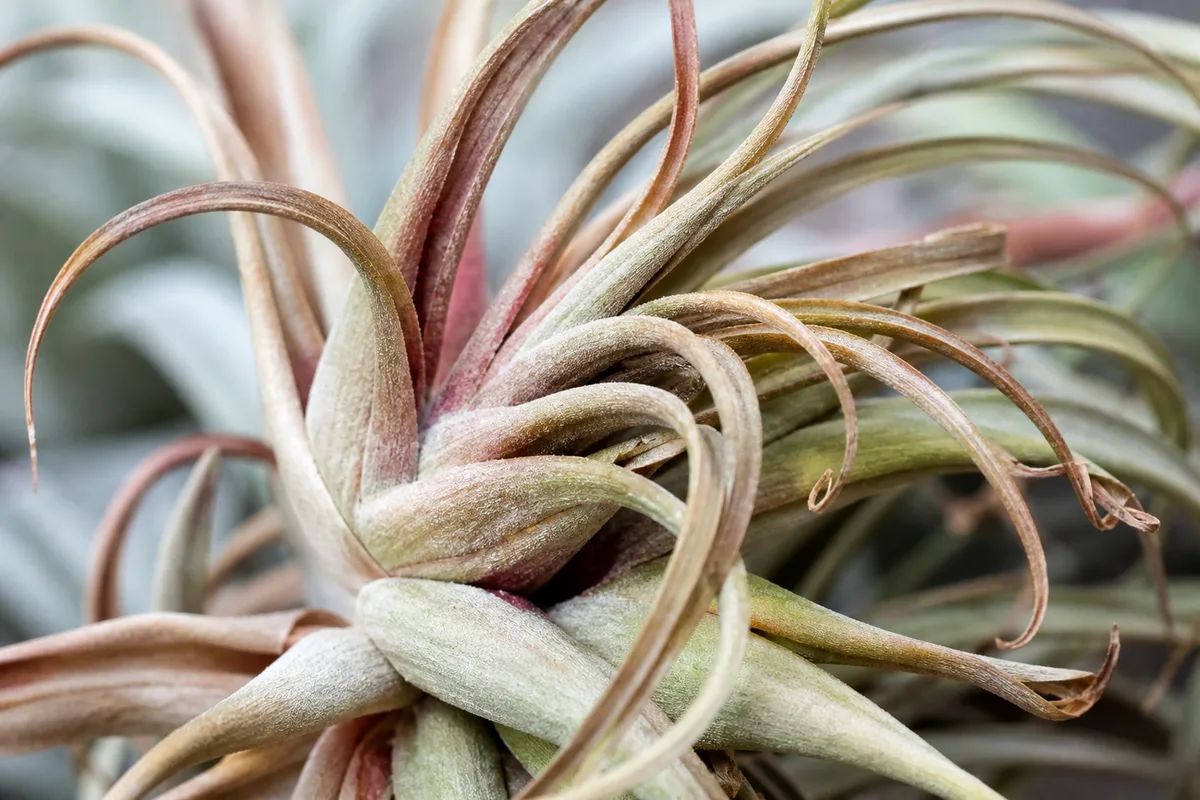
Treat a mesic ionantha like a desert xerographica and it desiccates. Keep a xeric species too wet in dim light and it declines slowly, then rots at the base. Matching rhythm to leaf type is faster than guessing from a generic “weekly soak” sticker on the nursery pot.
How to read leaf texture for watering clues
Use appearance as your first diagnostic tool. Silvery, fuzzy, stiff leaves usually signal xeric - lighter soaks, more sun, longer intervals between water. Glossy green, smooth leaves usually signal mesic - weekly soaks, filtered light, supplemental mist in dry winter air. When in doubt, underwatering a xeric plant is safer than overwatering it; the opposite is often true for mesic types in heated homes.
The Tillandsia light guide pairs with this split: xeric forms tolerate more direct morning sun; mesic forms bleach or scorch under hot afternoon glass.
Mistake 4 - Watering on a Calendar Without Checking Leaves
The fourth mistake is watering because it is Tuesday, not because the plant is dry. There is no honest universal schedule - species, light, temperature, humidity, and airflow all shift demand. Penn State notes that misting used as the main method may need to happen very frequently, while soaking on a fixed weekly calendar can still be wrong if the plant sits in a steamy bathroom or above a winter radiator. (Penn State Extension)
Better Homes & Gardens points to weekly soaking as a starting point for many homes, with xeric types watered less often than mesic ones - but both need leaf checks. (Better Homes & Gardens) If leaves feel overly curled, dry, or brittle before the next soak, shorten the interval or add a rinse. If the base stays cool, damp, and heavy in low light, extend the interval and improve airflow.
Dry winter indoor air often demands more attention than humid summer weeks, even in the same room. Longwood Gardens notes that tillandsias prefer high humidity but still depend on the soak-and-dry cycle indoors - ambient moisture does not replace submersion. (Longwood Gardens)
Mistake 5 - Mounting or Decorating Before the Plant Dries
The fifth mistake is gluing, wiring, or tucking a tillandsia into wet moss before it has fully dried. Water sitting in the crown or against the base is how rot starts. Extension and grower sources repeat the same protocol: shake vigorously, dry upside down, wait at least four hours, then return to display. Skipping that step to “finish the arrangement” trades a photo moment for crown failure two weeks later.
Do not bury the base in constantly wet moss. Do not glue over the growing point. Keep attachments light and reversible when possible so you can soak and dry without fighting the display. Bauer’s Market and similar bromeliad care references warn that wet mounting materials against the stem base recreate the conditions epiphytes never face in open canopy air.
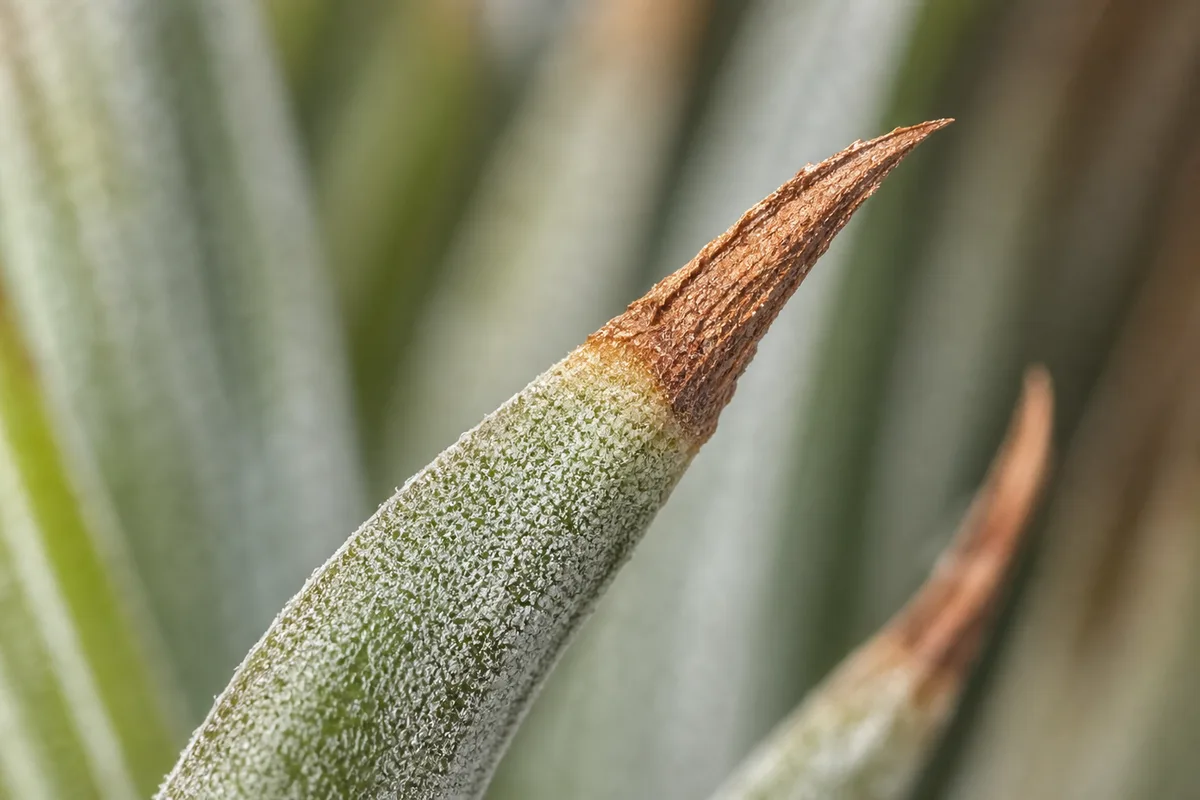
Open terrariums can work when airflow stays good. Closed setups and deep decorative bowls that trap still air are where brown tips and crispy leaves show up first - often a dehydration or salt issue on the leaf edge, sometimes early rot at the center if water never leaves.
Mistake 6 - Treating Tillandsias as Unkillable Décor
The sixth mistake is buying tillandsias as shelf props that “barely need anything.” Sellers market them that way; buyers mist once a week; plants slowly die in dim corners. UVM Extension describes tillandsias as captivating soil-less plants - but still living organisms that need light, water, and circulation between 50°F and 90°F, with no frost exposure. (University of Vermont Extension)
They are good indoor plants when you want a plant, not a prop: compact, soil-free, and expressive if you read leaf feedback. Color shifts before bloom, pup formation, and drying speed after watering all tell you whether the environment works. A pothos forgives more neglect; tillandsias reward accurate care with form and offsets in a tiny footprint.
When symptoms appear, troubleshoot in order: symptom → environment → fix. Soft dark centers point to overwatering. Tight curling and dull color point to thirst or too much sun. Stalled growth in a dark nook points to not enough light before fertilizer ever enters the conversation.
Quick Reference - Light, Water, and Airflow
If you want a one-screen cheat sheet after the mistake list:
Light: Bright, filtered indoor light. Cornell Cooperative Extension recommends east- or west-facing windows as strong placements; south windows can work in cooler months but may overheat in summer; north exposure and interior rooms without supplemental light usually fail. (Cornell Cooperative Extension) RHS suggests a bright south-facing window behind a curtain as a workable filtered setup. (RHS)
Water: Soak mesic types 20–30 minutes weekly; xeric types 10–20 minutes every 10–14 days as a starting point. Shake, invert, dry 4+ hours. Misting supplements; it rarely replaces soaking in dry homes.
Airflow: Ventilated position beats a stylish dead corner. Bathrooms and kitchens work when bright; they fail when dark and permanently humid without drying time.
Feed: Light bromeliad or orchid fertilizer in soak water occasionally during active growth - see the Tillandsia fertilizer guide for dilution detail.
Propagation: Mature plants bloom once, produce pups, and decline slowly. Separate offsets at roughly one-third to one-half parent size if needed, or leave clumps intact - covered in the propagation guide.
Grow lights: When windows are insufficient, full-spectrum LEDs 12–18 inches above the plant for 10–12 hours daily support mesic tillandsias indoors, per NYBG and Penn State-style indoor bromeliad guidance. (New York Botanical Garden)
Best beginner species for your room
Match species to your room, not to a gift-shop display. Solid starters include Tillandsia ionantha (compact, colors before bloom), caput-medusae, bulbosa, and xerographica (slower, more xeric - watch overwatering). T. cyanea is unusual because it can grow in well-drained medium as well as mounted - the exception that proves the no-soil rule. (NC State Extension)
Bright, dry homes: lean xeric. Moderate light and humidity: mesic ionantha clusters often thrive. Buying for your environment beats buying for Instagram every time.
Pet Owners - What ASPCA Lists and What to Watch For
Tillandsias are widely listed as non-toxic to cats and dogs, and bromeliads appear on ASPCA non-toxic plant guidance. That does not mean pets should chew them - any plant material can cause mild stomach upset, and stiff leaves can irritate the mouth or pose a choking risk. (ASPCA)
Mount air plants out of reach when possible. The Tillandsia hub includes the same pet-safety framing for owners who want full species-care depth. Contact your veterinarian if a pet swallows a large piece or shows persistent vomiting.
When to Use the Full Tillandsia Hub and Problem Guides
This guide is intentionally a mistake-correction entry point, not a duplicate of the encyclopedic hub. Open the Tillandsia care hub when you need CAM photosynthesis context, detailed soak tables, grow-light specs, mounting galleries, or links to eighteen problem pages.
Route by symptom when things go wrong:
- Soft crown, sour smell → overwatering / root rot
- Tight curl, dull gray-green → underwatering
- Brown leaf edges → brown tips / crispy leaves
- Winter dryness → low humidity
- Weak pale growth → light guide
UF/IFAS notes that air plants are epiphytic bromeliads adapted to irregular rain and fast drying - the hub applies that biology procedurally; this guide keeps you out of the six mistakes that make those procedures necessary. (UF/IFAS Gardening Solutions)
Related guides
- How to water indoor plants the right way - soil-based watering logic that does not transfer to tillandsias, but helps if you grow both
- How to create a DIY terrarium step by step - open vs. closed containers; tillandsias belong in open setups only
- Grow lights complete guide for indoor plants - supplemental light when windows are weak
Conclusion
Growing tillandsias well is less about finding a zero-maintenance gimmick and more about avoiding six predictable mistakes: mist-only watering, sealed globes, ignoring xeric vs. mesic cues, calendar watering without leaf checks, decorating before drying, and treating plants as unkillable décor. Fix those and the core rhythm - bright filtered light, real hydration, fast drying, strong airflow - falls into place.
When you want procedural depth, pet-safety detail, or symptom-specific rescue pages, use the Tillandsia care hub as the canonical next step. This guide gets you past the myths; the hub gets you to long-term success.