Pebble Trays for Plants: How They Fit Into a Care Routine
Learn when to use pebble trays for plants, how to combine them with watering and humidity checks, and when to skip them.
Quick Answer: Where Pebble Trays Belong in Your Routine
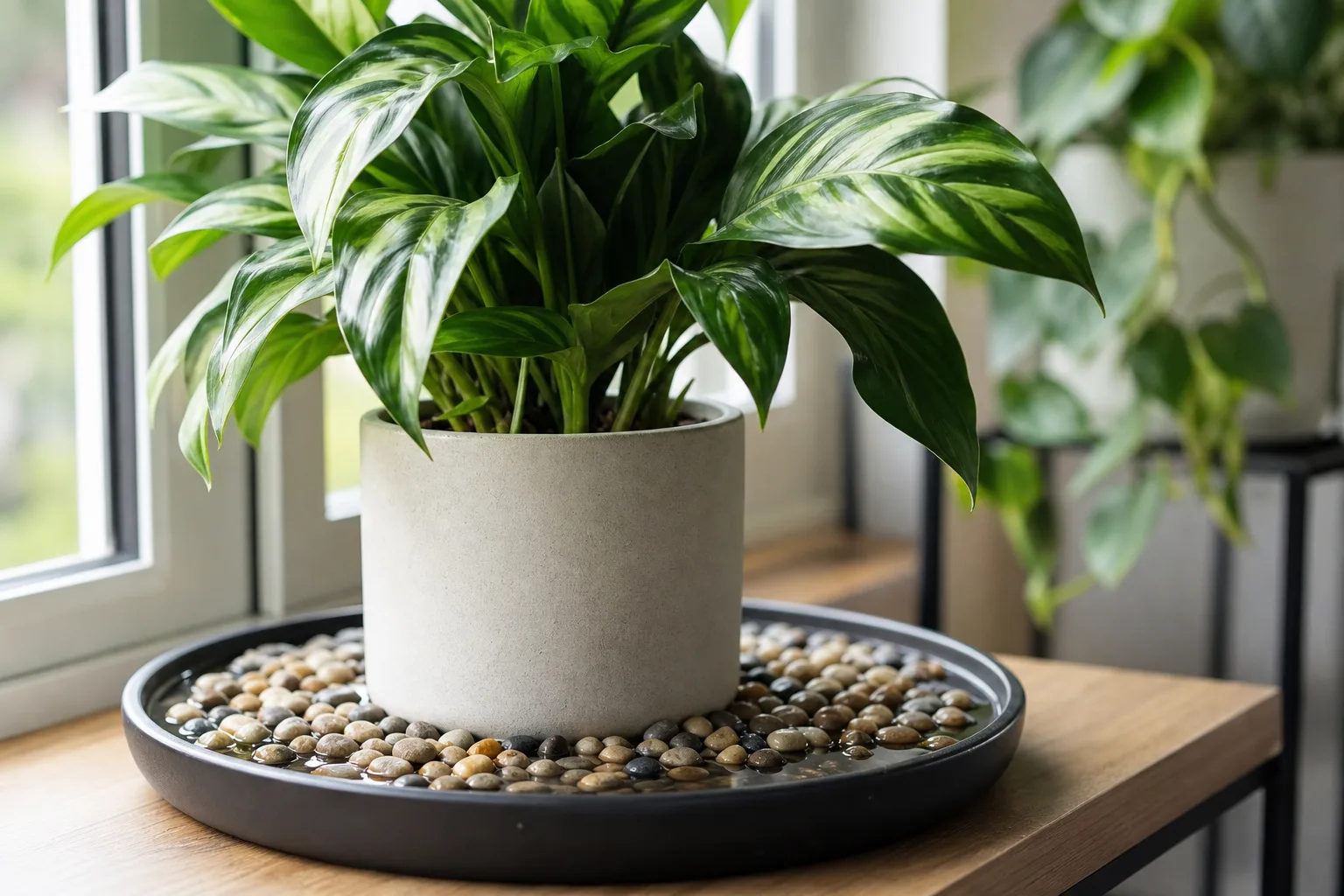
This guide is the pebble-tray routine hub. A pebble tray is a cheap, passive humidity tool that belongs in the supporting cast of plant care—not at the center. Use one after light, watering, drainage, and placement are already reasonably correct and you still have a small, local humidity gap worth addressing.
The honest summary: pebble trays are real but limited. They can raise relative humidity in a small zone near the water surface, which helps compact, humidity-sensitive plants more than tall floor specimens in dry rooms. They are not snake oil, and they are not a substitute for fixing bad watering, poor drainage, or a chronically dry whole room.
If you need the full humidity math and measured readings, see Indoor Humidity and Pebble Trays. If you need build steps, see how to set up a pebble tray. This page answers where trays fit in a normal weekly routine and when to escalate to grouping or a humidifier instead.
What a Pebble Tray Actually Is
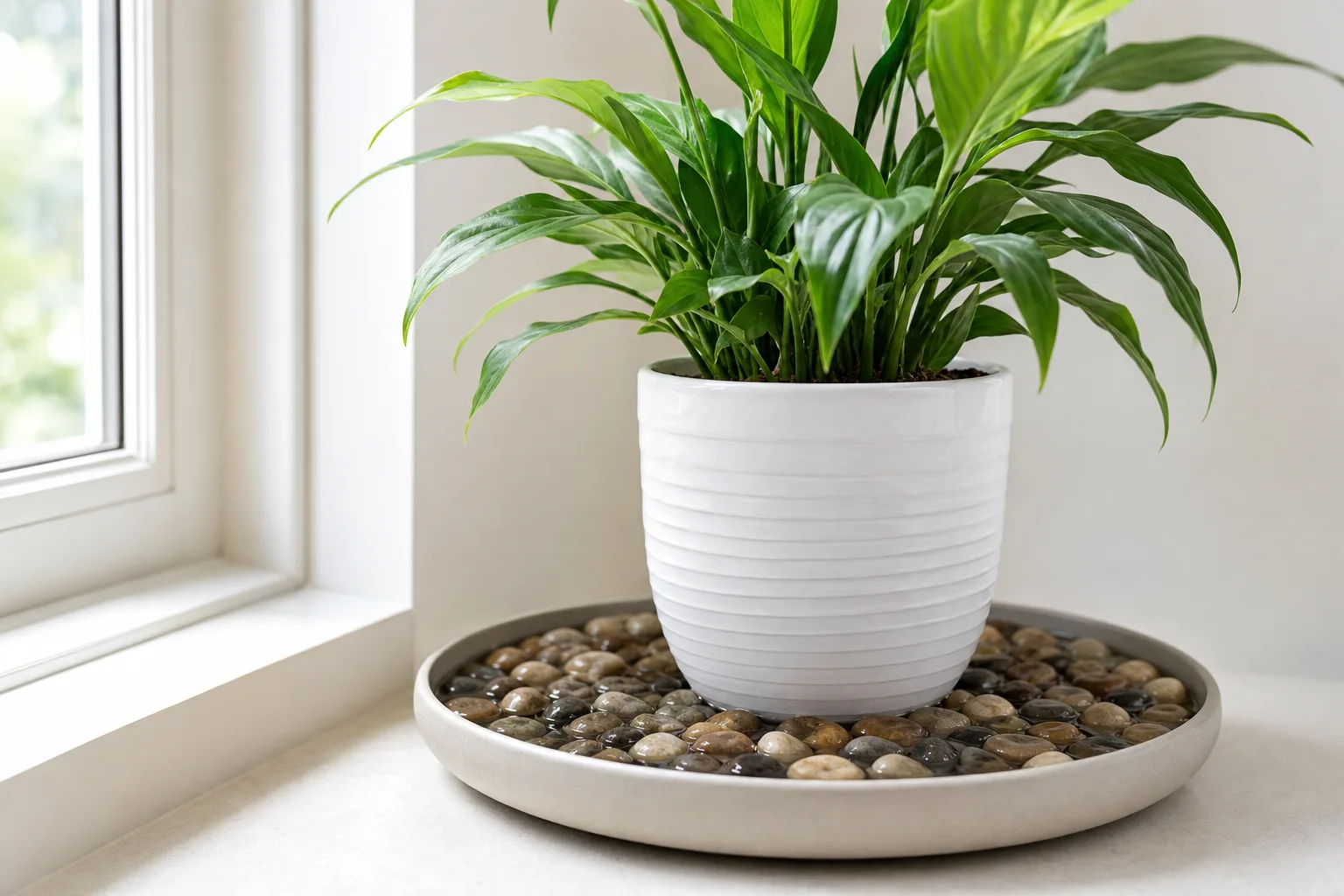
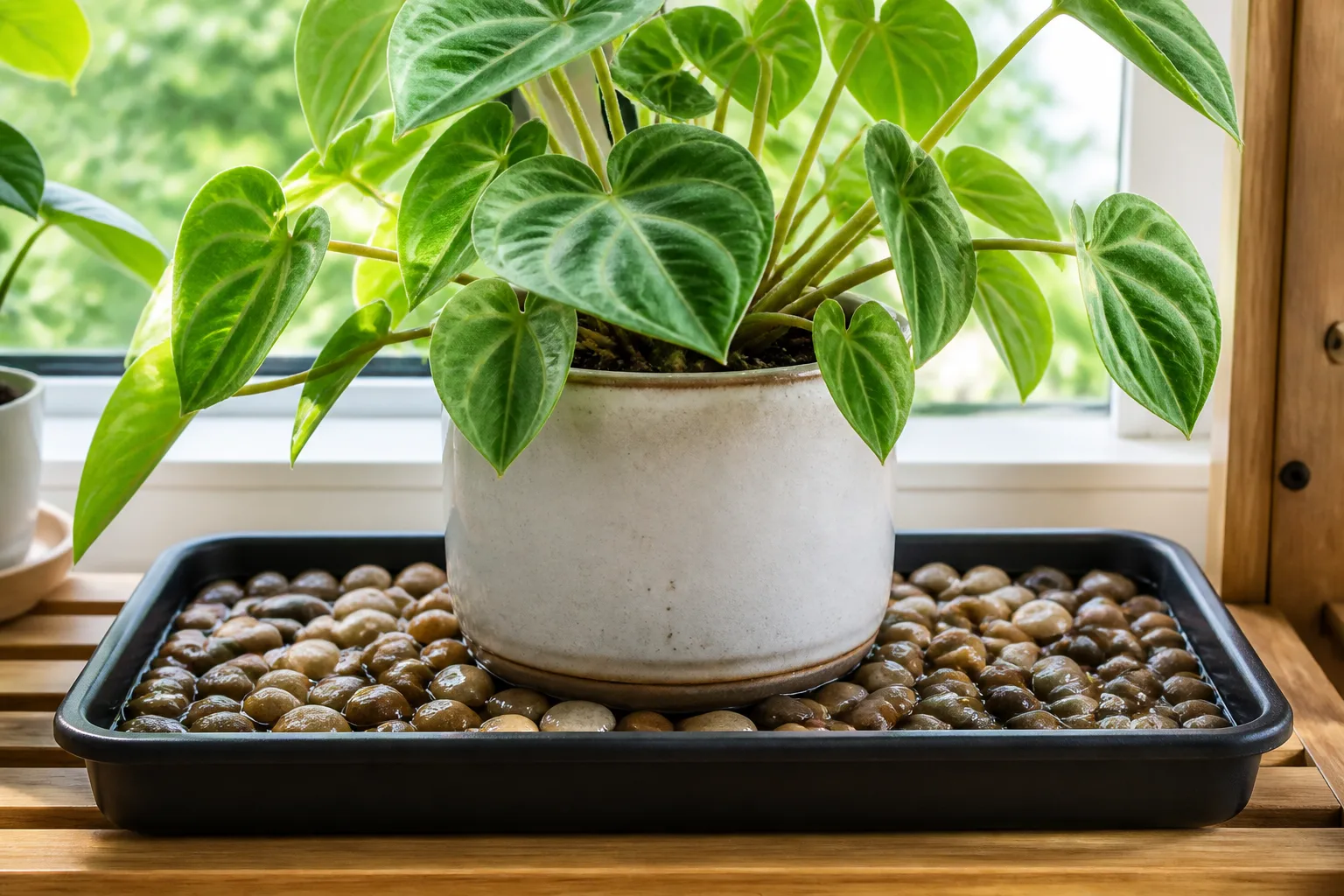
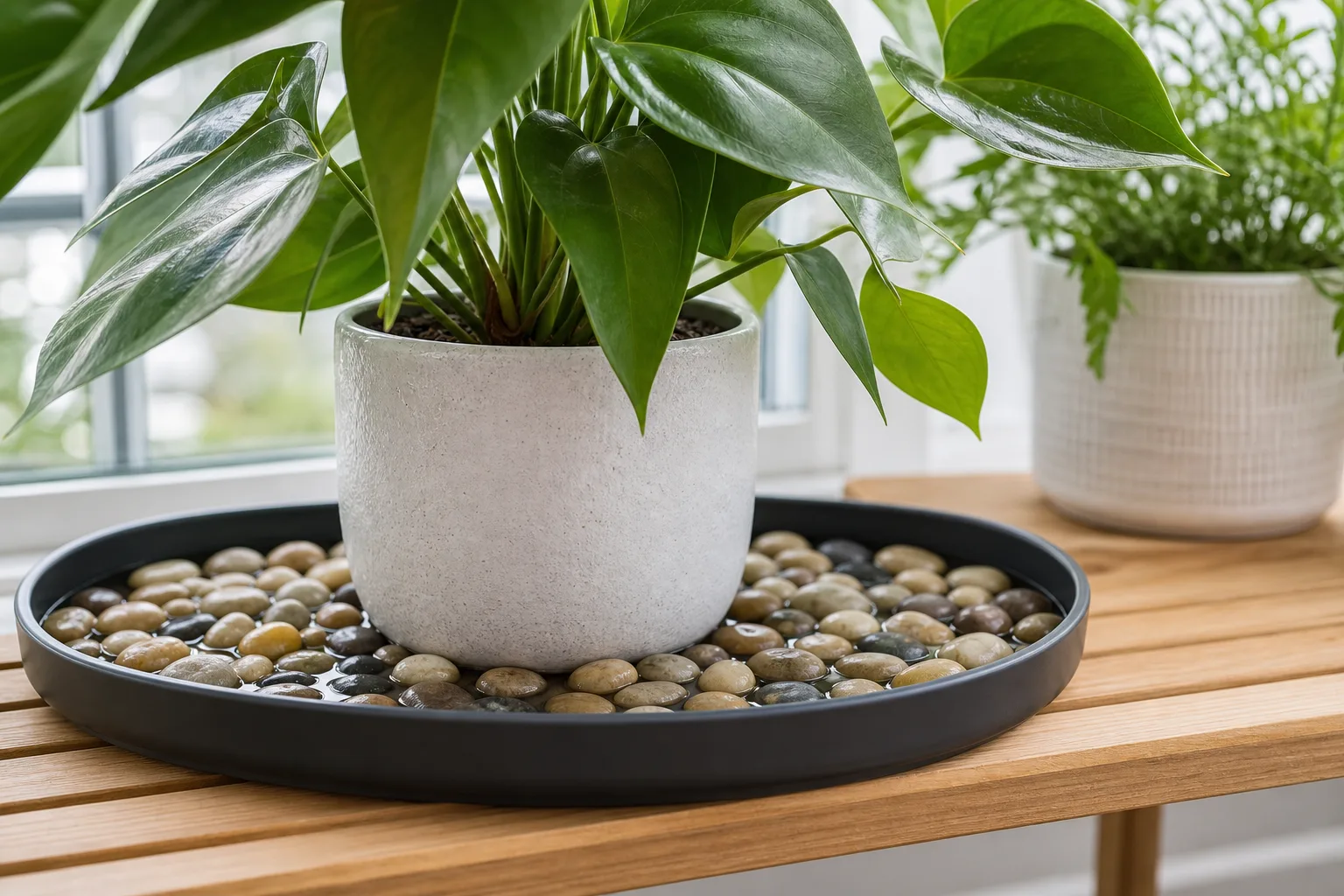
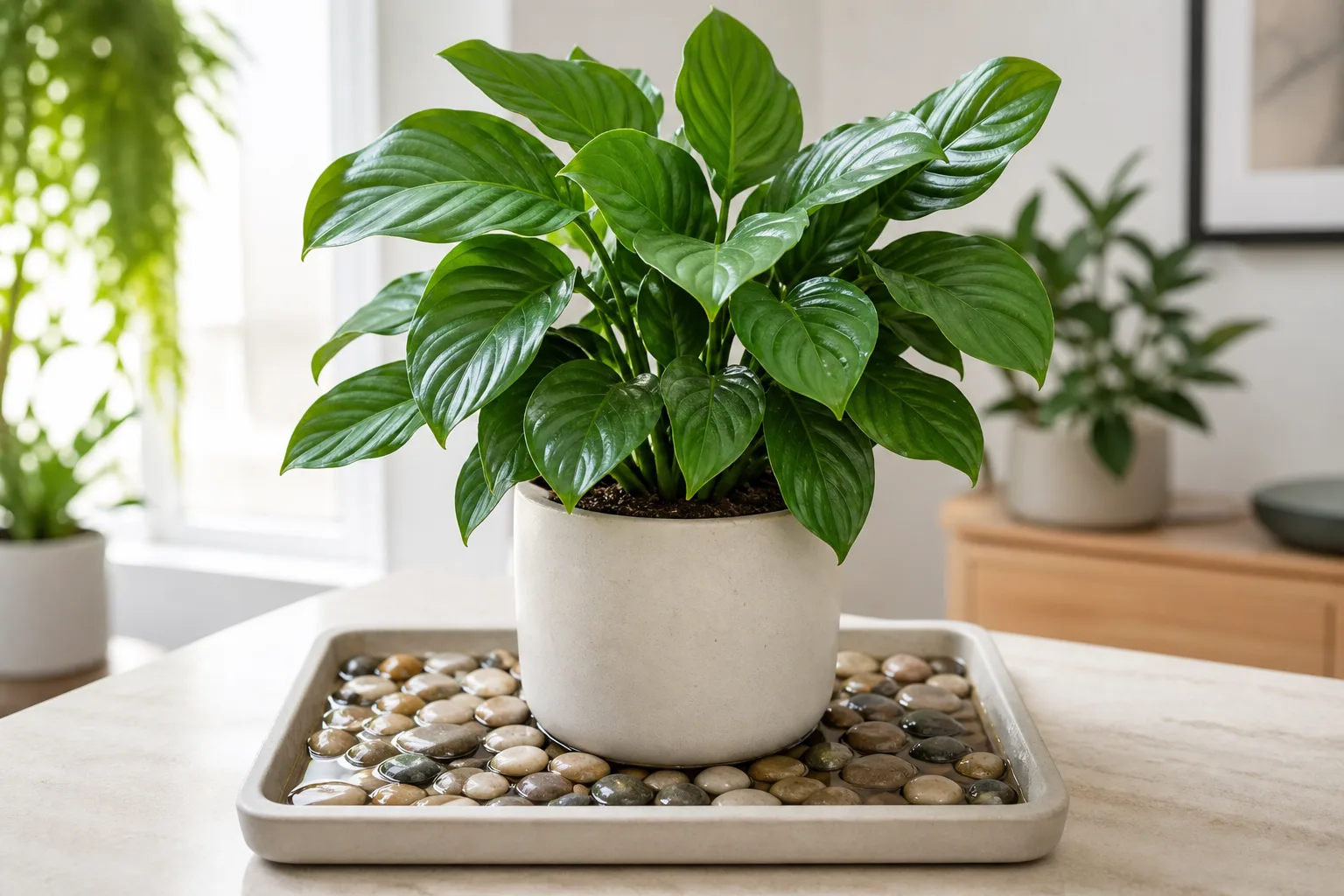
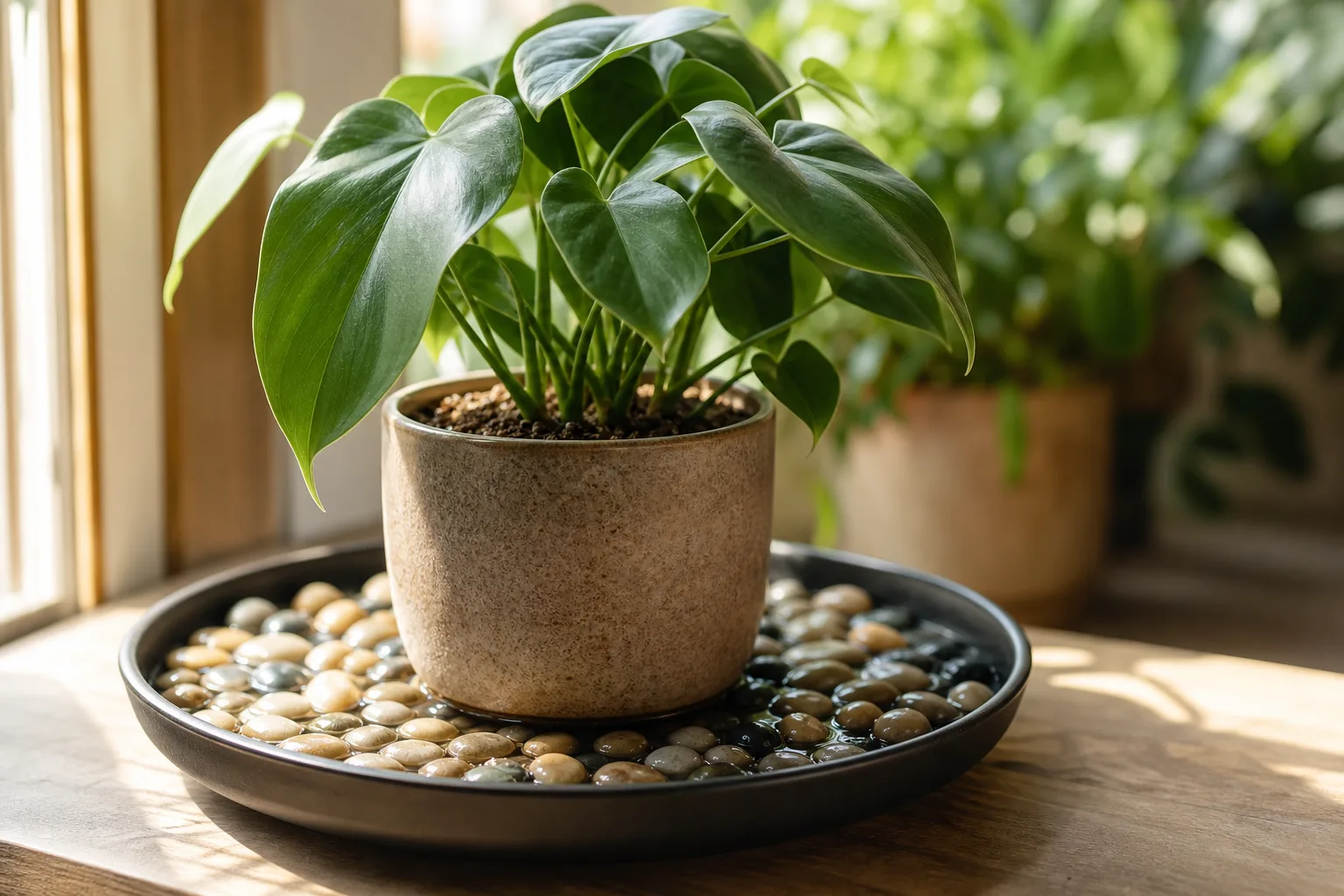
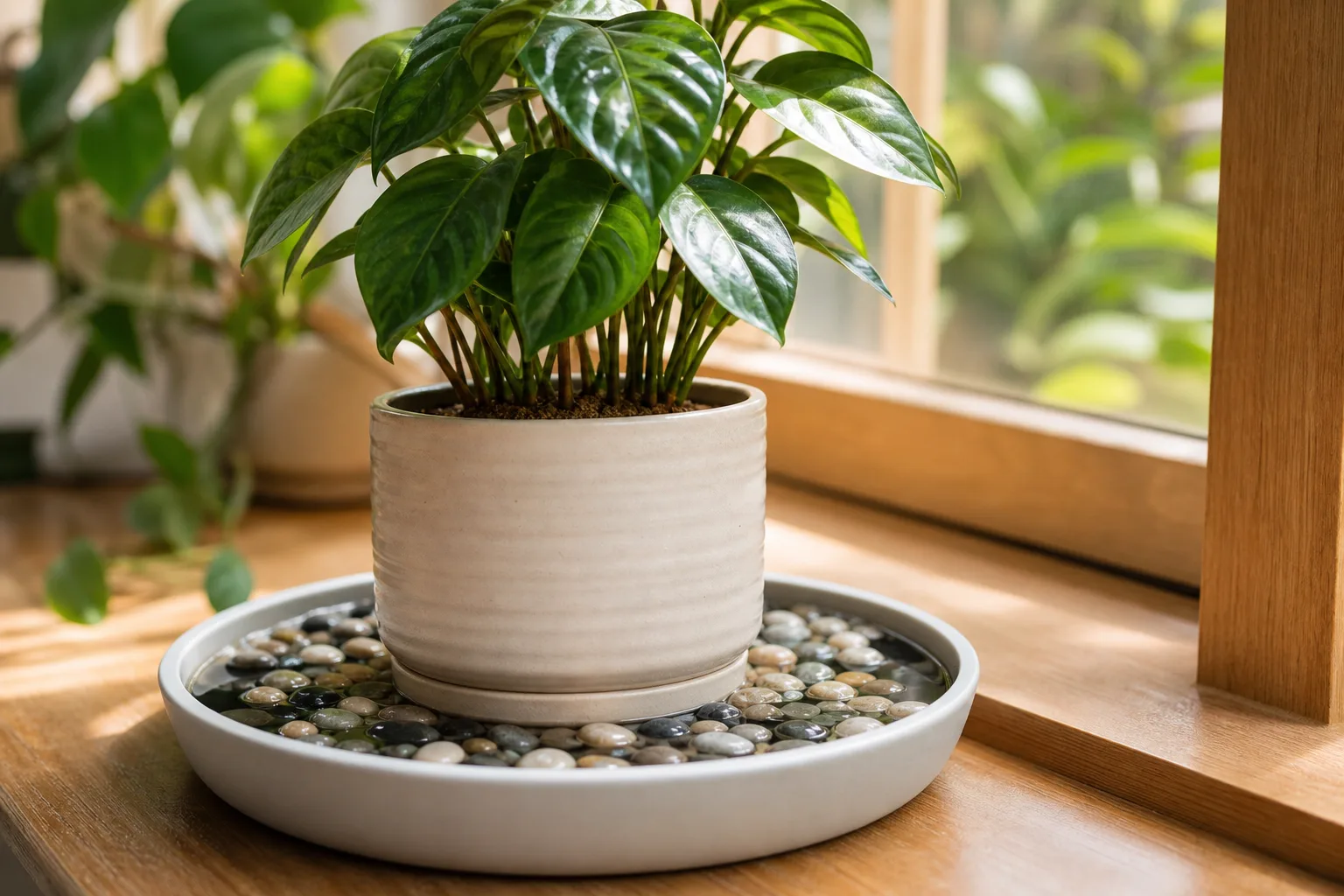
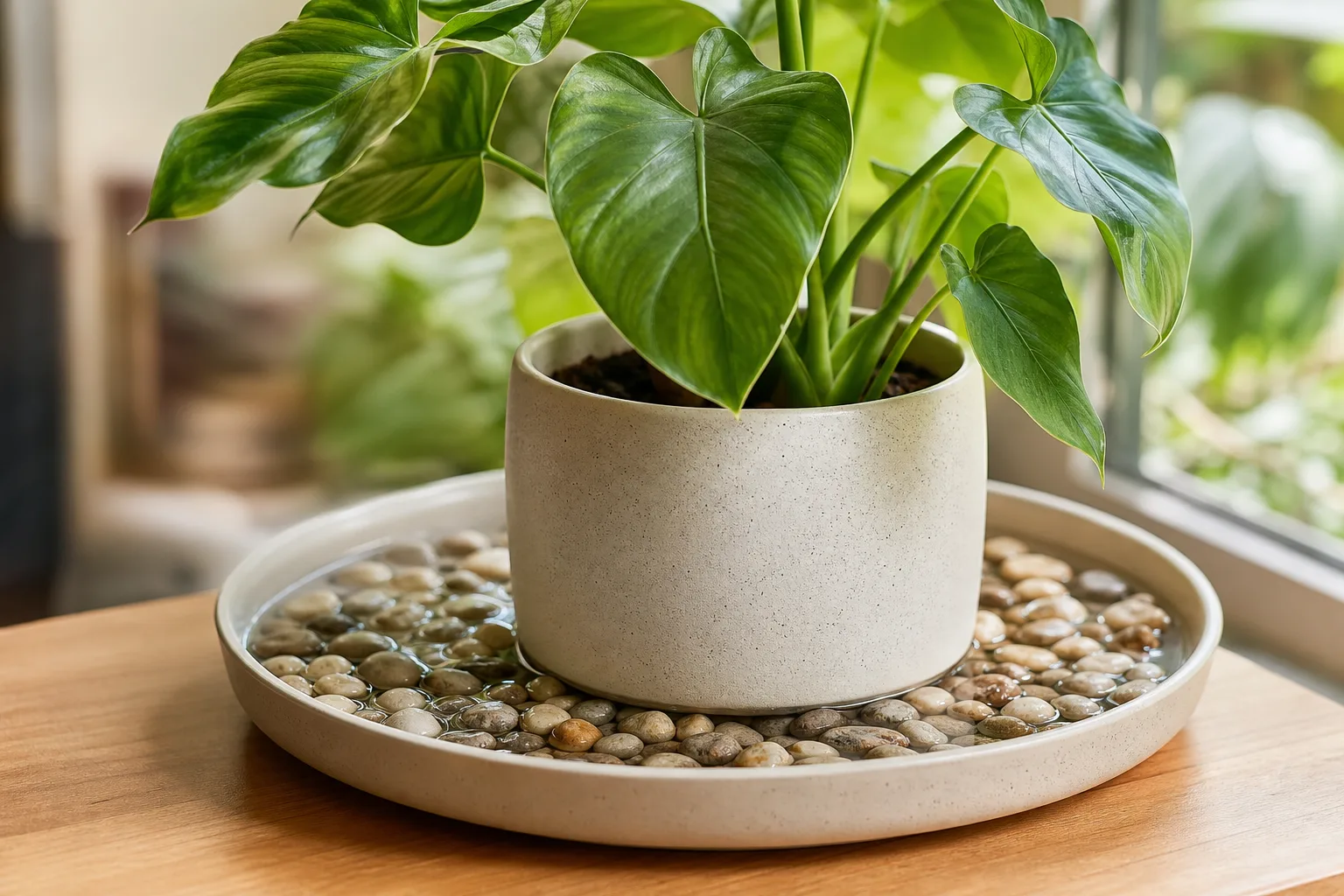
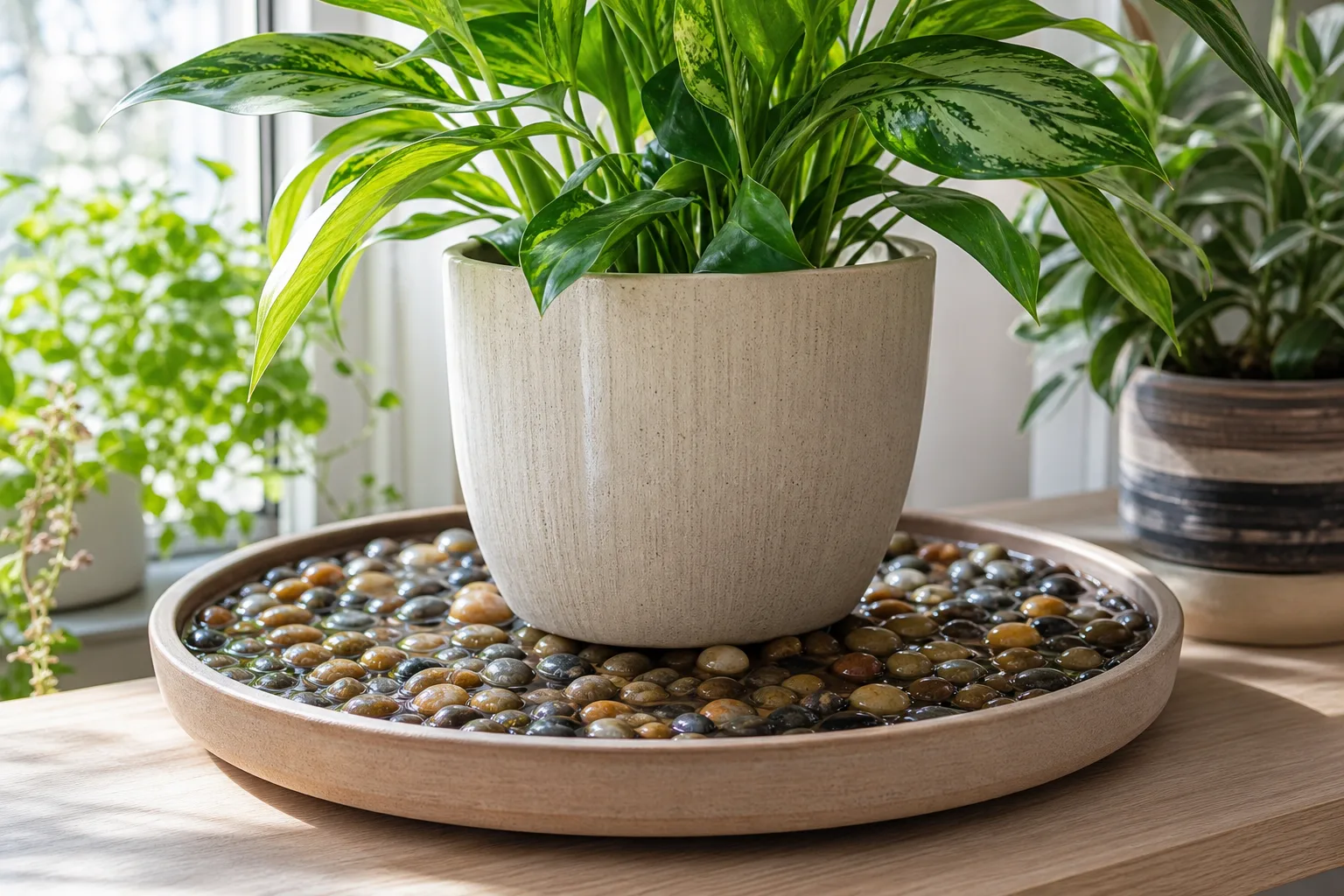
A pebble tray is a shallow tray or saucer filled with stones and a small amount of water, with the plant pot resting above the water line rather than inside it. As water evaporates from the exposed surface, it can raise humidity in the air immediately around the tray. University of Illinois Extension and Missouri Botanical Garden both describe this structure: pot on pebbles, water below the pot base, drainage holes never submerged.
That makes a tray a microclimate tool, not a whole-room humidifier. It is silent, needs no electricity, and costs little to try. It is also easy to overestimate. Treat it like one modest refinement in an otherwise working routine, not a magic fix for every tropical plant in a heated apartment.
Why Humidity Matters for Indoor Plants
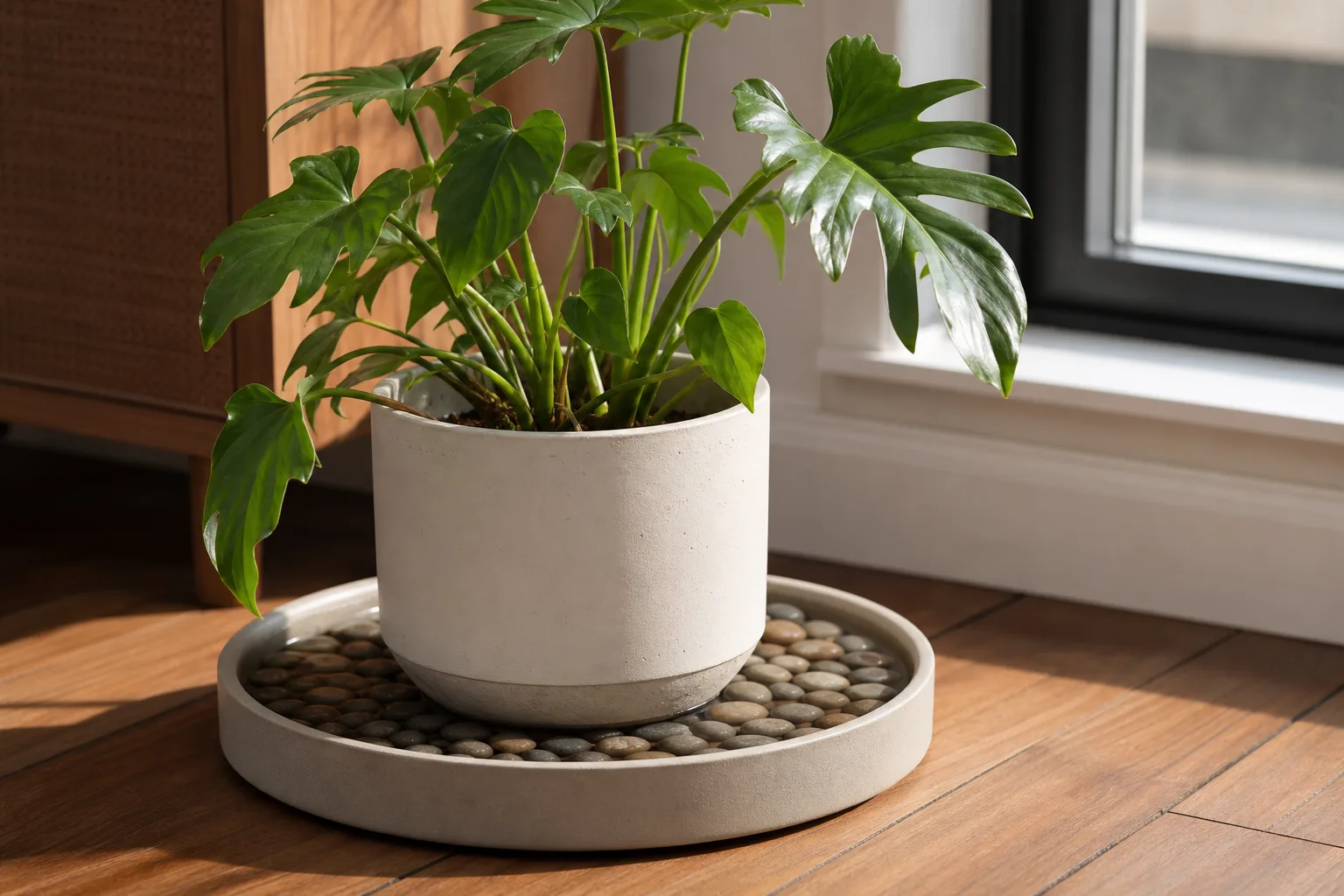
Many common houseplants evolved in air that carries more moisture than the average heated or air-conditioned room. University of New Hampshire Extension notes that most houseplants, aside from cacti, succulents, and a few others, prefer roughly 40% to 60% relative humidity, while some tropical species appreciate higher. In winter, many homes drop below 30% as cold outdoor air is warmed indoors without adding water—physics, not a mystery.
Humidity matters because plants lose water through transpiration. When indoor air is too dry, that loss can outpace comfortable replacement, especially if the plant also sits near a vent, in strong light, or in a pot that dries unevenly. Dry air does not kill every plant, and it is not the cause of every brown tip—but it is a real stressor for thin-leaved tropicals. Pebble trays enter the conversation because they try to soften that stress locally without rewiring the entire room.
Signs Your Plant May Need More Humidity
Low humidity often shows up as dry, brown, brittle leaf margins, crispy tips, or shriveled foliage—symptoms that overlap with underwatering, salt buildup, and root trouble. University of New Hampshire Extension lists dry brown edges as a humidity clue; the Royal Horticultural Society stresses matching conditions to each plant rather than applying one routine shelf-wide.
Humidity should be part of the diagnosis, not the whole diagnosis. Before you add a tray, confirm the basics: soil moisture pattern, drainage, light level, and whether dry forced air is hitting the leaves directly. University of Maryland Extension specifically recommends keeping plants away from heating and air-conditioning sources because localized dry air can mimic humidity stress.
Editorial Scenario: A Winter Tray Routine With Measured RH
Here is one documented setup from a LeafyPixels winter editorial check—not a controlled study, but a transparent example of what a tray can and cannot change.
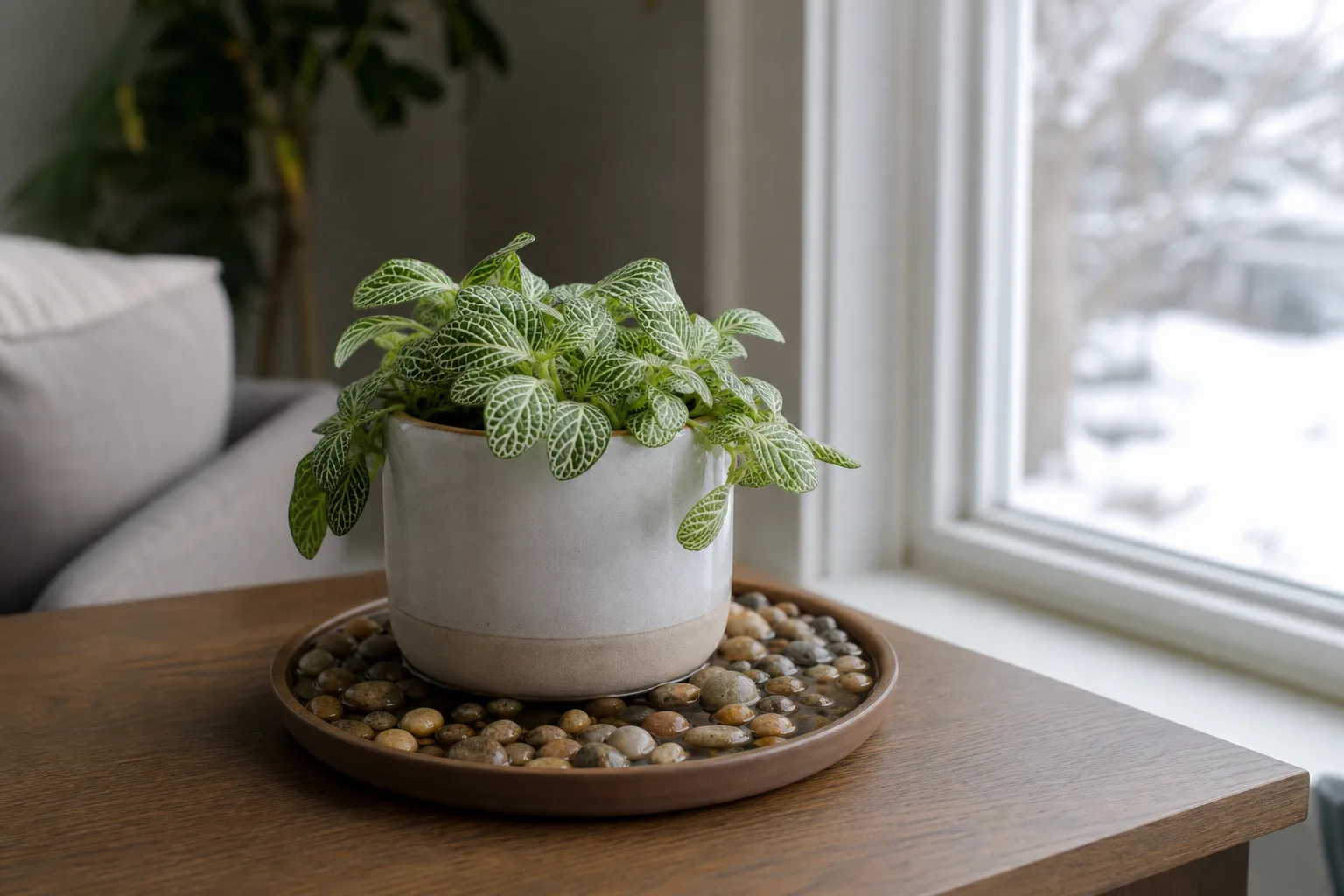
The plant: a compact fittonia on a north-facing shelf in a 14 × 12 ft forced-air heated bedroom.
The room: mid-January, thermostat at 68°F, hygrometer on the opposite wall reading 21% RH—common for heated winter air per NC State Extension.
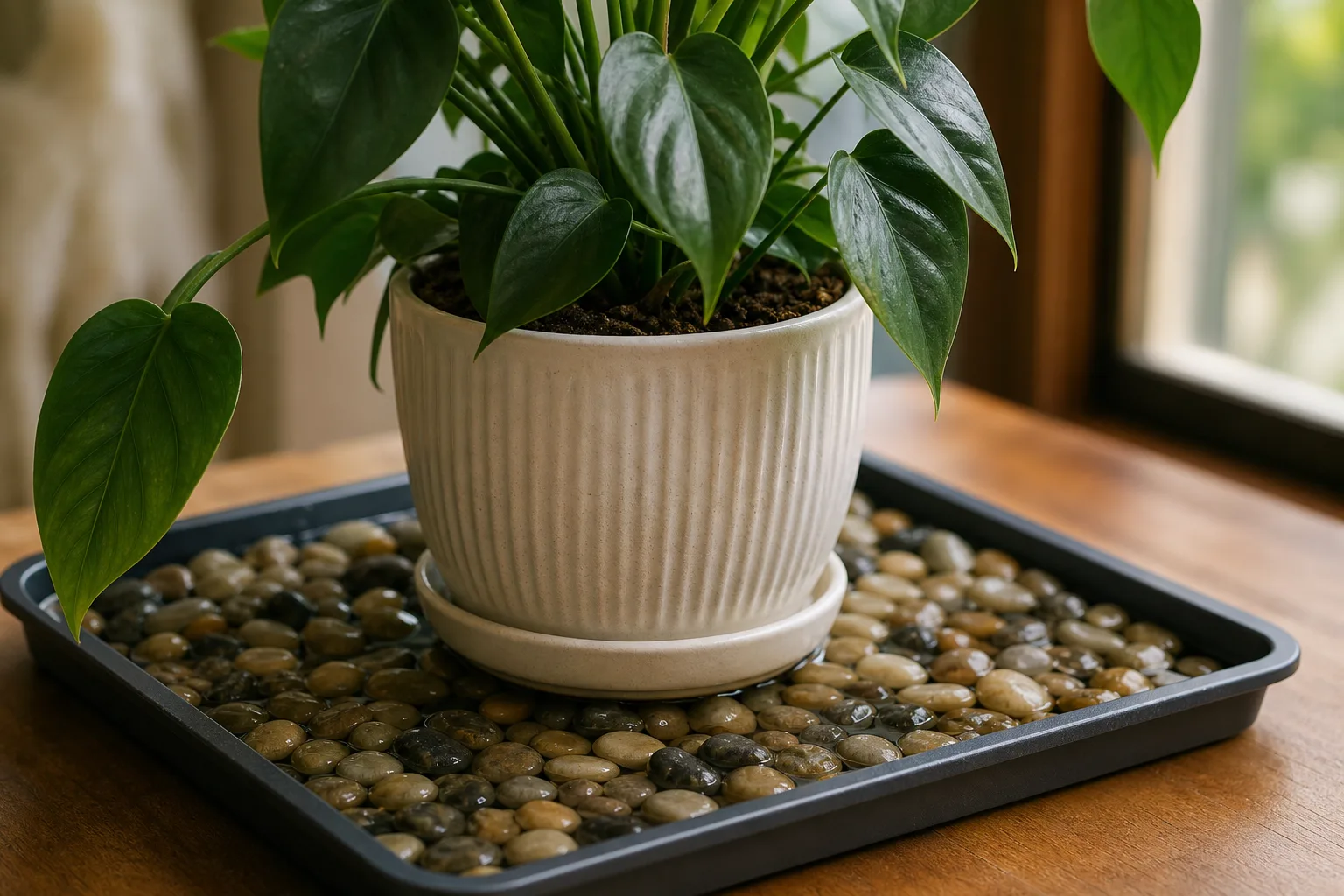
The routine: In October, when the heat first ran consistently, we added a tray roughly 1.5× the pot diameter, filled with clean river pebbles, water to just below the stone tops, pot resting fully above the water. Refill every two to four days so the pebbles never fully dried out.
The readings (same meter, same time of day, three days apart averaged):
| Position | RH | Change vs room |
|---|---|---|
| Control: opposite wall | 21% | — |
| 6 in. above tray (lower foliage) | 25% | +4 points |
| 2 in. above tray (just above stones) | 29% | +8 points |
The pattern matches extension framing: trays help locally, not room-wide. At leaf height—the air the fittonia actually experiences—the bump was about four percentage points. Across the room, nothing moved. Full methodology and repeat protocol live in Indoor Humidity and Pebble Trays; this hub keeps the routine takeaway.
The outcome: New growth on the fittonia stayed flatter through February; existing crispy edges did not green up. In March, when outdoor air warmed and room RH climbed toward 35% without the tray, we removed it and grouped the plant with two ferns instead—one less open water surface to monitor. That seasonal add-and-reassess rhythm is the point: trays are often a heating-season refinement, not a permanent fixture.
Where a Pebble Tray Fits in a Plant Care Routine
The tray belongs in the supporting cast, alongside grouping, smart placement, and seasonal adjustments. If light is wrong, soil stays soggy, or the plant lives next to a heating vent, a tray will not fix the core problem. University of New Hampshire Extension lists pebble trays alongside grouping and humidifiers—not ahead of correct watering and drainage.
Use a tray when the plant is a plausible candidate, the humidity gap seems local and moderate, and you want a low-cost passive test before buying a humidifier. Skip it when the diagnosis is unclear, the room is severely dry, the plant is drought-adapted, or you are really trying to solve root rot or weak light.
Weekly and Seasonal Routine Checklist
Fold tray checks into the plant inspection you should already be doing:
Weekly (30 seconds per plant):
- Check soil moisture before anything else.
- Glance at the tray water line—is water still below the pebbles?
- Confirm the pot has not settled into standing water.
- Scan pebbles for algae film, slime, or white mineral crust.
- Look at new growth, not old damaged tissue.
Seasonal reassess (October and March in most heated climates):
- October: If room RH drops and humidity-sensitive plants show fresh edge damage, trial a tray or refresh an existing one.
- March: If room RH recovers above ~35–40% and new growth looks stable, try removing the tray and watch for two weeks.
- Year-round: Revisit after any move, repot, or HVAC change.
Tray, Humidifier, or Grouping: A Decision Flowchart
START: Basics correct? (light, drain, water, placement)
  |
  NO --> Fix basics first. Stop here.
  |
  YES
  |
  v
Is the plant compact with foliage near the tray zone?
  |
  NO --> Tall plant or canopy far above tray?
  |        YES --> Humidifier or grouping; tray alone unlikely to help.
  |
  YES
  |
  v
Is room RH severely low (<25%) with multiple struggling plants?
  |
  YES --> Humidifier primary; tray optional add-on.
  |
  NO
  |
  v
Several compatible tropicals on one shelf?
  |
  YES --> Try grouping first, or grouping + one shared tray.
  |
  NO
  |
  v
One small humidity-sensitive plant, mild dry-air stress?
  |
  YES --> Pebble tray is a reasonable proportional test.
  |
  NO --> Measure at leaf height; if no gap, skip the tray.
This flowchart gates on basics-first logic—the same order extension resources imply when they list trays after correct culture.
The Plants That Benefit Most
Best tray candidates share two traits: they want more humidity than average indoor air offers, and their foliage sits close to the evaporation zone. Strong matches include:
- Fittonia and small ferns
- Prayer plants and compact calatheas
- Small orchids and selaginella
- Low creeping tropicals on shelves and windowsills
Nebraska Extension and Missouri Botanical Garden identify foliage plants and some orchids as more humidity-aware than the average succulent. For species deep dives, see calathea care and monstera humidity needs.
Plants That Usually Do Not Need Pebble Trays
Poor candidates include cacti, most succulents, snake plants, ZZ plants, and hardy foliage such as pothos already thriving in average indoor air. University of New Hampshire Extension explicitly separates cacti and succulents from humidity-loving houseplants when discussing moisture preferences.
Tall structural plants are also weak fits: a monstera canopy sitting three feet above a saucer is too far from the evaporation surface for a narrow tray to matter much. A tray under a drought-tolerant plant is rarely harmful if the pot stays dry, but it is often pointless maintenance—and pointless steps do not survive busy routines.
Do Pebble Trays Actually Work?
Yes—but only within a narrow lane. Extension sources recommend trays of damp pebbles as a way to increase humidity around the plant, not across an entire room. Illinois Extension and Iowa State Extension frame them as modest aids listed alongside grouping and humidifiers.
The middle-ground answer: trays are real but limited. They are not snake oil, and they are not a substitute for understanding room conditions.
What They Can Realistically Do
A tray creates a small pocket of extra moisture as water evaporates. University of New Hampshire Extension says trays can help a little—the realistic standard is a subtle local improvement, not a greenhouse effect.
That small bump can still matter for a fittonia on a shelf or a fern in a dry apartment. Pair the tray with vent avoidance, plant grouping, and a hygrometer at leaf height. Judge success by healthier new growth and fewer fresh crispy edges over several weeks—not by old damage reversing.
For measured examples—including the 21% room / 25% leaf-level pattern from our winter test—see Indoor Humidity and Pebble Trays. This hub links there rather than duplicating the full measurement protocol.
Their Biggest Limits
Air movement is the first limit. Homes circulate air; humidity disperses quickly as you move away from the tray. Tall plants, large canopies, and open floor plans swallow the effect fast.
Room-scale dryness is the second. When winter RH sits in the teens across the whole space and multiple tropicals struggle, a tray cannot carry the job. University of New Hampshire Extension identifies a portable humidifier near plants, paired with a hygrometer, as the stronger option in dry winter conditions.
Diagnosis errors are the third. Brown tips also come from underwatering, salt buildup, damaged roots, and poor water quality. A tray layered onto the wrong cause adds maintenance without solving anything.
Tray Sizing, Setup, and Maintenance Essentials
This hub keeps setup to the essentials. Full step-by-step builds live in how to set up a pebble tray and best pebbles for a DIY tray.
Sizing rule: Choose a tray about 1.5× the pot diameter—wide enough to expose useful evaporation surface without turning the shelf into a pond. Nebraska Extension recommends a tray a few inches wider than the container.
Water line rule: Fill until water sits just below the top of the pebbles. The pot base and drainage holes must stay above standing water—always. Illinois Extension is explicit: pot on pebbles, not in water.
Material rule: River stones, aquarium gravel, marbles, or LECA all work if they keep the pot stable and allow evaporation. Material matters less than clearance and cleanliness.
Refill and Clean Cadence by Room Condition
| Room condition | Refill cadence | Clean cadence |
|---|---|---|
| Dry forced-air heat, small tray | Every 2–4 days | Rinse pebbles every 1–2 weeks |
| Moderate humidity, stable temps | Every 4–7 days | Rinse when film or algae appears |
| Hard tap water | As evaporation dictates | Scrub mineral crust weekly |
| Grouped plants, shared tray | Check daily in peak heat | Full rinse when any pot drains into tray |
Refill whenever the exposed pebble tops start drying completely—an empty tray is just decorative gravel. If slime, fungus gnats, or odor appear, dump, scrub, and restart. Penn State Extension notes that consistently wet organic debris can encourage fungus gnats; clean open water setups matter.
Pebble Trays vs Other Humidity Methods
| Method | Best for | Main strength | Main weakness | When to choose |
|---|---|---|---|---|
| Pebble tray | One compact humidity-loving plant | Cheap, silent, local | Weak at distance and in very dry rooms | Mild gap, good candidate plant, basics already right |
| Grouping | Several compatible tropicals on one shelf | Shared microclimate, no gear | Modest effect; disease spread risk if one plant is sick | Multiple small plants, same light needs |
| Humidifier | Dry room, several sensitive plants | Strongest RH change | Cost, cleaning, mineral dust | Room RH far below target or repeated tray test shows no leaf-level gain |
| Misting | Occasional boost for select species | Fast | Lasts minutes; leaf disease risk in poor airflow | Not a tray substitute; see houseplant humidity guide |
| Terrarium / cloche | Tiny humidity lovers | Holds moisture well | Limited plant size and airflow | Fittonia, moss, micro ferns in stable light |
Keep the home-health guardrail in view: the US EPA recommends indoor RH between 30% and 50%, ideally below 60%, to limit condensation and mold. Aim to help sensitive plants locally without over-humidifying the whole home. For a full side-by-side debate, see pebble tray vs humidifier.
Common Mistakes That Cancel the Benefit
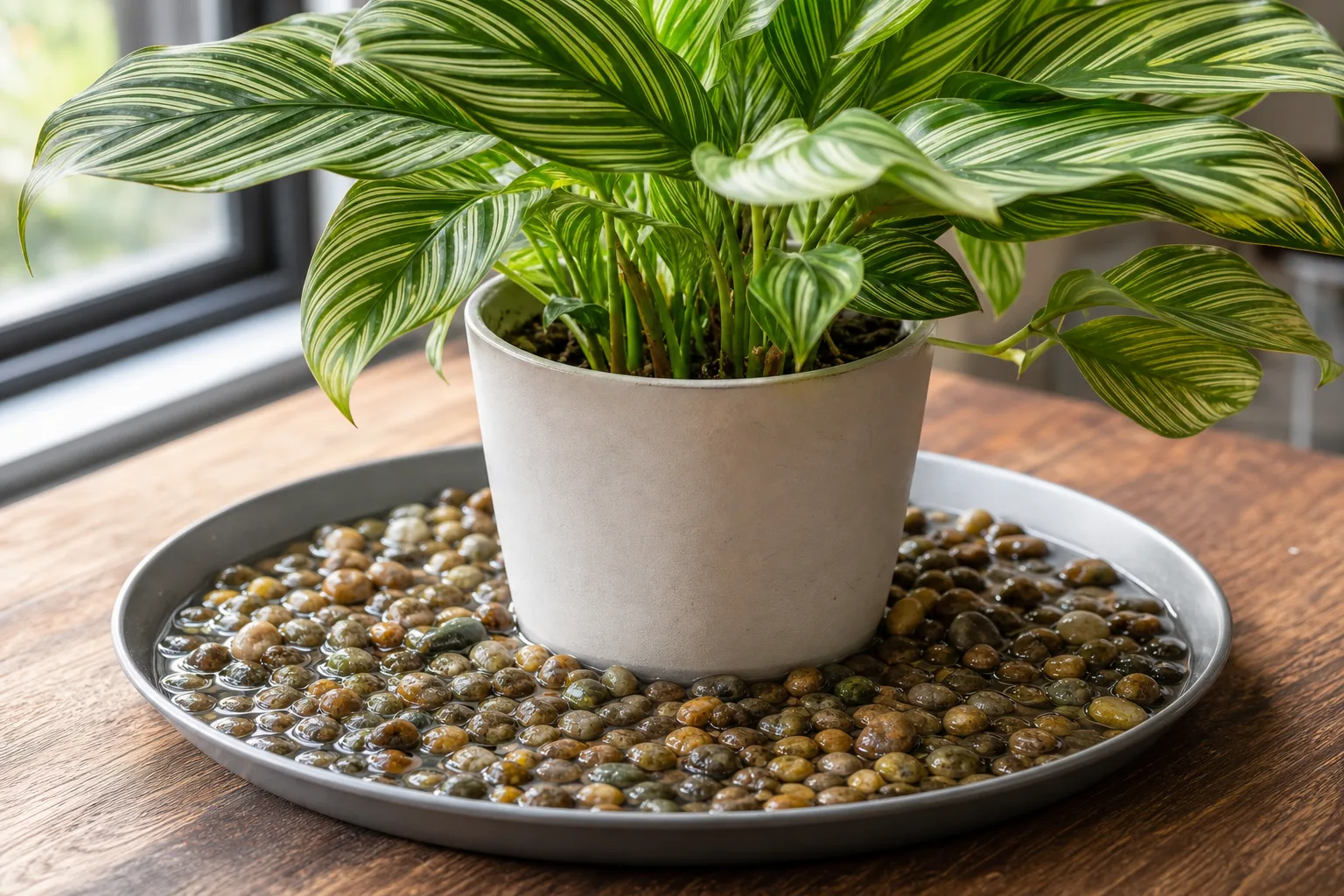
Letting the pot sit in water is the fastest way to turn a humidity aid into a root problem. Once drainage holes contact standing water, mix can stay too wet—exactly what many tropicals cannot tolerate.
Using a tray that is too small under a large plant is mostly cosmetic. Wide tray + low foliage = plausible benefit; narrow saucer + tall fiddle-leaf fig = little chance.
Expecting instant brown-tip repair sets you up to quit early. Dead tissue stays dead; trays reduce new damage over weeks if humidity was part of the problem.
Ignoring hygiene and placement wastes the effort. A tray beside a heating vent fights dry forced air; a tray that never gets rinsed becomes algae soup.
Skipping measurement leads to false confidence. One high reading directly over wet stones does not mean the room changed—compare leaf height to a control across the room, as described in Indoor Humidity and Pebble Trays.
For deeper mistake walkthroughs, see pebble tray myths and can a pebble tray fix brown tips.
Related Guides
Use the spoke that matches your next question—this hub does not repeat their full depth:
- What is a pebble tray? — clean definition
- Do pebble trays really increase humidity? — evidence and limits
- Indoor humidity and pebble trays — measured RH examples and hygrometer protocol
- How to set up a pebble tray — numbered build steps
- DIY pebble tray for indoor plants — materials and construction
- Pebble tray vs humidifier — escalation decision
- Signs your houseplants need more humidity — symptom sorting
- Winter houseplant care — seasonal context
Conclusion
Pebble trays fit best as a small support tool inside an otherwise working routine. They help most when the plant is compact, the tray is wide, the water stays below the pebbles, and the humidity gap is local—not when the whole room is severely dry or the real problem is watering, salts, or light.
Measure at leaf height, run the seasonal add-and-reassess rhythm, and link out to the measurement primer when you need numbers instead of rules of thumb. Neither universal nor useless—just a proportional tool for the right-sized problem.